How To Keep Squirrels Off Bird Feeders Without Risky Tricks
Squirrels are part of many backyard ecosystems, but that does not mean they need to empty every feeder you hang. If you are trying to learn how to keep squirrels out of bird feeders, the most reliable answer is not one trick. It is a simple combination of distance, a good baffle, the right feeder, less seed waste, and safe maintenance habits.
The goal is to make bird seed harder for squirrels to reach without hurting squirrels, birds, pets, or children. A calm, practical setup works better than sticky substances, grease, poisons, traps, or strong home remedies that can create new problems.
For most yards, start with a pole-mounted feeder, add a properly placed metal baffle, move the feeder away from fences and branches, and clean up spilled seed. Then adjust from there. Squirrels are persistent, so expect a little trial and error before your setup is truly dependable.
The Quick Answer: Use Distance, A Baffle, And Less Mess
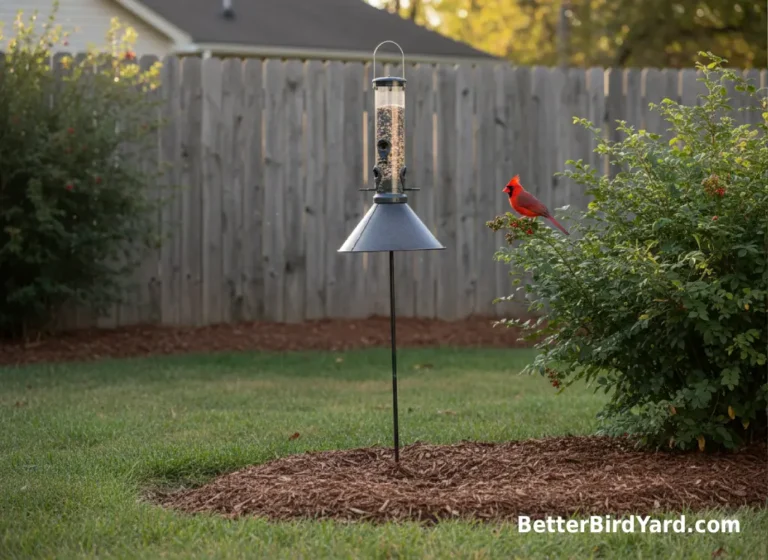
The best squirrel deterrent bird feeder setup is usually a feeder on a sturdy pole with a smooth baffle below it, placed well away from anything a squirrel can jump from. Cornell Lab’s Project FeederWatch has long pointed readers toward baffles and generous spacing because squirrels can jump, climb, and drop from nearby branches with surprising skill.
Think of squirrel control as a three-part system:
- Block climbing with a baffle on the pole or above a hanging feeder.
- Block jumping by moving the feeder away from fences, trees, deck rails, rooflines, and shrubs.
- Reduce the reward by using less messy seed and cleaning spilled food from the ground.
No feeder is completely squirrel-proof in every yard. A determined squirrel may still test the setup, especially if sunflower seed is easy to reach. But when you combine physical barriers with smart placement, most backyard bird watchers see a big difference.
Why Squirrels Keep Beating Your Bird Feeder
Squirrels usually win because the feeder is reachable from more directions than the owner realizes. A feeder may look safe from the ground, but a squirrel may be using a deck rail, shepherd’s hook, tree trunk, fence post, patio chair, roof edge, or shrub as a launch point.
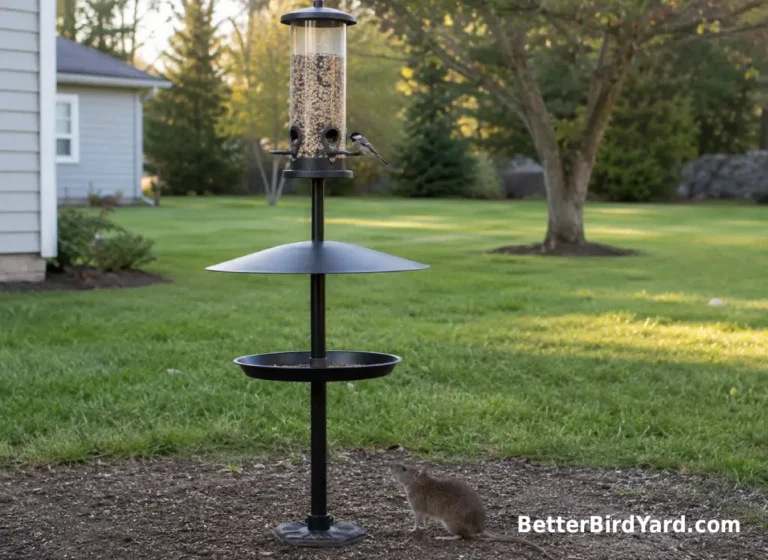
Sunflower seed, peanuts, corn, and many inexpensive mixed-seed blends are especially tempting to squirrels. Spilled seed on the ground also trains squirrels, chipmunks, raccoons, and rodents to keep checking the area. Once a squirrel learns that your feeder is easy food, it will return often.
Start With Placement Before Buying A New Feeder
If you only change one thing, move the feeder before buying more gear. The classic backyard guideline is to keep feeders roughly 5 feet or more above the ground, about 7 to 10 feet from side launch points, and well below overhead branches or roof edges. In a tight yard, aim for the best version of that spacing you can manage.
Use this simple setup sequence:
- Choose the most open spot you have, away from fences, shrubs, deck rails, and patio furniture.
- Use a sturdy pole rather than a thin, wobbly shepherd’s hook if squirrels are a serious problem.
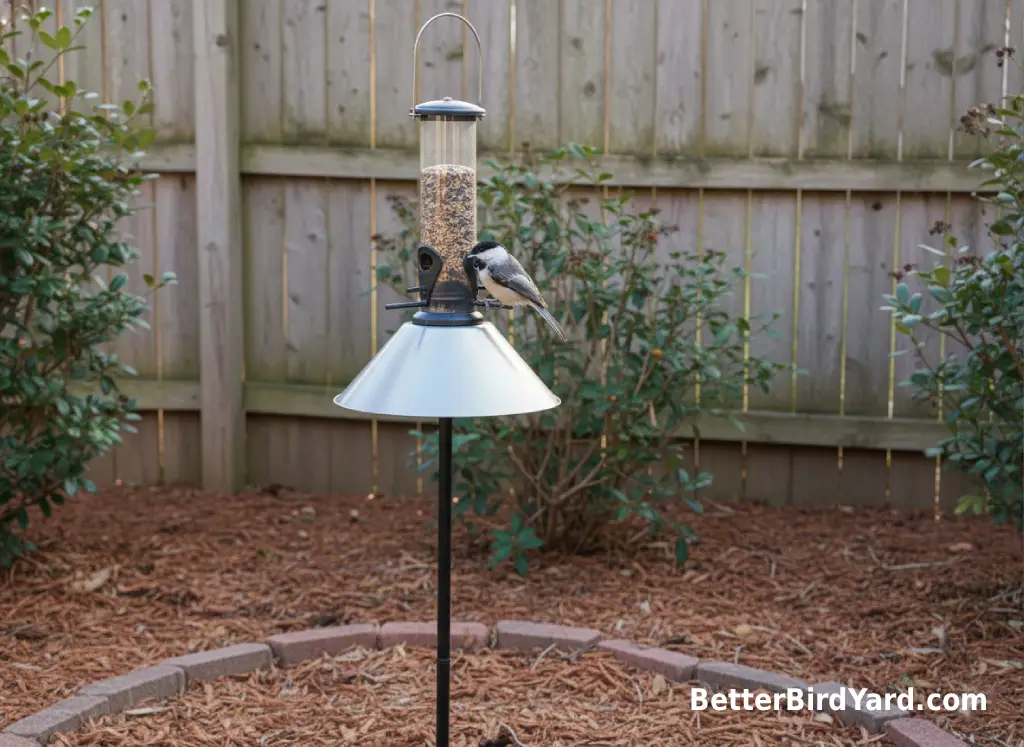
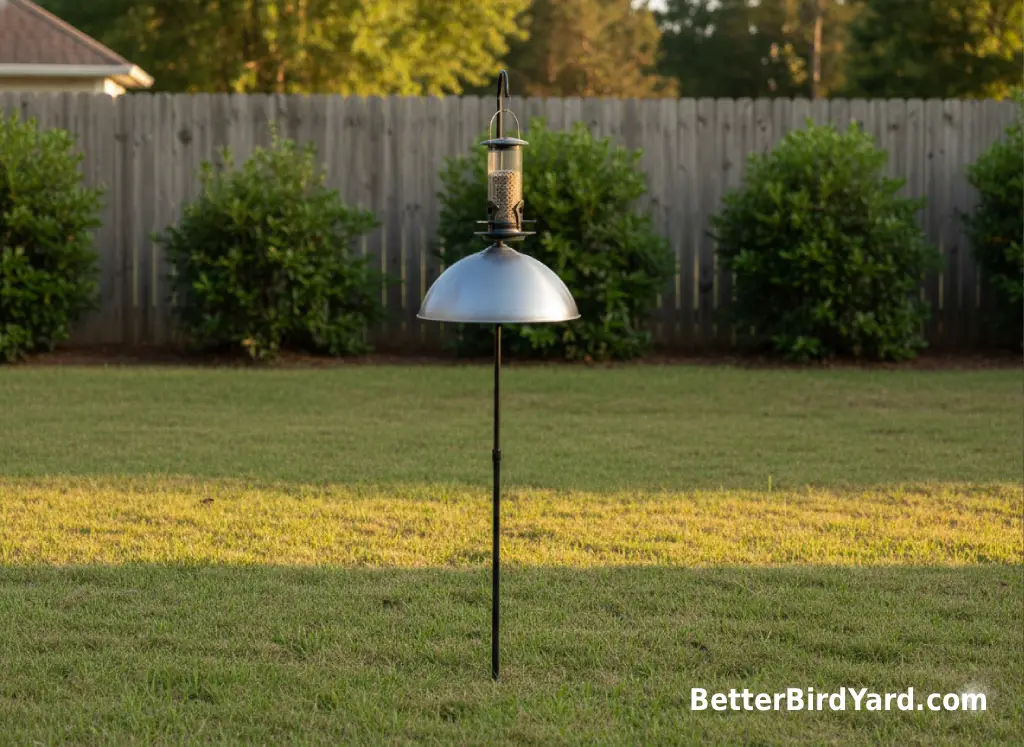
- Install a smooth metal baffle below the feeder, high enough that squirrels cannot jump over it from the ground.
- Keep feeders above the baffle so squirrels cannot stretch around it.
- Look overhead for branches, gutters, pergolas, and balcony edges that allow squirrels to drop down.
- Watch for one week, then move the setup again if squirrels find a new route.
Birds still need nearby cover, but cover does not need to be directly beside the feeder. A shrub or small tree several yards away can give birds a safe place to perch without handing squirrels an easy launching pad.
Choose The Right Squirrel Deterrent Bird Feeder
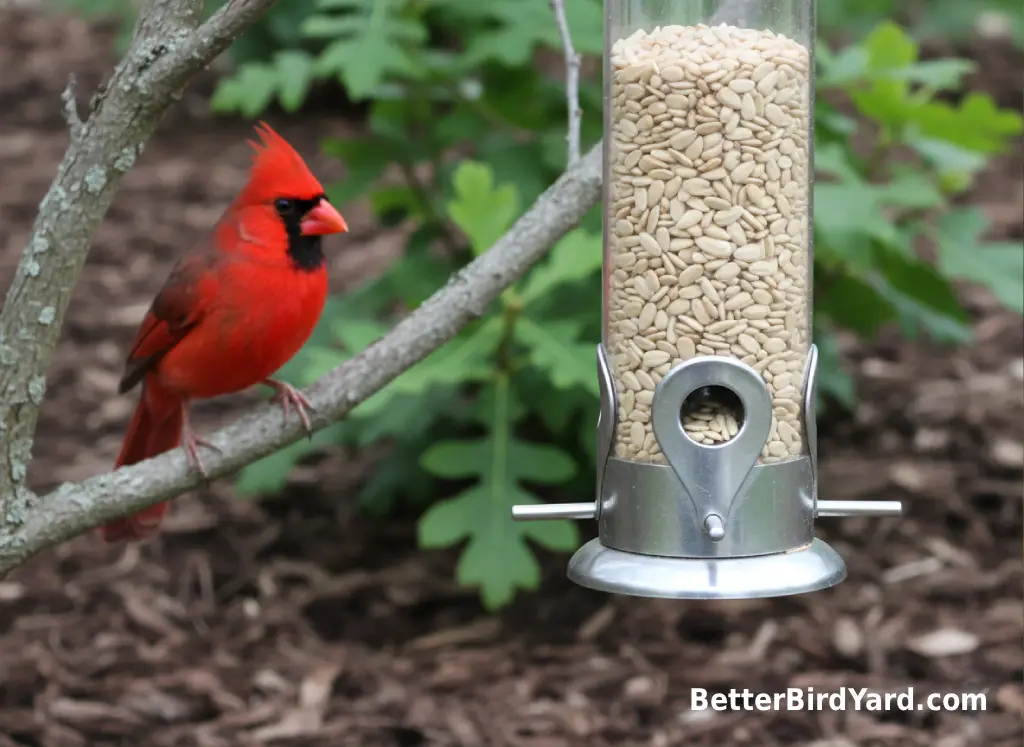
A squirrel deterrent bird feeder works best when it is part of a good placement system. Weight-sensitive feeders close the feeding ports when a heavier animal climbs on. Cage-style feeders allow smaller birds to enter while keeping larger animals outside. Metal ports and chew-resistant parts can help the feeder last longer.
| Feeder Type | Best For | Watch-Out |
|---|---|---|
| Pole-Mounted Feeder With Baffle | Most suburban yards with some open space | Fails if placed too close to fences, trees, or deck rails |
| Weight-Sensitive Feeder | Sunflower seed feeding where squirrels are persistent | Needs correct spring setting and regular cleaning |
| Caged Tube Feeder | Finches, chickadees, titmice, and other smaller birds | May exclude larger birds you enjoy watching |
| Hanging Feeder With Overhead Baffle | Tree branch setups when a pole is not possible | Needs a wide, tilting baffle above the feeder |
| Tray Or Platform Feeder | Ground-feeding birds and easy viewing | Usually the hardest style to protect from squirrels |
For a beginner, the most forgiving setup is a sturdy pole with a barrel or cone baffle and one easy-to-clean tube or hopper feeder.
Use Seed Choices To Lower Squirrel Pressure
Seed choice will not solve a bad feeder location, but it can reduce squirrel pressure. Squirrels often favor sunflower seed, peanuts, corn, and many cheap mixed blends. They are usually less interested in nyjer and often less enthusiastic about safflower, though results vary by yard and by individual squirrel.
Try these practical adjustments:
- Use safflower in a hopper or tube feeder if squirrels are emptying sunflower seed too quickly.
- Offer nyjer in a dedicated finch feeder, where appropriate, because the seed is tiny and less attractive to many squirrels.
- Avoid corn-heavy mixes if squirrels, raccoons, or rodents are already a problem.
- Buy smaller amounts of seed more often so it stays dry and fresh.
- Remove wet, moldy, or clumped seed instead of leaving it for wildlife.
Hot-pepper-treated bird seed is sometimes sold as a squirrel deterrent because mammals react strongly to capsaicin. BetterBirdYard treats it as a backup option, not the first step. If you use it, choose a commercial product, handle it carefully, keep it away from children and pets, and avoid loose DIY cayenne dust that can irritate eyes, noses, and lungs during filling or cleaning.
DIY Fixes That Are Worth Trying
DIY squirrel control works best when it copies the same idea as a commercial baffle: make climbing or tightrope walking awkward without trapping or injuring wildlife. A smooth, wobbling barrier is much safer than anything sharp, sticky, greasy, or electric.
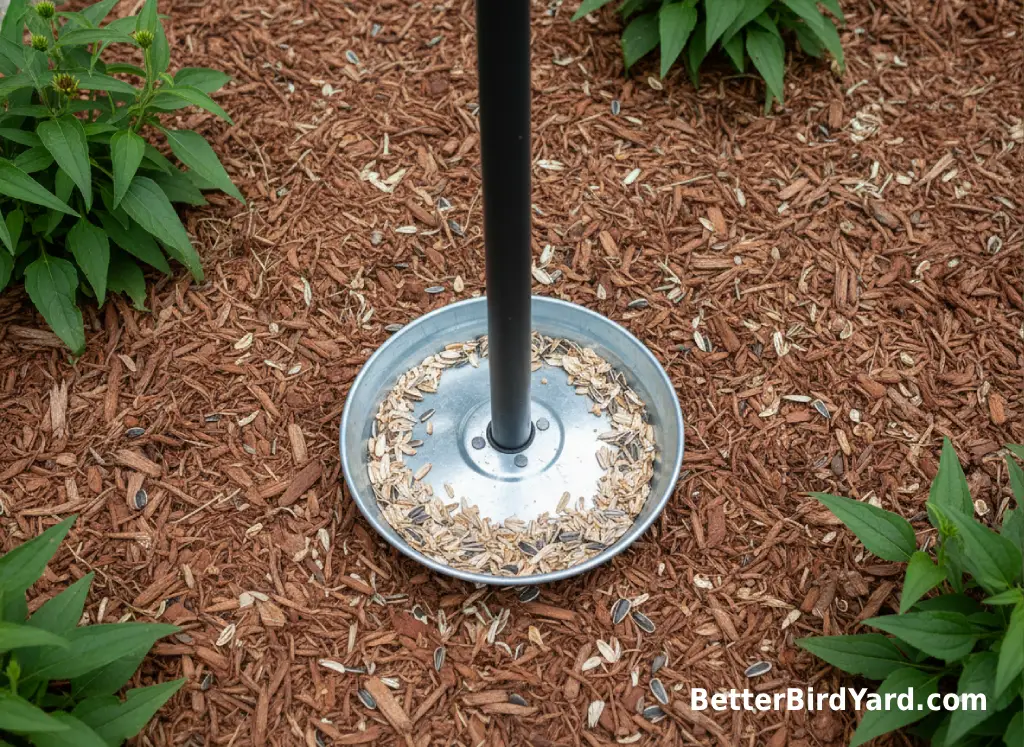
Reasonable DIY options include a wide homemade hanging baffle above a feeder, smooth rolling guards on a suspended feeder wire, or a simple seed tray that catches waste before it reaches the ground. Keep homemade parts sturdy, smooth, and easy to clean. If a squirrel could get stuck, cut, tangled, or pinched, do not use it.
These methods also do nothing to make your bird feeding station cleaner or safer for birds.
Keep The Ground Clean So You Do Not Invite More Wildlife
Spilled seed is one of those details that matters more than beginners expect. Even if squirrels cannot reach the feeder, a pile of sunflower shells and dropped seed below it may keep them coming back. It can also attract chipmunks, mice, rats, raccoons, opossums, and, in some regions, bears.
Keep the feeding area tidy with a few simple habits:
- Use a seed tray under messy feeders.
- Rake or sweep hulls and dropped seed regularly.
- Move feeders occasionally if the ground underneath gets compacted or dirty.
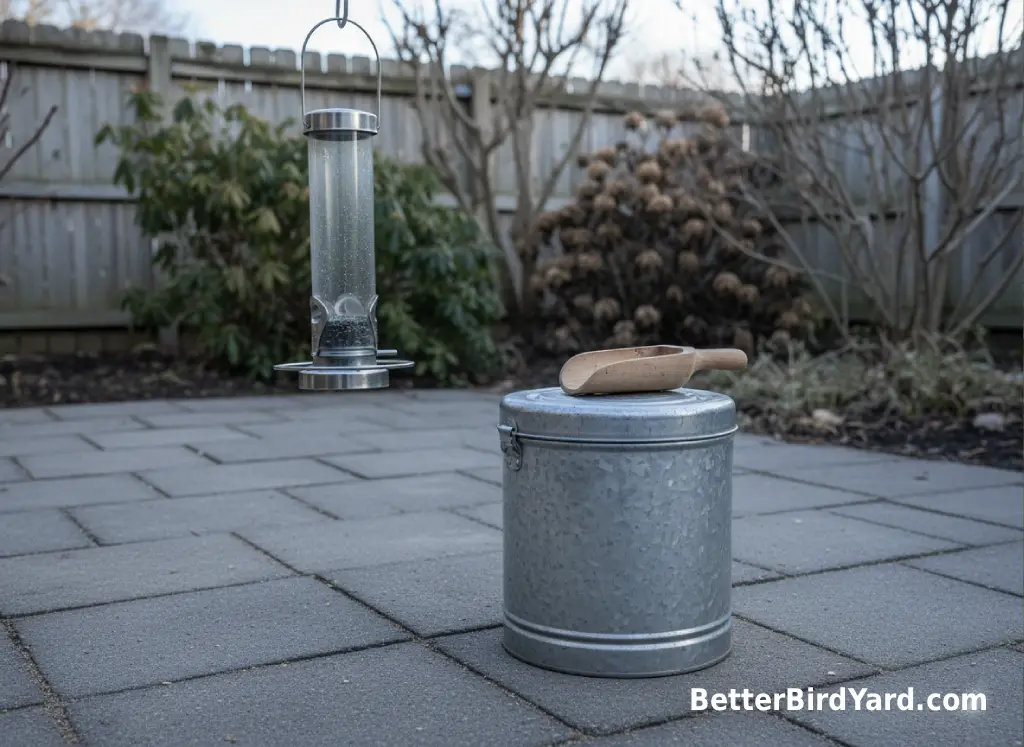
- Store seed in a tight metal or heavy-duty container.
- Put out only what birds are likely to eat before it gets wet or stale.
Editorial note: If you see nighttime wildlife, chew marks on storage bins, or droppings around the feeder, treat it as a food-source problem first. Reduce seed, clean the ground, bring feeders in overnight if needed, and check local wildlife agency guidance if larger wildlife is involved.
Clean feeders matter for bird health, too. Cornell Lab and Project FeederWatch recommend cleaning seed and suet feeders regularly, more often during wet weather, heavy use, or when sick birds are seen nearby. Our bird feeder cleaning guide walks through a simple routine for ordinary backyard feeders.
Small Yards, Patios, And Renters Need A Simpler Plan
Small spaces make squirrel control harder because every railing, chair, plant stand, fence, and storage box can become a launch point. Renters may also have HOA, apartment, or balcony rules that limit feeder types, spilled seed, or wildlife feeding.
In a small yard or patio, keep the plan modest. Choose one tidy feeder instead of several. Use nyjer or safflower if appropriate for the birds you want to support. Add a tray to catch waste. Keep the feeder away from the railing if possible, and do not leave bags of seed outside where squirrels can chew into them.
Window feeders can be enjoyable, but use them thoughtfully. Place them directly on the window as designed, keep the glass treated or visible to birds where needed, and clean them often. If squirrels can reach the window from a sill, railing, or nearby chair, a window feeder may become a squirrel feeder quickly.
Common Mistakes To Avoid
Most squirrel problems come from a few repeat mistakes. Fixing these often works better than replacing every feeder in the yard.
- Putting a baffle too low, so squirrels jump over it from the ground.
- Placing a feeder close to a fence, branch, deck rail, roof edge, or patio furniture.
- Using a tray feeder full of sunflower seed when squirrels are already visiting daily.
- Letting spilled seed build up under the feeder.
- Greasing poles or using sticky products that can harm wildlife.
- Assuming one squirrel-resistant feeder will work without good placement.
- Leaving feeders out during local wildlife conflicts or disease advisories without checking guidance.
Another easy mistake is giving up too quickly. After you move a feeder or add a baffle, watch how squirrels approach it. Their route will tell you what to fix next. If they climb the pole, improve the baffle. If they launch from the side, move the feeder. If they feed on the ground, reduce seed waste.
Seasonal And Local Safety Checks
Squirrel pressure can change with the season. Fall and winter often bring more intense feeder visits because many animals are looking for calorie-rich food. Spring and summer may bring different concerns, especially in areas with bears, raccoons, rodents, nesting birds, or local disease advisories.
In bear country, bird feeders can become a serious attractant. BearWise and many state wildlife agencies advise removing bird feeders when bears are active and keeping seed stored securely. Follow your own state wildlife agency’s guidance, because timing and risk vary by region.
If you notice birds that appear sick, multiple dead birds, unusual behavior, or an official local outbreak notice, do not try to diagnose the cause at the feeder. Clean feeders and bird baths, pause or reduce feeding if advised, wear gloves when handling dirty feeders, wash hands afterward, and check your state wildlife agency, Cornell Lab, USDA, USGS, or CDC guidance as appropriate.
Squirrel control should never make the yard unsafe for birds. Keep feeders clean, keep food dry, avoid moldy seed, and use physical barriers before chemical or irritating deterrents.
Conclusion: Make The Feeder Harder To Reach, Not The Yard Less Friendly
The safest way to keep squirrels away from bird feeders is to make the feeder harder to reach, not to make the yard hostile to wildlife. Start with placement. Add a good baffle. Choose a feeder that matches your space. Reduce spilled seed. Store food securely. Then adjust based on what you actually see squirrels doing in your yard.
For most backyard bird watchers, a pole-mounted feeder with a well-placed baffle is the best first investment. In small spaces, a tidy feeder, less tempting seed, and strict cleanup may matter even more. If squirrels still visit, remember that the problem is usually access, reward, or both.
Bird feeding works best when it stays clean, safe, and realistic. You may not stop every squirrel every day, but you can protect more seed for birds while keeping your yard friendly, responsible, and easier to maintain.