Raccoon Baffles For Bird Feeders: What Works
Raccoons and bird feeders are a frustrating mix. One night raid can empty a feeder, bend hooks, scatter seed across the ground, and teach a clever animal that your yard is worth checking again tomorrow. The good news is that you usually do not need harsh deterrents. The best answer is boring, physical prevention: remove the food at night, use a sturdy pole setup, add the right raccoon baffle, reduce spilled seed, and stop making the rest of the yard smell like an easy meal.
This guide focuses on how to keep raccoons out of bird feeders while still feeding wild backyard birds responsibly. It is written for ordinary US yards, patios, rental spaces, and suburban feeding stations where raccoons may be part of the local nighttime wildlife. Project FeederWatch has noted that removing feeders in the early evening will not harm birds and can help deter raccoons and other animals, because birds use many food sources rather than relying only on one feeder.
Think of this as a layered setup. One change may help, but the strongest results usually come from combining a raccoon-resistant feeder station with cleaner feeding habits and a simple evening routine.
Start With The Quick Fix: Remove The Night Buffet
If raccoons are visiting your feeders at night, the fastest fix is to bring feeders in before dark and put them back out in the morning. It sounds simple because it is. Raccoons are most likely to raid feeders when birds are no longer using them, so removing the feeder during those hours cuts off the reward.
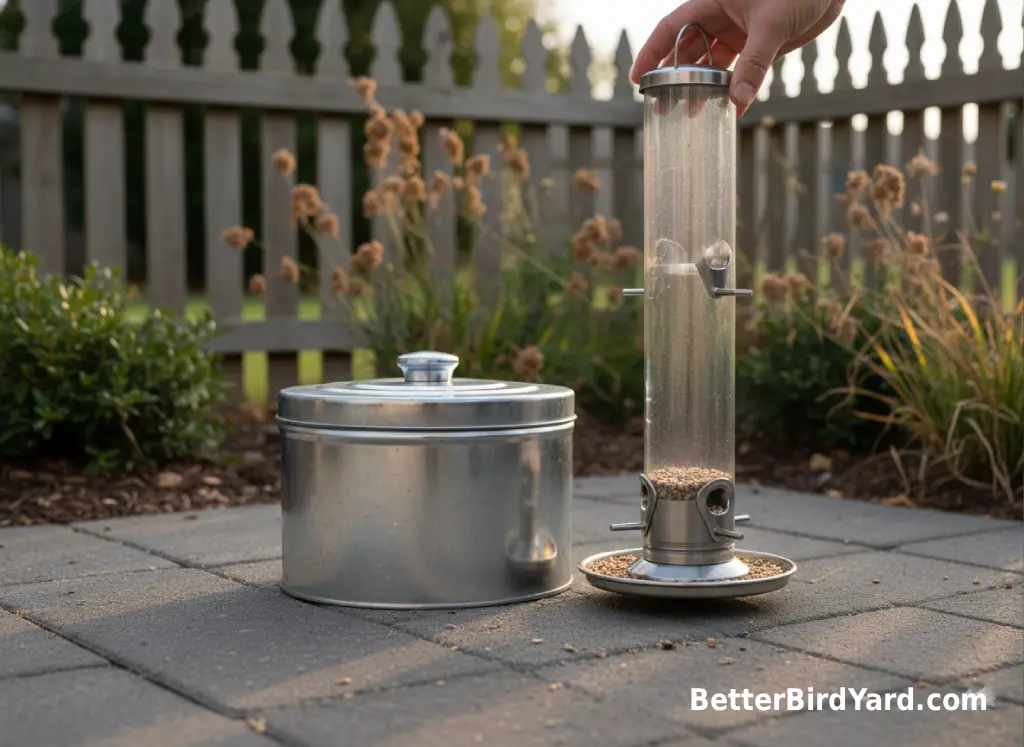
Use a garage, shed, mudroom, enclosed porch, or lidded metal container that raccoons cannot pry open. Avoid leaving the feeder on an open deck table or in a loose plastic bin; raccoons are strong, persistent, and very good at testing lids.
This is especially useful for renters, balcony bird watchers, and anyone who cannot install a permanent pole. Humane World for Animals also lists nighttime feeder removal as the simplest solution for raccoons at bird feeders.
If you only change one thing tonight, do this:
- Bring feeders in before dusk.
- Sweep or scoop spilled seed under the feeding area.
- Store seed in a tightly lidded metal or hard-sided container.
- Bring pet food and water dishes indoors overnight.
- Check the area the next morning for tipped trays, paw prints, or fresh seed mess.
After a week without a payoff, many raccoons move on to easier food sources. If they keep returning, the next step is a more raccoon-resistant physical setup.
Why Raccoons Keep Coming Back To Bird Feeders
Raccoons are not interested in your bird-feeding goals. They are following smell, memory, and easy calories. A feeder full of sunflower seed, suet, peanuts, fruit, or leftover seed on the ground can become a reliable nighttime stop. Once a raccoon learns that a feeder pays off, it may test poles, hooks, decks, railings, tree branches, and nearby furniture to reach it again.
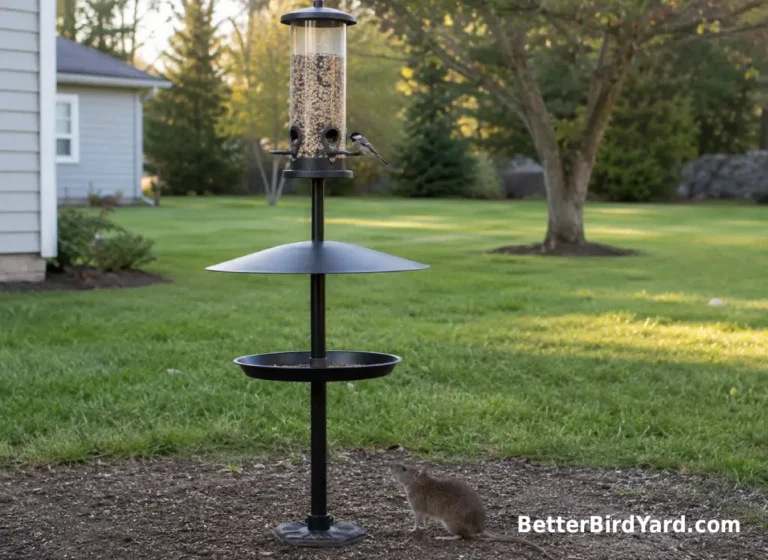
Spilled seed is often the real problem. Even if the feeder itself is hard to reach, a messy patch below it can attract raccoons, mice, rats, opossums, and squirrels. Wildlife Illinois specifically advises bird feeders to use baffles or weight-activated treadles and not to allow bird seed to accumulate on the ground where it can attract rodents, raccoons, and opossums.
Other yard attractants can make the feeder problem worse. Pet food, unsecured trash, fallen fruit, open compost, greasy grills, and chicken feed can all encourage raccoons to patrol the same route. North Carolina Wildlife Resources Commission recommends removing unnatural food sources, feeding pets indoors, and securing trash and livestock feed in animal-proof containers.
The practical takeaway: do not think only about the feeder. Think about the whole nighttime food map of your yard. A raccoon baffle for bird feeders works much better when the ground is clean and nearby food smells are controlled.
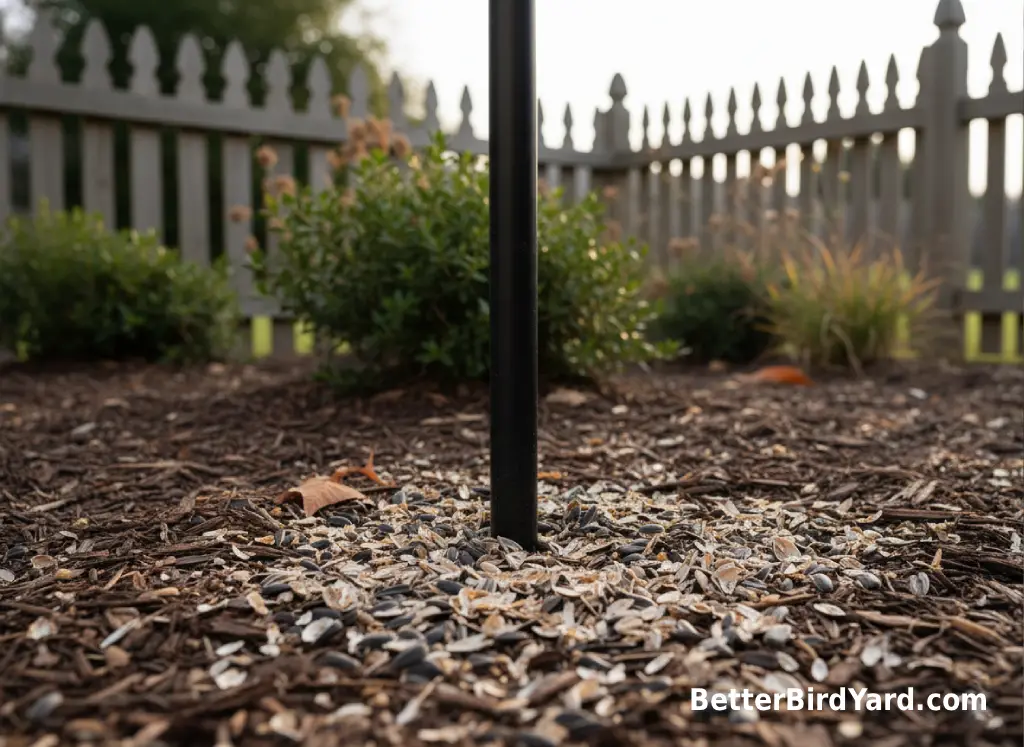
Use A Pole-Mounted Raccoon Baffle That Raccoons Cannot Climb Around
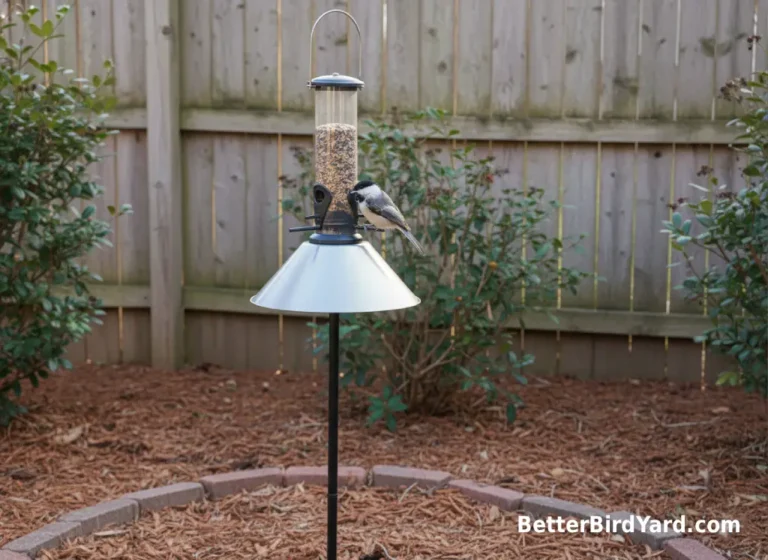
For a permanent feeding station, the best starting point is usually a freestanding metal pole with a properly sized raccoon baffle. A small squirrel dome may slow squirrels, but raccoons are larger, stronger, and better at reaching around obstacles. Raccoon baffles for bird feeders are usually taller, wider, and more rigid than small decorative squirrel guards.
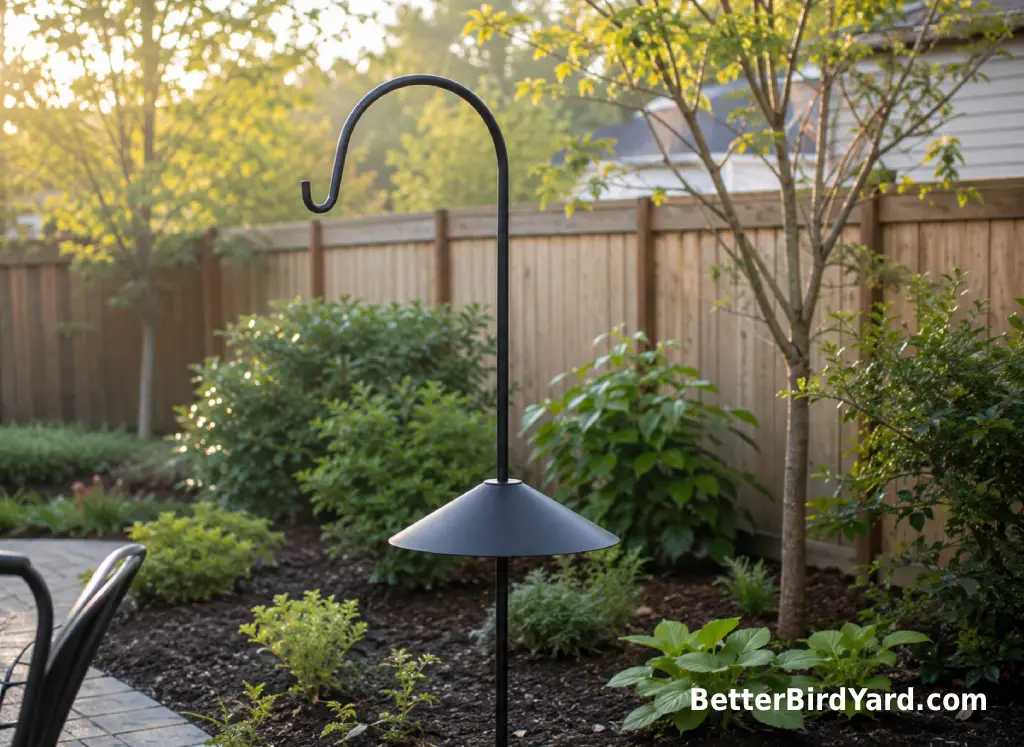
A stovepipe-style baffle is one of the most useful designs because it blocks the raccoon from hugging the pole and climbing past the guard. Humane World for Animals recommends a stovepipe-shaped raccoon guard at least 24 inches long, with the bottom of the baffle set at least 4 feet off the ground so a raccoon cannot simply jump over it.
For beginners, the setup should look like this:
- A sturdy freestanding pole, not a flimsy shepherd’s hook that can be bent or tipped.
- A tall metal stovepipe baffle below the feeder.
- Feeders hung high enough that the baffle has room to work.
- No nearby fence, deck rail, tree limb, chair, grill, or planter that gives raccoons a shortcut.
Place The Feeder Where The Baffle Can Actually Work
Many raccoon and squirrel problems are really placement problems. A good baffle cannot help if a raccoon can step from a deck rail onto the feeder, climb a fence post beside it, or drop down from a low branch. Before buying another feeder, stand where the feeder hangs and look around like a climbing animal.
Move the feeding station away from easy launch points. Cornell Lab’s All About Birds advises that nearby trees and shrubs can help birds by offering resting places and quick refuge, but also cautions that branches too close to feeders can give squirrels access and provide hiding places for cats. The same idea applies to raccoons: cover is helpful for birds, but access points should not become ladders.
A practical compromise is to keep bird-friendly cover nearby but not touching the feeder zone. In a small yard, that may mean placing the pole several feet from shrubs, trimming a low branch, or moving a patio chair that has accidentally become a raccoon step stool.
Also keep window safety in mind when moving feeders. Cornell Lab guidance says feeders can reduce window-collision risk when placed very close to a window, within about 3 feet, or much farther away, greater than 30 feet. If your best raccoon-resistant spot creates a new window-strike risk, add visible window treatments or choose a safer location.
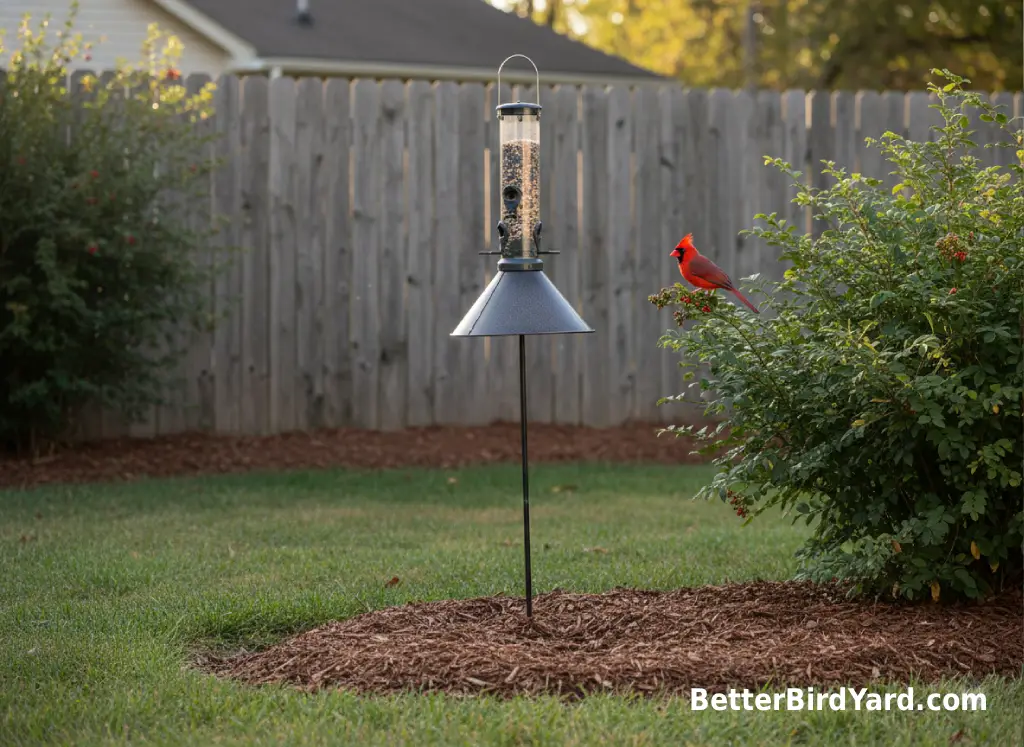
Choose Raccoon-Resistant Feeders And Cleaner Seed Habits
Raccoon-resistant bird feeders are most useful when they reduce access and reduce mess. Weight-sensitive feeders, caged feeders, sturdy tube feeders, and feeders with trays can all help in the right setup. They are not magic, but they can reduce the amount of seed that falls to the ground and make it harder for larger animals to feed directly.
Seed choice matters too. A cheap mixed seed with lots of filler can lead to more discarded grain under the feeder. Birds often pick through blends for the pieces they prefer, leaving the rest for nighttime visitors. Using one good seed type per feeder, such as black oil sunflower in a tube feeder or nyjer in a finch feeder, can make cleanup easier and reduce waste. Humane World for Animals also recommends reducing seed that falls to the ground by using one type of seed per feeder and feeders that catch fallen seed.
| Feeder Or Habit | How It Helps | Beginner Caution |
|---|---|---|
| Sturdy Tube Feeder | Limits open access and usually spills less than a loose tray. | Still needs a pole baffle if raccoons can climb to it. |
| Weight-Activated Feeder | Can close feeding ports under heavier animals. | Not enough by itself if a raccoon can pull, shake, or damage it. |
| Seed Tray | Catches some dropped seed before it reaches the ground. | Must be emptied and cleaned so it does not hold wet, spoiled food. |
| Single-Seed Feeding | Reduces rejected filler seed and makes mess easier to spot. | Different birds prefer different foods, so results vary by yard. |
For more feeder setup help, see our related guide to Cardinal Bird Feeder Guide. A smaller, cleaner feeding station is often easier to protect than a crowded row of feeders that spills seed in several directions.
Build A Simple Five-Step Raccoon-Resistant Setup
If your current setup is a feeder hanging from a tree limb, start fresh if you can. A simple pole station is easier to troubleshoot, easier to clean, and usually easier to protect from both squirrels and raccoons.
Use this five-step setup:
- Choose one feeding spot that is easy to see, refill, and clean.
- Install a sturdy freestanding pole that cannot be pushed over easily.
- Add a tall stovepipe-style raccoon baffle below the feeder.
- Keep nearby branches, fences, railings, and furniture from becoming shortcuts.
- Use a cleaner feeder and sweep spilled seed before it becomes a nighttime attractant.
Then test the station for one week. Each morning, look for bent hooks, muddy paw marks, knocked seed trays, or fresh piles of hulls under the feeder. Those clues tell you whether the raccoon is climbing the pole, jumping from the side, tipping the station, or feeding mostly from the ground.
Editorial note: in a small yard, we would rather see one well-protected feeder than four poorly protected feeders. A single clean station with a good baffle is easier to maintain and less likely to draw raccoons, rodents, and other nighttime visitors.
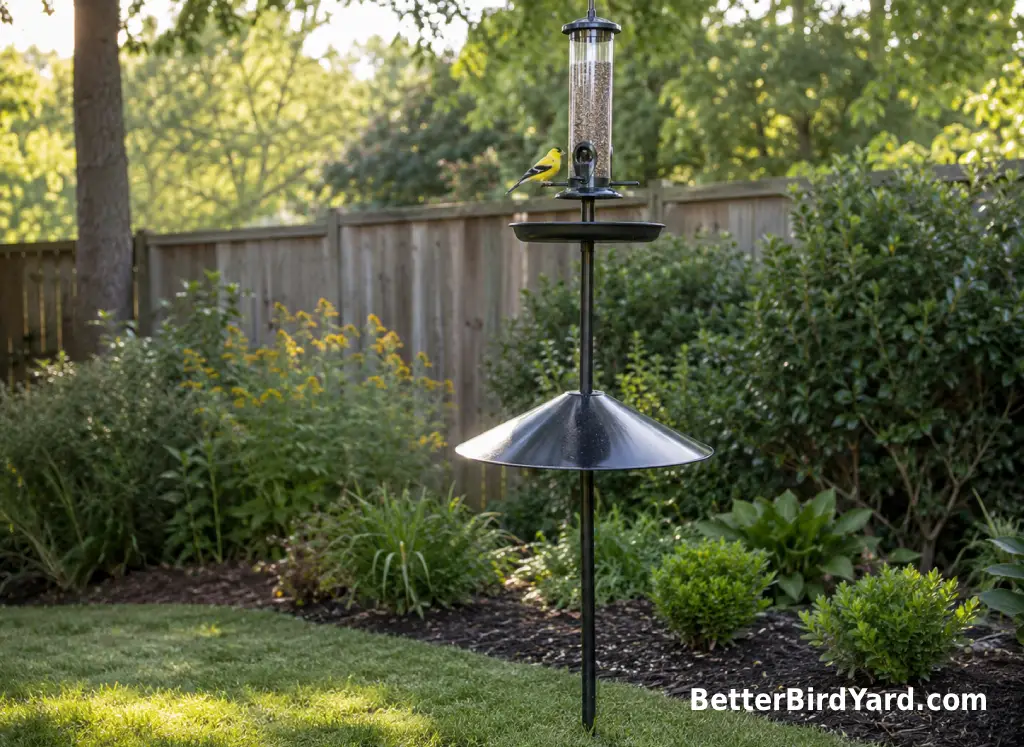
Use A Night Routine For Decks, Patios, And Rental Spaces
Deck and balcony feeders are convenient for bird watching, but they are also convenient for raccoons if the feeder is attached to a rail, hook, or nearby shelf. In rental spaces where you cannot install a permanent pole, your best raccoon control is a consistent evening routine.
Before dark, remove hanging feeders and store them in a secure place. Empty or cover seed trays. Sweep loose seed from deck boards, balcony corners, and under plant stands. A small hand broom and dustpan kept near the door makes this less of a chore.
Do not store seed in a soft bag on the patio. Use a tight-lidded metal can or a hard-sided container kept indoors. Raccoons can tear bags, open loose lids, and learn where you keep the refill supply.
If you use suet, peanuts, fruit, or mealworms, be extra careful. These foods can be especially attractive to mammals. Offer only what birds will eat during the day, and remove leftovers before evening. Never leave spoiled fruit, wet seed, or old suet out overnight.
Avoid Common Mistakes That Make Raccoons Harder To Stop
Raccoons are easier to prevent than to untrain. Once they know a feeder is reliable, small mistakes can keep the habit going. The most common problems are not dramatic; they are everyday setup details that give raccoons another chance.
- Hanging feeders from tree limbs. Branches make excellent raccoon access routes.
- Using a small squirrel dome as a raccoon baffle. Raccoons may reach around or climb past small guards.
- Leaving seed on the ground overnight. The mess becomes a second feeder.
- Keeping pet food outside. This can draw raccoons even if the bird feeder is protected.
- Greasing poles. Grease can get on birds’ feathers and is not a bird-safe solution.
- Leaving feeders out during repeated raids. A short feeding pause can help break the routine.
Also avoid spicy, sticky, oily, or chemical home remedies around feeders. Even when a tactic is meant for mammals, it can create problems for birds, pets, children, soil, or nearby water. Physical exclusion and cleaner feeding habits are safer and more reliable.
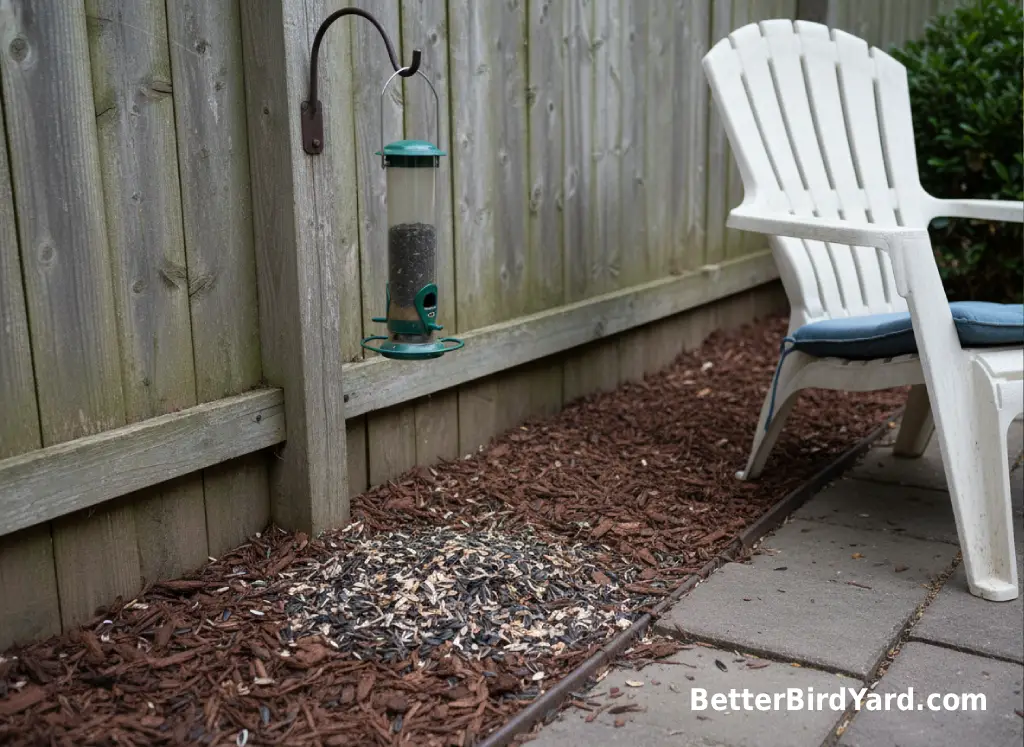
Keep The Feeding Area Clean And Bird-Safe
Raccoon prevention and bird health overlap. A clean feeding area is less attractive to mammals and safer for birds. Wet seed, packed debris, droppings, and old hulls can make feeders less healthy, especially when many birds are using the same ports and perches.
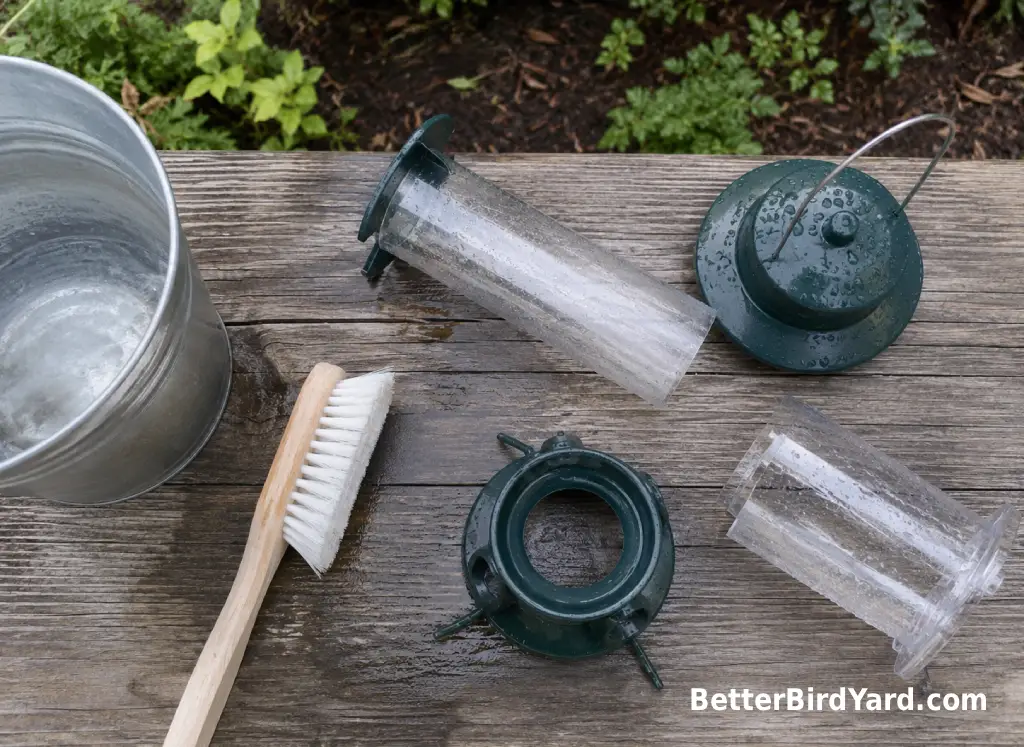
Project FeederWatch recommends removing visible debris, soaking or scrubbing feeders with a dilute bleach solution, rinsing thoroughly, and letting feeders dry before refilling. It also emphasizes cleaning feeders regularly even when there are no signs of disease.
For everyday maintenance, keep it simple:
- Shake out old seed before adding fresh seed.
- Scrub sticky ports, trays, and seams where debris collects.
- Let feeders dry fully before refilling.
- Rake or sweep hulls and spilled seed below the feeder.
- Move feeders occasionally if waste is building up in one patch of ground.
If you see birds that appear sick, unusually weak, or unable to fly normally, do not try to diagnose the cause. Pause feeding, clean feeders and bird baths, and check your state wildlife agency or local bird-health guidance. For injured, stunned, orphaned, or unusually behaving wild birds, contact a licensed wildlife rehabilitator, local wildlife agency, animal control, or another qualified local professional.
Know When To Pause Feeding Or Get Local Help
Sometimes the most responsible move is to stop feeding for a short time. If raccoons are climbing onto a deck every night, damaging property, approaching people, or finding multiple food sources in the yard, remove feeders and clean the area until the pattern changes.
You should also check local guidance if your area has wildlife-feeding rules, bear activity, neighborhood complaints, disease advisories, or HOA restrictions. Rules and recommendations vary by city, county, and state. BetterBirdYard is not a legal authority or wildlife agency, so local ordinances and state wildlife guidance should come first.
Contact local help if a raccoon appears injured, trapped, unusually bold, or is repeatedly entering a structure such as an attic, chimney, shed, or crawl space. Do not attempt to handle, corner, relocate, or feed raccoons. Your local animal control office, state wildlife agency, or qualified wildlife-control professional can tell you what is appropriate in your area.
US Fish and Wildlife Service notes that feeding wild birds can carry risks such as disease, predation, and window collisions when feeding is not managed carefully. The goal is not simply to keep seed away from raccoons; it is to run a feeding station that supports birds without creating avoidable problems for other wildlife.
Final Checklist For Keeping Raccoons Away From Bird Feeders
Keeping raccoons off bird feeders is rarely about one perfect product. It is a routine. Use a physical barrier, remove nighttime rewards, clean the ground, and make the rest of the yard less inviting.
- Bring feeders in at dusk if raccoons are active.
- Use a sturdy freestanding pole instead of an easy tree branch or railing.
- Install a tall stovepipe-style raccoon baffle below the feeder.
- Keep feeders away from fences, branches, deck rails, and patio furniture.
- Use cleaner seed habits and avoid letting seed pile up on the ground.
- Store birdseed in a tight-lidded metal or hard-sided container.
- Bring pet food indoors and secure trash, compost, grills, and fallen fruit.
- Pause feeding temporarily if raccoons keep returning despite changes.
- Check local wildlife guidance if raccoon activity becomes persistent or concerning.
The most bird-friendly solution is also the most practical: feed birds in a way that does not teach raccoons, rodents, or other nighttime wildlife to depend on your yard. A cleaner, simpler, raccoon-resistant setup protects your seed budget, reduces frustration, and keeps your backyard feeding station focused on the birds you meant to support.