Rat-Proof Bird Feeder Setup: How To Feed Birds Without Feeding Rats
A truly rat proof bird feeder is less about buying one magic feeder and more about building a feeder setup that leaves rodents with nothing easy to eat. Rats and mice are opportunistic. If bird seed spills onto the ground, sits in a tray overnight, or stays in a plastic bag in the garage, it can become a reliable food source for them.
The good news is that most backyard bird watchers can reduce the problem with a few practical changes: use a feeder that limits spillage, mount it where rats cannot easily climb or jump to it, offer only what birds will eat during the day, clean underneath it often, and store seed in a chew-resistant container. Cornell Lab of Ornithology notes that bird food scattered under feeders can attract unwanted rodents, and King County Public Health gives similar advice for managing bird feeders around rats.
This guide is written for ordinary US backyards, patios, balconies, and small garden spaces. It will help you choose a rodent-resistant feeder setup without overpromising that any feeder is completely rat-proof.
The Quick Answer: No Feeder Is Completely Rat-Proof
The most honest answer is this: a bird feeder can be rat-resistant, but it is rarely rat-proof by itself. Rats are strong climbers, good jumpers, and persistent food seekers. If there is spilled seed under the feeder, they do not need to defeat the feeder at all.
The best rodent proof bird feeder setup has three parts working together:
- A feeder that does not dump seed easily.
- A smooth pole with a properly placed baffle.
- A cleanup routine that removes fallen seed before night.
That last point matters more than many beginners expect. King County Public Health notes that bird seed easily spills to the ground, rats are good climbers, and rats are attracted to bird seed. Their guidance includes using a feeder tray and baffle, avoiding overfilling, and not leaving seed available overnight.
So before shopping for an expensive product labeled as an amazon rat proof bird feeder or a premium squirrel-proof model, look at the whole setup. A clever feeder hanging from a fence, tree branch, deck rail, or shepherd’s hook beside dense shrubs may still be easy for rats to reach.
Why Bird Feeders Attract Rats And Mice
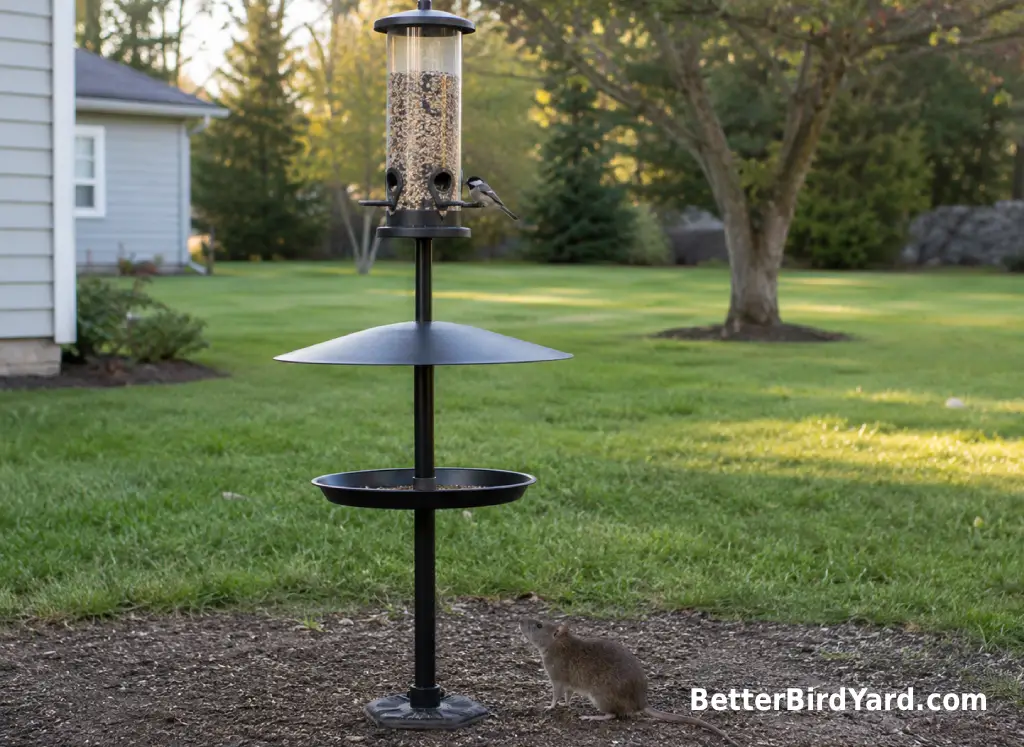
Bird feeders attract rodents when they create a predictable food source. Rats and mice eat bird seed, bird food blends, suet crumbs, peanut pieces, fruit scraps, and spilled grain. They are especially interested in food that lands on the ground or stays available after dark.
Do bird feeders attract mice and rats every time? Not necessarily. A clean, well-managed feeder may never become a noticeable rodent problem. But if rodents already live nearby, an unmanaged feeder can make your yard more useful to them. Ask Extension’s rodent guidance describes bird seed spillage as one of many outdoor food sources rats can use, along with pet food, fallen fruit, compost, and garbage.
Common feeder clues that invite rodents include:
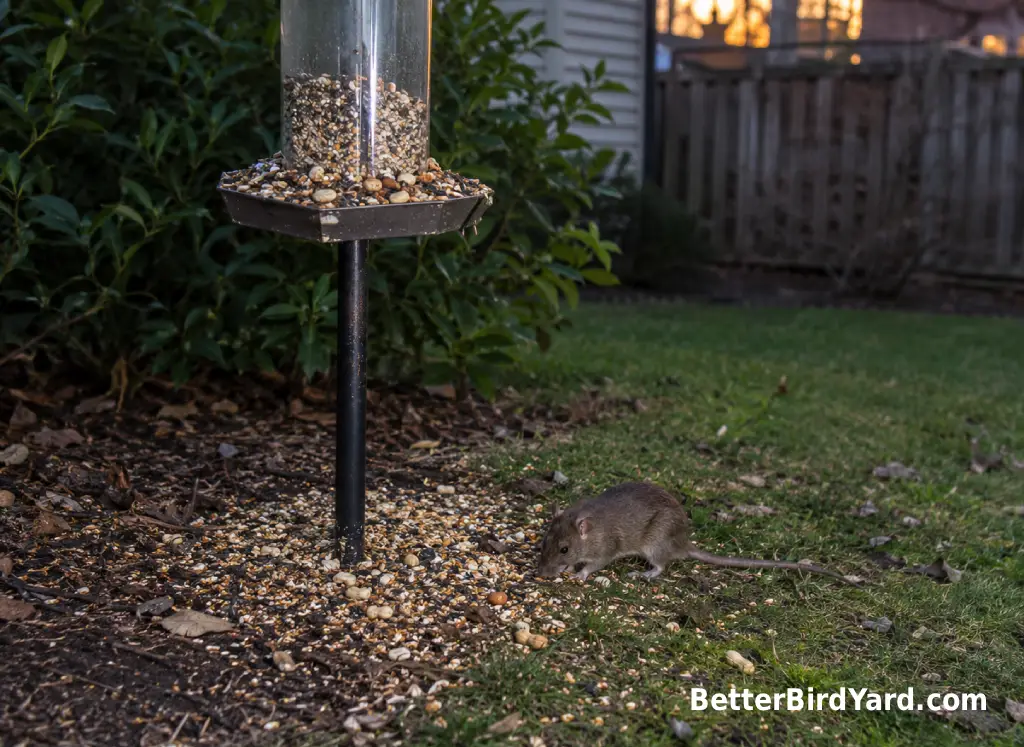
- Seed piles under a tube, hopper, tray, or bird table.
- Cheap mixes with filler grains that birds toss aside.
- Open platform feeders left full overnight.
- Suet crumbs or peanut pieces collecting below a feeder.
- Seed stored in bags, cardboard boxes, or plastic bins that rodents can chew.
A common mistake we see in small yards is placing a feeder over lawn or mulch and assuming the seed disappears because it is hard to see. It may not be gone. It may simply be hidden in grass, leaf litter, or mulch until rodents find it after dark.
What To Look For In A Rodent-Resistant Bird Feeder
A bird feeder rat proof setup starts with feeder design. The goal is not only to keep rodents off the feeder. It is also to keep food from falling where rodents can reach it.
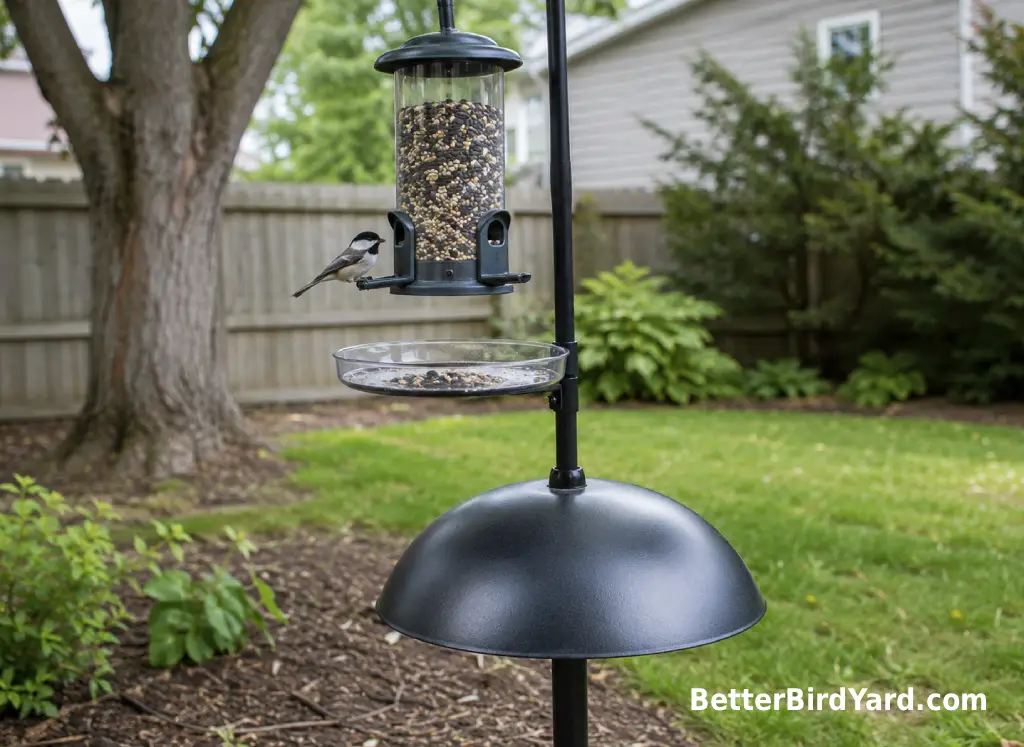
For seed feeding, look for these features:
- Small, controlled seed ports instead of wide-open bins.
- A sturdy metal or thick plastic body that is easy to clean.
- A fitted tray that catches some dropped seed without becoming a buffet.
- Good drainage so seed does not stay wet and moldy.
- A smooth pole-mount option that works with a baffle.
Tube feeders, hopper feeders with controlled openings, and some weight-sensitive squirrel-resistant feeders can all work when they are mounted correctly. A caged feeder may help with squirrels and larger birds, but it will not solve a seed-spill problem by itself.
Platform feeders and open trays are the hardest to manage around rats because birds can scatter food from them easily. If you use one, treat it like a small serving plate, not a storage bin. Put out a modest amount in the morning, remove leftovers before dusk, and clean the surface often.
Choose Bird Seed That Leaves Less Food For Rodents
There is no common backyard bird seed that rats cannot eat. That is the safest answer to what bird seed do rats not eat. Rats can eat many plant-based foods, grains, nuts, and seeds. So the better question is: which bird foods leave the least waste?
Hulled sunflower seed, sometimes called sunflower chips or sunflower hearts, is often a good starting point because birds do not need to crack off shells and drop them below the feeder. Cornell Lab recommends hulled seed as one way to reduce mess under feeders, and Ask Extension also points to high-consumption seeds as a helpful practice for rat management.
Seed choice can help, but it is not magic. Keep these tradeoffs in mind:
- Hulled sunflower creates less shell waste but can spoil faster if it gets wet.
- Nyjer works best in a finch feeder with tiny ports, but old or damp nyjer can be ignored by birds.
- Peanuts and suet can attract wonderful birds, but crumbs and leftovers are attractive to rodents.
- Cheap mixed seed with lots of filler grains often gets kicked out by birds and left on the ground.
Buy smaller amounts of seed if you feed casually. Fresh seed in a sealed metal container is usually better than a large bargain bag that sits for months in a garage, shed, or closet. Cornell’s feeder guidance recommends storing seed in a dry, dark location in a sealed container to prevent rodents from eating it.
Place The Feeder Where Rats Cannot Use Fences, Shrubs, Or Deck Rails
Placement is where many rodent proof bird feeder plans succeed or fail. A feeder that hangs from a tree branch, fence, pergola, deck railing, or dense shrub line may be easy for rats to reach. Roof rats in particular are agile climbers, and UC IPM notes that roof rats commonly live or nest above ground in shrubs, trees, or dense vegetation.
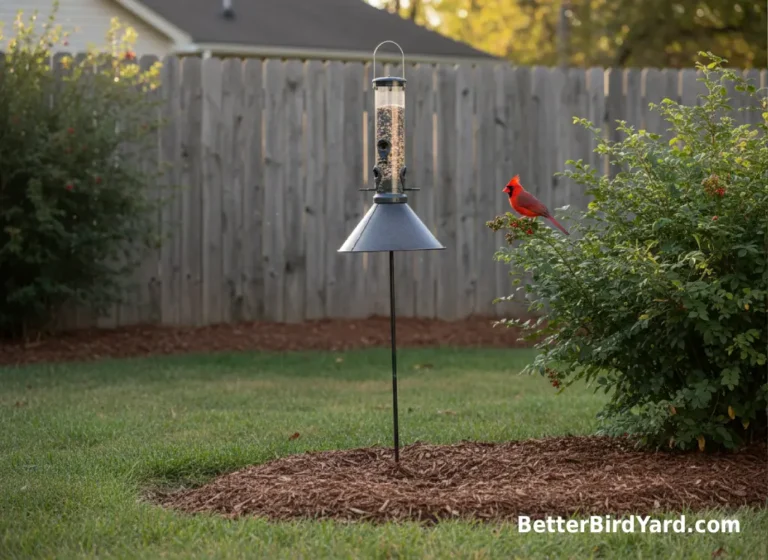
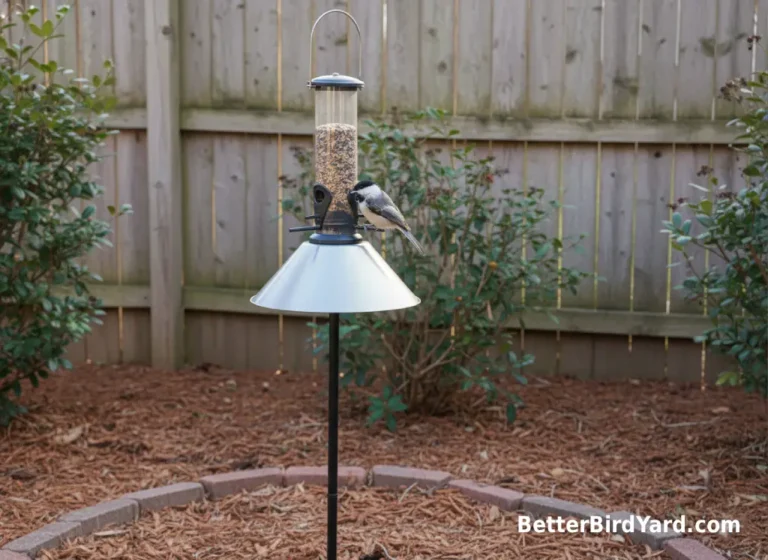
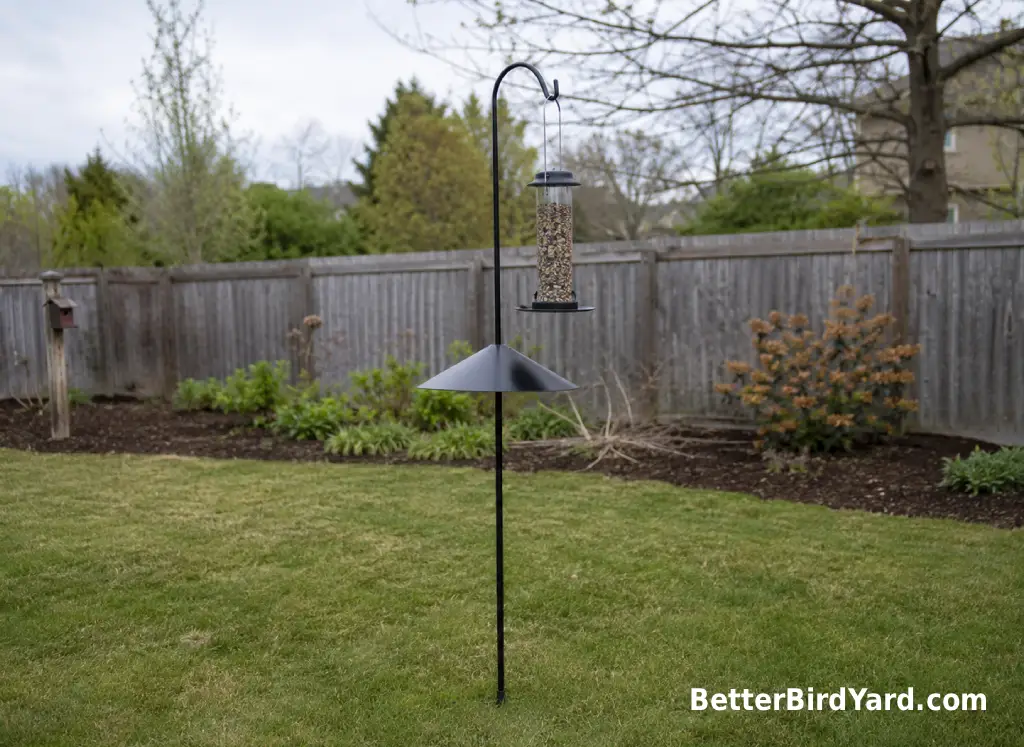
For a more rat-resistant setup, use a smooth metal pole in open space. King County Public Health advises placing feeders four feet off the ground and eight feet away from branches, fences, and other objects rats may use to jump onto feeders.
A baffle should be wide enough and placed so rats and squirrels cannot simply climb around it. In a small yard, patio, or rental space, this may mean using a freestanding pole system with a heavy base instead of hanging the feeder from a balcony rail. On balconies, check lease, HOA, and local rules before feeding birds, especially if seed is falling to shared areas below.
Keep the ground under the feeder visible and easy to clean. A feeder over concrete, pavers, or a removable tray is easier to manage than one over ivy, tall grass, dense groundcover, or deep mulch.
A Simple Daily Routine To Keep Rats Away
The best DIY rat proof bird feeder plan is a routine you can actually keep. In a small yard, I would keep it simple: feed less, clean more often, and make nighttime food unavailable.
- Fill feeders in the morning, not at dusk.
- Offer only what birds are likely to finish during the day.
- Use a tray or catch system, but empty it before it becomes a rodent plate.
- Sweep, rake, or vacuum hard surfaces under feeders before evening.
- Bring in open tray feeders or remove leftovers before dark.
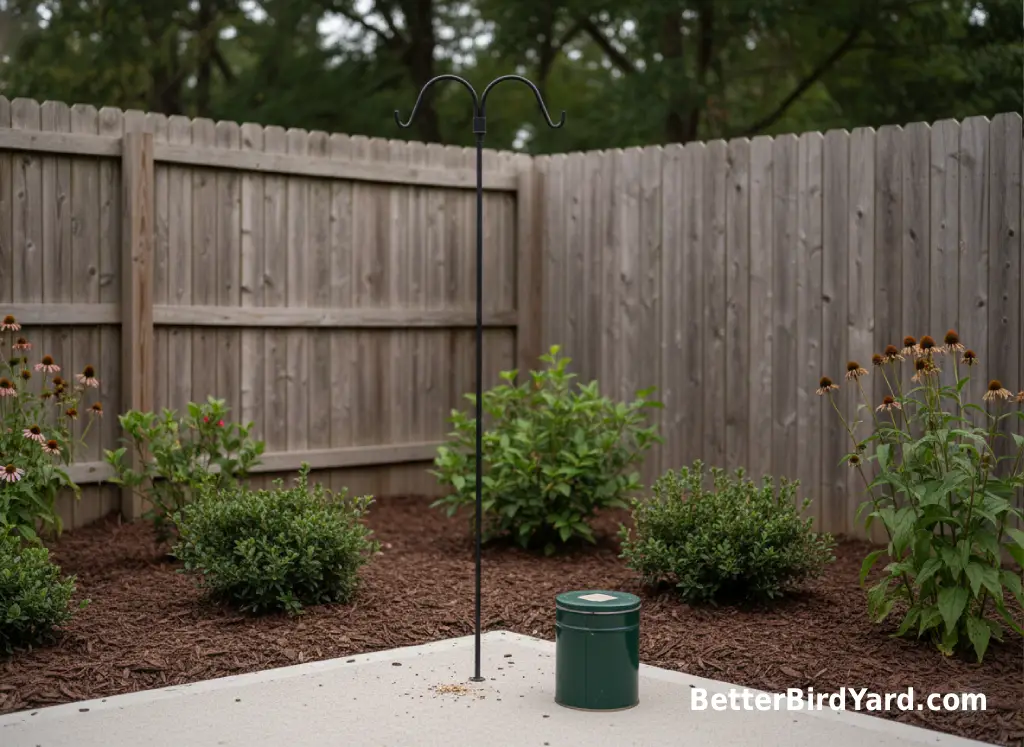
- Store bird seed in a sealed metal container, not a bag or soft plastic bin.
Cornell Lab recommends cleaning the ground below feeders to prevent buildup of hulls, uneaten seeds, and waste, and Audubon also recommends tidying below feeders to remove wet, moldy, or spoiled material.
Editorial note: If you only change one thing this week, change the amount of seed you offer. Many feeder problems start because the feeder is being used like a storage container instead of a daily serving station.
Bird Tables And Platform Feeders Need Extra Care
A rat proof bird table is hard to achieve because a bird table is, by design, an open food surface. It can still be used responsibly, but it needs tighter management than a tube feeder.
Use a bird table only during daylight feeding hours. Put out a small amount of food, then clear the table before evening. Avoid leaving fruit, suet, peanuts, or seed mixes on the table overnight. If the table has cracks, rough wood, or corners that hold wet food, scrub it regularly and let it dry fully before refilling.
For patios and balconies, place a washable mat or tray under the feeding area so cleanup is quick. This is especially useful for renters because seed hulls can blow into neighboring spaces, drains, shared walkways, or landscaping. Check your lease, HOA, or local rules if feeding birds causes mess, nuisance wildlife, or neighbor concerns.
If rats have already appeared, pause the bird table first. Open feeders are usually the easiest food source to remove while you work on cleanup, storage, and rodent exclusion.
Common Mistakes That Make A Feeder Easy For Rats
Most rat problems around feeders come from a few repeat mistakes. The feeder itself may get blamed, but the larger feeding station is usually the real issue.
| Mistake | Why It Attracts Rodents | Better Fix |
|---|---|---|
| Overfilling feeders | Birds scatter more seed, and leftovers remain after dark. | Fill lightly in the morning and adjust to what birds finish. |
| Using cheap filler-heavy mixes | Birds often toss unwanted grains onto the ground. | Use higher-quality seed that your local birds actually eat. |
| Hanging feeders from trees or fences | Rats can climb or jump from nearby structures. | Use a smooth pole in open space with a baffle. |
| Leaving open trays full overnight | Rats are most active at night and can feed undisturbed. | Remove leftovers before dusk. |
| Storing seed in plastic or bags | Rats can chew into weak containers. | Use a sealed metal container. |
Do Rats Eat Birds, Eggs, Or Baby Birds?
Yes, some rats can eat bird eggs, young birds, and other animal foods, although what happens in a particular backyard depends on the rat species, habitat, nest location, and available food. UC IPM notes that roof rats eat a wide variety of foods and may eat young birds and bird eggs. USGS has also documented rat predation at bird nests in conservation settings.
For backyard bird watchers, the practical takeaway is not to interfere with nests or try to handle wild birds. Instead, reduce the rodent support your yard provides. Keep seed off the ground, avoid dense clutter near feeding stations, store food securely, and avoid creating sheltered areas where rats can nest close to feeders.
What To Do If You Already See Rats At The Feeder
If you see rats, droppings, gnaw marks, burrows, or nighttime rodent activity near a feeder, pause feeding while you remove the food source. This can feel disappointing, but it is often the most bird-friendly choice. King County Public Health states that if there is an active rat infestation, bird seed must be removed for control efforts to be successful.
Start with these steps:
- Take down seed, suet, peanut, fruit, and platform feeders temporarily.
- Clean spilled seed, hulls, and old food from the ground.
- Move all bird seed into sealed metal storage.
- Remove other attractants, such as pet food, fallen fruit, open compost, and loose garbage.
- Check for burrows, gnawing, droppings, and access points around sheds, garages, and foundations.
- Contact a licensed pest professional or local agency if the problem is active or spreading.
Be careful with rodenticides around a bird-friendly yard. Oregon Department of Fish and Wildlife warns that poison baits used for mice and rats can sicken or kill owls, hawks, foxes, bobcats, pets, and other non-target animals through direct or secondary poisoning. Follow product labels and local rules, and consider professional help when needed.
Quick Answers To Common Rat And Bird Feeder Questions
| Question | BetterBirdYard Answer |
|---|---|
| Do rats eat bird seed? | Yes. Rats can eat bird seed and will return to reliable food sources. |
| Do mice eat bird seed? | Yes. Mice can eat spilled seed, especially under feeders or in storage areas. |
| Do rats eat bird food? | Yes. Seed, suet crumbs, peanuts, fruit, and some mixes can all be attractive. |
| Can rats eat bird food? | Yes, which is why feeder design, cleanup, and storage matter. |
| Are there bird feeders that do not attract rats? | No feeder can promise that, but spill-resistant feeders on baffled poles are much better than open trays or messy hanging feeders. |
| What is the best rodent proof bird feeder? | The best choice is usually a low-spill tube or hopper feeder on a smooth baffled pole, paired with daily cleanup. |
| Should I stop feeding birds if rats show up? | Yes, at least temporarily, while you remove food sources and address the infestation. |
Once the area has been quiet for a while, restart slowly. Use one feeder, one seed type, and a small daily amount. Watch the ground beneath it for a week before adding more feeders.
Clean Feeders Still Matter For Birds, Not Just Rodent Control
Rodent prevention and bird health overlap. Old seed, wet hulls, droppings, and spoiled food can create problems for birds as well as attract pests. Cornell Lab recommends cleaning seed feeders about once every two weeks, and more often during heavy use, wet weather, local salmonella reports, or if sick birds are seen in the yard. Cornell also recommends scrubbing away debris, rinsing thoroughly, and allowing feeders to dry before refilling.
Do not use moldy seed, damp clumps, spoiled suet, or old fruit. Empty and clean feeders when food looks wet, smells off, or sticks together. If you notice birds that appear unusually weak, fluffed-up, lethargic, or easy to approach, avoid guessing the disease. Take feeders down, clean feeders and bird baths, clean the ground below, and check your state wildlife agency or local wildlife guidance.
Healthy bird feeding is not about keeping feeders full all the time. Birds use many natural foods, and Cornell’s classroom feeder guidance notes that it is fine to leave feeders empty over breaks because feeders are one of many food sources birds use.
The Best Rat-Resistant Setup For Most Backyards
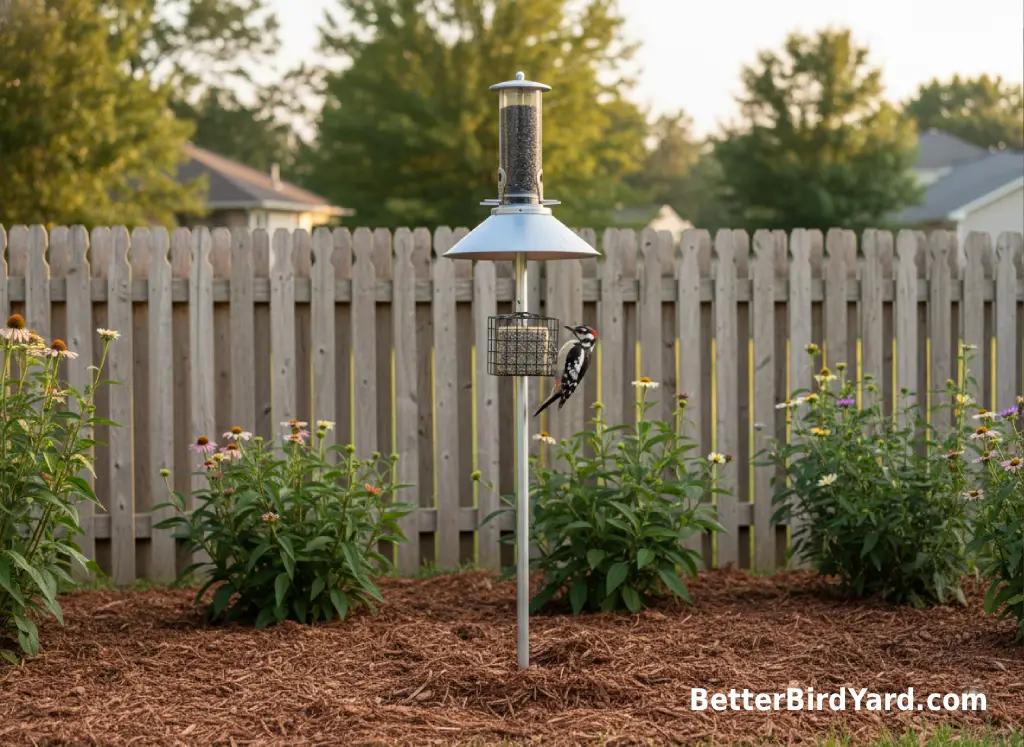
For most suburban yards and patios, the best rat-resistant bird feeding setup is simple:
- A smooth metal pole placed away from fences, shrubs, trees, and deck rails.
- A wide baffle below the feeder.
- A tube or hopper feeder that limits seed waste.
- Hulled sunflower or another high-use seed your birds actually eat.
- A hard or visible surface below the feeder for quick cleanup.
- A sealed metal seed container stored away from walls and clutter.
- A habit of pausing feeding if rodents appear.
This setup will not guarantee that you never see a mouse or rat. But it removes the most common reasons rodents visit bird feeding stations: easy access, spilled seed, overfilled feeders, and unsecured storage.
Feeding birds responsibly sometimes means feeding less. A smaller, cleaner feeder that supports a few chickadees, finches, cardinals, or woodpeckers without feeding rodents is better than a busy station that leaves food all over the ground by sunset.
A rat proof bird feeder is really a rat-resistant system. Keep food controlled, keep the ground clean, store seed securely, and do not hesitate to pause feeding when conditions change. That approach supports backyard birds while protecting your home, neighbors, pets, and local wildlife.