Where To Hang A Hummingbird Feeder In Your Yard
The best place to hang a hummingbird feeder is where hummingbirds can find it, you can clean it easily, and birds are not being funneled into avoidable hazards. For most yards, that means a partly shaded spot with open flight space, a nearby perch or flowers, and safer distance from untreated windows, outdoor cats, and dense hiding cover.
That sounds simple, but real yards are full of tradeoffs. The sunniest spot may spoil nectar faster. The prettiest window view may increase collision risk if the glass is not treated. A hidden corner may feel peaceful to us but be hard for hummingbirds to notice.
Use this guide to choose a practical hummingbird feeder placement for a suburban yard, townhouse patio, balcony, small garden, or rental space. The goal is not a perfect magazine setup. It is a feeder that stays clean, visible, accessible, and reasonably safe through spring, summer, and migration season.
The Quick Answer: Best Location For A Hummingbird Feeder
If you want a fast starting point, hang your hummingbird feeder about eye level, in bright open view, with light shade during the hottest part of the day. Keep it easy to reach because nectar feeders need frequent cleaning. Audubon recommends a basic homemade hummingbird nectar mix of 1 part refined white sugar to 4 parts water, no honey, no artificial sweeteners, and no red coloring; it also recommends cleaning more often in hot weather or whenever nectar looks cloudy, moldy, or contaminated.
| Yard Situation | Good Placement | Avoid |
|---|---|---|
| Small Backyard | Part shade near flowers, with open flight space | Deep shrub cover where cats can hide |
| Patio Or Deck | Railing hanger, wall bracket, or shepherd hook you can reach | Drippy spots over furniture, walkways, or neighbors below |
| Window Viewing | Very close to a treated window or well away from glass | Untreated reflective glass near the feeder |
| Hot Summer Yard | Morning sun and afternoon shade | All-day direct sun that heats nectar quickly |
| Territorial Hummingbirds | Two small feeders placed out of sight of each other | One large feeder in a bottleneck spot |
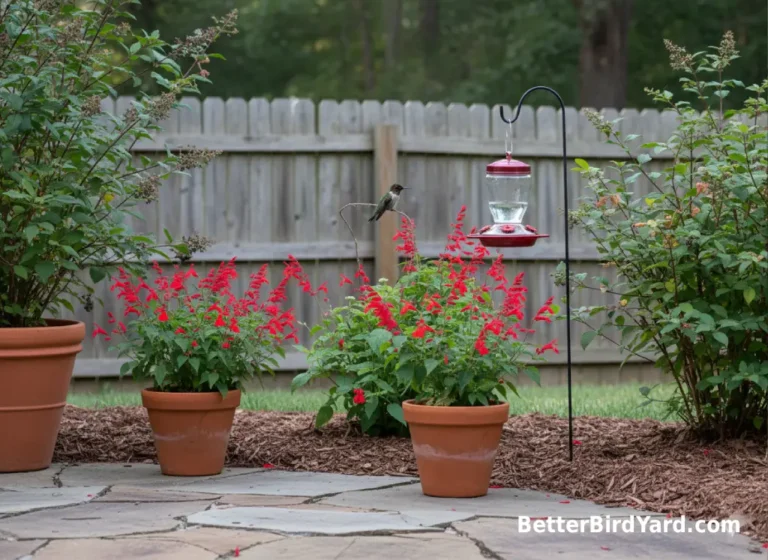
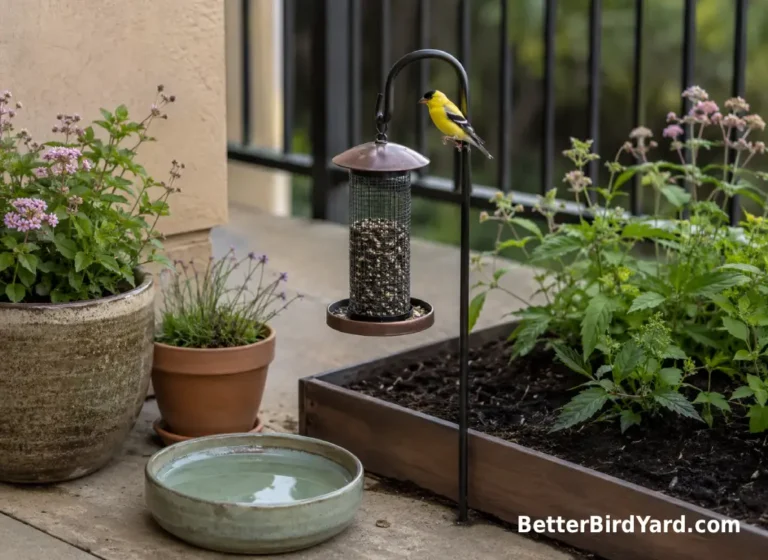
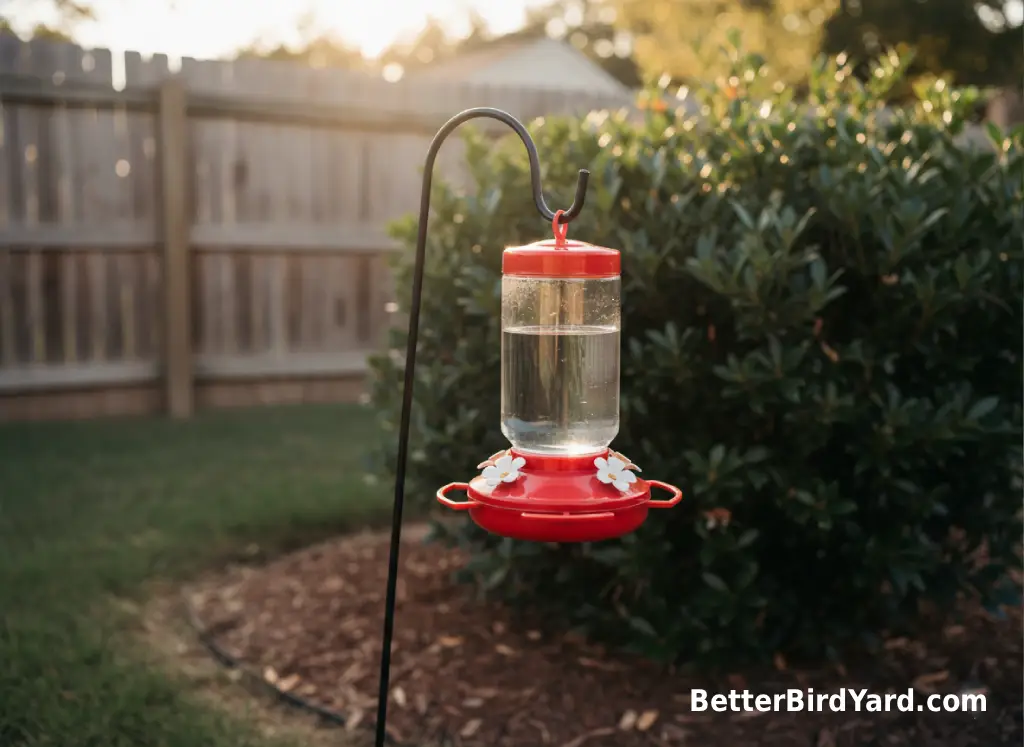
A good first setup is a small, easy-to-clean feeder on a shepherd hook near a flower bed or patio edge. Fill it lightly at first so you are not wasting nectar, then adjust once you know how quickly hummingbirds are using it.
How High Should You Hang A Hummingbird Feeder?
For most homes, hummingbird feeder height placement is more about access and safety than a strict measurement. Eye level to slightly above eye level works well because you can see the feeder, refill it, and clean it without dragging out a ladder every few days.
A common beginner mistake is hanging the feeder too high because it looks pretty from a distance. That usually makes maintenance harder. If cleaning feels annoying, the feeder is more likely to sit outside with old nectar, and that is not good for hummingbirds.
Use these practical height checks:
- Can you take the feeder down with one hand without stretching?
- Can children, pets, or passing foot traffic bump it?
- Is it high enough that ants, dogs, and curious hands are less likely to reach it?
- Can you see the nectar clearly enough to notice cloudiness, insects, or mold?
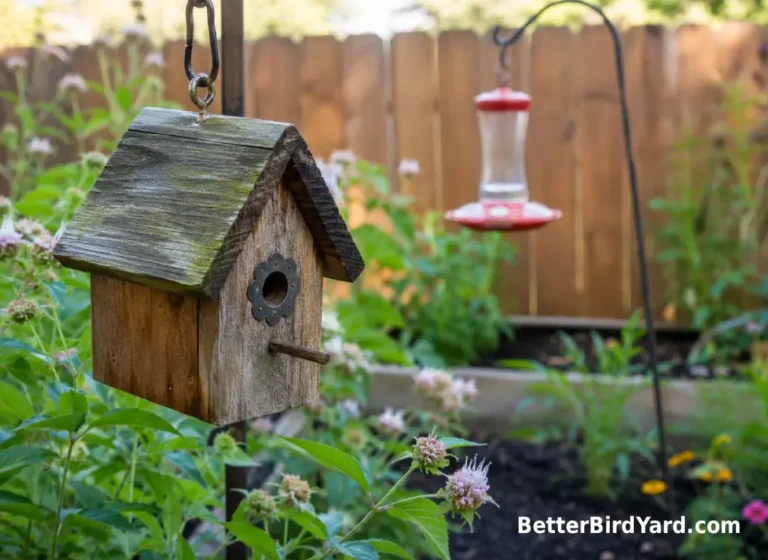
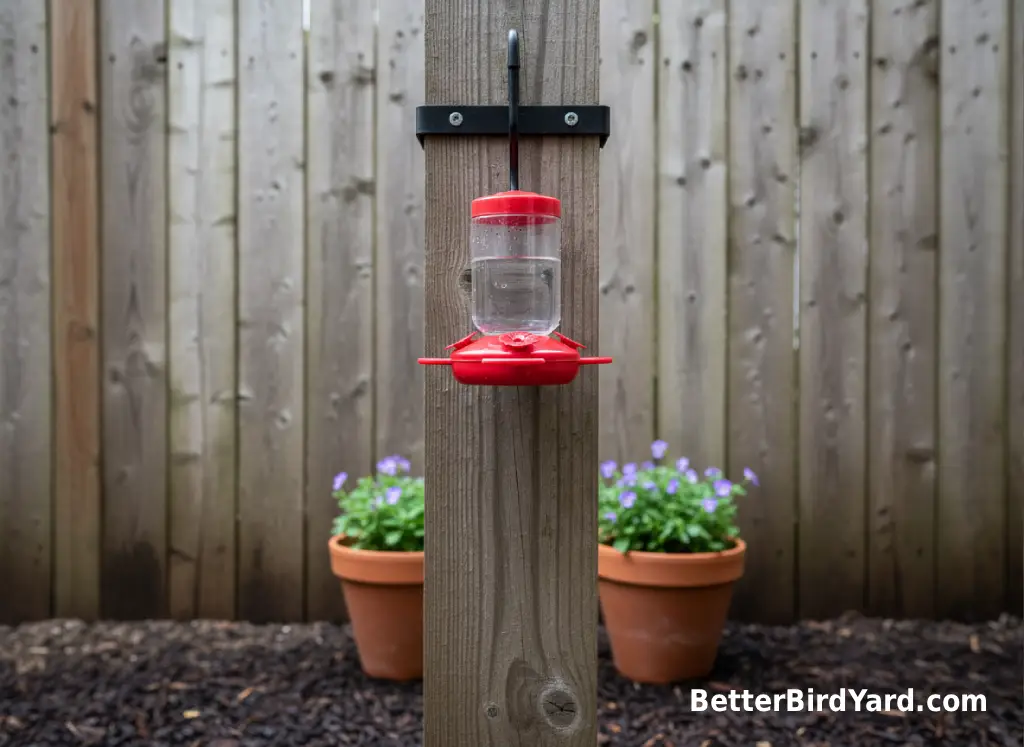
A hummingbird feeder hanger can be as simple as a shepherd hook, deck rail hook, wall bracket, or sturdy tree limb. Choose the option that keeps the feeder level and steady. Hummingbirds can handle normal movement from a breeze, but a feeder that swings hard, leaks, or tilts will be harder for birds to use and harder for you to maintain.
Choose Part Shade, Not A Hidden Corner
The best placement for a hummingbird feeder usually gives you a balance: bright enough for birds to spot it, shaded enough that nectar does not heat up all day. Full sun is not automatically wrong, but nectar spoils faster in heat and direct sun, so those feeders need more attention.
Morning sun with afternoon shade is often a good compromise. The feeder catches light early, stays visible, and avoids the harshest heat later in the day. A spot under an open tree canopy, near the edge of a porch roof, or beside taller shrubs can work well as long as the feeder is not buried in leaves.
A hidden corner is less helpful. Hummingbirds are quick, observant birds, but a feeder tucked under a dark overhang or behind thick foliage may go unnoticed. It can also make cleaning harder because you are less likely to notice old nectar, ants, bees, or leaks.
If your yard is very sunny, use a smaller feeder and refill it more often rather than letting a large reservoir sit in the heat. If your yard is mostly shaded, place the feeder near bright flowers or a visible open edge so hummingbirds have a clear line of sight.
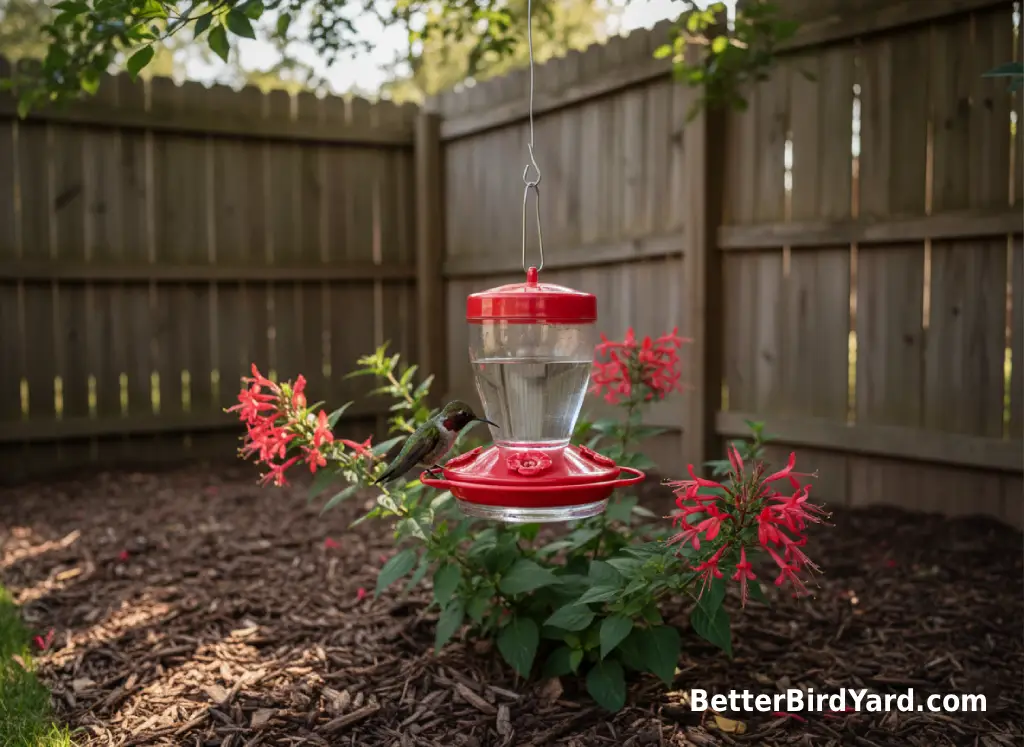
Hang It Near Flowers, Perches, And Open Flight Space
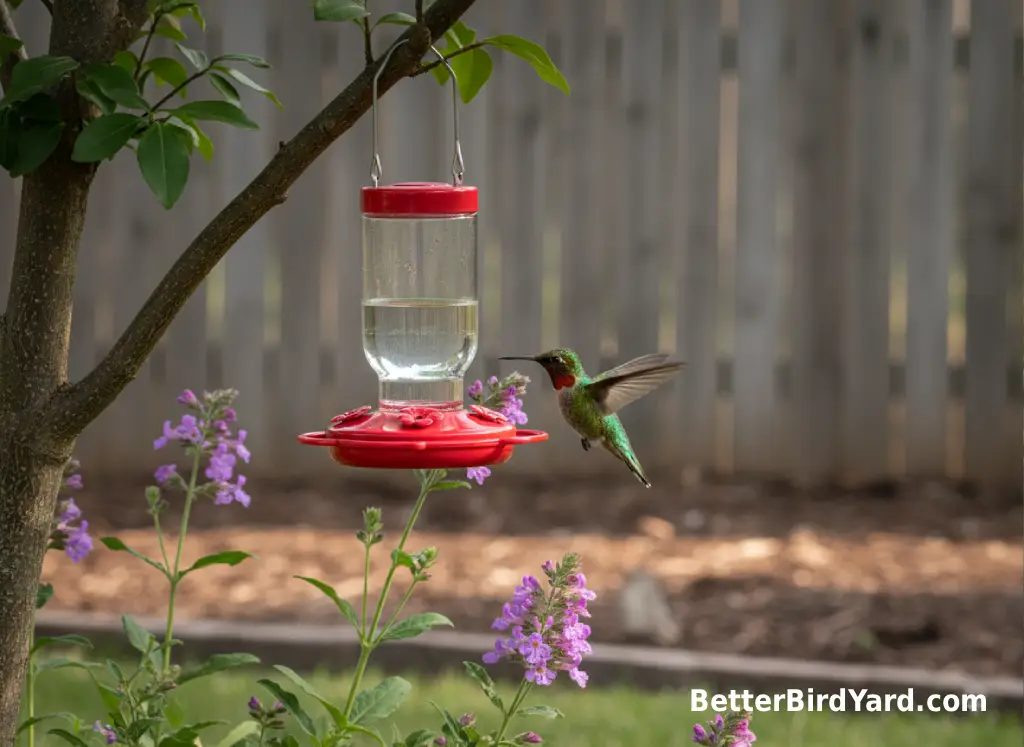
A feeder is easier for hummingbirds to find when it sits near the kind of habitat they already use. Native flowering plants are especially helpful because they can provide nectar, attract small insects, and make the feeder feel like part of a real feeding area rather than a lone plastic object in the middle of a lawn. The National Wildlife Federation emphasizes native flowers as a strong way to support hummingbirds beyond a feeder alone.
You do not need a huge garden. A few containers of region-appropriate native flowers near a patio, a mulched bed with tubular blooms, or a small shrub border can make the area more inviting. For more planting ideas, see our guide to hummingbird-friendly flowers for small yards.
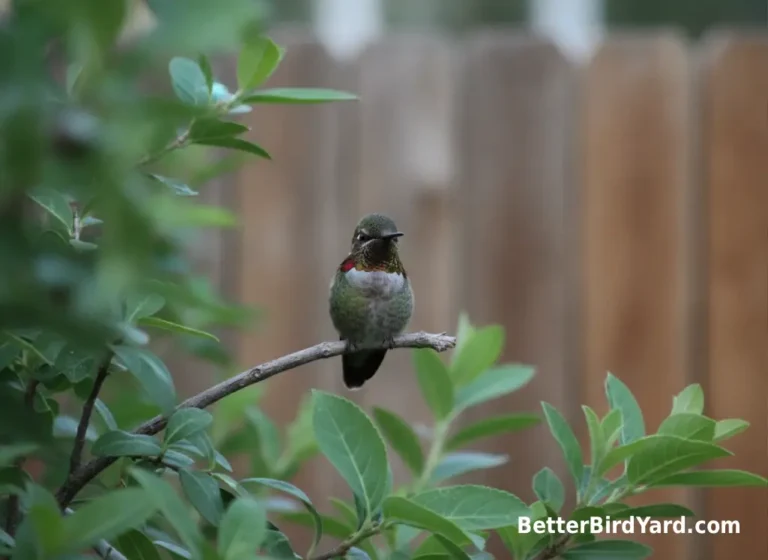
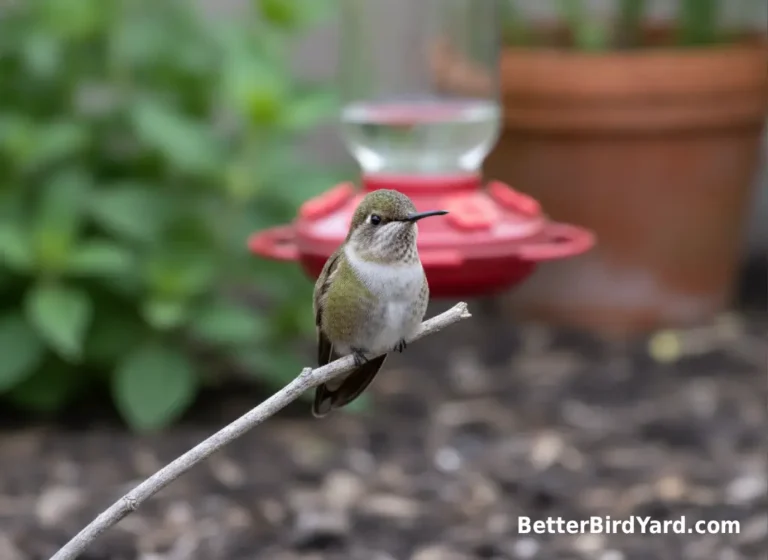
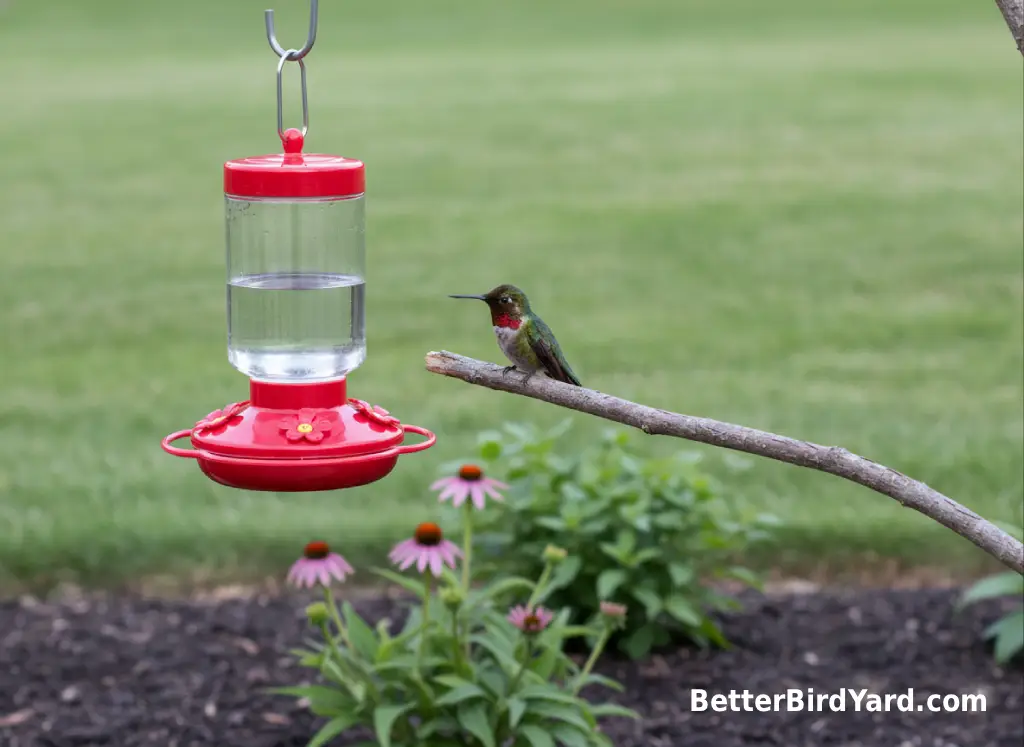
Perches matter, too. Hummingbirds often rest between feeding trips, watch over a feeder, or wait nearby before darting in. A thin branch, small shrub, or nearby trellis can help, but keep the feeder out in the open enough that birds have room to approach and leave quickly.
In a small yard, I would keep this simple: place the feeder near flowers, give hummingbirds a nearby perch, and keep the immediate area open. That combination is more useful than hiding the feeder deep in a shrub where it is harder to see, clean, and protect from ambush.
Protect Hummingbirds From Windows, Cats, And Predator Cover
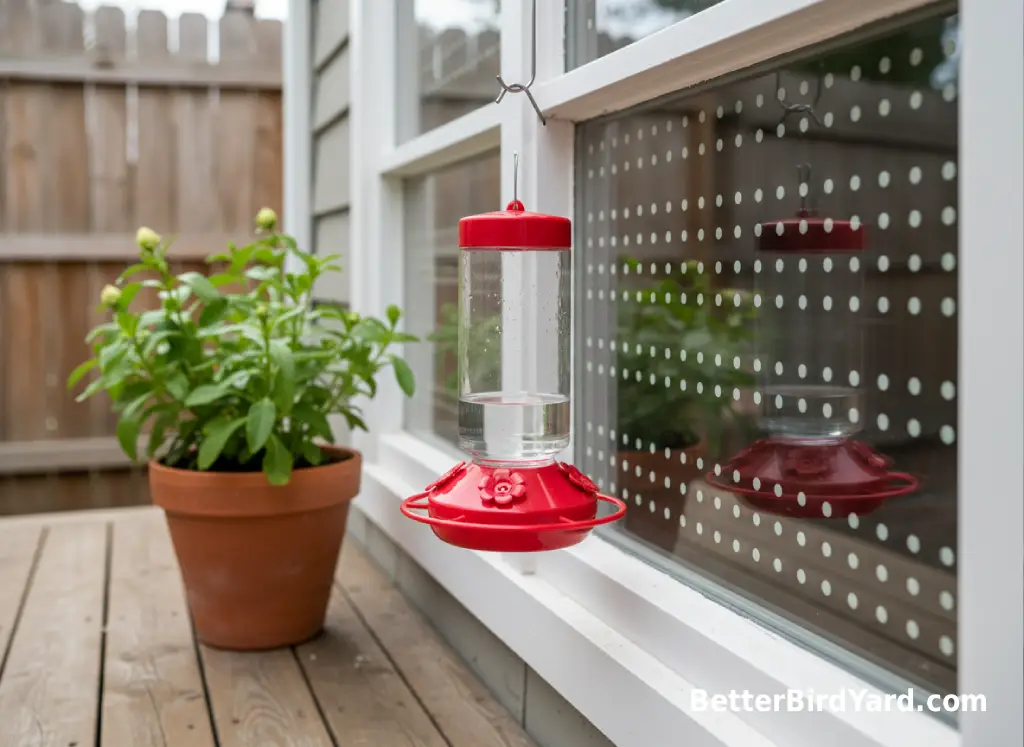
Window views are one reason people love hummingbird feeders, but glass deserves extra thought. Cornell Lab guidance for bird feeders commonly recommends placing feeders very close to windows or more than 30 feet away, because collision risk changes with distance and flight speed. Window treatments still matter, especially on reflective panes that show sky, trees, or yard openings.
If you want a feeder near a window, treat the outside of the glass with closely spaced bird-safe dots, tape, cords, screens, or other visible patterns. A few decorative decals are usually not enough if large areas of glass still reflect open flight paths.
Predator cover is the other big placement issue. Hummingbirds need shrubs, trees, and perches, but a feeder should not hang directly over dense low cover where outdoor cats can hide. Try to give birds an open approach while keeping useful shelter nearby but not right under the feeder.
Good safety checks include:
- Look at the window from the feeder’s angle and check whether it reflects trees or sky.
- Keep cats indoors and avoid placing feeders where neighborhood cats can crouch below.
- Move the feeder if you notice repeated panic flights, hard window bumps, or predator activity.
- Temporarily take the feeder down if a predator starts using it as a hunting station.
How To Hang A Hummingbird Feeder In A Small Yard, Patio, Or Balcony
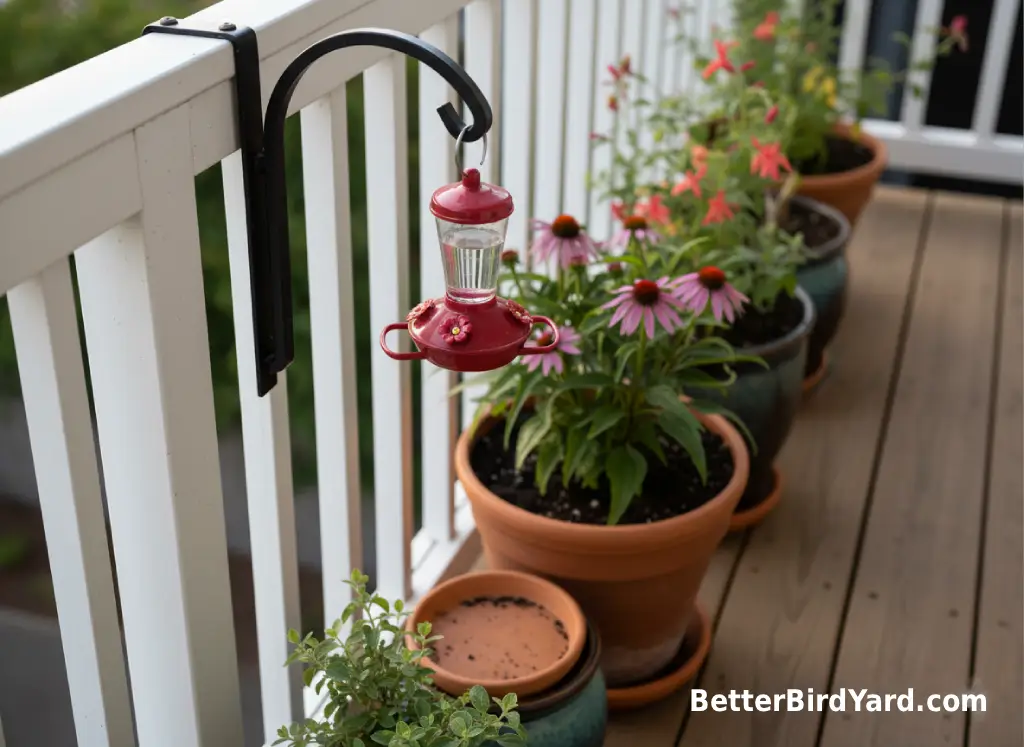
You can hang a hummingbird feeder in a small space if you focus on stability, cleaning access, and neighbor-friendly placement. A balcony railing hook, clamp-on pole, wall bracket, or suction-cup window feeder can work, but each one has a tradeoff.
Railing hooks are flexible and easy to remove. Wall brackets are sturdier but may not be allowed in rentals. Suction-cup feeders can give excellent views, but the window should still be made bird-safe, and the feeder must be cleaned just as often as any hanging hummingbird feeder.
Before you hang one, check three ordinary details:
- Will nectar drip onto a walkway, shared balcony, downstairs neighbor, or outdoor furniture?
- Can you remove the feeder without leaning over a railing?
- Do your lease, HOA, condo rules, or local guidelines allow feeders?
For renters, a small feeder is usually better than a large one. It is lighter, easier to wash in a sink, and less likely to sit with stale nectar. Keep the setup tidy, wipe sticky drips, and avoid placing the feeder where ants can easily trail in from a wall, railing, or overhanging branch.
If bees or wasps become persistent, do not use oils, sprays, or sticky traps on the feeder. Move the feeder a short distance, clean away spilled nectar, use bee guards if your feeder supports them, and choose a saucer-style feeder that is less prone to dripping.
When Should I Put Out My Hummingbird Feeder?
Put your hummingbird feeder out shortly before hummingbirds normally arrive in your area. Audubon’s guidance is to put feeders out about a week before local arrival in places where hummingbirds leave for winter, while checking local Audubon centers, bird clubs, or regional reports if you are unsure.
That timing varies across the United States. Some southern and western areas may have hummingbirds for much of the year, while many northern and interior areas see them mainly during the warmer months and migration. Avoid one-size-fits-all dates unless you are writing them down for your own yard after a few seasons of observation.
Leaving a feeder up in fall does not force hummingbirds to stay. Migration is influenced by natural cues such as changing day length, not simply by whether your feeder is available. The more important question is whether you can keep the feeder clean. If you leave it up for late migrants, keep changing and cleaning the nectar even when visits slow down.
In freezing weather, watch the feeder carefully. Frozen nectar is not useful, and a feeder that repeatedly freezes, cracks, or leaks should be brought in, rotated, or managed with local winter-feeding guidance. If you live in a year-round hummingbird area, the same basic rule applies: feeding is only helpful when the nectar is fresh and the feeder is clean.
Common Hummingbird Feeder Placement Mistakes To Avoid
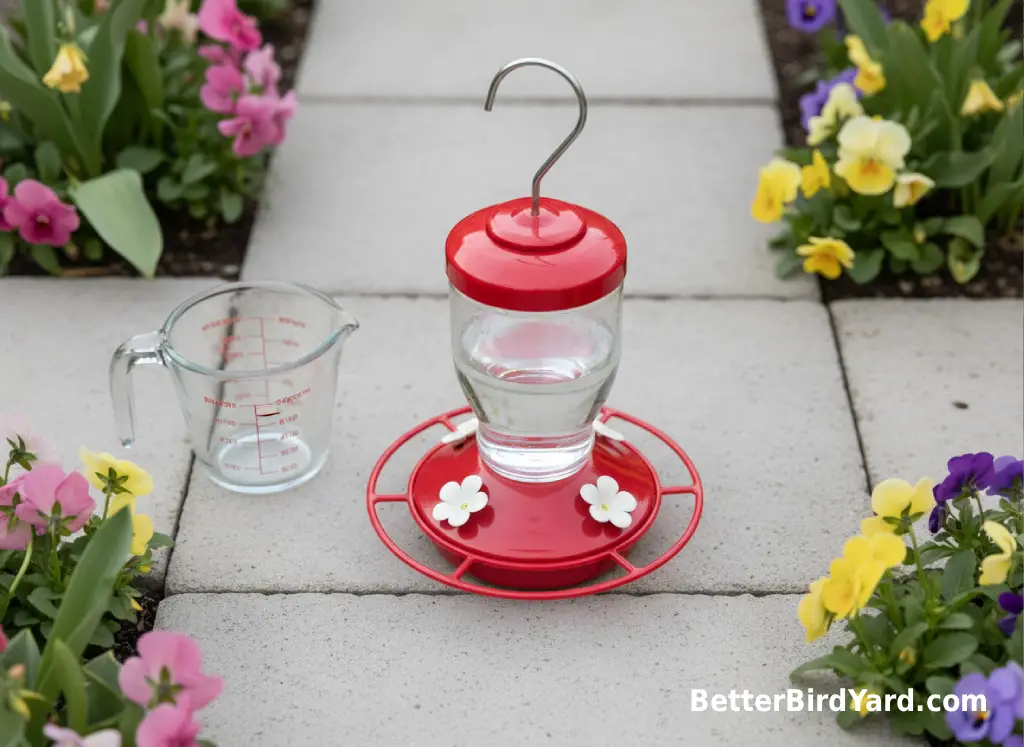
Most hummingbird feeder problems start with a placement that makes cleaning hard, nectar spoil faster, or birds less safe. The feeder may still get visits, but it becomes more work than it needs to be.
- Hanging It In All-Day Hot Sun: Heat can make nectar spoil faster. Use smaller fills, clean more often, or move the feeder to afternoon shade.
- Hiding It Too Deep In Foliage: Hummingbirds may miss it, and you may miss mold, ants, or leaks.
- Putting It Too Close To Untreated Glass: A pretty view can become a window-strike risk if reflections are not addressed.
- Using A Feeder That Is Hard To Take Apart: Placement will not fix a feeder that cannot be cleaned properly.
- Letting One Bird Guard The Only Feeder: Add a second small feeder out of sight around a corner, tree, or porch post.
- Hanging It Over Messy Or Unsafe Areas: Avoid spots above grills, chemical storage, busy walkways, pet areas, or places where sticky drips attract ants.
For hummingbird feeders specifically, clean whenever nectar turns cloudy, you see mold or dark specks, insects get inside, or the feeder has been sitting through hot weather. Cornell Lab’s All About Birds and Audubon both advise against red dye; natural nectar is clear, and red feeder parts are enough to catch hummingbirds’ attention.
For a deeper cleaning routine, see our step-by-step guide to how to clean a hummingbird feeder.
Step-By-Step: A Simple Feeder Setup That Works
Use this simple process when you are choosing where to put a hummingbird feeder for the first time.
- Pick A Visible Area: Choose a spot near flowers, a patio edge, or a garden bed where hummingbirds can notice the feeder.
- Check The Sun: Aim for morning sun and afternoon shade, especially in hot climates.
- Check The Glass: If the feeder is near a window, treat the outside of the glass or choose a safer distance.
- Add A Stable Hanger: Use a shepherd hook, bracket, rail hook, or sturdy branch that keeps the feeder level.
- Keep It Reachable: Hang it where you can remove, wash, refill, and rehang it without a ladder.
- Start With A Small Fill: Use less nectar until you know how quickly birds are drinking it.
- Watch And Adjust: Move the feeder if nectar spoils too fast, birds seem uneasy, ants invade, or one bird dominates the only feeding spot.
This is one of those backyard details that is worth adjusting after a week or two. Hummingbirds may find the feeder quickly, or they may take time. Local flowers, nesting territories, migration movement, weather, and nearby feeders can all affect visits.
If nothing happens right away, do not panic and do not add dye. Keep the feeder clean, make sure it is visible, and consider adding more nectar-rich native flowers nearby. A feeder is a supplement; a bird-friendly yard is the stronger long-term invitation.
Final Thoughts On Where To Place A Hummingbird Feeder
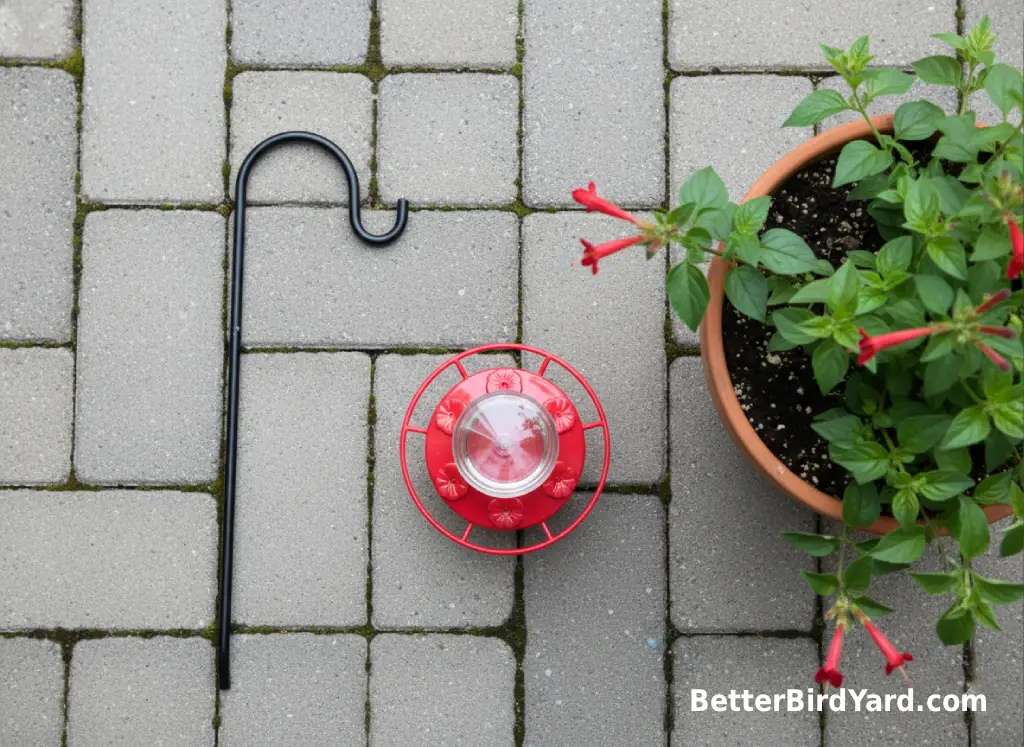
The best place to hang a hummingbird feeder is not just the spot with the nicest view. It is the spot where birds can find the feeder, use it with open flight space, and avoid obvious hazards while you can keep the nectar fresh.
For most beginner and intermediate backyard bird watchers, the best location for a hummingbird feeder is a partly shaded, easy-to-reach place near flowers or perches, away from untreated reflective windows and predator hiding spots. A small feeder that gets cleaned often is usually better than a large feeder that looks impressive but sits too long in the heat.
Start with one simple hanging hummingbird feeder, observe for a week or two, then adjust. Move it a few feet if ants find it. Add a second feeder if one hummingbird guards the first. Shift it into afternoon shade if nectar spoils quickly. Treat nearby glass if window reflections are an issue.
Hummingbird feeder placement is part practical setup and part careful observation. When the feeder is clean, visible, reachable, and placed with bird safety in mind, you give hummingbirds a better chance to use it while keeping your own routine manageable.