A Clean, Simple Hummingbird Feeder Setup That Actually Helps Birds
A hummingbird feeder can be one of the most rewarding backyard bird feeders to watch, but it is also one of the least forgiving if it is neglected. Sugar water spoils faster than many beginners expect, especially in hot weather, and tiny feeder ports can hide sticky residue, mold, and insects.
The good news is that a safe hummingbird feeder setup is simple. Choose a feeder you can take apart and scrub, fill it with plain white sugar-water nectar, hang it where birds can find it and you can maintain it, and clean it often enough that the nectar stays clear. Cornell Lab of Ornithology and Audubon both emphasize plain sugar water, no red dye, and regular cleaning as core hummingbird feeder care.
This guide is written for ordinary US yards, patios, balconies, and small gardens. You do not need a big landscape or an expensive hummingbird bird feeder. You need a practical feeder, a realistic cleaning routine, and a yard that gives hummingbirds safe reasons to return without depending on one sugar-water station.
Start With A Feeder You Can Keep Clean
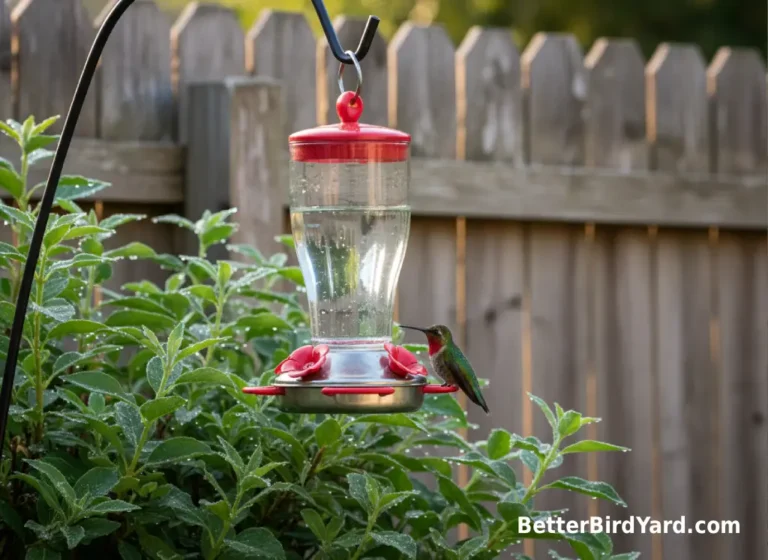
The best bird feeder for hummingbirds is not always the prettiest one. It is the one you will actually clean. Look for a feeder with a wide opening, a base that separates fully, and ports you can reach with a small brush. If a feeder has narrow seams, decorative shapes, or hidden chambers you cannot scrub, it may become a maintenance problem.
A small feeder is often better for beginners than a large one. Cornell notes that the best-sized feeders are often the ones hummingbirds empty every day or two, because sugar water can ferment and grow bacteria or mold if left too long.
For a patio, balcony, or small suburban yard, start with one modest feeder instead of several. A single easy-clean feeder lets you learn your local traffic pattern without wasting nectar. If hummingbirds are emptying it quickly and you can keep up with cleaning, you can add a second feeder later.
Helpful features to look for:
- A base that comes apart without tools.
- A bottle or dish design with openings large enough for a brush.
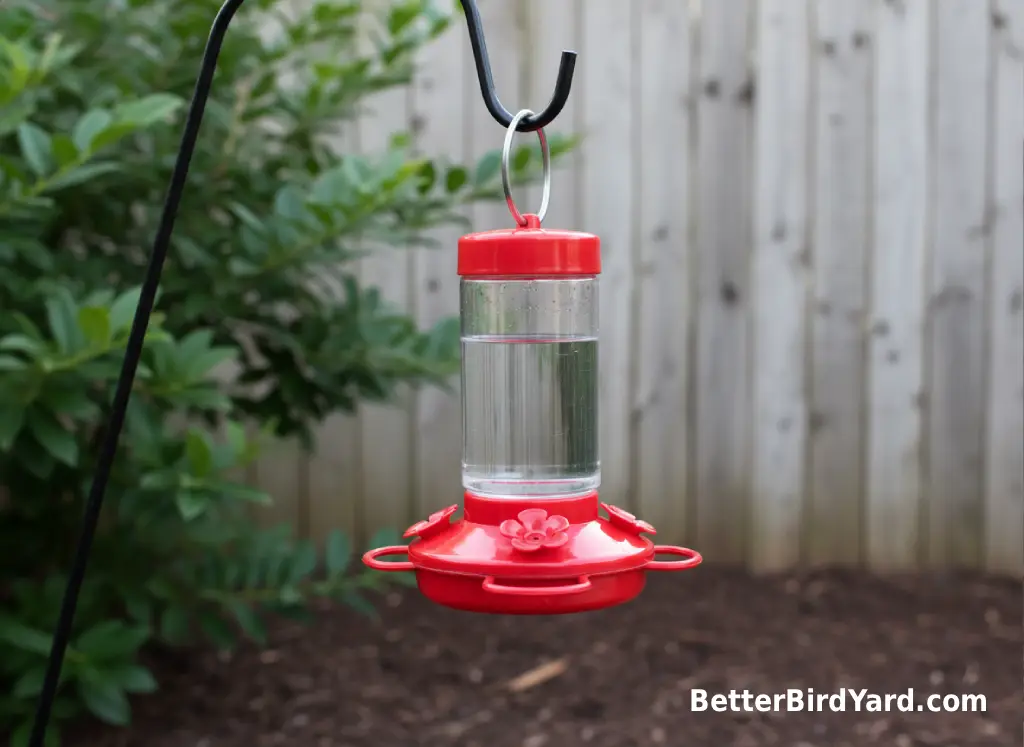
- Simple red parts to help birds notice it, without dyed nectar.
- Built-in bee guards or ant moat features that are easy to rinse.
- A size that matches your actual hummingbird activity, not your hopes.
A common mistake we see is buying a large decorative feeder first, then discovering it is awkward to wash. Hummingbird feeders need more upkeep than seed feeders, so cleaning access matters more than style.
Make Hummingbird Nectar The Simple Way
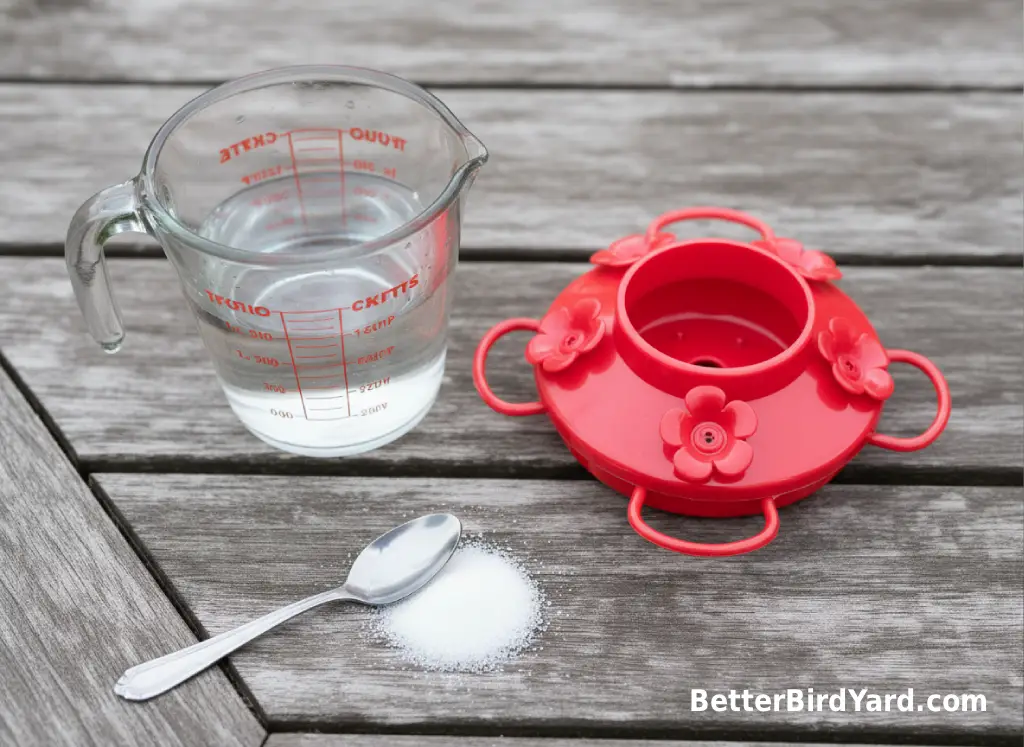
Use plain white granulated sugar and water. The standard backyard recipe is one part refined white sugar to four parts water, such as 1/4 cup sugar mixed with 1 cup water. Audubon gives this same basic ratio and warns against honey, red food coloring, artificial sweeteners, brown sugar, molasses, and other substitutes.
To make nectar, dissolve the sugar in hot or boiling water, let the mixture cool completely, and then fill a clean feeder. Cornell notes that boiling is not always necessary for very small fresh batches, but it is a practical choice when you are making a larger batch to refrigerate.
Keep the nectar clear. Flower nectar is naturally clear, and hummingbirds are attracted by red feeder parts and nearby flowers, not by red liquid. Cornell and Audubon both caution that red dye is unnecessary and may be harmful.
Basic nectar steps:
- Mix 1 part refined white sugar with 4 parts water.
- Stir until fully dissolved.
- Cool before filling the feeder.
- Refrigerate extra nectar in a clean covered container.
- Discard old nectar from the feeder instead of topping it off.
Hang The Feeder Where Birds Can Find It And You Can Reach It
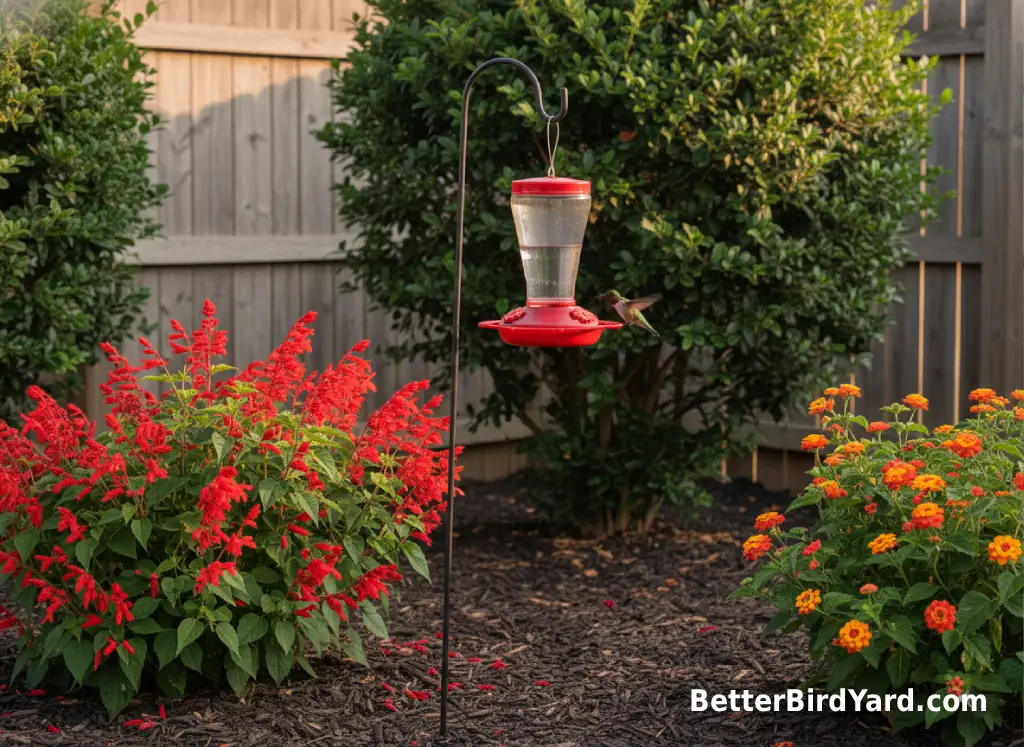
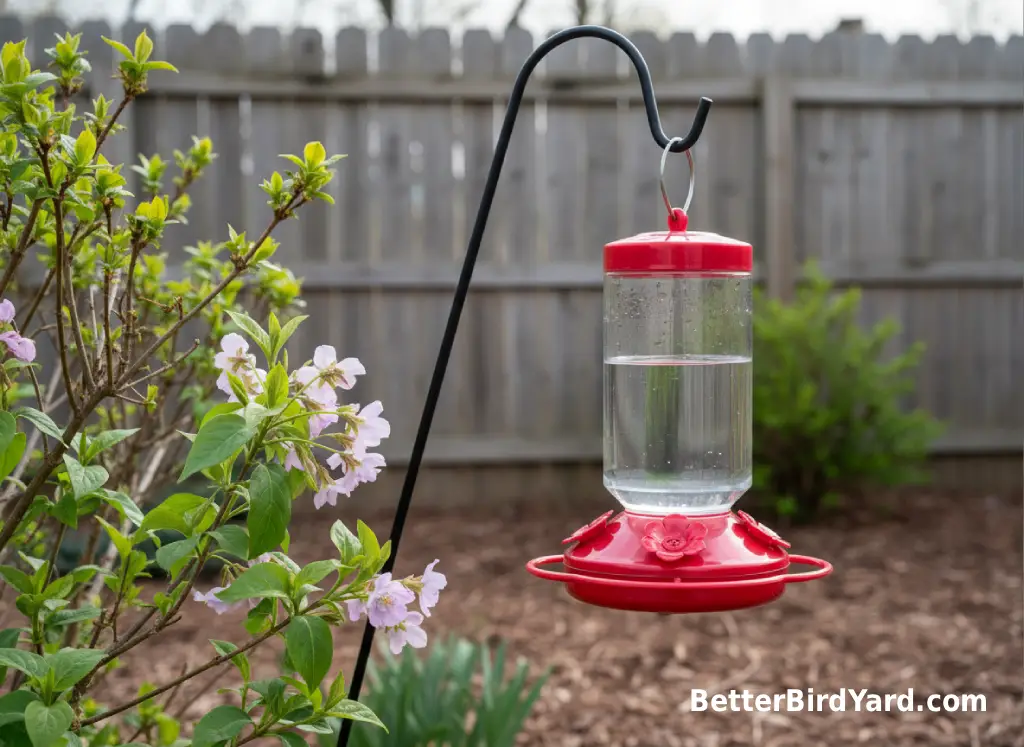
Place your hummingbird feeder where it is visible, shaded for part of the day, and easy to reach for cleaning. Full sun can warm nectar and make it spoil faster, while deep hidden shade may make the feeder harder for hummingbirds to notice. Cornell recommends avoiding direct sun because sugar water spoils more rapidly there.
In a small yard, a good spot might be just off a patio, near a kitchen window, or beside a container of native flowers. On a balcony, use a stable hook or railing mount that keeps the feeder from swinging hard in wind. For renters, check lease, balcony, HOA, or building rules before installing hooks or feeding stations.
Keep feeder placement practical:
- Choose a spot you pass often so you notice cloudy nectar quickly.
- Give hummingbirds nearby cover, such as shrubs or small trees, without hiding the feeder completely.
- Keep the feeder away from areas where cats can stalk from below.
- Move it if ants, bees, or wasps become persistent.
- Avoid placing it so close to a window that birds may collide with reflected glass.
Hummingbirds can be territorial, especially at feeders. If one bird guards the feeder constantly and you have enough space, try a second small feeder placed out of sight of the first. In a tiny patio, do not overdo it; two clean feeders are better than four neglected ones.
Clean The Feeder Before Nectar Turns Cloudy
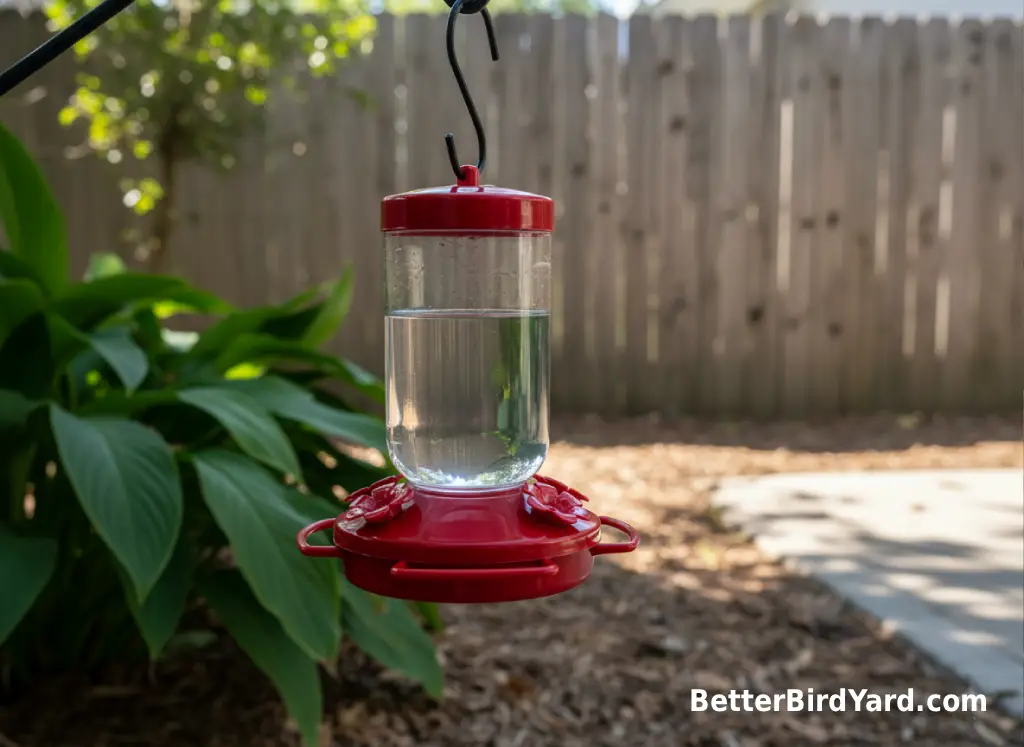
Cleaning is the part of hummingbird feeding that matters most. Sugar water can spoil, ferment, and grow mold. Cornell advises changing hummingbird homemade nectar every two or three days at most, and daily in very hot weather. Audubon recommends emptying and cleaning feeders daily or every other day in hot weather, every three days in temperate weather, and about twice per week in cooler weather.
Use the weather, feeder location, and nectar appearance as your guide. If the nectar looks cloudy, smells sour, has floating debris, or you see mold around the ports, clean the feeder immediately. Do not wait for the calendar.
| Condition | Practical Cleaning Trigger |
|---|---|
| Hot weather or sunny placement | Empty, wash, and refill daily or every other day. |
| Mild weather | Clean about every 2 to 3 days, or sooner if nectar changes. |
| Cooler weather | Clean at least twice per week, and always when the feeder empties. |
| Cloudy nectar, mold, insects, or debris | Take the feeder down and clean it right away. |
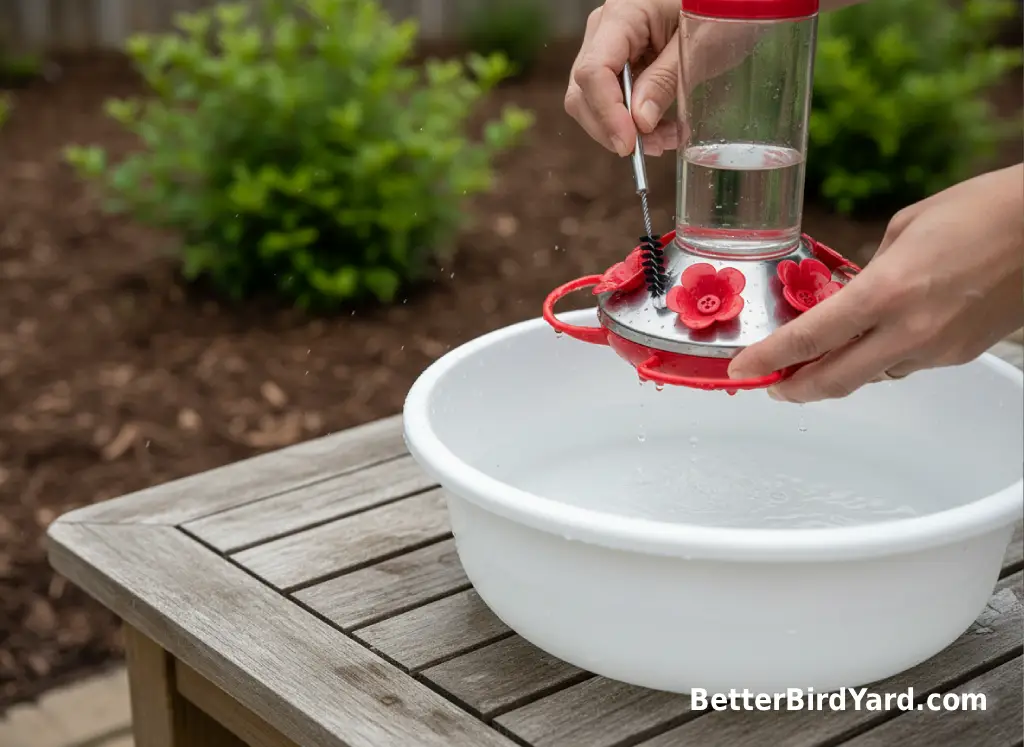
Take the feeder apart fully. Scrub the reservoir, base, ports, seams, and ant moat if it has one. Cornell says feeders can be cleaned by taking them apart and using a dishwasher on a hot setting, or by hand washing with soap and boiling water or a dilute bleach solution followed by thorough rinsing. Audubon also describes vinegar-based cleaning for hummingbird feeders and stresses rinsing well before refilling.
Editorial note: If you only change one habit, stop topping off old nectar. Empty it, wash the feeder, and refill with fresh nectar. That one habit prevents a lot of sticky, cloudy, hard-to-clean problems.
For a broader maintenance routine around seed feeders and baths, see our Cleaning Hummingbird Feeders.
Avoid The Most Common Hummingbird Feeder Mistakes
Most hummingbird feeder problems come from good intentions plus small maintenance gaps. Beginners often assume that clear nectar is safe for a week, that a bigger feeder is more helpful, or that red liquid is what attracts hummingbirds. The safer approach is simpler and more modest.
Avoid these common mistakes:
- Using red dye. Red feeder parts are enough; the nectar should stay clear.
- Using honey or alternative sweeteners. Stick with refined white sugar and water.
- Buying a feeder that cannot be scrubbed well.
- Leaving nectar out too long in hot weather.
- Placing the feeder in harsh full sun.
- Letting ants, bees, or wasps take over without adjusting placement or cleaning.
- Adding too many feeders before you know your cleaning capacity.
Do not panic if hummingbirds do not arrive immediately. Their visits vary by region, season, weather, nearby flowers, nesting activity, and local food sources. A feeder may be ignored for days and then become busy, or it may be used lightly if your area has abundant flowers.
If insects are a problem, first clean the feeder, check for leaks, and move it a few feet. Leaking nectar attracts ants and wasps. An ant moat can help, but it also needs rinsing. Avoid spraying pesticides around the feeder; hummingbirds eat small insects and can be exposed to chemicals in the same yard habitat.
Support Hummingbirds Beyond The Feeder
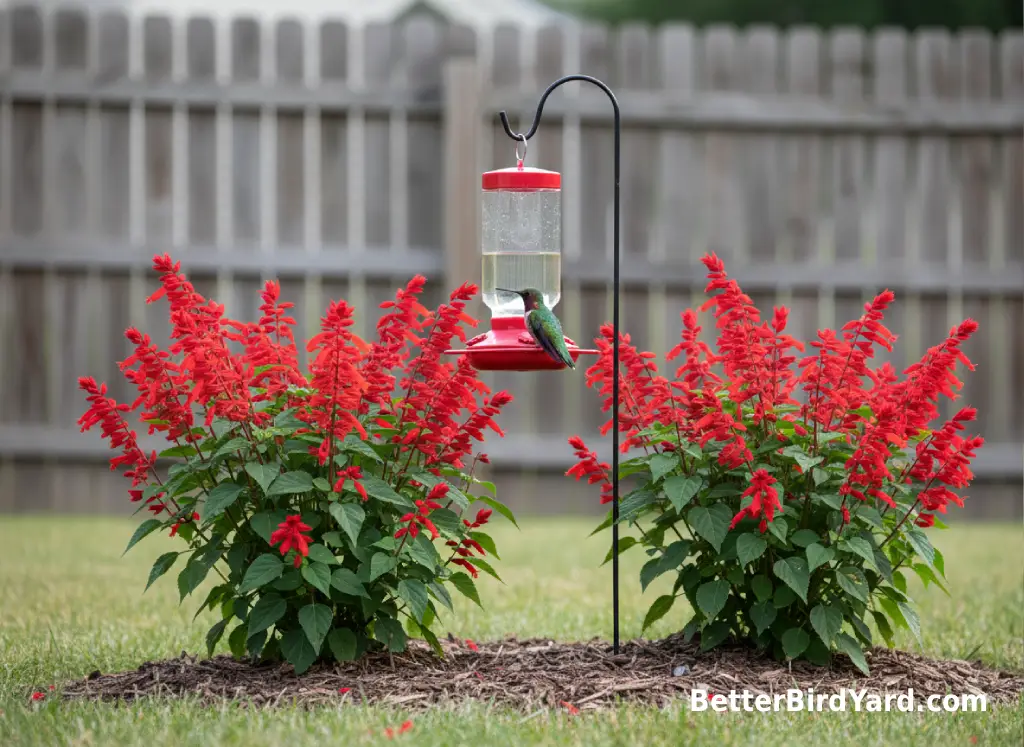
A hummingbird feeder is only one part of a better hummingbird yard. Native flowers, shrubs, trees, and a pesticide-conscious garden can support nectar sources, shelter, and small insects. The National Wildlife Federation notes that native flowers can serve as nectar sources and habitat for insects, which hummingbirds also use as food.
For many small-space readers, the easiest upgrade is a container garden with region-appropriate tubular flowers. In much of the US, gardeners often consider options such as bee balm, cardinal flower, columbine, penstemon, salvia, or native honeysuckle, but the best choices depend on your region, sunlight, soil, and whether a plant is native or well-behaved in your area. Check your state extension service or local native plant society before planting.
Keep the yard safer around the feeder:
- Choose native or region-appropriate nectar plants where possible.
- Avoid pesticides near feeders, flowers, and bird-friendly planting areas.
- Keep cats indoors or away from bird activity areas.
- Use window-strike prevention if feeders sit near reflective glass.
- Keep water features shallow, clean, and free of stagnant buildup.
NWF’s pollinator guidance cautions against chemical pesticides that can harm insects and remove important nectar plants. That matters for hummingbirds because they do not live on sugar water alone; insects are part of their diet.
For more habitat ideas, see our guide to native planting for backyard birds.
Know When To Put Feeders Out And When To Take Them Down
Timing depends on where you live. Some parts of the US have hummingbirds year-round, while many areas see them mainly during migration and breeding season. Audubon suggests putting feeders out before hummingbirds typically arrive locally and keeping feeders up as long as birds are still using them, with the same cleaning standards even when activity slows.
Leaving a clean feeder up into fall does not force healthy migratory hummingbirds to stay too late. Audubon explains that migration timing is driven by seasonal cues rather than feeder availability. The bigger issue is maintenance: if the feeder is out, it needs fresh nectar and cleaning even if visits are rare.
For a practical seasonal routine, check local first-sighting reports, local Audubon chapters, bird clubs, eBird activity, or your state wildlife agency. Put the feeder out a little before your area usually sees hummingbirds, then keep notes. Your own yard log will become more useful than a national calendar.
If you travel, are too busy to clean regularly, or have a heat wave coming, it is better to take the feeder down than to leave old nectar outside. Hummingbirds also use flowers and insects, so a temporarily removed feeder is safer than a neglected one.
Pause Feeding If Birds Look Sick Or Local Agencies Warn About Outbreaks
Backyard bird watchers should not try to diagnose wild birds from feeder behavior. A bird that looks weak, unusually still, disoriented, or visibly unwell may have many possible problems, and some require qualified help. If you notice concerning behavior around any feeder, stop feeding temporarily, clean feeders and baths thoroughly, and check guidance from your state wildlife agency or local wildlife rehabilitator.
USGS notes that bird feeders and birdbaths should be washed or disinfected regularly and that people should wash hands after touching them. USGS National Wildlife Health Center materials also describe bird feeding stations as places where disease can spread when contaminated with droppings or debris.
Use this safe pattern:
- Do not handle a sick, injured, stunned, or orphaned wild bird casually.
- Take feeders down if multiple birds appear unwell or local guidance recommends pausing.
- Clean and rinse feeders, baths, hooks, and nearby surfaces.
- Wash your hands after feeder work.
- Contact a licensed wildlife rehabilitator, local wildlife agency, animal control, or another qualified local professional when a bird appears injured, stranded, or in distress.
This is not about fear; it is about responsible feeding. A clean feeder helps reduce avoidable risk, and taking a break when something seems wrong is often the most bird-friendly choice.
Final Thoughts: Keep It Small, Clean, And Consistent
A good hummingbird feeder setup is not complicated. Use a small feeder you can scrub, fill it with clear 1:4 white sugar-water nectar, skip dye and honey, hang it where birds can find it, and clean it before the nectar turns cloudy.
For beginners, the most helpful mindset is to treat a hummingbird feeder as a fresh-food station, not a decoration. If you would not drink from it, do not ask birds to use it. In hot weather, that may mean daily attention. In cooler weather, it still means a steady routine.
The feeder can bring hummingbirds close enough for wonderful backyard watching, but it should not be the only support you offer. Native flowers, fewer pesticides, safer windows, indoor cats, and clean water features all help create a yard that is better for birds beyond the feeder ports.
Start with one feeder. Keep it clean for a full season. Watch what happens in your own yard. That quiet, consistent routine will teach you more than any complicated setup.