Hummingbird Lifespan: What Backyard Birders Should Know
Most hummingbirds live only a few years, especially because many do not survive their first year. But the tiny bird visiting your feeder is not automatically short-lived. Current North American Bird Banding Program longevity records list several hummingbirds reaching roughly 8 to 12 years in the wild, including Ruby-throated, Anna’s, Black-chinned, Costa’s, Broad-tailed, Rufous, Allen’s, Calliope, and Broad-billed Hummingbirds.
The most useful backyard answer is this: hummingbirds are built for intense, high-energy lives, and a safe yard can support them, but no feeder can guarantee a longer life. Clean nectar, native flowers, insects, safe perches, fewer window-collision risks, and fewer outdoor-cat hazards are the practical things a homeowner or renter can control.
For many US readers, the species matters. Eastern yards mostly get Ruby-throated Hummingbirds during the breeding season. California and western yards may see Anna’s, Allen’s, Costa’s, Black-chinned, Rufous, or other species depending on location and season. Lifespan records are species-specific, and they are best understood as documented maximums, not promises.
The Quick Answer: How Long Do Hummingbirds Live In The Wild?
Hummingbirds in the wild often live only a few years, but documented individuals can live much longer. American Bird Conservancy notes that many hummingbirds do not make it through their first year, and even after that, long-term survival is not easy. Its summary of banding data describes most hummingbirds as living only a few years at most, while some individuals reach surprisingly old ages.
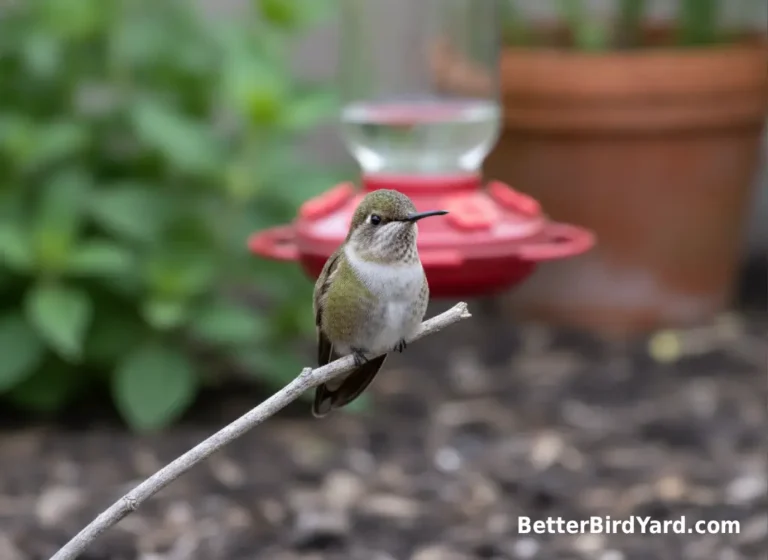
That difference between average survival and record age is the part that trips up many backyard bird watchers. A bird that visits your feeder may be a first-year bird learning the neighborhood, an adult passing through on migration, or a returning bird that has used the same patch of flowers and feeders for several seasons.
The safest way to answer how long hummingbirds live in the wild is to separate three ideas:
- Many young hummingbirds do not survive their first year.
- Adults that make it past the most vulnerable stage may return for multiple seasons.
- Banding records show that some wild hummingbirds can reach about 8 to 12 years, depending on species.
So, when a reader asks how long hummingbirds live for, the practical answer is: usually a few years, but occasionally much longer.
Hummingbird Lifespan Records By Species
Bird-banding records are especially useful because they document individual birds that were banded and later encountered again. These are known records, not the maximum possible age for every bird of that species. The North American Bird Banding Program longevity table, current through December 2025, lists these hummingbird records:
| Species | Current Documented Longevity Record | Backyard Context |
|---|---|---|
| Ruby-Throated Hummingbird | 11 Years, 1 Month | Main breeding hummingbird for much of the eastern US. |
| Black-Chinned Hummingbird | 12 Years, 1 Month | Seen in many western and southwestern areas. |
| Anna’s Hummingbird | 9 Years, 5 Months | Common in many Pacific Coast and western urban areas. |
| Costa’s Hummingbird | 8 Years, 9 Months | More associated with southwestern desert and coastal areas. |
| Broad-Tailed Hummingbird | 12 Years, 2 Months | A western mountain and migration species. |
| Rufous Hummingbird | 8 Years, 11 Months | A long-distance migrant that may visit western yards. |
| Allen’s Hummingbird | 5 Years, 11 Months | Most familiar along parts of coastal California and Oregon. |
| Calliope Hummingbird | 10 Years, 1 Month | A tiny western species seen in mountain and migration areas. |
For a backyard birder, the main lesson is not to memorize every record. It is to avoid assuming a hummingbird is disposable because it is tiny. A clean feeder and safer yard may support the same individual across repeated visits or seasons.
How Long Do Ruby-Throated Hummingbirds Live?
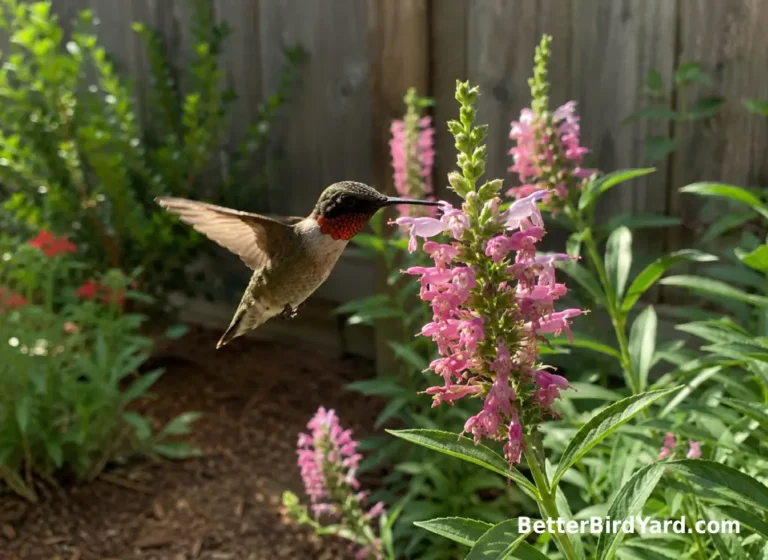
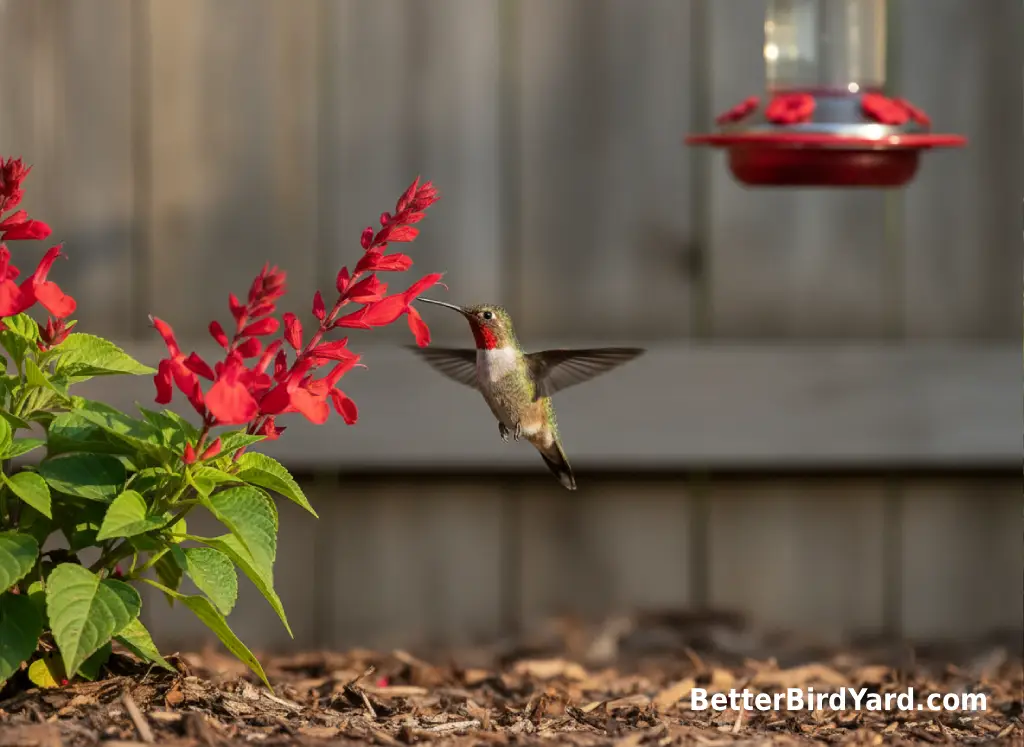
Ruby-throated Hummingbirds are the species most eastern US backyard bird watchers are asking about. Cornell Lab describes the Ruby-throated Hummingbird as eastern North America’s only breeding hummingbird, and it is strongly associated with backyards, forest edges, orchards, meadows, and gardens during the breeding season.
For Ruby-throated Hummingbirds, current banding data lists a documented longevity record of 11 years, 1 month. That does not mean the average Ruby-throated Hummingbird lives 11 years. It means at least one known individual survived that long between banding and later encounter.
In ordinary backyard terms, you may notice three patterns:
- A male may guard a feeder fiercely for part of the season, then disappear earlier than expected.
- A female or immature bird may visit more quietly and repeatedly without flashy throat color.
- Fall visitors may be passing through rather than nesting nearby.
Do not worry if the same-looking bird stops visiting for a while. Hummingbirds use flowers, insects, tree cover, and multiple feeding stops. A feeder is one helpful stop in a larger daily route, not the whole bird’s life.
How Long Do Hummingbirds Live In California?
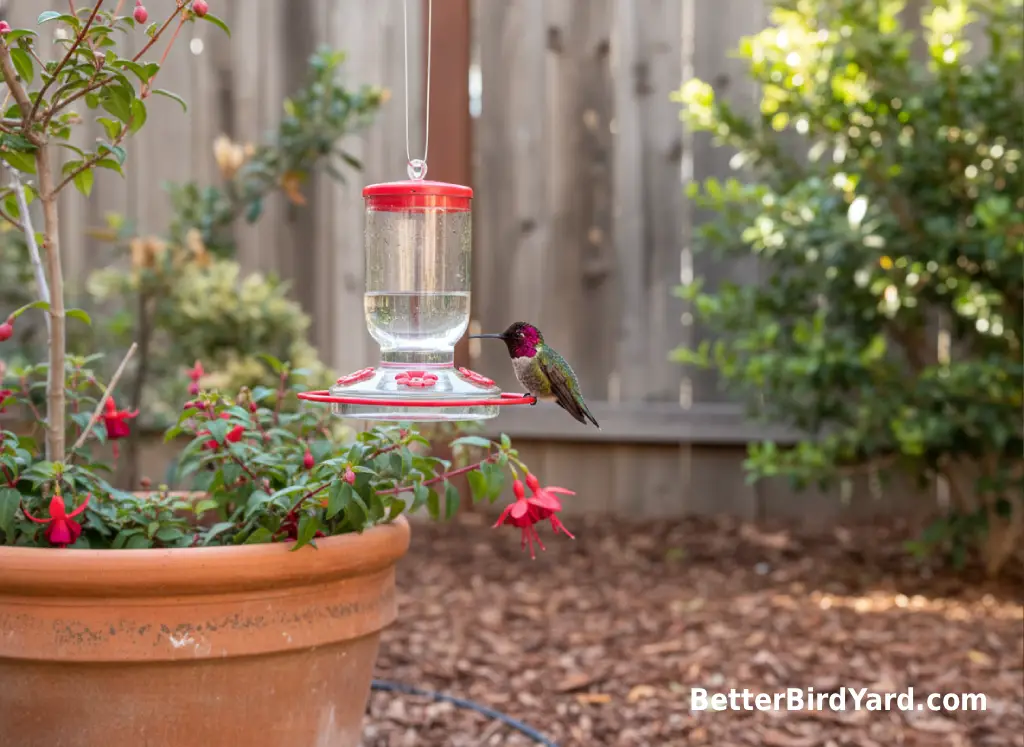
In California, hummingbird lifespan depends on the species. Anna’s Hummingbirds are especially familiar because they are common in many residential areas and can be present year-round in much of the state. The California Department of Fish and Wildlife describes Anna’s Hummingbird as a common resident through coastal California and much of the interior, and the US Fish and Wildlife Service notes that Anna’s is one of the few hummingbirds that live year-round in the United States and Canada.
Current banding records list an Anna’s Hummingbird at 9 years, 5 months, a Costa’s Hummingbird at 8 years, 9 months, and an Allen’s Hummingbird at 5 years, 11 months. All three records involved California-banded or California-encountered birds. Black-chinned Hummingbirds also occur in the West, and their current record is 12 years, 1 month, though that listed record is from Idaho.
For California backyard birders, the practical takeaway is simple: do not use a single hummingbird lifespan number for the whole state. A Los Angeles patio with year-round Anna’s activity, a coastal scrub garden with Allen’s, and a desert-edge yard with Costa’s may all have different seasonal patterns.
How Long Do Hummingbirds Live In Captivity?
For backyard readers, captivity is not a useful or appropriate comparison. Hummingbirds are wild birds, not pets. In the United States, the US Fish and Wildlife Service explains that migratory bird permit regulations cover activities such as taking, possession, transportation, banding, and marking of migratory birds, with limited exceptions and permits handled through the Migratory Bird Permit Program.
That means a hummingbird in a licensed wildlife rehabilitation, research, zoo, or permitted educational setting is in a completely different situation from a bird visiting your porch feeder. Captive records, where they exist, should not be used as a reason to keep, confine, or attempt to raise a wild hummingbird at home.
Your best backyard role is prevention: clean feeders, safe windows, native flowers, and fast contact with a licensed wildlife rehabilitator or local wildlife agency when something is wrong.
How Long Can Hummingbirds Live Without Food?
There is no safe single backyard number for how long a hummingbird can live without food. It depends on species, body condition, temperature, time of day, migration condition, access to insects and flowers, and whether the bird can use torpor. Cornell Lab’s Bird Academy explains that hummingbirds use daily torpor mainly at night as an energy-saving state, and that natural torpor is different from ordinary sleep.
During the day, an active hummingbird needs frequent access to energy. Nectar and sugar-water feeders provide quick carbohydrates, but hummingbirds also eat tiny insects and spiders. The National Wildlife Federation and Georgia Department of Natural Resources both emphasize that hummingbirds use insects and other small invertebrates as part of a complete diet.
For backyard care, the important point is not to test their limits. Keep nectar fresh, keep flowers available where you can, avoid pesticides around hummingbird plants, and do not assume one feeder is the bird’s only food source.
What Helps Hummingbirds Survive Around Homes?
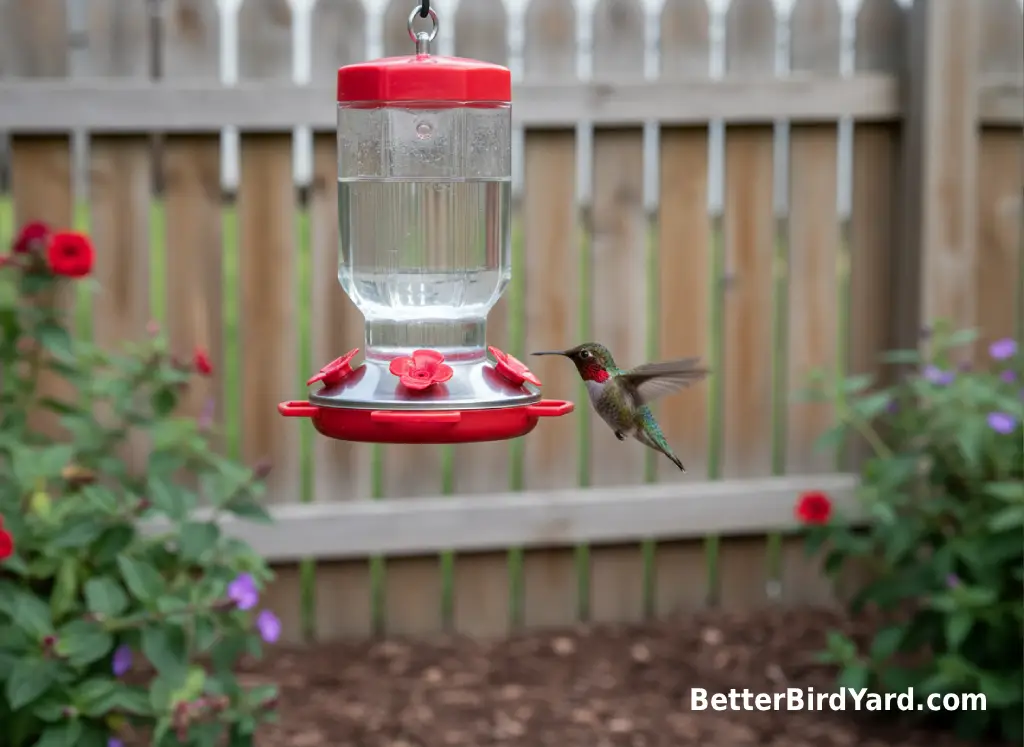
You cannot make a wild hummingbird live longer by feeding it more sugar water. What you can do is reduce avoidable risks and make your yard a safer stop. Think of your yard as one small refueling station in a much larger landscape.
Start with the basics:
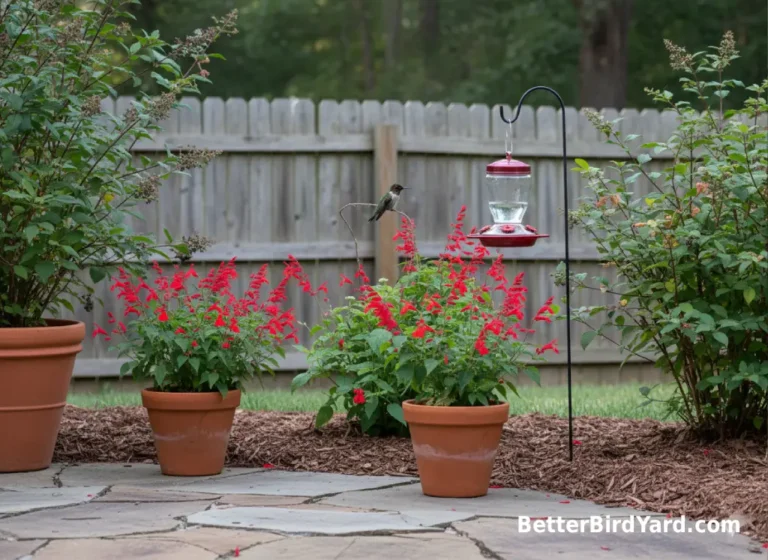
- Use plain white sugar and water at a 1:4 ratio for nectar.
- Do not add red dye, honey, brown sugar, powdered sugar, or sugar substitutes.
- Change nectar often, especially in hot weather or whenever it looks cloudy.
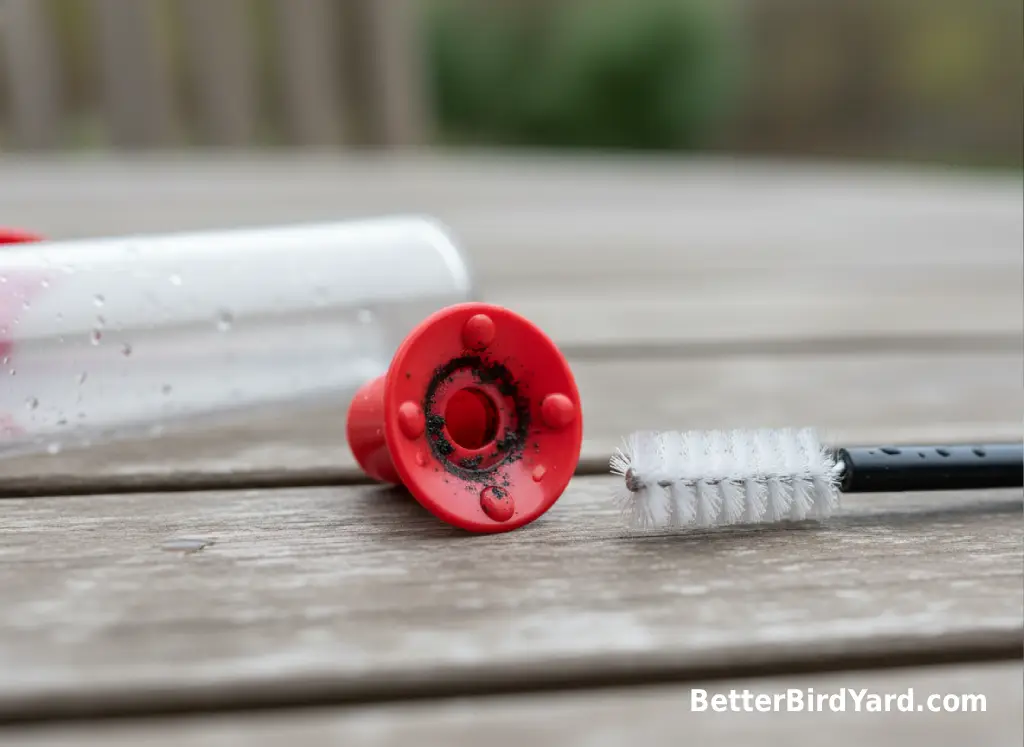
- Clean the feeder thoroughly before refilling.
- Plant region-appropriate nectar flowers where possible.
- Keep cats indoors or safely contained away from feeding and flowering areas.
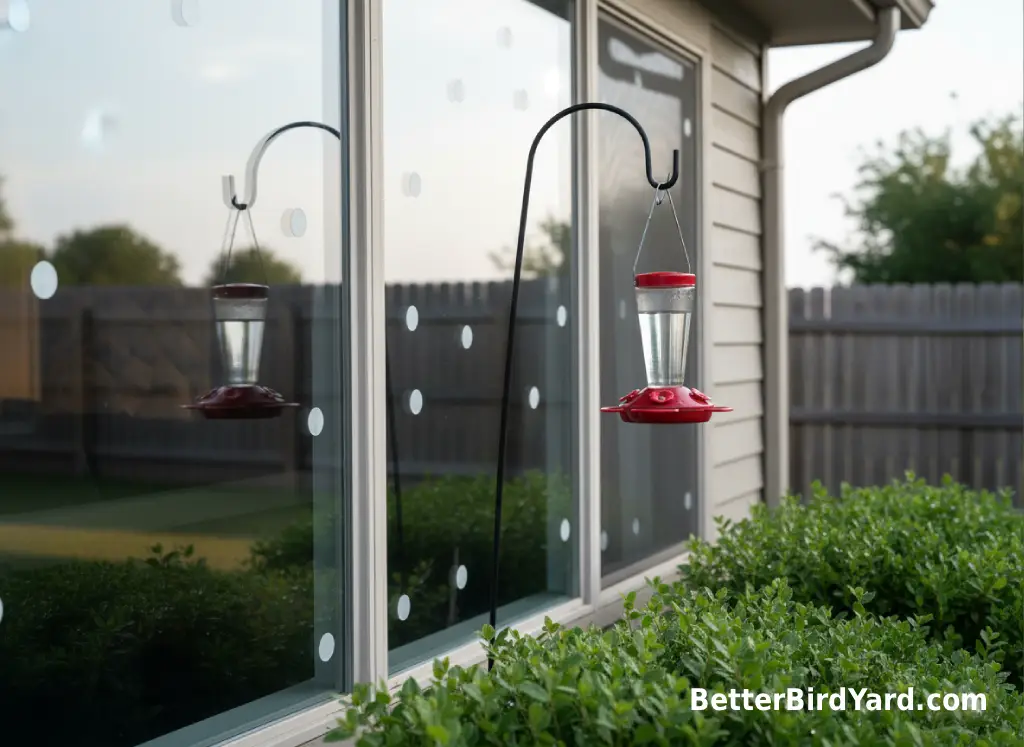
- Use window-strike prevention where birds fly near glass.
Audubon gives a simple nectar recipe of 1/4 cup refined white sugar to 1 cup boiling water and warns against honey and red food coloring. Smithsonian’s National Zoo recommends 1 part sugar to 4 parts water, no red dye, and changing and cleaning feeders every other day to help prevent harmful mold growth.
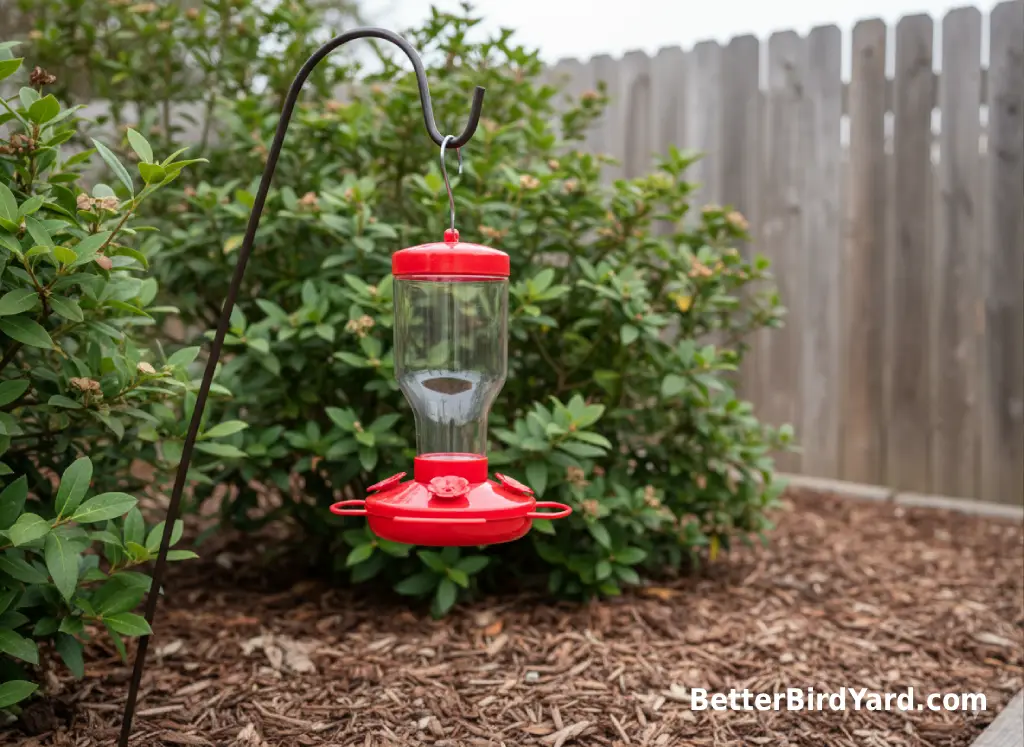
Editorial note: In a small yard or apartment patio, we would rather see one small feeder kept very clean than a large feeder that sits half-full for too long. Small feeders are easier to wash, easier to refill with fresh nectar, and less likely to become a sticky chore.
For more practical setup help, see our guide to how to clean a hummingbird feeder and our ideas for hummingbird-friendly native plants.
Common Mistakes That Do Not Help Hummingbirds
Hummingbird care gets risky when people turn simple feeding into folk recipes or ignore maintenance. The biggest mistakes are usually ordinary ones: nectar left too long in hot weather, a feeder that is hard to scrub, sticky ports, red dye, honey, and feeders placed where birds repeatedly fly toward reflective glass.
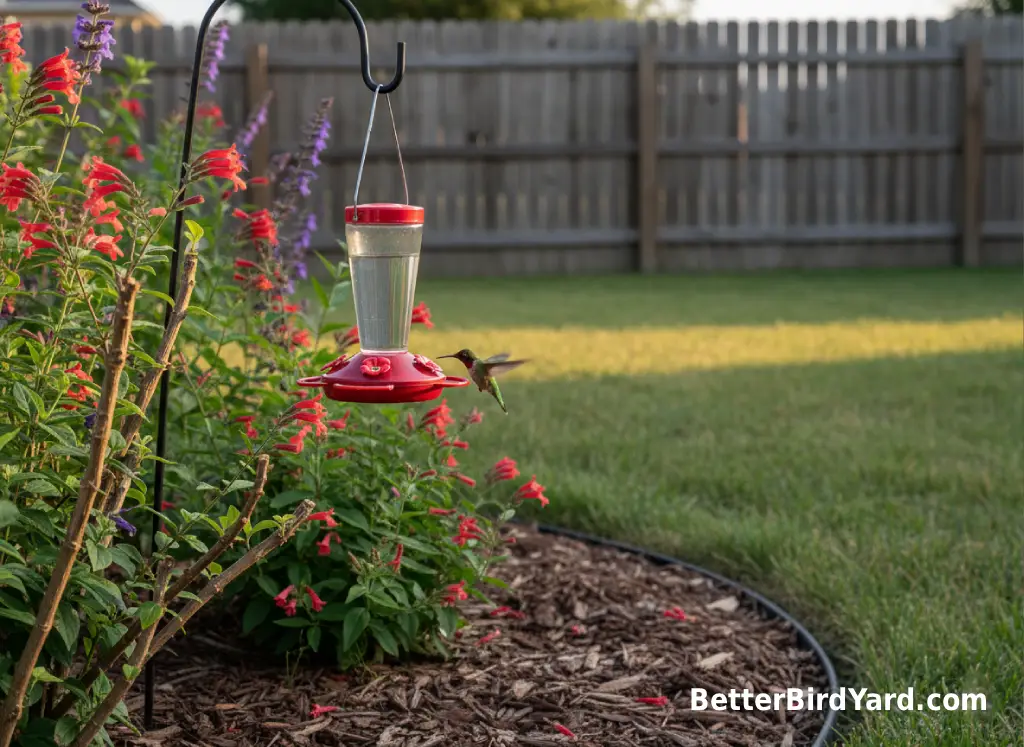
Another mistake is thinking a busy feeder means birds are depending entirely on you. Hummingbirds may visit feeders, flowers, tree sap, and insect-rich shrubs in the same day. They can also be territorial, so a dominant bird may chase others away from a single feeder. Adding another small feeder out of sight of the first can sometimes reduce guarding, but only if you can keep both feeders clean.
American Bird Conservancy lists several human-related hazards hummingbirds face, including habitat loss, domestic cats, pesticides, and collisions with windows and vehicles. These are not feeder details, but they matter in real yards.
Keep the routine simple: fresh homemade nectar, clean feeder, nearby cover, flowers, and safer glass. Skip shortcuts that sound easy but create more risk for birds.
When To Get Local Help For A Hummingbird In Trouble
A sick, injured, stunned, trapped, or orphaned hummingbird needs local qualified help. BetterBirdYard is not a wildlife rehabilitation service, and a blog article cannot safely diagnose a wild bird. Look for visible signs instead: a bird on the ground that cannot fly, a bird stuck indoors, a bird caught in spider webbing or plant netting, a bird that struck a window and does not recover quickly, or a bird that appears weak, unresponsive, or unable to perch.
Safe first steps are limited: keep pets and children away, reduce immediate hazards, and contact a licensed wildlife rehabilitator, local wildlife agency, animal control, or another qualified local professional for instructions. Do not try to medicate, force-feed, or keep a hummingbird as a pet.
For broader bird-health events, USGS National Wildlife Health Center guidance has included pausing feeding during active morbidity or mortality events, cleaning feeders and bird baths, avoiding unnecessary handling, keeping pets away from sick or dead wild birds, and contacting state or District wildlife conservation agencies for instructions.
What A Backyard Feeder Can And Cannot Do
A feeder can provide a convenient energy source. It cannot replace a whole habitat, prevent migration risks, stop bad weather, remove predators, or guarantee that a bird lives to an old age.
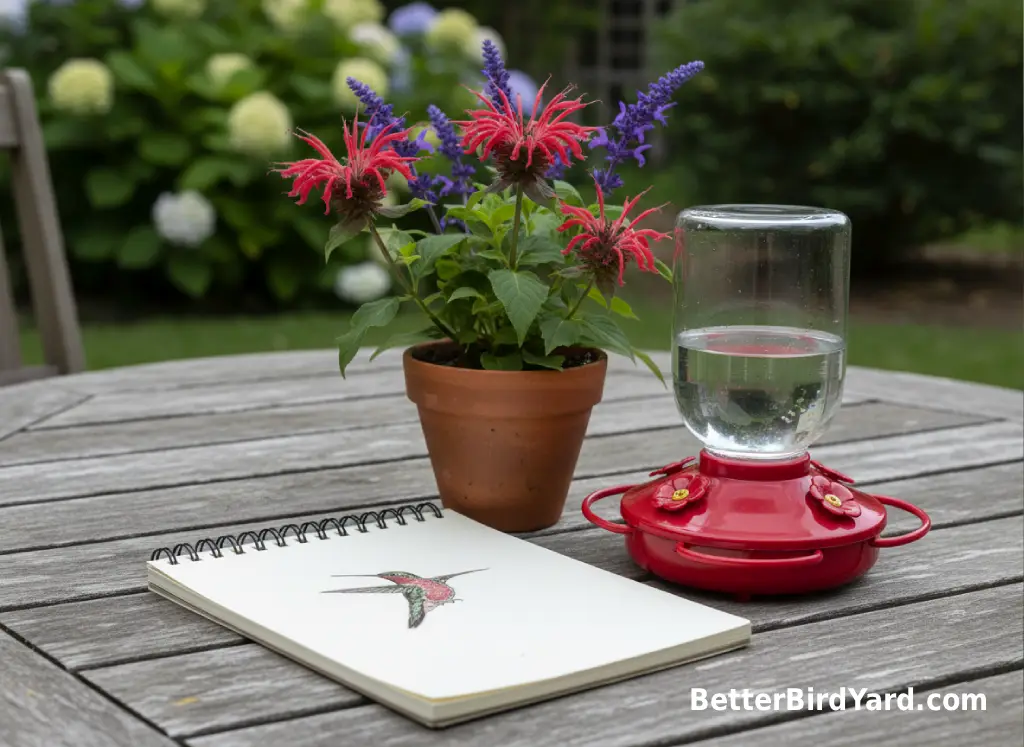
That is actually freeing. You do not have to create a perfect hummingbird sanctuary to help. A renter with a balcony can keep one small feeder clean and add a pot of nectar-rich flowers. A suburban homeowner can reduce window reflections near feeders, avoid insecticides around flowering shrubs, and provide a few sheltered perches. A gardener can choose native or region-appropriate plants that bloom at different times rather than relying only on sugar water.
Hummingbirds need both fast energy and protein-rich small prey. Audubon notes that Anna’s Hummingbirds feed on nectar, tiny insects, and sugar-water mixtures at feeders, while National Wildlife Federation describes shrubs and trees as useful cover and perches, especially around cold nights when hummingbirds may use torpor.
The best backyard plan is steady and modest: clean supplemental nectar, real flowers, fewer hazards, and a little patience.
Quick FAQ About Hummingbird Lifespan
Do Hummingbirds Live Longer If I Feed Them?
A clean feeder can help provide supplemental energy, especially during active feeding periods, but it does not guarantee a longer life. Dirty feeders, spoiled nectar, window hazards, cats, and pesticides can undo the benefit of feeding.
Do Hummingbirds Come Back To The Same Yard?
Some hummingbirds can return to familiar feeding areas, but not every visitor is the same bird. Watch patterns, not just color. A returning feeder visitor may use the same perch, defend the same feeder, or appear around the same seasonal window, but positive identification usually requires banding or very careful field observation.
Should I Leave Feeders Up Late In Fall?
Clean feeders left up late do not stop migration. Smithsonian’s National Zoo notes that migration timing depends on where you live and says clean feeders can help stragglers; in areas with year-round hummingbirds, feeders may stay up as long as they are maintained.
Is A Very Still Hummingbird Always In Torpor?
No. Torpor is a natural energy-saving state, mostly used at night, but an unusually still bird in daylight may be injured, exhausted, trapped, or ill. Do not diagnose it yourself. Keep pets away and contact qualified local help if the bird appears unable to fly, perch, or recover normally.
What Is The Oldest Known Hummingbird?
Among current North American Bird Banding Program records, Broad-tailed Hummingbird is listed at 12 years, 2 months, and Black-chinned Hummingbird at 12 years, 1 month. These are documented records, not typical backyard life expectancy.
The BetterBirdYard Bottom Line
Hummingbirds usually live only a few years, but they are capable of much longer lives than their size suggests. Current banding records show several North American species reaching about 8 to 12 years, including the familiar Ruby-throated Hummingbird and several western species.
For a backyard bird watcher, the most responsible response is not to chase record ages. It is to make your small patch safer: fresh nectar, no dye or honey, clean feeders, flowers that support nectar and insects, fewer window collisions, and pets kept away from feeding areas.
A hummingbird’s life is fast, risky, and mostly beyond our control. But the part that passes through your yard can be cleaner, safer, and more nourishing. That is a meaningful way to support these tiny birds without pretending a feeder can do everything.