Homemade Hummingbird Food: What To Use And Avoid
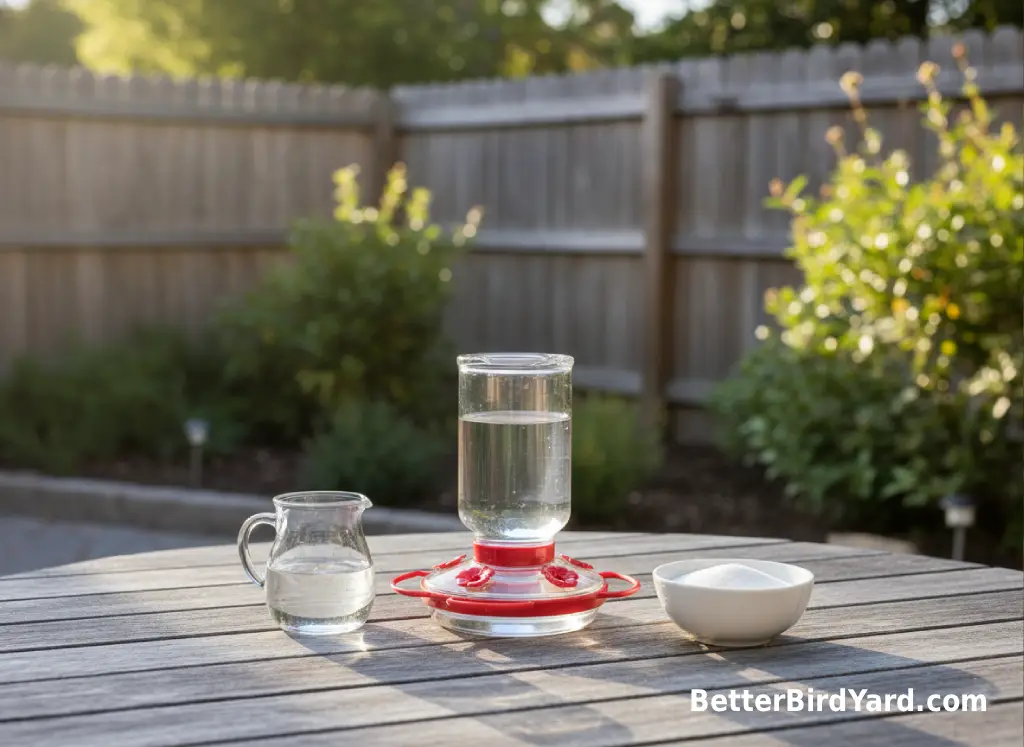
The safest homemade hummingbird food recipe is simple: mix 1 part refined white sugar with 4 parts water, let it cool, and fill a clean feeder. That means 1/4 cup sugar to 1 cup water, or 1 cup sugar to 4 cups water. Project FeederWatch, Smithsonian’s National Zoo, Audubon, and the U.S. Fish and Wildlife Service all point backyard bird watchers toward this plain sugar-water approach, without red dye, honey, or extra additives.
The recipe is easy. The responsibility is keeping it fresh. Hummingbird nectar can spoil quickly in warm weather, especially in sunny feeders or small feeders that get only occasional visits. A safe setup is not about buying a fancy red liquid from the store. It is about using the right sugar water ratio, changing it often, and cleaning the feeder before cloudy nectar, mold, or sticky buildup becomes a problem.
Here is the BetterBirdYard way to make hummingbird food at home, keep it clean, and avoid the common mistakes that can turn a helpful feeder into a risky one.
The Simple Hummingbird Food Recipe
Use this basic hummingbird food ratio every time unless you are following specific guidance from a qualified bird source:
- 1 cup water
- 1/4 cup refined white sugar
For a larger batch, use 4 cups water and 1 cup refined white sugar. The ratio stays the same: 4 parts water to 1 part sugar. Project FeederWatch describes hummingbird nectar as one part sugar to four parts boiling water, cooled before filling the feeder, and Smithsonian’s National Zoo gives the same 1:4 ratio using refined white sugar and water.
Refined white table sugar is the standard choice. Do not add red dye. Do not use honey, brown sugar, powdered sugar, raw sugar, corn syrup, molasses, artificial sweeteners, vitamins, or commercial red nectar mixes. Plain clear sugar water is enough.
You can warm or boil the water to help the sugar dissolve, then cool it fully before filling the feeder. Smithsonian notes that boiling is not required if the sugar fully dissolves, but using hot water is still a tidy beginner-friendly habit because it makes mixing easy.
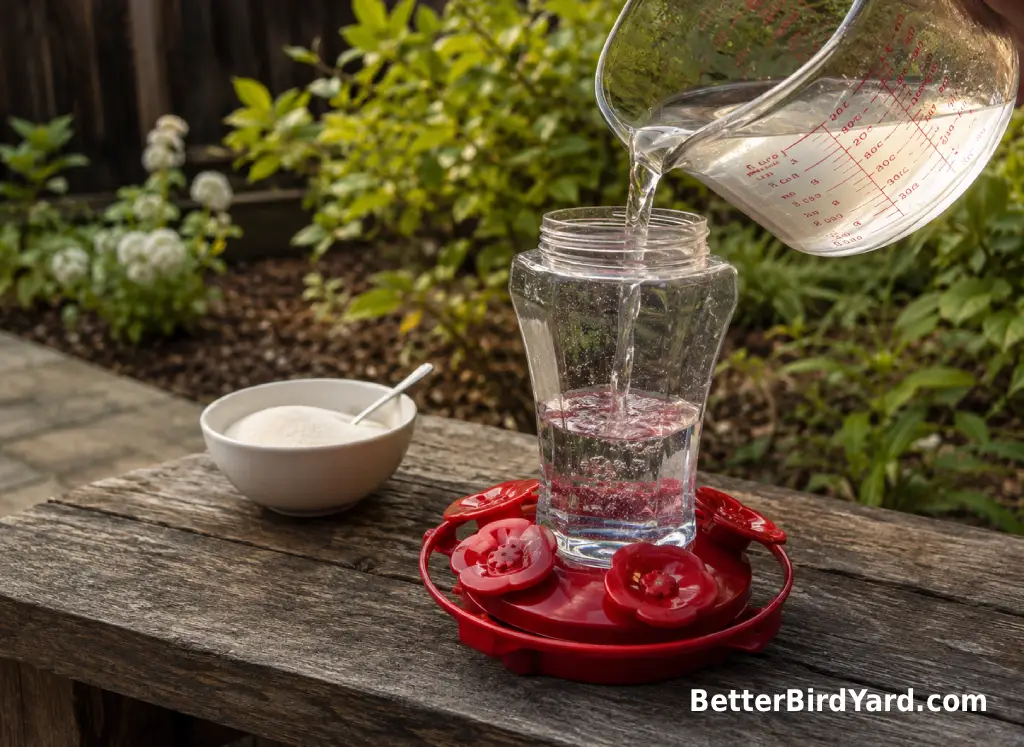
How To Make Hummingbird Food Step By Step
Making hummingbird feeder nectar takes only a few minutes, but the order matters. The feeder should be clean before the fresh sugar water goes in.
- Measure the water and sugar. Use 1 cup water and 1/4 cup refined white sugar for a small batch.
- Dissolve the sugar completely. Stir until the water is clear and no sugar grains remain.
- Let the mixture cool. Never put hot nectar into a feeder.
- Fill only what the birds will use soon. Smaller amounts are easier to keep fresh.
- Refrigerate extra nectar. Smithsonian’s National Zoo recommends storing extra sugar water in the refrigerator for no more than one week.
- Hang the feeder and watch the freshness. Cloudiness, floating specks, mold, or a sour smell mean it is time to empty, clean, and refill.
What Not To Put In Hummingbird Nectar
Good homemade hummingbird food is intentionally plain. Hummingbirds do not need red liquid, supplements, or sweetener experiments at a backyard feeder.
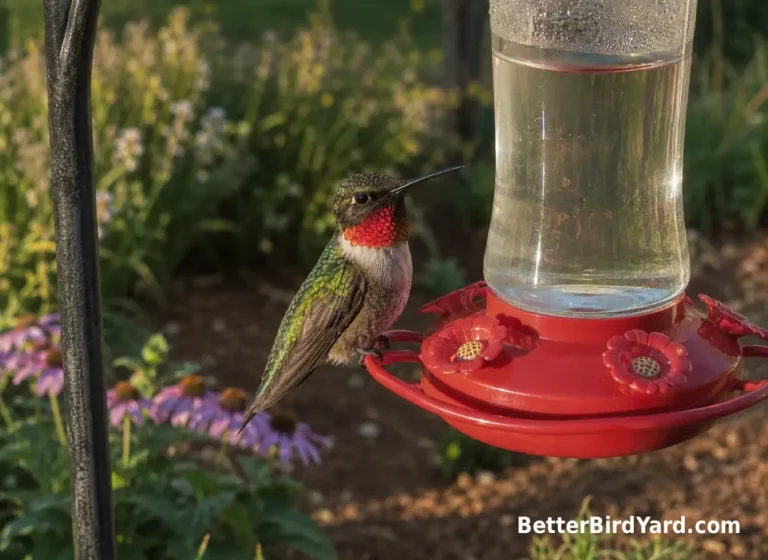
- No red dye or food coloring. Red feeder parts are enough to help hummingbirds notice the feeder, and Audubon notes that red coloring is unnecessary and may be harmful.
- No honey. Cornell’s All About Birds cautions that diluted honey can support bacteria and fungus, and Audubon also warns against substituting honey in nectar.
- No brown, raw, powdered, or unprocessed sugars. Smithsonian recommends refined white sugar and warns against honey, corn syrup, raw sugars, and powdered sugar because it can contain extra ingredients.
- No artificial sweeteners. They do not provide the energy hummingbirds are visiting the feeder to get.
- No vitamins or mineral drops. A feeder is supplemental sugar water, not a complete diet.
If you are wondering how to make sugar water for hummingbirds without sugar, the safest answer is: do not make feeder nectar without sugar. Instead, support hummingbirds with nectar-rich native flowers, a clean water source such as a fine mister, and a pesticide-conscious yard. Audubon recommends native plants and notes that hummingbirds also use small water droplets from misters or leaves.
How Often To Change And Clean Your Feeder
Fresh nectar is only half the job. The feeder itself needs regular cleaning because sugar water can ferment, and mold or bacteria can grow in feeders. Cornell’s All About Birds says hummingbird water should not be left out for more than two or three days and should be changed daily in very hot weather. Audubon recommends cleaning feeders every 2–3 days, daily in particularly hot conditions, and immediately whenever nectar looks cloudy.
For a practical backyard routine, use this:
- Cool spring or fall weather: change and clean at least every few days, and sooner if the nectar looks cloudy.
- Warm or hot weather: change every 1–2 days if needed, especially in sun or high heat.
- Any time you see cloudiness, mold, insects inside, or sticky buildup: empty it immediately, clean it, rinse well, and refill with fresh nectar.
Choose a feeder that comes apart easily. Tiny decorative feeders can look pretty but may be difficult to scrub well. A simple feeder with wide openings, removable ports, and a bottle-brush-friendly reservoir is usually a better beginner choice. For a deeper cleaning routine, see our guide to cleaning hummingbird feeders.
Cups And Batch Sizes For The Sugar Water Ratio
The hummingbird food recipe sugar water ratio is easiest to remember as 4 to 1: four parts water to one part refined white sugar. A “part” can be a tablespoon, cup, or quart as long as the ratio stays the same.
| Finished Batch Size | Water | Refined White Sugar | Best Use |
|---|---|---|---|
| Small Patio Batch | 1 cup | 1/4 cup | Good for one small feeder or light activity |
| Medium Batch | 2 cups | 1/2 cup | Useful when one feeder gets regular visits |
| Large Batch | 4 cups | 1 cup | Better for multiple feeders or heavy use |
| Extra Small Test Batch | 1/2 cup | 2 tablespoons | Good for trying a new feeder without waste |
For most beginners, the small patio batch is the safest starting point. It keeps waste down and makes it more likely you will change the nectar before it spoils.
Where To Place A Hummingbird Feeder In A Small Yard Or Patio
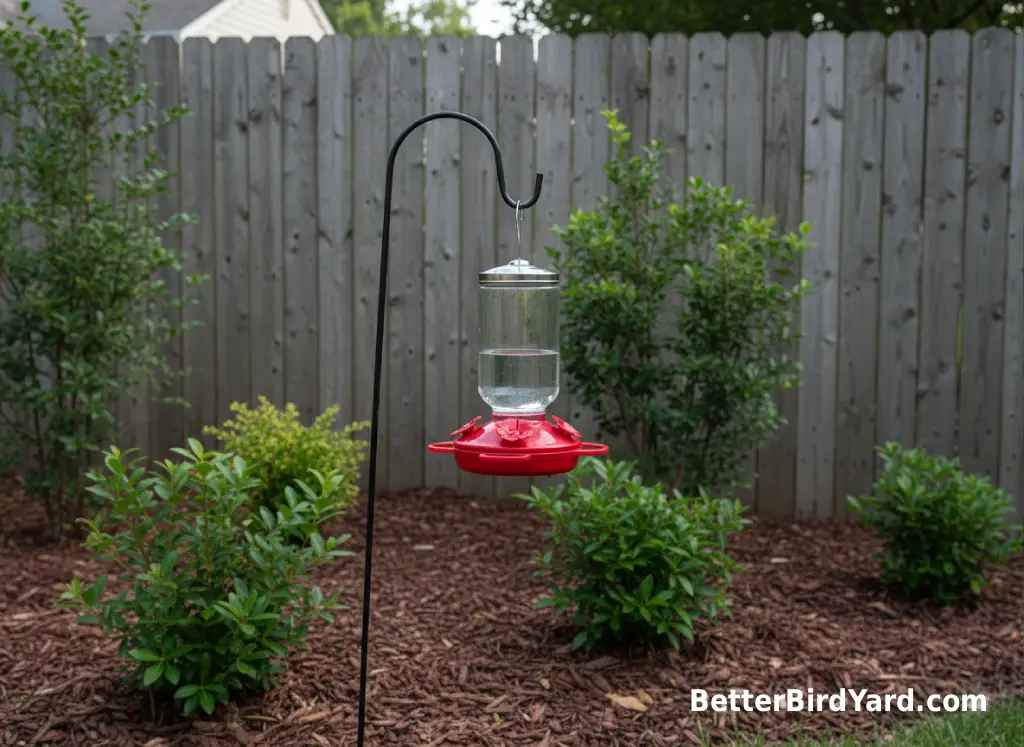
A good feeder location helps the nectar stay fresh and gives hummingbirds a safer, calmer place to feed. Audubon recommends hanging hummingbird feeders in shade to help slow fermentation and spacing multiple feeders far enough apart that one bird cannot easily dominate them all. Smithsonian also suggests a shaded location away from busy activity and, when possible, near trees.
In a suburban yard, a feeder often works well near a flower bed, porch edge, or small tree where you can reach it easily for cleaning. On a balcony or rental patio, use a sturdy hook or railing hanger, keep drips off shared walkways, and check lease, building, or HOA rules before hanging feeders.
Keep the feeder where you will actually maintain it. A feeder tucked behind shrubs may look natural, but if it is inconvenient to reach, it is more likely to be neglected. If you have windows nearby, think about reflections and collision risk. Place feeders thoughtfully and consider window-strike prevention if birds are flying toward reflected trees or sky.
Common Mistakes That Spoil Good Hummingbird Food
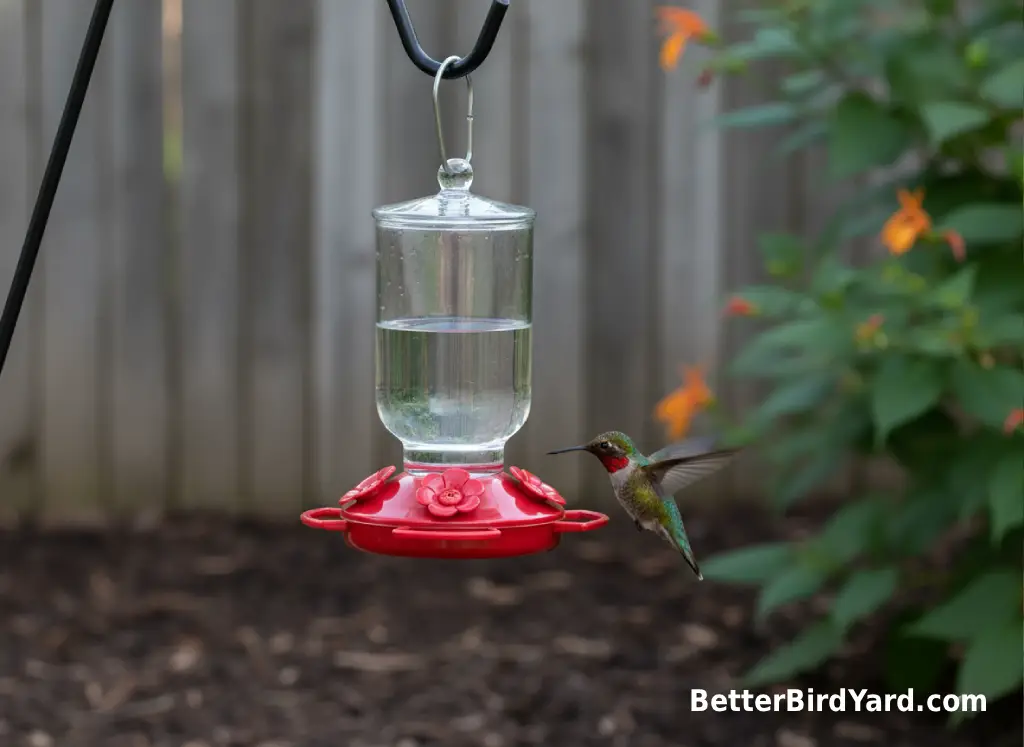
Most hummingbird feeder problems start with good intentions: a bigger feeder, sweeter nectar, a splash of red color, or a refill poured on top of old nectar. The better approach is simpler and cleaner.
- Using too much nectar at once. If the birds are not emptying the feeder quickly, fill it only partway.
- Topping off old nectar. Empty, clean, and refill instead.
- Leaving the feeder in full hot sun. Shade helps slow spoilage, though cleaning is still necessary.
- Using red dye. Red feeder parts can attract hummingbirds without coloring the nectar.
- Ignoring cloudy nectar. Cloudiness is a stop sign, not a “wait one more day” sign.
- Buying a hard-to-clean feeder. If you cannot reach the ports and corners, choose a simpler model.
BetterBirdYard editorial note: If you only change one habit, stop topping off old nectar. Emptying and cleaning may feel like a small chore, but it is the difference between offering fresh sugar water and letting yesterday’s warm nectar sit longer.
Seasonal Timing And Local Conditions
Hummingbird timing varies across the United States. Some areas have seasonal migrants, while some warmer regions may have hummingbirds present for much of the year. Smithsonian’s National Zoo notes that feeder timing depends on where you live and that clean feeders left up later in the season do not prevent hummingbirds from migrating.
For a beginner-friendly plan, watch local sightings, native flower bloom, and your own feeder activity instead of relying on one national date. Audubon suggests checking eBird for first spring sightings and keeping feeders up for a short period after your last observed hummingbird in fall, as long as the feeder is kept clean.
Quick FAQ About Homemade Hummingbird Food
Can I Use Tap Water?
In most homes, if your tap water is safe for people to drink, it is generally fine for hummingbird nectar. Smithsonian’s National Zoo says tap water can be used for hummingbird nectar.
Should Hummingbird Food Be Red?
No. Keep the nectar clear. Use a feeder with red parts or place the feeder near red or orange flowers if you want more visual attraction. Project FeederWatch and Audubon both say not to add red food coloring.
Can I Make It Sweeter To Attract More Hummingbirds?
Stick with the standard 1:4 sugar water ratio for routine backyard feeding. A stronger mixture is not a shortcut to better bird care, and too much tinkering can create confusion for beginners. Clean, fresh, correctly mixed nectar is the better goal.
Is Store-Bought Hummingbird Food Better?
Usually no. A plain homemade hummingbird food recipe using refined white sugar and water is inexpensive, clear, and easy to make. Avoid commercial mixes with red dye or unnecessary additives.
What Else Helps Besides A Feeder?
Add nectar-rich native plants, reduce pesticide use where practical, and provide clean water features such as a gentle mister. A feeder is only one part of a hummingbird-friendly yard.
For plant ideas, use our guide to plants that attract hummingbirds, reduce pesticide use where practical, and provide clean water features such as a gentle mister.
A Safe Routine For Responsible Hummingbird Feeding
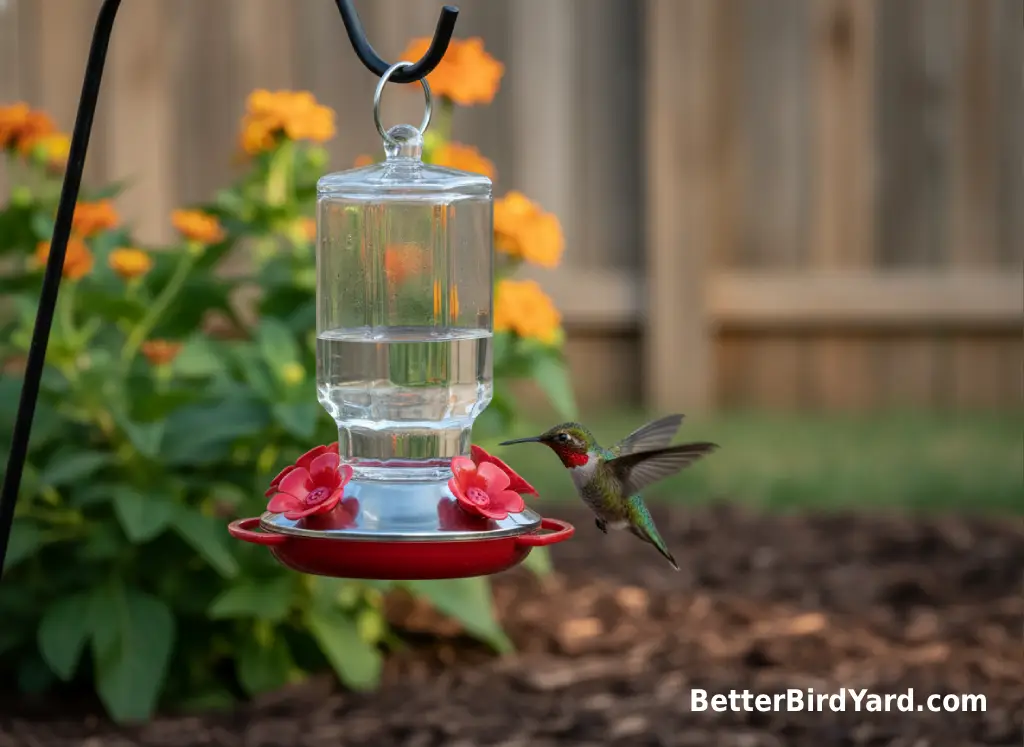
The best recipe for hummingbird feeder success is not complicated: refined white sugar, water, the right ratio, and a clean feeder. Mix 1 part sugar with 4 parts water, cool it before filling, skip the dye and honey, and change the nectar before it spoils.
For beginners, the most bird-friendly habit is making small batches. Fill only what your local hummingbirds are likely to use within a day or two, especially in warm weather. Keep a bottle brush near the sink, choose a feeder that comes apart easily, and make cleaning part of the same routine as refilling.
Hummingbirds do not need a perfect yard to benefit from your effort. A small patio feeder, a few native nectar plants, light shade, and consistent maintenance can be enough to make your space more useful. Keep the food plain, keep the feeder clean, and let the birds decide when your yard fits into their daily route.