Black-Chinned Hummingbird: Backyard ID And Responsible Care
The Black-chinned Hummingbird is one of the most widespread hummingbirds in the western United States, but it can still be surprisingly easy to overlook. In shade, the male’s throat may look simply dark. In good light, that dark chin can flash a narrow violet-purple band. Females are even subtler, with green backs, pale underparts, and no obvious throat color. Cornell Lab describes the species as a small, slender hummingbird with a long, straight bill, while Audubon notes that the male’s purple throat band can be hard to see except in the right light.
For backyard bird watchers, the practical takeaway is simple: do not rely on color alone. Watch the bird’s size, bill shape, posture, range, feeder behavior, and whether your yard is in the right part of the country. If you want to support Black-chinned Hummingbirds responsibly, focus on clean sugar-water feeders, native nectar plants, safe window placement, and a yard that also supports small insects. A feeder can help, but fresh nectar and good maintenance matter more than owning a fancy feeder.
What Does A Black-Chinned Hummingbird Look Like?
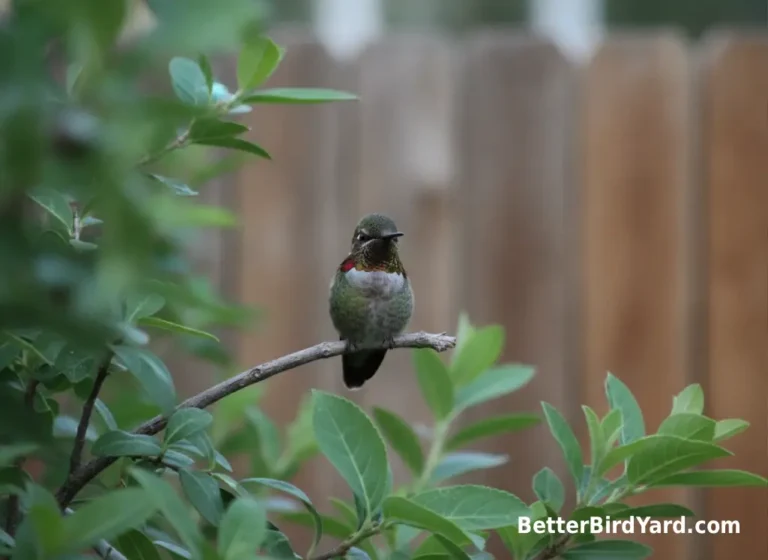
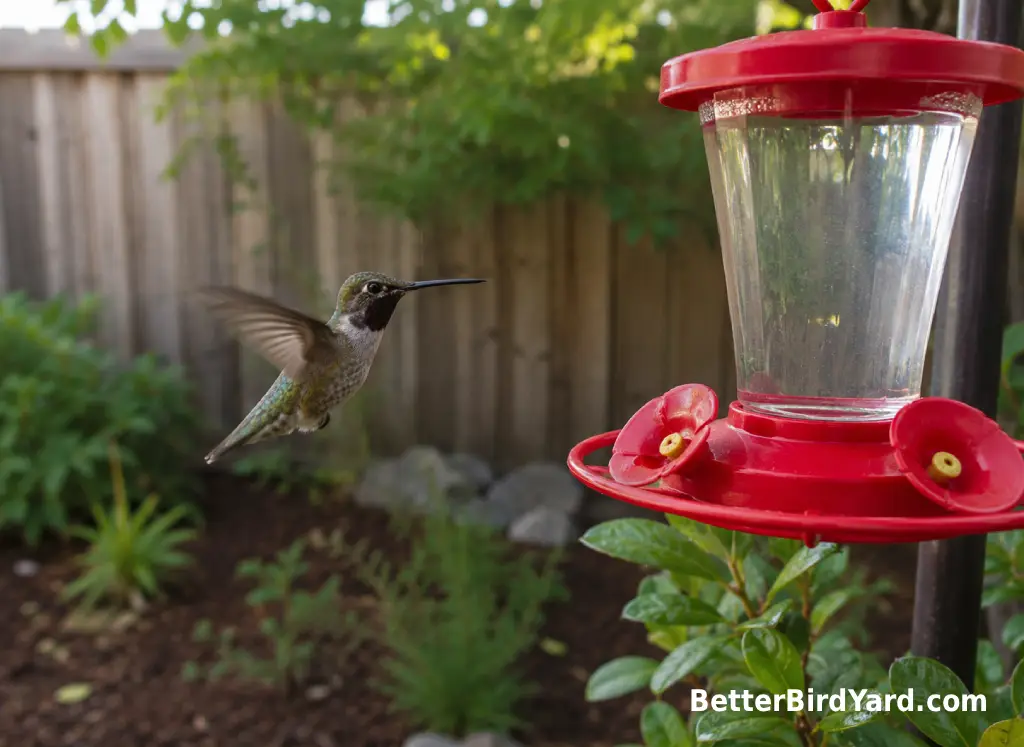
A male Black-chinned Hummingbird is not as flashy at first glance as a Ruby-throated or Anna’s Hummingbird. He usually looks green above and pale below, with a dark head and throat. The key field mark is the thin purple band at the bottom edge of the black throat, but that band may disappear unless sunlight hits it at the right angle. Cornell Lab describes the male as having a dull black head and deep black throat bordered below by iridescent purple.
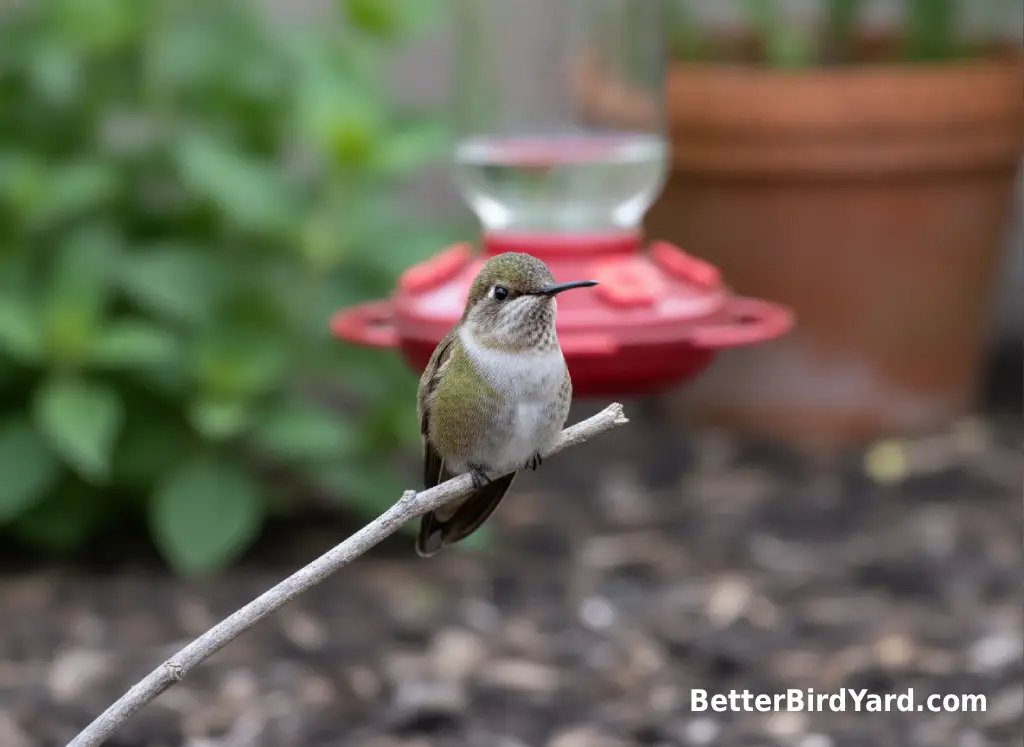
A Black-chinned Hummingbird female is quieter-looking: metallic green above, pale below, and usually without the bold throat color that beginners expect from hummingbird photos. Female and immature birds can look very similar to other western hummingbirds, so range, behavior, and repeated observations matter. Audubon notes that females can be hard to separate from similar hummingbirds, especially where ranges overlap.
| Feature | Male | Female Or Immature |
|---|---|---|
| Throat | Black throat with a narrow purple lower band in good light | Pale throat, sometimes with faint speckling |
| Back | Green to metallic green | Green to metallic green |
| Bill | Long, slim, and mostly straight | Long, slim, and mostly straight |
| Overall Impression | Dark-throated, slender western hummingbird | Plain, pale-bellied green hummingbird |
A common beginner mix-up is calling it a black throated hummingbird. That phrase describes what the male can look like, but the accepted common name is Black-chinned Hummingbird. The “black chin” is not a separate species from the Black-chinned Hummingbird; it is simply a casual description of the bird’s most noticeable field mark.
Where Black-Chinned Hummingbirds Live In The United States
Black-chinned Hummingbirds are mainly birds of the western United States. Cornell Lab describes them as widespread in the West and notes that they use habitats ranging from deserts to mountain forests, with many wintering along the Gulf Coast.
In backyard terms, that means your chances are much better in states such as Texas, New Mexico, Arizona, Utah, Nevada, Colorado, Idaho, and parts of the Pacific Northwest than in most of the eastern United States. Local range still depends on elevation, season, water, plantings, and migration timing. A suburban yard with trees, flowering plants, and a clean feeder can be useful habitat, especially where the species already occurs nearby.
If you are in the eastern U.S., a similar-looking female hummingbird at a feeder is much more likely to be a Ruby-throated Hummingbird unless local records suggest otherwise. In the West, female Black-chinned, Anna’s, Costa’s, Broad-tailed, and other hummingbirds can overlap in confusing ways. For a tricky bird, use a field guide, the Cornell Lab’s Merlin Bird ID app, or local birding records instead of guessing from one blurry feeder photo.
How To Tell A Black-Chinned Hummingbird Female From Similar Birds
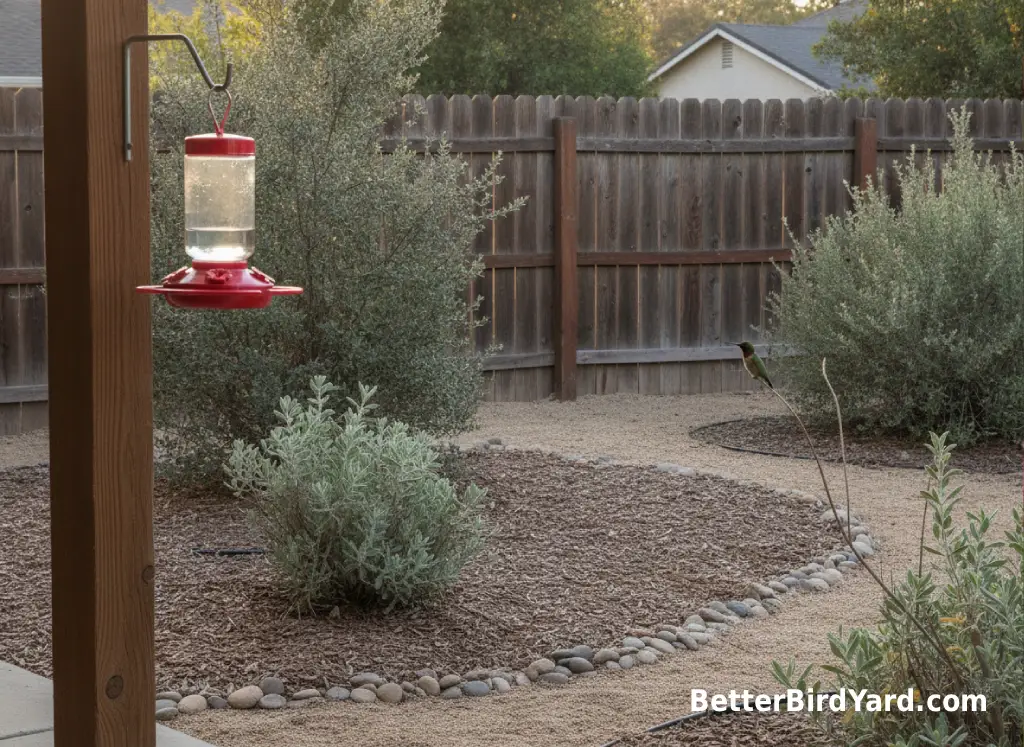
The Black-chinned hummingbird female is one of those birds that teaches patience. She usually does not give you a dramatic color patch. Instead, look for a slender shape, a long straight bill, a green back, pale underparts, and white tips on the outer tail feathers. Cornell Lab lists females and immature birds as dull metallic green above with a whitish throat and underparts.
In a backyard, the best identification often comes from a pattern of clues rather than one perfect field mark. Ask yourself: Are Black-chinned Hummingbirds expected in my area this month? Is the bill long and straight? Does the bird look slender rather than chunky? Are there adult males nearby showing the black throat and purple lower band? Is the bird repeatedly using the same feeder, perch, or native flowers?
For beginner-to-intermediate bird watchers, the most honest answer is sometimes “female-type hummingbird.” That is not a failure. Hummingbird identification can be difficult, and a cautious label is better than forcing a confident name onto a bird seen for three seconds in poor light.
How To Attract Black-Chinned Hummingbirds Responsibly
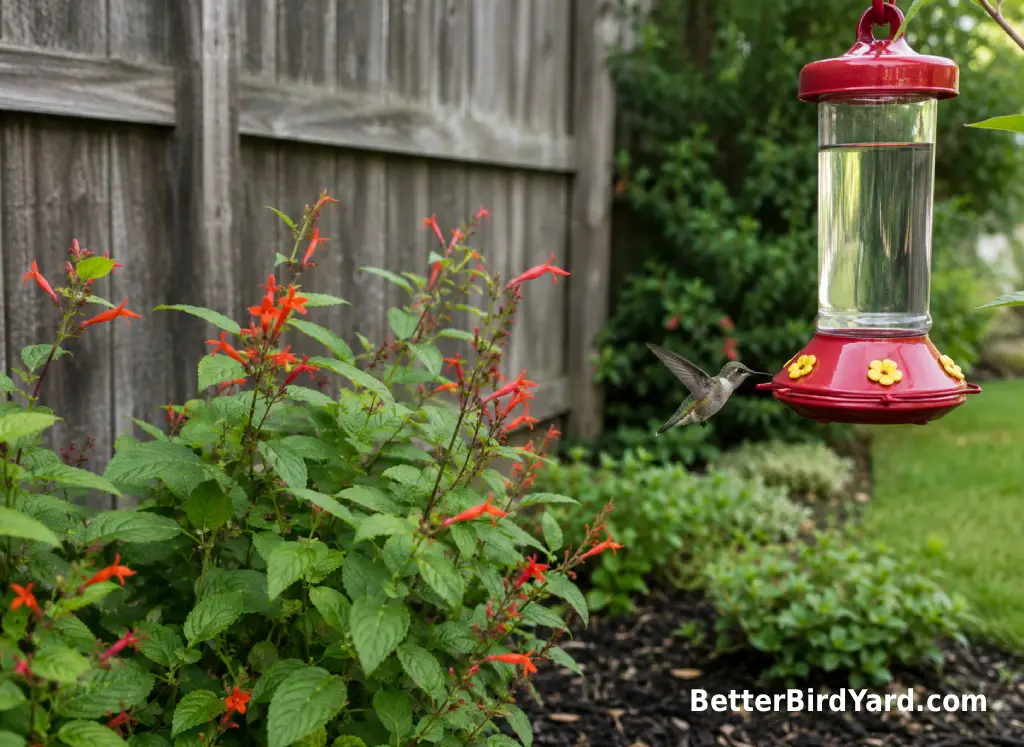
Attracting Black-chinned Hummingbirds is less about a single magic feeder and more about offering a safe, reliable feeding area. A good setup combines fresh nectar, native flowers, perches, shelter, and low pesticide use. National Wildlife Federation recommends native flowers as nectar sources and notes that those plants also support insects, which hummingbirds eat as part of their diet.
In a small yard or patio, keep it simple:
- Hang one easy-to-clean hummingbird feeder where you can reach it often.
- Add a pot or bed of region-appropriate native flowers with tubular blooms.
- Place the feeder where birds have nearby perches but are not boxed in by hiding spots for cats.
- Avoid spraying pesticides around hummingbird flowers, feeders, and nesting cover.
- Use red feeder parts or nearby red flowers for visibility, not red dye in the nectar.
Good plant choices vary by region, so use your state extension service, local native plant society, or native plant nursery for local guidance. In western and southwestern yards, penstemons, salvias, columbines, desert honeysuckle, and other native tubular flowers may be useful depending on your area. In containers, choose plants that match your sun, heat, and watering limits rather than copying a plant list from another state.
For more planting help, see our guide to native plants for hummingbirds.
Nectar And Feeder Cleaning Basics That Matter
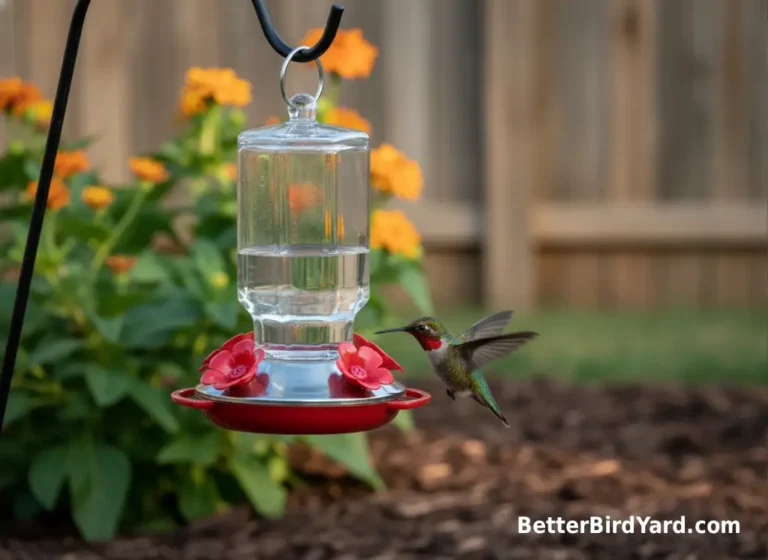
Use plain white granulated sugar and water. The standard homemade hummingbird nectar recipe is 1 part sugar to 4 parts water. Smithsonian’s National Zoo gives this ratio, says not to add red dye, and recommends changing and cleaning feeders every other day to prevent harmful mold growth. National Wildlife Federation also recommends 1 part white sugar to 4 parts water and warns against honey and artificial sweeteners.
Clear nectar in a red feeder is enough. Audubon’s hummingbird feeding guidance also says red coloring is not necessary and may be harmful.
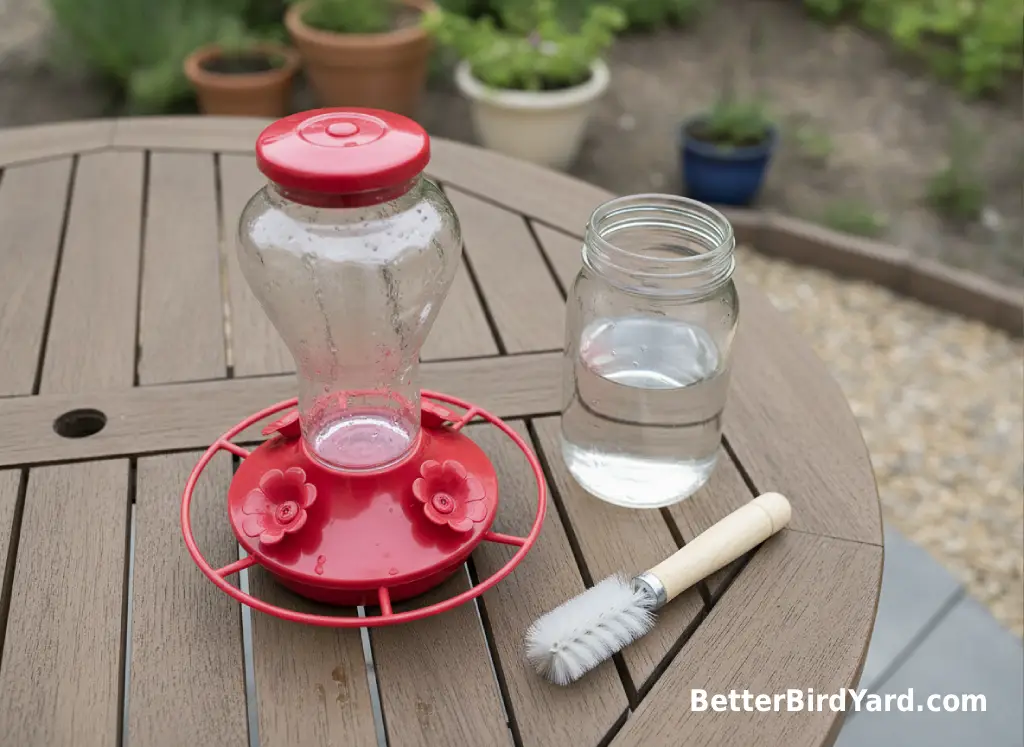
Clean more often in hot weather, direct sun, or whenever nectar looks cloudy, stringy, fermented, or contaminated by insects. A feeder that is hard to scrub is usually a bad feeder for beginners. Look for a design with a wide opening, removable parts, and ports you can reach with a small brush. If you cannot keep up with cleaning, it is better to take the feeder down and rely on native flowers than to leave spoiled nectar available.
For a deeper routine, see our hummingbird feeder cleaning guide.
Feeder Placement For Small Yards, Patios, And Windows
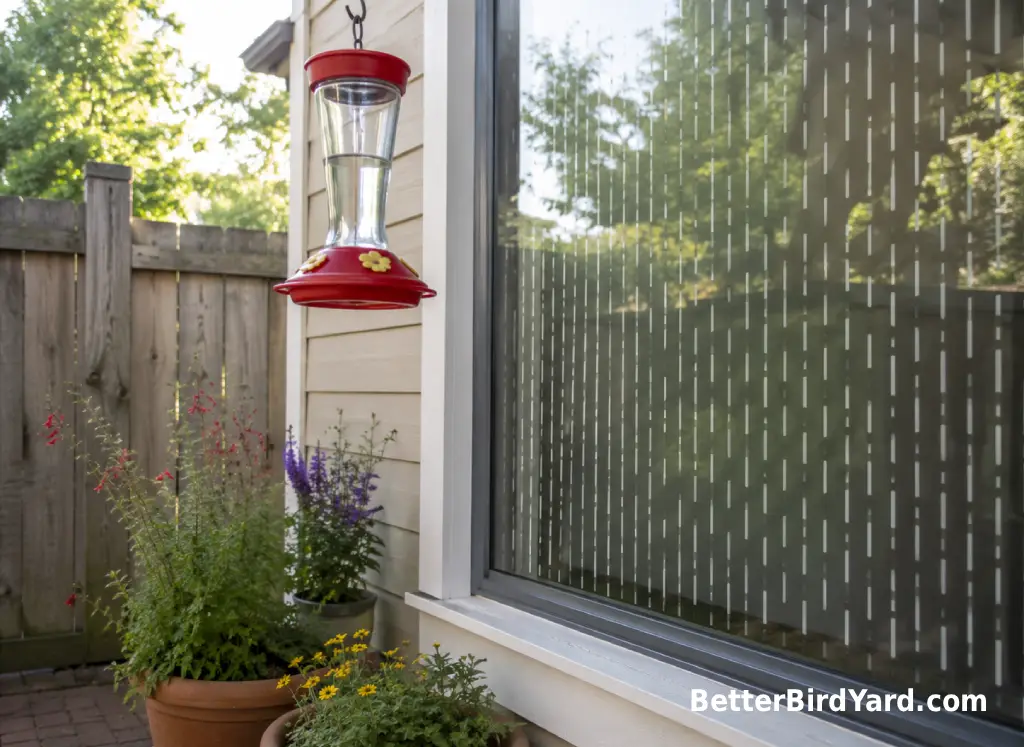
Hummingbirds are fast, and windows can be dangerous when they reflect sky, trees, or open space. Cornell Lab recommends closely spaced exterior window markings to help prevent collisions and notes that small birds such as hummingbirds need tight spacing. Cornell also advises placing feeders very close to windows so birds cannot build up speed, or far enough away that the window is less likely to be part of the immediate flight path.
In a real backyard, feeder placement is a balance. Put the feeder where you can clean it easily, where nectar will not bake all day in full sun, and where birds have a nearby perch. At the same time, avoid placing it right beside dense cover where a cat could hide. National Wildlife Federation recommends keeping feeders and birdbaths away from potential cat hiding places so birds have a better chance to spot danger.
For balconies and patios, choose a small feeder, refill with small amounts of nectar, and check lease or HOA rules before attaching hardware to railings, walls, or shared exterior surfaces. If ants or bees become a problem, clean drips promptly, use an ant moat if the feeder supports one, and avoid leaky feeders. Do not spray insecticide around the feeder; hummingbirds also rely on tiny insects, and pesticides can create broader yard risks.
Editorial note: If you only change one thing, make the feeder easier to clean. A simple feeder you wash often is better than a decorative feeder you avoid touching.
Common Mistakes To Avoid With Black-Chinned Hummingbirds
The most common mistake is assuming hummingbirds need special red nectar. They do not. Use clear sugar water, keep the feeder clean, and let the feeder’s red parts or nearby flowers provide the visual cue. Smithsonian, Audubon, and National Wildlife Federation all advise against red dye in nectar.
- Do not let nectar sit until it turns cloudy or moldy.
- Do not use honey, brown sugar, artificial sweeteners, or dyed nectar.
- Do not buy a huge feeder unless birds are emptying it quickly.
- Do not hang feeders where cats can hide nearby.
- Do not assume every plain female hummingbird is a Black-chinned Hummingbird.
- Do not spray pesticides on flowers that hummingbirds visit.
Keep the setup steady, clean, and visible. If the feeder stays untouched for weeks, move it slightly, add flowers, or watch at different times of day before deciding it has failed.
When A Hummingbird Seems Sick, Injured, Or Out Of Place
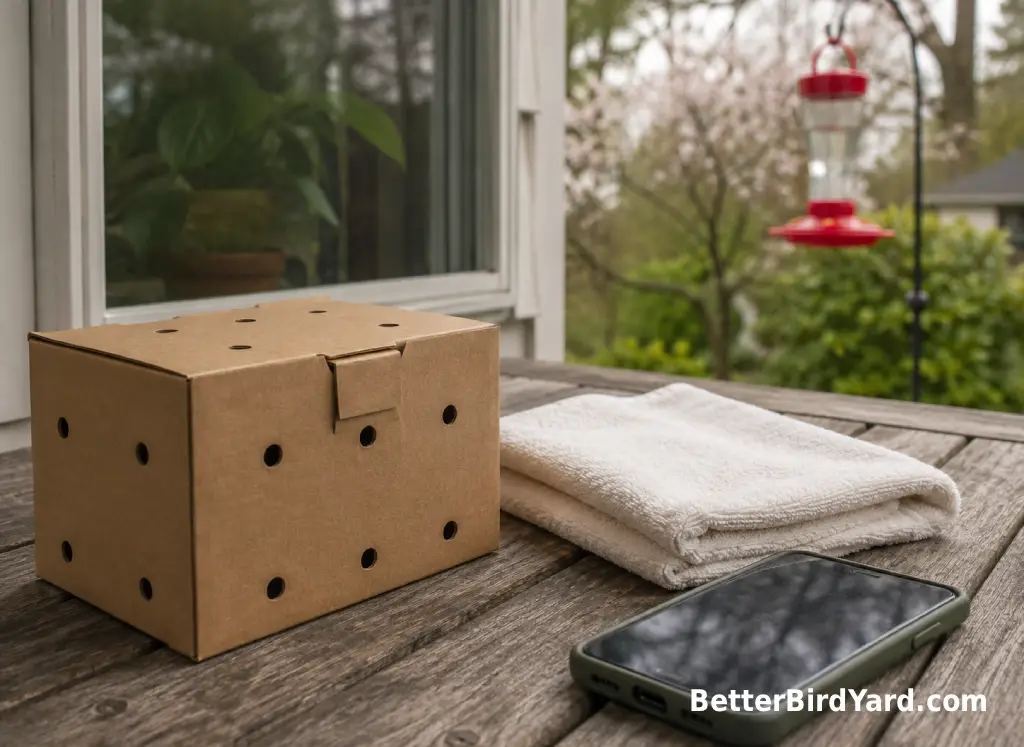
A hummingbird sitting motionless on the ground, striking a window, acting unusually weak, or being caught by a cat needs caution. Do not try to diagnose the bird, feed it by hand, give it sugar water with a dropper, or keep it as a pet. The safer first step is to keep pets and people away and contact a licensed wildlife rehabilitator, local wildlife agency, animal control, or another qualified local professional for instructions.
If you notice several birds acting sick around a feeder, take the feeder down, clean it thoroughly, clean nearby bird baths, and check your state wildlife agency for local guidance. Cornell Lab has noted that regular feeder and birdbath cleaning is an important disease-prevention habit, and avian influenza guidance can change by region and by whether domestic poultry are nearby. USDA APHIS maintains current avian influenza information for poultry and wild bird surveillance, while Cornell’s public guidance has described feeder risk for songbirds as generally low unless poultry or local agency recommendations change.
BetterBirdYard is not a wildlife rehabilitation service, veterinary service, or public health agency. When a wild bird’s health is involved, local qualified help is the right next step.
A Better Backyard For Black-Chinned Hummingbirds
The best Black-chinned Hummingbird yard is not complicated. It offers fresh nectar when a feeder is used, flowers that fit the local region, safe perches, fewer pesticides, and thoughtful placement away from obvious hazards. It also accepts that hummingbirds are wild birds. They may visit heavily one week and barely appear the next, depending on blooming plants, weather, nesting activity, migration, and local food availability.
For beginners, start with one clean feeder and one small patch or container of native nectar plants. Watch what happens for a full season. If hummingbirds visit regularly, then consider adding a second feeder out of direct sight of the first one, because hummingbirds can be territorial around feeding spots. If they do not visit, check your range, feeder cleanliness, flower choices, and window or predator risks before adding more gear.
Black-chinned Hummingbirds reward careful observation. The male’s violet throat band may appear for only a second. A female may look plain until you notice her neat shape and repeated perch. That is part of the fun: once your yard is safe, clean, and welcoming, the bird watching becomes slower, sharper, and much more satisfying.