How Fast Can A Hummingbird Fly And Hover?
Hummingbirds look impossibly quick because they are doing several fast things at once: flying forward, hovering, braking, reversing, chasing rivals, and beating their wings so quickly that the motion blurs. For a backyard bird watcher, the simplest answer is that hummingbirds can fly up to about 30 miles per hour in ordinary forward flight, while special display dives can be much faster. The U.S. Fish and Wildlife Service describes North American hummingbirds as flying at speeds up to 30 miles per hour, and Audubon notes that their wings can beat 20 to 80 times per second depending on the situation.
The exact speed depends on species, wind, behavior, and whether the bird is cruising, hovering, migrating, chasing, or diving. A hummingbird visiting your feeder is usually not trying to set a speed record. It is making tiny, precise movements that help it pause at a feeder port, back away from a flower, or dodge another hummingbird in a quick territorial chase.
Quick Answer: How Fast Can A Hummingbird Fly?
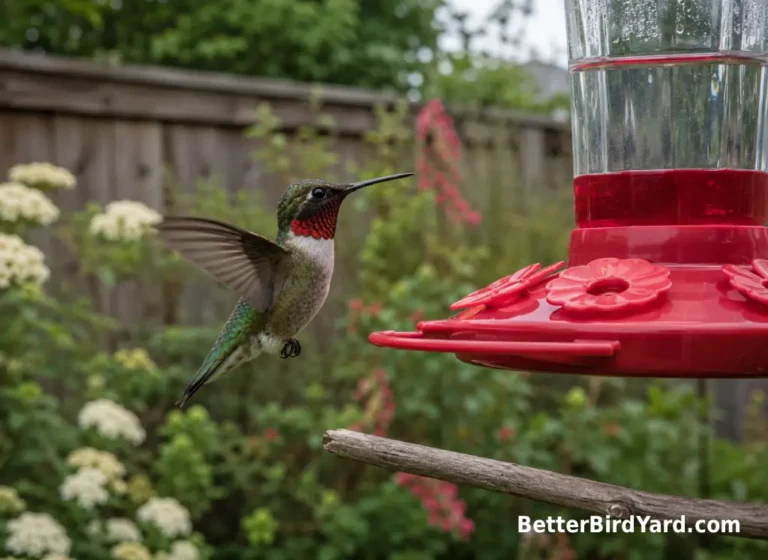
In everyday backyard terms, a hummingbird’s forward flight can reach roughly 30 mph, especially when it is moving between feeding areas or chasing another bird. Around a feeder, you are more likely seeing short bursts, hovering, braking, and sharp turns than long, straight-line speed.
| Flight Situation | Practical Speed Answer | What Backyard Birders Are Seeing |
|---|---|---|
| Ordinary Forward Flight | Up to about 30 mph | Fast travel between flowers, trees, feeders, and perches |
| Hovering | Little or no forward speed | The bird hangs in place while feeding |
| Wingbeats | Often around 50 times per second, with broader ranges by species and behavior | The wings blur into a soft haze |
| Backward Flight | Best understood as a short maneuver, not a cruising speed | The bird backs away from a flower or feeder port |
| Display Dives | Much faster; some measured dives are around 60 mph | Mostly courtship or territorial display, not normal feeder travel |
| Migration | Often similar to forward flight, but ground speed varies with wind and stops | Long-distance movement depends on fuel, weather, and habitat |
A helpful way to think about hummingbird speed is this: forward flight is fast, but control is the real marvel. Audubon describes hummingbirds as able to hover, fly backward and forward, and come to a quick stop, which is why a bird can zip toward your feeder and then freeze in midair like it hit invisible brakes.
How Fast Do Hummingbirds Flap Their Wings?
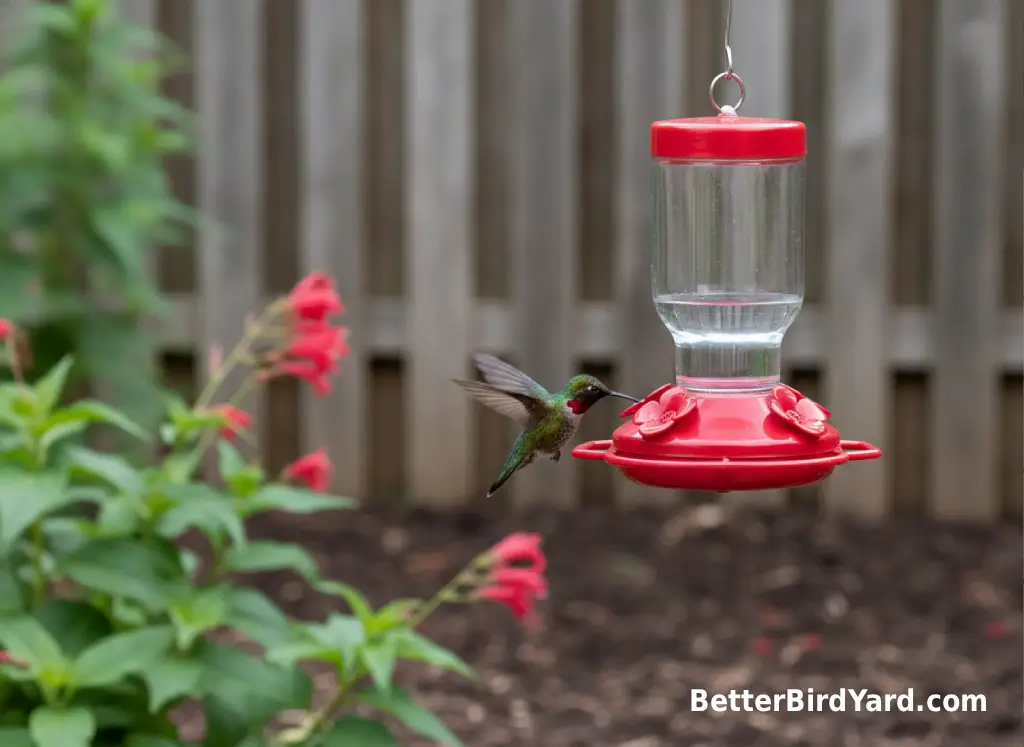
Hummingbird wingbeats are usually measured in beats per second, not miles per hour. Cornell Lab’s All About Birds says the Ruby-throated Hummingbird beats its wings about 53 times per second, while Audubon gives a broader hummingbird range of about 20 to 80 wingbeats per second.
That range matters because not every hummingbird is doing the same thing. A bird hovering steadily at a feeder, chasing another hummingbird, or performing a display may use different wingbeat rates. Species also differ. A Ruby-throated Hummingbird in an eastern backyard and an Anna’s Hummingbird in a western yard are both hummingbirds, but they are not identical little machines.
They are also not flapping like a robin or cardinal. The National Park Service describes the Ruby-throated Hummingbird’s wing motion as more of a figure-eight rotation, which helps create lift on both the forward and backward strokes. That unusual wing motion is what lets hummingbirds hover and change direction so sharply.
Can Hummingbirds Really Fly Backward?
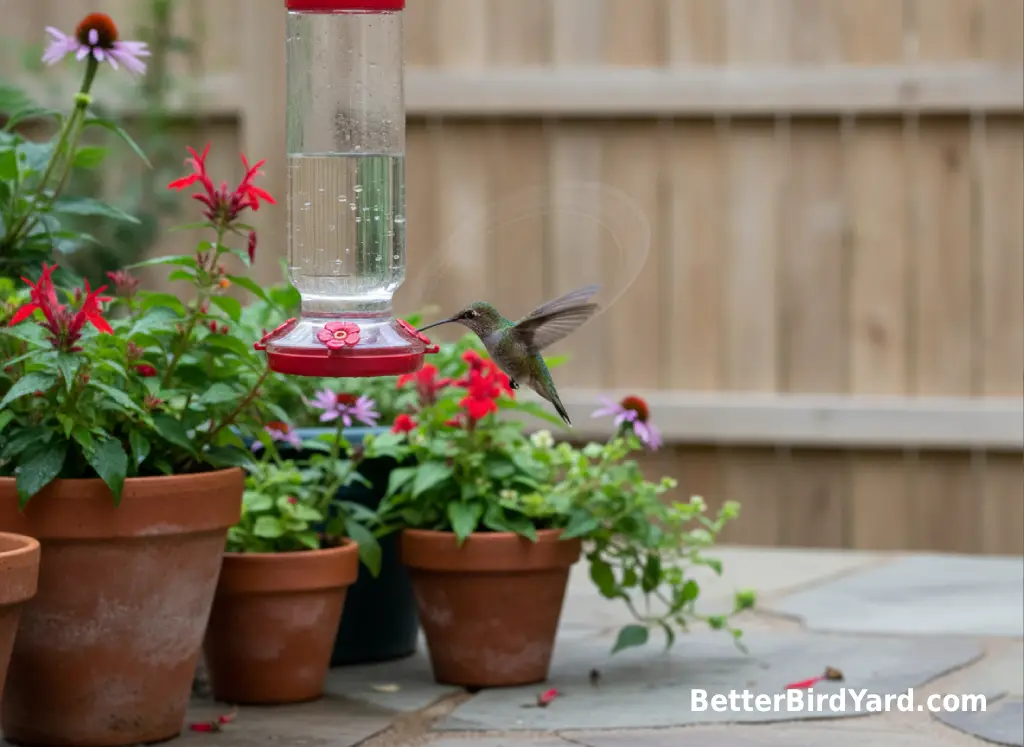
Yes. Hummingbirds can fly backward, and that is one of the easiest clues that you are watching a bird with very unusual flight control. Audubon describes hummingbirds as able to fly backward and forward, and the U.S. Fish and Wildlife Service explains that their figure-eight wing rotation helps them fly backward, hover, and change direction quickly.
What we would not do is put a neat backyard number on how fast a hummingbird can fly backward. Backward flight is usually a short, precise movement: backing away from a flower, shifting off a feeder port, or adjusting position during a territorial encounter. It is not how hummingbirds travel long distances.
A common mistake is to think backward flight means the bird is flying in reverse like a car backing down a driveway. It is more like a tiny aerial adjustment. The bird changes wing angle, holds itself in place, slides back, then turns or darts forward again. At a feeder, that can happen so quickly that it looks like a magic trick.
How Fast Do Hummingbirds Fly When Migrating?
During migration, hummingbirds still use powered flight, but their progress is not just a matter of top speed. Wind, weather, daylight, available nectar, insects, rest stops, and body condition all matter. Smithsonian’s National Zoo notes that Ruby-throated Hummingbirds can fly straight across the Gulf of Mexico in a single flight, which is a remarkable endurance feat for such a small bird.
For backyard readers, the safer answer is that migrating hummingbirds may be capable of the same fast forward flight you see locally, but migration pace is shaped by refueling. A bird may move quickly one night or morning, then spend time feeding heavily in a flower-rich yard, woodland edge, or coastal stopover before continuing.
This is why a clean feeder and late-season flowers can matter, especially for birds passing through. A feeder does not “trap” hummingbirds or stop migration. Audubon explains that hummingbirds migrate based on seasonal cues, and clean feeders can remain available for late migrants as long as they are properly maintained.
Why Hummingbird Dives Are Different From Normal Flight
If you hear that a hummingbird can fly 60 mph or faster, check the context. Those numbers usually refer to special dives, not ordinary feeder visits. Research on male Anna’s Hummingbirds measured an average maximum dive velocity of 27.3 meters per second, which is about 61 mph.
That is an impressive speed, but it is not the same as a hummingbird cruising across a neighborhood all day at 60 mph. In display dives, the bird is using gravity, posture, and a specific courtship or territorial behavior. Around a patio feeder, the more common show is a short chase, a rapid retreat to a perch, or a hovering standoff with another hummingbird.
Beginner bird watchers sometimes compare hummingbirds with falcons, swifts, or aircraft. That can be fun, but it can also confuse the answer. Hummingbirds are extraordinary because they combine speed with fine control at a tiny body size. Their best trick is not just going fast; it is going fast, stopping almost instantly, hovering, and reversing in the space around a flower.
What Hummingbird Speed Means For Your Feeder Setup
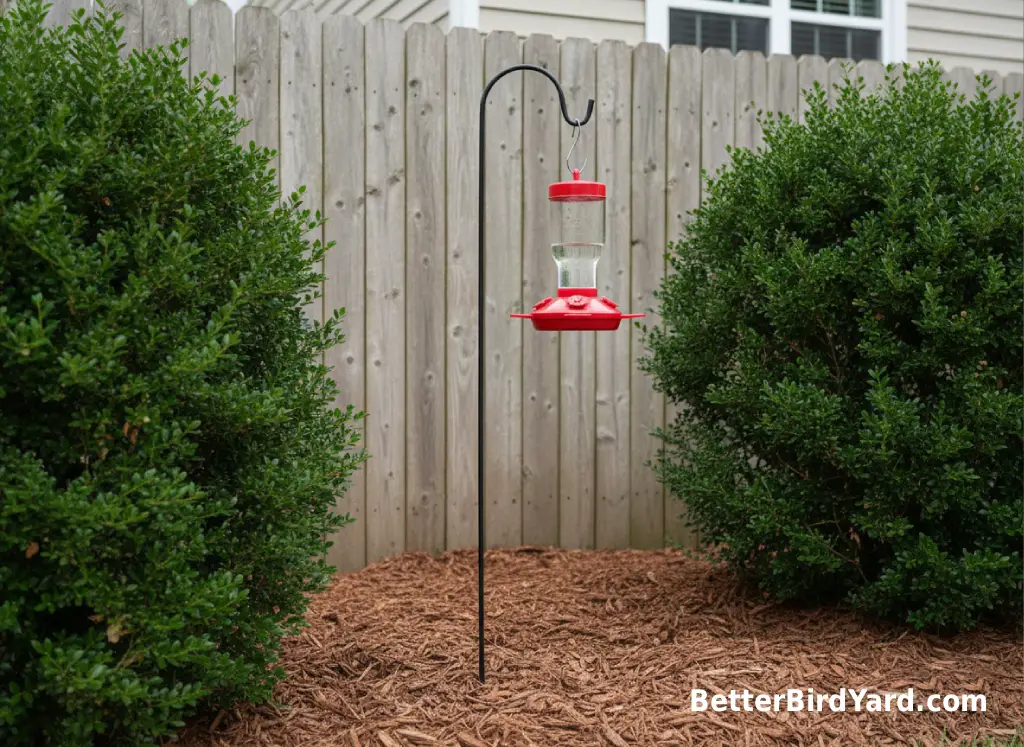
Fast flight is fun to watch, but it also makes feeder placement more important than many beginners expect. Hummingbirds may dart away quickly when startled, chased, or approached by a predator. The National Wildlife Federation recommends avoiding the 3- to 25-foot window danger zone for hummingbird feeders, or placing feeders very close to windows so birds are less likely to build up speed before reaching the glass.
For a small yard, patio, or balcony, keep the setup simple:
- Place the feeder where you can reach it easily for cleaning and refilling.
- Give hummingbirds open space to hover around the feeder ports.
- Keep nearby shrubs or small trees available as resting cover, without burying the feeder in foliage.
- Watch for window reflections, outdoor cats, and places where predators could hide.
- Use a small feeder if only one or two birds visit, so nectar is replaced before it spoils.
Editorial note: If you only change one thing, make the feeder easier to clean. A beautiful feeder that is hard to scrub becomes a problem quickly in warm weather.
For nectar, use plain refined white sugar and water at a 1:4 ratio, with no red dye. Smithsonian’s National Zoo recommends changing feeders every other day and cleaning them thoroughly to prevent harmful mold growth, while Audubon and the National Wildlife Federation also emphasize frequent cleaning, especially in hot weather.
For a fuller feeder-care walkthrough, see our homemade hummingbird food recipe and our guide to cleaning a hummingbird feeder safely.
Common Mistakes About Hummingbird Speed
The biggest mistake is treating one dramatic number as the answer for every situation. A hummingbird hovering at your feeder, migrating across open water, and diving during display are doing different things.
- Do not confuse wingbeat speed with flight speed. Wingbeats are measured in beats per second; travel speed is measured in miles per hour.
- Do not assume backward flight has the same kind of cruising speed as forward flight. It is usually a short control maneuver.
- Do not use red dye because hummingbirds are fast or attracted to red. Red feeder parts and flowers are enough; dye is unnecessary and may be harmful.
- Do not place a feeder where a startled bird can shoot straight into reflective glass.
- Do not leave nectar out just because birds are still visiting. Cloudy nectar, mold, heat, and sticky residue are signs to empty and clean the feeder.
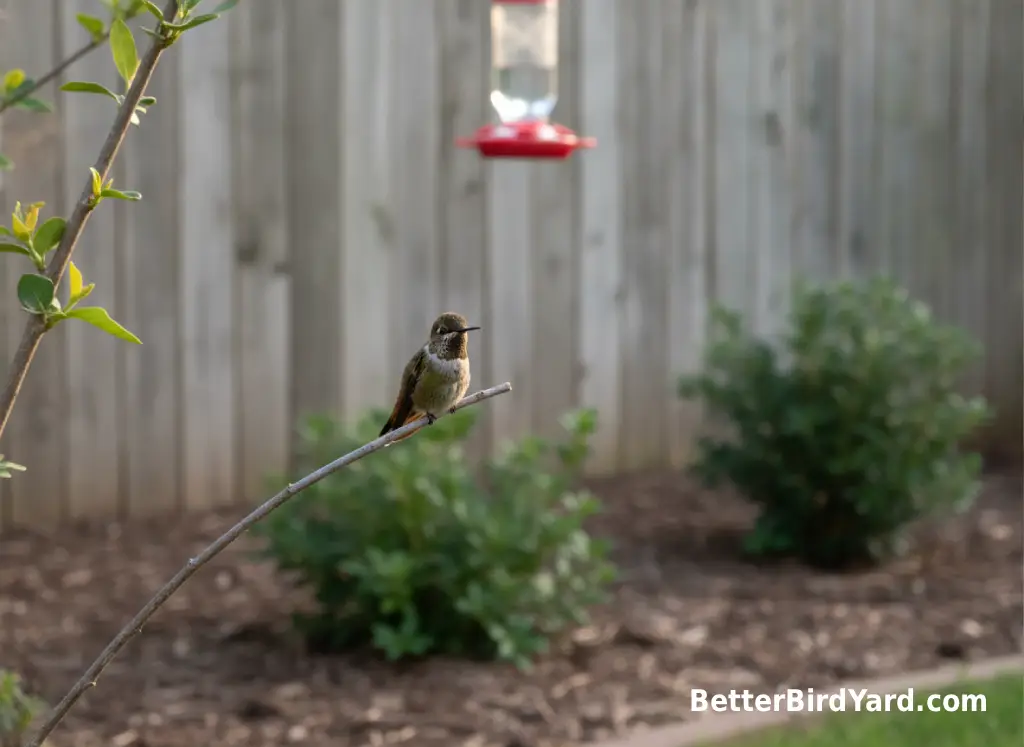
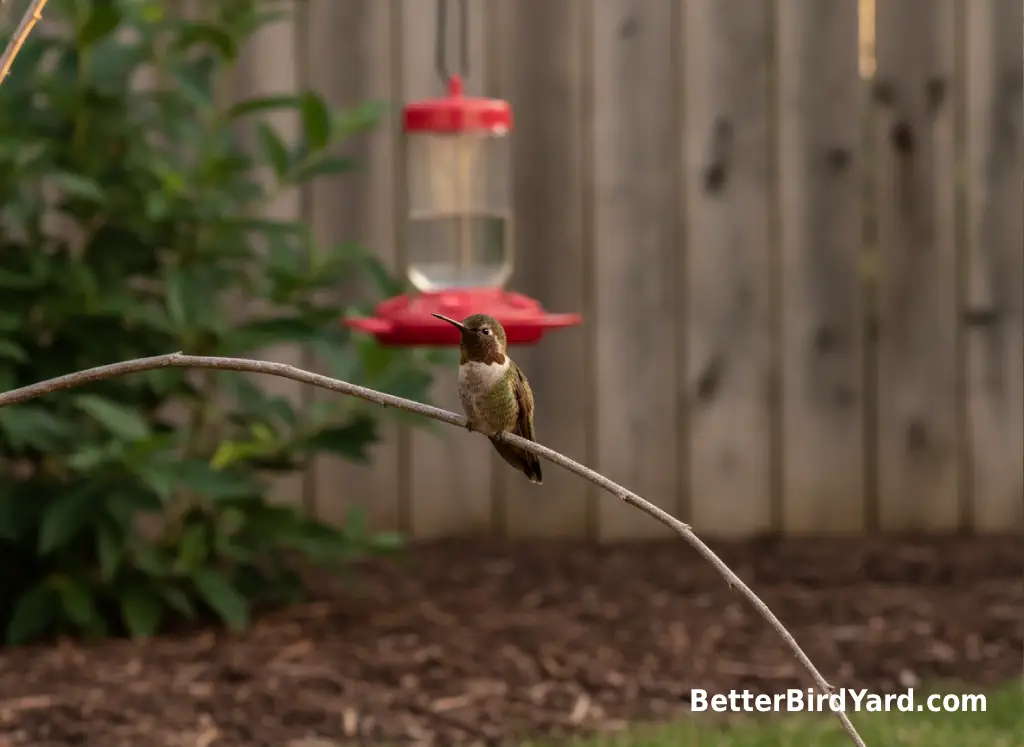
Speed also makes observation tricky. A bird may look like it vanished, when it really zipped to a perch just outside your line of sight. Try watching from a comfortable distance and looking for favorite resting spots: a bare twig, tomato cage, shepherd’s hook, fence wire, or the top of a small shrub.
Short FAQ About Hummingbird Flight Speed
How Fast Can A Hummingbird Fly In Normal Flight?
For normal forward flight, a practical answer is up to about 30 mph. Short chases may look even more dramatic because the bird accelerates, turns, and stops so quickly.
How Fast Do Hummingbirds Flap Their Wings?
Many hummingbirds beat their wings dozens of times per second. Ruby-throated Hummingbirds are listed by Cornell Lab at about 53 wingbeats per second, and Audubon describes hummingbirds more broadly at about 20 to 80 wingbeats per second.
How Fast Can A Hummingbird Fly Backwards?
There is no simple backyard mph number worth relying on for backward flight. Hummingbirds can fly backward, but they usually use it as a close-range maneuver around flowers, feeders, and rivals rather than as long-distance travel.
Are Hummingbirds Faster Than Other Birds?
Not in absolute top speed. Falcons are much faster in a steep hunting dive. Hummingbirds stand out because of their combination of hovering, backward flight, rapid wingbeats, and precise control in tiny spaces.
Do Feeders Change How Fast Hummingbirds Fly?
A feeder does not change the bird’s natural flight ability, but feeder placement can affect how safely birds approach and leave. Keep feeders clean, visible, and placed with windows, cats, and cover in mind.
Final Takeaway
So, how fast do hummingbirds fly? In ordinary forward flight, think up to about 30 mph. Their wings may beat around 50 times per second in familiar species like the Ruby-throated Hummingbird, with broader hummingbird ranges depending on species and behavior. They can fly backward, hover, and stop with startling control, while special display dives can reach much higher speeds than routine feeder visits.
For backyard bird watchers, the best response to all that speed is not a fancier feeder. It is a safer, cleaner, more thoughtful setup: fresh sugar water, no red dye, regular scrubbing, open hovering space, nearby cover, and careful placement away from window hazards and outdoor cats. Then the next time a hummingbird zips in, freezes in midair, backs away, and disappears to a perch, you will know you are watching one of the most precise flyers in the bird world.