Woodpeckers In The Yard: Looks, Females, Nests, Holes, And Easy ID
A woodpecker is one of the easiest backyard birds to notice and one of the hardest to identify at first glance. You may see a black-and-white bird clinging to a tree trunk, hear a sharp tapping from a dead branch, notice neat rows of holes in bark, or spot a flash of red on a bird at your suet feeder. All of those clues can point toward woodpeckers, but the details matter.
In the United States, backyard bird watchers commonly notice Downy Woodpeckers, Hairy Woodpeckers, Red-bellied Woodpeckers, Northern Flickers, Pileated Woodpeckers, sapsuckers, and a few region-specific species. Some are tiny and feeder-friendly. Others are crow-sized forest birds that only visit larger wooded yards. Females can look very similar to males, but they often have less red on the head, depending on the species.
This guide covers what woodpeckers are, what a woodpecker looks like, what female woodpeckers look like, what nests and holes look like, and how to support them responsibly in ordinary yards, patios, and small suburban spaces.
What Is A Woodpecker?
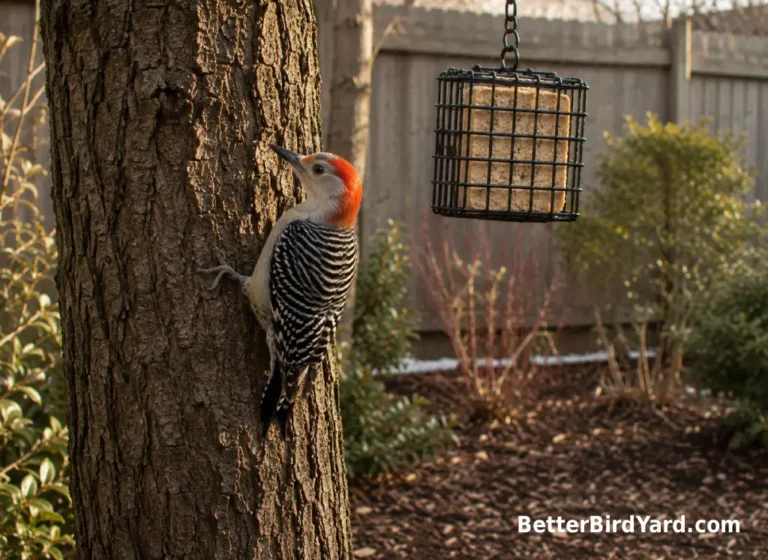
Woodpeckers are birds in the family Picidae, and most are built for life on bark. A typical woodpecker has a straight, chisel-like bill, strong feet, a stiff tail used as a brace, and an upright posture as it moves along trunks and branches. Cornell Lab’s All About Birds describes common species such as Downy and Hairy Woodpeckers as tree-clinging birds with black-and-white patterning, while larger species such as Pileated Woodpeckers have a much heavier bill and bold crest.
Woodpeckers do not peck because they are eating wood. They peck for several reasons: searching for insects under bark, excavating nest or roost cavities, communicating by drumming, and in the case of sapsuckers, making sap wells. The rhythm, location, and shape of the mark can tell you a lot.
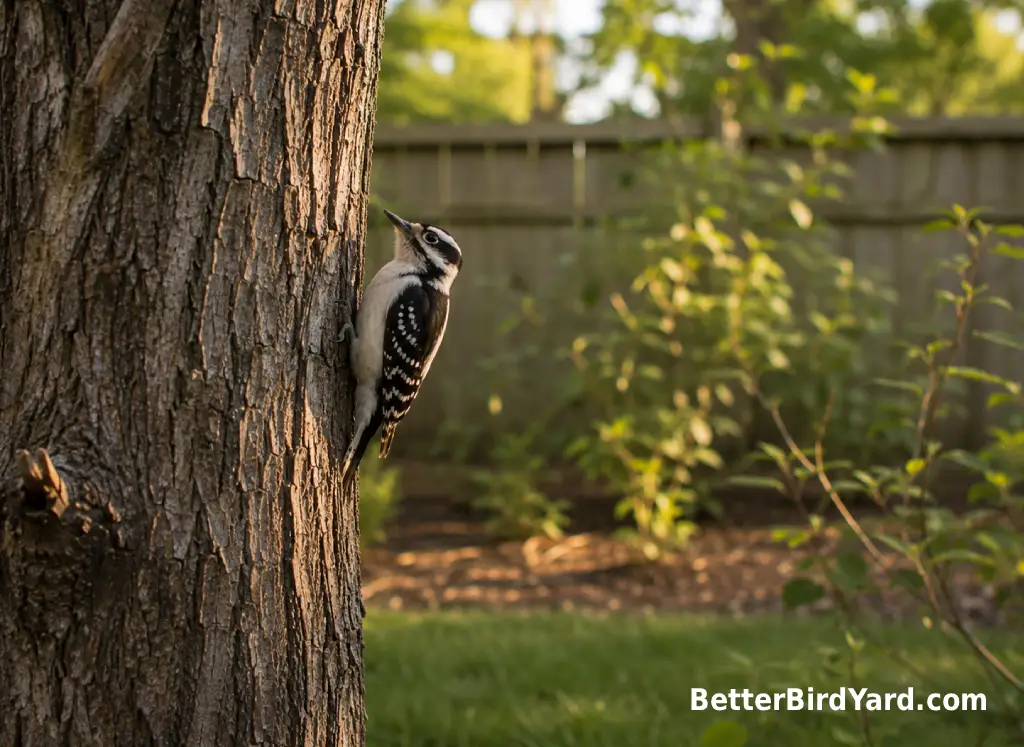
For a backyard watcher, the easiest first clue is behavior. A woodpecker usually lands vertically, props itself with its tail, and works upward or sideways along a trunk, branch, post, or feeder. Northern Flickers are a helpful exception because they often feed on the ground, especially where ants are available.
What Does A Woodpecker Look Like?
Most people picture a woodpecker as a black-and-white bird with a red patch on the head, and that is a good starting image for many backyard species. But woodpeckers vary more than beginners expect. Some have barred backs, some have spotted bellies, some are brownish with a bright rump patch, and some have a full red head.
Look for these field marks first:
- A straight, pointed bill used for probing, tapping, or excavating.
- An upright posture on trunks, branches, posts, or suet feeders.
- Stiff tail feathers pressed against the surface for support.
- Black-and-white barring, spotting, or striping on many common species.
- Red on the head, nape, crown, throat, or cheek in many males and some females.
- An undulating flight path, often a few wingbeats followed by a glide.
The exact pattern is the key. A Downy Woodpecker is small, black-and-white, and short-billed, while a Hairy Woodpecker looks similar but is larger with a longer bill. A Red-bellied Woodpecker is pale below with a strongly barred black-and-white back and red on the head. A Red-headed Woodpecker, despite the confusing name overlap, has a fully red head as an adult and bold black-and-white body patches.
Common Backyard Woodpeckers In The United States
Your local woodpeckers depend on region, habitat, season, and how many mature trees are nearby. Still, several species are common enough around US yards and neighborhoods that they are worth learning early.
| Woodpecker | Quick Look | Backyard Clue |
|---|---|---|
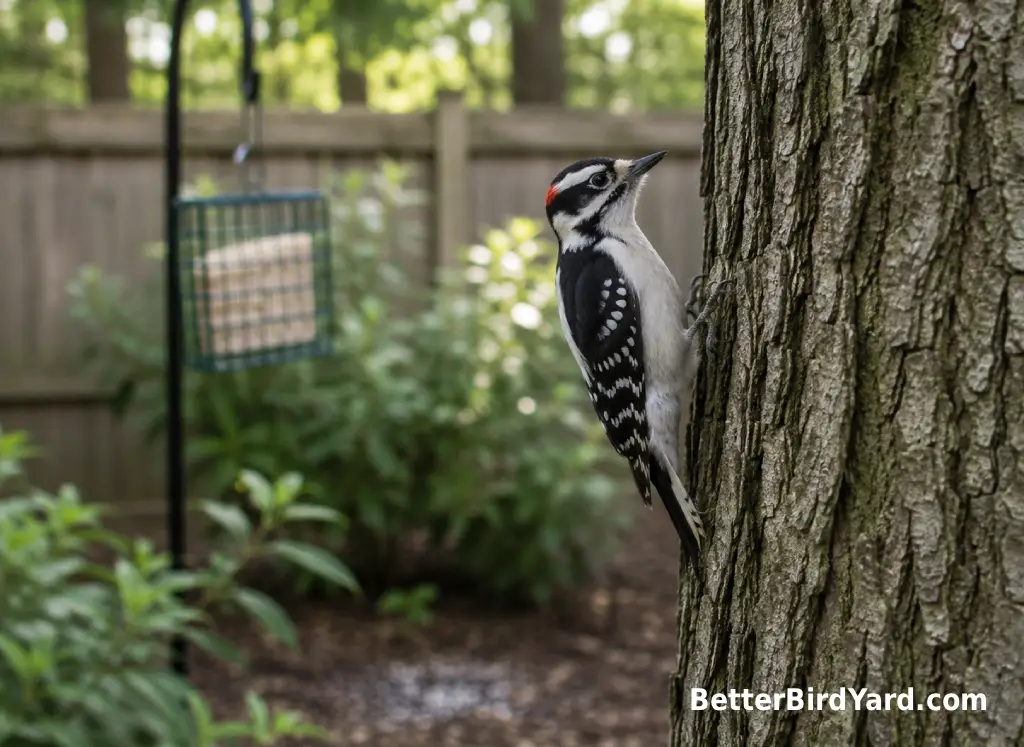
| Downy Woodpecker | Small, black-and-white, short bill, white stripe down the back. | Common at suet feeders, small trees, weed stems, and suburban yards. |
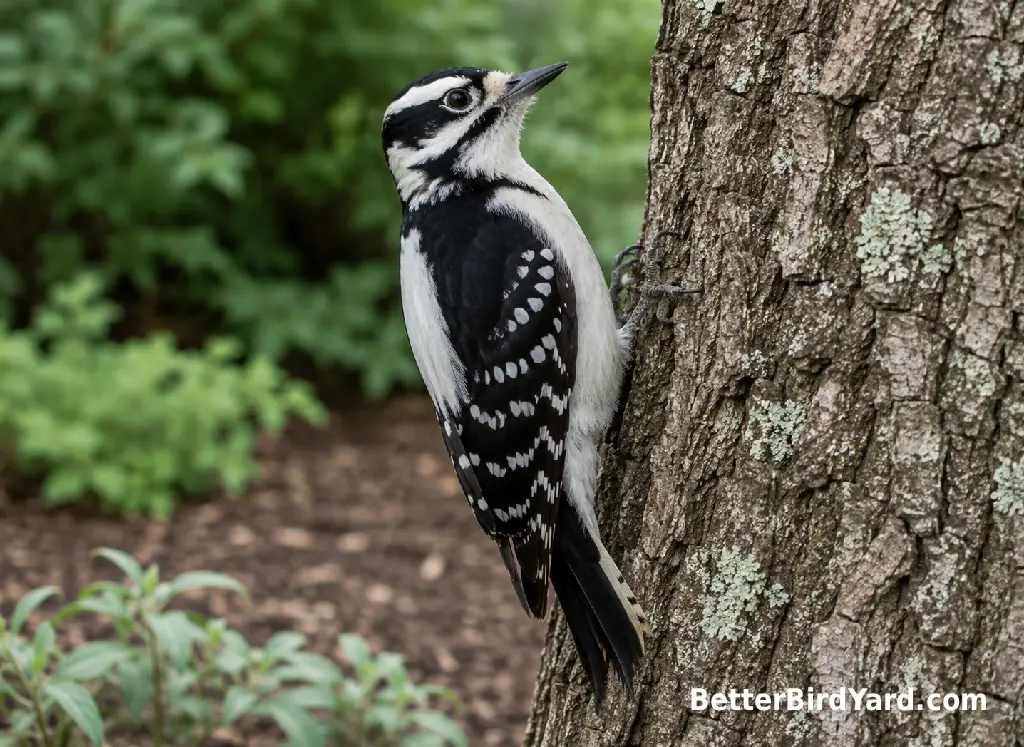
| Hairy Woodpecker | Similar to Downy but larger, with a longer bill and sturdier look. | Often on trunks and larger branches, sometimes at suet. |
| Red-bellied Woodpecker | Barred black-and-white back, pale belly, red on head. | Often vocal and noticeable in eastern yards with trees. |
| Northern Flicker | Brownish, spotted belly, black breast mark, white rump in flight. | Often feeds on lawns and open ground, especially for ants. |
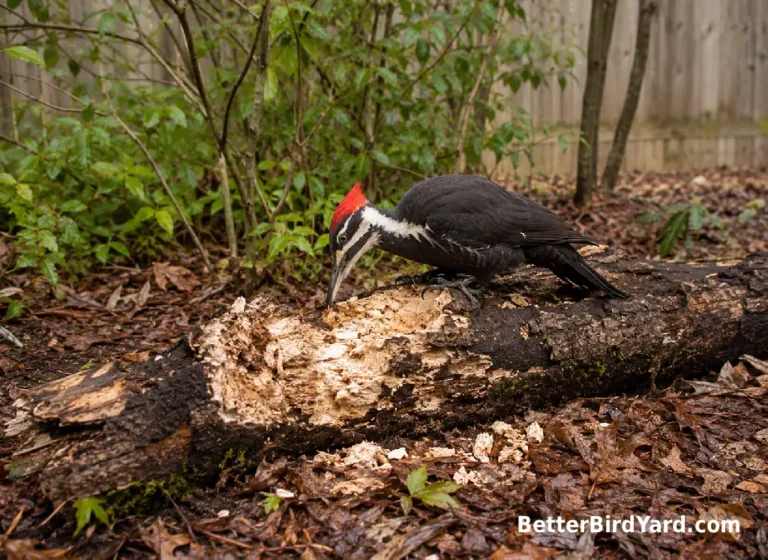
| Pileated Woodpecker | Very large, mostly black, white face stripes, red crest. | Usually needs larger trees or wooded neighborhoods; leaves big excavations. |
| Yellow-bellied Sapsucker | Black-and-white face pattern, vertical white wing patch, red crown. | Often leaves neat sap-well rows on tree trunks. |
| Red-headed Woodpecker | Adult has a full red head, white belly, black back, large white wing patches. | More habitat-dependent and not equally common in every suburban yard. |
A common beginner mistake is assuming every red-headed bird is a Red-headed Woodpecker. In many eastern yards, the bird with red on the top or back of the head is more likely to be a Red-bellied Woodpecker, especially if it has a barred back and pale belly. Cornell’s field guides are useful because they separate size, shape, color pattern, behavior, and habitat instead of relying on one bright color mark.
What Does A Female Woodpecker Look Like?
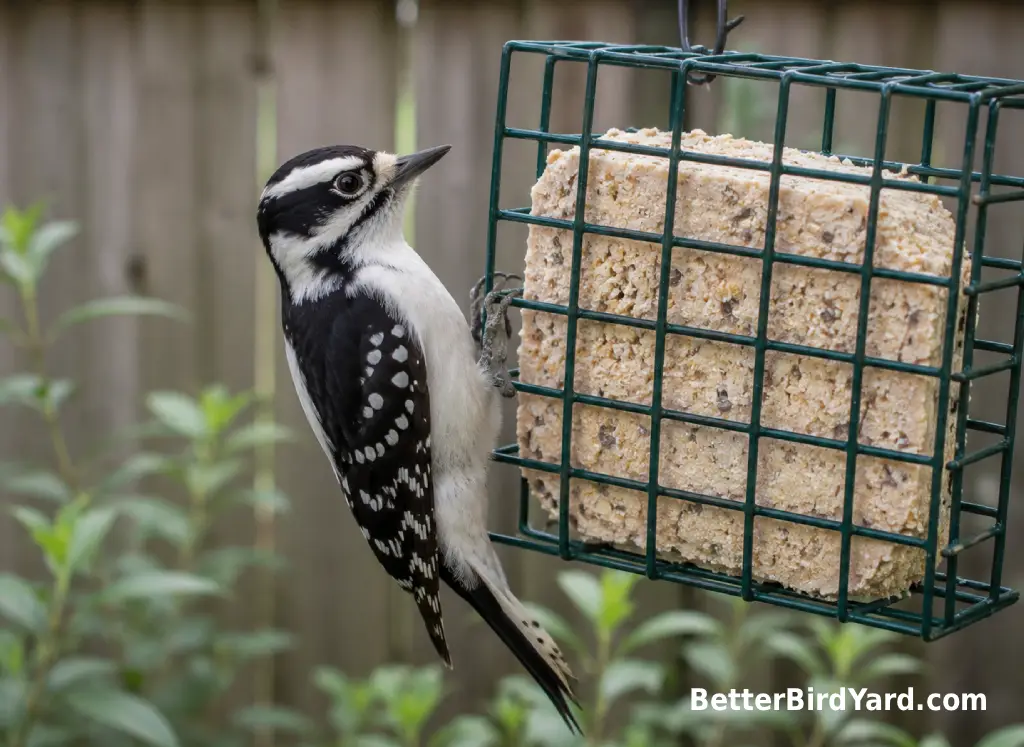
A female woodpecker does not have one universal look. The difference between male and female depends on the species, and the main difference is often how much red appears on the head.
In Downy and Hairy Woodpeckers, males have a small red patch on the back of the head, while females lack that red patch. In Red-bellied Woodpeckers, males have red on the crown and nape, while females have red on the nape but lack the full red crown. In Pileated Woodpeckers, both sexes have a red crest, but males have a red cheek stripe that females lack.
For Northern Flickers, the male and female difference is usually in the facial “whisker” mark. Eastern yellow-shafted males have a black whisker, western red-shafted males have a red whisker, and females lack the male whisker mark. This is a good reminder that female identification is often about the absence, size, or placement of a mark rather than a completely different body shape.
In the yard, start with species first, sex second. Ask: Is it small like a Downy, medium and barred like a Red-bellied, brownish and ground-feeding like a flicker, or huge with a red crest like a Pileated? Once you have the species, then compare the head pattern.
What Does A Woodpecker Nest Look Like?
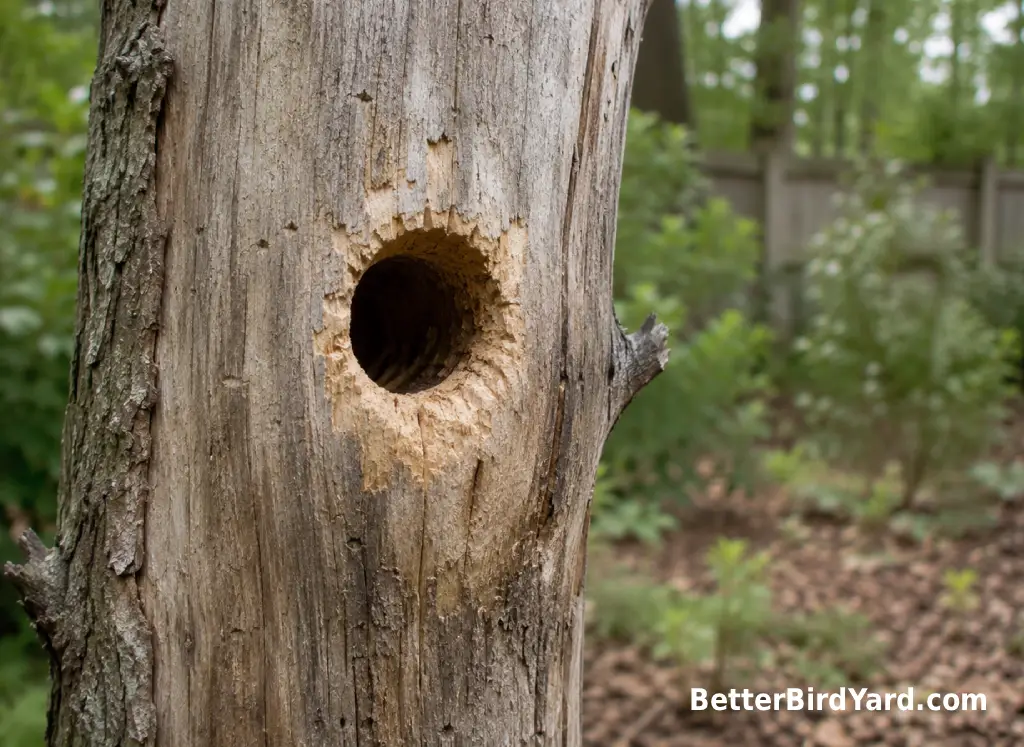
A woodpecker nest usually does not look like a twig cup. Most woodpeckers are cavity nesters. They excavate a hole in dead wood, decaying wood, a dead limb, a snag, or sometimes another suitable wooden surface. From the outside, you may only see a round or oval entrance hole. Inside, the cavity widens enough for eggs and young, and the “lining” is usually leftover wood chips rather than grass, feathers, or moss.
For example, Cornell describes Downy Woodpecker nest entrances as round and about 1 to 1.5 inches across, with cavities that widen toward the bottom and are lined only with wood chips. Pileated Woodpecker cavities are much larger and deeper, fitting the size of the bird. Red-bellied Woodpeckers typically excavate in dead wood, including dead trees, poles, fence posts, or stumps, and may also use old cavities or nest boxes.
If you find an active nest cavity, give it space. Do not tap the trunk, poke the hole, shine lights inside, or repeatedly stand nearby. Parent birds may be less obvious than you expect, and too much attention around a nest can also draw predators. If a cavity is in a dangerous location on a structure or near planned tree work, contact your local wildlife agency, a licensed wildlife professional, or a qualified arborist before taking action.
What Does A Woodpecker Hole Look Like?
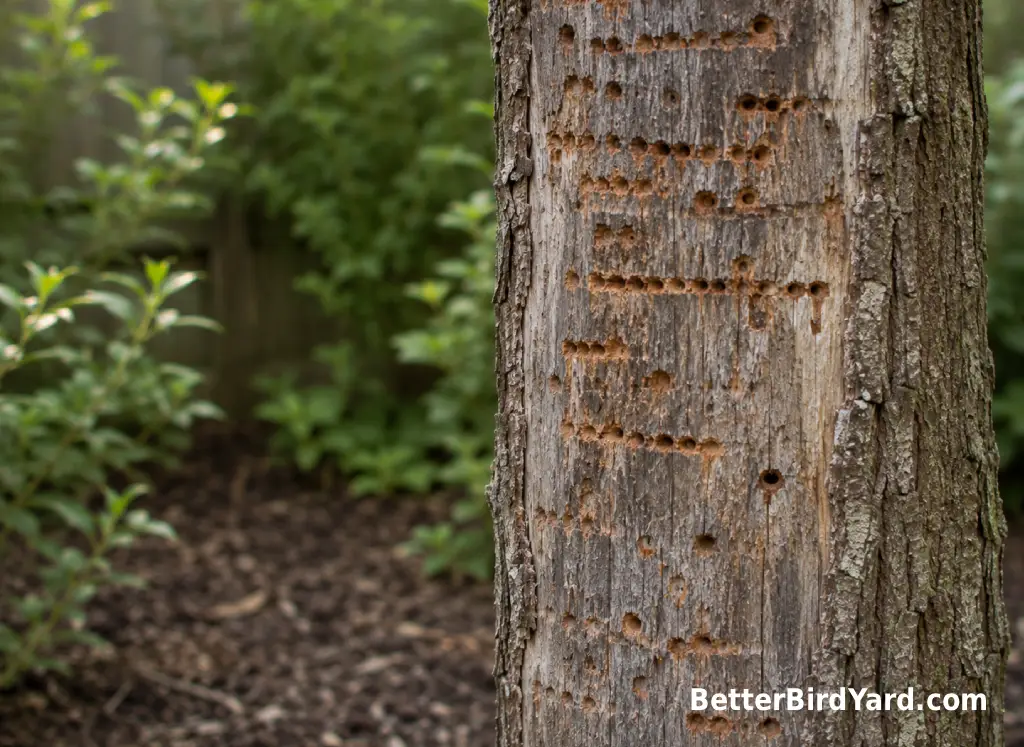
A woodpecker hole can mean several different things. Nest holes are usually round or oval and lead into a cavity. Feeding holes can be small, irregular, shallow, deep, scattered, or in rows. Drumming may leave little visible damage at all, especially when a bird drums on a dead limb, gutter, chimney cap, or another loud surface to communicate.
Here are common patterns to notice:
- Round nest entrance: Often a clean cavity entrance in dead or softened wood.
- Small irregular holes: Often feeding signs where a bird may be probing for insects.
- Neat horizontal or vertical rows: Often sapsucker sap wells.
- Large rectangular excavations: Often associated with Pileated Woodpeckers searching for carpenter ants and other insects in softer wood.
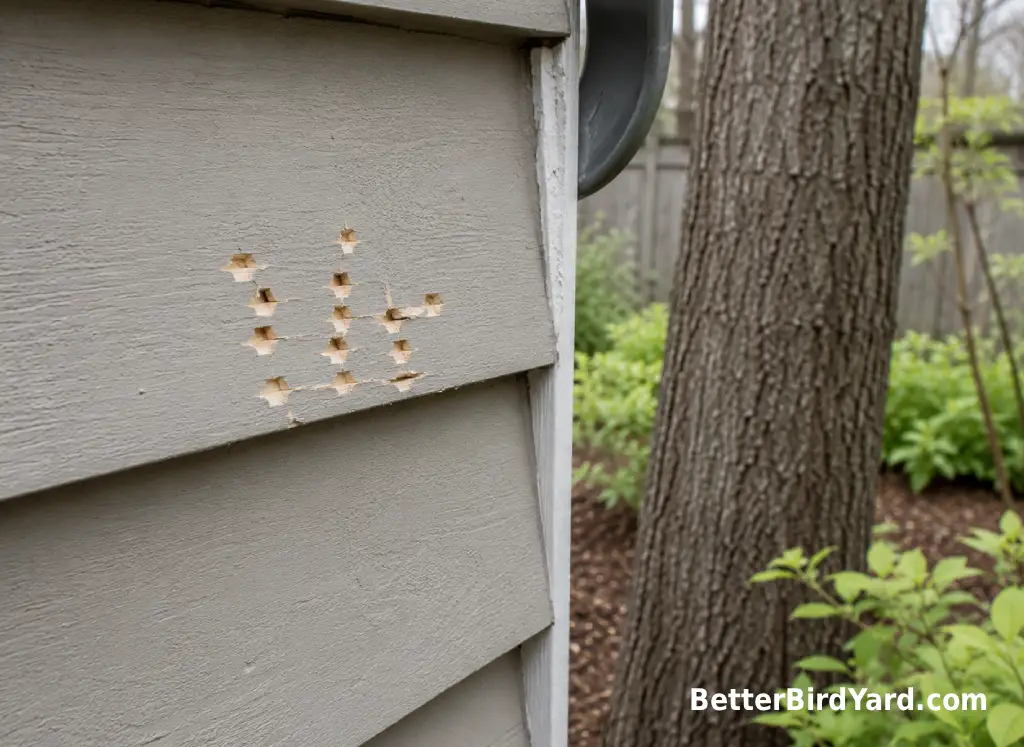
- House siding holes: May be related to drumming, nesting, roosting, or insects in the siding.
Yellow-bellied Sapsuckers are known for making organized rows of sap wells, while Pileated Woodpeckers can leave distinctive rectangular holes in rotten wood. Cornell also notes that woodpeckers hammering on houses may be communicating, investigating insects, or excavating a cavity, and the shape and location of the holes help narrow down what is happening.
One practical backyard note: a few holes in a dead branch are different from repeated damage to living ornamental trees or house siding. If you are seeing fresh damage on a home, look for insect issues, hollow-sounding boards, or repeated activity in one spot before assuming the bird is the main problem.
How To Identify A Woodpecker In Your Yard
The simplest way to identify woodpeckers is to slow down and collect a few clues before reaching for a name. A blurry flash of black, white, and red can easily lead to the wrong species. A thirty-second look at size, bill length, head pattern, and behavior is usually more useful.
Use this quick backyard sequence:
- Compare size: Is it chickadee-sized, robin-sized, crow-sized, or somewhere between?
- Check the bill: A Downy has a noticeably short bill; a Hairy has a longer, stronger-looking bill.
- Study the back: Is it striped, barred, spotted, solid black, or marked with a bold white patch?
- Look for red carefully: Is red on the nape, crown, cheek, throat, or entire head?
- Watch behavior: Is it climbing a trunk, using a suet feeder, feeding on the ground, or drilling rows?
- Notice habitat: A wooded neighborhood, open lawn, desert yard, western oak area, or mature eastern suburb may point to different species.
A common mistake we see is identifying only by color. Red on the head is helpful, but size and bill length often solve the puzzle faster. For example, Downy and Hairy Woodpeckers can look nearly identical to new birders, but the Hairy is larger with a proportionally longer bill and cleaner-looking outer tail feathers. Cornell’s comparison pages are especially useful for this Downy-versus-Hairy problem.
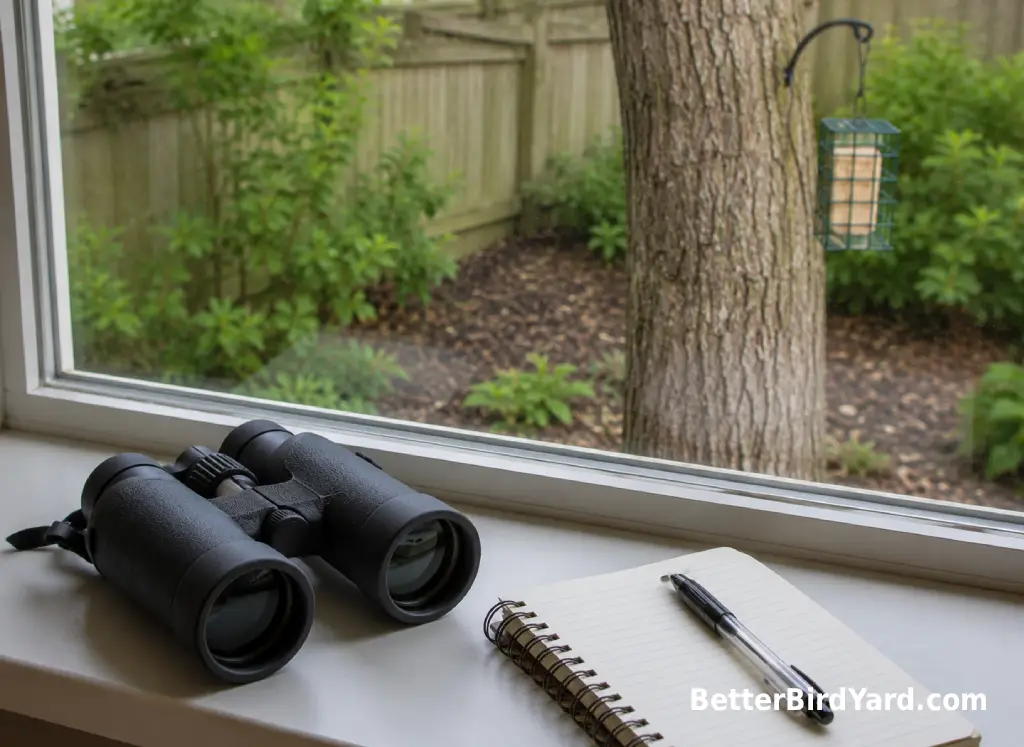
Editorial note: In a small yard or apartment patio, you may only get brief views at a feeder. Keep the feeder where you can see the bird’s side clearly, not directly above or behind glare. A quiet window view is often better than walking closer.
How To Support Woodpeckers Responsibly
The best way to support woodpeckers is to offer a yard that has food, shelter, and safe observation without forcing birds into crowded or dirty feeding spots. Mature trees, native shrubs, dead limbs left safely in place, and clean feeders can all help, but results vary by region and habitat.
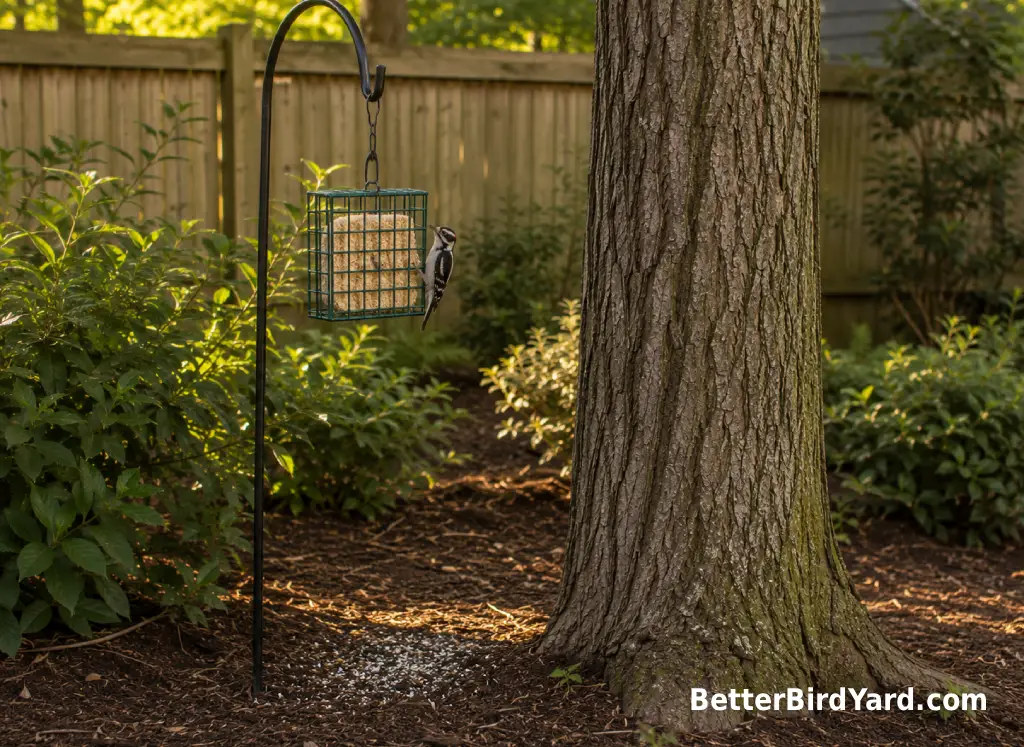
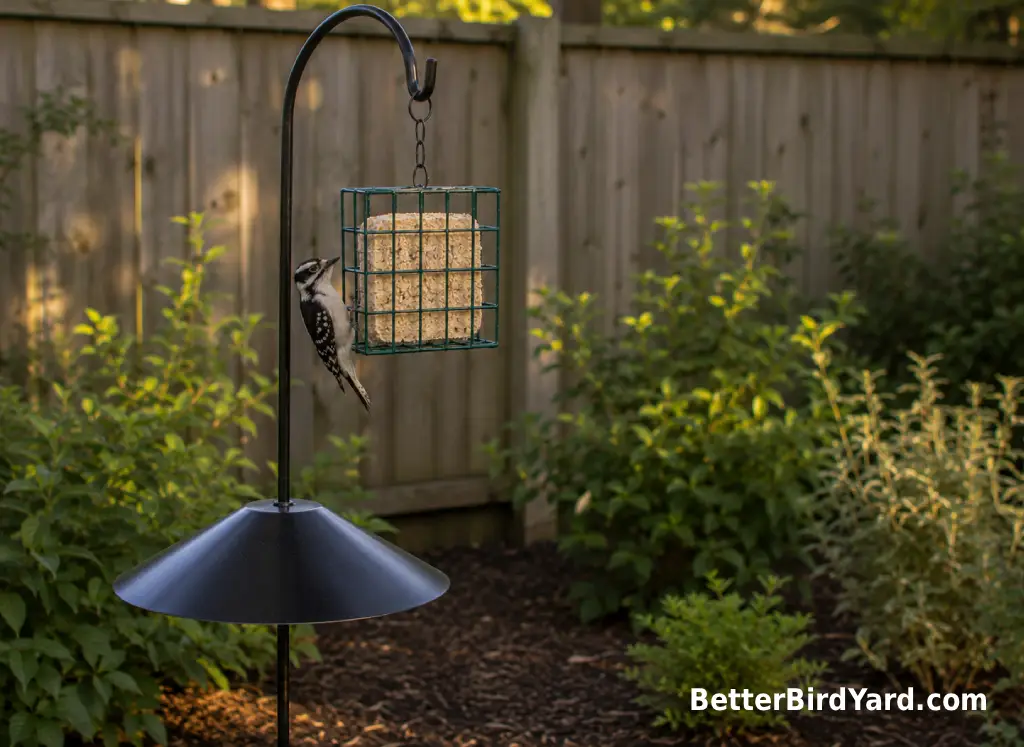
For feeders, suet is the classic woodpecker choice. Cornell describes suet as a high-energy food that is especially valuable in colder weather and attractive to woodpeckers, nuthatches, chickadees, and other birds. In warm weather, keep suet fresh and remove it if it softens, smells rancid, or becomes messy; raw or homemade suet is not a good hot-weather choice.
In an ordinary yard, keep the setup simple:
- Use one clean suet cage or tail-prop feeder near a tree or shrub cover.
- Add a squirrel baffle if squirrels dominate the feeder.
- Clean feeders regularly and any time they look dirty.
- Rake or sweep heavy seed and suet crumbs below feeding areas.
- Keep cats indoors and place feeders away from easy ambush cover.
- Use window strike prevention if feeders are near reflective glass.
Feeder hygiene matters. The CDC advises cleaning bird feeders and bird baths at least monthly and more often when droppings, dirt, or buildup appear; the U.S. Fish and Wildlife Service notes that feeders can concentrate songbirds and increase the risk of diseases other than avian influenza. A practical BetterBirdYard routine is to clean more often during heavy use, wet weather, warm spells, or whenever food looks spoiled.
When Woodpeckers Peck Houses, Trees, Or Other Backyard Surfaces
Woodpeckers sometimes peck houses, gutters, trim, chimneys, fences, utility poles, or wooden posts. The first step is not to panic and not to harm the bird. Native woodpeckers are generally protected under federal law, and the U.S. Fish and Wildlife Service describes the Migratory Bird Treaty Act as prohibiting take of protected migratory birds without authorization. Local and state rules can also apply, so homeowners should use humane prevention and check proper guidance before taking action.
Cornell lists several reasons woodpeckers hammer on houses: loud drumming to communicate, feeding on insects in siding, or excavating a cavity. Small irregular holes may point toward insect foraging, while larger cavity-like holes may suggest nesting or roosting attempts. If insects are involved, the building may need repair or pest evaluation separate from the bird issue.
Safer first steps include covering the affected area, repairing insect-damaged wood, using visual deterrents early, and blocking access with properly installed netting that cannot trap birds. Cornell advises that netting should be taut, set away from siding, and closed at the sides so birds do not become trapped behind it.
If the bird seems sick, injured, stunned, trapped, or unable to fly, do not try to diagnose or treat it. Cornell recommends contacting a wildlife rehabilitator or local veterinarian for sick or injured birds, and Audubon wildlife guidance similarly points people toward licensed rehabilitators rather than feeding, watering, or attempting home care.
Quick FAQ About Woodpeckers
Are Woodpeckers Good To Have Around?
Usually, yes. Woodpeckers are part of a healthy backyard bird community. They feed on insects, create cavities that other wildlife may later use, and add year-round interest to wooded yards. The practical exception is repeated damage to siding, trim, or valuable trees, which should be handled with humane prevention and local guidance.
Do Woodpeckers Eat From Bird Feeders?
Many do, especially Downy, Hairy, and Red-bellied Woodpeckers. Suet is the most common feeder food for woodpeckers, and some may also take peanuts or sunflower. Keep food fresh, avoid spoiled suet or moldy seed, and clean feeders before buildup becomes a problem.
Do Woodpeckers Use Birdhouses?
Some woodpeckers may use nest boxes, but many prefer excavating their own cavities in dead or softened wood. Nest box size and placement need to match the species, and boxes should be maintained responsibly. Do not disturb active nests or block a cavity that may be in use.
Why Is A Woodpecker Drumming On Metal?
Drumming on metal is often communication, not feeding. Gutters, chimney caps, and other resonant surfaces can make a loud sound that carries well. It may be seasonal and may decrease after territorial or breeding activity changes, but persistent house issues deserve attention.
Conclusion: Learn The Pattern Before The Name
Woodpeckers become much easier to understand once you stop looking for one perfect field mark. Size, bill length, posture, back pattern, head markings, behavior, and hole shape all work together. A female woodpecker may simply have less red than the male. A nest may look like a plain round entrance in dead wood. A woodpecker hole may be a nest cavity, feeding mark, sap well, or house damage clue.
For backyard bird watchers, the goal is not just to name the bird. It is to notice what the bird is doing and respond responsibly. Offer clean suet if it fits your yard, keep food fresh, protect birds from cats and window strikes, leave safe dead wood where appropriate, and avoid disturbing active nests. If a woodpecker causes house damage or appears injured, use careful, humane steps and contact qualified local help when needed.
With a little patience, a tapping sound outside the window can turn from a mystery into one of the most interesting bird observations in the yard.