Eastern Bluebird Guide: Identification, Habitat, Food, And Backyard Support
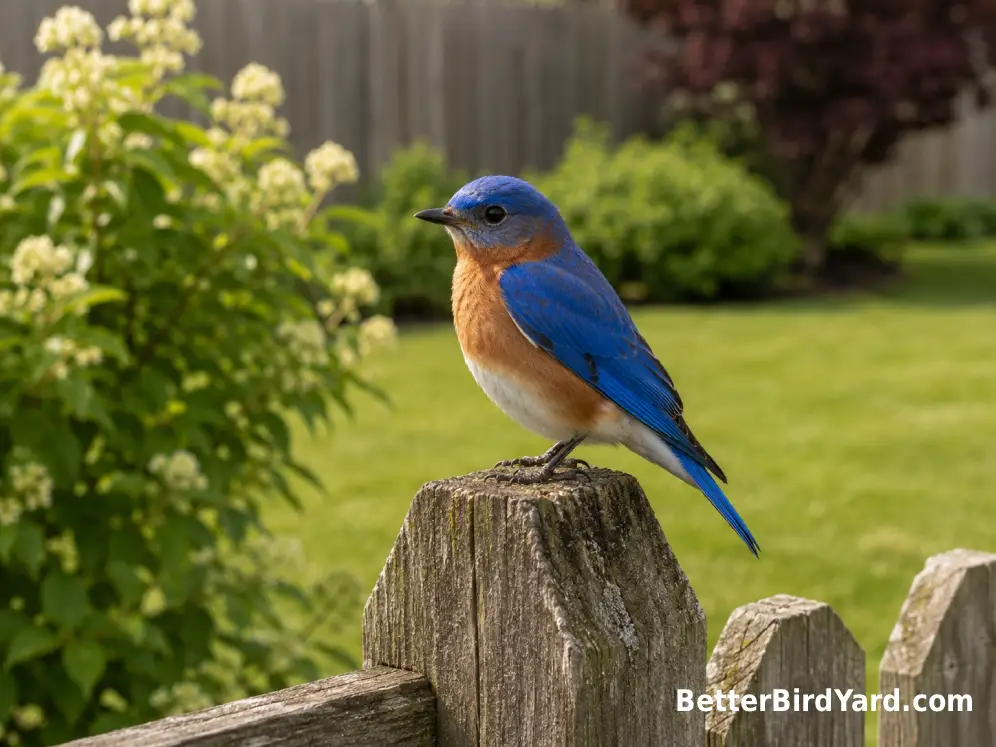
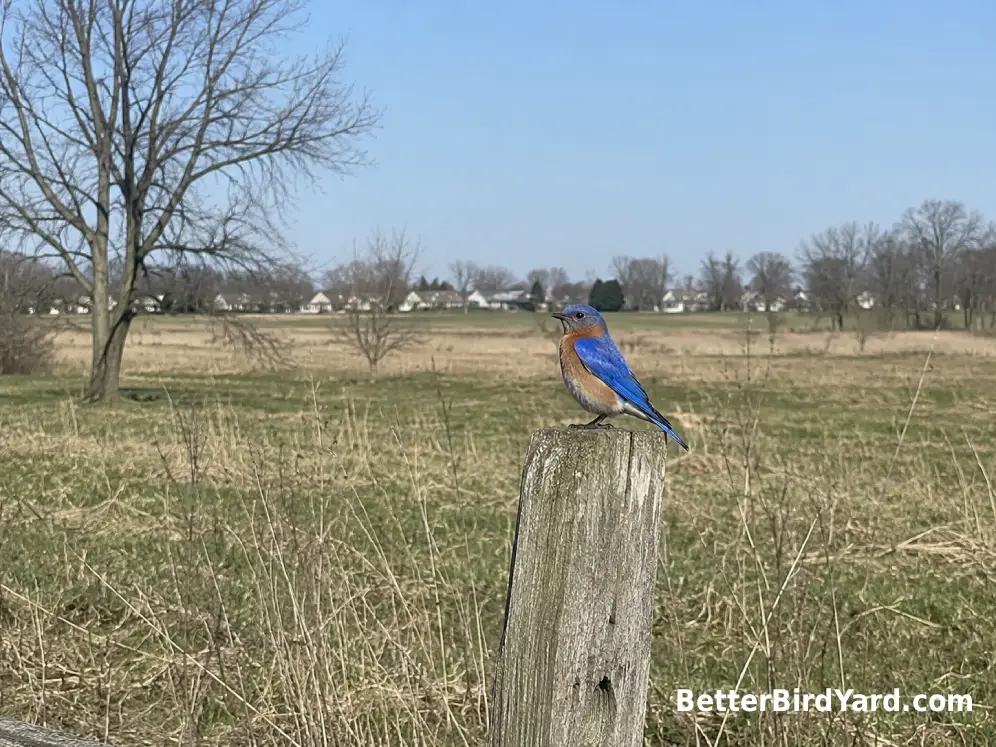
A flash of brilliant blue over a lawn or field can make an Eastern Bluebird surprisingly easy to notice once you know what to watch for. The Eastern Bluebird, Sialia sialis, is a small member of the thrush family found across much of eastern North America. Males combine vivid blue upperparts with a rusty-orange breast, while females are softer gray-blue with more subdued orange-brown coloring.
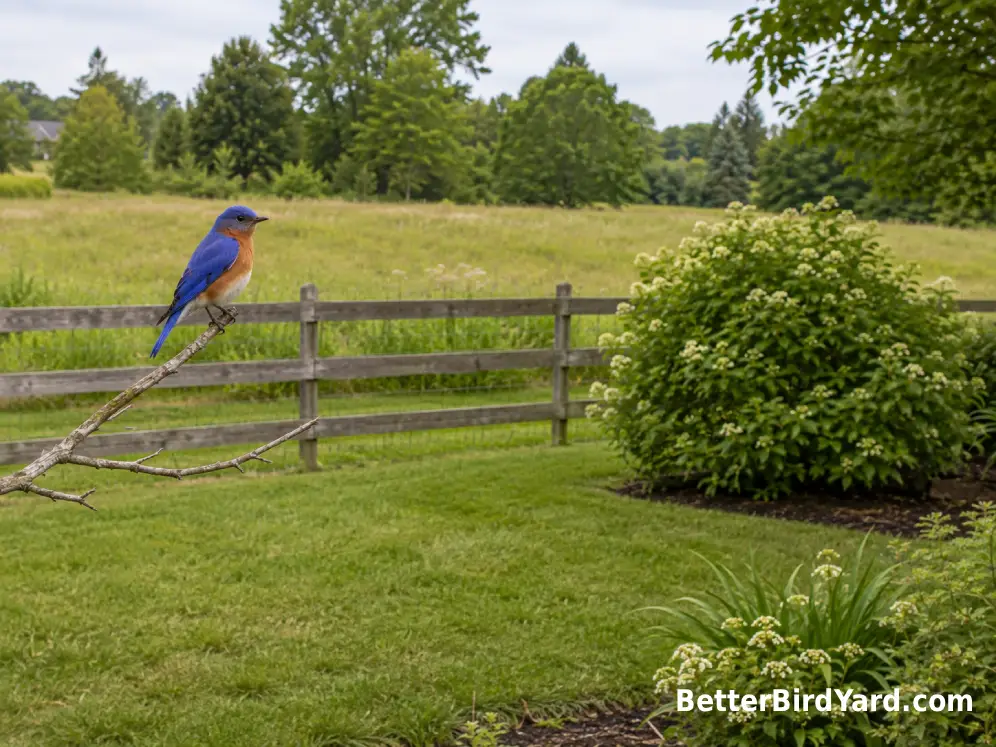
Eastern Bluebirds are especially associated with open spaces: lawns, pastures, orchards, parks, field edges, and other places where they can perch above short vegetation and drop to the ground for insects. They also readily use suitable nest boxes, which gives homeowners with the right habitat a practical way to support them. Cornell notes that bluebirds generally are not typical seed-feeder birds, although they may visit feeders offering mealworms.
If you have seen the name written informally as eastern blue bird, it refers to the same species; the standard common name is Eastern Bluebird. Here is how to recognize these birds, understand what brings them into a yard, and offer food, water, habitat, and nesting opportunities responsibly.
How To Identify An Eastern Bluebird
Color is the easiest starting point, but shape and behavior make identification much more reliable. Eastern Bluebirds are roughly 6 to 8 inches long, with rounded heads, plump bodies, relatively large eyes, and short, straight bills. They are smaller than an American Robin.
| Bird | What To Look For |
|---|---|
| Adult male | Deep blue head, back, wings, and tail with a rusty or brick-red throat and breast and a pale belly. |
| Adult female | Grayish or brownish upperparts, muted orange-brown breast, and noticeable blue in the wings and tail. |
| Juvenile | Spotted breast and back with blue developing in the wings and tail. |
Do not rely on brilliant blue alone. Cornell points out that bluebird plumage can look much duller under poor lighting, so a male sitting in shade may appear gray-brown until sunlight catches his feathers.
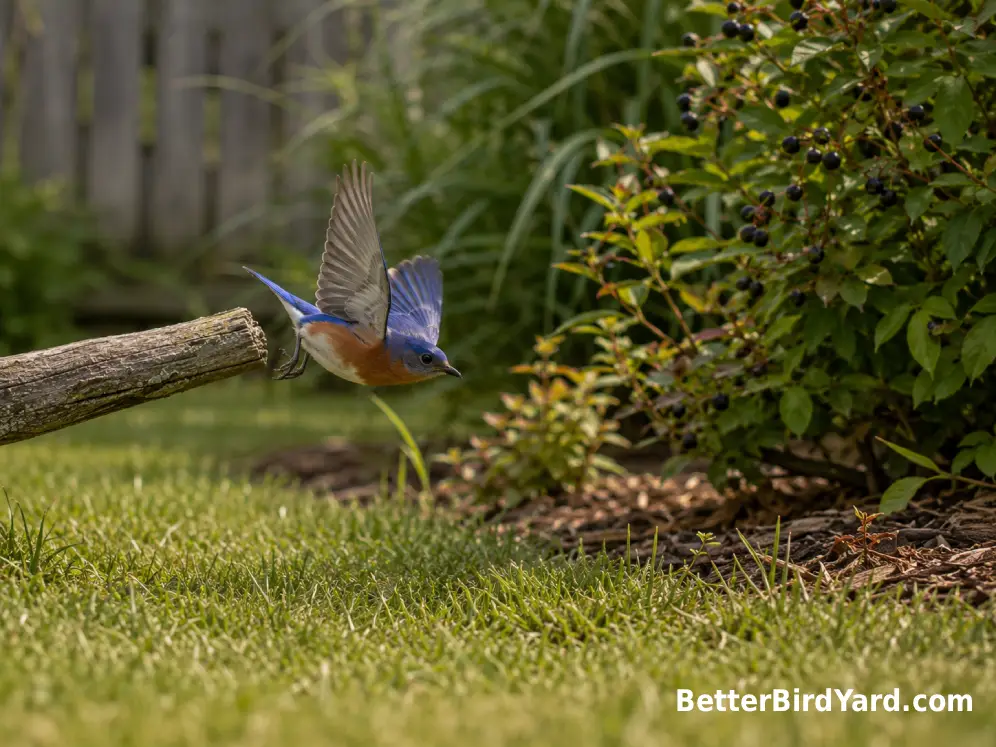
Behavior provides another useful clue: Eastern Bluebirds often sit upright on low branches, wires, fence posts, or nest boxes, watch the ground, then swoop downward after prey.
That combination of a low lookout perch, open ground, a compact thrush-like shape, and blue-and-rust coloring is often more useful than color by itself.
Where Eastern Bluebirds Live
Eastern Bluebirds favor open country with scattered trees or other perches and relatively sparse ground cover. Cornell lists pastures, agricultural fields, suburban parks, backyards, golf courses, meadows, and forest openings among the habitats where they commonly occur. Audubon similarly describes them as birds of open country and semi-open landscapes.
This matters if you are hoping to see bluebirds at home. A densely wooded yard with heavy understory may support plenty of excellent bird habitat, but it is not automatically good Eastern Bluebird habitat. Bluebirds need open areas where they can see ground-dwelling prey and nearby elevated places from which to hunt.
The species is a resident to medium-distance migrant. Birds in some northern portions of the range migrate south for winter, while populations farther south may move relatively little or remain near breeding territories year-round. Local numbers can therefore change substantially with season and location.
A small suburban property can still be useful if it borders a larger lawn, park, school field, cemetery, pasture, or other open space. Renters with patios or tiny gardens should be realistic: you may be able to provide water or observe passing bluebirds, but a nest box makes sense only when the surrounding habitat is appropriate.
What Eastern Bluebirds Eat
Eastern Bluebirds eat mostly insects and other small invertebrates during much of the year. Cornell lists caterpillars, beetles, crickets, grasshoppers, spiders, and similar prey among their foods. Bluebirds often hunt these animals from a perch rather than searching through a seed feeder. In fall and winter, fruits and berries become a much more important part of the diet.
That helps explain why filling an ordinary tube feeder with sunflower seed is not the most direct way to attract bluebirds. Cornell specifically notes that Eastern Bluebirds do not often visit feeders unless mealworms are available.
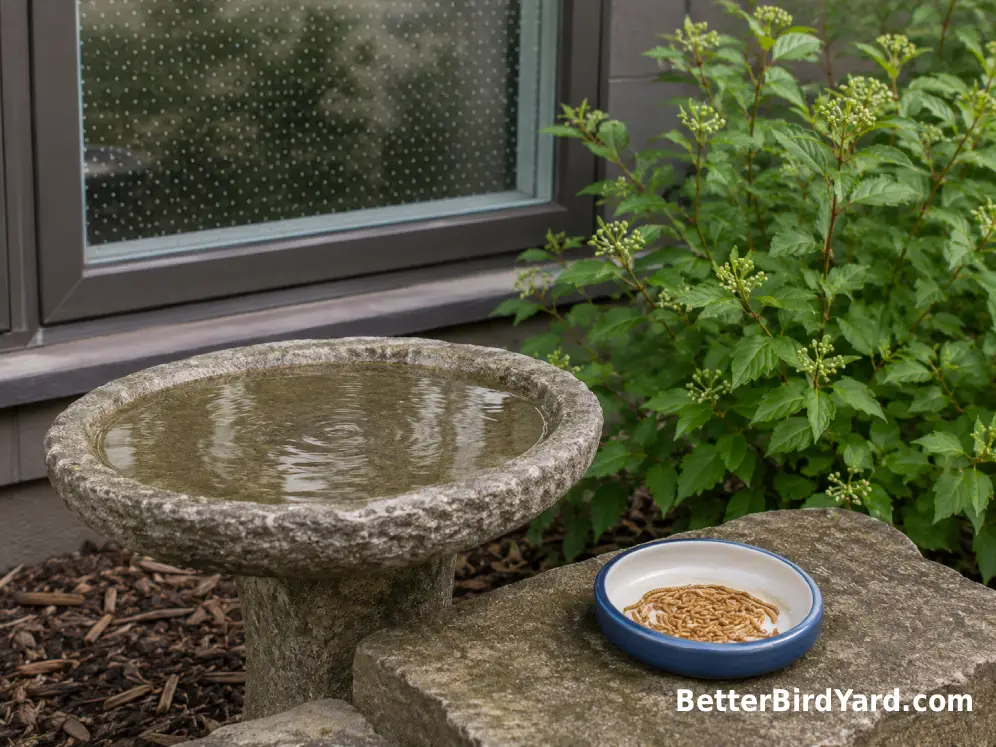
If bluebirds already occur in your neighborhood, a small, clean dish or suitable platform offering mealworms may encourage occasional visits. Treat feeder food as supplemental rather than a replacement for natural food. Offer manageable amounts, remove spoiled or contaminated food promptly, and keep the feeding surface clean.
Habitat can do more than a feeder over the long term. Region-appropriate native fruiting plants can add seasonal food while also supporting the insects birds depend on. Cornell records bluebirds eating fruits from plants including dogwoods, sumacs, junipers, hollies, hackberries, and other fruiting trees and shrubs. Because plant suitability varies widely across the United States, choose native species recommended for your particular region rather than assuming every plant in one of those groups belongs in every yard.
How To Make A Yard More Bluebird-Friendly
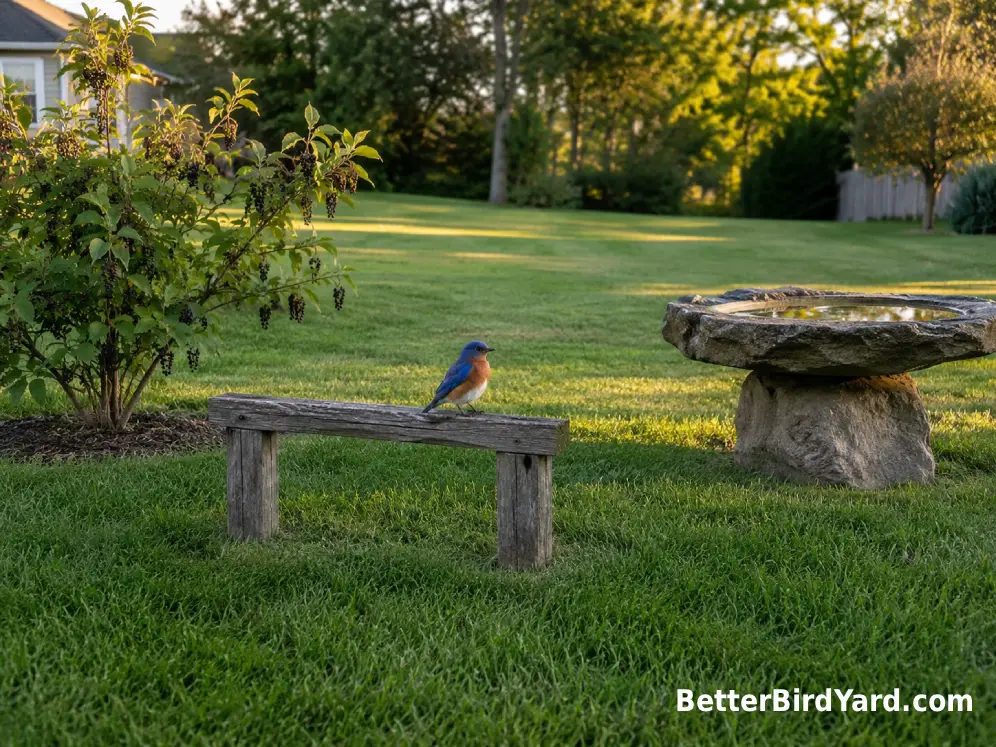
The best bluebird setup looks less like a crowded feeding station and more like useful habitat. Keep some open hunting space, provide safe perches, add clean water, and retain or plant appropriate native vegetation around the edges. If your yard is surrounded by mature woodland, tall dense shrubs, and buildings, work with the habitat you have rather than trying to force a bluebird territory into an unsuitable space.
- Maintain some open lawn or low vegetation where bluebirds can hunt.
- Provide a shallow source of fresh water and keep it clean.
- Use region-appropriate native shrubs or trees that offer insects, berries, or shelter.
- Avoid unnecessary pesticide use around areas where birds forage.
- Make reflective windows near bird activity safer with effective exterior treatments.
Audubon recommends shallow bird baths and regular water replacement and cleaning, while Cornell notes that fresh water can attract even birds that do not normally use seed feeders. If water is your starting point, our bird bath guide can help you keep the setup practical.
A common mistake we see is treating a bluebird yard as a shopping list: nest box, mealworms, bird bath, done. The surrounding habitat matters more than the number of accessories. If you only change one thing, start by asking whether a bluebird has clear hunting space and safe places to perch.
Also look toward your windows from outside. If they strongly reflect open sky or vegetation, Cornell recommends exterior collision-deterrent treatments that break up those reflections across the glass rather than relying on one or two isolated decals.
Choosing And Placing An Eastern Bluebird Nest Box
Eastern Bluebirds are cavity nesters. In natural settings they use suitable holes in trees, including old woodpecker cavities. They also readily accept properly designed nest boxes when those boxes are placed in suitable open habitat.
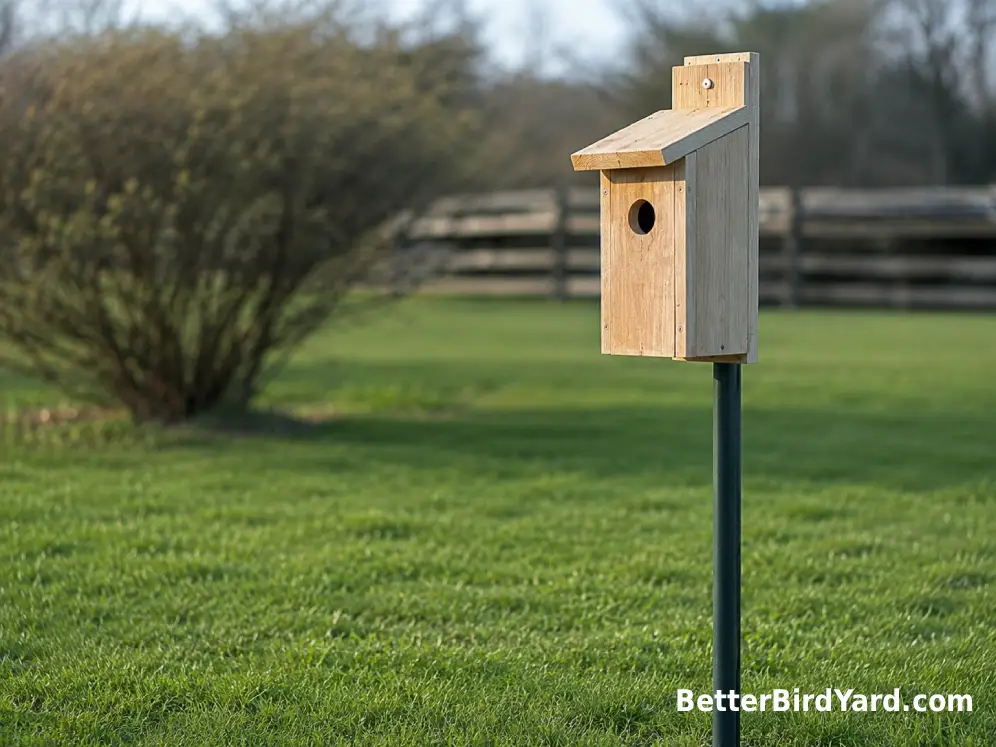
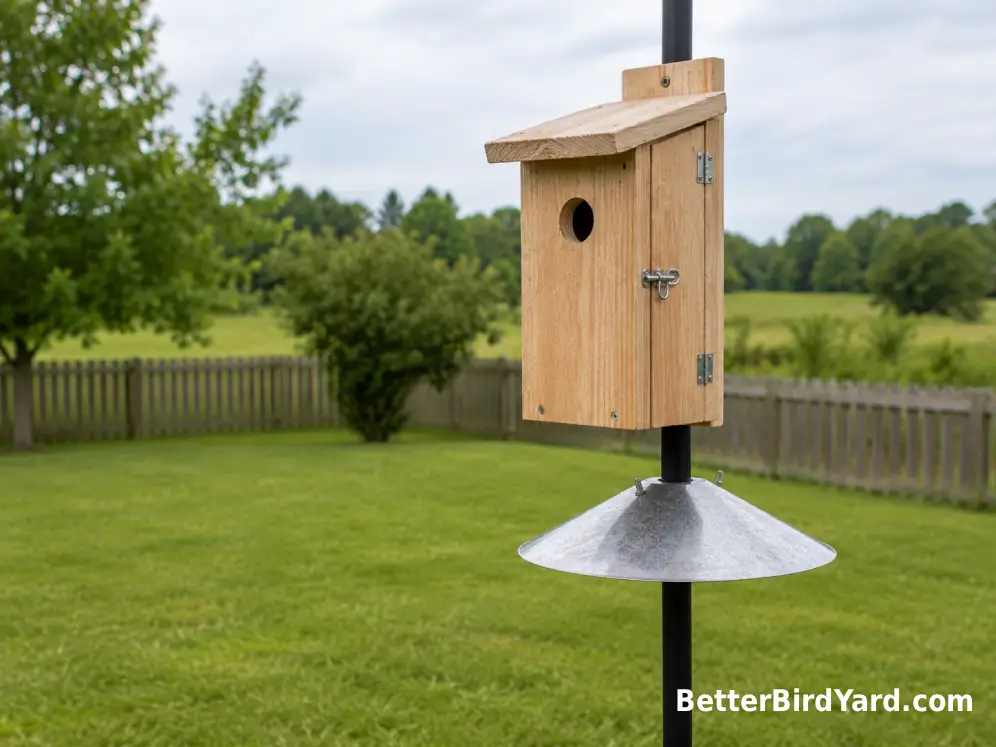
A good bluebird nest box is more important than a decorative one. Cornell NestWatch recommends durable construction, drainage and ventilation, easy access for monitoring and cleaning, no external perch, and a predator-resistant mounting setup. For Eastern Bluebirds, its placement guidance lists a 1.5-inch round entrance as a standard option and open lawn, orchard, or rural habitat as appropriate locations.
- Choose a species-appropriate design rather than a generic ornamental birdhouse.
- Place the box in open habitat with a clear flight path to the entrance.
- Mount it securely on a freestanding smooth pole when practical.
- Add a suitable predator guard or baffle.
- Keep branches and other easy predator access points away from the box.
- Do not add an outside perch; bluebirds do not need one.
Predator protection is one of those details that matters more than beginners expect. Cornell NestWatch notes that nest boxes can be vulnerable to raccoons, cats, snakes, squirrels, and other predators, and recommends smooth pole mounting combined with an appropriate guard where possible.
How To Monitor A Bluebird Box Responsibly
Putting up a box also creates a maintenance responsibility. Check it according to established nest-monitoring guidance rather than opening it repeatedly just for a closer look. Keep visits brief, avoid disturbing adults unnecessarily, and never handle eggs or nestlings casually.
Once a brood has fully fledged and the nest is no longer active, Cornell NestWatch recommends removing the old nest so the box is available for another nesting attempt. A box designed with an accessible side or front panel makes this much easier.
Another frequent problem is assuming that any bird using a bluebird box is an intruder. Several native cavity-nesting birds may investigate suitable boxes. Identify the species before making changes, and follow NestWatch guidance and applicable wildlife rules rather than removing eggs or nests on guesswork.
If Tree Swallows and bluebirds are both competing for boxes and you have enough suitable open habitat, Cornell NestWatch describes paired-box arrangements as one possible management approach. This is mainly useful on larger properties; squeezing several boxes into a tiny suburban yard is not necessarily better.
Watch the structure as carefully as the birds. Repair loose roofs, sharp hardware, enlarged entrance holes, water leaks, or unstable mounts before the next nesting attempt. A dry, secure, correctly sized box is far more useful than an elaborate birdhouse that is difficult to inspect or clean.
Eastern Bluebirds In Illinois
Eastern Bluebirds are native and well established in Illinois. The Illinois Department of Natural Resources describes the species as a common migrant and summer resident statewide and a common winter resident in southern Illinois. It lists pastures, open woodlands, orchards, roadsides, and similar open landscapes among their typical habitats in the state.
For an Illinois backyard watcher, that means the best viewing opportunities depend partly on where you live and what surrounds your property. An open suburban edge near fields or parks may be much more attractive than a heavily wooded city lot. Bluebirds can also shift locally with weather, food availability, nesting habitat, and season, so absence from one yard does not mean they are absent from the broader neighborhood.
There is also an easy state-bird mix-up worth clearing up. The Eastern Bluebird is not the Illinois state bird; Illinois chose the Northern Cardinal. The Eastern Bluebird is the official state bird of Missouri and New York. Missouri adopted the bluebird as its state bird in 1927, while New York adopted it in 1970.
So if you encounter the phrase eastern bluebird state bird, both Missouri and New York are correct answers.
Common Bluebird Backyard Mistakes To Avoid
- Putting a box in unsuitable habitat. A bluebird box buried inside dense woodland is much less appealing than one overlooking open feeding space.
- Buying a birdhouse for looks alone. Poor ventilation, no drainage, oversized openings, decorative perches, and inaccessible interiors can make maintenance or predator protection more difficult.
- Mounting directly where predators have easy access. Trees and rough wooden posts can provide climbing surfaces; a guarded freestanding pole is usually the more practical choice.
- Expecting bluebirds at a seed feeder. Their natural diet centers on insects and fruit, and mealworms are generally a more relevant supplemental offering than ordinary seed.
- Using pesticides where bluebirds hunt. Insect prey is a major part of their diet, and NestWatch advises avoiding nest-box sites where pesticides and herbicides are being used.
- Ignoring water and feeder hygiene. Replace dirty water, clean baths and feeding dishes, and discard spoiled food rather than allowing wet or contaminated material to accumulate.
The broader lesson is simple: attracting a bird should never be the only goal. A good setup also reduces preventable hazards and is manageable enough that you will actually maintain it.
When A Bluebird Needs More Than Backyard Help
A bluebird sitting still is not automatically sick. Birds may rest, watch for food, avoid bad weather, or behave differently during nesting and migration. What matters is whether you see concerning signs such as obvious injury, inability to fly normally, unusual approachability, prolonged immobility in an exposed location, or a recent collision with glass.
Do not try to diagnose or treat a wild bluebird yourself. If a bird appears injured, has struck a window, or is behaving in a seriously abnormal way, contact a licensed wildlife rehabilitator, local wildlife agency, animal control office, or another qualified wildlife professional for guidance. Cornell advises seeking rehabilitation help for window-collision victims because injuries may not be obvious from appearance alone.
If several birds around a feeder or water source appear unwell, stop and reassess the setup rather than assuming a specific disease. Remove spoiled food, clean feeders and baths, consider temporarily pausing feeding, and check current guidance from your state wildlife agency or other authoritative wildlife-health source. Cornell’s Project FeederWatch likewise emphasizes cleaning feeding areas and taking signs of illness seriously rather than continuing normal feeding without precautions.
A Simple Plan For Supporting Eastern Bluebirds
Supporting Eastern Bluebirds does not require turning your yard into a complicated feeding station. Start with the habitat they actually use: some open ground for hunting, safe low perches, fresh water, and region-appropriate native plants that support insects and seasonal fruit. If your property has enough open space, a correctly designed and protected bluebird box can add valuable nesting habitat.
Mealworms can be useful as supplemental food when bluebirds are already nearby, but seed feeders alone are unlikely to be the reason they stay. A clean, well-managed yard with natural food and safe nesting opportunities is the stronger foundation.
Most importantly, keep expectations realistic. Eastern Bluebirds choose territories based on a combination of habitat, season, available nesting cavities, local competition, weather, and food. No feeder or nest box can guarantee a pair. But when the habitat fits, a thoughtfully managed backyard can give these distinctive blue-and-rust thrushes another safe place to hunt, drink, perch, and potentially raise young.