Male vs Female Blue Jay: What Actually Gives Them Away
If you have two Blue Jays visiting your feeder and one looks larger, brighter, or more assertive, it is tempting to label that bird the male. Unfortunately, identifying a Blue Jay male vs female is not that simple. Adult male and female Blue Jays have the same basic blue, white, gray, and black plumage, making them difficult to separate by appearance alone.
The Cornell Lab of Ornithology describes the Blue Jay as a species in which adult males and females share the same plumage pattern. In practical backyard terms, there is no obvious male-only color patch, female-only marking, or dependable difference in crest shape that lets you sex a single bird at a glance.
The useful clues come from behavior, especially around an active nest. Even then, it helps to watch repeated behavior rather than make a judgment from one quick encounter. Here is what you can realistically tell—and what is mostly guesswork.
Can You Tell A Male Blue Jay From A Female At A Glance?
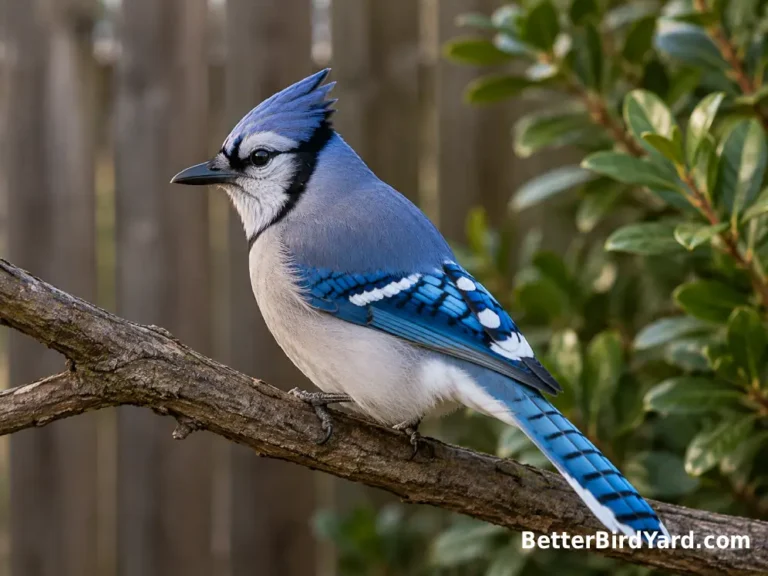
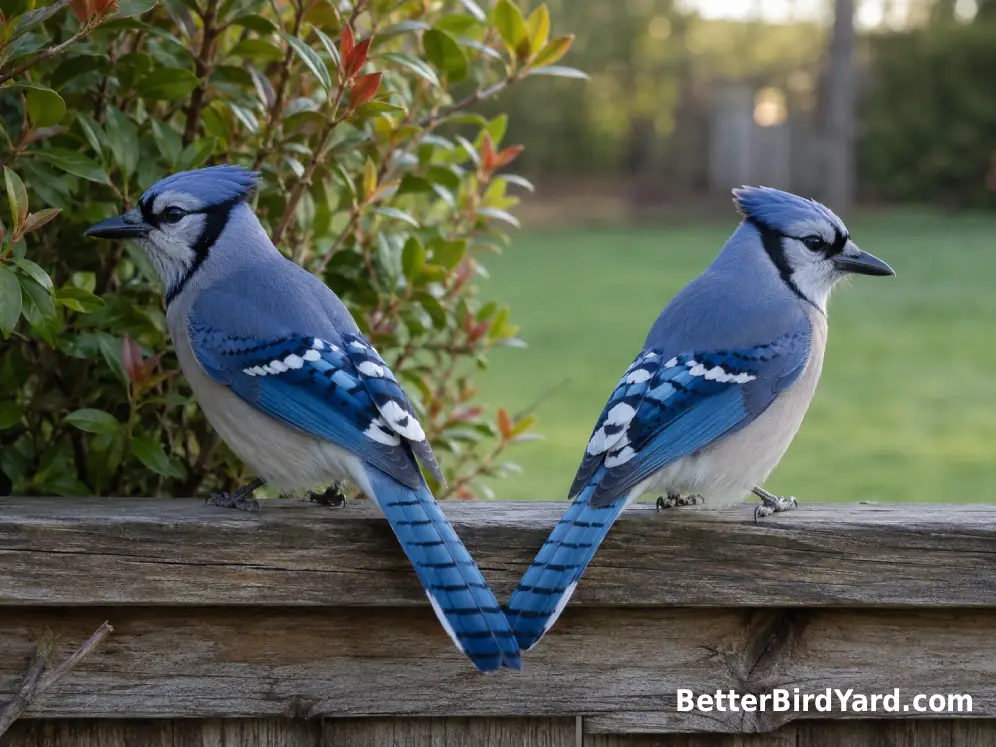
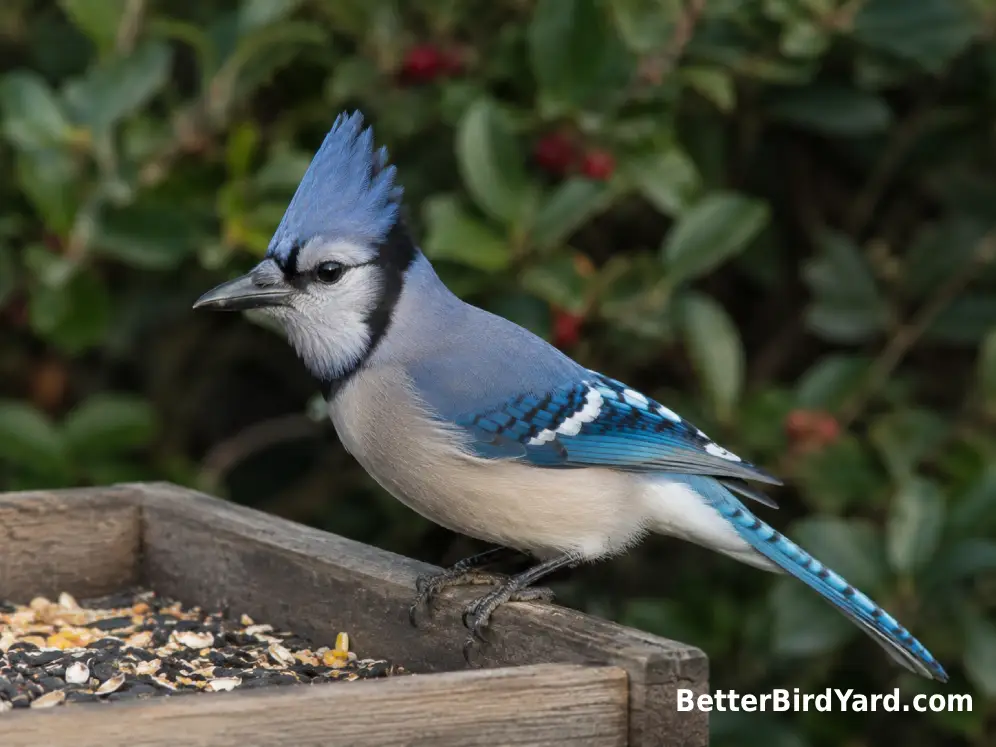
Usually, no. A female Blue Jay bird looks much like an adult male Blue Jay. Both sexes can show the familiar blue crest and back, white-to-gray underparts, black facial and neck markings, and barred blue, black, and white wings and tail.
That makes Blue Jays different from strongly sexually dimorphic backyard birds such as Northern Cardinals, where adult males and females have visibly different plumage. With Blue Jays, a photograph of one adult bird usually does not contain enough information to determine its sex confidently.
This also means that color intensity is a poor shortcut. One jay may appear deeper blue than another because of lighting, viewing angle, feather condition, or the way its feathers reflect light. Cornell notes that pale-blue iridescent areas of a Blue Jay’s wing can look brighter or duller depending on viewing angle.
If all you have is one Blue Jay sitting at a feeder, the most accurate identification is simply adult Blue Jay rather than male or female.
What Do Male And Female Blue Jays Look Like?
Male and female Blue Jays share the features most backyard watchers use for identification. Both have a strong straight bill, prominent crest, broad rounded tail, pale underparts, and the striking blue-and-black pattern across the wings and tail.
| Feature | Male Blue Jay | Female Blue Jay | Useful For Sexing? |
|---|---|---|---|
| Blue, white, gray, and black plumage | Present | Present | No |
| Raised or lowered crest | Present | Present | No |
| Black neck and facial markings | Present | Present | No |
| Overall body size | Overlaps with females | Overlaps with males | Not dependable in the field |
| Incubating eggs | No | Yes | Strong behavioral clue |
| Feeding an incubating mate | Yes | Not the incubating role | Strong behavioral clue |
Cornell lists a combined measurement range for both sexes rather than separate field-identification measurements: roughly 9.8–11.8 inches long, 2.5–3.5 ounces in weight, with a wingspan of about 13.4–16.9 inches. The important point for a backyard observer is the overlap. A bird that looks a little bigger is not automatically a male.
Distance can make that problem worse. A jay six inches closer to your window can look substantially larger than its companion. Fluffed feathers, posture, and a raised crest can also change the bird’s apparent bulk.
Nesting Behavior Gives You The Best Male-Female Clues
Breeding behavior is much more informative than feather color. Cornell reports that both sexes take part in gathering nest material and building the nest, although males tend to do more material gathering while females tend to do more of the actual arranging and building. That means a Blue Jay carrying a twig is not automatically male or female.
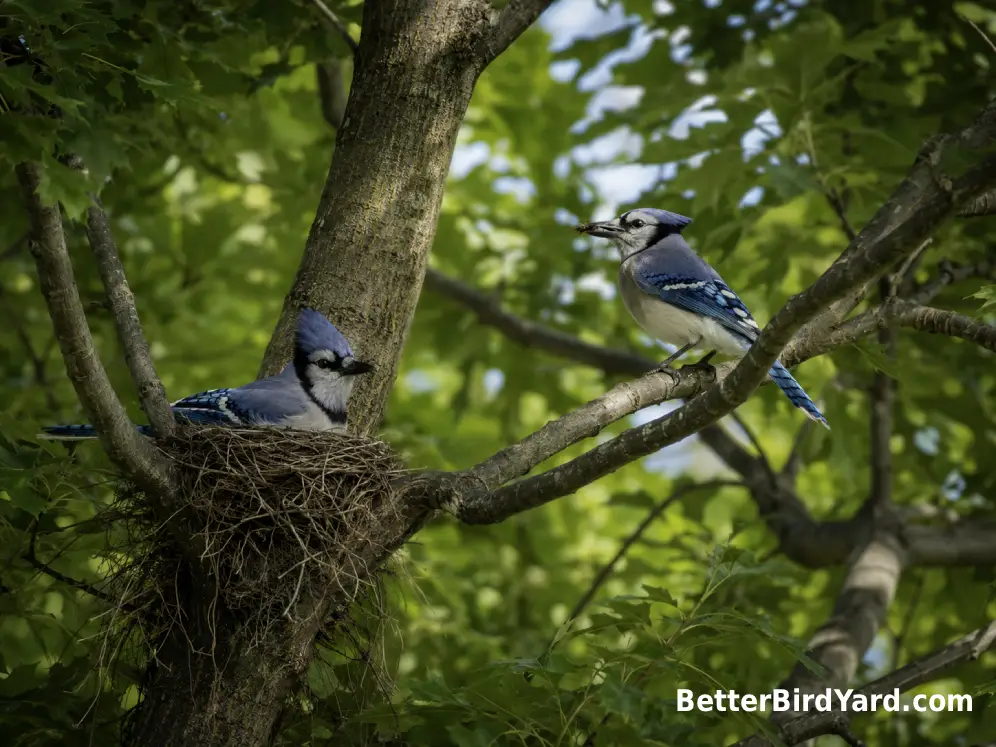
Once incubation begins, the roles become easier to interpret. Only the female incubates the eggs, while her mate brings her food. During the early nestling period, the female continues brooding the young while the male supplies food to her and the nestlings. Later, both adults participate in gathering food for the young.
- If one adult is repeatedly sitting on eggs, that bird is the female.
- If its partner repeatedly delivers food during incubation, that bird is the male.
- If both birds are carrying nest material, that behavior alone does not identify sex.
- Once nestlings are older and both parents are feeding them, food delivery becomes less useful as a sex clue.
The word repeatedly matters. A single glimpse rarely provides enough context. Watching the same pair calmly from a distance over several days gives you a much better chance of understanding which bird is doing which job.
Size, Crest, Color, And Boldness Are Poor Sex Clues
Several popular shortcuts for identifying a female vs male Blue Jay sound convincing until you watch enough birds to see how much individuals vary.
“The bigger bird is the male.” Size differences between two birds are difficult to judge unless they are at exactly the same distance and in similar postures. Cornell’s identification measurements are given for both sexes together, which is a good reminder that body size is not a practical field mark for separating them.
“Females are duller blue.” Not reliably. Adult males and females share the same basic plumage pattern. Apparent brightness can change with lighting and feather angle.
“A tall crest means male.” Both sexes can raise or lower the crest. Cornell describes crest position as part of Blue Jay body language associated with social context and aggression rather than a male-only trait.
“The bossy feeder bird must be male.” Feeder behavior is too variable to use that way. Individual temperament, hunger, social status, nearby competitors, and the situation at the feeder can all affect how a jay behaves. Treat assertiveness as behavior, not a sex marker.
How To Watch A Blue Jay Pair Without Disturbing Them
You do not need to approach a nest to learn a surprising amount about a pair. In fact, distance often produces better observations because the birds are more likely to continue their normal routine.
- Watch from a window, patio, or another regular spot the birds already tolerate.
- Use binoculars rather than moving closer to a nest.
- Keep notes about repeated actions: nest sitting, food deliveries, or material gathering.
- Look for patterns over multiple visits instead of labeling birds after one encounter.
- If the birds become agitated or repeatedly alarm-call in response to your presence, give them more space.
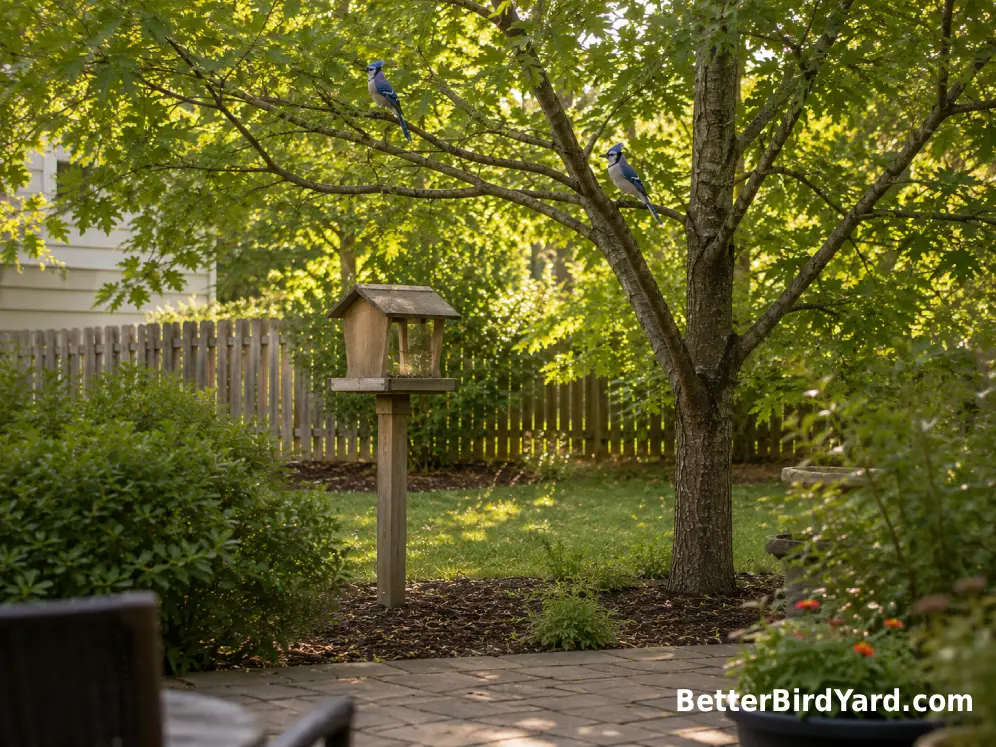
A small yard can actually make this easier. If the same pair regularly crosses between an oak, fence line, and feeder, you may learn their usual routes without needing to follow them around.
BetterBirdYard note: If your real goal is simply to enjoy the pair, you do not have to determine which bird is male and which is female. Blue Jays have complex social behavior, and watching how two birds interact is often more interesting than trying to assign a sex to every visitor.
If Blue Jays regularly use your feeding station, our Blue Jay feeder guide can help you set up a practical observation spot. Keeping feeding areas tidy also makes longer observation sessions more pleasant; see our bird feeder cleaning guide for routine maintenance basics.
Common Male-Vs-Female Blue Jay Identification Mistakes
The most common mistake is turning a small visual difference into a definite answer. Two Blue Jays rarely stand like identification-chart specimens. One is closer, another is crouched, one has its crest raised, and the other has its feathers sleeked down. Those differences can make the birds look less alike than they really are.
Another mistake is assuming a pair must always be one obvious male and one obvious female based on which bird appears dominant. Blue Jay social behavior can involve mates, family members, and flock associates, so simply seeing two jays together does not prove you are watching a breeding pair.
Nest behavior can also be misread. Because male and female Blue Jays both participate in nest construction, carrying twigs or visiting a partly built nest does not settle the question. The clearest backyard clue comes later: the adult actually incubating eggs is the female, while the mate provisioning her during incubation is the male.
Finally, avoid relying on a single photograph labeled male or female online unless the sex was established through behavior, banding, or another reliable method. Appearance by itself usually cannot support that label.
Does A Female Blue Jay Have Different Colors?
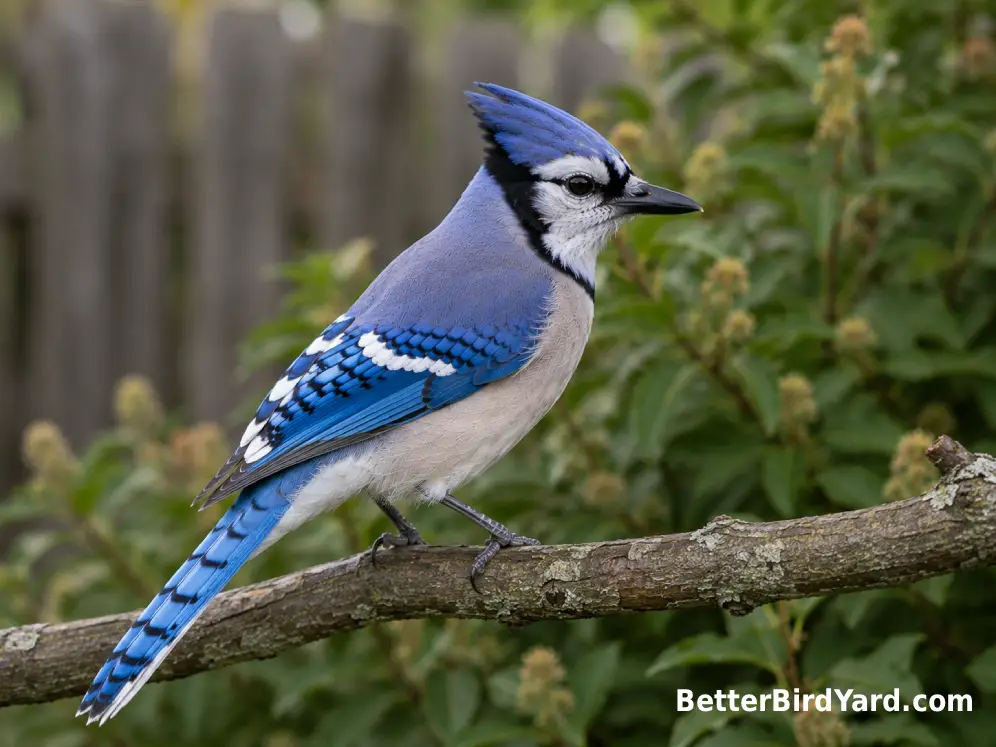
No consistent female-only color pattern is useful for backyard identification. A female Blue Jay has the same general adult plumage pattern as a male: blue above, pale underneath, with black and white markings. Cornell specifically uses the Blue Jay as an example of a bird whose adult males and females share a single plumage pattern.
This is worth remembering when photographs make one bird look especially vivid. Blue feathers can change dramatically in apparent brightness with light and angle, so a brilliant-looking jay is not automatically male and a softer-looking jay is not automatically female.
Instead of looking for a hidden female color clue, concentrate on confirming the species first. The combination of a prominent crest, strong bill, blue-and-black barred wings and tail, pale underparts, and black facial and neck markings is far more useful for identifying a Blue Jay than it is for identifying the bird’s sex.
The Bottom Line On Male And Female Blue Jays
For most backyard observations, a male vs female Blue Jay cannot be identified reliably by color, crest, body size, or attitude. The two sexes look remarkably similar, and the differences people think they see at feeders are often caused by posture, lighting, distance, or normal individual variation.
If you want a dependable clue, watch behavior during the breeding season from a respectful distance. Both sexes help build the nest, so construction alone will not tell you much. Once eggs are being incubated, however, the bird sitting on them is the female, while her mate brings food. That is much stronger evidence than guessing from which bird looks bigger or bluer.
And if you never manage to determine the sex of the Blue Jays in your yard, you are not missing an obvious field mark. For these birds, adult appearance simply does not give backyard watchers an easy male-female label. Watching the pair’s routines, calls, feeding behavior, and family interactions is the more rewarding clue to what they are doing in your yard.