Blue Jay Bird Feeder: A Practical Setup for Peanuts and Bigger Birds
If you want Blue Jays at your feeder, start with a feeder that gives these relatively large songbirds room to land. A sturdy platform or tray feeder is usually the simplest choice, while a roomy hopper feeder mounted on a post is a good option if you want better protection from rain. Cornell Lab guidance specifically notes that Blue Jays tend to prefer tray feeders or hopper feeders on a post rather than small hanging feeders. Peanuts, sunflower seed, and suet are among the foods they commonly take at feeders.
For many yards, the most useful blue jay bird feeder is therefore not a complicated specialty model. It is a stable feeder with enough landing space, good drainage, and food the birds can easily reach. Whole unsalted peanuts can make the setup especially attractive to jays, although sunflower seed gives you a more general-purpose feeder that other backyard birds can use too.
The details matter. A feeder that stays damp, swings under a Blue Jay’s weight, or constantly feeds squirrels instead of birds quickly becomes frustrating. The goal is a simple setup you can keep clean and manage responsibly.
What Is The Best Bird Feeder For Blue Jays?
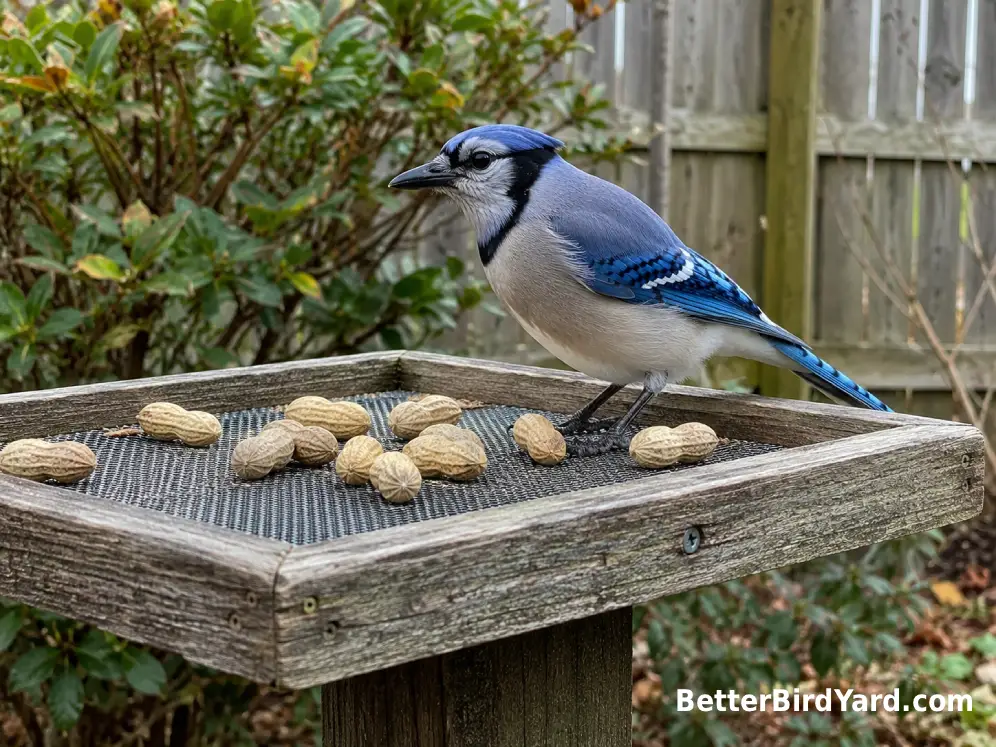
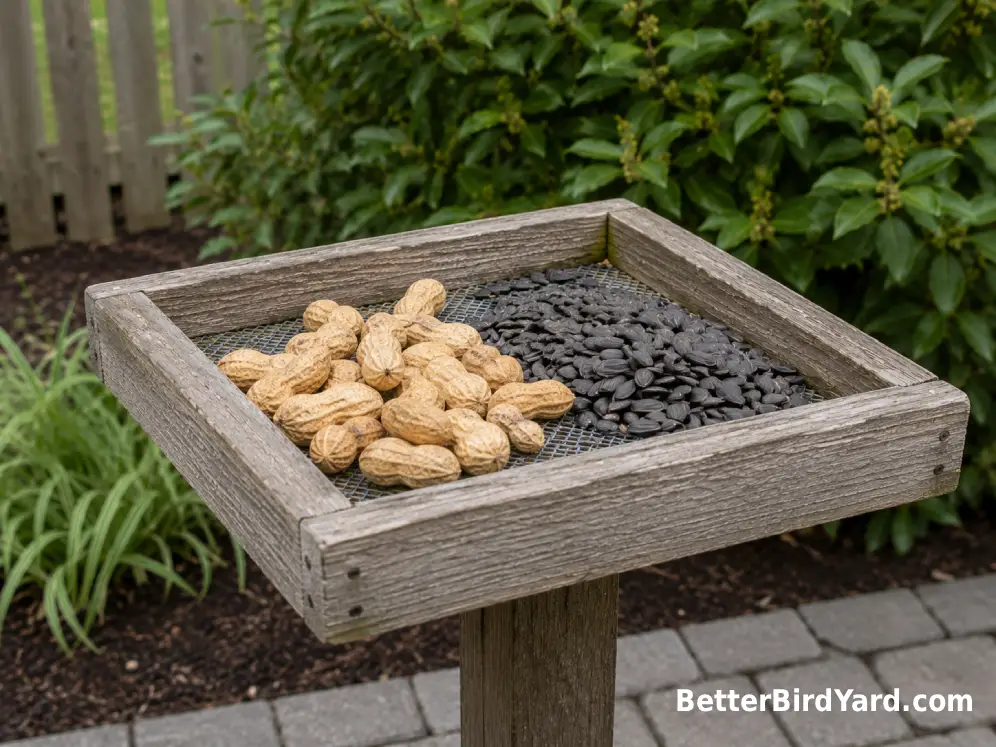
For most beginners, a post-mounted platform feeder is the best place to start. Blue Jays are larger and heavier than chickadees or finches, so they benefit from a broad, stable landing area instead of short perches designed for small birds. Cornell’s Project FeederWatch describes platform feeders as suitable for jays and recommends drainage so water does not collect around the food.
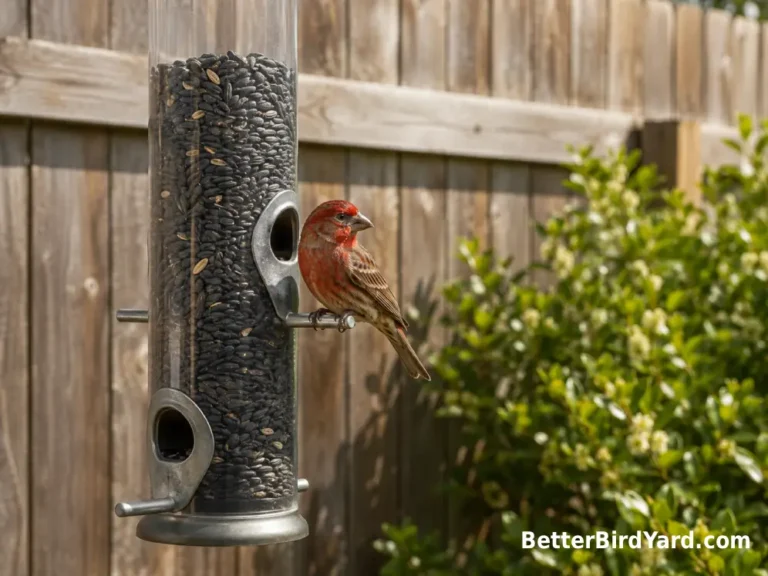
A large hopper feeder is a strong second choice. It combines a feeding ledge with a covered seed reservoir, which can help keep sunflower seed drier during ordinary rain. Make sure the ledge is wide enough for a Blue Jay to perch comfortably. Small hoppers and short-perch tube feeders are often intentionally designed to discourage larger birds, including jays, so they work against your goal.
A dedicated peanut feeder can also work well, particularly if your main goal is watching jays carry off peanuts. Choose one that lets the bird grip securely and reach the food without forcing its head or body into an awkward opening. Ease of cleaning matters more than an elaborate shape.
| Feeder Type | Best Use | Main Advantage | Main Tradeoff |
|---|---|---|---|
| Platform or tray | Whole peanuts and sunflower seed | Roomy, stable landing area | Food is more exposed to weather and droppings |
| Large hopper | Sunflower seed and peanut pieces | Roof helps protect food | Can be harder to clean |
| Peanut feeder | Whole or shelled peanuts, depending on design | Keeps a high-value food separate | Can draw squirrels and other wildlife |
| Small tube feeder | Smaller feeder birds | Good seed protection | Short perches may exclude Blue Jays |
What Should You Put In A Blue Jay Feeder?
Peanuts are one of the most practical foods for a Blue Jay peanut bird feeder. Project FeederWatch notes that peanuts can be offered either shelled or in the shell, and larger birds such as jays may carry peanuts away for later use. Use plain peanuts only: raw or roasted is acceptable, but avoid salted, flavored, sugared, or otherwise coated peanuts.
Whole peanuts in the shell work especially well on a platform because Blue Jays can simply land, choose one, and leave. Peanut hearts or pieces can be offered on a platform or in an appropriate hopper. Keep peanuts dry and discard any that look moldy, damp, spoiled, or questionable. Cornell also cautions that peanuts can spoil when moisture is allowed to build up, making smaller portions sensible during wet or humid weather.
Sunflower seed is a useful alternative or companion food. It makes the feeder appealing to a wider mix of birds while still being suitable for Blue Jays. Hulled sunflower reduces shell debris, but because the protective hull has been removed, it needs especially good protection from moisture.
- Use plain, unsalted peanuts with no coatings or flavorings.
- Try whole in-shell peanuts on an open tray.
- Offer sunflower seed if you want a broader mix of feeder visitors.
- Put out manageable portions rather than leaving large amounts exposed.
- Discard wet, moldy, or spoiled food instead of topping it off with fresh food.
If you are comparing foods beyond these basics, our backyard bird seed guide can help you match food choices to the other species visiting your yard.
How To Set Up A Blue Jay Bird Feeder
A good feeder can still disappoint if it wobbles, stays wet, or sits where birds seem reluctant to approach. Blue Jays often make quick feeder visits, so a stable landing area and a clear route in and out are useful.
Keep the setup simple:
- Choose a platform, tray, or roomy hopper that supports a large bird comfortably.
- Mount it securely on a post, railing, or other stable support.
- Make sure rainwater can drain instead of pooling with seed.
- Start with a modest amount of peanuts or sunflower seed.
- Watch the feeder for several days before changing multiple things at once.
Nearby shrubs or trees can give birds places to perch between visits, but avoid creating an easy hiding place immediately beside the feeder for free-roaming cats or other predators. Feeders can also increase collision risk when poorly arranged around reflective glass, so pay attention to nearby windows and use effective exterior window treatments where needed. Audubon emphasizes that responsible feeding includes both regular feeder care and making windows safer for birds.
For a renter with only a patio or balcony, you do not need a large feeding station. A compact railing tray that can be removed and washed may be easier to manage than a large hopper. Before putting out food, check lease terms, building policies, HOA rules, and local ordinances where applicable, especially if fallen seed could affect neighbors or attract rodents.
How To Keep Squirrels And Other Visitors From Taking Over
Peanuts do not appeal only to Blue Jays. Squirrels, chipmunks, raccoons, and other wildlife may be interested too, and Cornell specifically cautions that peanuts can attract animals you may not want to subsidize.
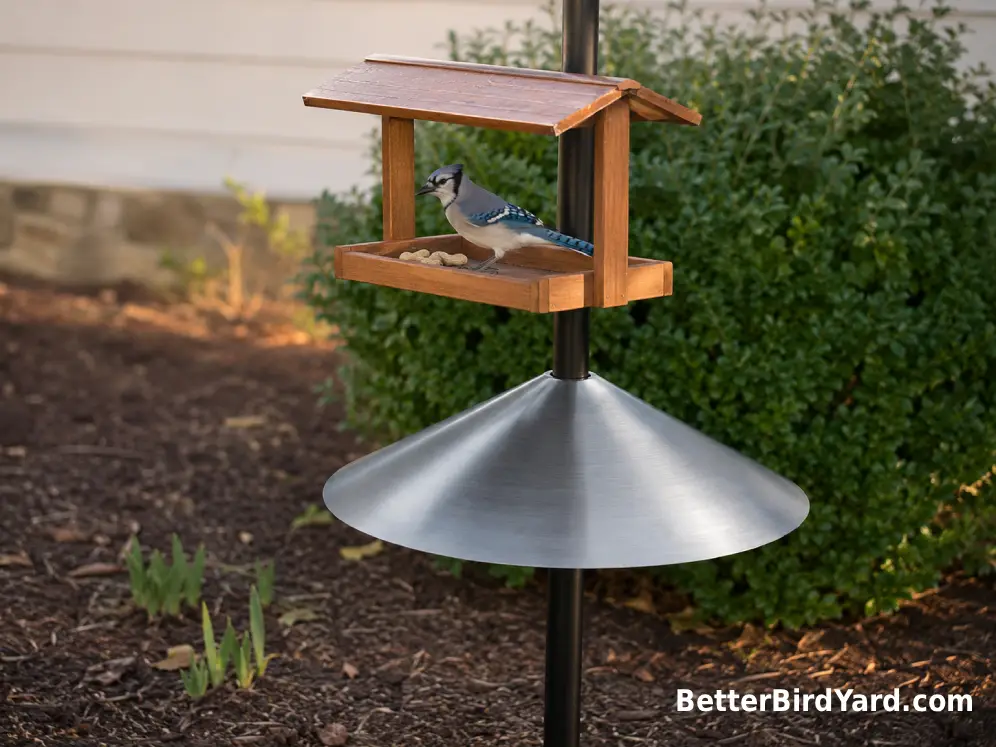
A pole-mounted feeder with an appropriate baffle is usually easier to defend than an open tray attached directly to a tree. Keep in mind that no squirrel solution works equally well in every yard. Nearby fences, roofs, branches, and railings can turn into launching points, so watch what actually happens before buying more hardware.
Blue Jays themselves may temporarily displace smaller birds at a shared platform. That does not necessarily mean you need to stop feeding them. Cornell feeder observations show that dominance and displacement are normal parts of activity around busy feeders.
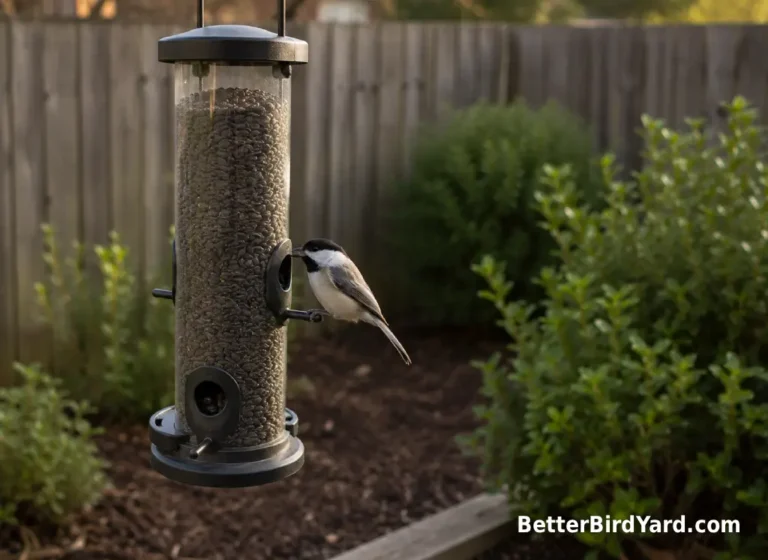
If smaller chickadees, finches, or nuthatches rarely get a chance to eat, separating foods can help. Put peanuts on the jay-friendly tray and maintain a second feeder with shorter perches for smaller species. Project FeederWatch notes that short-perch tube feeders can exclude larger birds such as jays, which makes them useful as a companion feeder rather than your main Blue Jay feeder.
Watch the ground as closely as the feeder. If uneaten peanuts or sunflower seed begin accumulating, scale back the amount you offer. Persistent food on the ground can attract rodents and turn a pleasant feeding station into a neighborhood problem.
How To Keep A Blue Jay Feeder Clean And Safe
Platform feeders are easy for Blue Jays to use, but the open surface also means seed can be exposed to rain, droppings, and other contamination. Good drainage and small portions make maintenance much easier.
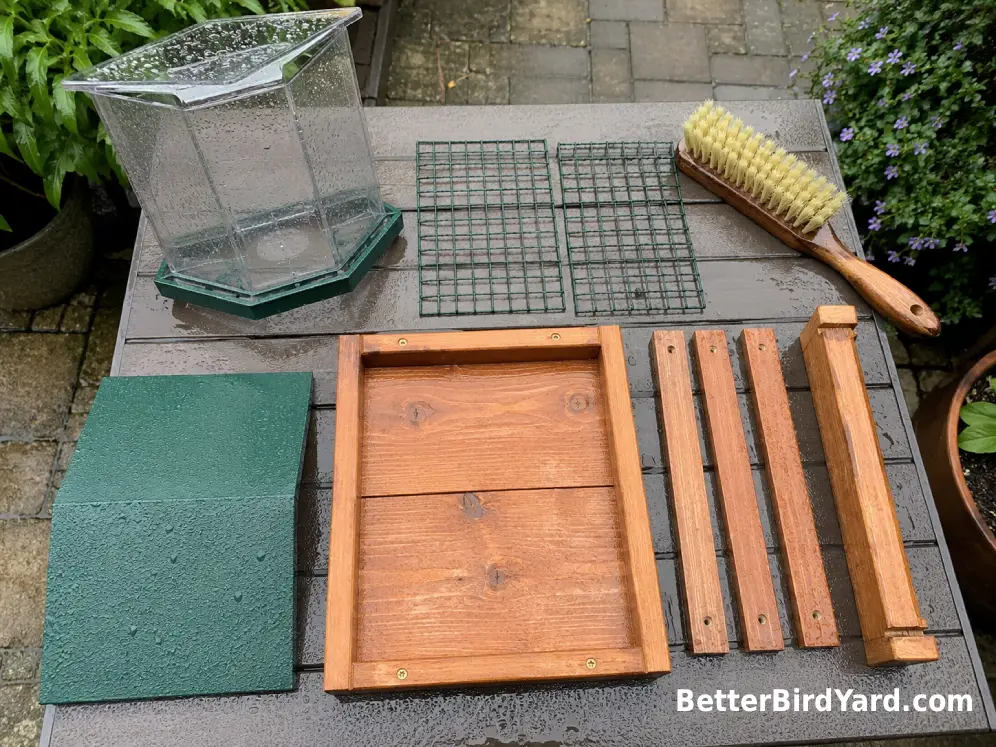
Project FeederWatch recommends cleaning seed and suet feeders regularly, such as every week or two, and more often during heavy use or wet weather. Their current general method is straightforward: take the feeder apart, remove debris, wash thoroughly with warm water and dish soap, rinse it well, and allow it to dry before refilling. The ground beneath feeders should also be kept free of accumulated droppings and spoiled food.
- Empty old food rather than continually topping off the feeder.
- Remove stuck hulls and peanut fragments from corners and drainage openings.
- Wash the feeder regularly and whenever it becomes visibly soiled.
- Let the feeder dry completely before adding fresh seed or peanuts.
- Rake or sweep up old food beneath the feeding area.
This is one of those details that matters more than beginners expect: a feeder that is easy to disassemble is often a better purchase than a beautiful feeder full of narrow seams you cannot reach with a brush.
If you notice birds that appear sick around the feeding area, do not try to diagnose or treat them yourself. Clean feeders and baths, consider pausing feeding, and check current guidance from your state wildlife agency or Project FeederWatch. A wild bird that is injured or behaving unusually may need advice from a licensed wildlife rehabilitator or other qualified local professional rather than backyard treatment.
For a more detailed routine, see our bird feeder cleaning guide.
Common Blue Jay Feeder Mistakes To Avoid
The most common problems with bird feeders for Blue Jays are less about the birds and more about choosing equipment that does not fit their size or creating more food than the yard can safely handle.
- Using a tiny feeder with short perches. Small tube feeders may intentionally exclude jays, so do not assume every seed feeder is suitable.
- Choosing an unstable hanging feeder. Blue Jays can use some hanging designs, but Cornell notes a preference for tray or post-mounted hopper feeders. A swinging feeder may simply be less convenient.
- Leaving peanuts exposed through long stretches of rain. Offer smaller portions and discard damp or moldy food.
- Using salted or flavored peanuts. Stick with plain peanuts without salt, coatings, or seasoning.
- Overfilling an open platform. More food is not necessarily better if it sits long enough to become wet or contaminated.
- Ignoring the ground below the feeder. Accumulated seed can attract rodents and other unwanted wildlife.
Another mistake is expecting immediate results. Even the best bird feeder for Blue Jays cannot guarantee visits. Local Blue Jay numbers, nearby habitat, season, natural food availability, and competition with other feeding sites all affect what you see.
Give a new feeder time to be discovered. If Blue Jays already pass through your neighborhood, a stable tray with a few peanuts is a much more useful experiment than repeatedly moving the feeder or changing food every day.
Do Blue Jays Need A Special Feeder In Every Yard?
No. If you already have a roomy platform or large hopper feeder, you may only need to change what you offer rather than purchase another feeder. A few plain peanuts or sunflower seeds can tell you whether local Blue Jays are interested.
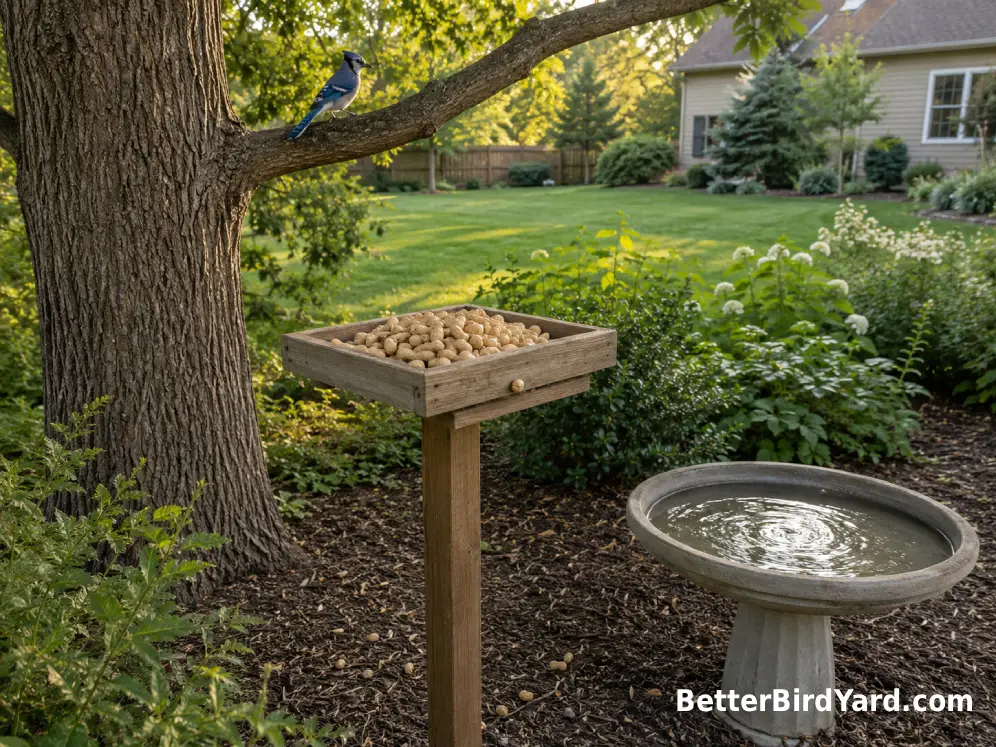
Habitat matters too. Cornell notes the association between Blue Jays and oaks, whose acorns are an important natural food, and also observes that Blue Jays readily visit bird baths. A feeder can supplement those natural resources, but it does not need to be the entire attraction strategy.
If you have room, native trees and shrubs appropriate to your region can provide food, cover, and structure without requiring daily refilling. In a rental or tiny patio, a clean bird bath and one removable feeder may be a more realistic combination.
Local conditions should shape your decision. In areas with bears or persistent nuisance wildlife, follow state or local wildlife agency recommendations about whether feeders should be removed seasonally. If building rules prohibit feeding or fallen seed creates conflict with neighbors, a bird bath and bird-friendly planting may be better options.
Blue Jays are widespread across much of the eastern and central United States, but their occurrence is not identical everywhere. If you rarely see or hear them locally, check a current range map or local bird observations before assuming your feeder design is the problem.
A Simple Blue Jay Feeder Setup To Start With
If you only change one thing, start with a sturdy platform feeder rather than trying to find an elaborate species-specific product. Mount it securely, make sure the bottom drains well, and offer a small handful of plain unsalted peanuts. If you would rather feed a wider range of birds, use sunflower seed as your main food and add peanuts separately.
A large hopper feeder is the better choice when protecting seed from ordinary rain is a priority, while a dedicated peanut feeder can be useful if you want to keep peanuts separate from your regular seed station. Small tube feeders still have a place in the yard, but they are better used as a second feeding area for smaller birds than as the main bird feeder for Blue Jays.
Then watch what your yard tells you. If squirrels take every peanut, adjust the mounting or add a baffle. Food that stays wet may mean you should reduce portions or improve weather protection. To prevent smaller birds from being repeatedly displaced, consider separating the feeding stations. And if keeping the feeder clean becomes difficult, simplify the setup rather than adding more food.
That combination of a stable landing space, appropriate food, good drainage, regular cleaning, and realistic expectations is usually more important than finding a feeder marketed specifically for Blue Jays.