Finch Bird Feeder Guide: Choose the Right Feeder, Seed, and Setup
A good finch bird feeder does not need to be complicated. For many US backyards, the most useful starting point is a cleanable tube feeder paired with the seed your local finches actually want. If House Finches are your main target, black-oil sunflower seed is a particularly practical choice. If you are hoping for American Goldfinches or Pine Siskins, a dedicated small-port feeder filled with nyjer can make more sense.
The important distinction is that finch bird feeders are not all designed for the same food or the same birds. A narrow nyjer feeder may be excellent for small goldfinches yet be a less useful first purchase for someone primarily trying to feed House Finches.
For beginners, we would prioritize three things before decorative features: the feeder should match the seed, come apart easily for cleaning, and keep the food reasonably protected from wet weather. From there, safe placement and a simple maintenance routine matter more than owning several feeders.
Quick Answer: The Best Finch Feeder Depends On The Finch
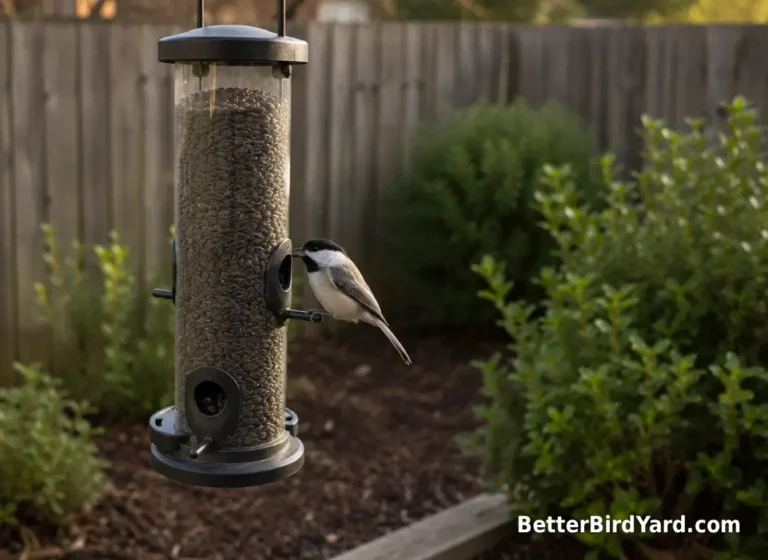
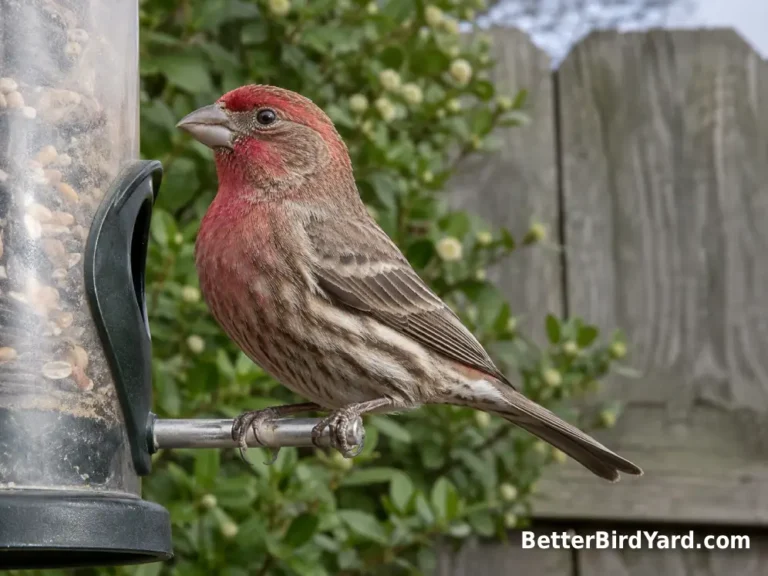
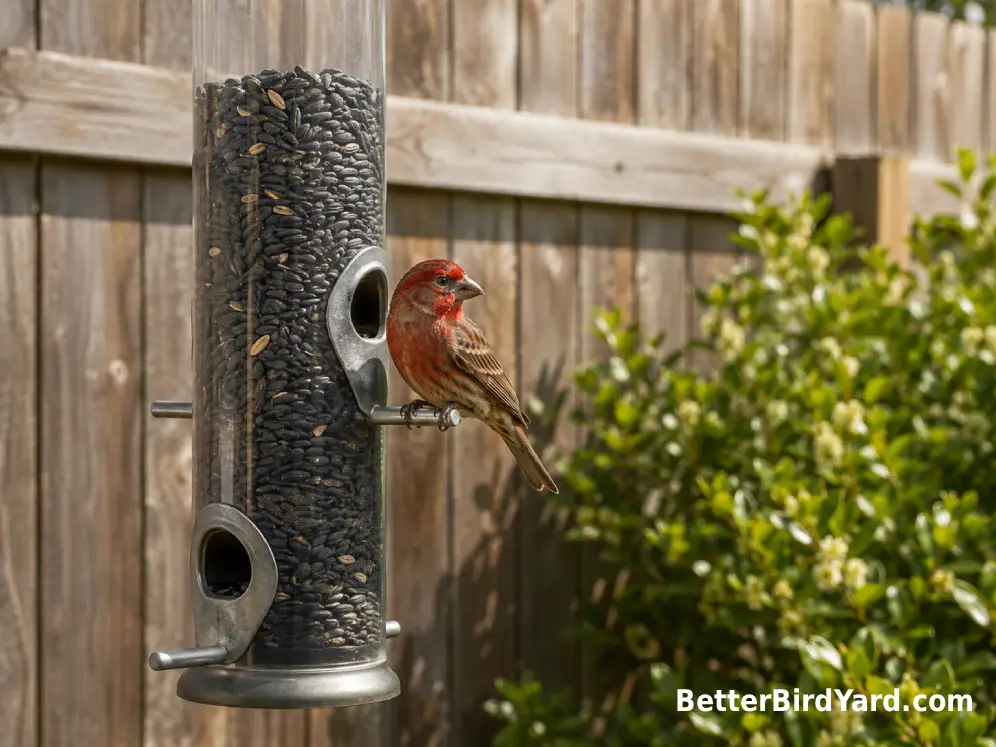
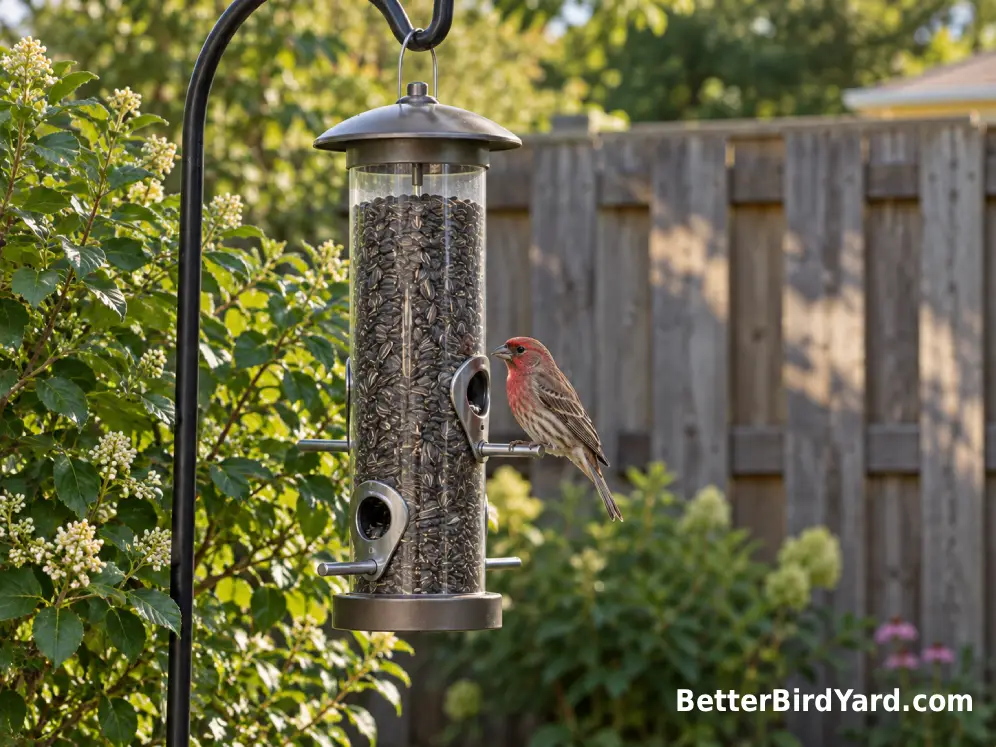
If you want one versatile feeder to begin with, a standard tube feeder that accepts sunflower seed is difficult to beat. Cornell Lab guidance identifies tube, hopper, and platform feeders as suitable choices for House Finches, with black-oil sunflower being a preferred feeder food.
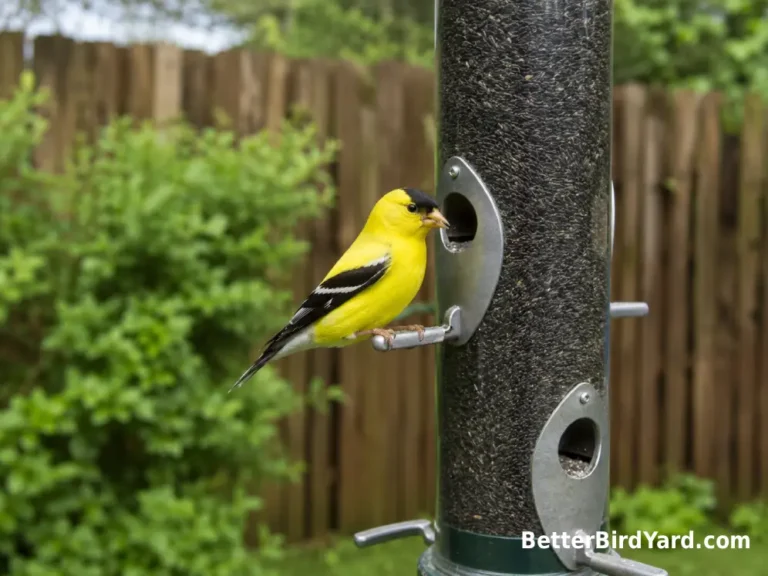
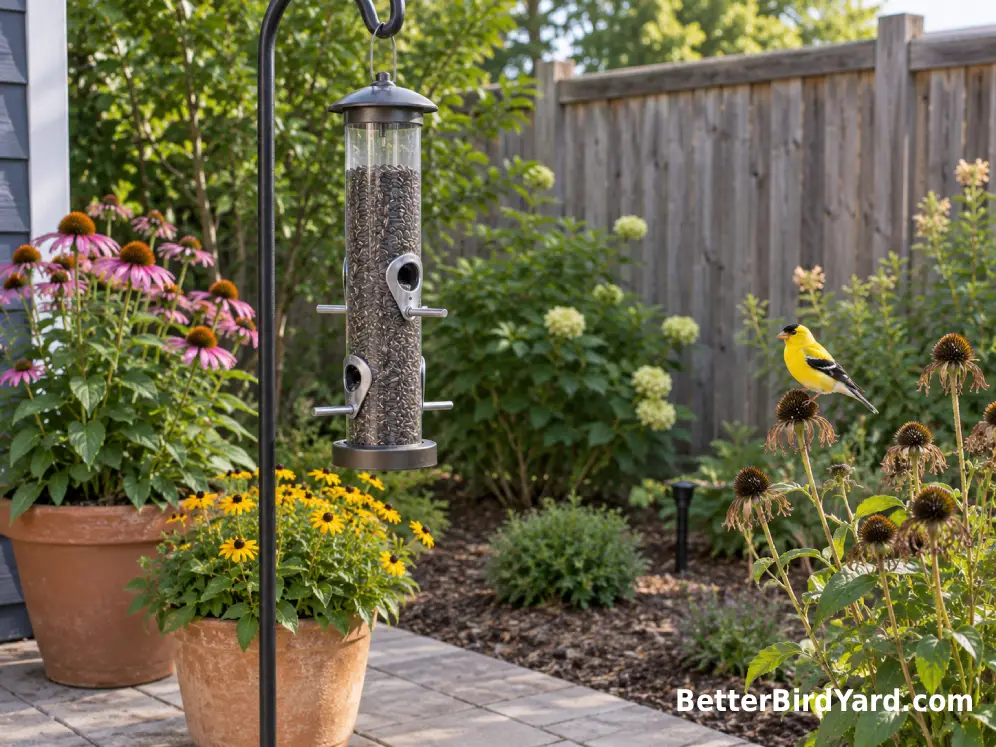
Goldfinches give you another option. American Goldfinches readily eat both sunflower and nyjer at feeders, while specialized nyjer feeders use very small openings that keep the tiny seed from pouring out.
| Feeder Type | Good Starting Use | Food | Beginner Tradeoff |
|---|---|---|---|
| Standard tube feeder | House Finches and a variety of other small feeder birds | Black-oil sunflower | Simple and versatile, but sunflower shells can create ground cleanup |
| Small-port nyjer feeder | American Goldfinches, Pine Siskins, and other small finches where present | Nyjer | Good seed control, but the specialized feeder is less versatile |
| Hopper feeder | House Finches plus a broader mix of feeder birds | Sunflower and suitable seed | Holds more food but may bring more traffic and cleanup |
| Platform feeder | Finches that are comfortable feeding on an open surface | Sunflower | Easy for birds to access, but exposed food needs close attention to weather and cleanliness |
If your specific goal is a bird feeder for House Finch visits, we would start with the standard tube feeder and sunflower seed rather than assuming that anything marketed as a finch feeder must use nyjer.
Choose The Right Seed Before You Buy The Feeder
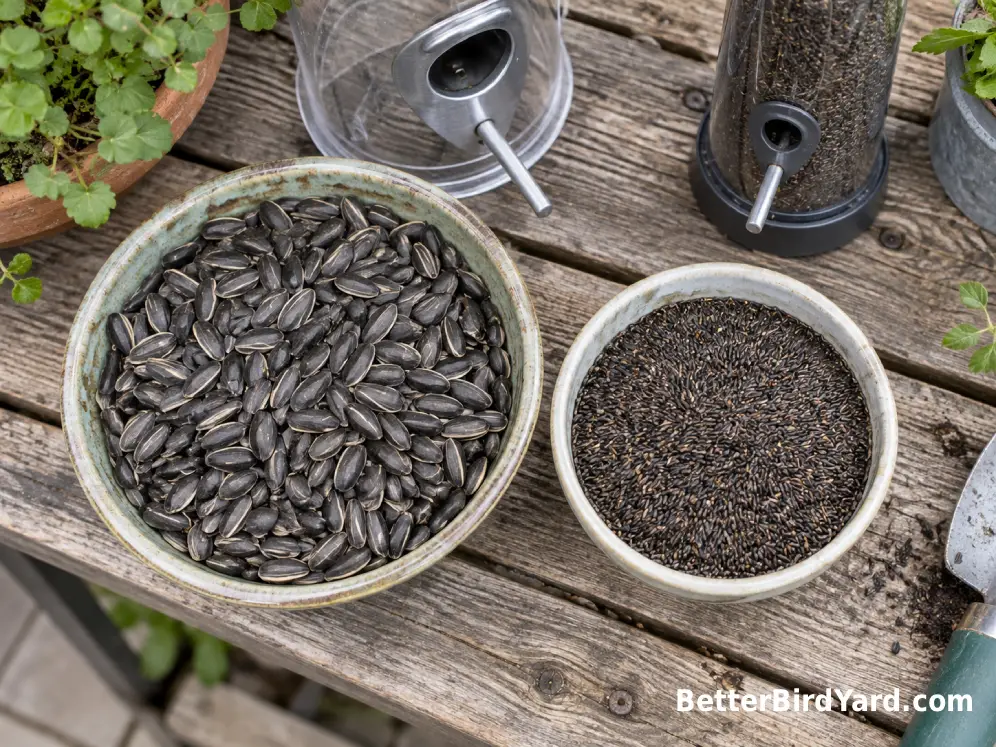
The feeder and the food have to work as a pair. A standard sunflower tube has ports sized for larger seeds. A nyjer tube has much smaller openings because nyjer is tiny. Putting nyjer into a feeder with oversized ports can waste seed, while putting sunflower into a feeder designed only for nyjer simply will not work.
For House Finches, black-oil sunflower is the straightforward choice. Cornell Lab describes it as a preferred feeder food for the species, and Project FeederWatch notes that black-oil sunflower is widely eaten by finches and many other backyard birds.
For American Goldfinches, both sunflower and nyjer are useful options. Nyjer makes the most sense when you want a feeder more strongly oriented toward small finches. Project FeederWatch recommends offering nyjer by itself in a feeder with appropriately small ports rather than mixing it into food that may spill or separate.
- Choose black-oil sunflower for a versatile House Finch setup.
- Choose nyjer for a dedicated small-finch feeder.
- Buy modest amounts until you learn how quickly birds use the food.
- Discard seed that becomes wet, moldy, or otherwise spoiled.
For patios and balconies where shells are an issue, hulled sunflower can reduce debris. It also lacks the protective shell, however, so moisture and spoilage deserve extra attention. Cornell advises offering only amounts that can be consumed while still fresh.
Our broader bird seed guide can help if you also want to feed chickadees, cardinals, nuthatches, or other regular backyard visitors.
Set Up Your Finch Feeder In Five Simple Steps
You do not need a large feeding station to make a finch feeder useful. One feeder, properly placed and maintained, is enough to learn which birds are already moving through your yard or neighborhood.
- Choose your target first. Use a sunflower tube for a versatile setup or a small-port nyjer feeder when goldfinches and similar small finches are the priority.
- Mount it securely. A shepherd’s hook, feeder pole, or sturdy hanging point should keep the feeder stable while still allowing you to reach it easily for refilling and cleaning.
- Start with a small amount of fresh seed. This helps you judge demand before leaving a large quantity exposed to humidity or rain.
- Check the view around the feeder. Avoid creating an easy ambush spot for roaming cats, and pay attention to nearby reflective windows.
- Watch before adding more equipment. Give local birds time to discover the feeder, then adjust the food, position, or feeder style based on what actually happens.
Windows deserve particular attention. Cornell’s collision guidance recommends keeping feeders very close to glass, roughly within 3 feet, or placing them more than about 30 feet away rather than in the higher-speed flight zone between those distances. Effective exterior window treatments can provide additional protection where reflections are a problem.
For a renter, that may mean a compact pole-mounted feeder on a patio rather than drilling into a railing or wall. Check lease, property-management, HOA, or local rules where feeding restrictions apply. You also want a location where spilled seed can be swept up easily instead of accumulating underneath neighboring balconies or around shared walkways.
Keep Seed Fresh And The Feeder Easy To Clean
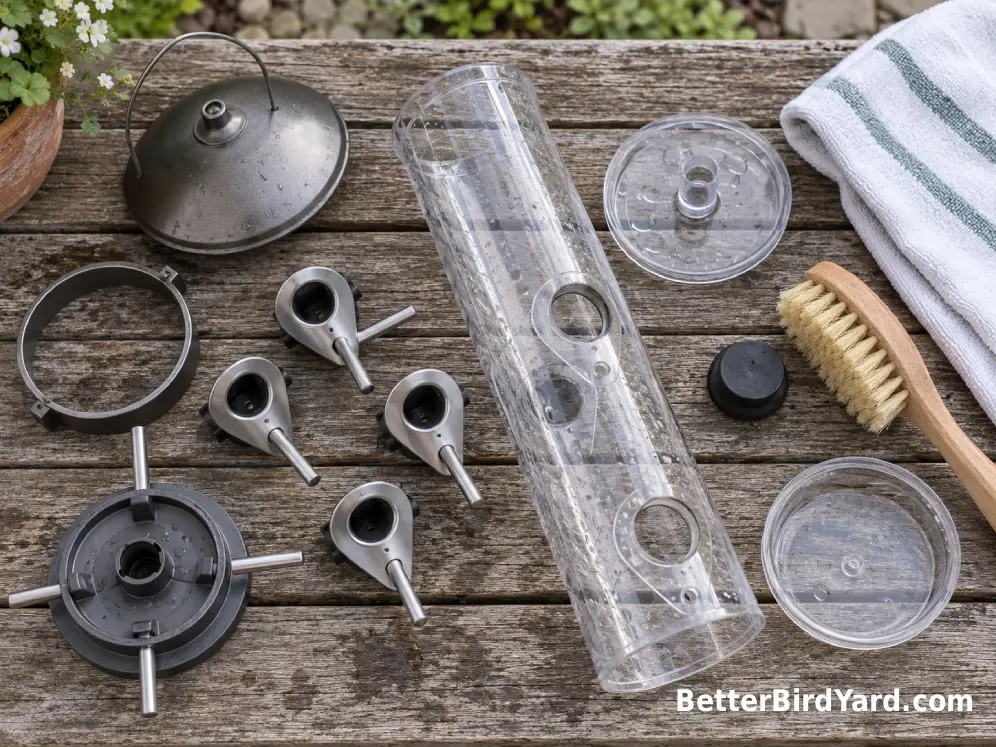
Easy cleaning is one of the most important feeder features you can buy. Decorative seams, permanently attached parts, or narrow spaces that trap damp seed may look harmless in the store but become frustrating after a few weeks outdoors.
Project FeederWatch currently recommends cleaning seed and suet feeders regularly, such as every week or two, and more frequently during heavy use or wet weather. Their basic routine is to disassemble the feeder, remove debris, wash thoroughly with warm water and dish soap, rinse, and let every part dry completely before adding seed again.
For day-to-day maintenance, keep the routine short:
- Check ports and the bottom of the tube for damp or clumped seed.
- Remove old hulls and spilled food beneath the feeder.
- Do not pour fresh seed on top of visibly wet, moldy, or spoiled food.
- Let a washed feeder dry fully before refilling.
Editorial note: this is one of those details that matters more than beginners expect. A feeder that takes two minutes to open is far more likely to get cleaned regularly than one that requires a screwdriver, awkward clips, and several hard-to-reach corners.
Seed and droppings accumulating below feeding areas can also create sanitation problems and attract rodents, so sweeping or raking underneath the feeder is part of feeder care, not just cosmetic yard work.
For a more complete routine, see our bird feeder cleaning guide.
Fix Common Finch Feeder Problems
A quiet feeder does not necessarily mean you bought the wrong one. Finch activity varies with location, season, weather, natural food supplies, and which species are present in your area. Make one change at a time so you can tell what actually helped.
| What You Notice | Likely Practical Issue | What To Try |
|---|---|---|
| No finches are visiting | Birds may not have discovered the feeder, the food may not match local species, or natural food may currently be abundant | Keep fresh food available in a consistent location and observe before buying another feeder |
| House Finches visit but ignore the nyjer feeder | The setup may be aimed more strongly at small nyjer-feeding finches | Offer black-oil sunflower in a standard tube, hopper, or suitable platform feeder |
| Nyjer remains untouched | The relevant finches may be absent, or the food may no longer be appealing | Check seed condition and local bird activity before continually topping it up |
| Seed becomes clumped | Moisture is entering or remaining in the feeder | Discard spoiled food, clean and dry the feeder, and address exposure to rain |
| Seed piles up below the feeder | Birds may be discarding shells or unwanted components of a mix | Try a simpler single-seed offering and clean underneath regularly |
| Squirrels empty the feeder | The feeder is easy to reach or climb onto | Consider a properly mounted baffle or a feeder designed to reduce squirrel access |
A common mistake is responding to a slow week by adding several new seed blends at once. That often increases waste without telling you much. For House Finches, returning to a straightforward black-oil sunflower setup is a useful baseline. For American Goldfinches, fresh sunflower or nyjer is the more relevant test. Cornell documents both foods as regular feeder choices for American Goldfinches.
Make A Small Yard Or Patio More Finch-Friendly
Finch feeding works surprisingly well in small spaces because you do not need a lawn full of feeders. A single tube feeder, a few appropriate plants, and careful cleanup can be more manageable than a large feeding station.
Where space allows, native seed-producing plants can complement supplemental food. American Goldfinches naturally use seeds from plants such as native thistles and other members of the sunflower family, and Cornell recommends native thistles, composite plants, and native milkweeds as useful backyard habitat choices. The best plants still depend on your region, so check a state extension service or reputable local native-plant resource before buying.
On a balcony or patio, practical details matter just as much as habitat. Keep the feeder where dropped hulls are easy to sweep, avoid overfilling it before rainy weather, and store unused seed somewhere dry and inaccessible to rodents. If neighbors live directly below you, a low-mess food such as carefully managed hulled sunflower may be easier to live with than a constant fall of sunflower shells.
Do not assume more feeders automatically create a better bird-friendly space. A small number of well-maintained resources is easier to keep sanitary and gives you a clearer picture of which foods your local birds actually use.
Watch For Crowding, Windows, Cats, And Sick Birds
Finches can gather in groups, which makes an active feeder enjoyable to watch but also makes sanitation important. Project FeederWatch notes that birds concentrating around feeding sites can create opportunities for pathogens to spread, which is why regular cleaning and removal of accumulated food and droppings are worthwhile even when the birds appear healthy.
House Finches deserve a little extra attention because they are among the species associated with visible eye problems at feeders. If you notice a bird that seems unusually lethargic, has crusted or swollen-looking eyes, or otherwise appears unwell, do not try to diagnose or treat it yourself. Project FeederWatch recommends increasing sanitation and considering temporary feeder removal when sick birds are observed; current local wildlife-agency guidance should take priority during an outbreak or unusual local event.
If a wild bird appears injured or seriously compromised, contact a licensed wildlife rehabilitator, your state wildlife agency, animal control, or another qualified local professional rather than attempting home treatment.
Also keep the rest of the feeding area in mind. Reduce window-collision risk, discourage outdoor cats from accessing feeding birds, remove food accumulating where rodents can find it, and reconsider the setup if the feeder is creating persistent nuisance-wildlife problems. Safe bird feeding is less about keeping the feeder full every minute and more about maintaining a clean, manageable place where birds can supplement the natural foods already available around them.
For most beginners, the simplest recommendation is still the strongest: use a cleanable standard tube feeder with black-oil sunflower if House Finches are your main interest, or add a dedicated small-port nyjer feeder if American Goldfinches and other small nyjer-feeding finches are the priority. Keep the food fresh, clean the equipment regularly, and let the birds in your own yard tell you whether the setup needs to become more complicated.
A finch bird feeder should be easy to enjoy and easy to maintain. Get those two things right, and you have a practical setup that can work in a suburban yard, a compact garden, or a renter-friendly patio without turning bird feeding into a daily chore.