American Goldfinch Feeders: A Practical Setup for More Finch Visits
American Goldfinches are wonderfully uncomplicated feeder birds once you get the basics right. If you want a feeder mainly for these small seed-eating finches, a nyjer feeder with tiny ports or fine mesh is usually the most focused choice. A small tube feeder stocked with sunflower seed is a more versatile alternative if you also want chickadees, House Finches, and other backyard visitors.
The Cornell Lab of Ornithology lists both nyjer and sunflower among the foods American Goldfinches readily take at feeders. It also notes that goldfinches can use several feeder styles, so you do not need a highly specialized or expensive setup to get started.
The bigger difference usually comes from seed freshness, feeder cleanliness, safe placement, and whether goldfinches are actually present in your area at that time. A bright yellow finch may look as though it should immediately find a new feeder, but birds can take time to investigate unfamiliar food sources.
What Is the Best Feeder for American Goldfinches?
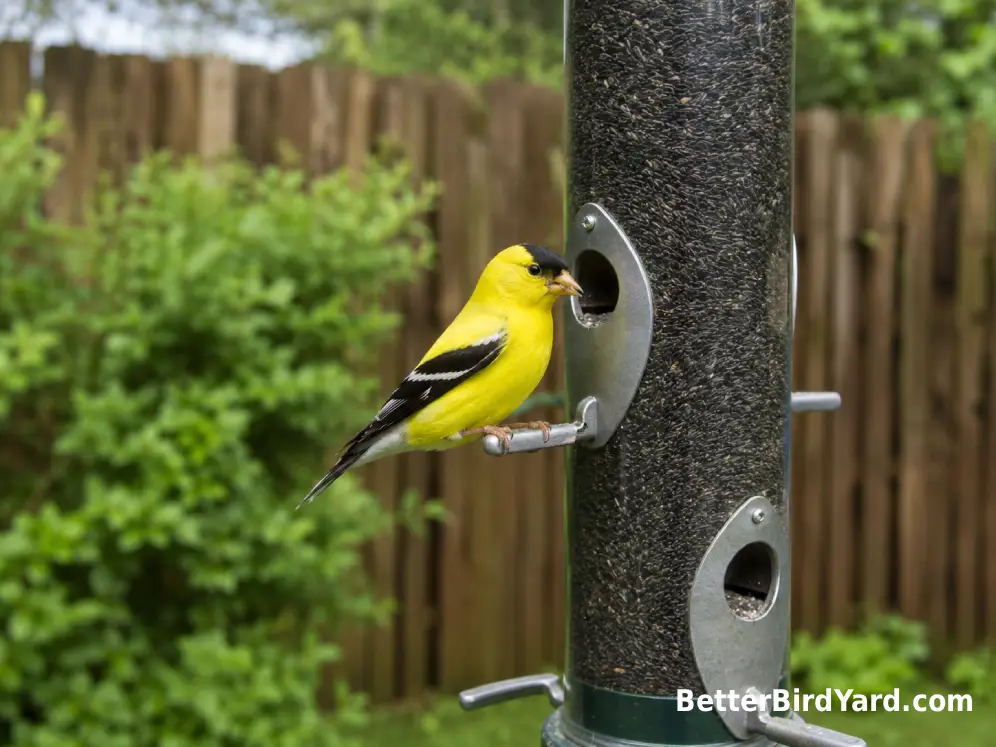
For a feeder dedicated mostly to goldfinches and other small finches, we would start with a small nyjer tube feeder or a well-made metal mesh nyjer feeder. Nyjer seed is tiny, so feeders designed for it use very small openings that help control spillage. Project FeederWatch specifically recommends using an appropriate small-port feeder for nyjer rather than putting the seed into an ordinary large-port feeder.
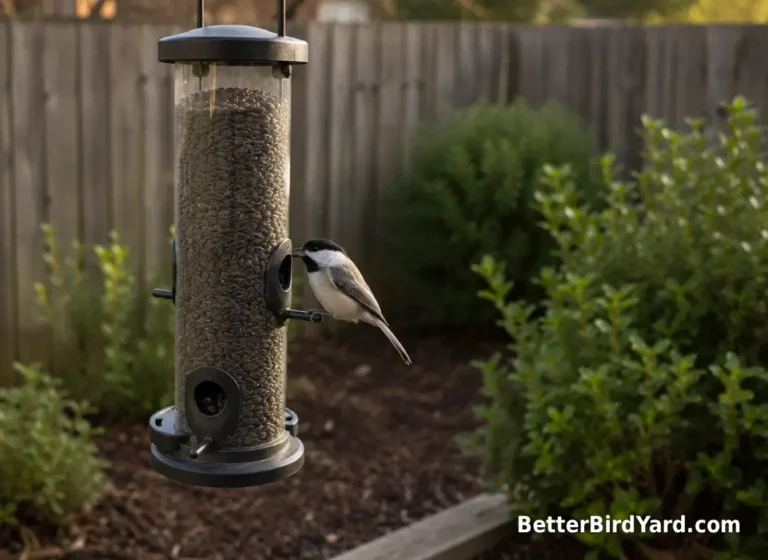
A tube design is particularly beginner-friendly because the reservoir helps shield seed from rain better than an exposed tray. Cornell also points out that tube feeders can be configured with short perches that comfortably accommodate small birds such as finches while making access less convenient for some larger birds.
Fine-mesh feeders and finch socks can work too. Goldfinches readily cling while feeding, but exposed mesh has a practical drawback: rain can soak the seed more easily. Cornell recommends using small quantities and replacing seed regularly when using mesh-style nyjer feeders.
If you want one feeder for a wider range of backyard birds, choose a regular tube feeder for sunflower instead. American Goldfinches commonly eat sunflower at feeders, while sunflower also appeals to many other species.
Nyjer or Sunflower: Which Seed Should You Use?
Both foods are good choices for American Goldfinches. The decision is mostly about how specialized you want your feeding station to be.
- Choose nyjer if your main goal is attracting small finches and you do not mind maintaining a separate feeder.
- Choose sunflower if you want goldfinches plus a broader mix of backyard birds.
- Offer both in separate feeders if you have enough space and can comfortably keep both clean.
Nyjer is sometimes sold as thistle seed, but it is not the seed of the North American thistles you may see goldfinches feeding on in the wild. Project FeederWatch identifies commercial nyjer as seed from Guizotia abyssinica, an African plant, and notes that imported seed is heat-treated before entering the country.
One beginner frustration is assuming that untouched nyjer means the feeder is wrong. Before replacing the feeder, check the seed itself. Buy manageable quantities, keep them dry, and avoid repeatedly topping fresh seed onto old material lingering at the bottom. Cornell recommends emptying old seed from tube feeders before adding more.
For more help sorting out seed choices, see our bird seed guide.
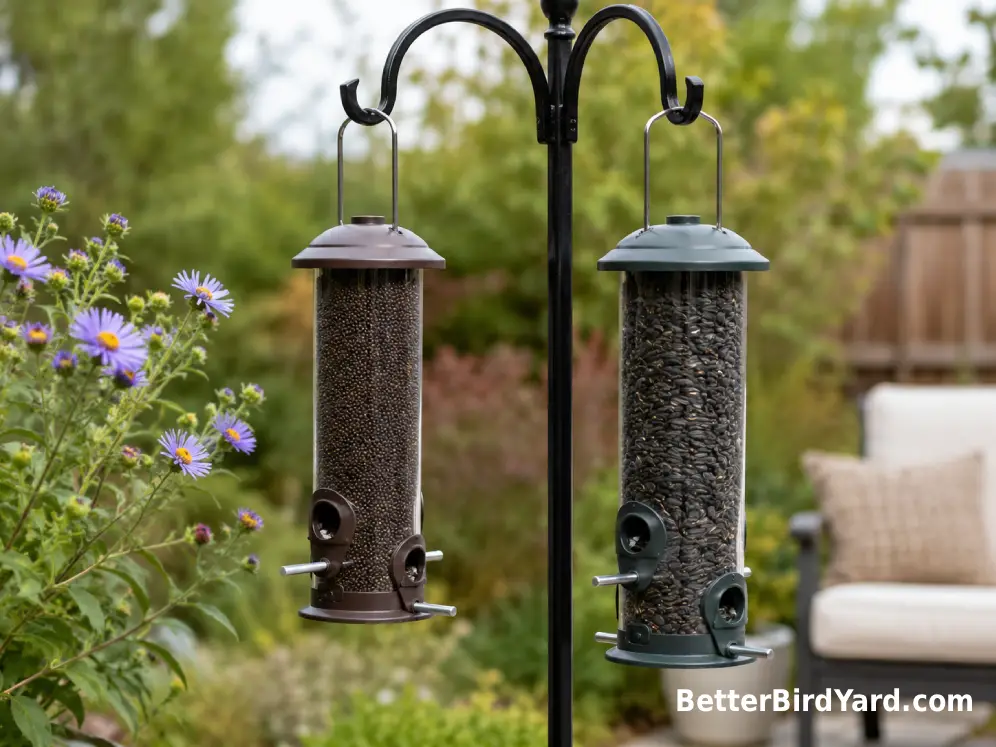
Tube, Mesh, Upside-Down, or Window Feeder?
| Feeder Type | Best For | Main Tradeoff |
|---|---|---|
| Nyjer tube feeder | A simple dedicated goldfinch setup | Requires tiny nyjer-compatible ports |
| Metal mesh feeder | Several finches clinging around the feeder | Seed is more exposed to wet weather |
| Upside-down finch feeder | Watching natural-looking acrobatic feeding | Not necessary for attracting goldfinches |
| Sunflower tube feeder | Goldfinches plus a wider range of birds | May attract more competition and squirrels |
| Window feeder | Renters and very small outdoor spaces | Needs frequent attention if droppings collect on the tray |
A goldfinch upside-down bird feeder is not just a novelty. American Goldfinches are acrobatic feeders, and Audubon notes that many nyjer tube designs provide perch arrangements allowing them to feed upright or inverted. Cornell likewise describes American Goldfinches clinging to seed socks and balancing acrobatically on seed-bearing plants.
Still, an upside-down design is optional. A straightforward small-port tube feeder can work perfectly well. We would choose based first on cleanability, weather protection, sturdy construction, and how easily you can inspect the seed—not on a clever perch arrangement.
For renters, a compact window-mounted feeder can be useful where permitted. Cornell includes finches among the birds that may use window feeders, and small feeders are especially practical when you do not want a large amount of seed sitting unused.
How to Set Up a Goldfinch Feeder
A good setup does not need to be elaborate. For a small yard or patio, one modest feeder that you can easily reach, inspect, and clean is better than several feeders that become difficult to maintain.
- Choose a small nyjer feeder or sunflower tube feeder that comes apart for cleaning.
- Add only a modest amount of fresh seed until you learn how quickly birds use it.
- Hang or mount the feeder where you can easily monitor seed condition and activity.
- Use a baffle or appropriate placement if squirrels repeatedly empty or damage the feeder.
- Check nearby glass and reduce collision risk before making the spot a busy feeding station.
If the feeder is near a window, current U.S. Fish and Wildlife Service guidance recommends keeping bird feeders within 3 feet of the glass so birds leaving the feeder have less room to build dangerous speed. Treating reflective glass on the exterior can provide additional protection and is especially important around bird attractants.
On a balcony or rental patio, also consider what falls below you. A feeder positioned over a removable tray or an area you can sweep is easier to manage than one that scatters shells onto a neighbor’s property. Check lease, building, HOA, and local rules where feeding wildlife is regulated.
A common mistake we see is buying the largest feeder available because it seems more convenient. With nyjer, smaller is often easier: you refill with fresher seed, notice moisture sooner, and have less material to discard if weather gets into the feeder.
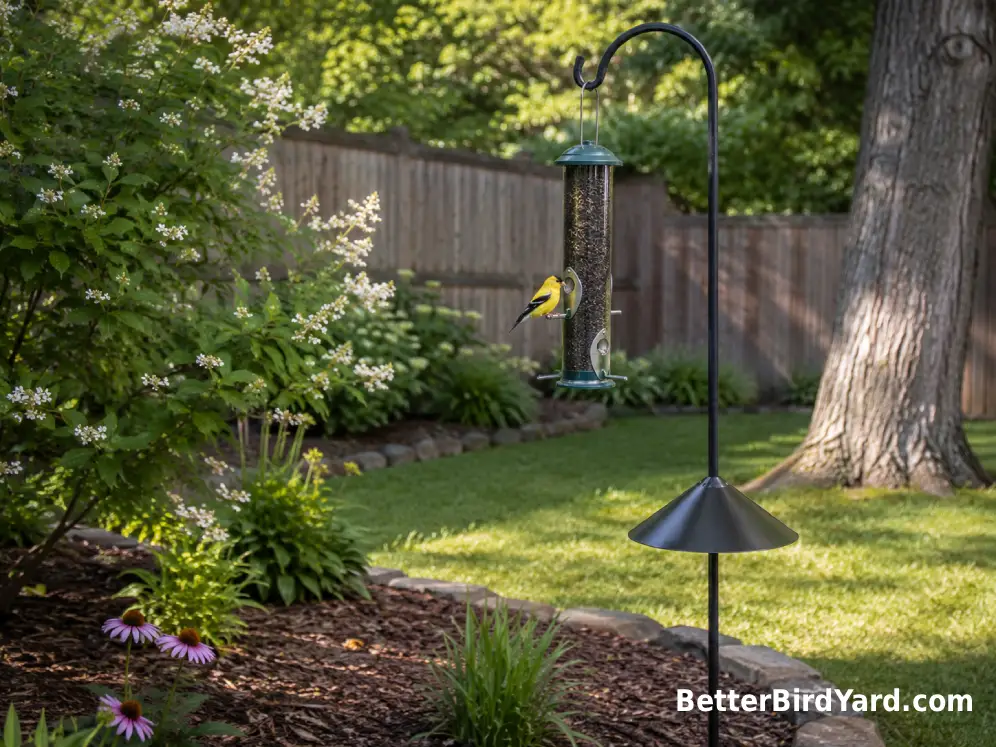
Why Aren’t Goldfinches Using the Feeder?
An empty feeder does not necessarily mean you chose the wrong model. American Goldfinch activity varies with location, season, natural food availability, and the number of birds already moving through your neighborhood.
Before changing everything, check the simple things first:
- Make sure the seed is dry and looks fresh rather than damp or clumped.
- Confirm that nyjer can actually pass through the feeder openings.
- Remove old seed before adding a new batch.
- Give a newly installed feeder time to become familiar.
- Look beyond the feeder for goldfinches using seedheads, nearby trees, or other neighborhood feeders.
Cornell describes American Goldfinches as common in weedy fields, open areas, suburbs, parks, and backyards, particularly where seed-producing plants such as thistles and asters occur. The birds also use many feeder styles, so changing from one clean, functional feeder to another is not always the solution.
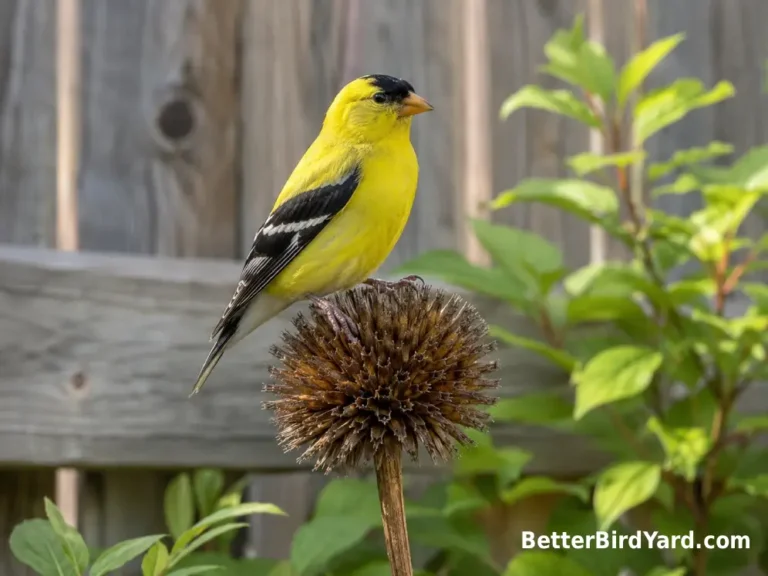
Another easy mistake is watching only for brilliant lemon-yellow males. Outside breeding plumage, males become much duller, and females are less intensely yellow throughout the year. A quiet olive-brown finch with dark wings and pale wingbars may still be the American Goldfinch you were hoping to see.
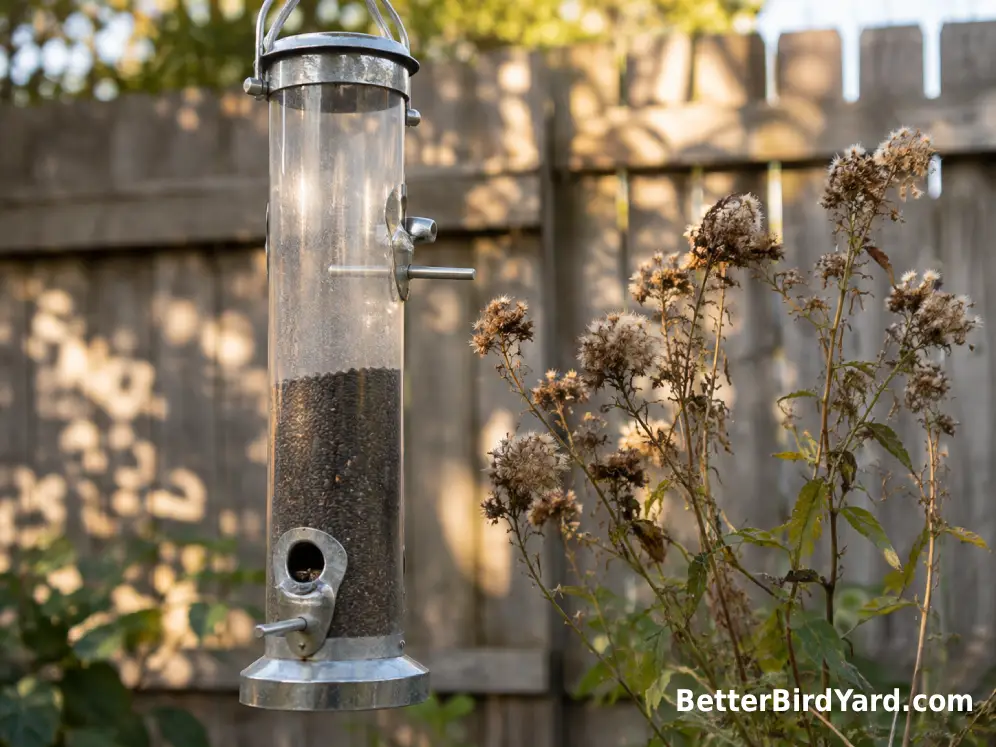
Keep the Feeder Clean and the Seed Dry
Easy cleaning is one of the most useful features to look for in any American Goldfinch feeder. Birds repeatedly touch the same perches and feeding openings, while damp seed and debris can accumulate inside or underneath the feeder.
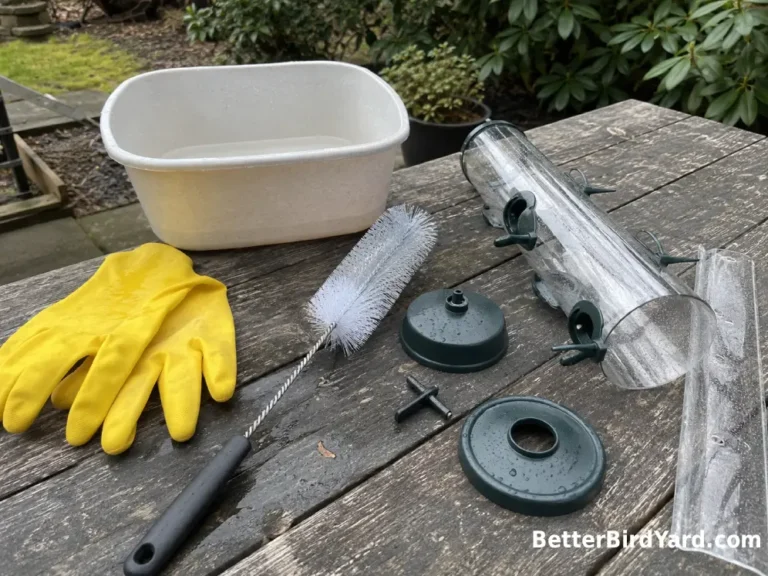
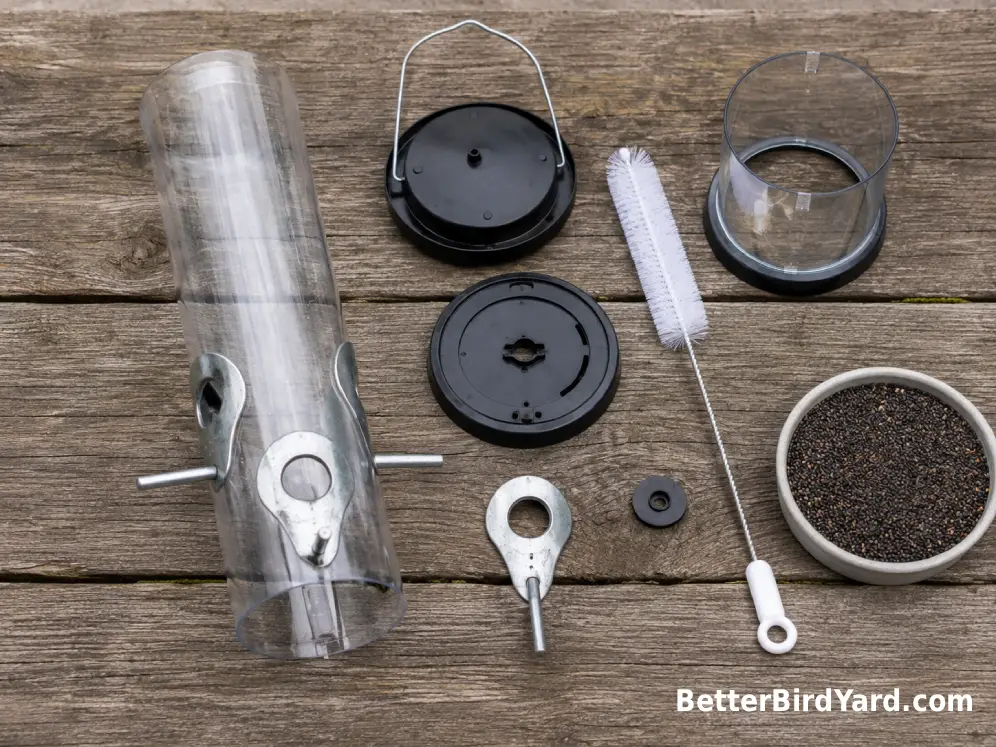
Project FeederWatch currently recommends cleaning seed and suet feeders regularly, such as every week or two, and more often during heavy use or wet weather. Its routine method is straightforward: take the feeder apart, remove debris, wash thoroughly with warm water and dish soap, rinse well, and allow everything to dry completely before refilling.
That drying step matters with nyjer because such small seed can settle into damp corners and become difficult to inspect. Do not simply pour fresh seed over material that is wet, spoiled, or questionable. Sweep or rake discarded seed and hulls below the feeder as well; keeping the feeding area tidy helps limit accumulated waste and discourages rodents.
Our full bird feeder cleaning guide covers a practical routine for different feeder styles.
If you see birds that appear unusually lethargic, have crusty or swollen-looking eyes, or otherwise seem unwell, do not try to diagnose or treat them yourself. Clean the feeding area and check current Project FeederWatch and local wildlife agency guidance; temporarily reducing or removing feeders may be appropriate depending on the circumstances. A licensed wildlife rehabilitator or qualified wildlife professional is the right contact for a wild bird that appears to need direct care.
Support Goldfinches Beyond the Feeder
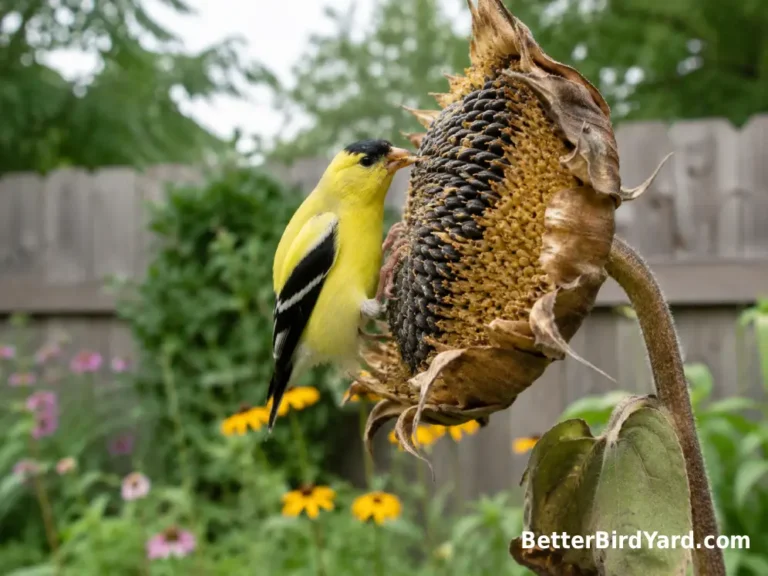
A feeder is supplemental food, not the whole backyard habitat. American Goldfinches naturally gather seeds from plants including sunflowers, thistles, asters, grasses, and several seed-producing trees. Cornell specifically recommends native thistles and other composite plants, along with native milkweed, as useful additions for yards intended to support goldfinches.
For a suburban yard, that can mean allowing a few appropriate seedheads to remain instead of cutting every flower stalk down as soon as it fades. On a patio, even a small container planting can add cover and another place for birds to investigate.
Plant recommendations should be local rather than one-size-fits-all. Choose species native and appropriate to your part of the United States through your state extension service, native plant program, or other reliable regional resource. Avoid assuming that every plant commonly called thistle belongs in every yard.
This is also useful if feeder maintenance ever becomes difficult. Project FeederWatch notes that native plantings can support birds without concentrating them entirely around a feeding station, even where the available space is only a container garden or window box.
What to Expect Through the Year
Do not judge your goldfinch feeder only by how many brilliant yellow birds appear during one particular month. American Goldfinches can visit feeders throughout the year in suitable parts of their range, but their abundance and appearance change with season and location. Cornell notes that males exchange their bright breeding colors for much duller nonbreeding plumage.
Natural food also changes through the year. If seed-producing plants are abundant nearby, birds may spend more time feeding away from your station. At other times, a clean feeder with dependable seed may become more active.
In the western United States, remember that not every small yellow finch is an American Goldfinch. Lesser Goldfinches also visit feeders and eat nyjer and other small seeds. If identification matters to you, look at plumage pattern, range, and other field marks rather than treating yellow finch as a single species.
The useful approach is consistency rather than chasing a perfect calendar: offer appropriate food when you can maintain it safely, keep the feeder clean, watch what your local birds actually do, and adjust the amount of seed to match real use.
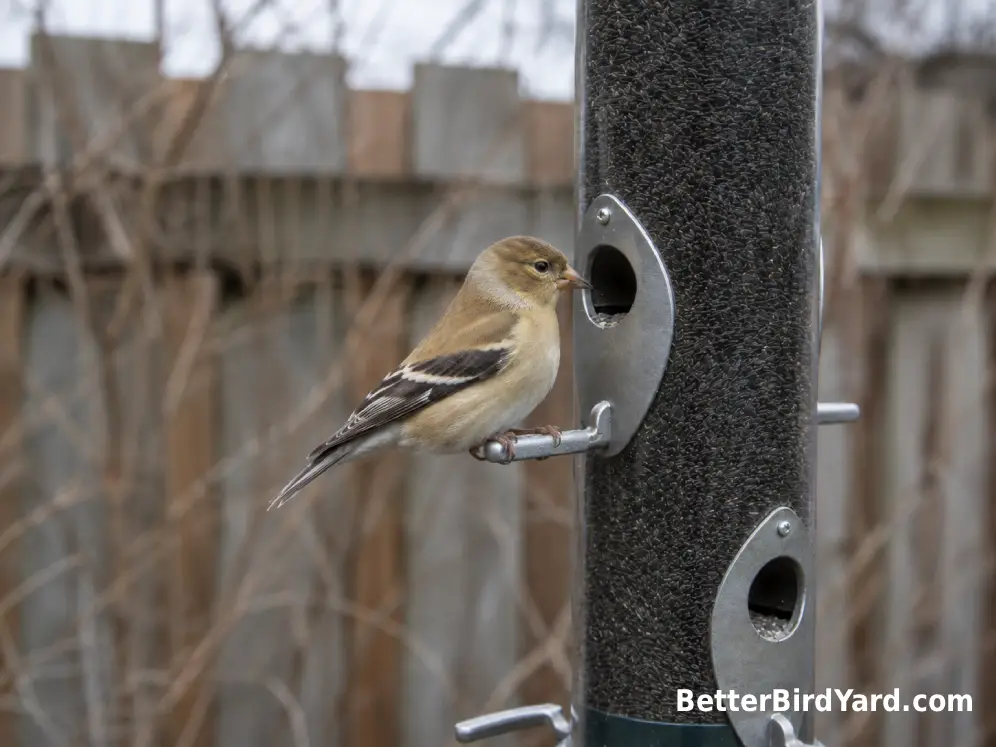
A Simple Goldfinch Setup Is Usually the Best One
If your goal is specifically to feed American Goldfinches, start small: a washable nyjer tube feeder or metal mesh feeder, a modest amount of fresh nyjer, and a location where you can easily inspect and maintain it. If you prefer one feeder that serves more species, a sunflower tube feeder is a sensible alternative. Cornell’s guidance supports both foods and makes clear that goldfinches are flexible about feeder style.
Do not worry about finding one universally best goldfinch feeder. A flashy yellow finch feeder, specialized upside-down model, or large multi-port station can be enjoyable, but none replaces the basics: fresh appropriate seed, a feeder that stays reasonably dry, routine cleaning, safe placement around glass and predators, and realistic expectations about seasonal activity.
Once those basics are in place, pay attention to the birds rather than the packaging. A goldfinch calmly clinging to a clean feeder, working through fresh seed, is a much better sign of a successful setup than any particular feeder shape or marketing label.