Seeds In Bird Food: What’s In Wild Bird Seed And How To Choose It
The seeds in bird food can look confusing at first: black seeds, white seeds, tiny needle-like seeds, striped shells, pale round grains, and blends with ingredients that birds may toss aside. The good news is that most backyard birdseed choices come down to a few common ingredients, and you do not need a complicated mix to feed birds responsibly.
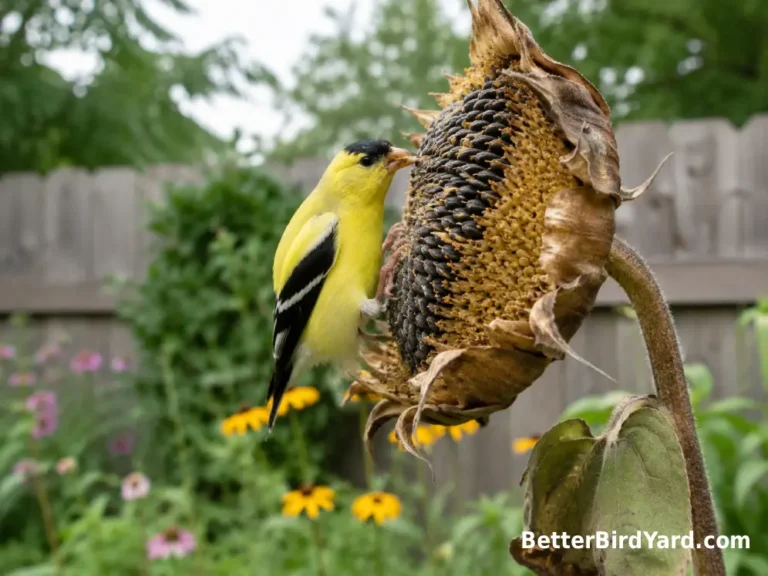
For many US backyard feeders, black oil sunflower seed is the best all-around starting point because it is widely accepted by many seed-eating birds. Nyjer seed is more specialized for finches. White proso millet works best for ground-feeding birds. Safflower can be useful in hopper or tray feeders, especially where cardinals and grosbeaks are common. Cheap mixes with lots of red millet, oats, or filler grains often create more mess than value. Cornell Lab’s All About Birds notes that sunflower attracts the widest variety of birds and that some filler-heavy mixes can lead to waste as birds sort through them.
Use this guide to identify common bird food seeds, choose a blend that fits your yard or patio, and avoid the mistakes that lead to moldy seed, wasted money, rodents, or overcrowded feeders.
Quick Answer: What Seeds Are Usually In Bird Food?
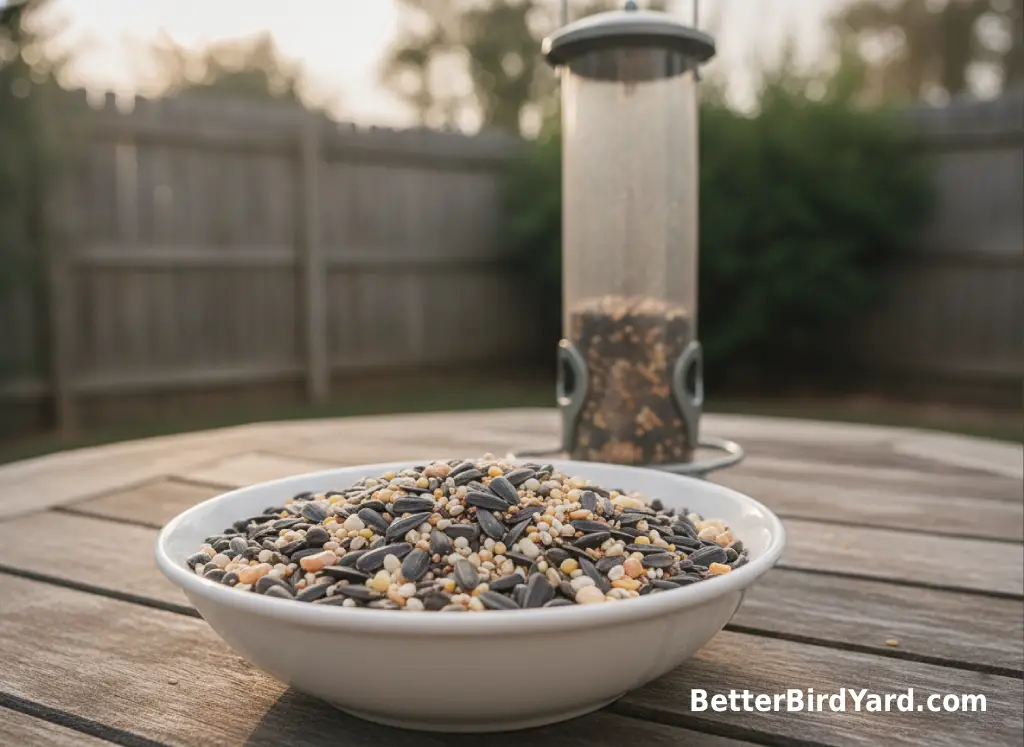
Most wild bird seed food contains one or more of these ingredients: black oil sunflower seed, striped sunflower seed, hulled sunflower hearts or chips, safflower seed, nyjer seed, white proso millet, cracked corn, milo, oats, wheat, flax, canary seed, peanuts, or dried fruit pieces. Not every ingredient is equally useful for an ordinary backyard feeder.
A simple feeder setup usually works better than a complicated bargain blend. If you are just starting, try one feeder with black oil sunflower seed and watch what happens for a week or two. Seeing small finches is a good reason to add a separate nyjer feeder. When doves, juncos, towhees, or sparrows feed under the station, a small amount of white proso millet in a low tray may make sense. Project FeederWatch’s common feeder bird tool includes food categories such as black-oil sunflower, millet, nyjer, safflower, peanuts, cracked corn, suet, and fruit, which is a helpful reminder that different birds use different foods and feeder styles.
The main beginner mistake is assuming that a bigger mixed bag is automatically better. In many yards, birds pick out sunflower first and leave the less appealing pieces on the ground. That waste can attract squirrels, rodents, raccoons, or other animals you did not mean to feed.
How To Read A Bag Of Wild Bird Seed
Bird seed labels are easiest to judge by the first few ingredients. If sunflower is near the top, the blend is usually more useful. If the bag is heavy with milo, red millet, oats, wheat, or vague grain fillers, expect more sorting and more cleanup. Cornell Lab specifically warns that mixes with red millet, oats, and other fillers are often less attractive to most birds and can lead to waste.
Look at the seed through the bag when you can. Good birdseed should look dry, clean, and fresh. Avoid bags with clumps, dusty moldy smell, moisture, insects, or seed that appears damp. A bargain bag is not a bargain if half of it ends up under the feeder.
For small yards, patios, balconies, and renters, a single-ingredient seed is often easier to manage. Black oil sunflower in a tube, hopper, or platform feeder is predictable. Hulled sunflower hearts reduce shell mess, but they spoil faster once exposed to moisture because the protective shell has been removed. Cornell Lab notes that sunflower hearts and chips can spoil quickly and should be offered only in amounts birds can eat in a day or two.
The Main Types Of Seeds In Bird Food
The best bird seed depends on which birds are already in your area, the feeder you use, and how much cleanup you can realistically keep up with. No seed guarantees a specific bird, but some ingredients are more useful than others.
| Seed Or Ingredient | What It Looks Like | Best Use | Backyard Notes |
|---|---|---|---|
| Black Oil Sunflower | Small black seeds with thin shells | Best all-around seed for many seed-eating birds | Works in tube, hopper, tray, and platform feeders; squirrels also like it. |
| Striped Sunflower | Larger black-and-white striped seeds | Larger-billed birds | Thicker shells can be harder for smaller birds to open. |
| Sunflower Hearts Or Chips | Pale shelled kernels | Low-shell-mess feeding | Use small amounts and keep dry because they spoil faster than seed in the shell. |
| Safflower | Firm white seeds | Tray or hopper feeders | Often used for cardinals and grosbeaks, but results vary by yard. |
| Nyjer, Niger, Or Thistle Seed | Tiny black needle-like seeds | Finch feeders | Best in a nyjer tube or mesh sock; not the same as invasive thistle seed. |
| White Proso Millet | Small round pale seeds | Ground-feeding birds | Offer only small amounts in a low tray or on clean ground. |
| Milo Or Sorghum | Round reddish-brown seeds | Limited backyard value | Often left uneaten in many suburban feeder setups. |
| Cracked Corn | Yellow broken kernels | Some ground-feeding birds and larger birds | Can attract nuisance wildlife and must be kept dry; skip it in many small yards. |
Sunflower is the practical anchor. Cornell Lab describes black oil sunflower as having thin shells that are easy for many seed-eating birds to crack, while striped sunflower has a thicker shell. Safflower has a thicker shell and may be eaten by cardinals, grosbeaks, chickadees, doves, and some sparrows, but Cornell also notes that squirrels and some less-wanted birds may eat it in certain areas, so it is not a magic pest-proof seed.
Black Seeds, White Seeds, And Tiny Seeds Explained
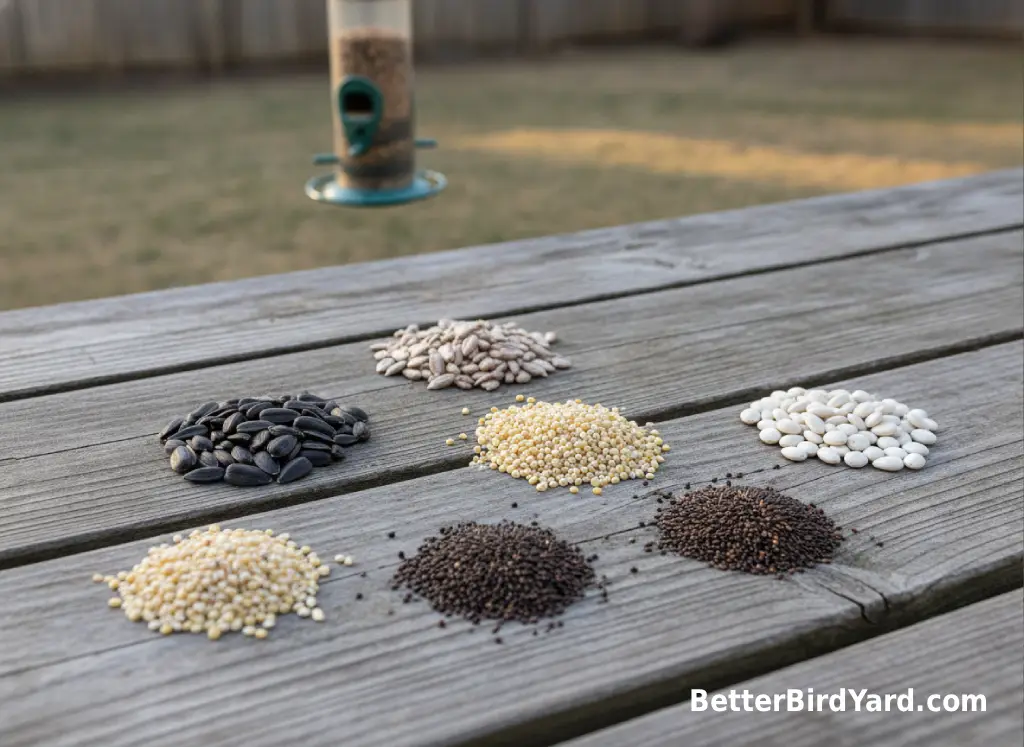
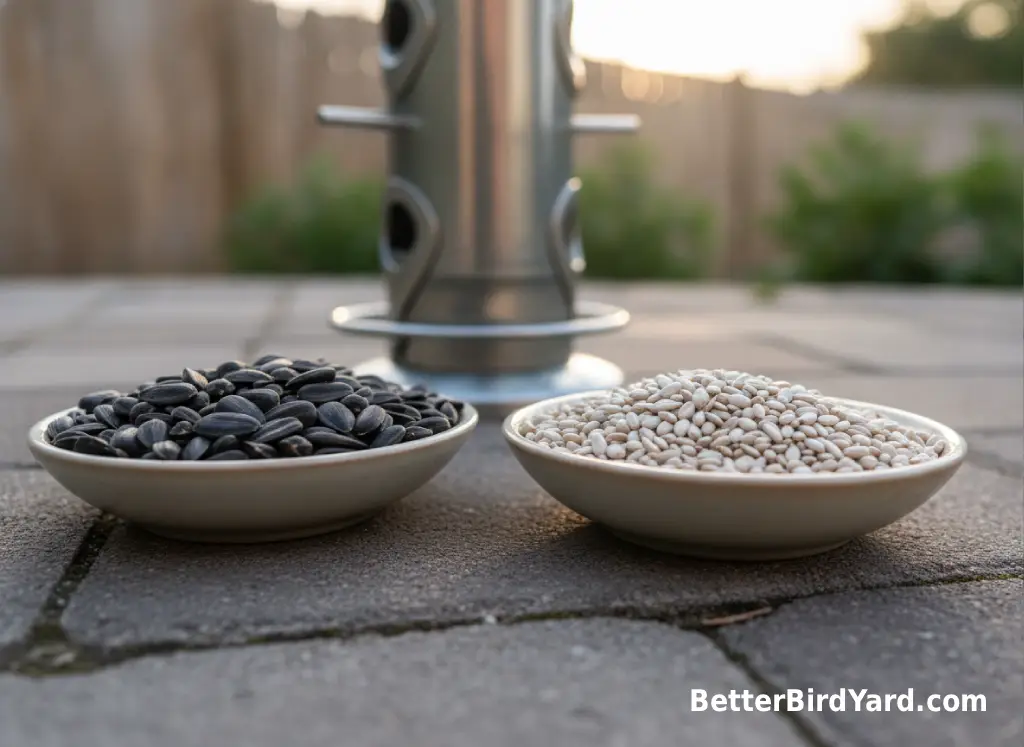
Black seeds in bird food are usually either black oil sunflower or nyjer. You can recognize black oil sunflower seeds by their larger, oval shape, glossy-black color, and thin shell. Nyjer seed is much smaller, narrow, and almost needle-like. If your feeder has tiny slit openings or a mesh sock, it is probably meant for nyjer rather than sunflower.
Nyjer is often sold as niger seed or thistle seed bird food, but the modern feeder seed is not invasive thistle. Cornell Lab explains that nyjer comes from Guizotia abyssinica, a daisy-like plant, and that imported seed is heat-sterilized to limit its chance of spreading while keeping food value. Small finches such as American Goldfinches and Pine Siskins often use it, especially when it is offered in the right feeder.
White seeds in bird food are often safflower or white proso millet. Safflower seeds are larger, firm, and oval. White proso millet is much smaller and rounder. Millet is more of a ground-feeder food, while safflower is better suited to tray and hopper feeders.
Sunflower hearts can also look pale or cream-colored because the shell has been removed. They are popular with many birds and reduce shell litter, but they are less forgiving in damp weather. Use smaller portions, avoid wet tube feeders that trap moisture, and discard any clumped or spoiled food.
Best Seed Choices For Small Yards, Patios, And Low-Mess Feeding
In a small space, the best seed is not just the one birds like. It is the one you can keep dry, clean, and manageable. A balcony feeder that rains seed onto a neighbor’s patio is not a good setup, even if the seed itself is high quality. A tiny townhouse yard may do better with one neat tube feeder than a large platform feeder that invites doves, squirrels, and spilled seed.
For most beginners, a simple small-space seed plan looks like this:
- Start with black oil sunflower in a clean tube or hopper feeder.
- Choose hulled sunflower hearts only if you can offer small amounts and keep them dry.
- Add nyjer in a separate finch feeder only if you regularly see finches nearby.
- Use white proso millet sparingly in a low tray if ground-feeding birds are part of your goal.
- Skip cheap filler-heavy mixes if spilled seed cleanup is already a problem.
BetterBirdYard Note: If you only change one thing, stop buying the biggest mixed bag on the shelf and buy a smaller amount of better seed. Fresh, dry seed in a clean feeder is usually more useful than a large bag that sits open in a damp garage for months.
For low-mess feeding, sunflower hearts are convenient, but they require more discipline. Cornell Lab cautions that shelled sunflower can spoil quickly without the protective shell, so avoid overfilling feeders and remove food that becomes wet or clumped.
Common Birdseed Mistakes That Waste Money Or Create Problems
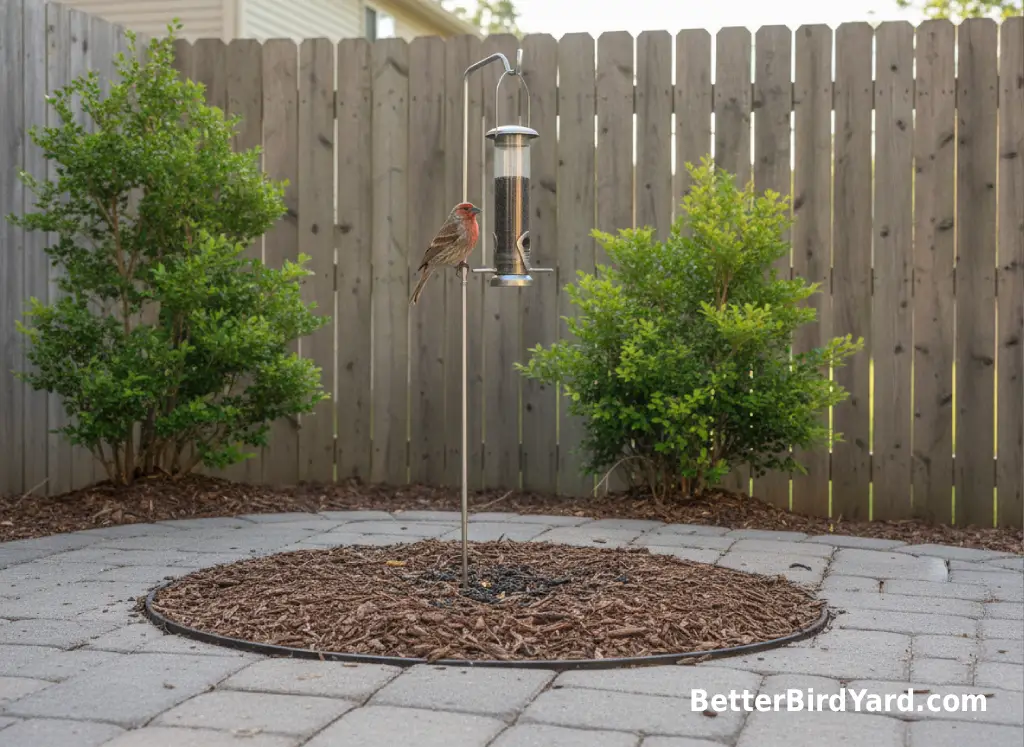
The most common birdseed mistake is overfilling feeders. More seed does not mean more responsible feeding. It often means older food sits in the feeder longer, gets damp, and ends up on the ground. Project FeederWatch has highlighted research showing that keeping seed dry helps reduce conditions that can support disease spread, and dry seed samples in that study did not show signs of the tested parasite.
Another mistake is using one mixed seed blend for every feeder. Birds that prefer sunflower may toss millet, milo, or oats out of a tube feeder. Ground-feeding birds may ignore a hanging feeder but clean up millet from a low tray. Matching seed to feeder type reduces waste.
A few practical mistakes to avoid:
- Do not top off old seed again and again; empty, check, and clean the feeder.
- Do not leave wet seed in a tray after rain.
- Do not offer moldy, clumped, sour-smelling, or insect-infested seed.
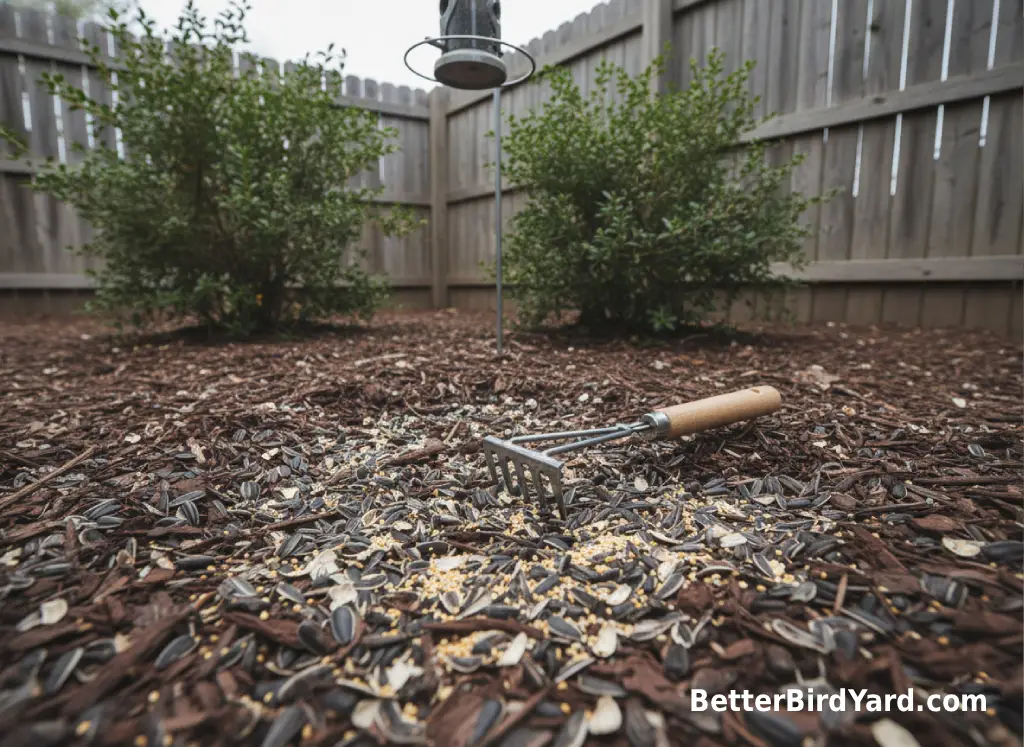
- Do not let hulls and spilled seed build up under feeders.
- Do not assume safflower or any other seed will completely stop squirrels.
Cracked corn is another ingredient to handle carefully. Cornell Lab notes that corn can attract animals such as House Sparrows, starlings, geese, raccoons, deer, and bears, and it must be kept dry because of contamination concerns. In many small suburban yards, it is simpler to skip corn unless you have a specific reason and a cleanup plan.
How To Store And Serve Bird Seed Safely
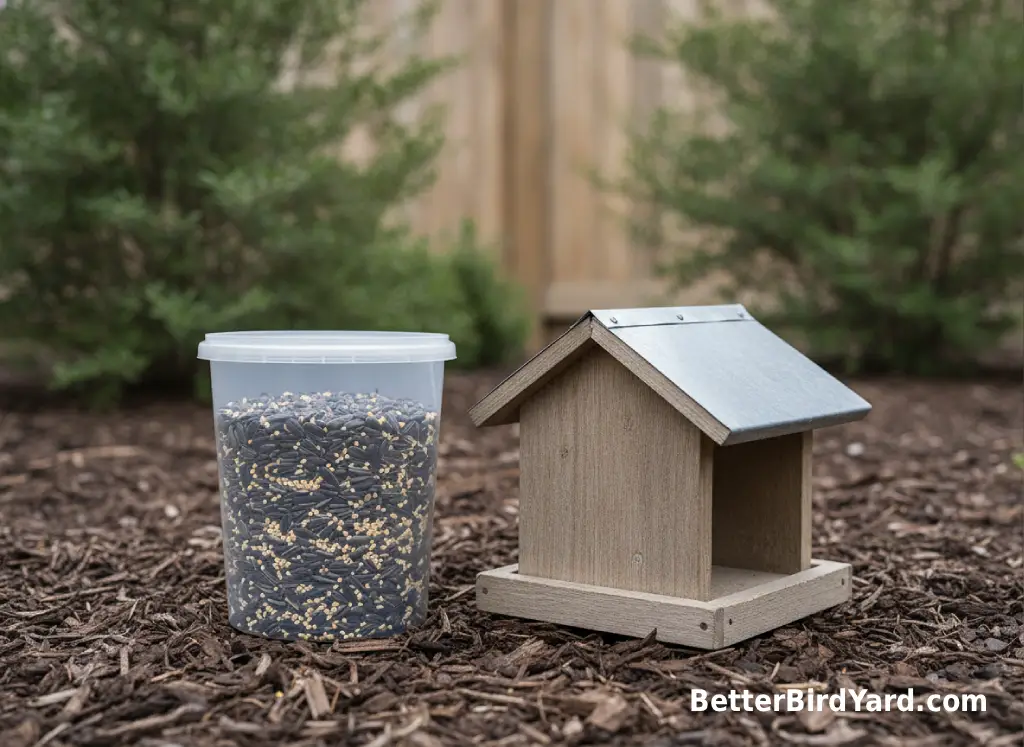
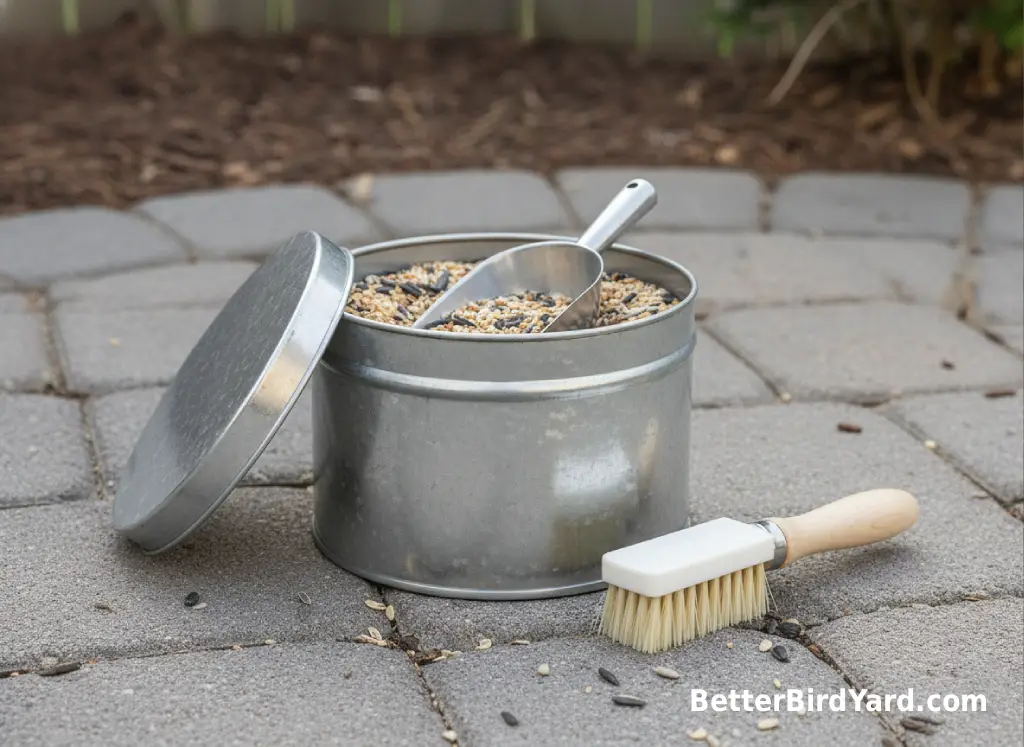
Good birdseed can become unsafe if it is stored badly. Keep seed in a cool, dry place in a tightly closed metal or hard plastic container. This protects it from moisture, insects, rodents, and spilled-bag mess. Buy amounts you can use while the seed is still fresh rather than chasing the lowest price per pound.
When serving seed, think in small portions. Fill feeders with what birds can eat before the next cleaning or before heavy rain is expected. Tray and platform feeders are useful, but they expose seed to weather and droppings more than some hanging feeders, so they need closer attention.
Project FeederWatch recommends cleaning feeders regularly even when there are no visible signs of disease, and its feeder-cleaning guidance emphasizes removing debris, using a dilute bleach solution, rinsing thoroughly, and letting feeders dry before adding food. Audubon similarly cites guidance to clean feeders and bird baths with nine parts water to one part bleach, dry feeders before rehanging, tidy hulls and feces below feeders, and clean seed feeders about every two weeks or more often if disease is suspected.
If you notice birds that look unusually fluffed, weak, crusty around the eyes, unable to fly normally, or otherwise sick, do not try to diagnose or treat them. Pause or reduce feeding, clean feeders and baths, and check with your state wildlife agency, local wildlife rehabilitator, animal control, or another qualified local resource for guidance. For a practical routine, see our feeder cleaning guide.
Seasonal And Local Notes For Responsible Bird Feeding
Bird feeding changes with weather, season, and location. In cold weather, high-energy foods such as sunflower seed can be especially useful as supplemental food, but birds still rely on natural foods across the landscape. In warm, wet, or humid weather, the seed safety problem often becomes moisture. Wet seed, damp hull piles, and crowded feeders deserve quick attention.
Regional differences matter too. A seed that works beautifully in a Midwestern yard may not get the same response on a dry Southwest patio or a heavily wooded New England lot. Local habitat, nearby natural food, feeder placement, weather, and the birds already present all affect results.
Check local rules if you live in an apartment, condo, HOA community, bear country, or a city with wildlife-feeding ordinances. Rules vary by city, county, state, landlord, and community association. In areas where bears, raccoons, rats, or other nuisance wildlife are a concern, follow local wildlife agency guidance and remove feeders when advised.
During any local bird disease advisory or unusual mortality event, do not rely on generic advice. Follow your state wildlife agency’s current guidance. BetterBirdYard is not a public health agency or wildlife rehabilitation service, so our role is to keep everyday feeder practices cautious, clean, and local-rule aware.
A Simple Seed Plan For Most Backyard Feeders
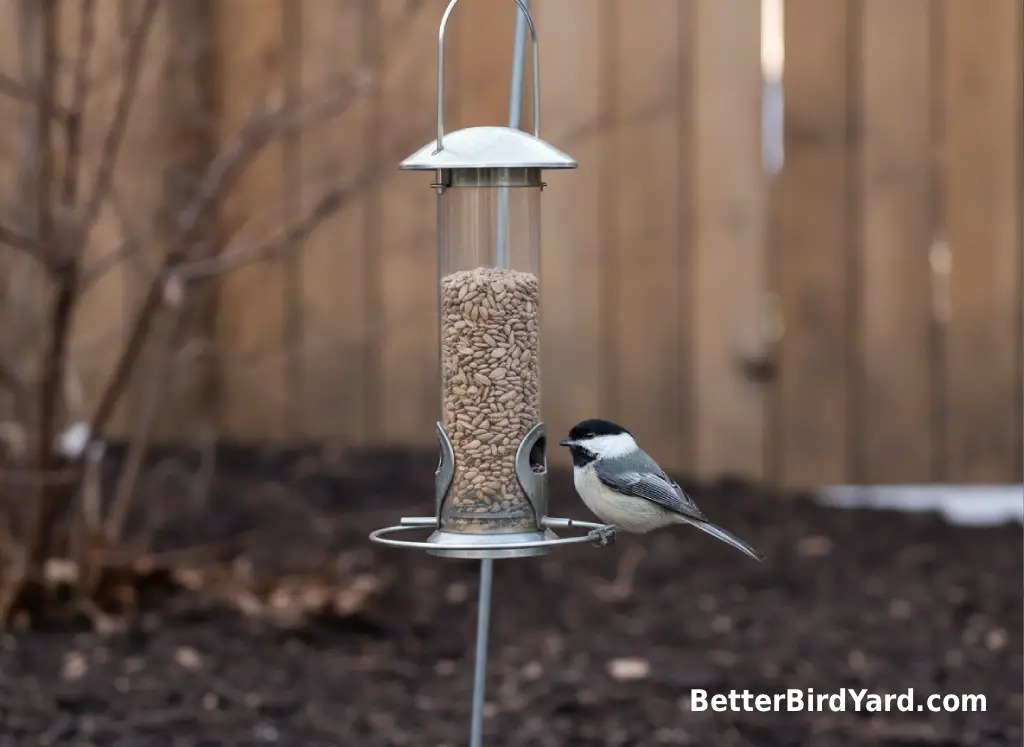
For most beginner-to-intermediate backyard bird watchers, the best plan is simple: start with black oil sunflower seed, keep it dry, clean the feeder regularly, and watch which birds actually visit. Add other bird food seeds only when they solve a real problem or fit a bird you already see.
If finches are common, try nyjer in a dedicated finch feeder. To support ground-feeding birds, offer a small amount of white proso millet in a low tray, as long as you can keep the area clean. When shell mess becomes a problem, sunflower hearts in small, dry portions are a cleaner option. For squirrels or larger birds that dominate the feeder, experiment carefully with placement, baffles, and seed type rather than expecting one ingredient to fix everything.
The right wild bird seed is not the flashiest bag or the longest ingredient list. It is fresh, dry, appropriate for your feeder, popular with the birds in your area, and manageable for your cleanup routine. When in doubt, buy less seed more often, use fewer ingredients, and keep the feeding station clean. That simple approach is better for birds, easier for beginners, and less frustrating for the person doing the sweeping.