Black Oil Sunflower Seeds for Birds: The Simple Seed That Works
Black oil sunflower seeds for birds are one of the most reliable starting foods for a backyard feeder. Their relatively thin shells are easier for many seed-eating birds to open than thicker striped sunflower shells, while the oil-rich kernel provides useful energy. Cornell Lab resources commonly recommend black oil sunflower as an effective all-purpose feeder seed because it appeals to a broad range of North American feeder visitors.
That does not mean every bird in your neighborhood will eat it, or that one bag of seed can replace native plants, clean water, shelter, and a safer yard. Your results will depend on your region, season, surrounding habitat, feeder design, and the birds already moving through the area.
The practical challenge is choosing the right form of sunflower seed and serving it without creating wet seed, mountains of hulls, squirrel pressure, or an expensive bulk-storage problem. This guide covers in-shell seed, hulled sunflower hearts and chips, suitable feeders, large bags, storage, cleaning, and small-space setups.
Why Black Oil Sunflower Is Such a Useful Starter Seed
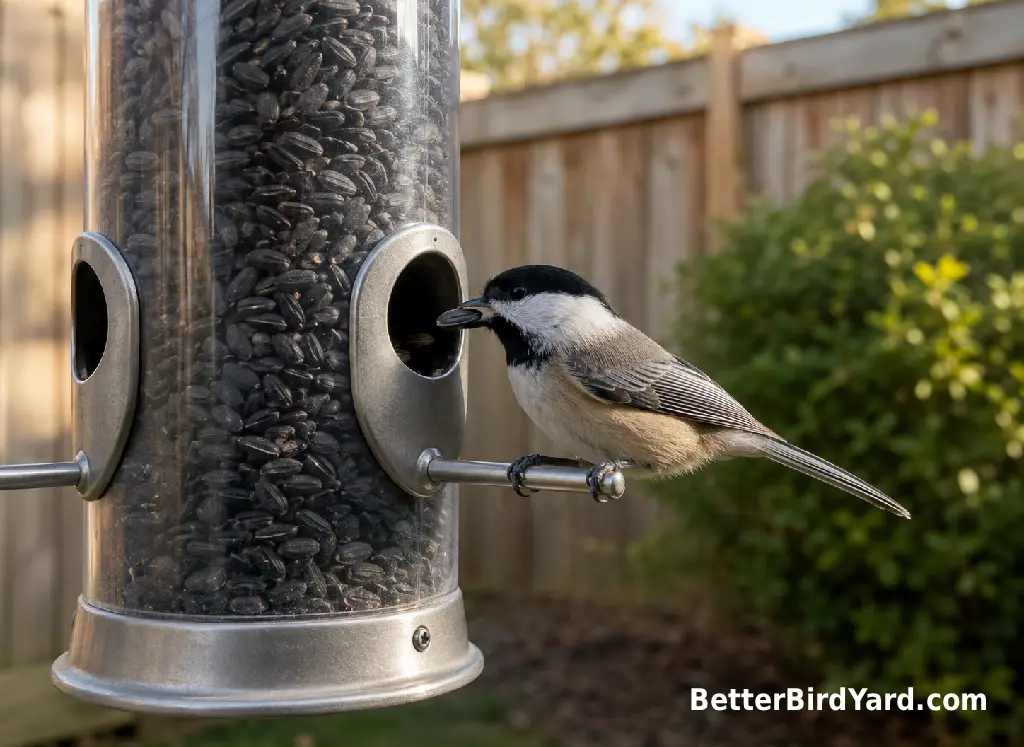
Black oil sunflower is a small, dark sunflower seed with a thin outer shell and a high proportion of edible kernel. That combination matters at a feeder: smaller birds can handle the seed, while larger seed eaters also find it worthwhile. Striped sunflower seeds have thicker shells and can be more difficult for some birds to open.
Another advantage is simplicity. Instead of beginning with a large blend containing ingredients that local birds may scatter or ignore, you can offer one recognizable seed and watch what happens. After a week or two, you will have a better sense of your feeder traffic, how quickly the seed is being eaten, and whether you need a second food such as nyjer, suet, peanuts, or safflower.
Which Backyard Birds Are Likely to Eat It?
Project FeederWatch identifies black oil sunflower as a favored feeder food for groups that include cardinals, chickadees, finches, and sparrows. Nuthatches, titmice, grosbeaks, jays, and some woodpeckers may also use sunflower feeders where those birds occur. The exact mix varies across the United States, and some birds are more comfortable on a platform or on the ground than on a narrow tube-feeder perch.
You may commonly see:
- Chickadees carrying individual seeds to a nearby branch.
- Finches remaining at the feeder while they open several seeds.
- Cardinals choosing a broad tray, hopper edge, or ground-level spill.
- Nuthatches approaching briefly, taking one seed, and leaving.
- Sparrows and doves searching beneath the feeder for fallen kernels.
These are likely patterns rather than promises. A feeder can be quiet even when the food is appropriate. Birds may have abundant natural food nearby, may not yet have discovered the feeder, or may avoid a location that feels exposed. Give a new setup some time before changing the seed repeatedly.
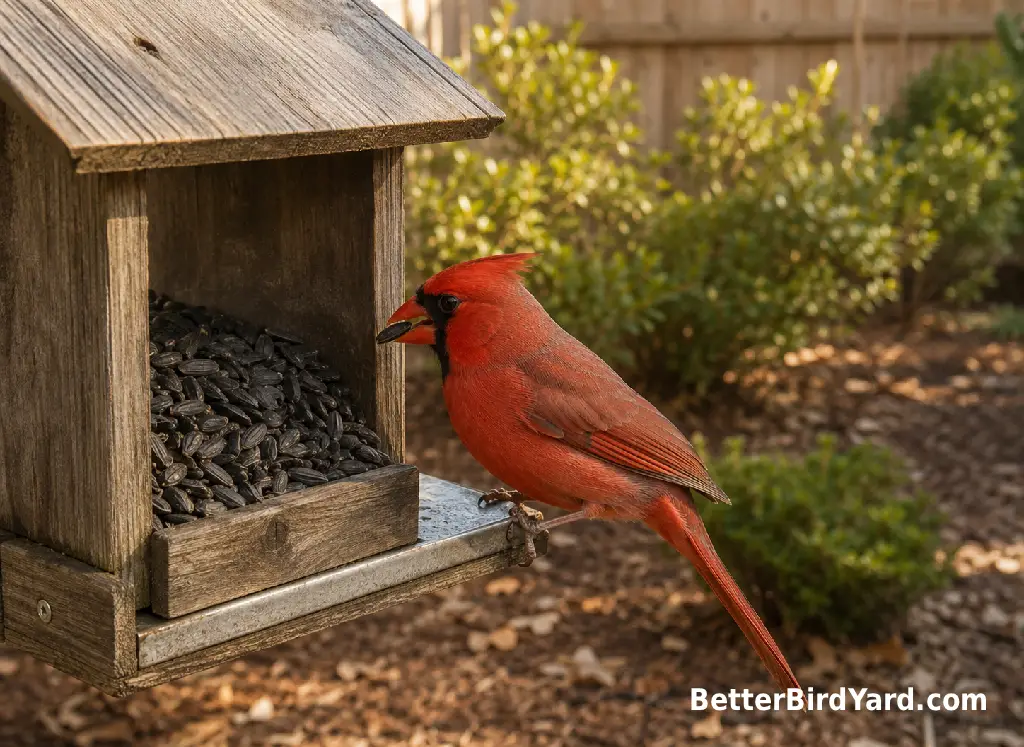
In-Shell, Hulled, or Sunflower Chips?
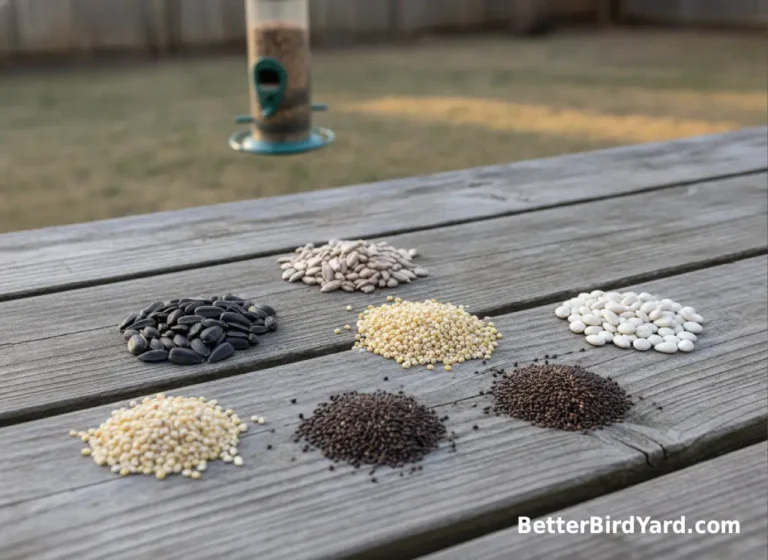
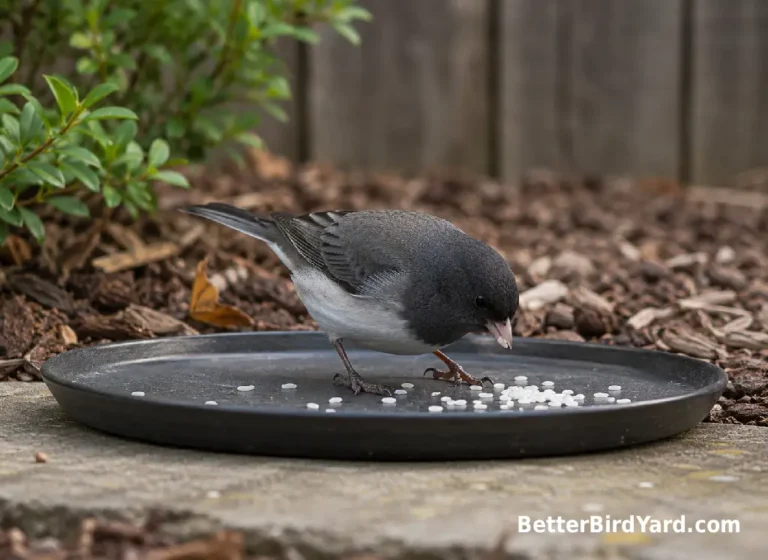
Sunflower hearts, hulled sunflower seeds, and shelled sunflower seeds generally refer to kernels with the outer shell removed. Sunflower chips are kernels broken into smaller pieces. All can be useful, but they behave differently in storage and in a feeder.
| Seed Type | Best For | Main Tradeoff |
|---|---|---|
| Black oil sunflower in shell | General backyard feeding, tube feeders, hoppers, and many platform feeders | Usually economical, but discarded hulls collect beneath the feeder |
| Whole sunflower hearts | Patios, balconies, small yards, and places where shell litter is a concern | Less cleanup, but usually costs more and spoils faster after becoming damp |
| Sunflower chips | Small birds and feeders with suitable fine openings | Easy to eat, but fine pieces may clump or block ports in damp conditions |
The shell protects an intact seed. Once it is removed, sunflower hearts and chips are more vulnerable to moisture and spoilage. Cornell advises offering hulled sunflower in amounts birds can consume promptly and avoiding feeder designs where moisture collects around the kernels.
Choosing a Bird Feeder for Sunflower Seeds
The best bird feeders for sunflower seeds are easy to inspect, easy to take apart, and designed to keep most rain away from the food. Cornell recommends a tube feeder as a straightforward starting option for black oil sunflower, while hopper and platform feeders provide different access for larger or less agile birds.
A tube feeder limits the number of birds feeding at once and generally works well for chickadees, finches, nuthatches, and titmice. Look for drainage, a roof or weather guard, and ports that can be scrubbed without special tools.
A hopper feeder holds more seed and provides a covered feeding area. It may accommodate cardinals, grosbeaks, jays, and other larger visitors more comfortably. The tradeoff is maintenance: corners and seams can trap old seed, and many hopper designs are easy for squirrels to access.
A platform or tray feeder gives birds an open landing area, making it useful for cardinals, doves, sparrows, and other birds that prefer more space. It also exposes food to rain and droppings, so offer smaller portions and clean the tray frequently.
Window feeders can suit apartments and tiny patios, provided the installation and surrounding glass are managed with collision prevention in mind.
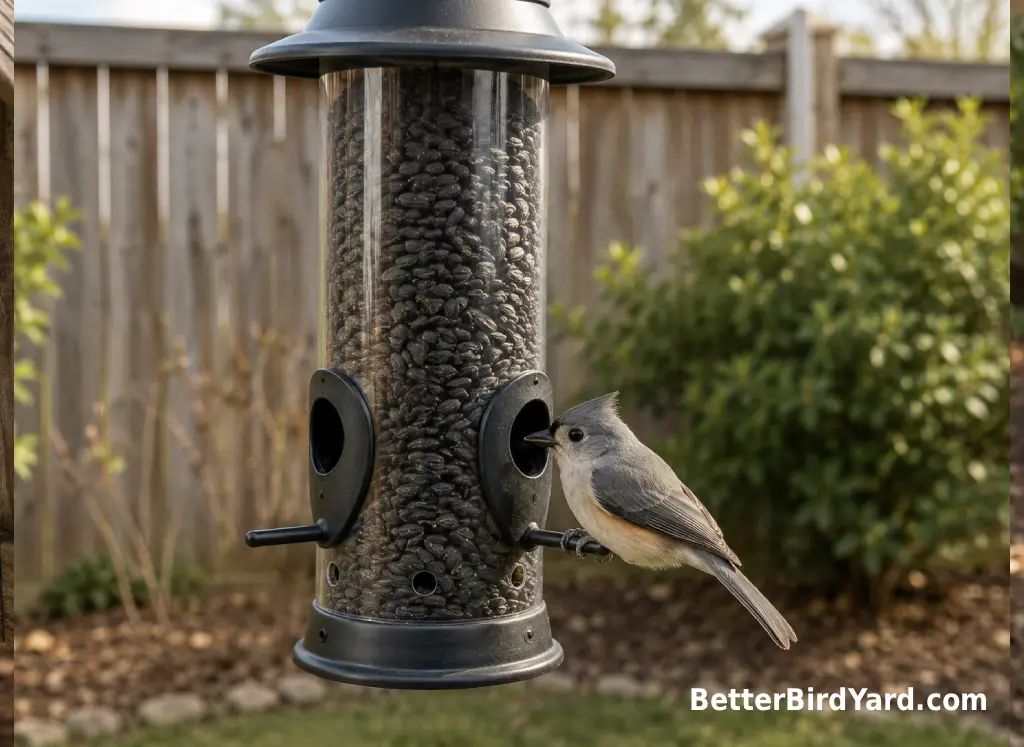
Set Up the Feeder With Less Waste and Squirrel Pressure
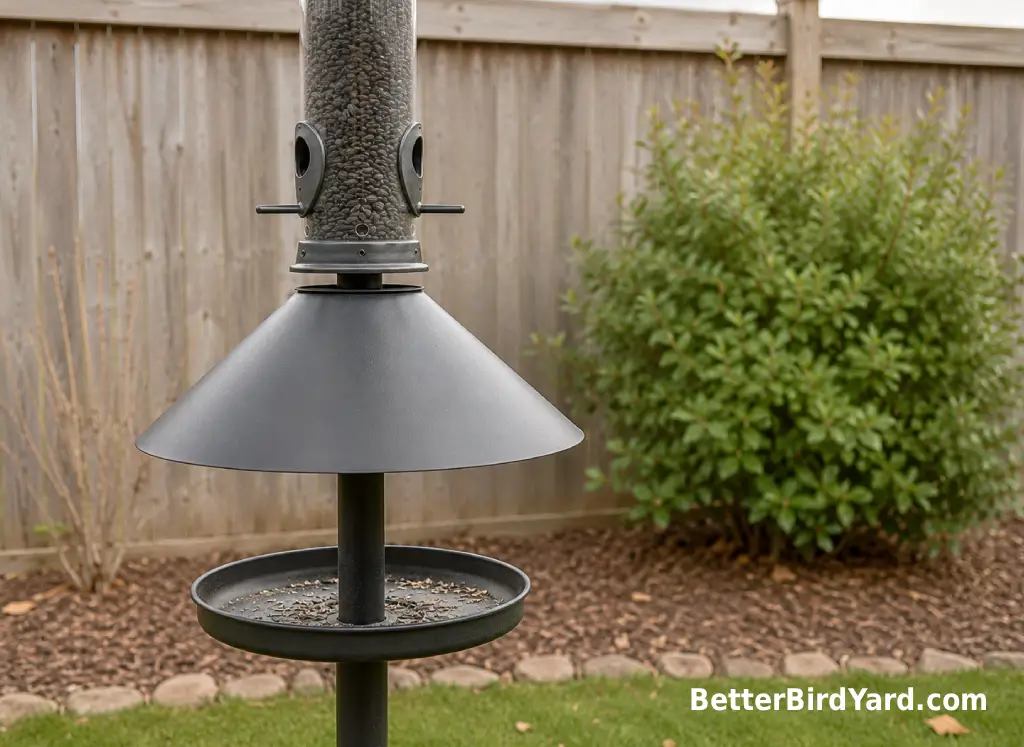
Sunflower seed is also attractive to squirrels, and uneaten seed or hulls beneath a feeder can draw rodents and other unwanted visitors. A baffle and a manageable serving size usually help more than constantly changing seed brands.
Keep the first setup simple:
- Fill the feeder only partway until you know how quickly birds empty it.
- Use a properly fitted pole or hanging baffle where the location allows.
- Add a removable seed tray only if you can empty and clean it easily.
- Rake, sweep, or vacuum hulls and spilled seed before a thick layer develops.
- Reduce the daily portion if food remains exposed through several wet days.
In a patio or balcony setting, a small covered feeder with hulled sunflower may be easier to manage than a large hopper filled with in-shell seed. Check lease, building, and HOA rules before installing a feeder, and choose a location where spilled food cannot fall onto a neighbor’s property.
BetterBirdYard editorial note: If you only change one thing, stop filling the feeder to the top automatically. Matching the amount of seed to actual bird traffic reduces waste, damp food, pests, and cleaning time.
Should You Buy a 40- or 50-Pound Bag?
A 40- or 50-pound bag of sunflower seeds for birds can lower the price per pound, but only when you have enough feeder activity and suitable storage. Cheap black sunflower seed is not a bargain if part of the bag becomes damp, stale, infested, or contaminated by rodents.
Begin by measuring how much your feeder uses. If your birds consume half a pound per day, a 40-pound bag lasts about 80 days and a 50-pound bag lasts about 100 days. If you use only a quarter-pound daily, the same bags last roughly 160 and 200 days. That simple calculation tells you more than the bag’s headline price.
Compare the delivered cost per pound rather than focusing on a free-shipping claim. Shipping costs may already be included in the listed price. Also consider the seller’s stock turnover, the condition of the packaging, and whether you can transfer the seed immediately into secure containers.
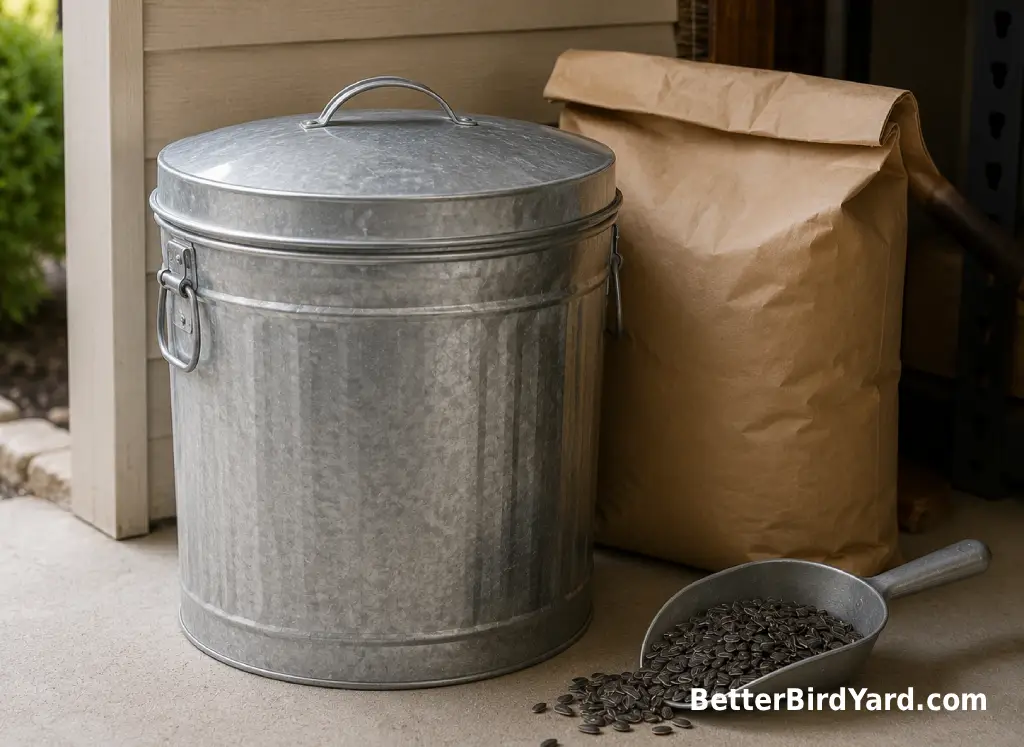
Large bags are most practical when you can divide the seed among tightly closed metal or heavy-duty plastic containers kept in a cool, dry area. University of Minnesota Extension recommends tightly closed containers for dried foods, including birdseed, and buying quantities that can be used within a reasonable period rather than letting opened products sit indefinitely.
For your first purchase, a smaller bag is often wiser. Learn your usage rate through a few weeks of ordinary weather before committing to bulk seed.
Store, Inspect, and Clean the Feeding Area
Keep unopened and opened seed dry, protected from pests, and away from strong temperature swings. Use older seed before newer purchases. Each time you refill, look for clumps, condensation, insects, webbing, a musty smell, or visible mold. Do not try to rescue wet or moldy seed by mixing it with fresh seed; discard it.
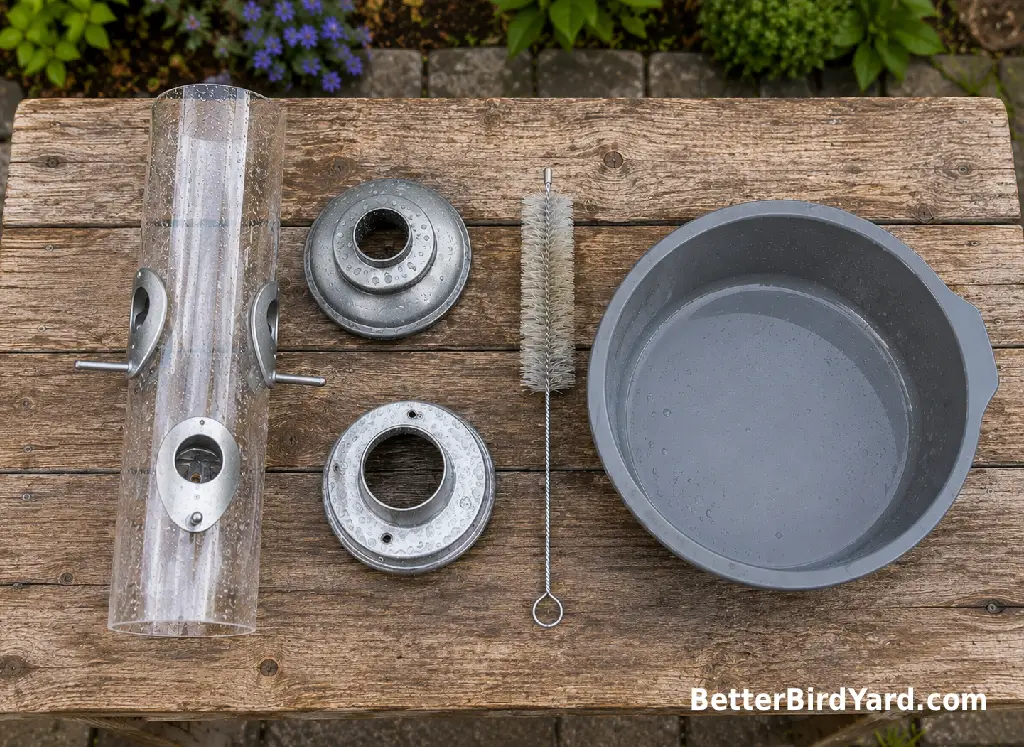
Cornell recommends cleaning ordinary seed feeders regularly, roughly every two weeks as a practical baseline and more often during warm, wet weather or heavy use. Take the feeder apart, remove all debris, wash or scrub it thoroughly, rinse it well, and let every component dry before adding fresh food. A dilute bleach solution of no more than one part bleach to nine parts water can be used when appropriate, followed by thorough rinsing and complete drying.
Do not forget the area beneath the feeder. Remove old hulls, droppings, and damp seed instead of allowing them to build up.
If you notice birds that appear unusually weak, have difficulty feeding, show swollen or crusted eyes, or remain fluffed and inactive for long periods, do not attempt a backyard diagnosis or add medication to the seed. Take feeders down, clean the equipment and ground area, and check current guidance from your state wildlife agency or another qualified local authority. Contact a licensed wildlife rehabilitator when an individual bird appears injured or needs professional help.
Common Mistakes and the Best Starting Choice
The most common problems are rarely caused by choosing black oil sunflower itself. They usually come from offering too much, allowing seed to become wet, buying more than can be stored safely, or selecting a feeder that is difficult to clean.
- Do not leave damp or clumped seed in the feeder.
- Do not assume a large bag is cheaper without checking the delivered price per pound.
- Do not use hulled sunflower in a feeder that traps moisture.
- Do not ignore shells and spilled kernels beneath the feeding station.
- Do not expect one seed or feeder to attract every local species.
- Do not keep feeding unchanged when local wildlife officials recommend a temporary pause.
For most beginners, the best starting choice is fresh black oil sunflower seed in a small, covered tube feeder that comes apart easily. Use a hopper or platform when the birds you hope to accommodate need a broader landing space. Choose hulled sunflower seeds for birds when reducing shell litter is worth the extra cost and you can serve small, dry portions.
Black oil sunflower works because it is widely accepted, easy to test, and flexible enough for many feeder styles. Its value still depends on the habits around it: buy a sensible quantity, keep the seed dry, clean the feeder and ground area, manage squirrels and spills, and watch how birds actually use your space. Combined with appropriate native plants, clean water, shelter, and safer windows, a well-maintained sunflower feeder can become a dependable part of a responsible bird-friendly yard.