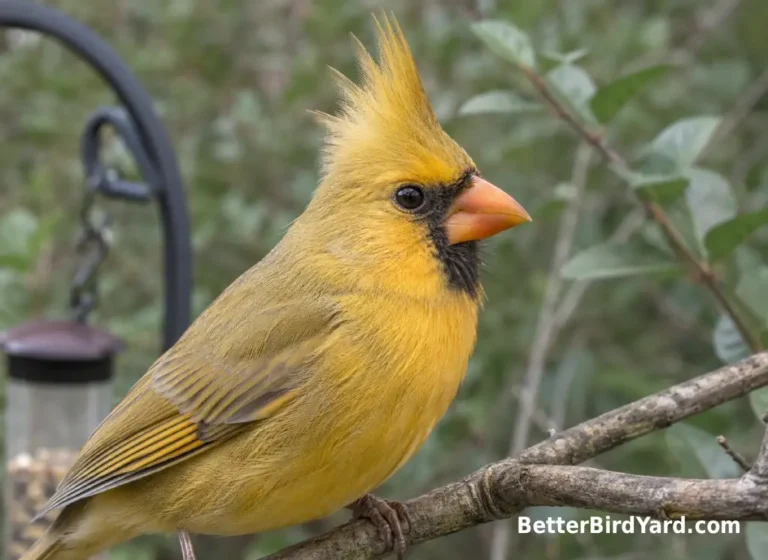
Cardinal Bird Guide: Northern Cardinal Facts For Backyard Watchers
The cardinal bird most people notice at backyard feeders in the United States is the Northern Cardinal, a sturdy songbird with a pointed crest, thick seed-cracking bill, and a personality that makes it hard to miss. A bright red cardinal on a snowy branch may be the classic picture, but female cardinals are just as worth watching: warm brown, softly red on the wings and tail, and often a little more subtle around shrubs and feeder edges.
For beginner and intermediate backyard bird watchers, Northern Cardinals are satisfying birds to learn because they are colorful, vocal, and often visible year-round within their range. They are also a good reminder that supporting backyard birds responsibly is about more than filling a feeder. Seed choice, feeder style, clean water, shrubs, window safety, cats, and sanitation all affect whether your yard is genuinely helpful. Cornell Lab of Ornithology and Audubon describe Northern Cardinals as common feeder visitors in much of the eastern and central United States, with local presence also in parts of the Southwest.
Quick Cardinal Bird Facts For Backyard Watchers
The Northern Cardinal is the familiar red cardinal of many eastern, central, and southern backyards. Its scientific name is Cardinalis cardinalis, and it belongs to a group of seed-eating songbirds with strong cone-shaped bills. The bird is often called simply a cardinal, but Northern Cardinal is the full common name used by field guides and birding organizations.
| Fact | What It Means In The Backyard |
|---|---|
| Year-Round Resident | Within much of its range, a Northern Cardinal may visit in winter, spring, summer, and fall instead of disappearing after migration. |
| Both Sexes Sing | You may hear whistled cardinal songs from more than one bird, not just the bright red male. |
| Strong Seed Bill | Sunflower and safflower are practical feeder choices because cardinals can handle larger seeds. |
| Dense Shrub User | Cardinals often feel safer when cover is nearby, especially in open suburban yards. |
| State Bird | The Northern Cardinal is the state bird of seven states: Illinois, Indiana, Kentucky, North Carolina, Ohio, Virginia, and West Virginia. |
A useful beginner habit is to watch where the bird goes after leaving the feeder. Cardinals often slip back into shrubs, vines, hedges, or low branches rather than staying exposed for long. That little movement pattern tells you a lot about what they need: food is helpful, but nearby cover makes the feeding spot feel safer.
How To Identify A Northern Cardinal
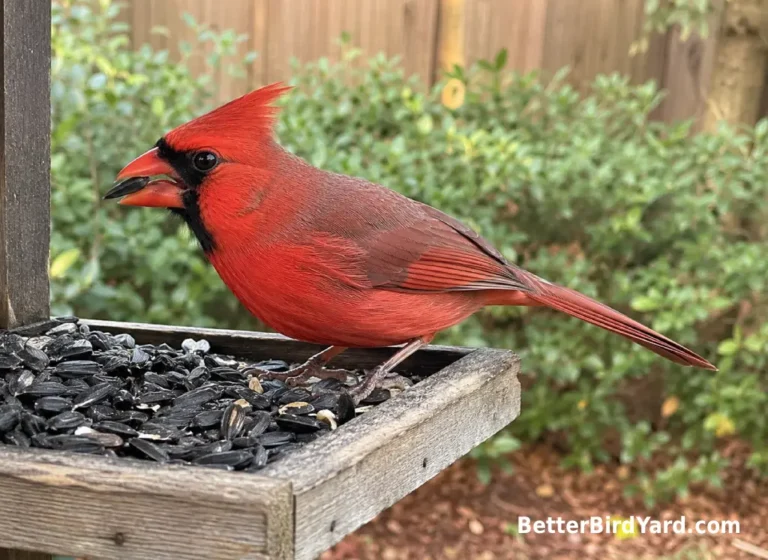
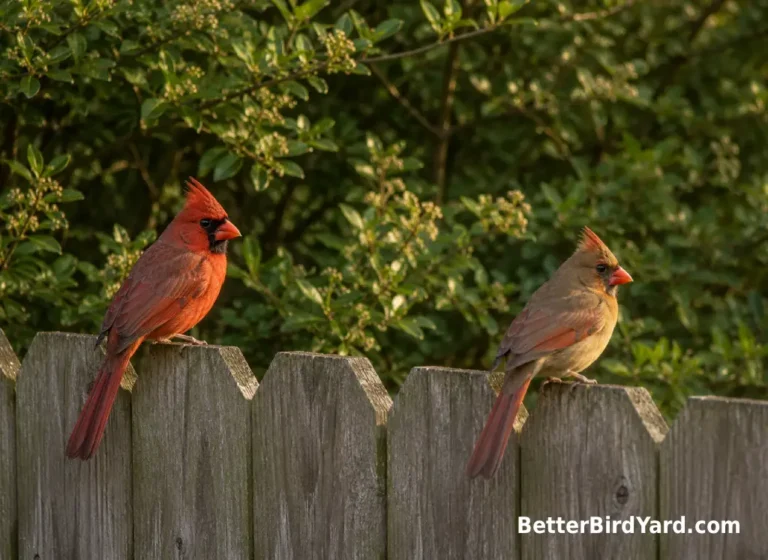
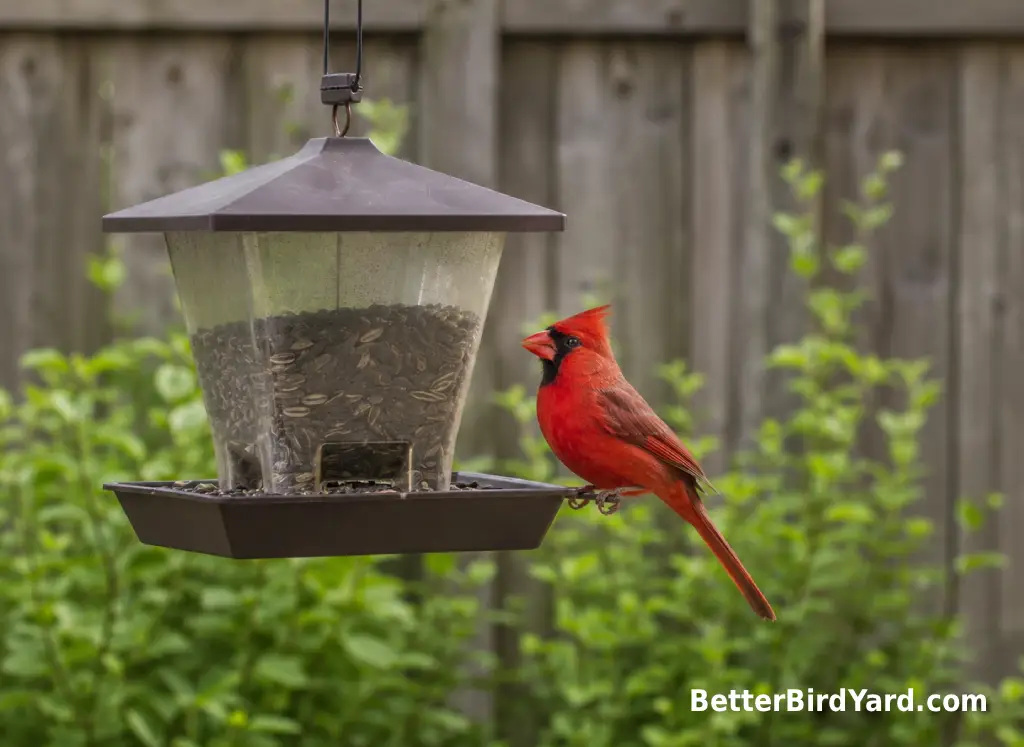
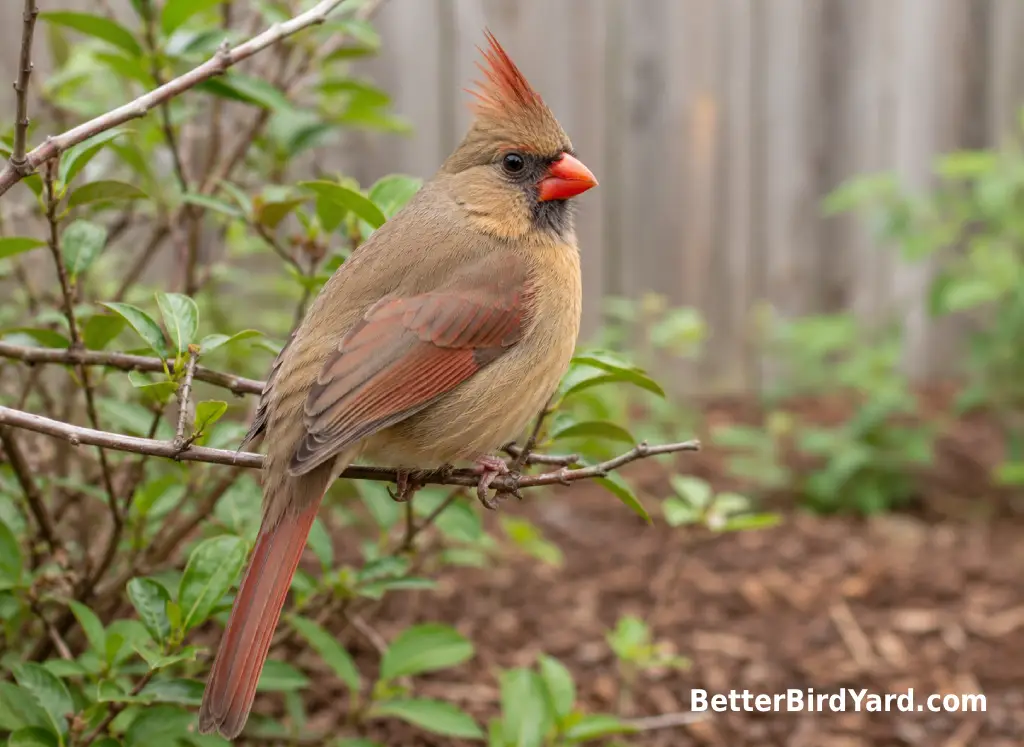
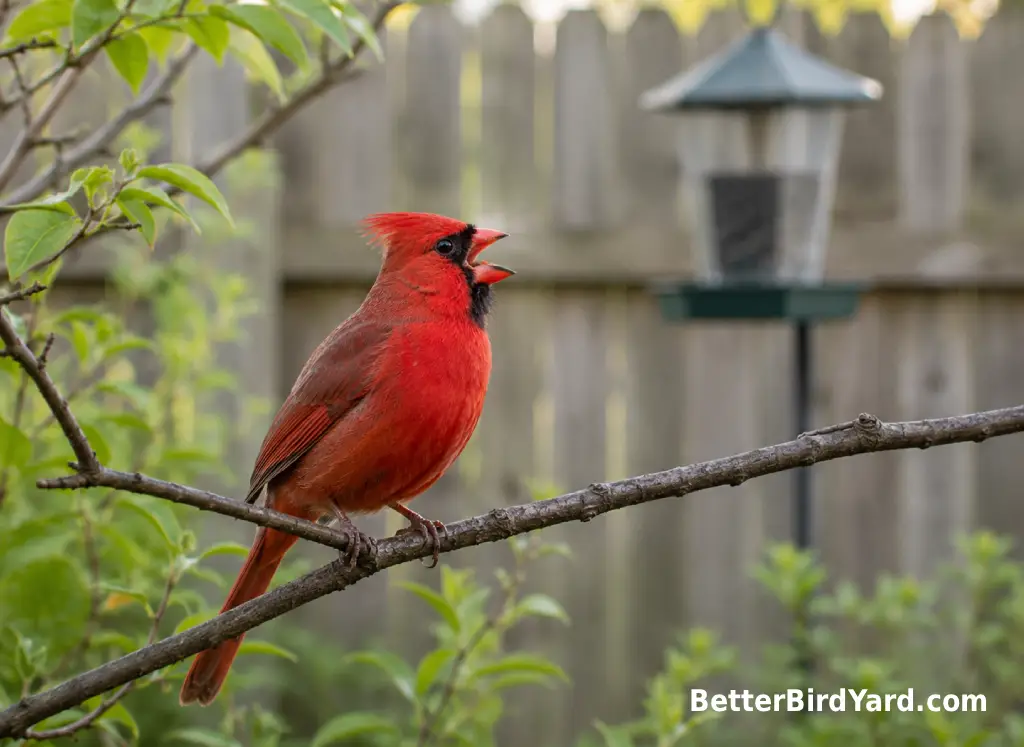
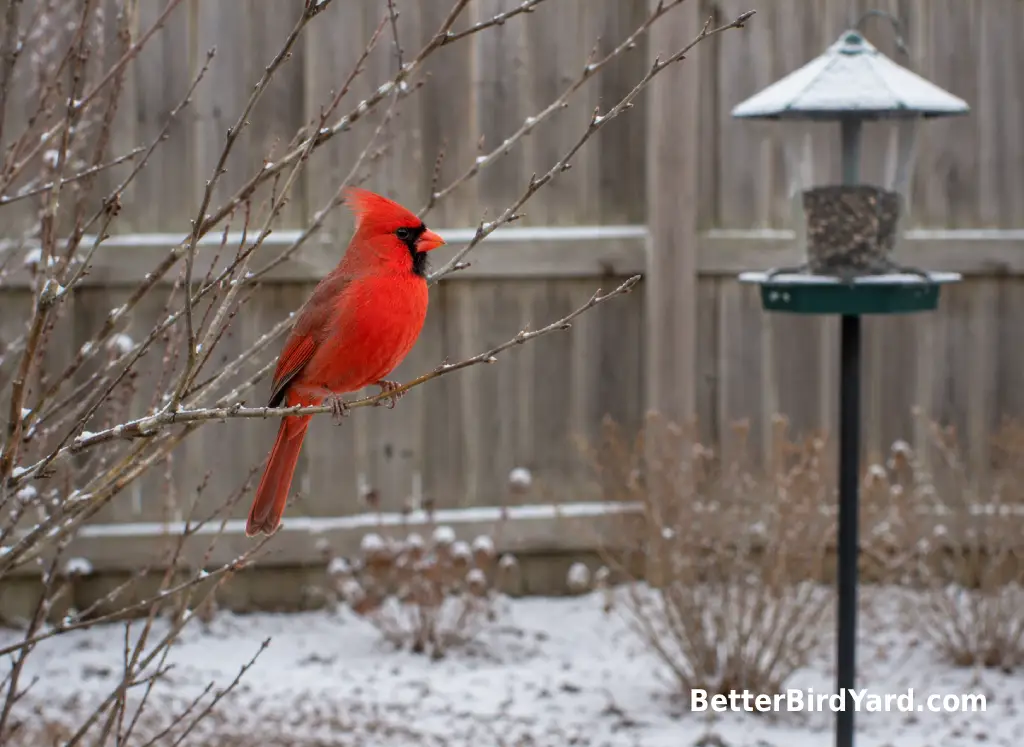
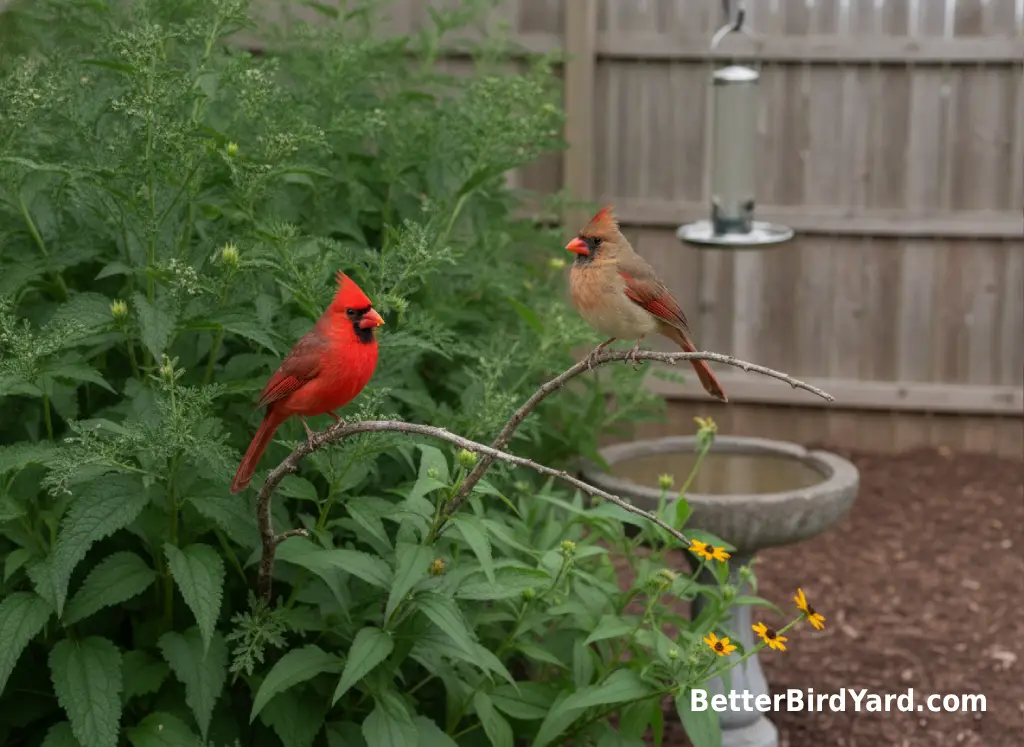
The easiest field marks are the crest, the thick bill, and the long tail. Adult male Northern Cardinals are rich red overall with a black face mask around the bill. Adult females are mostly warm brown or buffy with red highlights on the wings, tail, and crest. Both sexes have a chunky orange-red bill as adults, which is especially noticeable at close range.
Young cardinals can confuse new bird watchers because they may look duller, scruffier, or less strongly colored than adults. A juvenile may have a darker bill before it develops the bright adult bill color. If you see a brownish bird with a crest, long tail, and cardinal-shaped bill near adult cardinals, it may be a young Northern Cardinal rather than a different species.
Cardinals also have a distinctive way of moving. They often appear low in shrubs, along fence lines, or on the ground below feeders, making short hops as they pick through seed or natural food. Their call is a sharp metallic chip, while their song is a series of clear whistles. The exact notes vary, but once you learn the sound, you may start noticing cardinals before you see them.
What Cardinals Eat And Which Feeders Work Best
Northern Cardinals eat a mix of seeds, fruits, and insects, so a feeder should be treated as supplemental food rather than their whole diet. At backyard feeders, sunflower seed is one of the most reliable options. Safflower can also work well for cardinals, especially in yards where you want a sturdy seed that cardinals can crack easily. Cornell Lab notes that cardinals especially use sunflower seeds at feeders, and Project FeederWatch lists them among common feeder birds.
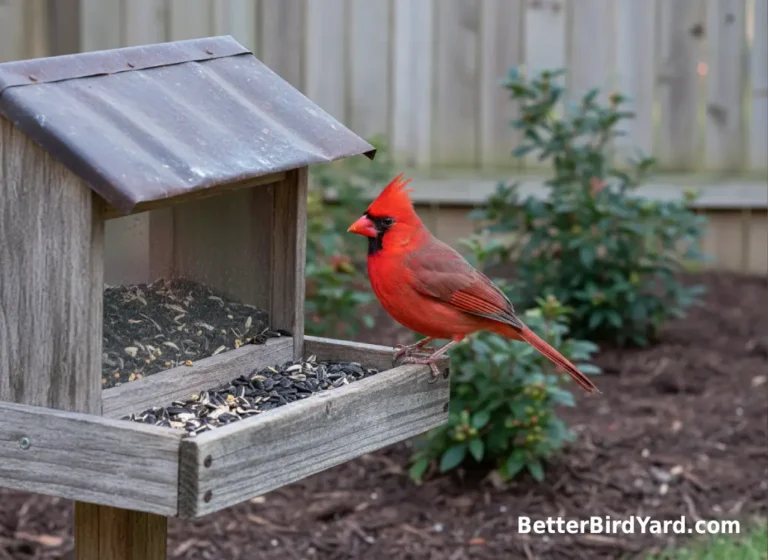
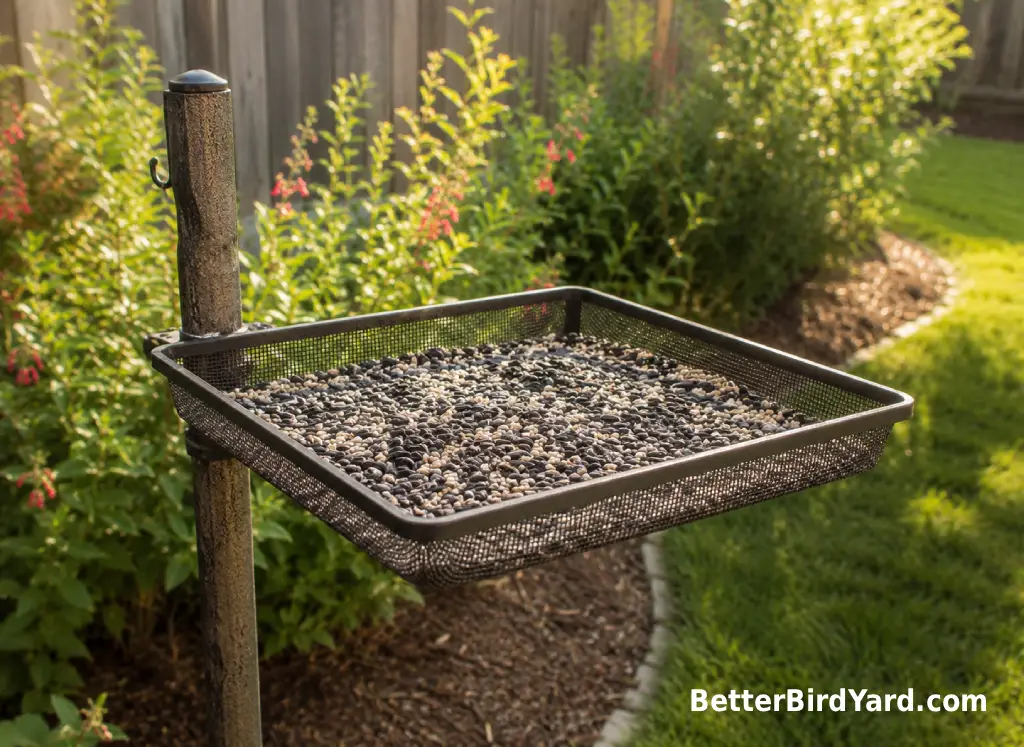
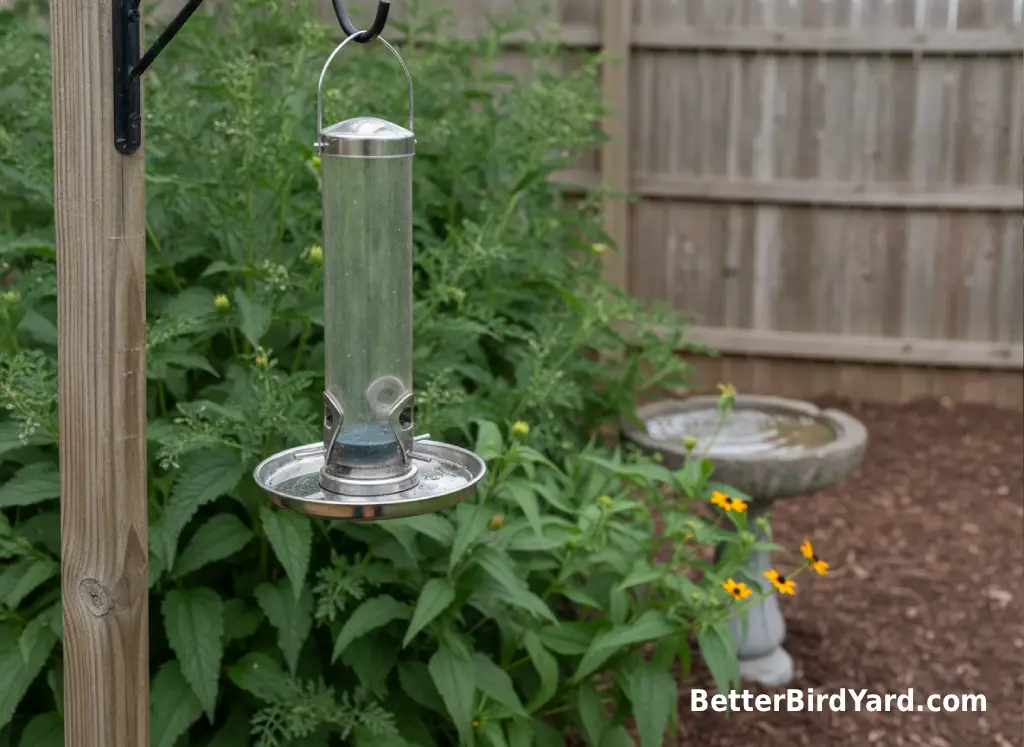
Cardinals are not tiny clinging birds, so they usually do better with room to stand. A hopper feeder, platform feeder, tray feeder, or a tube feeder with a generous tray can be more comfortable than a small-perch feeder designed for finches. In a small patio or rental space, one compact hopper feeder with a tray is often easier to clean and manage than several crowded feeders.
For a simple cardinal-friendly setup, start here:
- Use black oil sunflower, striped sunflower, safflower, or a clean blend built around those seeds.
- Choose a cardinal feeder with enough landing space for a medium-sized songbird.
- Place the feeder near shrubs or small trees, but not where a cat can easily hide and pounce.
- Clean spilled seed and hulls from the ground so the area does not attract rodents or hold moldy debris.
- Store seed in a dry, sealed container and discard any seed that smells musty or looks moldy.
A helpful next step is to compare seed types in a focused way. Our guide to seeds in bird food can help you choose a practical mix without buying several bags that end up wasted.
Where Cardinals Live, Nest, And Raise Young
Northern Cardinals are birds of edges, thickets, shrubby yards, woodland borders, parks, and neighborhoods. That is why they can do well around homes when the yard offers more than open lawn. Audubon describes the species as abundant in the Southeast and present north into southeastern Canada, while also noting that it is mostly absent west of the Great Plains except for local areas in the desert Southwest.
Cardinals do not need a birdhouse. They are not cavity nesters like chickadees or bluebirds. Instead, they typically build cup nests in shrubs, vines, or small trees. Cornell Lab lists Northern Cardinal nests as open-cup nests and gives typical nesting details such as 2 to 5 eggs, 1 to 2 broods, an incubation period of 11 to 13 days, and a nestling period of 7 to 13 days.
For a backyard, the practical takeaway is simple: keep some layered cover if you can. A tidy yard can still include a shrub corner, a native vine on a trellis, or a mixed planting bed with low and medium-height plants. National Wildlife Federation and Cornell Lab both emphasize native plants as useful habitat because they can provide food, shelter, and support for insects that birds rely on, but the best plant choices vary by region.
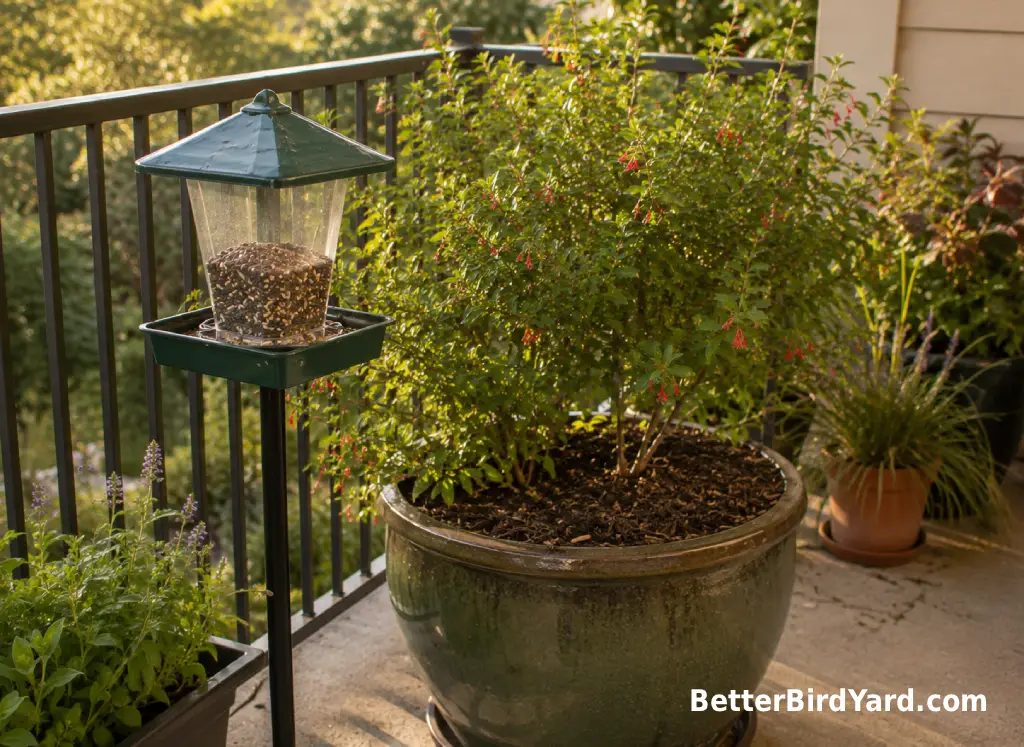
In a rental or patio space, you can still help. A large container with a region-appropriate native shrub, a clean shallow water dish on a stable stand, and a single well-managed feeder can create a small but useful stopover. Check lease, balcony, HOA, and local rules before adding feeders, water features, or plants that may drip, spill, or attract nuisance wildlife.

Northern Cardinal Songs, Behavior, And Backyard Personality
One of the most interesting facts about Northern Cardinals is that both males and females sing. In many backyards, the male’s bright color gets the attention first, but the female’s voice is part of the pair’s daily life too. Cornell Lab notes that female Northern Cardinals sing, sometimes from the nest, and cardinal songs are made of clear whistled phrases.
Cardinals are also famous for seeming to fight windows, mirrors, or shiny car surfaces. This usually happens when a bird sees its reflection and reacts as if another cardinal has entered its territory. It can be especially noticeable during the breeding season. If this becomes a problem, reduce the reflection from the outside with temporary window film, closely spaced decals, screens, or other exterior treatments. Cornell Lab recommends exterior glass treatments because birds do not understand glass as a barrier.
At feeders, cardinals can look bold, but they are still watching for danger. You may notice one bird feeding while another stays nearby, or a pair moving between shrubs and feeder edges. Morning and late afternoon can be productive times to watch them, especially in winter when natural food is less obvious and cardinals stand out against bare branches.
How Long Do Cardinal Birds Live?
The honest answer is that cardinal lifespan varies. Many wild birds face risks from predators, storms, disease, window collisions, vehicles, outdoor cats, and food shortages, so not every cardinal lives many years. Cornell Lab reports that the oldest recorded wild Northern Cardinal was a female found in Pennsylvania at 15 years and 9 months old. That is a record, not a promise for the average backyard bird.
For backyard watchers, the better question is how to reduce avoidable risks. You cannot control everything a wild cardinal faces, but you can keep your feeding station cleaner, prevent seed from rotting on trays, make nearby windows safer, keep cats away from feeding areas, and provide cover that does not turn into a predator hiding spot.
Think of a feeder as a responsibility, not just an invitation. Cornell Lab recommends cleaning feeders about every two weeks, and more often during heavy use, wet weather, local disease concerns, or when sick birds are seen. Feeders should be scrubbed, rinsed well, and fully dried before refilling. Moldy or decomposing seed and dirty feeder surfaces can increase disease risk.
Common Mistakes That Make A Yard Less Cardinal-Friendly
A common mistake we see is treating cardinals as if they only need a bigger feeder. In many yards, the problem is not the feeder size; it is the whole setup. Too much exposed lawn, no nearby cover, spoiled seed, dirty trays, reflective windows, or roaming cats can make a yard less safe even when the food is appealing.
- Leaving wet seed in the feeder: dump seed that clumps, smells musty, or shows mold.
- Letting hulls pile up below the feeder: rake or sweep often so the ground does not become a dirty feeding area.
- Using tiny perches only: choose at least one feeder style that gives cardinals room to stand.
- Placing feeders beside unsafe glass: treat reflective windows from the outside where birds can see the pattern.
- Putting feeders where cats can hide: keep feeding areas away from ambush cover and keep pet cats indoors or safely contained.
- Overcrowding one feeder: several birds jostling in one dirty spot can increase disease risk.
Editorial note: if you only change one thing this week, clean the feeder and the ground below it. It is not the most exciting backyard bird task, but it is one of the most useful. Audubon and Cornell Lab both emphasize that feeding birds comes with a responsibility to keep feeders clean and windows safer.
Seasonal And Small-Space Tips For Cardinals
Northern Cardinals are often easiest to notice in winter because the male’s red plumage stands out and natural vegetation is thinner. Within their range, they are generally present year-round, so the goal is not to attract cardinals for one season only. A steady, clean, safe setup is better than a big burst of seed followed by neglect.
In winter, keep seed dry and remove snow or ice from trays before it turns into a soggy mess. In spring and summer, remember that cardinals also eat insects and feed insects to young, so a yard with fewer pesticides and more region-appropriate native plants can be more useful than a feeder alone. Native shrubs, seed-bearing plants, and fruiting plants should be chosen for your region with help from local extension resources, native plant societies, or state wildlife-friendly gardening programs.
For small yards, patios, and balconies, keep the setup modest:
- Use one easy-to-clean feeder rather than several hard-to-maintain feeders.
- Add a stable shallow water source only if you can keep it clean.
- Choose a potted shrub or trellis plant where rules allow it.
- Use a tray or mat to reduce dropped seed if you live above neighbors.
- Stop or scale back feeding if seed waste begins attracting rodents or nuisance wildlife.
Local conditions matter. In bear country, areas with strict HOA rules, or buildings with pest concerns, feeding may need to be seasonal, limited, or avoided. Check city, county, state, building, and HOA guidance before setting up a feeder where conflicts are likely.
When A Cardinal Looks Sick, Injured, Or Unsafe
If a cardinal is puffed up, unable to fly normally, sitting still for a long time, showing crusted eyes, acting unusually tame, or found after hitting a window, do not try to diagnose the problem. Those signs can have more than one cause, and a backyard article is not a substitute for wildlife rehabilitation or veterinary expertise.
Use a cautious pattern: observe from a distance, keep pets and children away, reduce immediate hazards, and contact qualified local help when a bird appears sick, injured, stunned, orphaned, or unable to escape danger. A licensed wildlife rehabilitator, local wildlife agency, animal control office, or other qualified professional can give location-appropriate guidance.
If you see sick birds around a feeder, pause or reduce feeding, clean feeders and bird baths thoroughly, remove spilled seed and hulls, and check your state wildlife agency for current guidance. USGS National Wildlife Health Center notes that poorly maintained feeding stations may contribute to infectious disease and mortality, and Cornell Lab recommends more frequent cleaning when sick birds are seen or local disease concerns are reported.
Interesting Facts About Northern Cardinals
Northern Cardinal fun facts are easy to find, but the best ones are the details you can actually watch for in your yard. The bright red male may be the most photographed, yet the female’s warm coloring, red accents, and song make her just as important to learn. Both birds can be active around cover, especially near dawn and dusk.
- Female cardinals sing, which surprises many new bird watchers.
- Cardinals are usually year-round residents within much of their range, so winter sightings may be local birds rather than migrants.
- The Northern Cardinal is a favorite state bird, officially representing seven states.
- Cardinals do not use nest boxes because they nest in shrubs, vines, and small trees rather than cavities.
- The red cardinal at your feeder is usually male, but female and juvenile cardinals may spend just as much time using nearby cover.
The bigger lesson is that cardinals reward patient observation. Watch the bill shape, tail length, crest position, calls, feeding time, and route back to cover. Those details will help you recognize Northern Cardinals even when the light is poor or the bird is partly hidden in leaves.
The Practical Takeaway On Cardinal Birds
The Northern Cardinal is popular for good reason: it is colorful, vocal, recognizable, and often visible close to home. But the best way to enjoy cardinal birds is not to chase a perfect backyard setup. Start with the basics: a clean feeder with sunflower or safflower, nearby shrub cover, fresh water only if you can maintain it, safer windows, less seed waste, and fewer predator risks.
Results will vary by region, season, habitat, weather, and what food is naturally available nearby. If cardinals live in your area but are not visiting yet, give the yard time and look at the whole picture. A safe, calm, lightly sheltered space often matters as much as the seed itself.
For BetterBirdYard readers, the cardinal is a good starter bird because it teaches the habits that help many backyard birds: observe first, feed responsibly, clean regularly, plant thoughtfully, and step back when a bird needs qualified help. That approach makes your yard more useful for Northern Cardinals and healthier for the wider mix of wild birds that share the same space.