How To Attract Cardinals With Food, Feeders, Water, And Cover
If you want to know how to attract cardinals, start with a simple formula: offer sunflower or safflower seed in a sturdy feeder, place it near safe cover, keep fresh water nearby, and maintain the feeding area well. Northern Cardinals are common feeder visitors in much of the eastern and central United States and parts of the Southwest, but results still depend on your region, season, nearby habitat, and what food is already available in the neighborhood.
The good news is that attracting cardinals does not require a fancy yard. A suburban fence line, a small patio with shrubs, or a modest rental-friendly feeding station can work if it gives cardinals a calm place to land, eat, and retreat. Cornell Lab notes that Northern Cardinals use many feeders within their range, especially when sunflower seed is available, and Audubon describes them as birds of brushy edges, thickets, suburban gardens, and towns.
This guide focuses on practical, responsible backyard steps: what bird food attracts cardinals, which feeders they can actually use, where to place them, how to add water and cover, and how to keep the setup safe enough for regular use.
Quick Answer: What Attracts Cardinals?
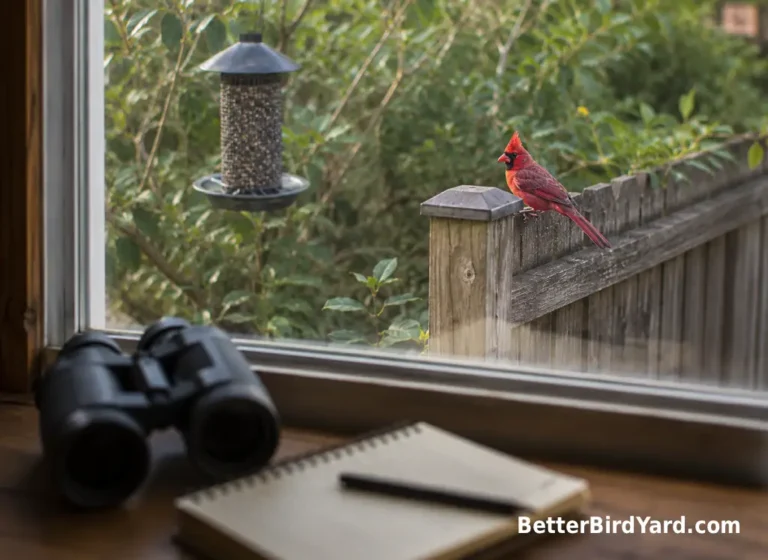
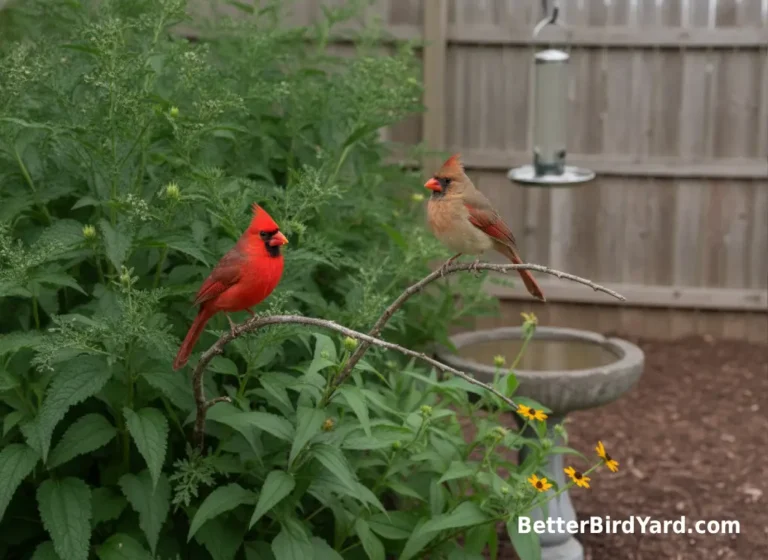
Cardinals are most likely to notice a yard that offers food, cover, and water together. A feeder alone can help, but a feeder beside shrubs, a brushy edge, or a quiet planting bed usually feels more inviting than one hanging in a wide-open spot.
For most beginners, the best starting setup is:
- Black oil sunflower seed or safflower seed.
- A hopper, platform, or tray-style feeder with enough room for a medium-sized bird.
- Placement near shrubs, small trees, or a fence line, while still keeping predators and window strikes in mind.
- A clean bird bath or shallow water source.
- Regular cleanup under the feeder so old seed, hulls, and droppings do not build up.
Cardinals eat a varied natural diet that includes seeds, insects, berries, and other plant material, but at feeders they are especially associated with sunflower seed. Audubon also notes that they readily come to feeders and favor sunflower seed, while Cornell’s feeder guidance lists black oil sunflower among favorite feeder foods for cardinals.
Think of your yard as a small stopover, not a vending machine. The goal is to make it easy for cardinals to feed safely without creating a messy, crowded, or disease-prone feeding area.
Choose The Best Cardinal Food First
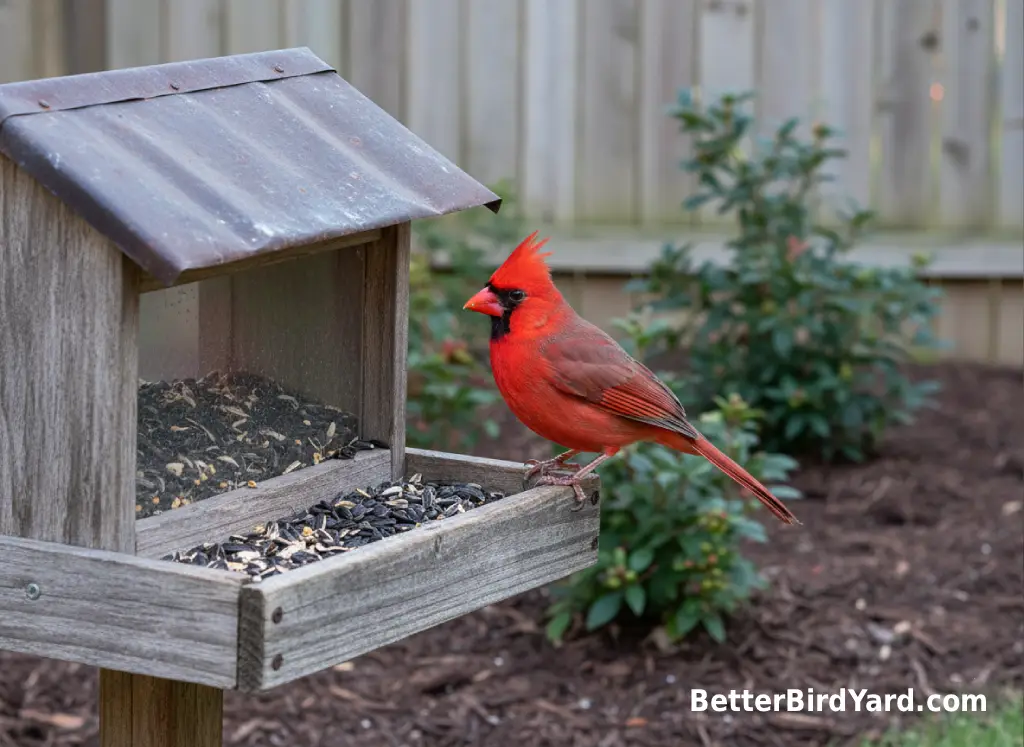
The simplest answer to what bird seed attracts cardinals is black oil sunflower seed. It has a thin shell compared with striped sunflower, and Cornell describes sunflower as a mainstay feeder seed because it attracts a wide variety of birds.
Safflower is the other seed worth trying, especially if you are trying to make the feeder more cardinal-focused. Cornell describes safflower as a favorite among cardinals and other big-billed birds, while noting that many birds still prefer sunflower overall.
| Food | Why It Helps | Best Use |
|---|---|---|
| Black Oil Sunflower | Highly attractive to cardinals and many other feeder birds. | Best first choice for most yards. |
| Safflower | Often eaten by cardinals and other big-billed birds. | Good second feeder or squirrel-pressure experiment. |
| Striped Sunflower | Larger, thicker shells; still useful for big-billed birds. | Try if black oil sunflower attracts too many smaller birds. |
| Hulled Sunflower | Less shell mess, but spoils faster when damp. | Use in small amounts and keep dry. |
| Unsalted Peanuts | Useful if you also want Blue Jays and larger birds. | Offer sparingly in a separate feeder. |
For a cleaner cardinal setup, start with one good seed instead of a complicated blend.
Pick A Feeder Cardinals Can Actually Use
Cardinals are not tiny clinging finches. They are medium-sized, heavy-billed songbirds that usually do better with a feeder that gives them room to perch, turn, and crack seed. If your tube feeder has very short pegs, cardinals may visit less often even if the seed is right.
Good feeder choices for attracting cardinals include hopper feeders, platform feeders, and tray feeders with drainage. Project FeederWatch describes hopper feeders as roofed platforms that help protect seed from weather, and platform feeders as flat raised surfaces that should have drainage holes to prevent water from collecting.
A simple six-step cardinal feeder setup looks like this:
- Choose black oil sunflower seed or safflower seed.
- Use a hopper or platform feeder with enough landing space.
- Place it near shrubs or a brushy edge, not in the most exposed part of the yard.
- Add a baffle if squirrels can reach the pole or hanger.
- Put out only enough seed to stay fresh between refills.
- Clean the feeder before old hulls, wet seed, or droppings build up.
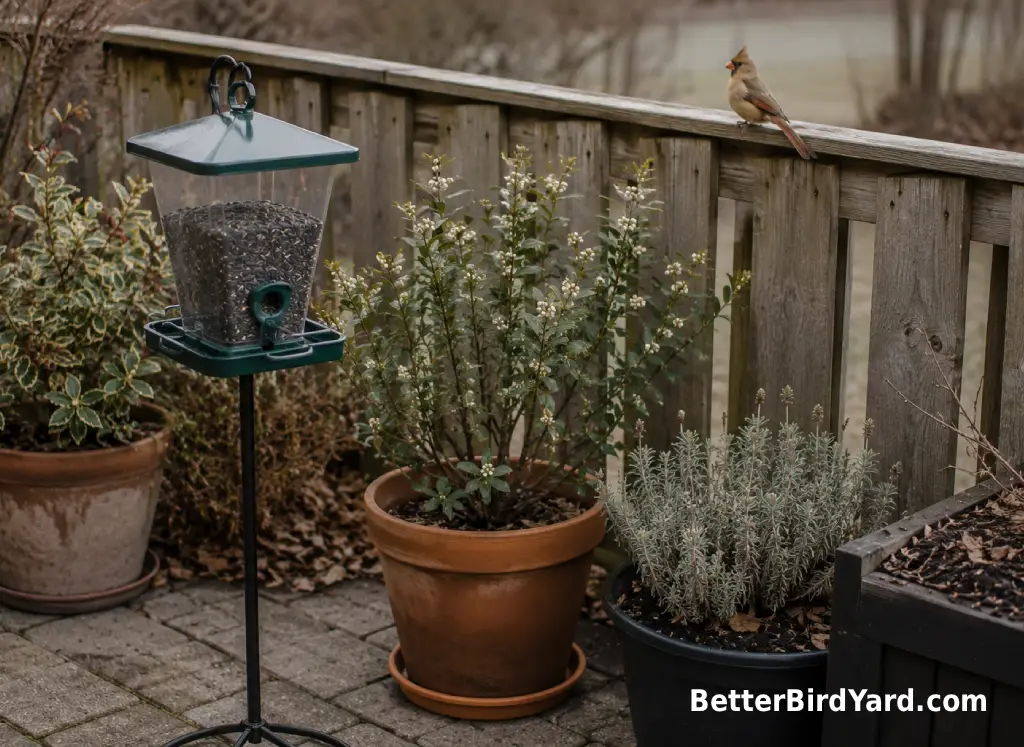
In small yards and patios, a compact hopper on a pole is often easier to manage than a large open tray. It gives cardinals space but does not broadcast as much seed onto the ground. On balconies, check lease, HOA, and building rules before feeding birds, and avoid anything that drops seed onto neighbors’ spaces.
Place The Feeder Where Cardinals Feel Safe
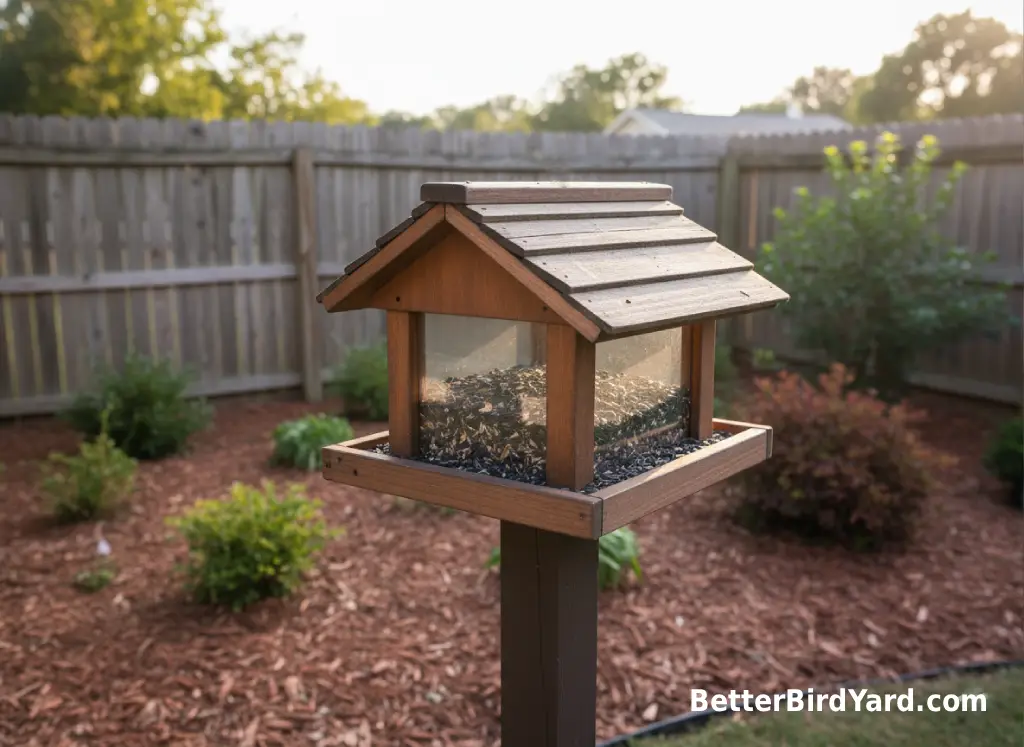
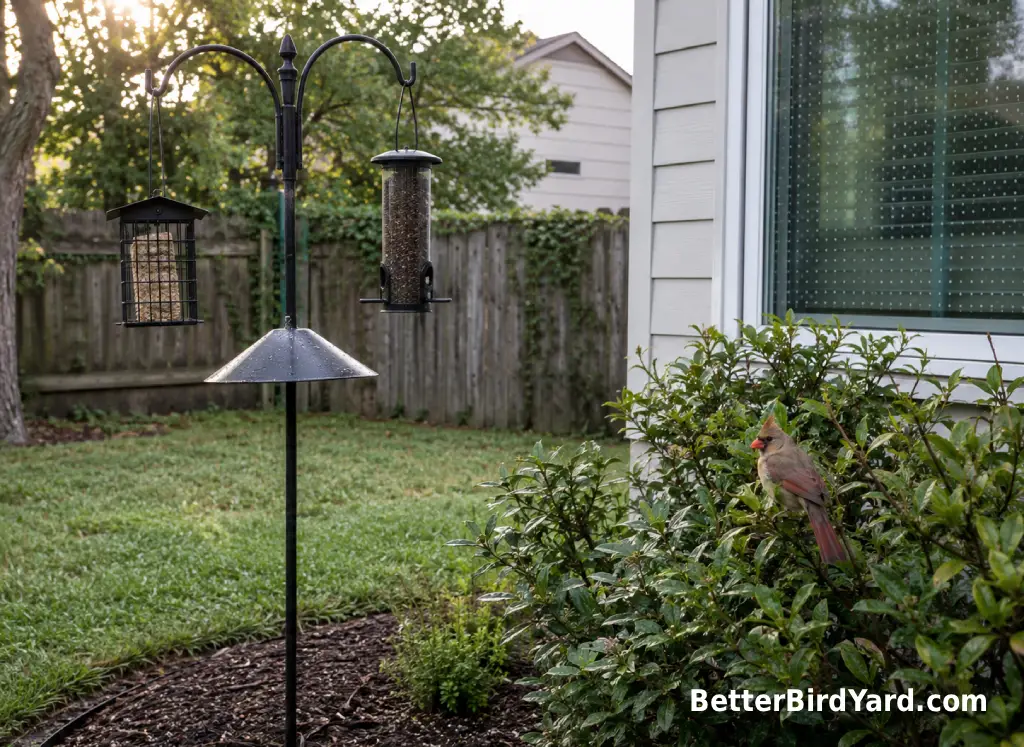
Feeder placement can matter as much as seed choice. Cardinals often approach from shrubs, low branches, vines, or brushy edges, then drop down to feed. A feeder hanging in the middle of a bare lawn may be slower to attract them because it offers less escape cover.
Place the feeder where cardinals can move between cover and food in short flights. A fence line with shrubs, a small tree, or a mulched planting bed can work well. At the same time, avoid creating an ambush point for cats or other predators. If outdoor cats are common in your neighborhood, keep the feeder away from dense low hiding spots where a cat could crouch unseen.
Windows deserve special attention. Project FeederWatch recommends making reflective windows visible to birds with outside patterns such as dots, tape, strings, or other markings spaced no more than 2 inches apart, and it also recommends keeping cats indoors to reduce bird predation.
For many homes, the practical compromise is a feeder on a pole near shrubs but not directly beside a large reflective window. If cardinals repeatedly fly toward glass or attack their reflection in spring, reduce reflection with exterior markings or temporary covers rather than moving the problem closer to the birds.
Add Water, Cover, And Native Plant Texture
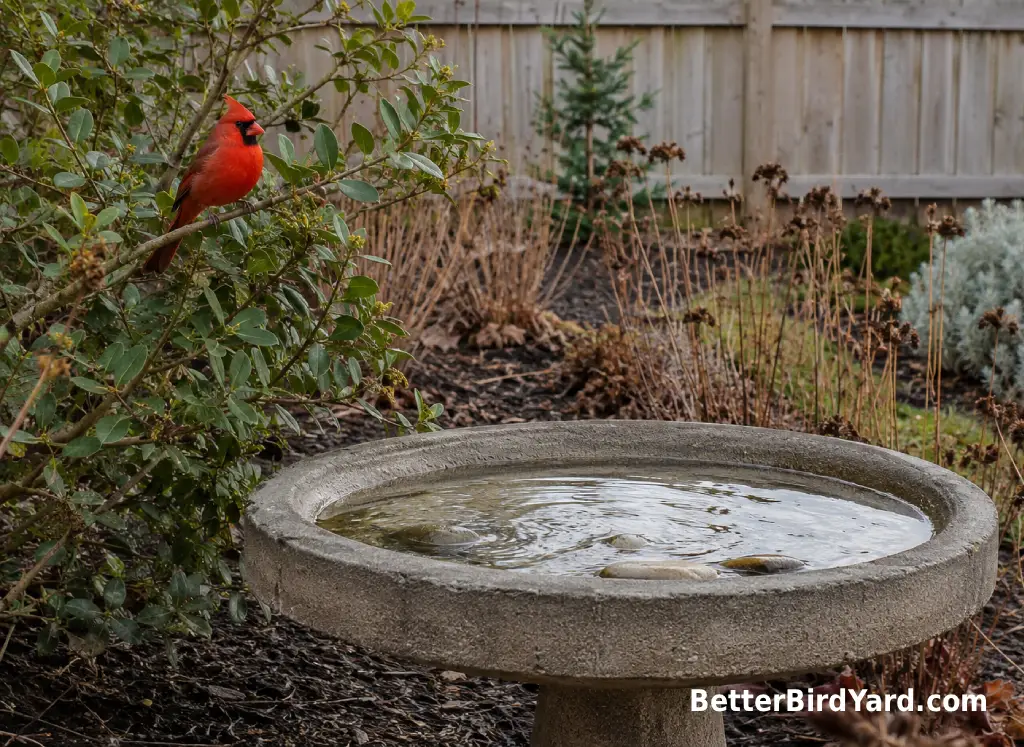
Food may bring cardinals to your attention, but cover and water help make the yard more useful. Audubon describes Northern Cardinal habitat as woodland edges, thickets, suburban gardens, towns, and other brushy or semi-open places where dense bushes are available for nesting.
You do not need a wild-looking yard from corner to corner. A small brushy strip can make a difference. In a suburban yard, that might mean a few native shrubs along the fence. On a patio, it might mean large containers with regionally appropriate native shrubs or dense, bird-safe plantings. In a rental, it might simply mean placing the feeder near existing shrubs instead of in the most exposed spot.
Cardinals also use natural foods, including berries, seeds, insects, and plant material. Leaving some perennial seedheads standing through winter and reducing pesticide use can support more natural foraging. Choose plants suited to your region through local extension resources, native plant societies, or your state wildlife agency rather than assuming one plant list works everywhere.
Water is worth adding if you can maintain it. Project FeederWatch notes that birds are attracted to water for drinking and bathing and recommends changing bird bath water daily to keep it fresh and clean. Its broader cleaning guidance also recommends replacing bird bath water every couple of days or sooner when cloudy water, mold, or droppings appear.
Editorial note: if feeder care already feels like too much, start with plants and water before adding multiple feeders. A clean, simple setup is better than a busy one you cannot maintain.
How To Attract Cardinals And Blue Jays Without Chaos
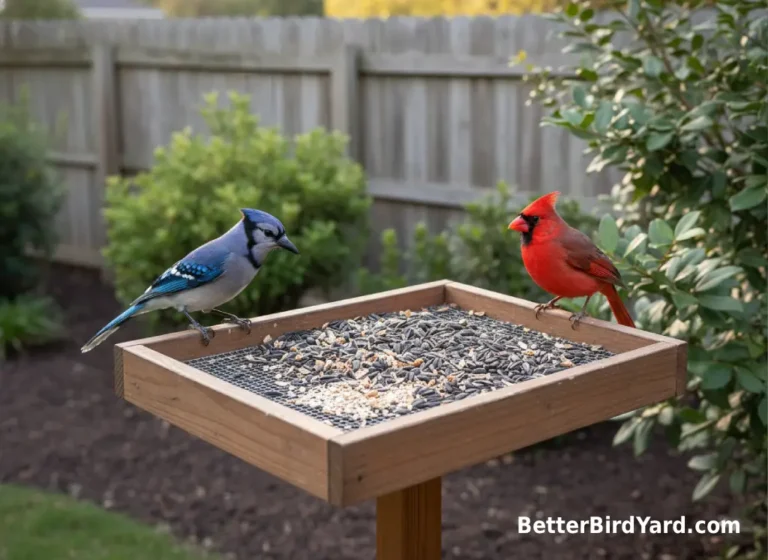
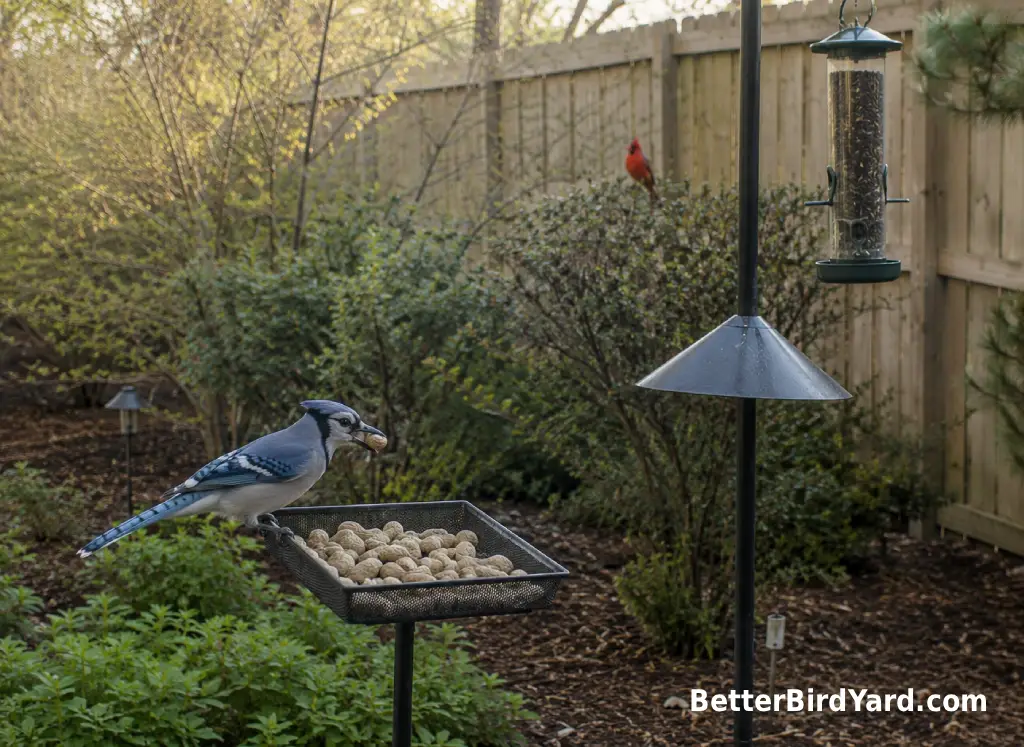
Many readers want to know how to attract cardinals and blue jays together. The overlap is simple: both may use larger, sturdier feeders, and both may be interested in high-energy foods. The challenge is that Blue Jays are bold, loud, and quick to carry food away, while cardinals often feed more quietly from cover.
The easiest way to support both without letting jays dominate the cardinal feeder is to separate the foods. Keep sunflower or safflower in the cardinal feeder. Offer a small amount of unsalted peanuts in a separate tray or peanut feeder away from it. Project FeederWatch notes that peanut hearts are likely to attract jays, and it cautions against salted peanuts or peanuts with coatings or flavorings.
Keep the peanut portion modest. Jays may cache food, squirrels may notice quickly, and leftover peanuts can spoil if they stay damp. If the yard turns chaotic, pull back to the cardinal setup: sunflower or safflower, a good hopper feeder, and nearby cover.
A small-space version is even simpler. Use one hopper feeder for sunflower seed, then offer peanuts only occasionally in a removable dish you can bring back inside. This keeps the setup cleaner and makes it easier to stop if squirrels, rodents, or larger birds take over.
Keep The Setup Clean Enough To Stay Bird-Friendly
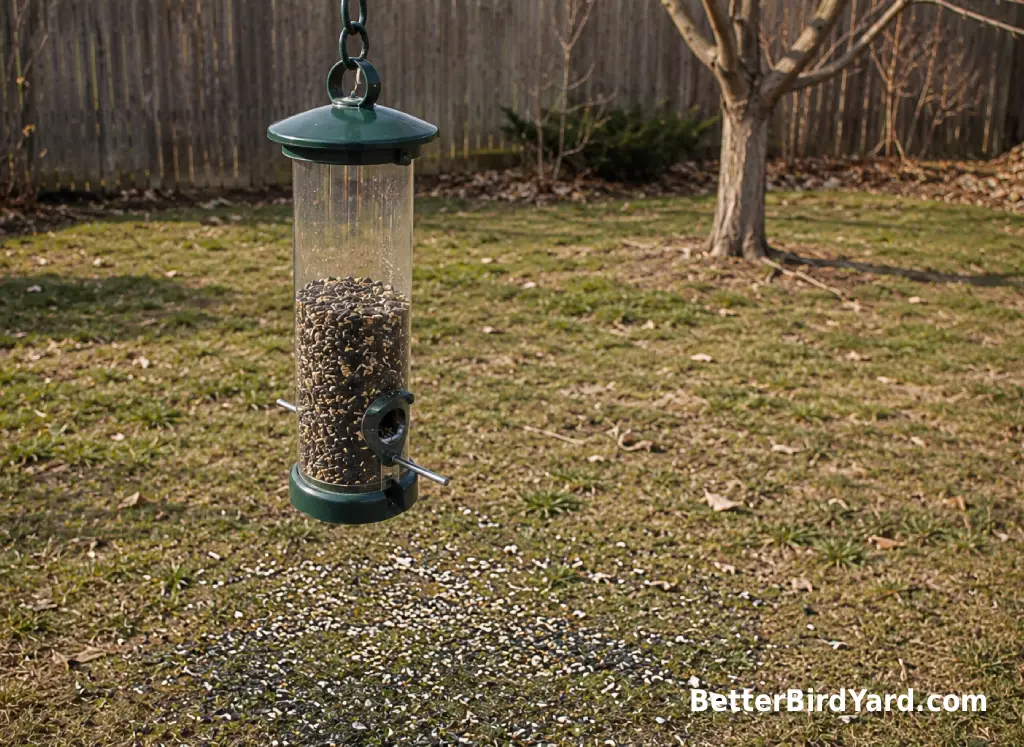
Attracting cardinals responsibly means keeping the feeding area clean. Feeders bring birds together, and Project FeederWatch cautions that feeders can be a source of disease transmission when birds congregate and pathogens spread through contact, droppings, or contaminated surfaces.
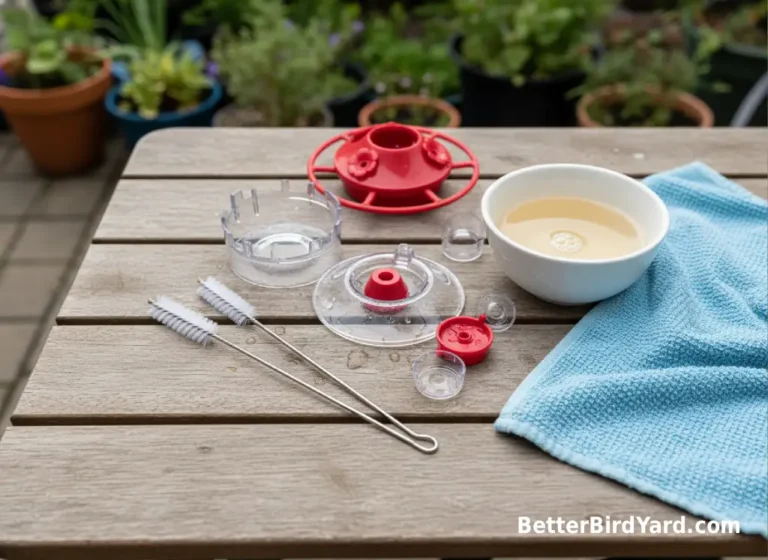
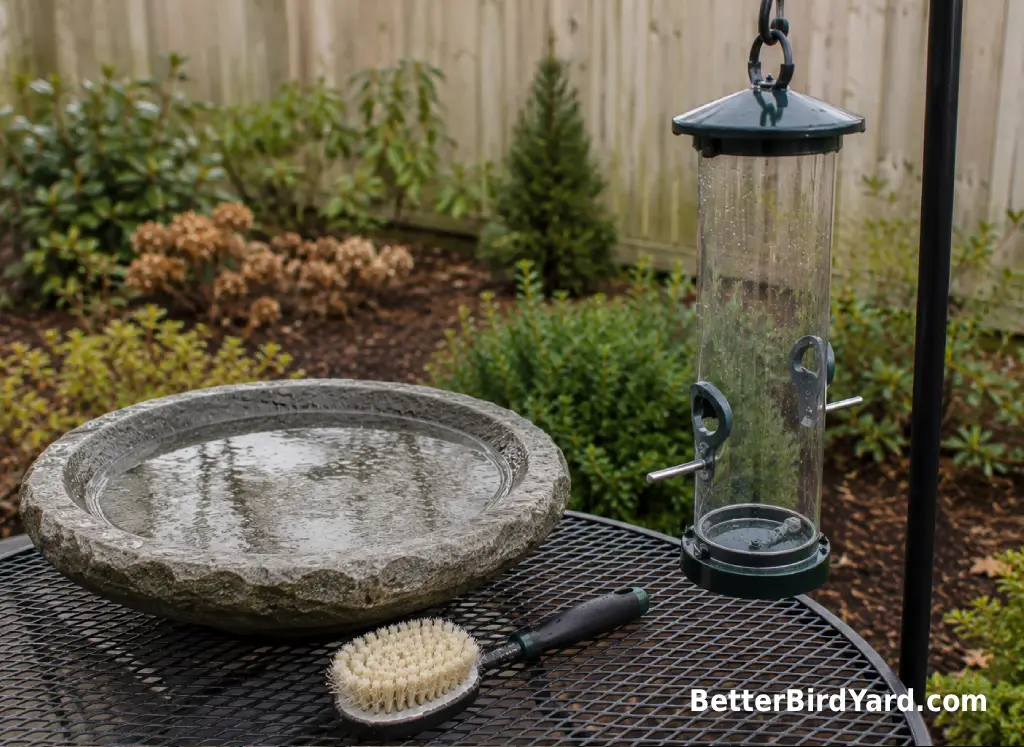
For seed and suet feeders, Project FeederWatch recommends cleaning regularly, such as every week or two, and more often during heavy use or wet weather. Their basic method is practical: take the feeder apart, scrub away debris, wash with warm water and dish soap, rinse thoroughly, and let it dry completely before refilling.
Make cleanup part of the cardinal setup:
- Rake or sweep seed hulls and old seed under feeders.
- Discard wet, clumped, moldy, or spoiled seed.
- Store seed in a sealed container where rodents cannot reach it.
- Use smaller seed portions during rainy or humid weather.
- Clean bird baths when water looks cloudy, dirty, or fouled by droppings.
Common Mistakes That Keep Cardinals Away
If cardinals are nearby but not using your feeder, the problem is usually practical rather than mysterious. Look at the setup from a cardinal’s point of view: Can a medium-sized bird land comfortably? Is there cover nearby? Is the food fresh? Is the feeder being monopolized by squirrels, jays, or grackles?
Common cardinal-attracting mistakes include:
- Using a tiny tube feeder with short perches that fit finches better than cardinals.
- Putting the feeder in a bare, exposed area far from shrubs or low branches.
- Buying low-quality seed mixes that leave unwanted filler on the ground.
- Letting old seed hulls, droppings, or wet seed collect below the feeder.
- Offering too much food at once during damp weather.
- Letting squirrels control the feeder before cardinals have a calm chance to feed.
Squirrels are not just a seed-budget problem. If they overrun a feeder, they can discourage birds from visiting. Project FeederWatch describes baffles as one of the best ways to keep squirrels away from seed and notes that squirrels may jump to feeders placed less than 10 feet from a tree or building.
One practical fix is to simplify for two weeks: one sturdy feeder, one good seed, one safe location, and regular cleanup. Watch when cardinals move through the yard, especially early and late in the day, then adjust placement instead of buying more equipment immediately.
Seasonal And Small-Space Tips For Attracting Cardinals
Northern Cardinals do not migrate away from much of their range, so they can be visible in winter when their red plumage stands out against bare branches or snow. Cornell notes that cardinals do not migrate and remain striking in winter backyards.
Winter feeding can be rewarding, but it also means seed may stay in the feeder longer during storms, freeze-thaw cycles, and damp weather. Check for clumping and keep the feeder dry. In hot or humid seasons, use smaller amounts so seed does not sit long enough to spoil.
Small-space readers can still create a useful setup:
- Choose one compact hopper feeder instead of several feeders.
- Use a tray only if you can clean it often and prevent seed from falling below.
- Add potted shrubs or dense containers where allowed.
- Use no-mess sunflower in tiny amounts only if you can keep it dry.
- Check apartment, balcony, HOA, and local rules before feeding.
If your space is too tight for a feeder, focus on clean water and bird-friendly planting. Cornell’s feeder care guidance notes that native plants can support birds even in small container gardens and window boxes by providing shelter, shade, and insect support.
The best small-space cardinal setup is the one you can keep clean, legal, neighbor-friendly, and consistent.
When To Pause Feeding Or Get Local Help
Sometimes the most responsible way to attract cardinals is to pause feeding for a while. If you notice birds that appear fluffed-up, unusually lethargic, crusty-eyed, weak, injured, stunned, or unable to fly normally, do not try to diagnose or treat them. Keep pets away, avoid casual handling, clean feeders and bird baths, and contact a licensed wildlife rehabilitator, local wildlife agency, animal control, or another qualified local professional for guidance.
Project FeederWatch recommends extra cleaning and possible temporary feeder removal when sick birds are observed, while also noting that local context matters because removing feeders in a neighborhood with many remaining feeders may shift birds elsewhere.
Pause or reduce feeding when:
- You cannot keep feeders or baths clean.
- Seed is repeatedly getting wet, moldy, or spoiled.
- Rodents, raccoons, bears, or other mammals are being attracted.
- Your state wildlife agency recommends changes during a local disease concern.
- Birds are repeatedly striking nearby windows.
In bear country, follow local wildlife authority guidance. Project FeederWatch recommends against bird feeding in bear areas except when bears are hibernating, because it is dangerous for bears to associate homes with food.
Responsible feeding is flexible. You are not failing the birds by taking feeders down when conditions are unsafe. Native plants, clean water when you can maintain it, and safer yard choices still support backyard birds.
Final Thoughts On Attracting Cardinals
Attracting cardinals works best when you keep the setup simple and bird-centered. Start with black oil sunflower seed or safflower seed, use a feeder with enough room for a medium-sized bird, and place it near shrubs or a brushy edge where cardinals can approach with cover nearby.
Then keep going with the details that matter more than beginners expect: fresh water, dry seed, clean feeder parts, swept-up hulls, window awareness, and predator caution. These habits do not just make your yard more appealing to cardinals; they make your feeding station safer for the other birds that discover it too.
If nothing happens right away, give it time. Cardinals may already have a routine in your neighborhood, and it can take days or weeks for them to trust a new feeder location. Watch quietly in the early morning and late afternoon, adjust one thing at a time, and avoid overloading the yard with too many foods or feeders.
A good cardinal yard is not complicated. It is steady, clean, sheltered, and realistic for the space you actually have.