Male Vs Female Cardinal: Color, Song, And Behavior
Male and female cardinals are one of the easiest backyard bird pairs to recognize once you know what to look for. The male Northern Cardinal is the bright red bird most people notice first, but the female cardinal bird is just as distinctive: warm tan-brown, crested, red-tinged in the wings and tail, and often marked with a dark face around her orange-red bill.
The simplest difference between male and female cardinals is color. Adult males are brilliant red overall with a black mask, while adult females are pale brown with reddish highlights. Juveniles are trickier because young cardinals look more like females at first and often have a darker gray to black bill before their adult bill color develops. Cornell Lab’s All About Birds describes adult males as brilliant red, adult females as pale brown with reddish tinges, and juveniles as female-like with a gray to black bill.
For backyard bird watchers, this guide focuses on what you can actually see from a window, patio, balcony, or feeder: color, crest, bill, song, behavior, feeder habits, and common beginner mix-ups.
Quick Answer: Male Vs Female Cardinal
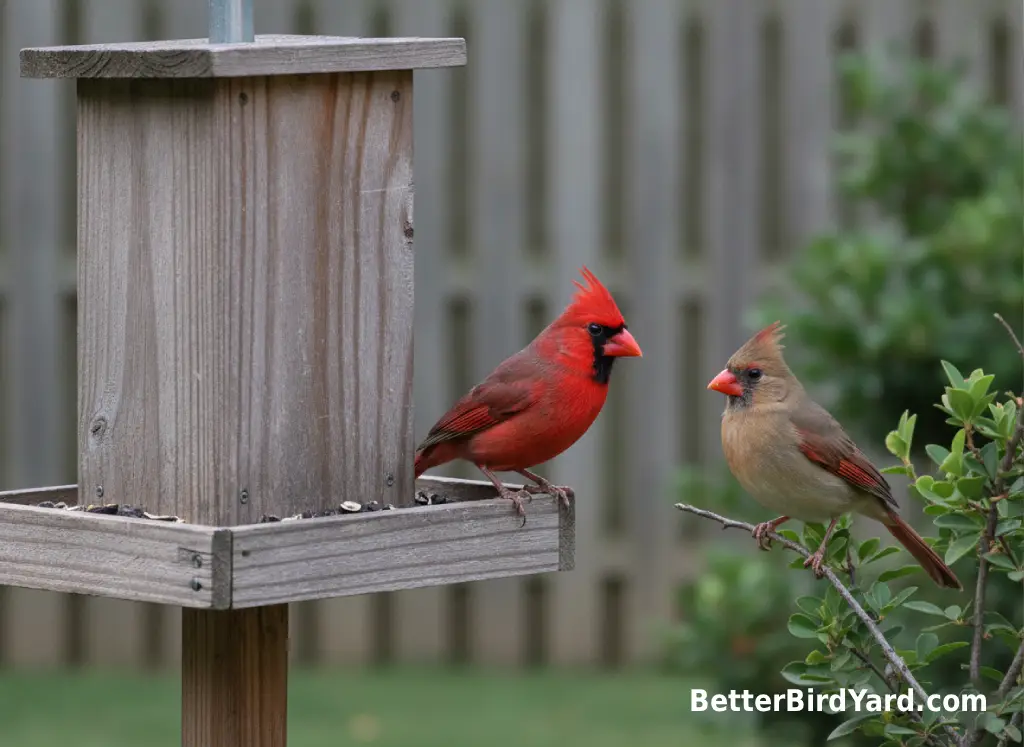
If you only remember one thing, remember this: the male cardinal bird is bright red, and the female northern cardinal is mostly warm brown with red accents. Both have a crest, a thick seed-cracking bill, a long tail, and a dark face around the bill.
| Feature | Adult Male Cardinal | Adult Female Cardinal |
|---|---|---|
| Overall Color | Brilliant red | Pale brown or tan with warm reddish highlights |
| Face | Black mask around the bill and throat | Dark face around the bill, usually softer-looking than the male’s |
| Bill | Reddish to orange-red | Red-orange |
| Crest | Red, often very noticeable | Brownish crest with red or orange tones |
| Best Backyard Clue | Bright red body visible from across the yard | Red wings, tail, and crest against a brown body |
Size will not help much. Cornell lists both sexes at about 8.3 to 9.1 inches long, so color and pattern are much more useful than body size for a normal backyard view.
How To Identify A Female Northern Cardinal
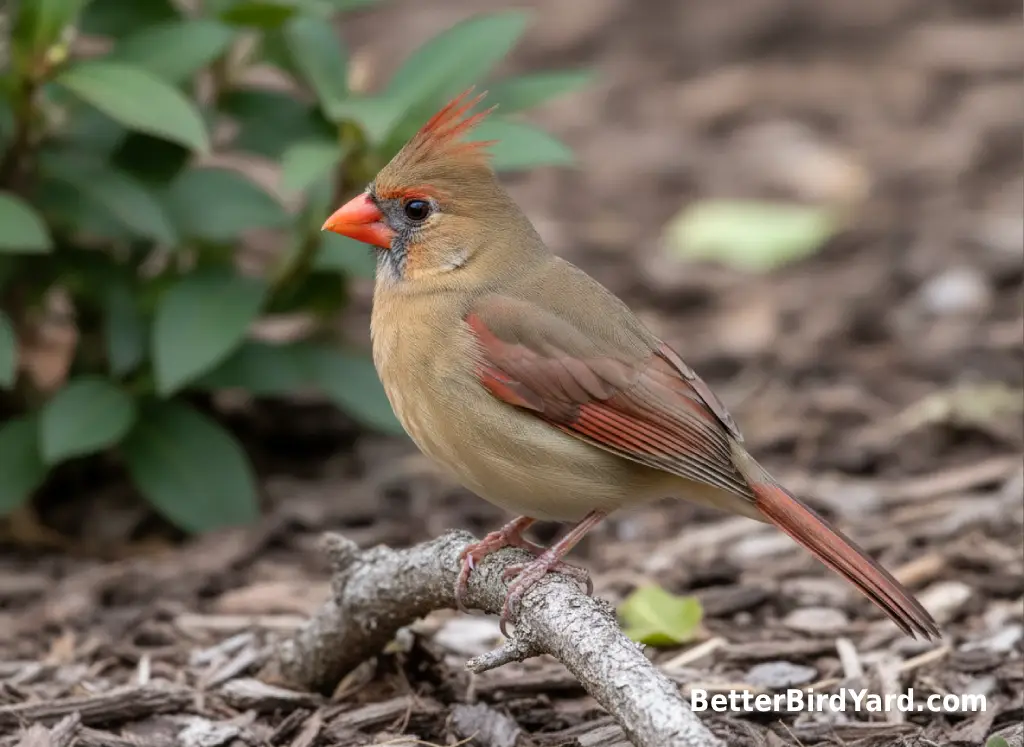
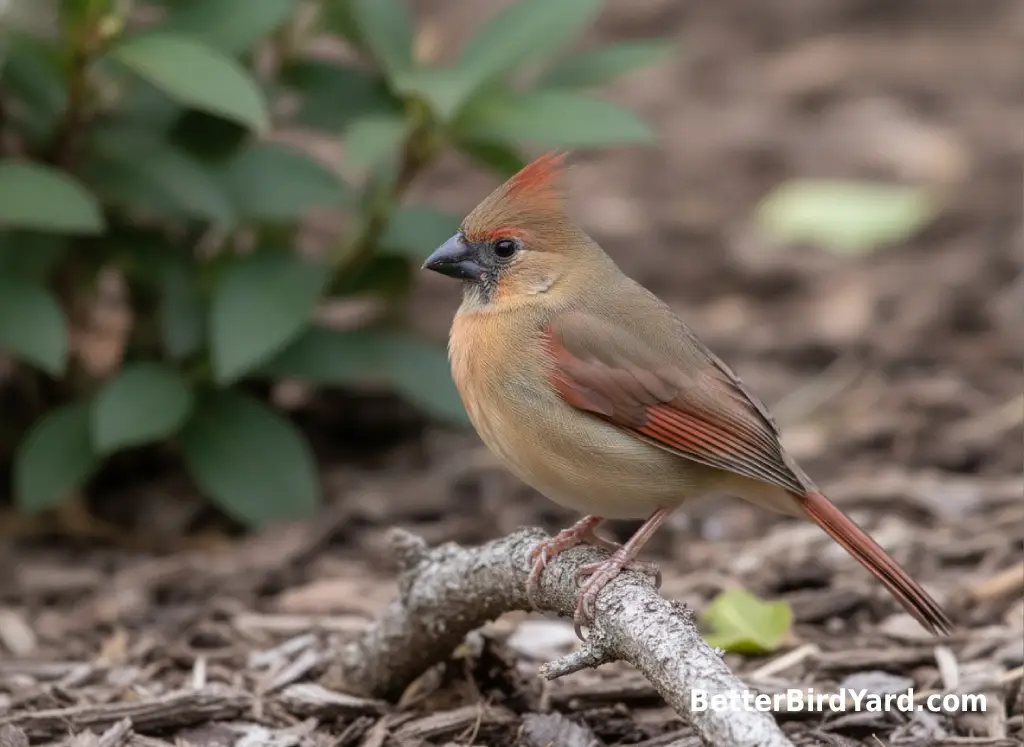
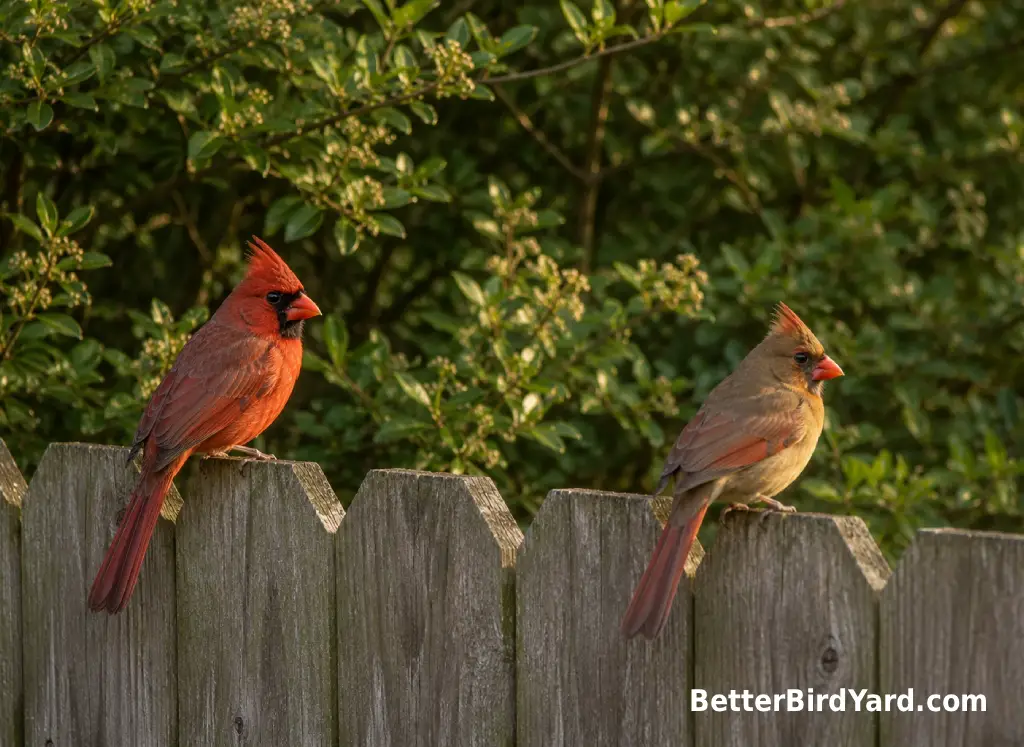
A female cardinal is not plain once your eye adjusts to her colors. Look for a warm buff-brown or tan body, a pointed crest, red-orange bill, and red or reddish-orange tones in the crest, wings, and tail. In bright sun, those red accents can glow. In shade, she may look more cinnamon-brown.
The most helpful angle is a side view. From the side, you can usually see the female’s red tail and wing edges. From straight ahead, she may look like a brown bird with a crest and large orange bill. From behind, the reddish tail can be the best clue.
A common beginner mistake is assuming every brown cardinal-like bird is a juvenile. Adult females can look soft brown all year, and Cornell notes that females carry the same basic cardinal shape as males: large songbird, thick bill, long tail, and prominent crest.
In a feeder crowd, watch behavior too. Female cardinals often approach from shrubs, hop low, pause, then move in for seeds. They are not usually as flashy as males, but they are not shy in the sense of being rare. Once you learn the female’s warm red-brown pattern, you may realize she has been visiting your yard all along.
How To Identify A Male Cardinal Bird
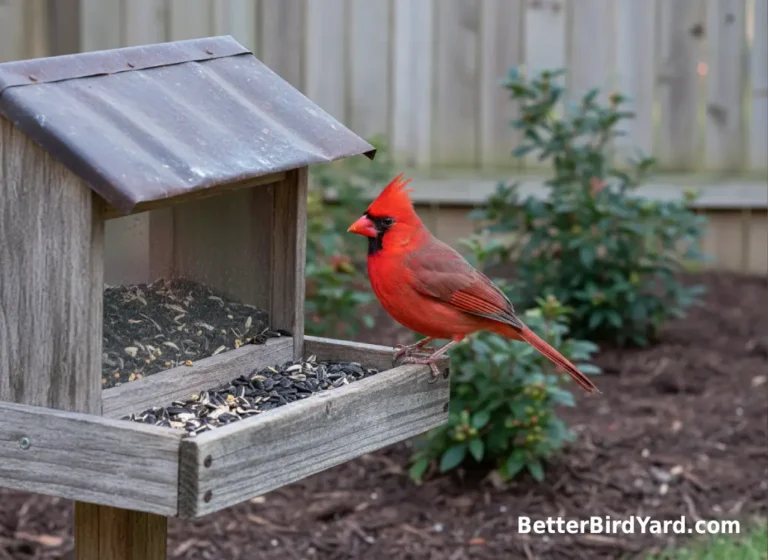
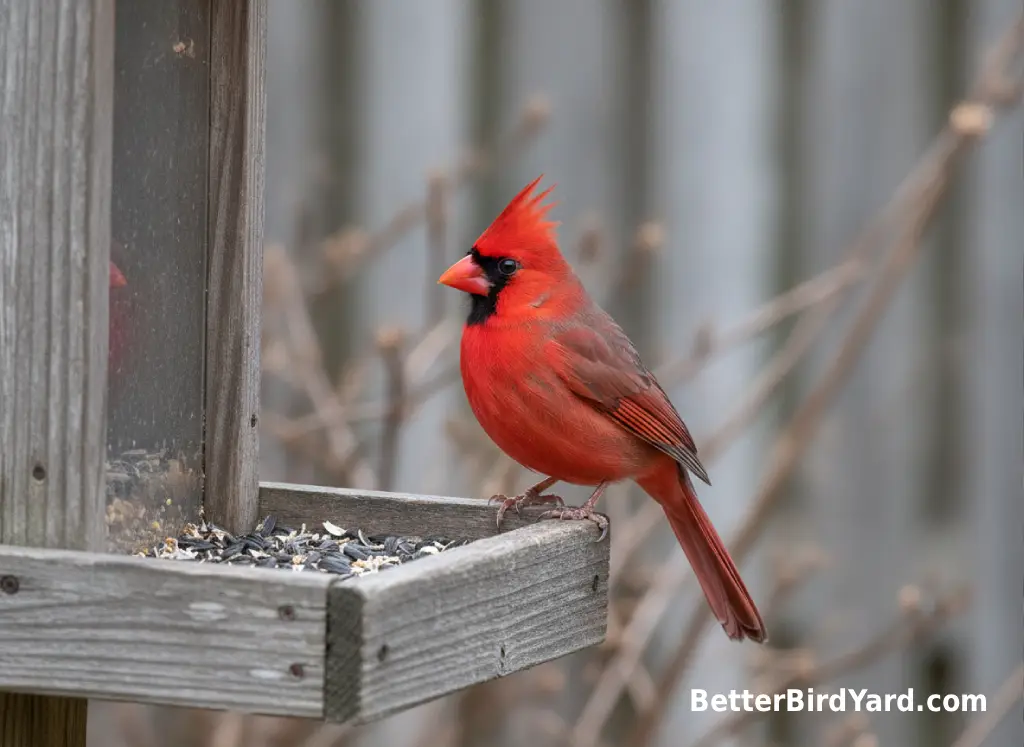
The adult male cardinal is the bright red bird that catches your eye from the kitchen window. He is red overall, with a black mask around the bill and throat, an orange-red bill, a raised crest, and a long reddish tail.
In the yard, the male’s red can look different depending on light. In snow or bright sun, he may look almost glowing. In shade or rain, he may look deeper red or slightly dusky. That normal light variation can confuse beginners, but the overall red body plus black face is still the strongest male cardinal clue.
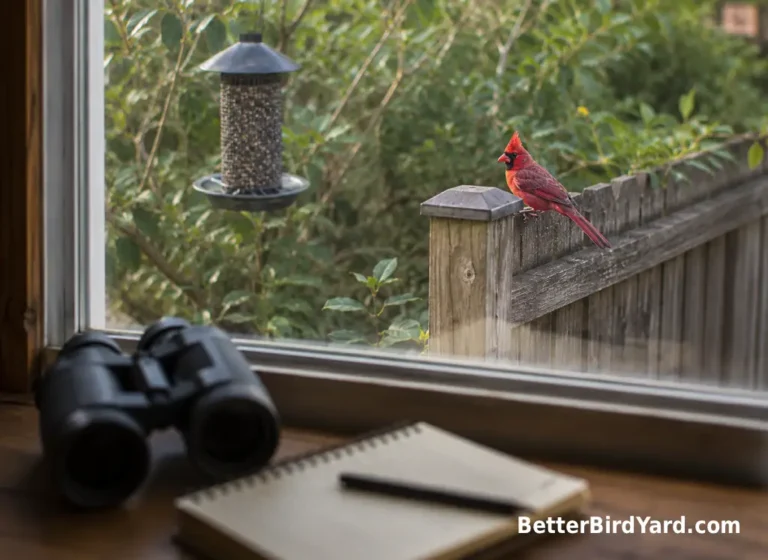
Male cardinals often sit upright on shrub branches, fence rails, or feeder edges. Cornell describes Northern Cardinals as long-tailed songbirds with a short, very thick bill, and notes that they often sit with the tail pointed downward, giving them a slightly hunched look.
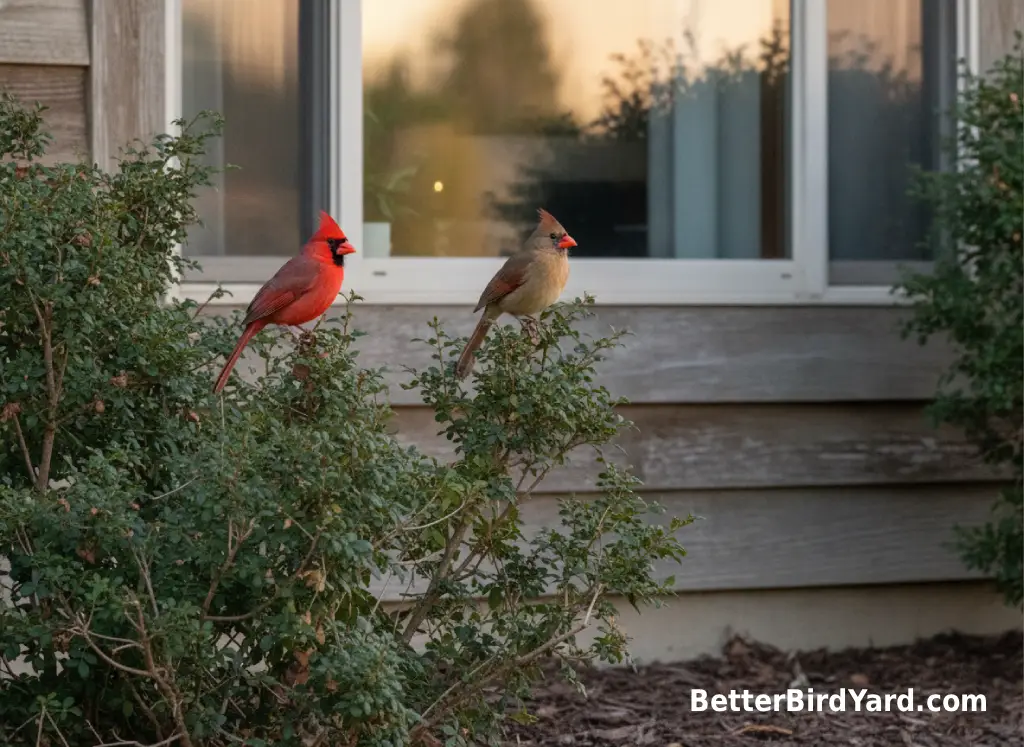
If you are comparing a male cardinal vs female cardinal at the same feeder, the difference is usually obvious: the male is red across most of the body, while the female is brown with red accents. If you see two red birds together, one may be another male, or the light may be making a female’s reddish tail stand out. Pause and check the whole body, not just one flash of red.
Juvenile Cardinal Male Vs Female: What You Can And Cannot Tell
Juvenile cardinals are where male vs female cardinal identification gets harder. Young Northern Cardinals generally look more like adult females than adult males at first. They are brownish, crested, and cardinal-shaped, but they often have a gray to black bill instead of the red-orange bill of an adult. Cornell specifically notes that juvenile Northern Cardinals are similar to females but have a gray to black bill.
That darker bill is one of the best beginner clues that you are looking at a young cardinal rather than an adult female. The bird may also look softer, messier, or less crisp than an adult. As young males mature, red feathers become more obvious, but there can be an awkward in-between stage where the bird looks patchy or uneven.
Here is the practical way to approach juvenile cardinal male vs female questions:
- Use the bill first. A dark bill points toward a juvenile.
- Use the whole body color second. Heavy red coming in may suggest a young male, but be cautious.
- Use behavior last. Young birds may flutter, beg, or follow adults, but behavior alone does not confirm sex.
- Avoid overcalling it. Some young cardinals are simply best labeled juvenile Northern Cardinal until they mature.
Editorial note: from a backyard window, a confident age clue is often easier than a confident sex clue. It is completely fine to write “juvenile cardinal” in your notes and wait for clearer plumage later.
Do Female Cardinals Sing?
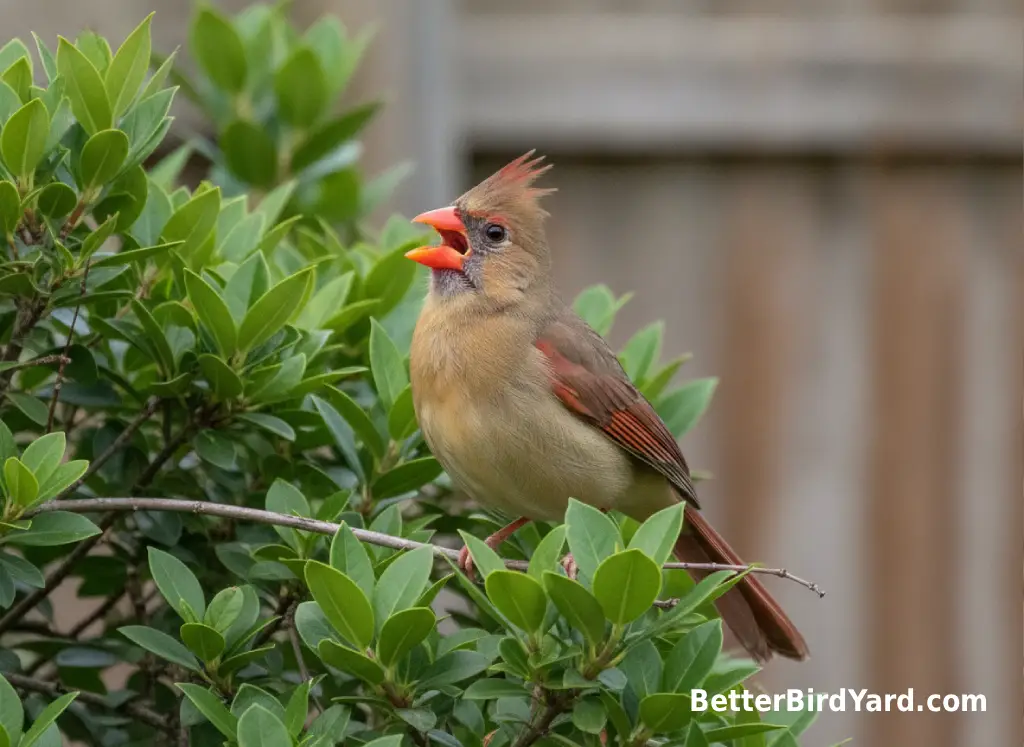
Yes, female cardinals sing. This surprises many backyard bird watchers because in many familiar songbirds, males are the more obvious singers. Cornell’s sound guide says both male and female Northern Cardinals sing loud, clear whistles, and that males may sing throughout the year with peak singing in spring and early summer.
A female Northern Cardinal may sing from a shrub, small tree, or nesting area. Cornell also notes that female cardinals may sing while sitting on the nest, possibly giving the male information about when to bring food.
For beginners, this matters because song alone does not prove you are hearing a male. If you hear a bright, whistled cardinal song and then spot a brown crested bird, you may be watching a singing female cardinal, not a different species.
The common call is different from the full song. Cardinals also give sharp chip notes, often from cover. If a bird is hidden in dense shrubs and calling sharply, look low and patiently. Cardinals can be easy to hear and surprisingly easy to miss.
Behavior Clues: Pairs, Courtship, Feeding, And Window Reflections
Male and female cardinal birds often appear as a pair, especially around shrubs, feeders, or yard edges. You may see one bird arrive first and the other follow a minute later. During courtship, Audubon describes male and female cardinals raising their heads, swaying, singing softly, and the male often feeding the female early in the breeding season.
Cardinals are also territorial. A male may sing from a visible perch, and both males and females may react to reflections in windows, mirrors, or shiny surfaces. Cornell notes that many people notice cardinals attacking reflections in spring and early summer when territorial behavior is high.
If a cardinal repeatedly hits or pecks at a window, do not try to catch or handle the bird. Reduce the reflection from the outside of the glass with closely spaced decals, temporary tempera markings, exterior screens, or other visible barriers. Interior blinds can help with light, but outside treatments are usually more visible to birds.
Behavior can support identification, but it should not replace field marks. A brown cardinal singing, feeding, or defending a window reflection can still be female. A bright red bird feeding another cardinal is likely male in courtship, but the safest beginner ID still comes from plumage, bill, crest, and overall shape.
Why Cardinals Visit Feeders And Small Yards
Northern Cardinals are common in many US backyards, parks, shrubby edges, and suburban neighborhoods, especially where there is cover nearby. Cornell describes them as common in yards and suburban areas and notes that they use backyards, parks, woodlots, and shrubby forest edges.
Cardinals are seed-friendly birds with strong, thick bills, but their diet is broader than feeder seed. Audubon describes their natural diet as mostly seeds, insects, and berries, and notes that young are fed mostly insects.
For feeders, sunflower seed is usually the simplest starting point. Cornell says Northern Cardinals particularly seem to use sunflower seeds where they occur, and the National Wildlife Federation recommends sunflower seed, safflower seed, cracked corn, or apples on a sturdy platform or hopper feeder near shrubs or other cover.
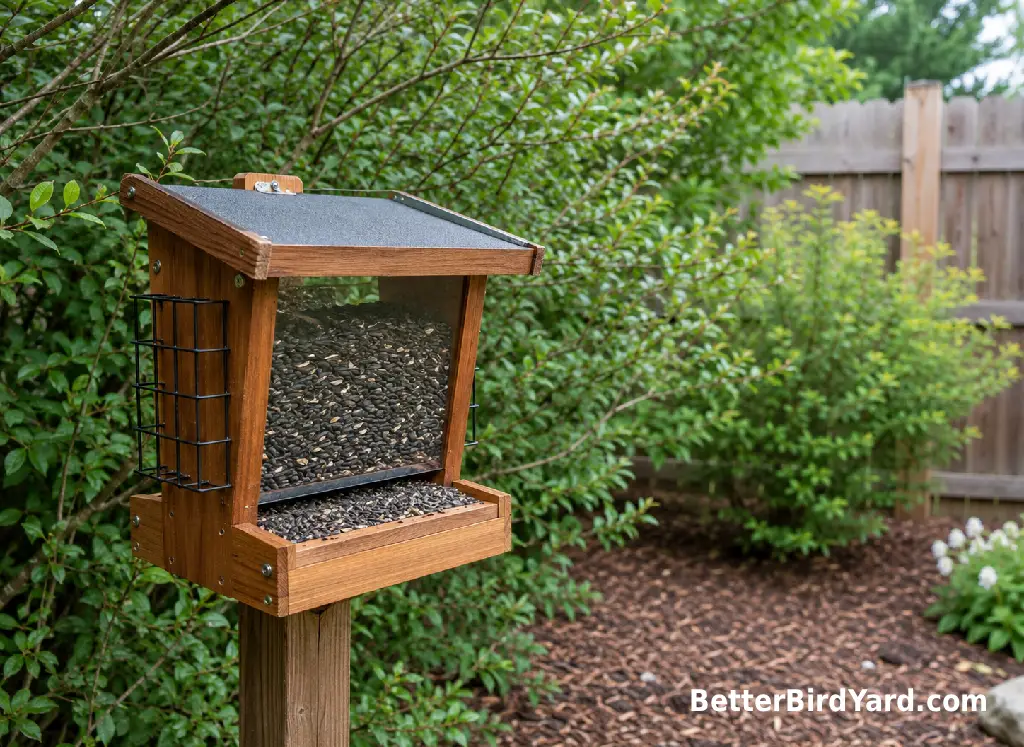
In a small yard or patio, do not overcomplicate the setup. A stable hopper, tray, or platform-style feeder near a shrub line is often more cardinal-friendly than a narrow tube feeder with tiny perches.
For more setup help, see our related guide to Cardinal Bird Feeder.
How To Support Male And Female Cardinals Responsibly
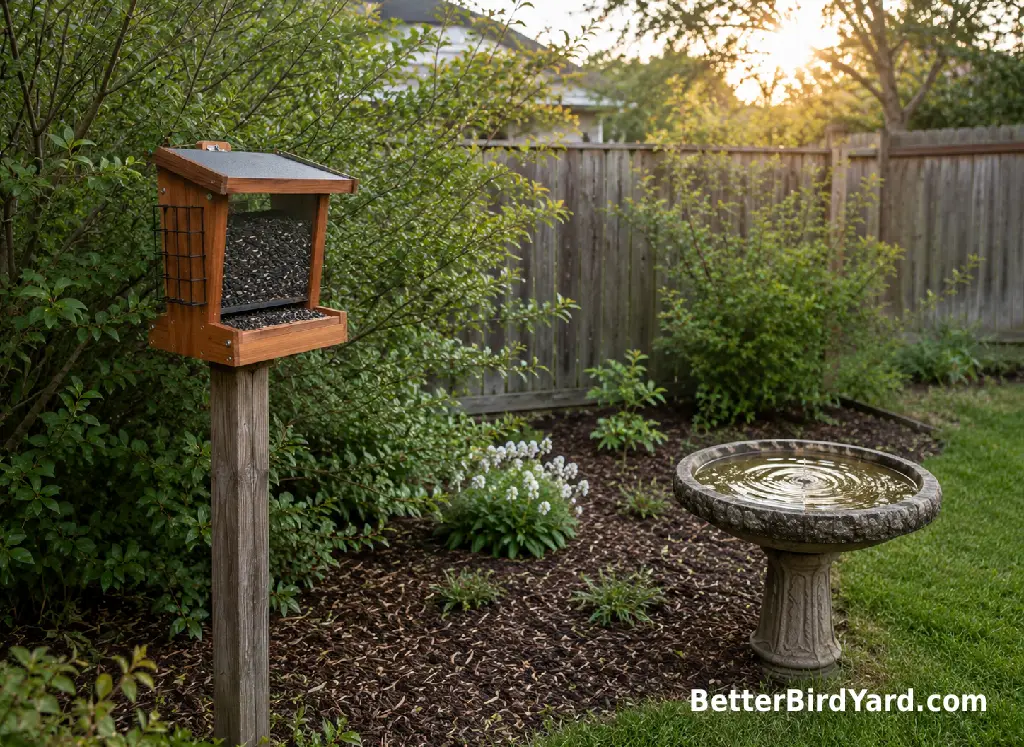
Good cardinal support is less about one magic food and more about a safe, steady yard. Male and female cardinals both benefit from cover, clean feeding areas, fresh water, and less pressure from outdoor cats, window reflections, and spoiled seed.
Keep the setup practical:
- Offer sunflower or safflower in a sturdy feeder that a cardinal can stand on comfortably.
- Place feeders near shrubs or small trees, but not so hidden that cats can ambush birds from cover.
- Clean up seed hulls and spilled seed before they build up under the feeder.
- Refresh bird bath water often, especially in warm weather or when droppings, algae, or debris appear.
- Use native shrubs and small trees suited to your region where you can, rather than relying only on feeders.
Feeder hygiene matters. Cornell Lab guidance recommends taking feeders apart, scrubbing away debris, cleaning with hot dishwasher settings or hand washing with soap and boiling water or a dilute bleach solution, rinsing thoroughly, and letting feeders dry before refilling.
Project FeederWatch recommends removing feeders used by a sick bird for a couple of weeks, cleaning the feeder and area thoroughly, and focusing on prevention. Contact a licensed wildlife rehabilitator, local wildlife agency, animal control, or another qualified local professional when a bird appears injured, stunned, orphaned, or in distress.
Common Mistakes When Identifying Cardinals
Most cardinal ID mistakes come from looking at only one clue. A quick flash of red does not always mean adult male, and a brown body does not always mean juvenile. Light, angle, molt, shadows, wet feathers, and distance can all change how a cardinal looks.
- Mistake 1: Calling every brown cardinal a juvenile. Adult females are naturally brown with red accents.
- Mistake 2: Ignoring the bill. A dark gray or blackish bill is a strong juvenile clue.
- Mistake 3: Using size to separate sexes. Male and female cardinals are very similar in size.
- Mistake 4: Assuming only males sing. Female Northern Cardinals sing too.
- Mistake 5: Forgetting similar birds. In parts of the Southwest, Pyrrhuloxia can confuse new birders, and tanagers can confuse people who see a red bird without a crest.
The best habit is to use a three-part check: shape, color pattern, and bill. First, ask whether it has the cardinal shape: crest, thick bill, long tail. Next, check whether the whole body is red or mostly brown with red accents. Finally, check bill color, especially if the bird looks young.
In real backyards, you rarely get a perfect field-guide pose. Take your time, watch the bird turn, and compare it with any other cardinals nearby. A female cardinal beside a male is one of the easiest ways to train your eye.
Male And Female Cardinal FAQ
Is The Female Cardinal Red?
A female cardinal is not red all over like an adult male, but she usually has red or reddish-orange highlights in the crest, wings, and tail. In good light, those accents can be very noticeable.
Are Male And Female Cardinals The Same Size?
They are close enough in size that backyard bird watchers should not rely on size for sexing. Color, bill, crest, and pattern are better clues.
Do Cardinals Mate For Life?
Cardinal pairs may stay together through winter, but pair bonds are not guaranteed forever. Cornell notes that pairs may stay together through winter, while some pairs split by the next season.
Why Do I See One Male Cardinal And Several Brown Cardinals?
You may be seeing a mix of females and juveniles. Check bill color: adult females usually have red-orange bills, while juveniles often show darker gray to black bills.
Will A Nest Box Attract Cardinals?
Cardinals usually nest in dense shrubs, vines, or low trees rather than nest boxes. Audubon describes their nests as well hidden in dense shrubs, vines, or low trees, so better shrub cover is more useful than a box for this species.
Final Takeaway
The difference between male and female cardinals is mostly a color-pattern difference, not a size difference. Adult males are bright red with a black face. Adult females are warm brown with red accents in the crest, wings, and tail. Juveniles often look female-like but show a darker bill, which is one of the best clues for young birds.
Once you know those basics, cardinal watching becomes much easier. You can start noticing the female’s song, the pair’s quiet movements through shrubs, the young birds learning feeder routines, and the way cardinals use cover before entering an open feeding area.
Support them responsibly by keeping feeders clean, offering practical seed choices, maintaining fresh water, reducing window reflection risks, and keeping outdoor cats away from feeding areas. A safe, calm yard with shrubs and clean food will not guarantee cardinals every day, but it gives male and female Northern Cardinals the kind of backyard space they are more likely to use well.