Do Cardinals Migrate? The Backyard Answer For Winter
If you see a bright red cardinal against snow, it is easy to wonder: do cardinals migrate, or are you seeing a winter visitor passing through? For most backyard bird watchers in the United States, the answer is simple: Northern Cardinals usually do not migrate. They are year-round residents throughout their range, which means they generally do not fly south for the winter like many migratory songbirds. Cornell Lab’s All About Birds says cardinals do not migrate, and its range map lists the Northern Cardinal as resident.
That does not mean your backyard cardinals will behave exactly the same in every season. They may become easier to notice in winter because leaves are gone, snow makes red males stand out, and feeders can become a convenient supplemental food source. They may also seem to vanish for a while if natural food is abundant, shrubs are dense, predators are active, or your feeder setup changes.
For BetterBirdYard readers, the useful question is not only whether cardinals fly south for the winter. It is also how to recognize normal seasonal behavior and support these birds responsibly in an ordinary yard, patio, or small garden.
Do Cardinals Migrate Or Fly South For The Winter?
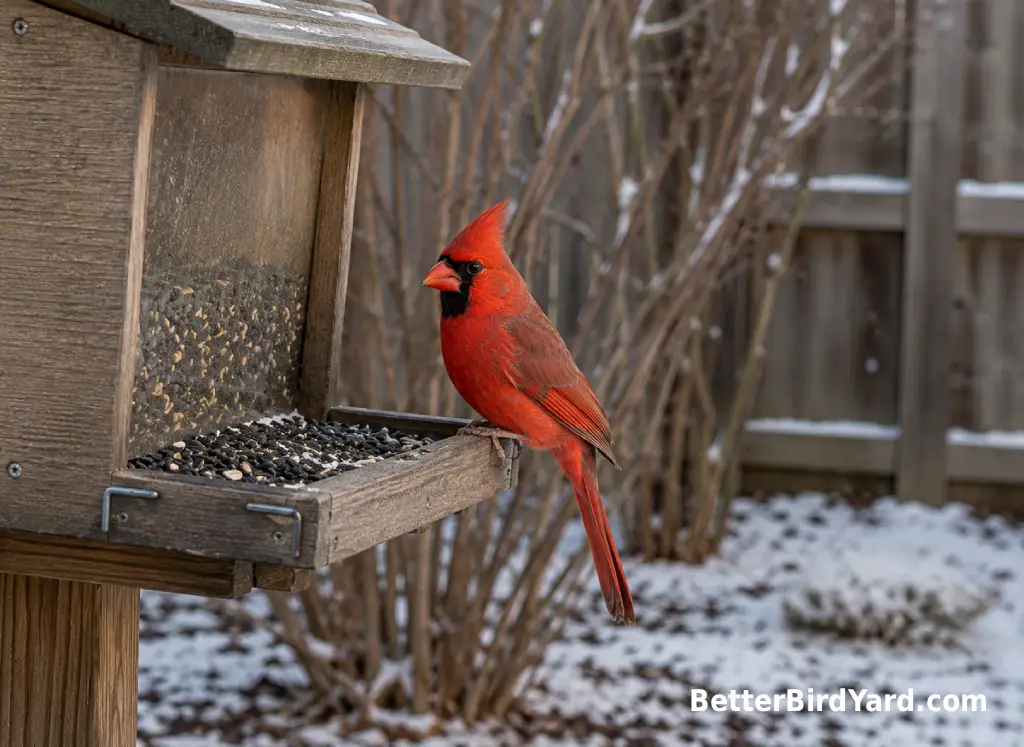
Northern Cardinals are considered permanent residents across their range. Audubon’s field guide describes the species as a permanent resident throughout its range, and Cornell Lab’s range information lists its migration status as resident. In plain backyard terms, do northern cardinals migrate? Usually, no. They tend to remain in the same general region instead of making a long seasonal trip south.
This is why many people in the eastern and central United States see cardinals at feeders in January, February, and March. A pair you see in summer may still be nearby in winter, even if you do not see them every day. Individual birds may move around locally to find food, cover, and safer shelter, but that is not the same as a true migration.
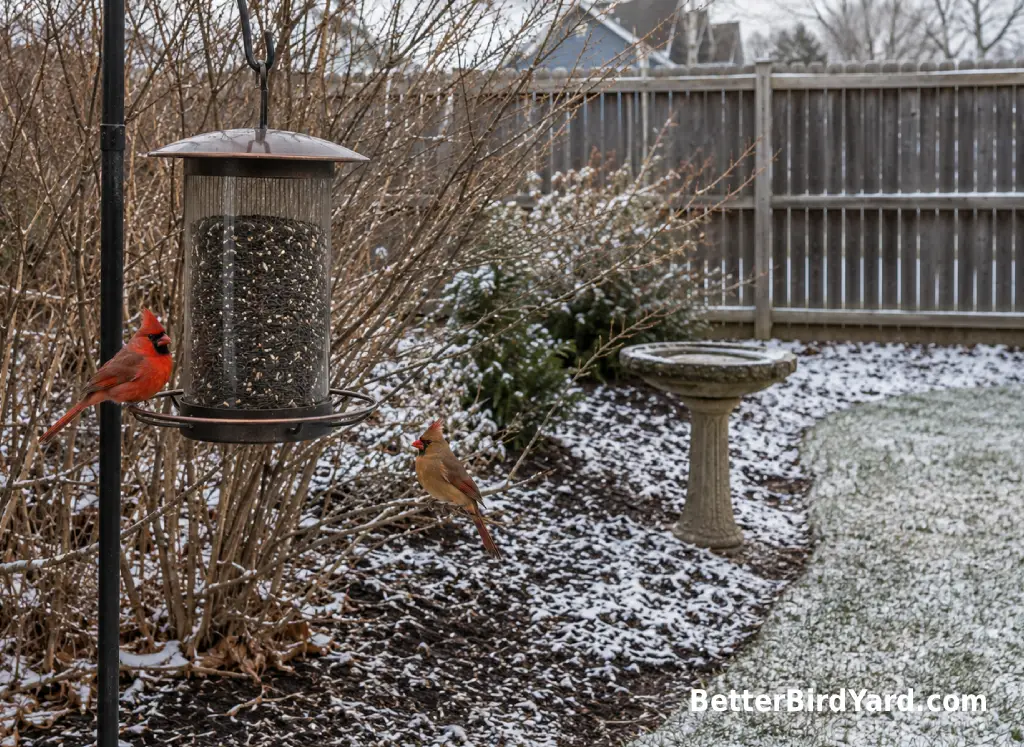
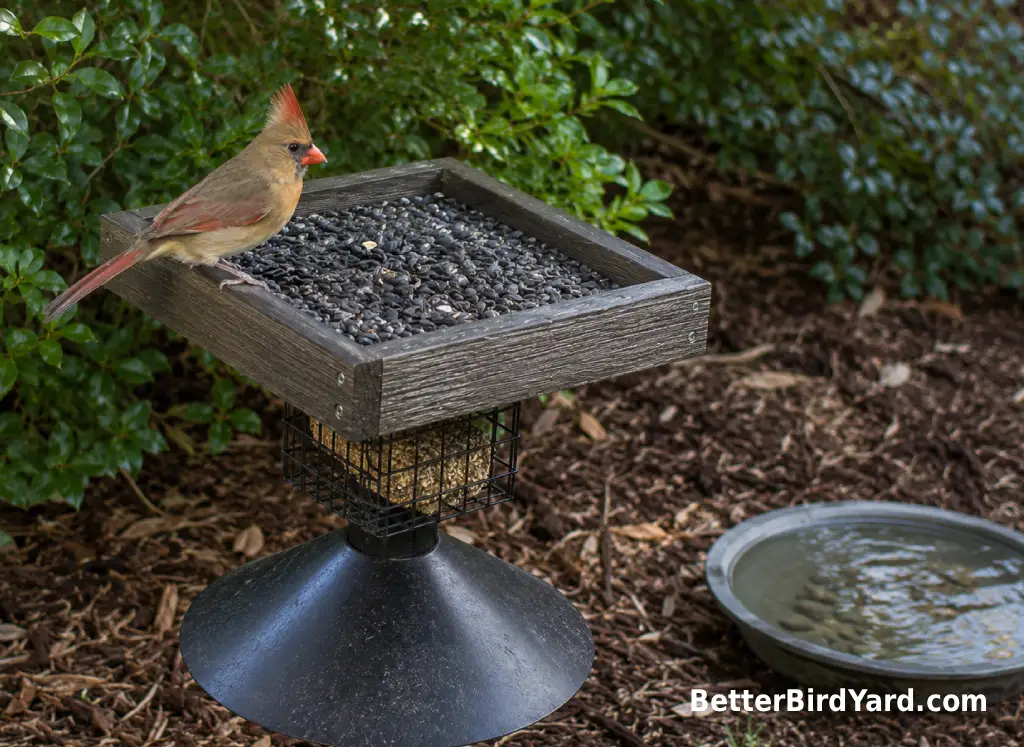
It also helps to clarify the phrase red cardinal. In most US backyard conversations, people mean the Northern Cardinal. Males are the familiar bright red birds, while females are warm brown with reddish accents and the same crest. Females are sometimes overlooked by beginners, especially in winter shrubs, but they are cardinals too.
Why Cardinals Sometimes Seem To Disappear
A cardinal that stops showing up at your feeder has not necessarily migrated. Cardinals use dense cover, forage on or near the ground, and may spend plenty of time out of view. Cornell Lab notes that Northern Cardinals are found in dense shrubby places such as hedgerows, backyards, thickets, and ornamental landscaping.
Seasonal food changes can also shift their routine. In late summer and fall, berries, seeds, and insects may be available away from your feeder. During nesting season, cardinals may be quieter around exposed feeding areas if they are focused on nearby cover and nest sites. In winter, the same birds may return more predictably when natural food is harder to find.
Beginner bird watchers sometimes change seed, move a feeder, trim shrubs, or clean up “messy” edges and then wonder why the cardinals left. Cardinals often like a combination of food and nearby shelter. A feeder placed in the middle of an exposed lawn may be less appealing than one near shrubs, brushy borders, or a small evergreen, as long as the placement still gives birds a safe view of cats and other predators.
A sudden drop in all feeder activity is different. Check for spoiled seed, dirty feeders, outdoor cats, window strikes, hawk pressure, or local wildlife disease advisories. Do not try to diagnose sick birds from backyard signs. If you see birds acting unusually, dead birds, or clear illness signs, clean and pause feeding as appropriate and check your state wildlife agency or a licensed wildlife rehabilitator for local guidance.
What Cardinals Do In Winter Instead Of Migrating
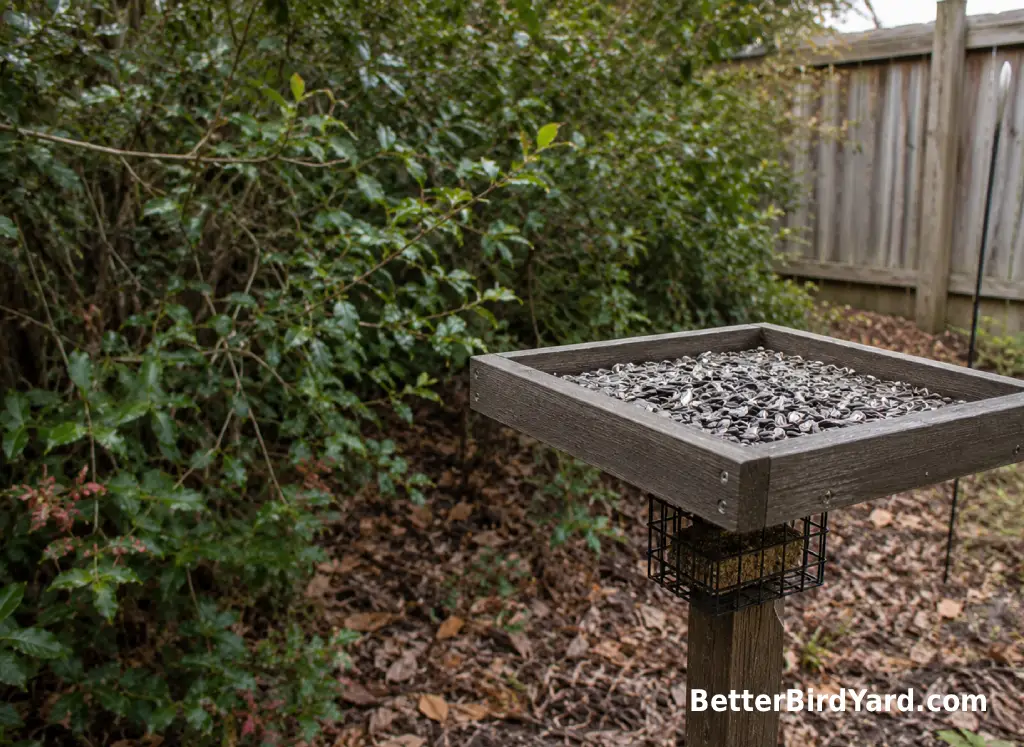
Instead of migrating, cardinals adjust to winter conditions close to home. They use shrubs, thickets, vines, and evergreen cover for shelter. They eat seeds and fruits, and they will visit feeders where suitable seed is available. Cornell Lab lists seeds and fruit as major foods for Northern Cardinals, with black oil sunflower seed among the birdseed they eat.
Cardinals can look especially dramatic in winter because males keep their red plumage rather than molting into a dull seasonal coat. Snow, gray branches, and low winter light simply make that red easier for us to notice. Females are just as worth watching; their warm reddish wings, tail, crest, and orange-red bill often show beautifully in bare shrubs.
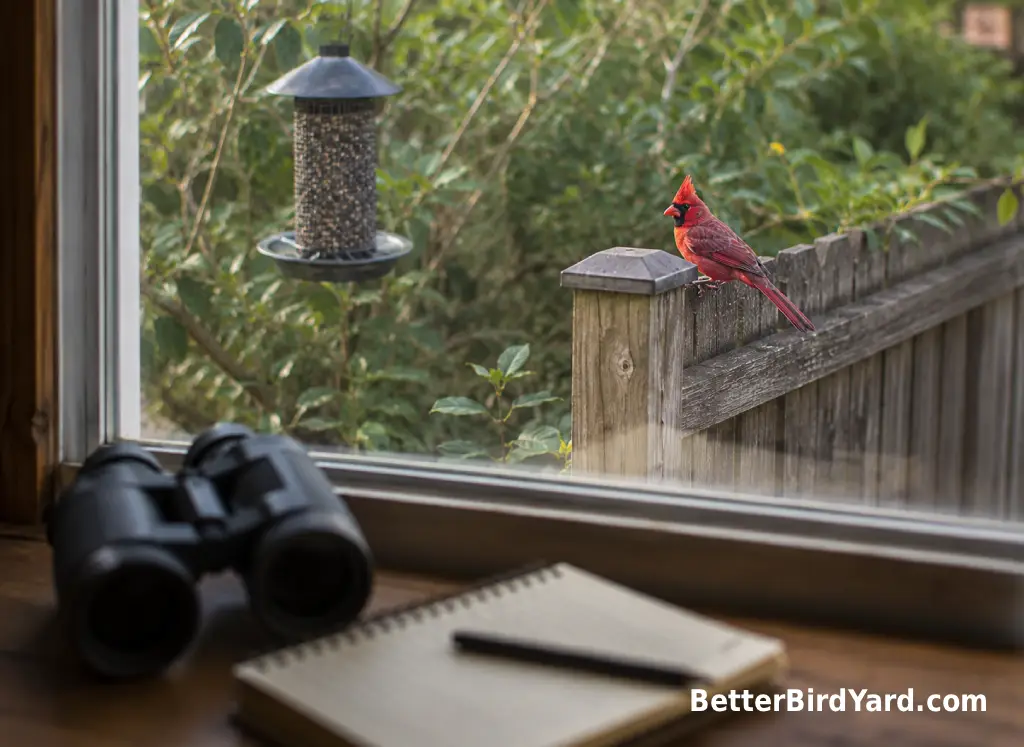
They may also become more predictable around sunrise and late afternoon. Many backyard bird watchers notice cardinals visiting feeders early and late, often when the yard feels quieter. In a small yard or patio, that means you may have better luck watching from indoors with a clear view rather than standing near the feeder.
Winter cardinals are not “new arrivals from the north” in the way some winter birds are. In most places within their range, they are familiar residents using a slightly different seasonal routine.
How To Support Cardinals In A Small Yard, Patio, Or Suburban Garden
You do not need a large property to make your space more cardinal-friendly. A small patio with a sturdy feeder, a clean water source, and nearby cover can be useful if cardinals already live in your area. The key is to think in practical layers: food, shelter, safety, and maintenance.
- Offer black oil sunflower seed or sunflower hearts in a hopper, platform, or tray-style feeder with enough room for a cardinal’s body and tail.
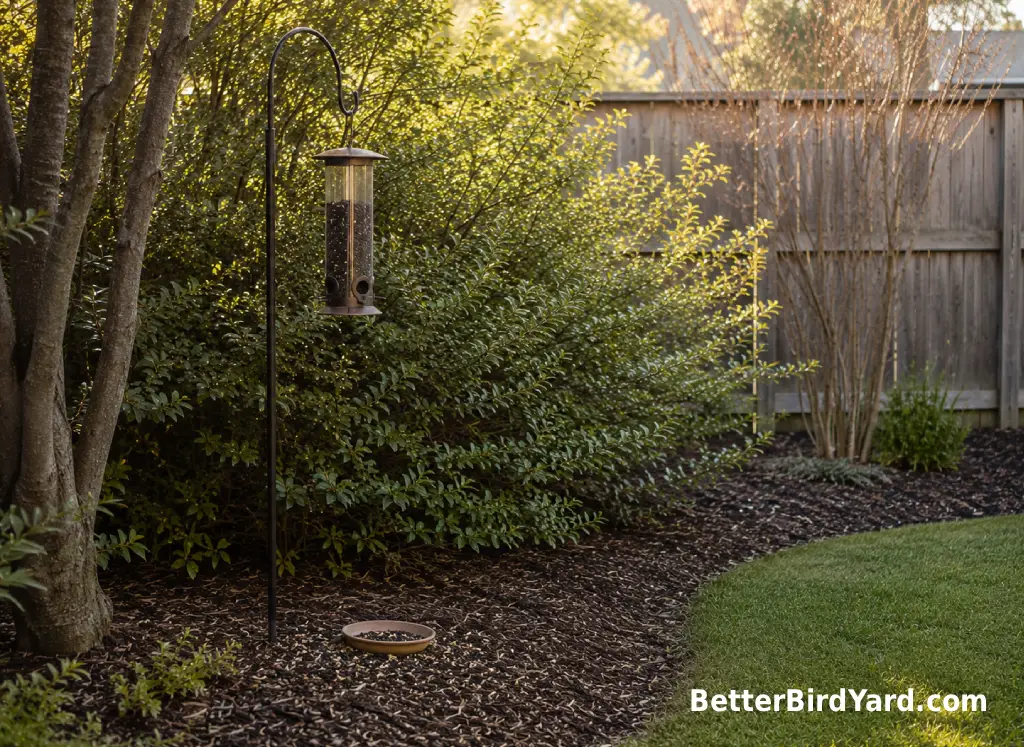
- Place the feeder near shrubs or small trees, but not so close to hiding spots that cats can ambush birds.
- Keep seed dry and replace wet, clumped, or moldy seed promptly.
- Clean feeders regularly, and clean more often during wet weather, heavy use, or local disease concerns.
- Add native shrubs or bird-friendly plants suited to your region when you have planting space.
Cornell Lab recommends cleaning bird feeders about every two weeks, and more often during heavy use, wet weather, local salmonella reports, or if sick birds are seen. Their cleaning guidance also warns that moldy or decomposing seeds and hulls can make birds sick, so feeder hygiene matters even in cold weather.
For planting, start local rather than copying a generic national plant list. Audubon’s native plant resources encourage choosing bird-friendly native plants for your area, which is especially helpful because the best shrub or seed-bearing plant in Maine may not be the best choice in Texas, Arizona, or Georgia.
Editorial note: In a small yard, we would keep this simple. One easy-to-clean feeder near cover is usually better than three neglected feeders that collect wet seed, hulls, and droppings.
For more help choosing a feeder setup, see our guide to the bird feeders for cardinals.
Range Matters: Why Some Yards Have Cardinals And Others Do Not
If you live in much of the eastern, central, or southern United States, Northern Cardinals may be a regular backyard bird. If you live in parts of the western US, you may not see them at all, or you may see them only locally in suitable habitat. Audubon notes that the Northern Cardinal is mostly absent west of the Great Plains, though it is locally common in parts of the desert Southwest.
This is where many online answers get too broad. Do cardinal birds migrate? Generally, no. But whether cardinals are in your yard at all depends on range, habitat, and local conditions. A perfect feeder in a place outside their normal range will not create cardinals out of nowhere.
Within their range, habitat still matters. Cardinals are associated with brushy, semi-open places, woodland edges, thickets, suburban gardens, and towns with dense bushes for nesting and cover. A yard with only open turf and no shrubs may get fewer visits than a yard with a layered edge of shrubs, vines, seed-bearing plants, and a clean feeder.
Renters can still work with small-space options. A large container shrub, a balcony-safe feeder where allowed, or a small water dish kept clean may improve the view for birds already nearby. Always check lease rules, HOA rules, city ordinances, and local wildlife guidance before putting up feeders on shared balconies or in places where seed mess could attract rodents.
Common Mistakes To Avoid With Winter Cardinals
Cardinals are hardy birds, but that does not make every winter feeding habit safe or helpful. A common mistake is assuming that cold weather prevents feeder problems. Wet seed can still clump, hulls can pile up, and droppings can contaminate feeder surfaces.
- Do not leave moldy, wet, or spoiled seed in a feeder.
- Do not keep topping off old seed without emptying and checking the bottom of the feeder.
- Do not place feeders where cats can hide close by.
- Do not use bread, salty snacks, or processed human foods as cardinal food.
- Do not ignore local wildlife agency notices about feeder disease concerns or avian flu in your area.
Another mistake is trimming away every bit of cover. Cardinals often use shrubs and dense edges, so a perfectly bare yard may look tidy to us but less useful to them. Balance matters: keep cover available, but avoid creating a predator trap right next to the feeder.
Quick FAQ About Cardinals And Migration
When Do Cardinals Migrate?
Northern Cardinals generally do not have a migration season. They are year-round residents across their range, although they may move locally in response to food, cover, weather, and disturbance.
Do Cardinals Migrate In Winter?
In most backyard situations, no. Cardinals do not typically migrate in winter. They survive the season by using local cover and available foods, including natural seeds and fruits as well as suitable feeder seed where people provide it responsibly.
Do Cardinals Migrate South For The Winter?
Northern Cardinals are not like long-distance migrants that leave northern breeding areas for southern wintering grounds. If cardinals live in your neighborhood, they are usually present year-round, even if you see them more or less often from month to month.
Why Do I See More Cardinals After Snow?
Snow can make red males easier to spot, and cardinals may visit feeders more noticeably when natural food is covered or harder to reach. That does not mean they just arrived from far away.
Will A Feeder Make Cardinals Stay?
A feeder can supplement food for cardinals already in the area, but it should not be treated as a guarantee. Habitat, range, cover, safety, weather, and natural food all influence whether cardinals visit your yard.
Final Takeaway: Cardinals Usually Stay Close To Home
So, do cardinals migrate? For Northern Cardinals, the backyard answer is usually no. They are year-round residents throughout their range and do not typically fly south for the winter. What changes is their visibility, routine, and use of feeders, shrubs, and natural food through the seasons.
If your cardinals seem to disappear, think locally before assuming migration. Look at feeder placement, seed freshness, shrub cover, predators, weather, and natural food sources. A quiet week at the feeder is often just a change in routine.
The best way to support cardinals is simple and steady: offer suitable seed in a clean feeder, keep the area below it tidy, provide nearby cover without creating predator hiding spots, and choose native plants suited to your region when you can. That approach helps cardinals where they already live and keeps your backyard bird feeding safer for all the birds that visit.