Red-Breasted Nuthatch: How to Identify and Attract This Tiny Tree-Climber
A Red-breasted Nuthatch can be easy to miss until a tiny blue-gray bird suddenly scampers headfirst down a tree trunk or darts onto a feeder for a sunflower seed. Despite the name, the breast is usually better described as rusty, cinnamon, or orange-toned rather than bright red.
These compact nuthatches are closely associated with conifer forests, especially spruce, fir, pine, and hemlock. Depending on where you live in the United States, they may be familiar year-round neighbors, seasonal visitors, or exciting winter arrivals that appear only in certain years. Their winter movements can change substantially as birds respond to natural food supplies farther north.
If Red-breasted Nuthatches occur in your area, a clean feeder stocked with suitable foods can make them easier to observe. But feeders are only part of the picture. Trees, insects, shelter, clean water, and safe backyard conditions are all useful pieces of a bird-friendly space.
How To Identify A Red-Breasted Nuthatch
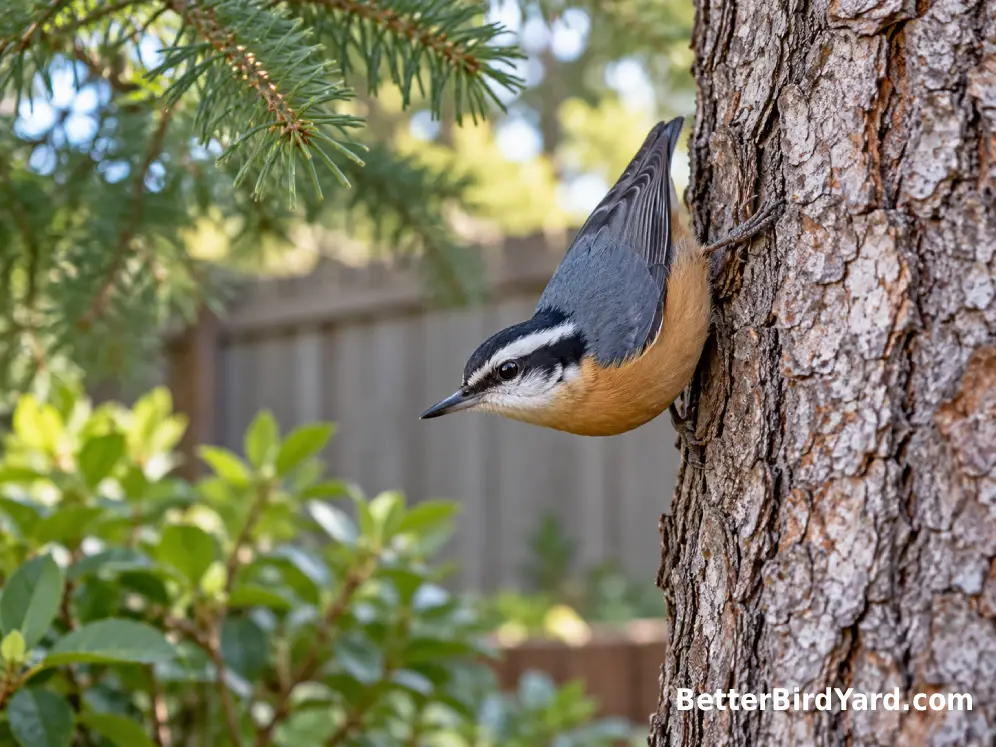
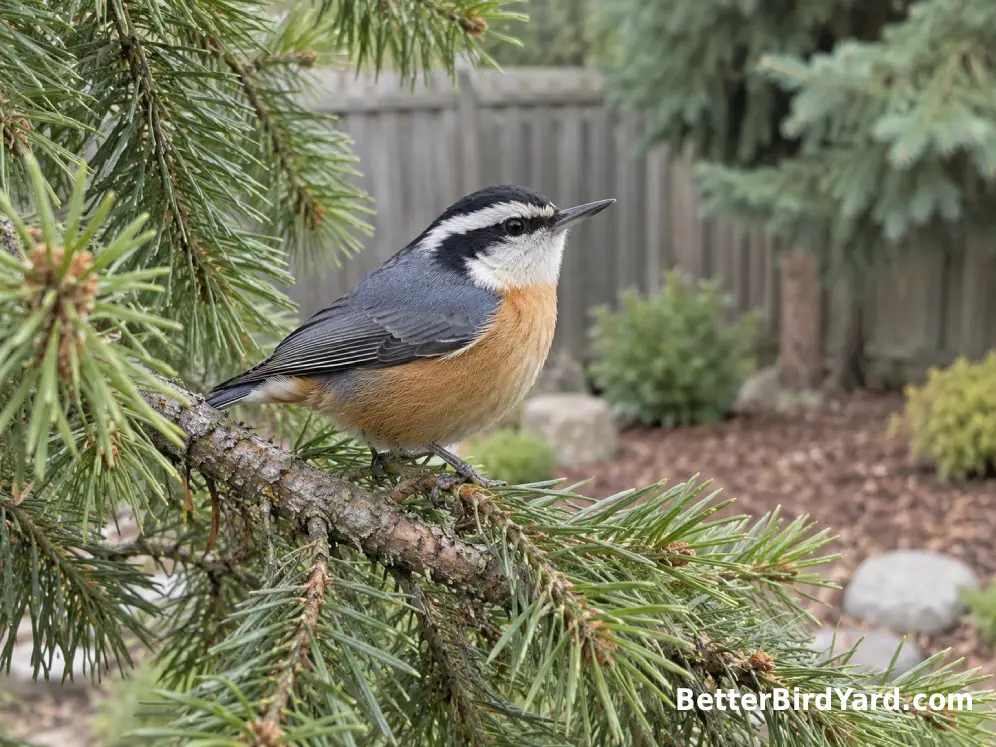
Start with the combination of size, face pattern, color, and movement. The Red-breasted Nuthatch is a very small, compact bird with a short tail, pointed bill, blue-gray upperparts, a strong dark stripe through the eye, and a pale white eyebrow. Its lower breast and belly have a warm rusty or cinnamon wash. Males generally show a darker black cap, while females tend to have a grayer cap and somewhat paler underparts.
| Field Mark | What To Look For |
|---|---|
| Size | Small and compact, noticeably smaller than a White-breasted Nuthatch |
| Back | Blue-gray |
| Underparts | Warm rusty, cinnamon, or orange-toned |
| Face | Dark eyeline with a bold white eyebrow |
| Bill | Straight, narrow, and sharply pointed |
| Movement | Climbs up, sideways, and frequently headfirst down trunks and branches |
Behavior can clinch the identification when color is hard to see. Cornell Lab notes that these birds move rapidly over trunks and branches in almost any direction, probing bark for food. Unlike a woodpecker, a nuthatch does not need to brace itself against the trunk with a stiff tail.
The voice is another useful clue. Listen for a small, nasal, horn-like call coming from the trees. In a busy winter flock, you may hear the bird before you spot it.
Where And When You May See One
Red-breasted Nuthatches are strongly tied to coniferous forests. Spruce, fir, pine, hemlock, larch, and western red cedar are among the trees associated with their habitat, although eastern birds also use mixed and deciduous woodland. During winter movements they can turn up in parks, orchards, suburban neighborhoods, and other wooded places outside their core breeding habitat.
This is a species for which one winter can look very different from the next. Audubon notes that winter distribution varies substantially, especially in the East. When northern cone crops are poor, larger numbers may move south in what birders call an irruption. When natural food is plentiful farther north, many birds may remain closer to their breeding areas instead.
That means an empty feeder does not necessarily mean you are doing anything wrong. A backyard that hosted several Red-breasted Nuthatches one winter may see few or none the next. Region, weather, surrounding habitat, and natural seed availability all matter.
For beginners, the most useful habit is to watch the calendar without expecting an exact arrival date. If chickadees begin moving through your trees in fall or winter, listen and scan the trunks around them. Red-breasted Nuthatches regularly join mixed foraging flocks with other small woodland birds.
What Red-Breasted Nuthatches Eat
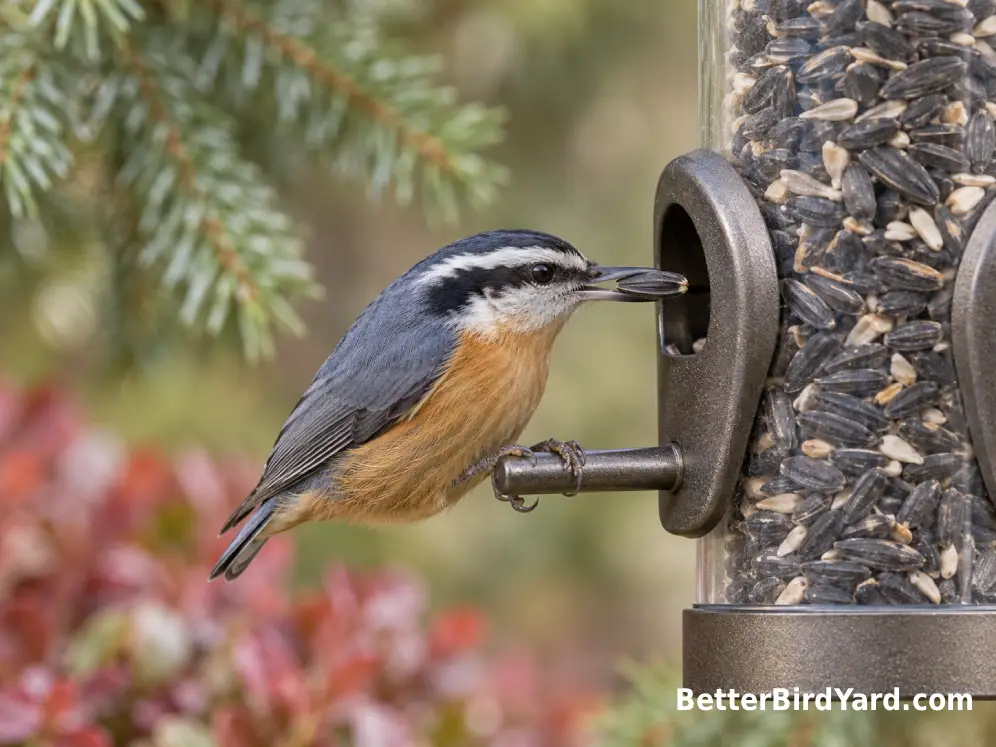
The natural diet changes with the season. During summer, Red-breasted Nuthatches eat many insects and other arthropods. In fall and winter, conifer seeds become especially important, and the birds may store food in bark crevices for later use. At backyard feeders, Cornell Lab specifically lists sunflower seeds, peanuts, and suet among the foods they take.
For a simple backyard setup, good options include:
- Black-oil sunflower seed or hulled sunflower pieces
- Plain, unsalted shelled peanuts or peanut pieces
- Fresh suet offered in a secure suet cage
A small tube or hopper feeder filled with sunflower seed is an easy starting point. A suet cage gives the birds another feeding surface that suits their strong clinging ability. If you already feed chickadees or woodpeckers, you may not need a special feeder just for nuthatches.
Project FeederWatch recommends plain peanuts rather than salted, flavored, or coated products, and it advises discarding peanuts that show mold. Hulled sunflower seed can reduce shell mess but needs to stay dry because exposed kernels spoil more readily than seed left in the shell.
A common mistake is adding more kinds of food when the real problem is simply that the species is not currently present in the neighborhood. If your feeder already offers fresh sunflower seed, a suitable habitat nearby may matter more than buying another specialty mix. Our backyard bird seed guide can help you keep a small feeding station simple.
How To Make Your Yard More Nuthatch-Friendly
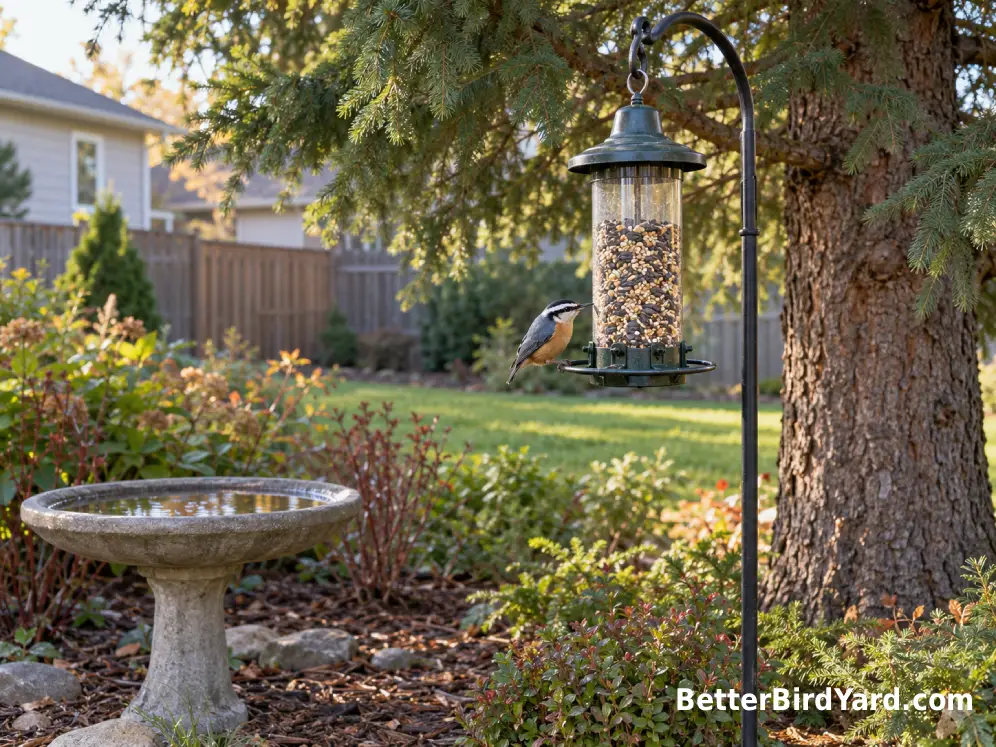
You do not need a large forested property to make a yard more useful to visiting birds. The most practical approach is to combine a reliable feeder with as much natural habitat as your space allows.
- Offer fresh sunflower seed, plain peanuts, or suet in feeders you can clean easily.
- Preserve healthy mature trees where possible, especially locally appropriate conifers.
- Add native shrubs or other regional native plants that support insects and provide cover.
- Provide clean water in a shallow, easily maintained bird bath.
- Reduce unnecessary pesticide use around bird-friendly planting areas.
Native plants are useful beyond the seeds and fruit people notice. The National Wildlife Federation emphasizes their role in supporting insects and broader backyard food webs. That matters for Red-breasted Nuthatches because insects form an important part of their natural diet, particularly during the warmer season. Choose plants appropriate to your own region rather than assuming the same pine, fir, or shrub belongs everywhere in the United States.
For renters and patio bird watchers, focus on what you can realistically maintain. A single clean feeder, a few containers planted with locally native species, and a small water source can create useful habitat without requiring a conventional yard. National Wildlife Federation guidance specifically notes that container gardens can support wildlife even in compact spaces.
Red-breasted Nuthatches often nest in dead trees or dead portions of living trees and commonly excavate their own cavities. Standing dead wood can therefore have wildlife value, but never retain a hazardous snag where it could threaten a home, walkway, vehicle, or neighboring property. Tree safety comes first.
Watch Their Tree-Climbing And Food-Storing Behavior
A feeder visit may last only a few seconds. A Red-breasted Nuthatch often grabs one item and leaves rather than settling in to eat a long meal. Watch where it goes. Cornell Lab reports that these birds store both seeds and insects, pushing food into bark crevices and sometimes covering a cache with bits of bark, lichen, or other material.
That habit helps explain the repeated feeder-to-tree routine you may notice: arrive, select a food item, fly away, work along the bark, then return.
Their nesting behavior is equally distinctive. Red-breasted Nuthatches frequently excavate cavities in dead or decaying wood. Both sexes participate, although the female does more of the excavation. They are also known for applying sticky conifer resin around the entrance of the nesting cavity. Cornell researchers continue to study this unusual behavior and its role around the nest entrance.
Seeing a nuthatch carrying nesting material or repeatedly entering a cavity is a reason to give that part of the yard extra space. Avoid opening, moving, or interfering with an active wild-bird nest. Observation from a comfortable distance is usually far more useful than trying to get a closer look.
Common Red-Breasted Nuthatch Identification Mistakes
The White-breasted Nuthatch is the bird most likely to cause confusion. It is larger, and its underparts look mostly white rather than richly rusty. A Red-breasted Nuthatch also has a stronger face pattern, with a dark stripe running through the eye beneath the pale eyebrow.
A Brown Creeper may also be seen hitching around trunks, but its camouflage is completely different: streaky brown rather than blue-gray, black, white, and cinnamon. Creepers typically work upward along trunks and then fly down to begin climbing again, while nuthatches readily travel headfirst downward.
Chickadees can overlap with Red-breasted Nuthatches in winter feeding flocks, but their shapes and movements differ. A chickadee looks round-headed and short-billed and spends more time hopping among twigs and branches. The nuthatch looks longer-billed and particularly comfortable moving directly across vertical bark.
If the light is poor, do not rely on the rusty breast alone. A better combination is small size + pointed bill + bold eyebrow and eyeline + blue-gray back + nuthatch-style climbing. That group of clues is much more dependable than judging a single flash of color.
Keep Feeders Clean And Watch For Backyard Hazards
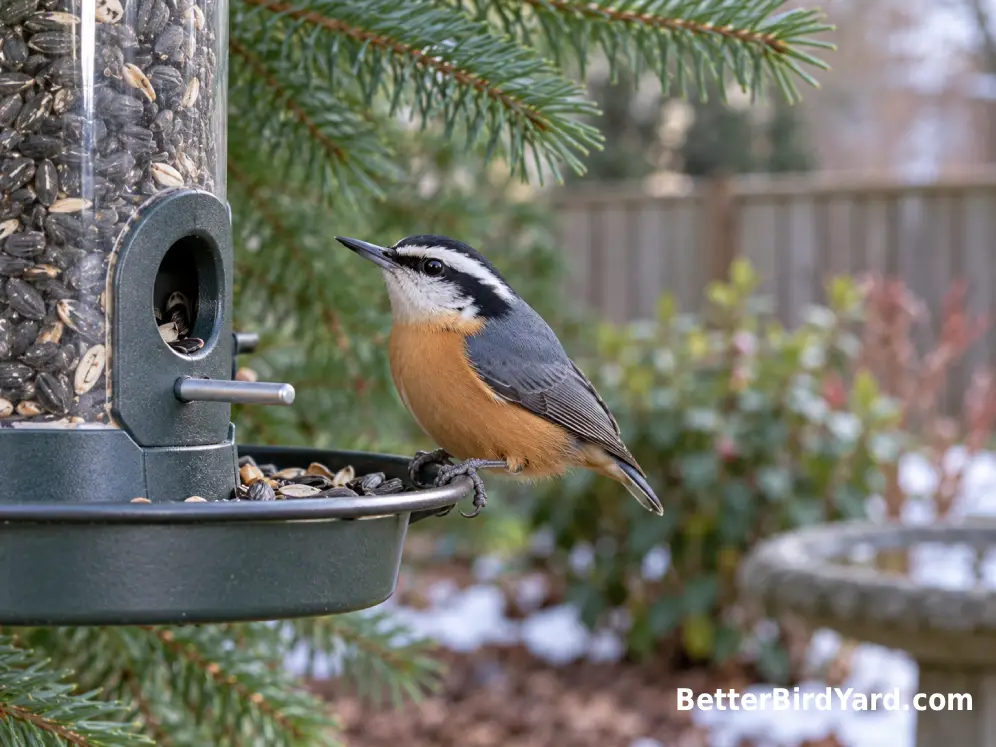
Attracting a Red-breasted Nuthatch is only worthwhile if the feeding station stays safe. Project FeederWatch recommends cleaning seed and suet feeders regularly, roughly every week or two as a general starting point, and more often during wet weather or periods of heavy use. Feeders should be scrubbed free of debris, washed thoroughly, rinsed, and allowed to dry completely before they are refilled.
Keep an eye on the ground as well as the feeder itself. Damp piles of seed, hulls, and droppings should not be allowed to build up underneath. Removing spoiled food also makes the area less attractive to rodents and other unwanted wildlife. Our bird feeder cleaning guide covers a practical routine in more detail.
If you notice a bird that is unusually lethargic, has crusted eyes, abnormal growths, or other obvious signs of illness, do not try to diagnose or medicate it. Clean feeders and baths, consider whether temporarily reducing or removing feeding is appropriate, and check current guidance from your state wildlife agency or another qualified local authority. Project FeederWatch likewise recommends extra sanitation precautions when sick birds are observed.
Also look beyond the feeder. Reflective windows, outdoor cats, spoiled food, and heavily contaminated feeding areas can turn an otherwise inviting bird station into a hazard. A useful backyard setup is not the one with the most feeders; it is the one you can keep clean, monitor, and maintain consistently.
A Small Bird Worth Watching For
The Red-breasted Nuthatch is one of those backyard birds that becomes much easier to notice once you know its habits. Look for a tiny blue-gray bird moving confidently down tree trunks, check for the dark eyeline and white eyebrow, and listen for the nasal call among chickadees and other small woodland birds.
If the species occurs in your area, fresh sunflower seed, plain peanuts, or suet may bring it within easier viewing distance. Pair those foods with clean feeders, native vegetation, safe tree cover, and sensible maintenance rather than trying to create a nuthatch-only feeding station.
And do not be discouraged if they seem abundant one winter and absent the next. Red-breasted Nuthatches respond to changing natural food supplies, and their seasonal movements can vary greatly from year to year. Sometimes the best backyard birding strategy is simply to keep a safe habitat ready and pay attention when a familiar little nasal call suddenly appears in the trees.