Yellow Cardinal Bird: What Backyard Birders Are Really Seeing
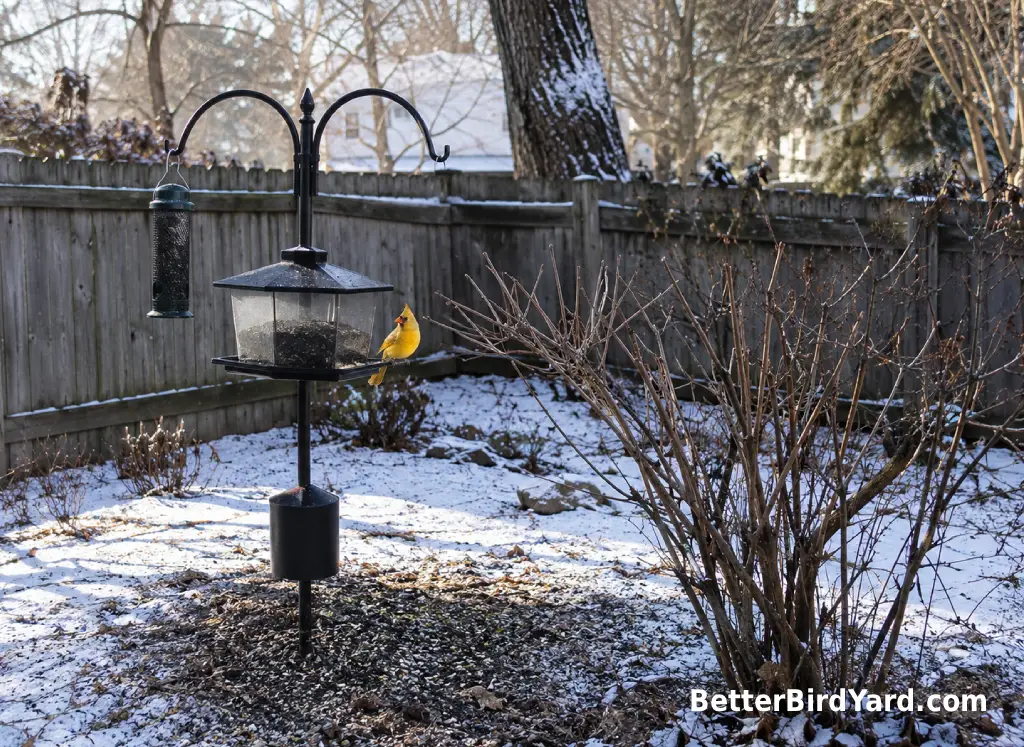
A yellow cardinal bird sounds almost too bright to be real, but yellow Northern Cardinals do exist. They are not a normal backyard color form, and they are not something you can attract by changing seed. In the United States, a bright yellow bird with a cardinal shape is usually either an extremely rare yellow Northern Cardinal, a female Northern Cardinal seen in unusual light, or a different species that happens to have a crest, heavy bill, or warm yellow plumage.
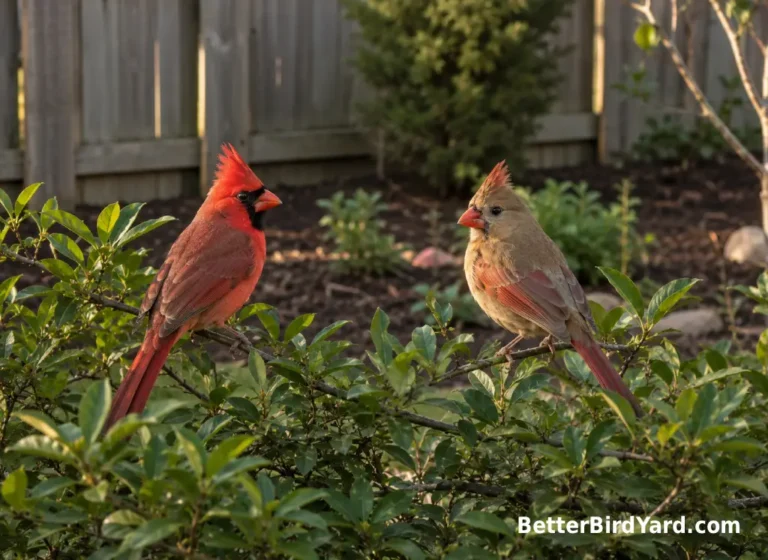
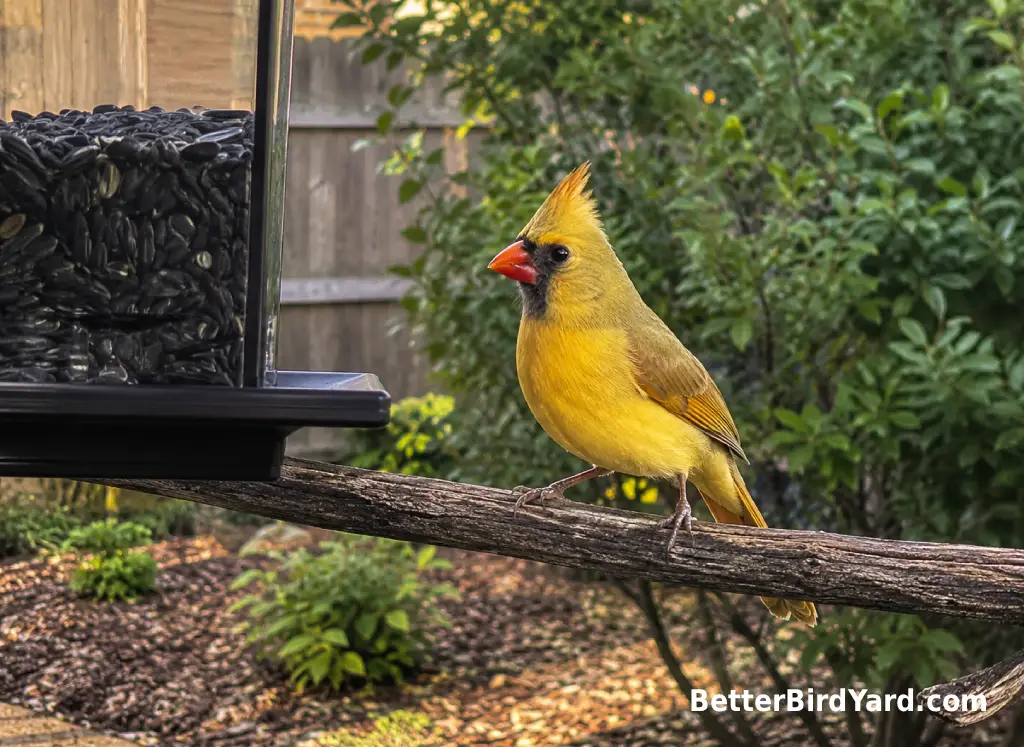
The key is not to identify the bird by color alone. Northern Cardinals have a thick orange-red bill, a pointed crest, a long tail, and a bold face pattern. Cornell Lab describes male Northern Cardinals as brilliant red overall, while females are pale brown with warm reddish touches in the wings, tail, and crest. A yellow male cardinal is unusual because that normal red coloring has changed, likely through a rare pigment-related genetic condition called xanthochroism.
For backyard birders, the best response is simple: observe, photograph from a distance, keep feeders clean, and avoid crowding birds. A rare bird is exciting, but responsible watching matters more than chasing the perfect view.
What Is A Yellow Cardinal Bird?
In everyday U.S. backyard birding, a yellow cardinal usually means a yellow Northern Cardinal, not a separate species that normally lives in North American yards. The familiar Northern Cardinal is the red crested bird many people know from feeders, hedges, and winter trees. A rare yellow one keeps the cardinal shape but replaces much of the expected red with yellow.
There is also a bird officially called the Yellow Cardinal, Gubernatrix cristata, but that is a South American species. BirdLife International lists it as an Endangered species formerly found across parts of Argentina, Uruguay, and nearby regions. That bird is not the same thing as a rare yellow Northern Cardinal visiting a feeder in Michigan, Alabama, Florida, or another U.S. backyard.
A practical way to separate the two ideas is this: if you are in the United States and you see a cardinal-shaped bird at a feeder, you are probably thinking about a Northern Cardinal. If it is truly yellow, photograph it carefully from indoors or from a respectful distance, then compare the bill, crest, face mask, tail length, and overall shape before assuming you have seen something rare.
Why Are Some Northern Cardinals Yellow Instead Of Red?
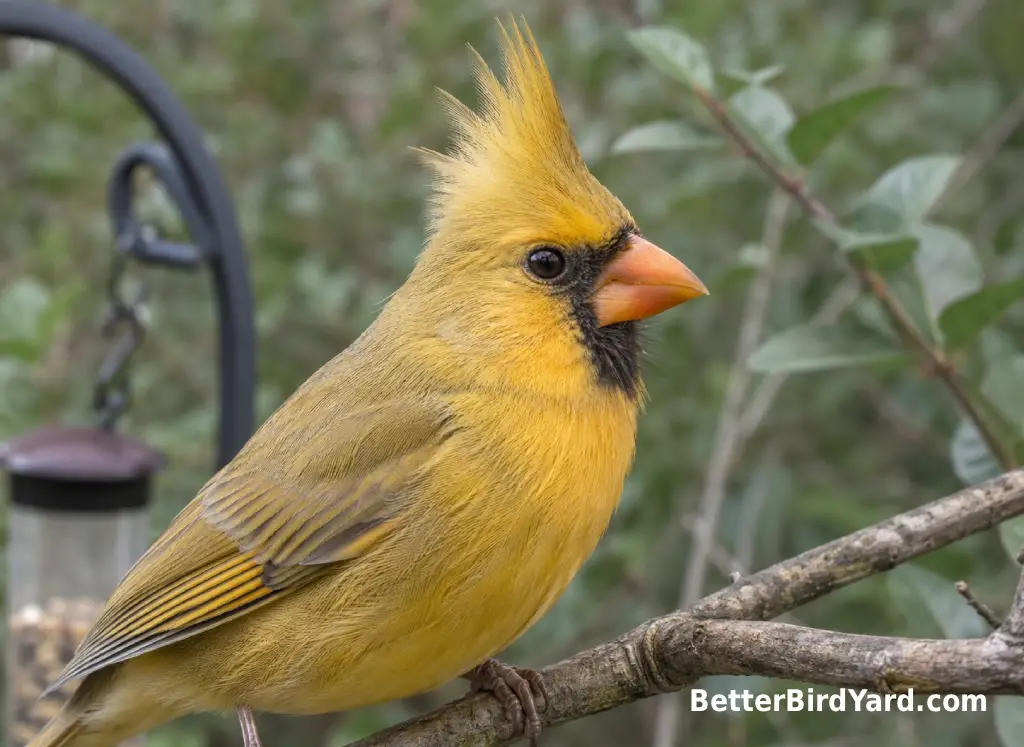
Northern Cardinals get their bright color from carotenoid pigments connected to diet and feather chemistry. In a typical male, those pigments are expressed as the rich red color birders expect. In rare yellow individuals, experts have suggested that the bird’s pigment processing is altered so the feathers appear yellow rather than red. Audubon reported that an Auburn University bird-coloration expert identified xanthochroism as the likely explanation for a famous yellow Northern Cardinal, describing it as a rare condition also seen in some other birds.
This is not caused by safflower, sunflower seed, yellow corn, or anything a homeowner adds to a feeder. Please do not try to change a wild bird’s color through food experiments, dyes, supplements, or unusual mixes. Feeders should support birds with appropriate food, clean water, and safe habitat, not manipulate their appearance.
A yellow bird that looks like a cardinal can also be a normal female cardinal in strong sunlight, a young bird in transitional plumage, a different yellow species, or a photo affected by camera settings. Color is helpful, but shape is usually the better clue.
The Michigan Yellow Cardinal That Surprised Backyard Birders
The phrase extremely rare yellow Northern Cardinal surprises backyard birders in Michigan refers to a widely shared report from Bath, Michigan, near East Lansing. Popular Science reported in January 2025 that backyard birders Arlene and John McDaniel spotted a yellow Northern Cardinal shortly before Christmas. The sighting became notable because yellow Northern Cardinals are so uncommon and easy to recognize once clearly photographed.
Stories like that are exciting because they happen in ordinary places: a backyard, a feeder, a window view, a familiar winter bird suddenly appearing in an unfamiliar color. They are also a good reminder that birding from home can be surprisingly rewarding without turning the yard into a spectacle.
If a rare yellow cardinal appears in your yard, keep things calm. Do not increase feeding heavily just to keep the bird around. Do not bait it closer. Do not post exact private addresses in public groups. A general town or county-level report is usually safer than giving a pinpoint location, especially when a bird is rare enough to draw crowds.
Why Blue Cardinals Usually Turn Out To Be Other Birds
A blue cardinal bird is usually not a cardinal at all. Northern Cardinals are not naturally blue, and a true blue Northern Cardinal would be far outside normal backyard expectations. The confusion usually comes from blue birds that share one cardinal-like feature: a crest, a heavy seed-cracking bill, or a bold feeder presence.
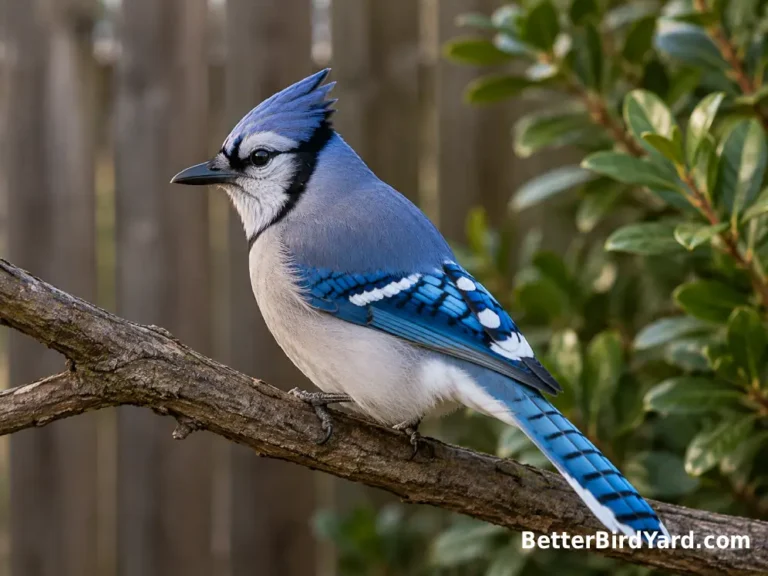
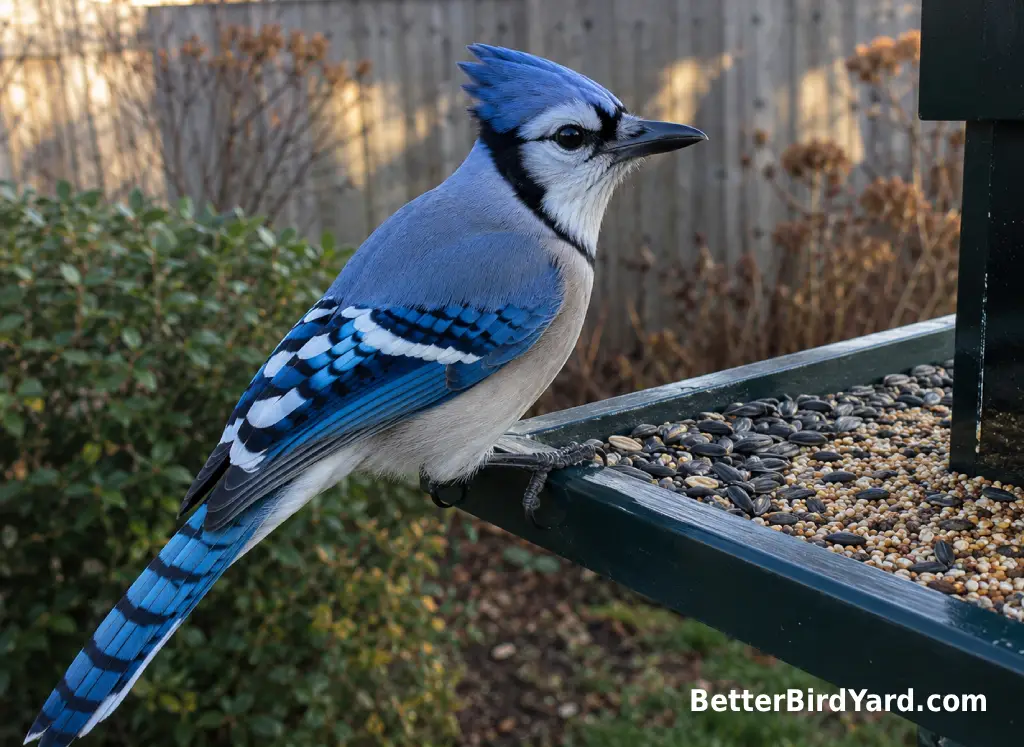
The most common mix-up is a Blue Jay. Cornell Lab describes Blue Jays as large crested songbirds with broad rounded tails. They can look “cardinal-like” at a glance because of the crest, but their blue, white, and black pattern, larger size, and noisier behavior point in a different direction.
Another possibility is a Blue Grosbeak. It does not have a cardinal crest, but it does have a thick triangular bill and belongs to the cardinal family. Cornell Lab describes the Blue Grosbeak as a stocky songbird with a very large triangular bill, which explains why some beginners connect it with cardinals even though the silhouette is different.
In a western yard, a Steller’s Jay can add another wrinkle. It is a dark-headed, blue-bodied crested jay, not a cardinal, but its shape can make a quick backyard glance misleading. For a better first pass, compare the bird’s bill and tail before focusing on color.
Red Birds That Are Not Cardinals
Not every solid red bird is a cardinal. This matters because many backyard birders see a flash of red and stop looking too soon. A male Northern Cardinal has a crest, a thick orange-red bill, and a black mask around the bill. A red bird that is not a cardinal may be slimmer, crestless, differently shaped, or active higher in trees rather than around shrubs and feeders.
| Bird | How It Can Confuse Beginners | Better Clue To Check |
|---|---|---|
| Summer Tanager | The male can look very red overall. | No crest, different bill shape, often in trees during warm months. |
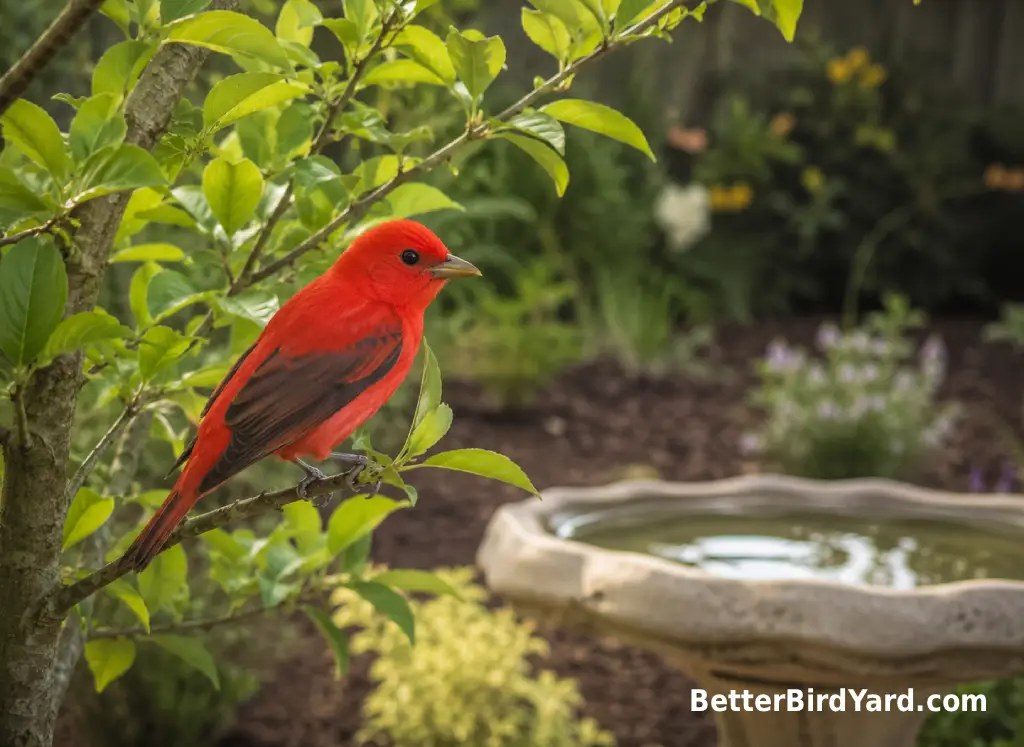
| Scarlet Tanager | The red body is vivid and eye-catching. | Black wings and tail on the male, no cardinal crest. |
| House Finch | Red on the head and chest can catch your eye at feeders. | Streaky brown body, smaller size, no crest. |
| Pyrrhuloxia | Looks like a gray-and-red desert cousin of a cardinal. | Southwestern desert range, gray body, curved yellowish bill. |
Cornell Lab calls the male Summer Tanager the only completely red bird in North America, while Scarlet Tanagers are known for red bodies with black wings and tails. In the Southwest, Pyrrhuloxias can look and sound like gray-and-red cardinals, but Cornell points to their desert habitat, long crest, and short curved yellow bill as useful separation clues.
How To Identify A Yellow, Blue, Or Red Cardinal-Like Bird
When a bird looks unusual, slow down and identify it like a birder rather than like a color chart. A yellow bird that looks like a cardinal, a blue bird that looks like a cardinal, or a northern red bird not cardinal all require the same basic checks.
- Start with shape: crest, tail length, body size, and posture.
- Check the bill: Northern Cardinals have a thick cone-shaped bill, not a thin insect-catching bill.
- Look for the face: male cardinals usually show a dark mask around the bill.
- Watch behavior: cardinals often feed low, use shrubs, and visit sturdy feeders.
- Note the setting: region, season, habitat, and whether the bird is at a feeder, tree canopy, brush pile, or open lawn.
- Take photos from a distance: side view, front view, and one wider shot showing size and surroundings.
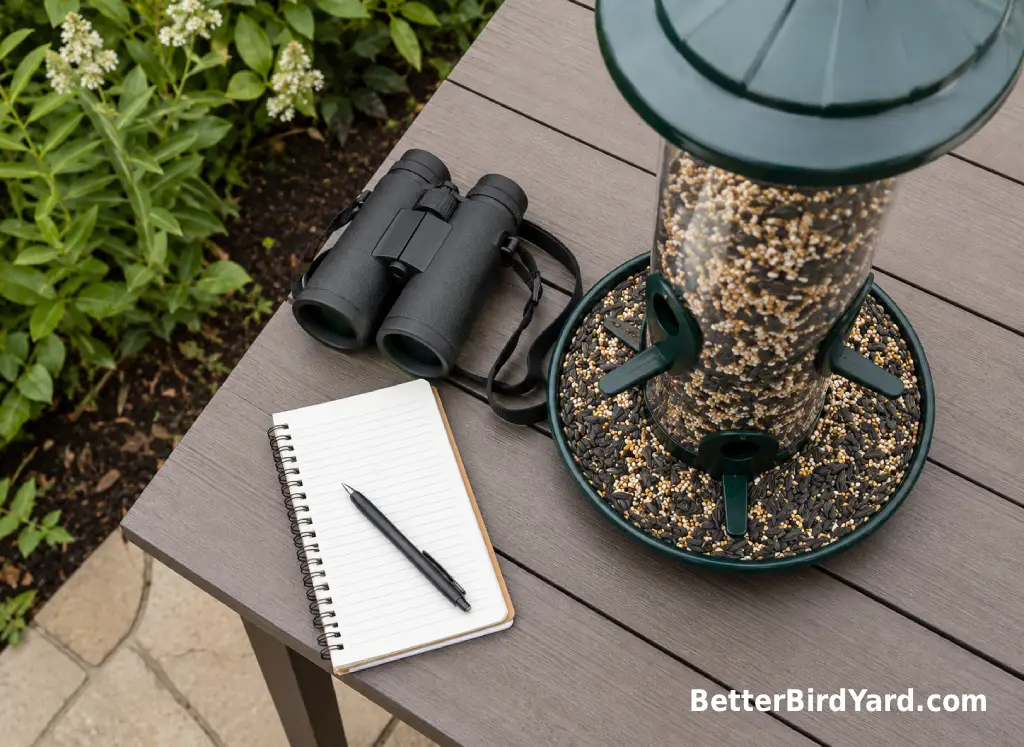
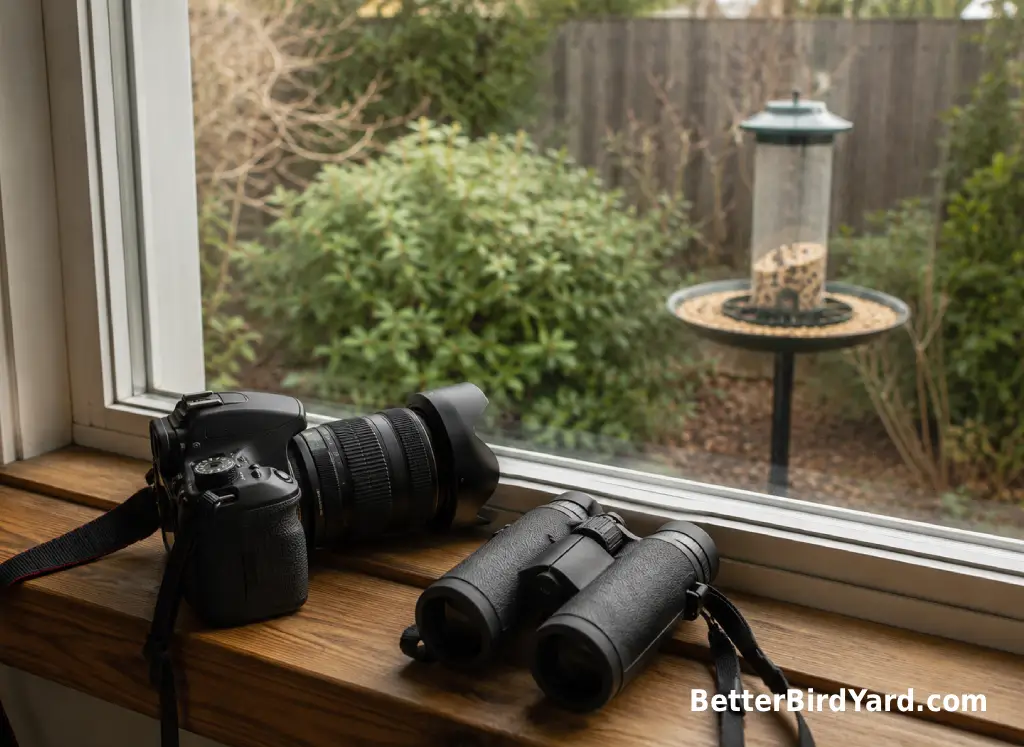
For a small yard or balcony, you do not need fancy equipment. A basic pair of binoculars, a phone photo, and a field guide app can be enough. If you share a photo with a birding group, include your state, date, habitat, and whether the bird was singing, feeding, or moving with other birds.
How To Support Cardinals Without Overdoing The Feeder
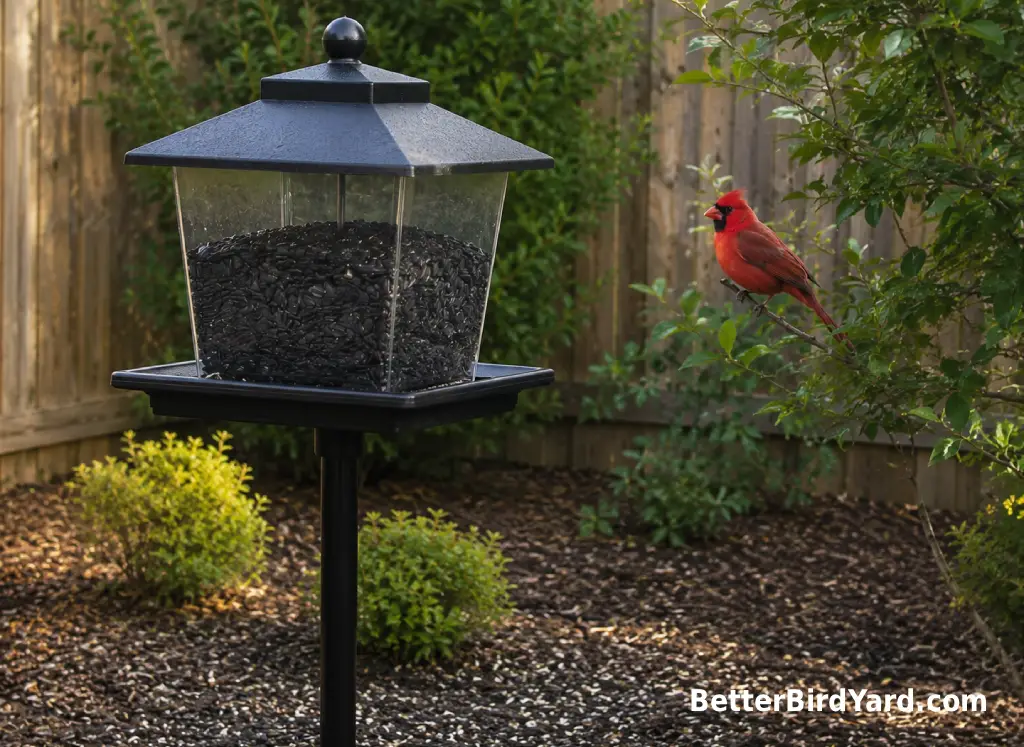
If you want to make your yard better for Northern Cardinals, think in terms of steady support, not guarantees. Audubon notes that cardinals eat a varied diet and show a strong preference for sunflower seeds at feeders, with safflower also used by cardinals. A sturdy hopper, tray, or platform-style feeder is often easier for cardinals to use than a tiny tube feeder with short perches.
Keep the setup simple. Offer a modest amount of fresh seed, place the feeder near shrubs or small trees for cover, and clean up hulls and spilled seed so the area does not become messy or attractive to rodents. For more setup help, see our guide to attracting cardinals responsibly.
Cleanliness matters more than most beginners expect. Cornell Lab recommends taking cardinal feeders apart and washing them on a hot dishwasher setting or hand washing with soap and boiling water or a dilute bleach solution of no more than one part bleach to nine parts water, followed by thorough rinsing and drying before refilling. Project FeederWatch also emphasizes removing visible debris and cleaning feeders regularly, even when birds look healthy.
- Discard wet, clumped, or moldy seed instead of topping it off.
- Clean more often during warm, wet weather or heavy feeder use.
- Pause or reduce feeding if you see birds that appear visibly sick, and check local wildlife agency guidance during outbreaks.
- Keep cats indoors or in a catio when possible; Cornell Lab lists keeping cats indoors as one of its simple actions to help birds.
- Use native shrubs and plants that fit your region; Audubon’s native plant resources can help homeowners choose bird-friendly plants by area.
A rare yellow cardinal is thrilling, but the ordinary red and brown cardinals in your yard benefit most from fresh food, clean feeders, cover, and quiet space.
What To Do If You See A Rare Yellow Cardinal
A rare yellow cardinal bird does not need special treatment. It needs the same safe conditions as every other wild bird visiting your yard. Watch from a respectful distance, take photos without flushing the bird, and avoid changing the yard suddenly to keep it around.
Good next steps are simple:
- Take clear photos from indoors or from a distance.
- Record the date, general location, and behavior.
- Compare the bird’s crest, bill, mask, and tail with Northern Cardinal references.
- Share the sighting with a local bird club, eBird reviewer, or state birding group if you want confirmation.
- Avoid sharing an exact private address publicly if the bird may attract crowds.
If the bird looks injured, stunned, unable to fly, trapped, or unusually weak, do not attempt home treatment. Keep people and pets away and contact a licensed wildlife rehabilitator, local wildlife agency, animal control, or another qualified local professional for guidance. BetterBirdYard is not a wildlife rehabilitation or veterinary service, and unusual color alone is not a reason to handle a wild bird.
Also check your viewing area for hazards. If birds are repeatedly striking a window near the feeder, make the glass more visible from the outside with closely spaced markings, screens, or other bird-safe window treatments. U.S. Fish and Wildlife Service guidance notes that external screens can reduce reflections and help birds recognize glass as a barrier.
A yellow cardinal is memorable because it is rare, but the best backyard birding habit is ordinary patience. Keep a clean feeder, add safe cover, watch carefully, and let the bird decide whether your yard is part of its normal route.
A yellow cardinal bird is real, but it is not something most backyard birders will ever see. Most cardinals in U.S. yards will be the familiar red males, warm brown females, and brownish young birds. Blue cardinals are usually Blue Jays, Blue Grosbeaks, or another blue species, while many red birds that are not cardinals turn out to be tanagers, finches, or regional lookalikes.
The calm approach is the most reliable one: identify by shape first, color second, and behavior third. Support birds with clean feeders, fresh seed, native cover, safe water, and low-disturbance observation. If the rare yellow visitor arrives, enjoy the moment without turning it into pressure on the bird or the neighborhood.