Meet the Downy Woodpecker: A Tiny Backyard Acrobat
That little black-and-white bird climbing your backyard tree might be a Downy Woodpecker. With its short bill, checkered wings, and quick movements, this small woodpecker is a familiar visitor to wooded neighborhoods, parks, and bird feeders across much of the United States.
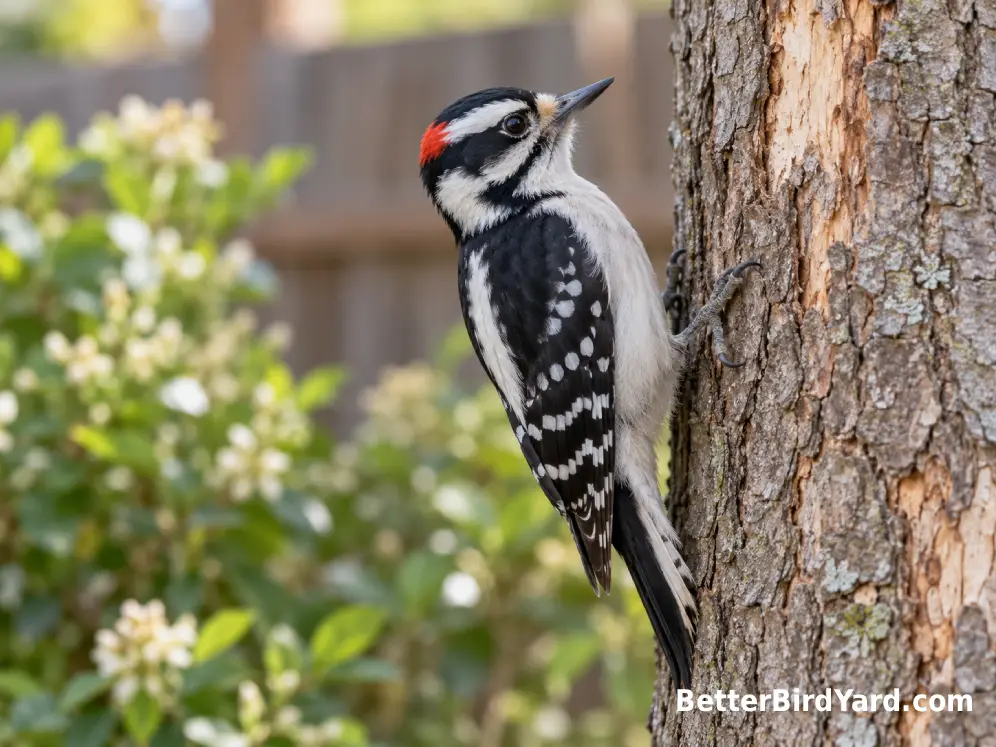
The Downy Woodpecker (Dryobates pubescens) is one of North America’s smallest woodpeckers. It measures about 5.5–6.7 inches long, not much bigger than many familiar backyard songbirds. Males have a small red patch on the back of the head, while adult females have no red there.
Downy Woodpeckers also have a larger lookalike, the Hairy Woodpecker, which can make identification tricky. Fortunately, the bill provides one of the easiest clues. And if you’re wondering whether your backyard visitor will disappear when winter arrives, there’s good news: most Downy Woodpeckers remain in the same general area year-round.
Here’s how to recognize them, understand their behavior, and make a small yard or patio more welcoming without putting wild birds at unnecessary risk.
What Does a Downy Woodpecker Look Like?
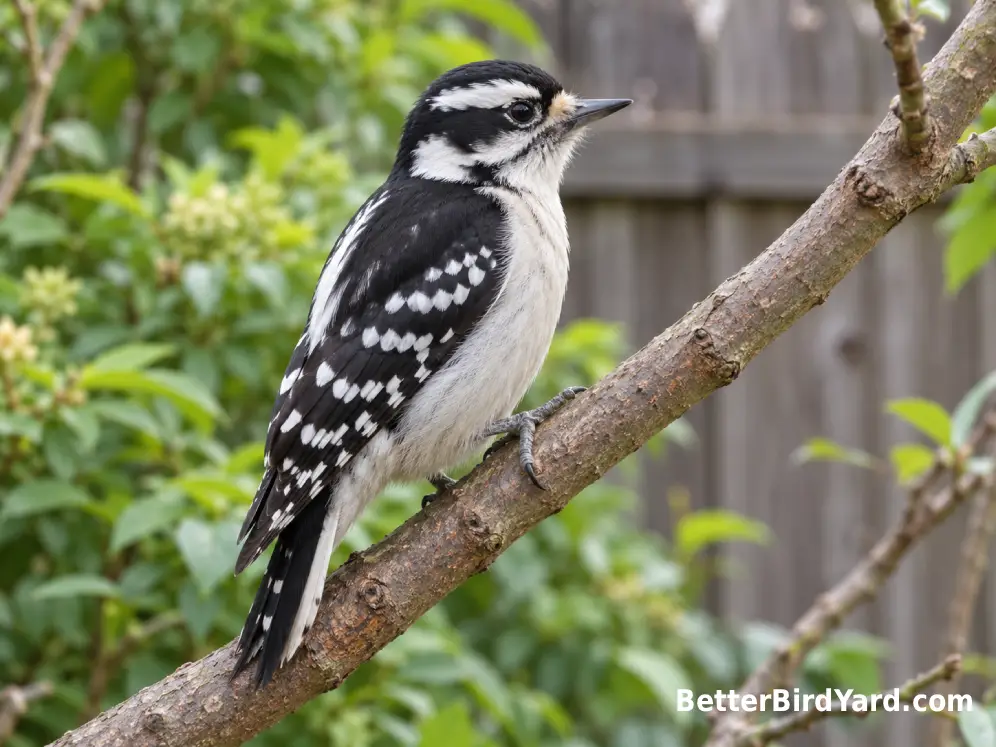
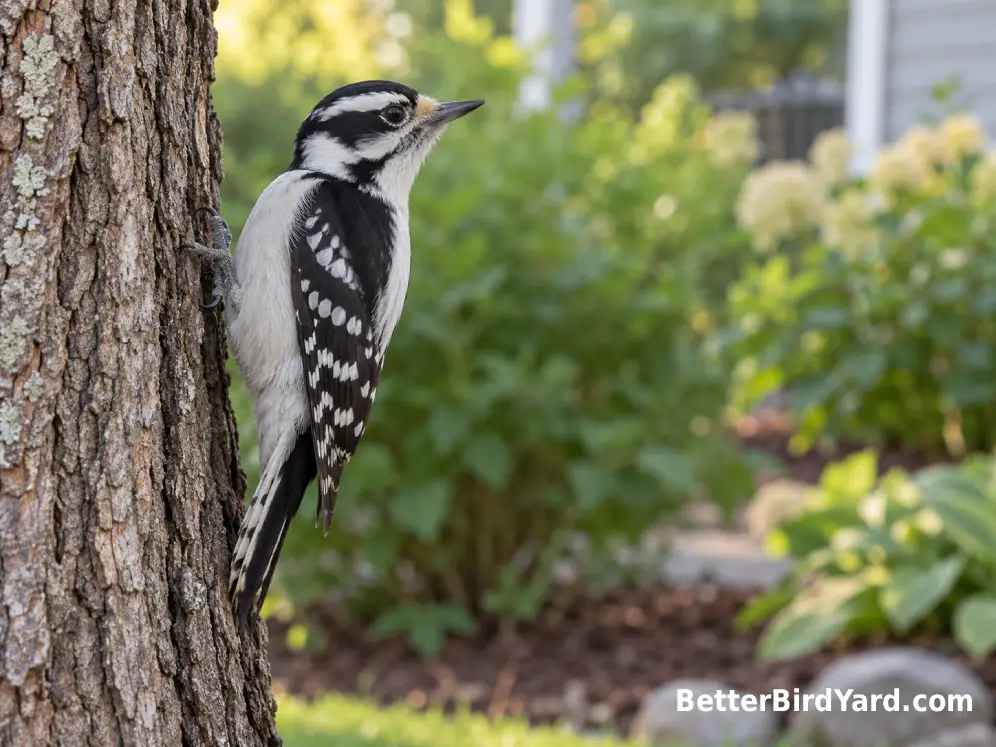
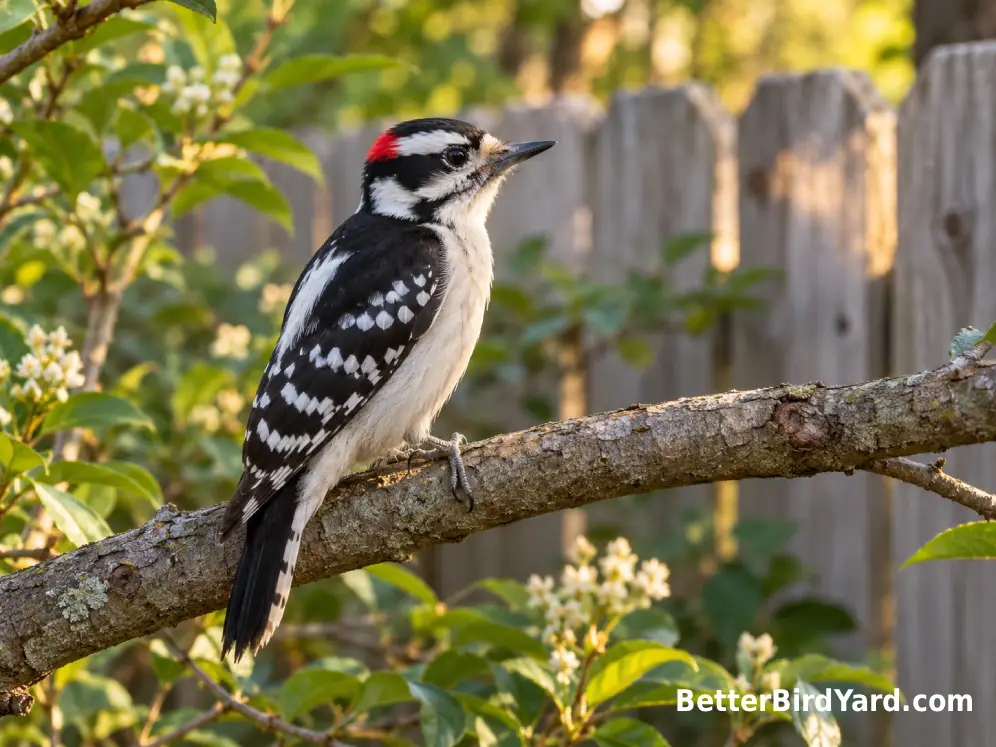
The easiest way to recognize this bird is by its compact size and crisp black-and-white pattern. Its back has a broad white stripe, while its black wings are dotted with white spots that create a checkered appearance.
Look for these field marks:
- Size: About 5.5–6.7 inches long, smaller than a typical American Robin.
- Bill: Short, straight, and pointed, noticeably smaller than the head.
- Head: Bold black-and-white stripes running across the face and crown.
- Back and wings: A broad white stripe down the center of the back, surrounded by black wings with white spots.
- Underside: Usually white or pale grayish, with some regional variation.
- Tail: Stiff feathers used for support, with small black marks often visible on the white outer tail feathers.
Its movements are another useful clue. Rather than sitting quietly on an exposed branch, a Downy Woodpecker often inches along bark, explores smaller limbs, or balances on thin plant stems while searching for insects.
You may also notice a slightly bouncing, wave-like flight pattern as the bird travels between trees. That’s typical of many woodpeckers, so it’s a supporting clue rather than proof of identification.
For reference photographs showing these features, the Cornell Lab of Ornithology’s Downy Woodpecker identification guide includes male, female, and juvenile examples.
Male vs. Female: The Small Red Patch Makes the Difference
Male and female Downy Woodpeckers look almost identical at first glance. Both have the same small body, white back, striped head, and black wings marked with white spots.
The main difference between adult birds is the color at the back of the head.
Male Downy Woodpecker
An adult male has a small red patch toward the rear of the head, often described as the nape. Depending on the angle, it can look like a thin red mark tucked between the black-and-white feathers.
That patch isn’t always visible. A male facing directly toward you may look entirely black and white until he turns his head.
Female Downy Woodpecker
An adult female lacks the red nape patch. The back of her head remains black and white, making a clear rear or side view particularly helpful.
She isn’t necessarily smaller or less boldly patterned than the male. Body size and overall plumage are too similar to be dependable ways of separating the sexes.
What About Young Birds?
Juvenile Downy Woodpeckers can have reddish feathers on the crown, toward the top or front of the head, rather than the adult male’s rear nape patch. This can confuse identification during the breeding season and late summer.
If you see red in an unexpected position, consider the bird’s age before deciding whether it is an adult male.
One interesting behavioral detail comes from Cornell Lab research: during winter, males often forage on smaller branches and weed stems, while females tend to feed more on larger branches and tree trunks. It’s an interesting pattern to watch for, but not a reliable way to identify a bird’s sex on its own.
Downy vs. Hairy Woodpecker: Look at the Bill First
Downy and Hairy Woodpeckers are among the most easily confused backyard birds. Both have black-and-white striped heads, white backs, spotted black wings, and males with red patches on the rear of the head.
The most useful difference isn’t the color. It’s the size and proportions of the bill.
| Feature | Downy Woodpecker | Hairy Woodpecker |
|---|---|---|
| Length | 5.5–6.7 inches | 7.1–10.2 inches |
| Bill | Short and stubby-looking, much shorter than the head | Longer and stronger-looking, approaching the length of the head |
| Body | Small and compact | Larger and more robust |
| Outer Tail Feathers | White feathers typically have small black spots | White outer feathers typically lack black spots |
| Foraging Habits | Often explores thin branches and plant stems | Often works larger branches and tree trunks |
| Male Head Marking | Small red patch on rear of head | Red patch on rear of head |
Why Bill Length Is the Best Starting Point
Imagine the bird’s bill alongside its head. On a Downy Woodpecker, it looks like a small pointed thorn. On a Hairy Woodpecker, it resembles a longer chisel. This comparison is often easier than judging body size because a single bird on a tree offers little sense of scale.
Tail markings can help when you get a clear view. Downy Woodpeckers typically have black spots on their white outer tail feathers, while Hairy Woodpeckers generally have plain white outer feathers. However, lighting, viewing angle, feather wear, and regional variation can make this clue difficult to use.
For the most confident identification, combine bill length with body size, tail markings, and behavior rather than relying on one feature.
Both species may visit suet feeders, so seeing a woodpecker at your feeder does not automatically make it a Downy. The Cornell Lab’s Hairy Woodpecker identification guide offers useful comparison photographs.
Where Downy Woodpeckers Live and What They Eat
Downy Woodpeckers live across much of the United States and southern Canada, wherever suitable wooded habitat exists. Their range includes many suburban neighborhoods, city parks, orchards, wooded creek corridors, and open deciduous forests.
They are particularly comfortable around trees with smaller branches, brushy edges, and natural plant growth. A yard doesn’t need to resemble a forest to be useful to them, especially if nearby trees provide additional feeding and nesting habitat.
Natural Foods
Most of a Downy Woodpecker’s natural diet consists of insects and other small invertebrates. According to the Cornell Lab of Ornithology, its foods include wood-boring beetle larvae, ants, caterpillars, and other insects found in bark and vegetation.
Plant foods such as berries, seeds, and grains also contribute to its diet.
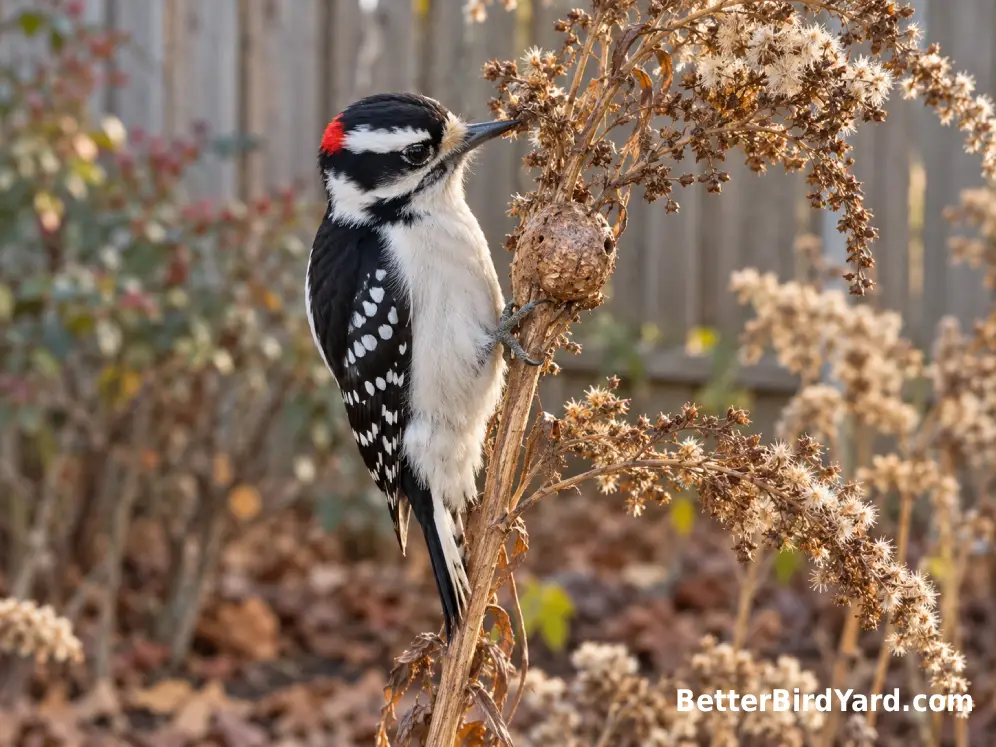
One of its more interesting habits is searching dried goldenrod stems for insect larvae hidden inside round swellings called galls. Its small size allows it to use feeding spots that larger woodpeckers may have difficulty reaching.
That is a good reason not to cut down every dead flower stem as soon as fall arrives. Where practical, leaving some standing stems until spring can preserve natural feeding opportunities for small birds and other wildlife.
Sounds Worth Learning
Downy Woodpeckers produce a sharp, high-pitched pik call, along with a longer whinny that typically descends in pitch. You might hear the bird before you spot it.
They also tap and drum on wood. Individual taps may be associated with feeding, while rapid drumming bursts are often used for communication and territorial signaling.
If you hear quick, repeated drumming in spring, look toward dead branches or other resonant surfaces. The sound may be a woodpecker communicating rather than searching for food.
Do Downy Woodpeckers Migrate in Winter?
Most Downy Woodpeckers do not make long seasonal migrations. They are considered largely year-round residents, meaning many birds stay in the same general region throughout the year.
There are exceptions. The National Audubon Society’s field guide notes that some northernmost birds move southward in winter, while some birds in western mountains shift to lower elevations or make shorter seasonal movements.
For backyard bird watchers in much of the United States, it’s reasonable to expect Downy Woodpeckers during every season if the local habitat supports them.
Why You May Notice More Downy Woodpeckers in Winter
In winter, bare branches make these birds easier to spot. Downy Woodpeckers also join mixed-species flocks with chickadees, nuthatches, and other small birds.
They may visit suet feeders more noticeably when natural insects are harder to find. This doesn’t necessarily mean the bird has migrated into your area; you may simply be seeing a local resident more often.
Winter is a particularly good time to watch them move along tree trunks, investigate dried plant stems, and make short visits to a well-maintained feeder. There’s no need to assume that all of your local Downy Woodpeckers will leave when the weather turns cold.
How to Make a Small Backyard More Welcoming
You don’t need a large property or several expensive feeders to make a yard more inviting to Downy Woodpeckers. A single suitable feeder, nearby tree cover, and safe surroundings can be a sensible starting point.
As with any wild bird, visits depend on your location, nearby habitat, season, and available natural food. No feeder setup guarantees that a particular species will arrive.
Start With a Simple Setup
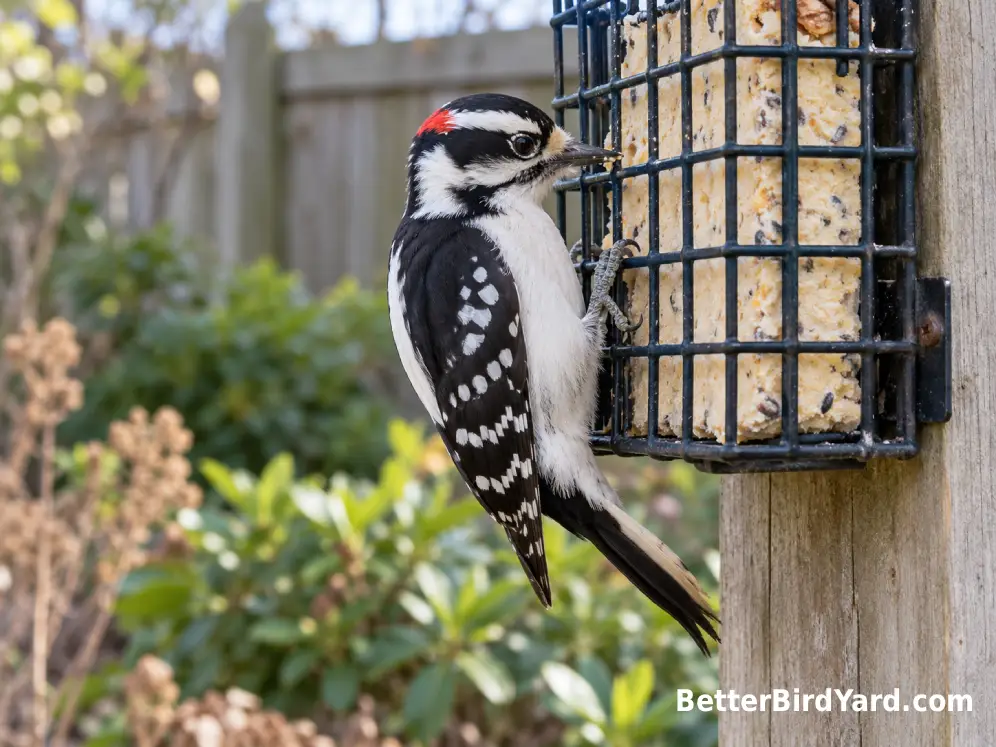
- Offer suet: A small, sturdy suet cage is an excellent first feeder to try. Downy Woodpeckers readily use suet where they occur.
- Add appropriate seeds: Black oil sunflower seeds may also attract them. Unsalted peanuts offered in a suitable bird feeder are another option.
- Keep useful vegetation: Native shrubs, suitable trees, and some standing dried stems provide cover and opportunities to find natural food.
- Provide fresh water: A shallow, easy-to-clean birdbath can serve multiple species, including birds that rarely visit seed feeders.
- Protect natural habitat: If a dead branch or standing dead tree is confirmed safe to retain by a qualified tree professional, it may provide important foraging or nesting opportunities.
What Works in a Patio or Rental Space?
If you have a small patio, you might only have room for one hanging suet cage and a compact water dish. That can still be a worthwhile setup where Downy Woodpeckers already live nearby.
Choose equipment you can remove and clean easily. Be mindful of windows, drainage, dropped food, and any rules established by your landlord, building, city, or homeowners association.
BetterBirdYard tip: Rather than buying several feeders immediately, start with one suet cage and observe how birds use it. If the suet stays untouched, check whether the species occurs locally, whether the feeder feels exposed, and whether natural food sources are plentiful. Give birds time to discover it before changing the whole setup.
For more help choosing an appropriate feeder, see our guide to suet feeders for woodpeckers.
Keep Feeding Stations Clean, Safe, and Practical
Attracting a woodpecker is only part of responsible backyard feeding. The more important commitment is keeping its food and surroundings safe.
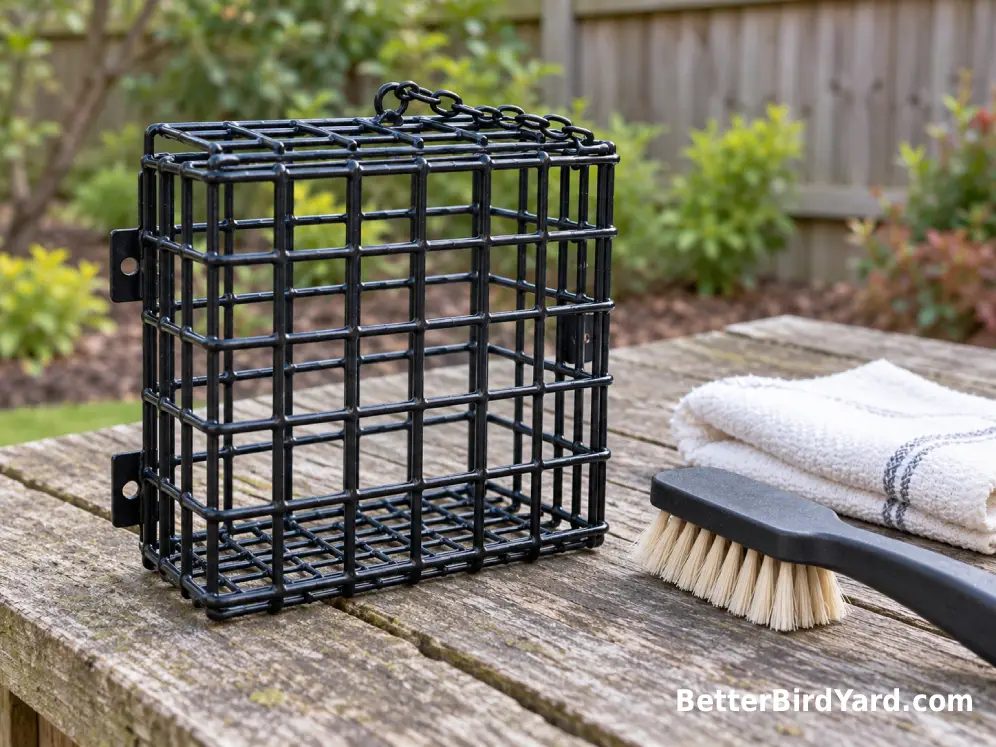
Suet feeders are simple to maintain, but they still need regular attention. Old food particles, bird droppings, and moisture can build up on the cage or nearby surfaces.
Cleaning and Food Care
Cornell Lab’s Project FeederWatch recommends cleaning seed and suet feeders regularly, generally every week or two, and more often during wet weather or heavy use. Take the feeder apart as needed, remove debris, scrub it with dish soap and water, rinse thoroughly, and let it dry before refilling.
Replace food that becomes wet, moldy, spoiled, or contaminated. Suet deserves extra attention in warm weather because it can soften, spoil, or become rancid. Remove it if its condition is questionable, and avoid offering raw suet during hot weather.
Regularly clear dropped food and debris beneath feeders as well. This can reduce sanitation problems and discourage rodents or other unwanted wildlife.
If you offer a birdbath, replace its water every day or two, more often when necessary, and scrub the basin whenever it looks dirty or algae begins to form.
Our bird feeder cleaning guide offers a practical routine for keeping backyard feeding stations manageable.
Pay Attention to Windows and Predators
Window collisions are a serious concern wherever birds gather around buildings. Treatments applied across the outside surface of reflective glass, using closely spaced markings, can help make windows more visible to birds.
Feeder placement matters, too. Cornell Lab guidance suggests that placing feeders within about three feet of a window can reduce the speed birds build up if they hit the glass. Do not assume a feeder positioned several feet from an untreated window is automatically safe.
Keep pet cats indoors or in secure outdoor enclosures, and avoid positioning feeders where roaming cats can hide and ambush visiting birds.
If You Notice a Bird That Appears Unwell
A bird that remains unusually inactive, has visible discharge, appears unable to perch normally, or shows other concerning behavior may be sick or injured. These signs are not enough to identify a particular condition.
Pause feeding if you notice potentially sick birds around your feeders, clean the feeding station thoroughly, and consult your state wildlife agency for current guidance. If a bird appears injured or unable to fly normally, contact a licensed wildlife rehabilitator or appropriate local wildlife authority rather than attempting treatment or casual handling.
Local wildlife agencies may also issue special feeding recommendations during disease outbreaks or where bears and other nuisance wildlife are a concern. Those local directions should take priority over a general backyard feeding routine.
What Drumming and Nesting Behavior Can Tell You
Once you recognize a Downy Woodpecker, watching its behavior can be just as interesting as identifying it.
These small birds don’t produce elaborate songs like many songbirds. Instead, they communicate through calls and rapid drumming on resonant surfaces, including dead limbs and sometimes human-made structures.
Drumming may become particularly noticeable during the breeding season, when birds establish territories and communicate with potential mates.
Remember that drumming and feeding aren’t the same activity. A bird making rapid, rhythmic bursts of sound may be communicating rather than removing insects from wood.
Where They Build Nests
Downy Woodpeckers are cavity nesters. A breeding pair typically excavates a nesting hole in a dead tree or a dead section of a living tree, often choosing wood softened by decay.
Both sexes participate in excavating the cavity. The nesting chamber is lined with wood chips left from the excavation rather than a traditional nest of grass and twigs.
Tree cavities can be valuable for other wildlife after the woodpeckers have finished using them. That makes safe retention of suitable deadwood one useful part of a bird-friendly yard.
However, don’t keep a hazardous dead tree standing near a house, walkway, or occupied outdoor space just to provide wildlife habitat. Have a qualified tree professional assess potential risks.
If you discover an active nesting cavity, observe from a distance and avoid blocking, touching, or disturbing the opening. Nesting activity is best appreciated without interference.
Common Reasons You Might Not See One at Your Feeder
A suet feeder can be perfectly suitable and still go days or weeks without a Downy Woodpecker visit. Sometimes the explanation is simpler than it seems.
- Limited local habitat: If your neighborhood has few suitable trees or little nearby woodland, Downy Woodpeckers may not be regular visitors.
- Abundant natural food: Birds may spend more time hunting insects and exploring vegetation instead of using supplemental food.
- Exposed placement: A feeder in a very open or disturbed location may be less appealing than one with reasonably nearby tree cover and a safe flight path.
- Food condition: Wet, old, or deteriorating suet should be replaced rather than left hanging indefinitely.
- Short visits: You may simply miss a bird that stops briefly and spends most of its day elsewhere.
Before buying another feeder, spend some time watching the surrounding trees. Listen for sharp pik calls, watch for movement along trunks, and check nearby smaller branches.
For a beginner, learning where Downy Woodpeckers naturally search for food can be more rewarding than waiting for them to appear at one particular feeder.
And if the birds do visit, resist the temptation to keep adding food or equipment. A clean, manageable setup with suitable nearby habitat is often the better long-term approach.
A Small Bird Worth Watching Through Every Season
The Downy Woodpecker may be small, but there’s plenty to notice once you know what to look for. Its short bill, black-and-white checkered wings, white back, and compact body make it distinctive. The male’s little red nape patch helps separate adult males from females, while bill proportions are especially useful for telling Downy and Hairy Woodpeckers apart.
Because most Downy Woodpeckers remain in the same general area throughout the year, bird watchers often have opportunities to observe them in different seasons. Winter may bring more feeder visits, while warmer months provide chances to watch natural foraging, calls, drumming, and nesting behavior from a respectful distance.
If you’d like to support them, keep the approach simple: preserve suitable habitat, offer clean food and fresh water when practical, reduce hazards around your feeding station, and allow birds to behave naturally.
Sometimes the most interesting Downy Woodpecker sighting isn’t at a feeder at all. It’s the little black-and-white bird working its way along a backyard branch, finding a meal in a place most of us would never think to look.