Pileated Woodpecker: Size, Identification, Habitat, And Backyard Facts
The pileated woodpecker is one of the most unforgettable birds a backyard watcher can see in the United States: large, mostly black, boldly striped in white, and topped with a bright red crest. It is nearly crow-sized, loud enough to hear before you spot it, and strong enough to leave big rectangular holes in dead wood while searching for ants and beetle larvae. Cornell Lab describes this species as one of the biggest and most striking forest birds on the continent.
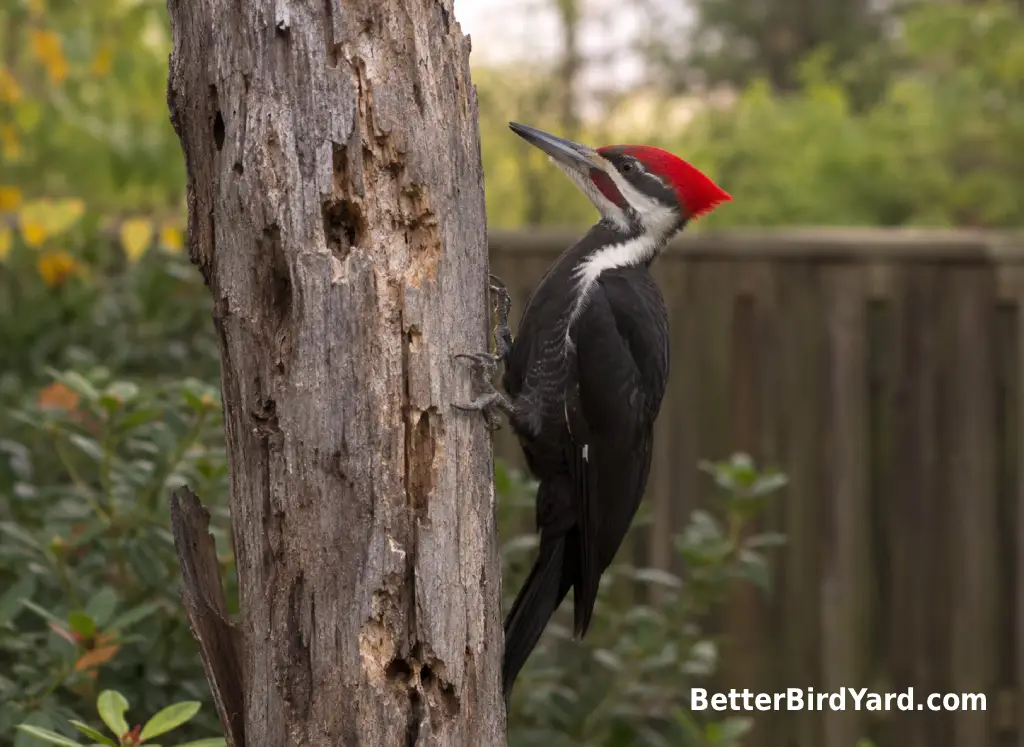
For beginners, the easiest way to identify a pileated woodpecker is to look for the full combination: very large woodpecker, red crest, black body, white face and neck stripes, loud calls, heavy drumming, and rectangular excavations in dead trees, stumps, or fallen logs. It is not a tiny feeder woodpecker like a downy or hairy woodpecker; it is a forest bird that sometimes crosses into wooded neighborhoods, parks, and backyards with mature trees.
This profile covers what a pileated woodpecker looks like, how big it is, where it lives, what it eats, and how ordinary homeowners or renters can support this remarkable bird responsibly without turning a small yard into a messy or unsafe feeding station.
Quick Profile
Here is the short version for quick backyard identification.
| Feature | Pileated Woodpecker Basics |
|---|---|
| Scientific Name | Dryocopus pileatus |
| Size | About 15.8–19.3 inches long, with a wingspan around 26.0–29.5 inches |
| Shape | Large woodpecker with a long neck, heavy bill, and red crest |
| Colors | Mostly black with white face and neck stripes; white flashes show in flight |
| Male Vs. Female | Males have a red cheek stripe; females have a darker cheek stripe |
| Habitat | Mature woods, mixed forests, wooded parks, and some suburban areas with large trees |
| Main Foods | Carpenter ants, other insects, beetle larvae, termites, wild fruits, and nuts |
| Backyard Visits | Occasional, especially where there are large trees, dead wood, and sometimes suet feeders |
What Does A Pileated Woodpecker Look Like?
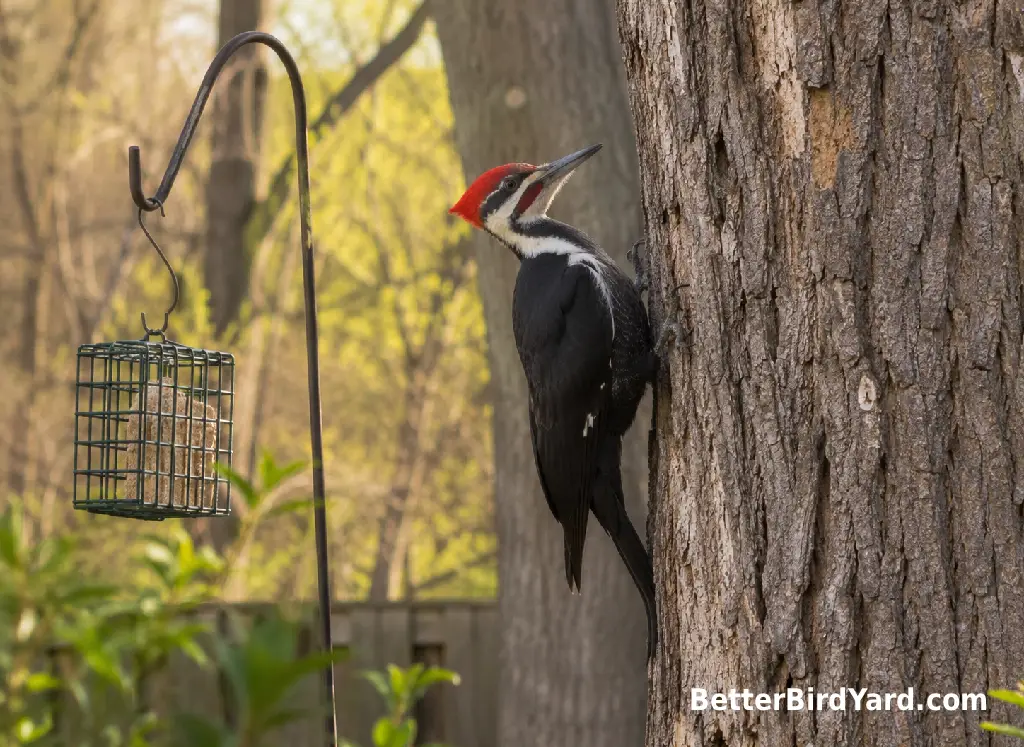
A pileated woodpecker looks dramatic even before you notice its size. The bird is mostly black, with bold white stripes running along the face and neck and a bright red crest that rises from the top of the head. In flight, it can flash white under the wings, which is one reason a large black bird crossing through the trees may suddenly look much brighter than expected.
The bill is long, straight, and chisel-like. The body is sturdy, the neck looks longer than on smaller backyard woodpeckers, and the tail is stiff enough to brace the bird against tree trunks. A perched pileated often appears upright, gripping the bark with strong feet and leaning back before striking the wood.
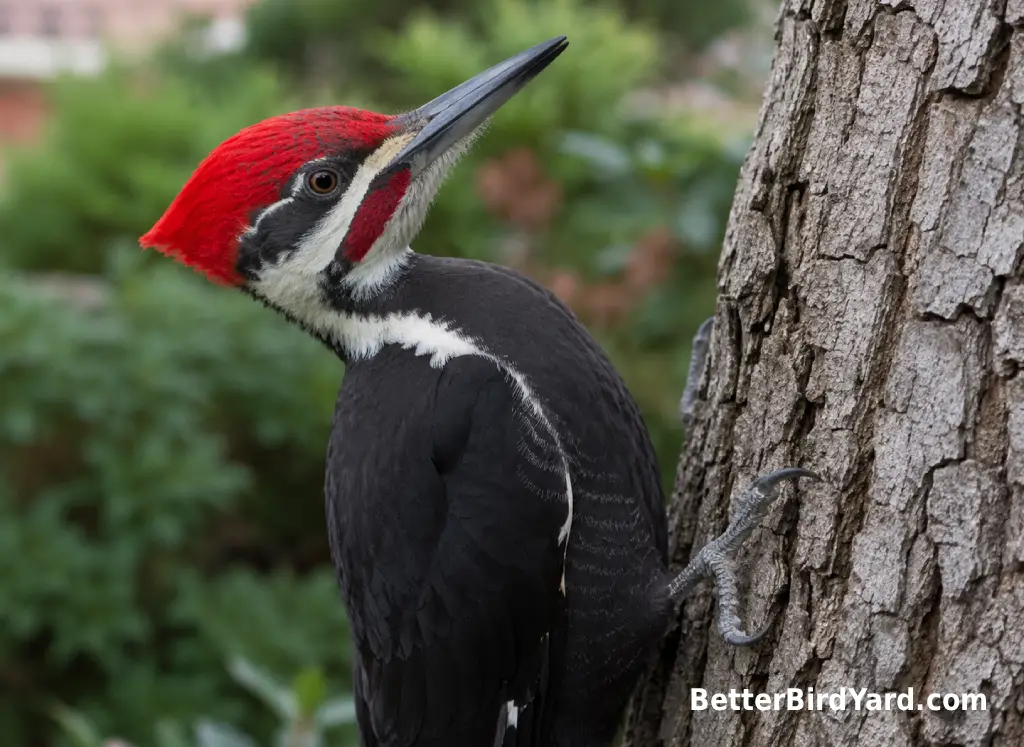
Male and female pileated woodpeckers look similar at first glance, but there are field marks that help. Males have a red stripe on the cheek, often called a mustache stripe. Females have a darker cheek stripe. Audubon also notes that the male has red on the forehead, while the female does not show the same red forehead mark.
In a backyard setting, most people notice the bird in one of three ways: a loud call from tall trees, a heavy thunking sound from dead wood, or a large black-and-white bird sweeping through the yard with an undulating woodpecker flight.
Pileated Woodpecker Size And Field Marks
Pileated woodpecker size is one of the best identification clues. This is not a small bird clinging to a feeder port. At roughly 16–19 inches long, it can look surprisingly large when it lands on a tree, a utility pole, or a big suet feeder. Its wingspan can reach roughly 2 feet 2 inches to 2 feet 5 inches, according to Audubon’s field guide.
A useful beginner comparison is this: a downy woodpecker looks small and tidy, a hairy woodpecker looks medium and crisp, and a pileated woodpecker looks powerful, long-necked, and crow-sized. If you see a huge woodpecker with a red crest, you are probably not looking at a downy, hairy, or red-bellied woodpecker.
- Look for a large black body, not a small checkered back.
- Look for a bright red crest, not just a red patch on the head.
- Watch for white flashes in flight.
- Listen for loud calls and deep, carrying drumming.
- Check nearby dead wood for rectangular excavations.
A common mistake we see is relying on color alone. Several North American woodpeckers have red, black, and white in their plumage. With pileated woodpeckers, size, shape, crest, sound, and feeding holes all work together.
Where Pileated Woodpeckers Live
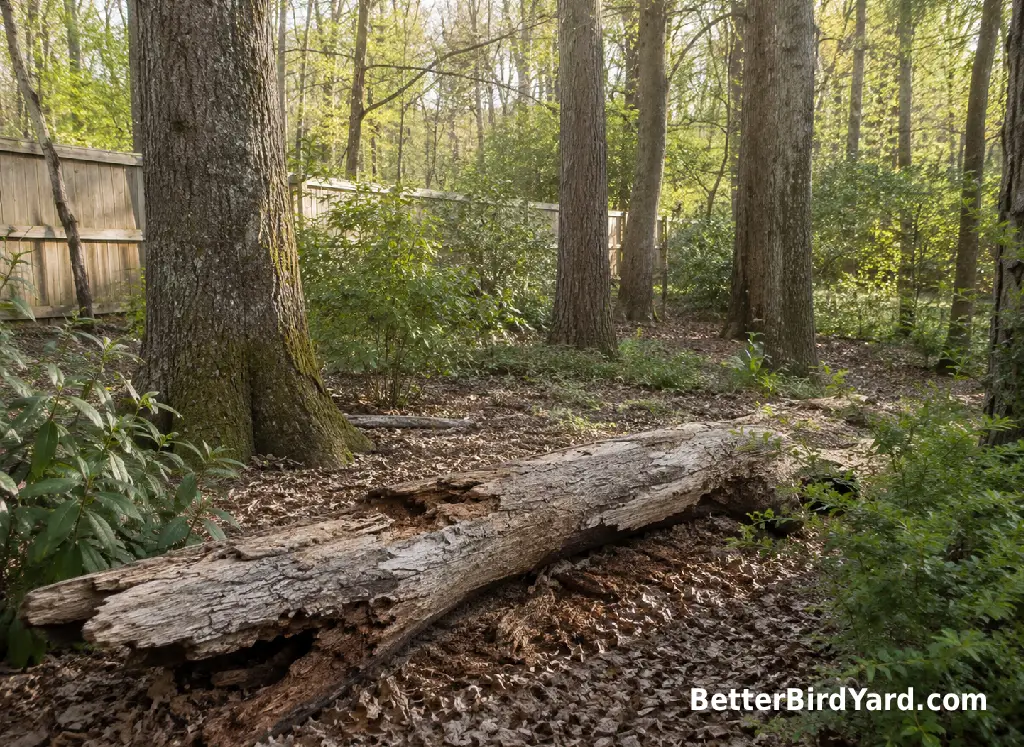
Pileated woodpeckers are forest birds first. They use mature deciduous forests, mixed forests, conifer forests, wooded swamps, parks, woodlots, and suburban areas where large trees and dead wood remain. Cornell Lab notes that they require large standing dead trees and downed wood, and that in the East they may also appear in partially wooded suburbs and backyards.
That last part matters for backyard bird watchers. A small patio with no nearby trees is unlikely to host a pileated woodpecker for long. A suburban yard beside woods, a creek corridor, an old park, or a tree-filled neighborhood has a better chance, especially if there are mature trees, stumps, snags, or fallen logs nearby.
In much of the eastern United States, pileated woodpeckers may be found in suitable wooded habitat. They also occur in parts of the Pacific Northwest and western forested regions. The exact likelihood of seeing one depends on your region, tree cover, local habitat, and season, so a local field guide, eBird, or state birding resource can help you judge how common they are near you.
For renters or people with small outdoor spaces, the practical takeaway is simple: you may not be able to create pileated habitat on a balcony, but you can still watch for them in nearby parks, greenways, wooded apartment edges, cemeteries, campuses, and older neighborhoods with big trees.
What They Eat And Why Rectangular Holes Matter
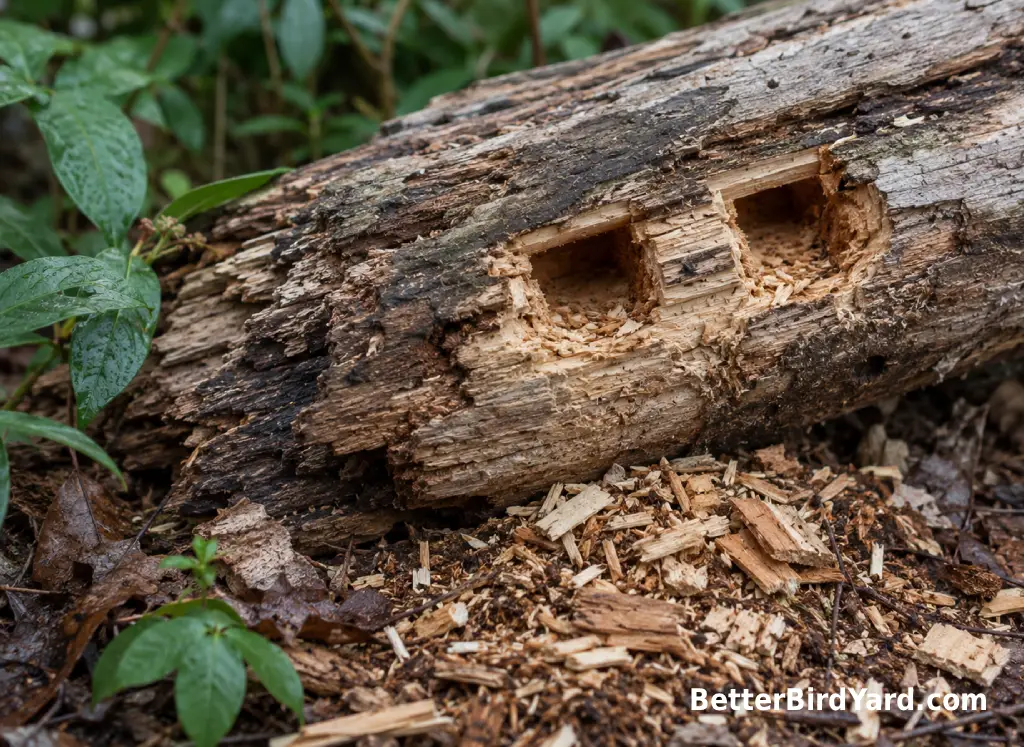
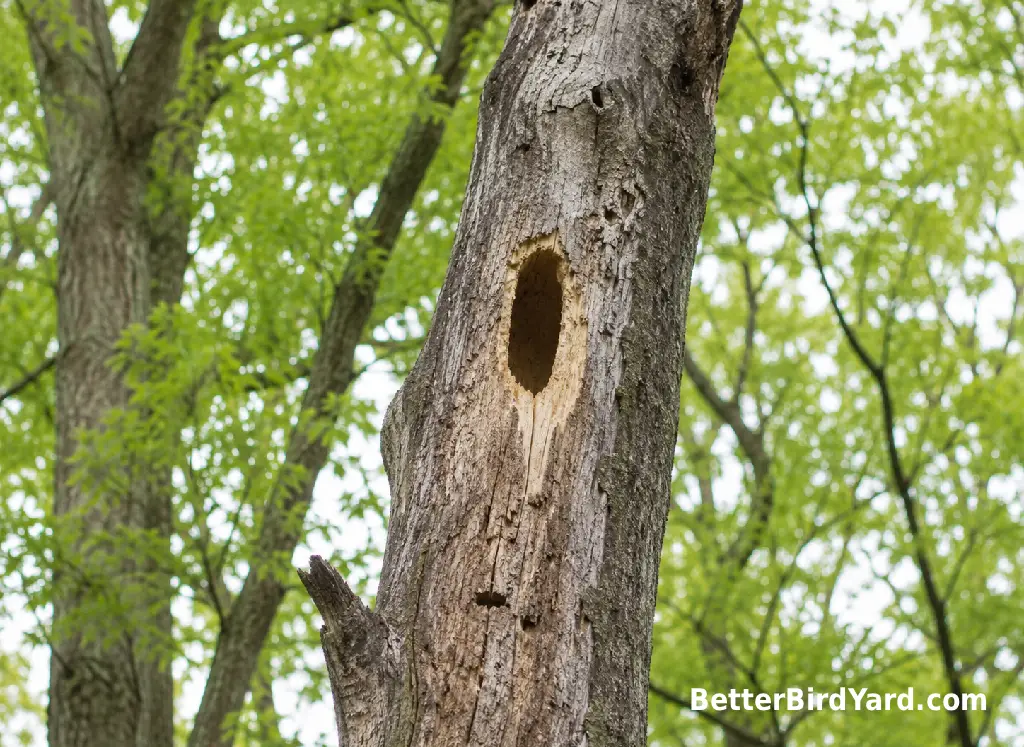
One of the best signs of a pileated woodpecker is not the bird itself, but the hole it leaves behind. Pileated woodpeckers often make large, rectangular excavations in dead or decaying wood while searching for carpenter ants, beetle larvae, termites, and other insects. Cornell Lab specifically points to these rectangular holes as a classic clue for the species.
Their diet is strongly tied to dead wood. Cornell Lab lists carpenter ants as a primary food, supplemented by other ants, wood-boring beetle larvae, termites, other insects, wild fruits, and nuts. Audubon also notes that carpenter ants may make up a large share of the diet, with fruits, berries, and nuts contributing as well.
In a yard, that means a pileated woodpecker may be interested in a decaying stump, a large dead branch, or a fallen log long before it cares about a feeder. The bird is not ruining good wood for fun; it is working through soft, insect-rich material. Still, if a pileated woodpecker is repeatedly excavating part of a house, deck, or utility structure, it is worth checking for moisture damage, insect activity, or softened wood rather than assuming the bird is the root problem.
For safety, do not poke around unstable dead trees or climb to inspect cavities. If a dead tree could fall on a home, walkway, driveway, or neighbor’s property, ask a qualified arborist about safe options. If it is safely located, leaving some dead wood can benefit many cavity-nesting and insect-eating birds.
Will Pileated Woodpeckers Visit Backyard Feeders?
Pileated woodpeckers sometimes visit backyard feeders, especially for suet, but they are not as predictable as chickadees, finches, or smaller woodpeckers. Cornell Lab’s backyard tips note that pileated woodpeckers sometimes visit feeders, especially for suet, and Cornell’s life history page says they occasionally visit backyard feeders for seeds or suet.
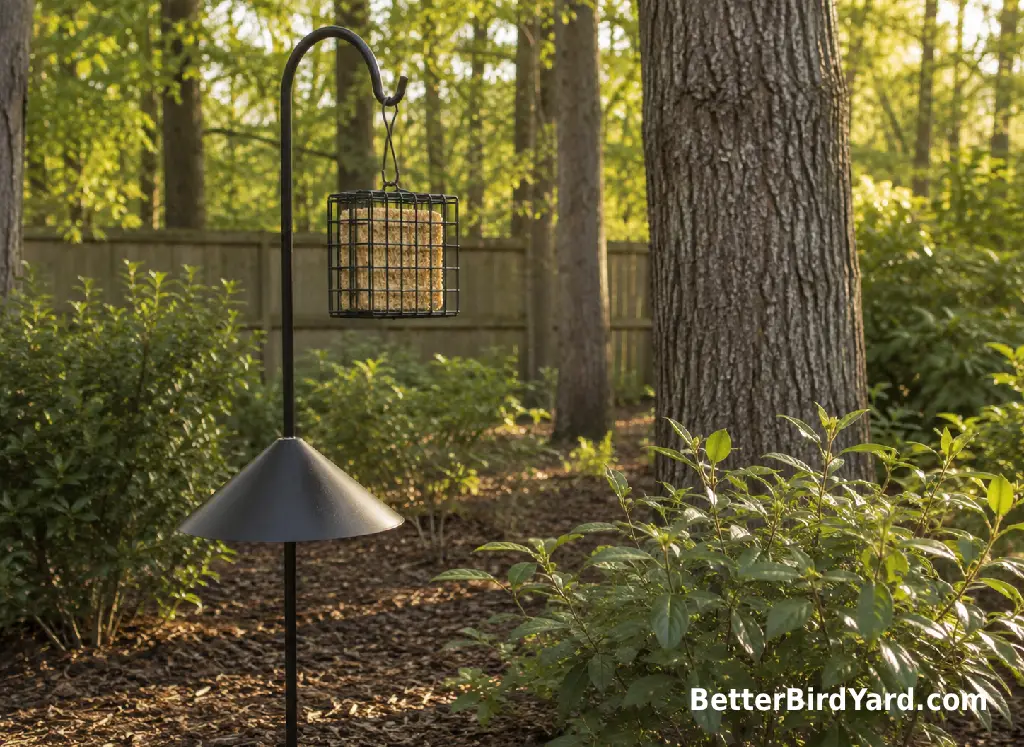
If you want to make your yard more pileated-friendly, think habitat first and feeder second. A large suet feeder mounted securely near trees is more realistic than a small cage that swings wildly under the weight of a crow-sized bird. Choose plain suet or woodpecker-friendly suet from a reputable supplier, keep it fresh, and remove it if it becomes rancid, moldy, melted, or heavily soiled.
For a small yard, start simple:
- Use a sturdy suet feeder with enough tail support for larger woodpeckers.
- Place it near trees but not so close to windows that startled birds fly into glass.
- Clean the feeder regularly and replace spoiled suet promptly.
- Watch for squirrels, raccoons, rodents, or bears where those are local concerns.
- Follow local wildlife agency guidance if there are feeder disease warnings in your area.
Editorial note: If you only change one thing, avoid the “more food is better” mindset. A clean, modest suet setup near good tree cover is more responsible than several overloaded feeders that attract pests or create cleanup problems. For general setup help, see our guide to woodpecker feeders.
Nesting, Territories, And Year-Round Behavior
Pileated woodpeckers are cavity nesters. They excavate nest cavities in dead trees, dead branches, and sometimes other suitable large wooden structures. Cornell Lab notes that nest trees are typically dead and that dead trees are valuable resources for birds and other animals. Their nest cavities may also be used later by other wildlife.
Unlike some small backyard birds that gather in loose feeder flocks, pileated woodpeckers are usually seen alone or in pairs. Cornell Lab describes them as monogamous birds that hold large territories, and it is uncommon to see more than two together outside family situations.
Their behavior is often easier to hear than see. A pileated woodpecker can give loud, ringing calls, and its drumming tends to sound deeper and slower than the quick tapping many people associate with smaller woodpeckers. When foraging, it may produce a heavy chopping sound that carries through the yard.
If you find an active nest cavity, give it distance. Do not tap the tree, shine lights inside, block the cavity, trim around it during nesting, or try to “help” the birds. If a nest is in a hazardous tree near a house or walkway, contact a qualified arborist and check local wildlife guidance before taking action. Nesting bird rules can vary by situation and location, and BetterBirdYard is not a legal authority.
Common Look-Alikes And Beginner ID Mistakes
The pileated woodpecker is distinctive, but beginners can still get tripped up when a bird moves fast, stays high in the trees, or appears only as a flash of black, white, and red.
The most common confusion is with smaller black-and-white woodpeckers. Downy and hairy woodpeckers are much smaller, have checkered black-and-white backs, and lack the tall red crest. Red-bellied woodpeckers have red on the head and a pale barred back, but they are not crow-sized and do not show the same bold black body and white facial striping. Northern flickers are large woodpeckers too, but they are browner, spotted, and shaped differently.
Another beginner mistake is mistaking a crow or large blackbird for a pileated in poor light. The flight pattern helps. Pileated woodpeckers often show the undulating flight typical of woodpeckers, while crows tend to fly in a steadier, straighter way. Cornell Lab specifically notes that the pileated’s undulating flight helps separate it from a crow’s straighter flight path.
Use a quick three-part check: Is it very large? Does it have a red crest and bold white face stripes? Is it acting like a woodpecker around trunks, snags, or logs? When all three are yes, you are likely looking at a pileated woodpecker.
How To Support Pileated Woodpeckers Responsibly In A Yard
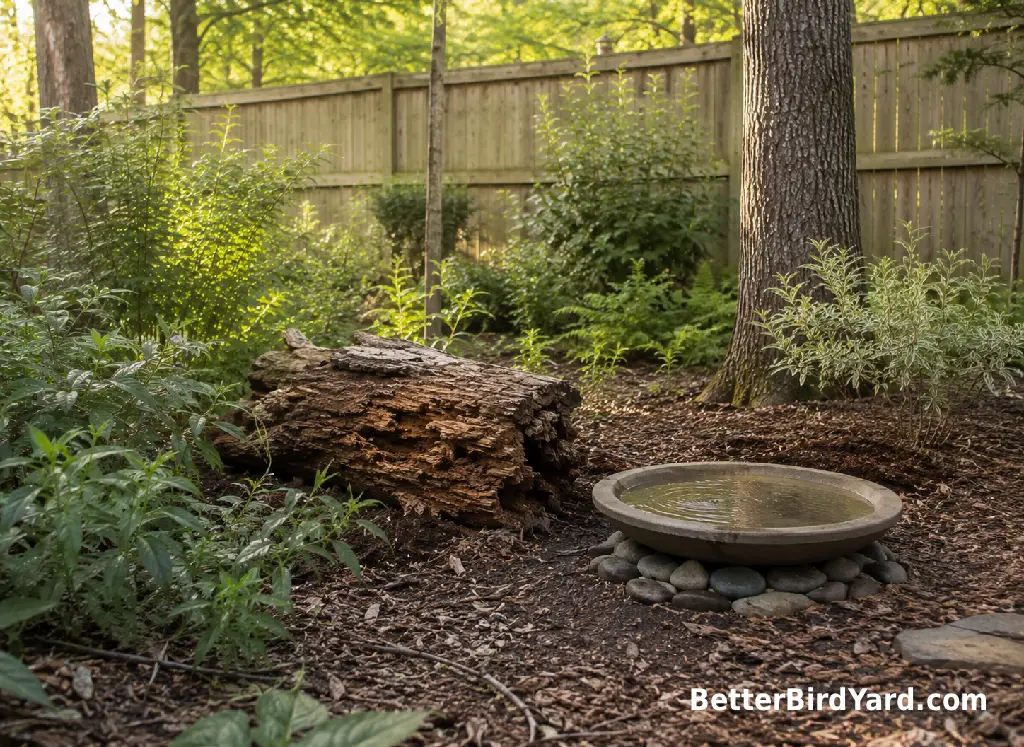
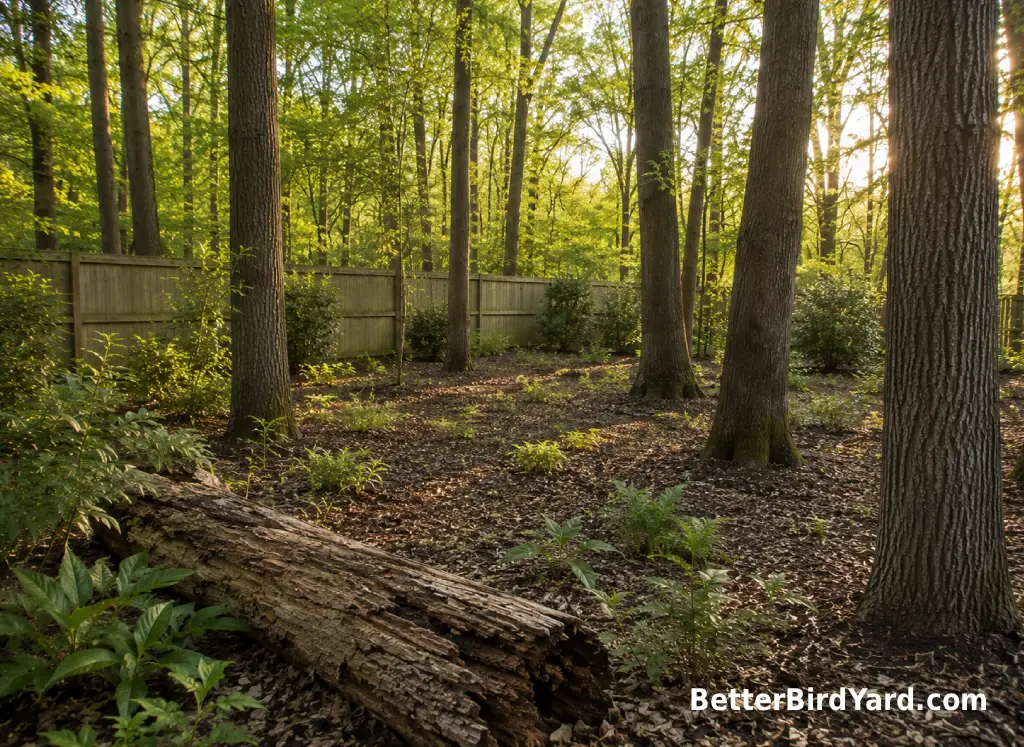
The best way to support pileated woodpeckers is to protect the things they already use: large trees, dead wood where safe, native plantings, clean water, and quiet space. You do not need a perfect forest. Even a small yard near wooded habitat can be more bird-friendly if it avoids the most common hazards.
- Leave a safe snag, stump, or fallen log when it does not threaten people, pets, buildings, or neighbors.
- Plant native shrubs and trees suited to your region to support insects, berries, and cover.
- Keep bird baths clean and refreshed so water does not become stagnant.
- Use feeders modestly, clean them regularly, and remove spoiled food.
- Reduce pesticide use where possible, especially around bird feeding and planting areas.
- Keep cats indoors or safely contained to reduce hunting pressure on birds.
- Use window-strike prevention if birds are flying toward reflective glass.
This is one of those species where patience matters. A pileated woodpecker may pass through your yard once, visit a dead stump for several days, or never come to a feeder at all. Results vary by region, season, surrounding habitat, tree age, and local food supply.
If you see a pileated woodpecker that appears sick, injured, stunned, trapped, or unable to fly, do not try to diagnose or treat it. Keep pets and people away and contact a licensed wildlife rehabilitator, local wildlife agency, animal control, or another qualified local professional for guidance. For more everyday habitat ideas, see our bird-friendly backyard guide.
Quick FAQ
Is Pilliated Woodpecker A Different Bird?
No. The standard spelling is pileated woodpecker. The word pileated means crested, which fits the bird’s bold red crest. Merriam-Webster defines pileated as having a crest and includes pileated woodpecker as an example.
How Do You Pronounce Pileated?
Both common pronunciations are used: one starting like pie and one starting like pill. Cornell’s bird-name pronunciation page lists both versions, so you do not need to worry too much about which one you hear from another birder.
Are Pileated Woodpeckers Rare?
They are not rare everywhere, but they can feel rare if your yard lacks large trees or nearby woods. Cornell Lab describes them as fairly common and of low conservation concern, while also noting their dependence on large standing dead trees and fallen logs.
Do Pileated Woodpeckers Damage Houses?
They can excavate wood, but repeated activity on a structure may point to softened wood, moisture problems, insects, or attractive drumming surfaces. Do not harm the bird. Inspect the building issue, repair damaged wood when appropriate, and check local wildlife rules before excluding birds from active nesting areas.
What Is The Best Time To See One?
There is no guaranteed time, but early morning can be productive because many birds are active and calls carry well. In wooded yards, also watch after rain or during quiet periods when hammering sounds are easier to hear.
Final Thoughts On The Pileated Woodpecker
A pileated woodpecker is the kind of bird that can stop a backyard watcher mid-sip of coffee. Its size, red crest, loud calls, and rectangular feeding holes make it one of the easiest large woodpeckers to recognize once you know what to look for.
The most important identification clues are simple: crow-sized woodpecker, mostly black body, white face and neck stripes, red crest, heavy bill, deep drumming, and large rectangular holes in dead wood. If your yard borders woods or has mature trees nearby, you may have a real chance of seeing one, especially if dead wood, native plantings, and quiet cover are part of the local habitat.
Supporting pileated woodpeckers responsibly does not mean chasing them with food or trying to force a visit. It means keeping feeders clean, offering suet only in a safe and manageable way, protecting mature trees where practical, leaving dead wood when it is safe, and treating wild birds as wild. That approach is better for the bird, easier for the homeowner, and more satisfying for anyone who wants a backyard that feels alive for the right reasons.