Hummingbird Heart Rate: How Fast Their Hearts Beat
A hummingbird heart rate can sound almost impossible the first time you hear it. These tiny birds may have an active heart rate around 1,200 beats per minute, especially during the high-energy work of hovering and fast flight. That number is not a calm, all-day resting number, though. The heart rate of hummingbirds changes with activity, temperature, species, and whether the bird is alert, resting, migrating, or entering torpor.
For backyard bird watchers, the point is not to measure a hummingbird’s pulse. You cannot safely do that at home, and there is no need to try. The useful takeaway is simpler: hummingbirds live on a very tight energy budget. Their fast heartbeat helps explain why they visit flowers and feeders often, why they perch more than beginners expect, and why clean nectar, safe feeder placement, and natural habitat matter.
This BetterBirdYard guide explains what the heart rate of a hummingbird really tells us, how torpor slows everything down, and how to support hummingbirds responsibly in an ordinary yard, balcony, or patio garden.
How Fast Is A Hummingbird’s Heart Rate?
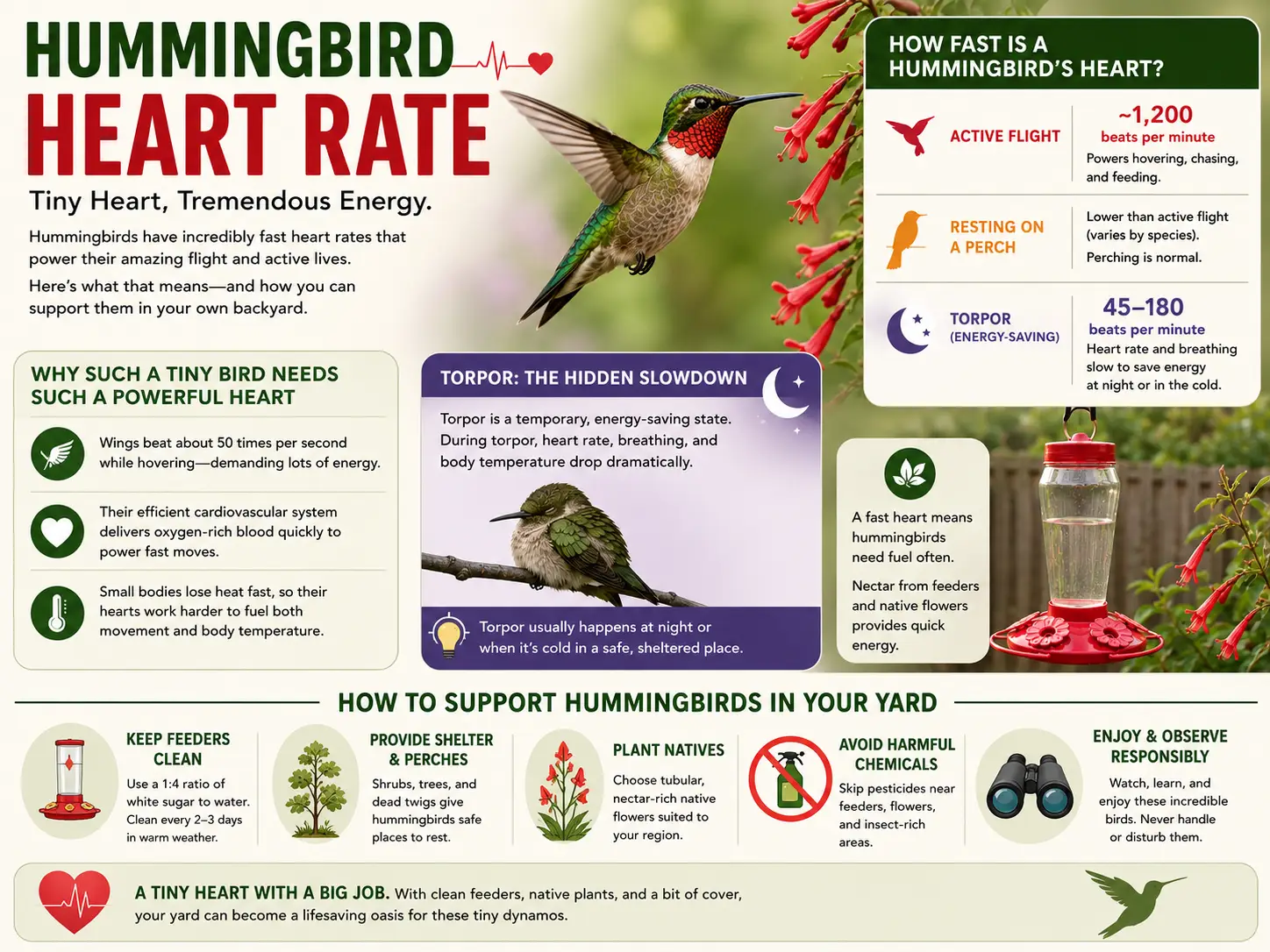
The quick answer: an active hummingbird’s heart can beat at about 1,200 beats per minute. Cornell Lab’s Bird Academy describes hummingbirds as having a heart that beats 1,200 times a minute to help power hovering flight, and Audubon gives a similar active-flight figure.
That does not mean every hummingbird is always beating at 1,200 beats per minute. A perched, resting bird is different from a bird chasing another hummingbird away from a feeder. Species matter, too. Cornell’s All About Birds notes that a Black-chinned Hummingbird’s heart averages about 480 beats per minute at rest, then may drop far lower during torpor.
| Hummingbird State | Typical Heart Rate Idea | What It Means For Backyard Watchers |
|---|---|---|
| Active Flight | Often described around 1,200 beats per minute | The bird is burning energy quickly while hovering, chasing, or feeding. |
| Resting On A Perch | Lower than active flight and species-dependent | A perched hummingbird is not necessarily weak; resting is normal. |
| Torpor | Can drop dramatically, such as 45–180 beats per minute in Black-chinned Hummingbirds | This is an energy-saving state, usually hidden from casual daytime viewing. |
A helpful way to think about the heart rate of a hummingbird is range, not one perfect number. These birds shift between intense bursts of activity and quiet energy-saving pauses.
Why Such A Tiny Bird Needs Such A Powerful Heart
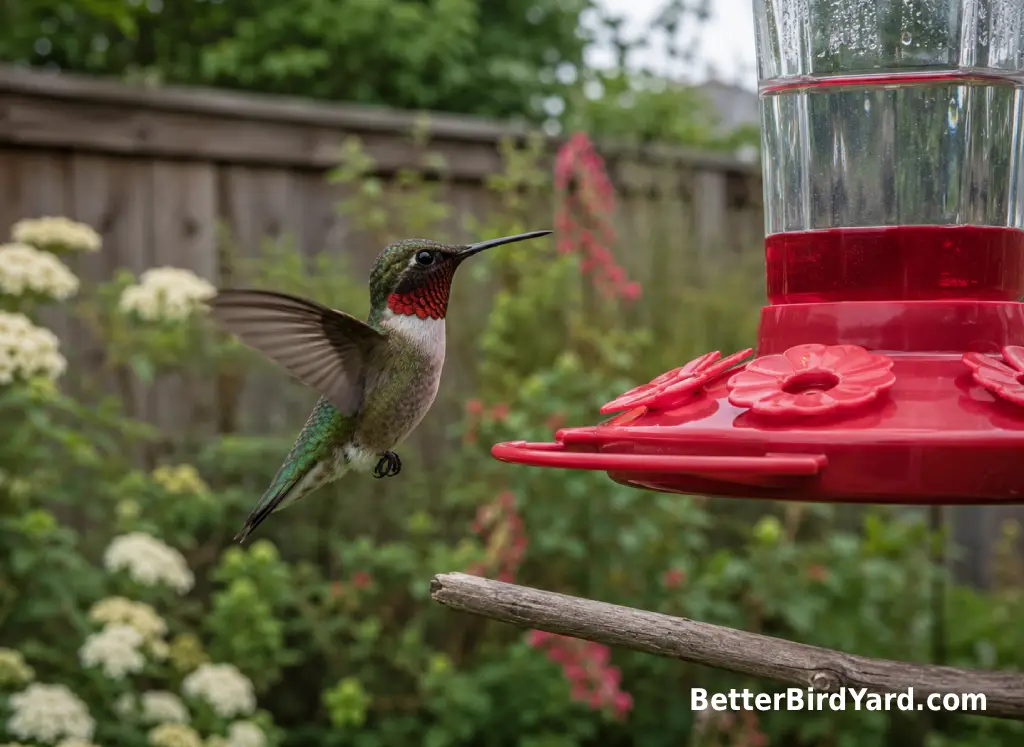
Hummingbirds are built for fast movement. They can hover in place, back up, dart sideways, and chase rivals through tight spaces around flowers and feeders. Cornell notes that hummingbirds commonly beat their wings around 50 times per second while hovering, and the Ruby-throated Hummingbird beats its wings about 53 times per second.
That wing speed requires oxygen-rich blood moving through the body very quickly. Audubon explains that birds have highly efficient cardiovascular systems, and small birds lose heat rapidly, which helps explain why their hearts work so hard compared with larger animals.
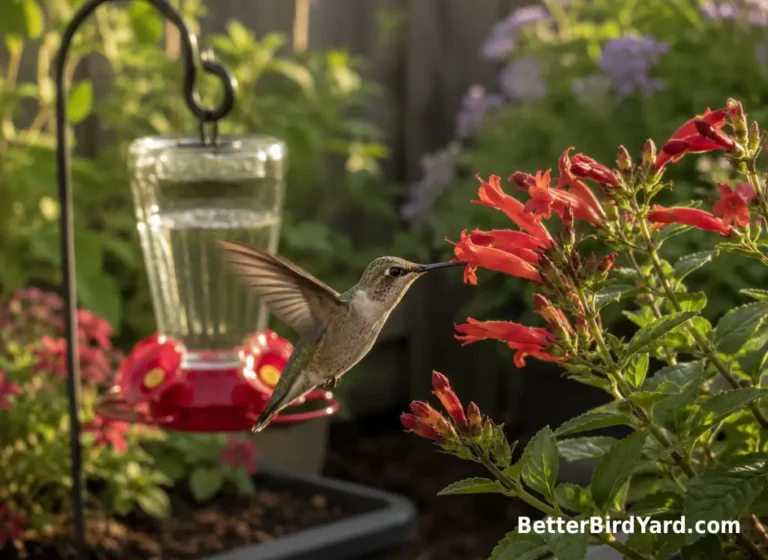
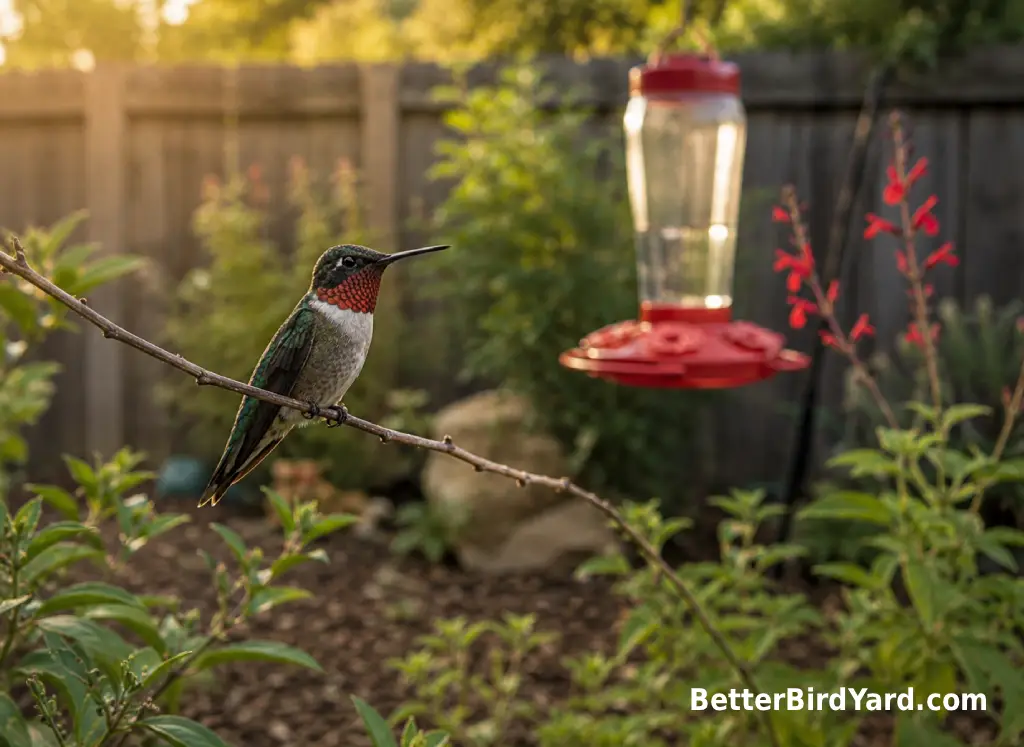
In a backyard, you may see the result as a blur at the feeder: hover, sip, zip away, perch, repeat. That quiet perch matters. Cornell’s Bird Academy points out that hummingbirds spend a large portion of the day perching, even though we often picture them constantly flying.
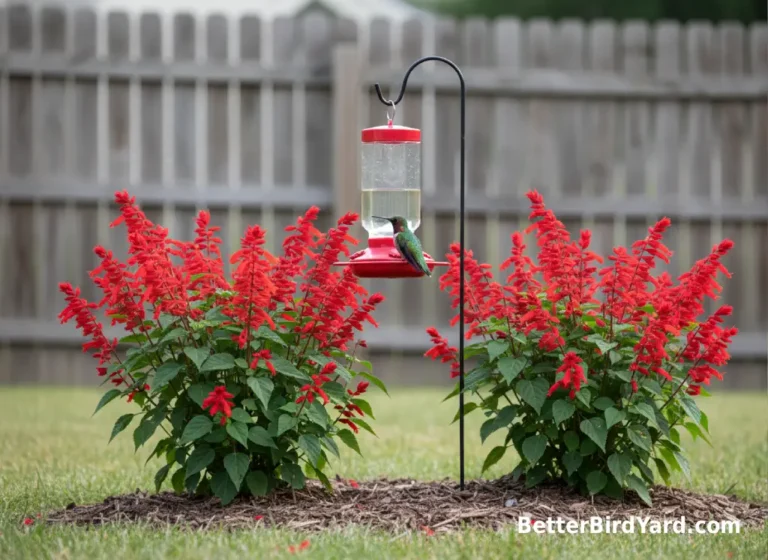
For a small yard or balcony, this is a useful clue. A feeder by itself is less helpful than a feeder near safe cover. A nearby shrub, small tree, trellis, or simple dead twig left in place can give hummingbirds a lookout and resting spot between feeding trips.
Torpor Is The Nighttime Slowdown Most Backyard Watchers Never See
Torpor is one of the most remarkable parts of hummingbird biology. It is a temporary energy-saving state that helps hummingbirds survive nights, cold snaps, and periods when fuel is limited. During torpor, breathing and heart rate slow dramatically.
Cornell’s All About Birds reports that Black-chinned Hummingbirds may drop from an average resting heart rate of about 480 beats per minute to 45–180 beats per minute in torpor. Cornell also notes that Anna’s Hummingbirds and many other species can enter torpor when temperatures fall, with breathing and heart rate slowing and body temperature dropping sharply.
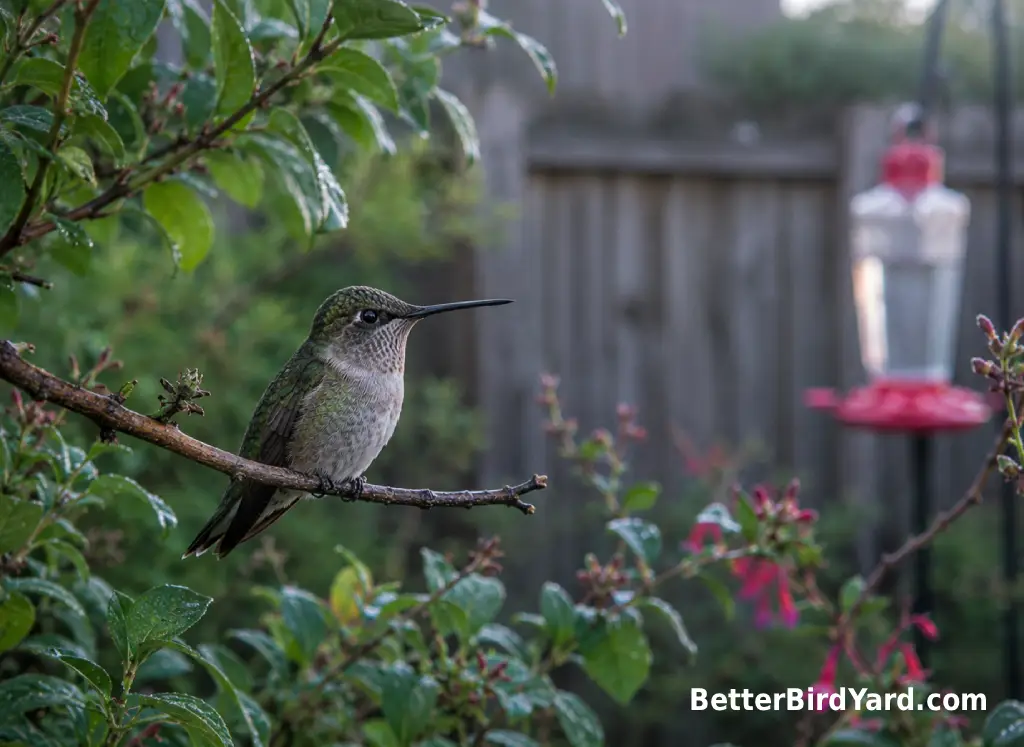
Most backyard watchers will not clearly see torpor because it often happens while the bird is tucked away on a sheltered perch. If you spot a hummingbird sitting quietly at dawn, it may simply be warming up and becoming active again. It may also just be resting. From a distance, it is not possible to diagnose what is happening, so the safest approach is to observe without disturbing the bird.
For your yard, torpor is another reason to think beyond the feeder. Wind protection, shrubs, small trees, native plantings, and safe perches can all make a hummingbird-friendly space more useful than a feeder hanging alone in an exposed spot.
What Heart Rate Teaches Us About Feeder And Flower Habits
A fast hummingbird heart rate helps explain why these birds feed so often. Nectar gives them quick energy, but feeders should be treated as supplemental food, not the whole habitat. The National Wildlife Federation describes hummingbird feeders as a supplement to natural food sources from native plants and insects.
In a small yard, we would keep the setup simple and easy to maintain:
- Use a small, easy-to-clean feeder that your visitors can empty in a few days.
- Place it where you can reach it easily for cleaning and refilling.
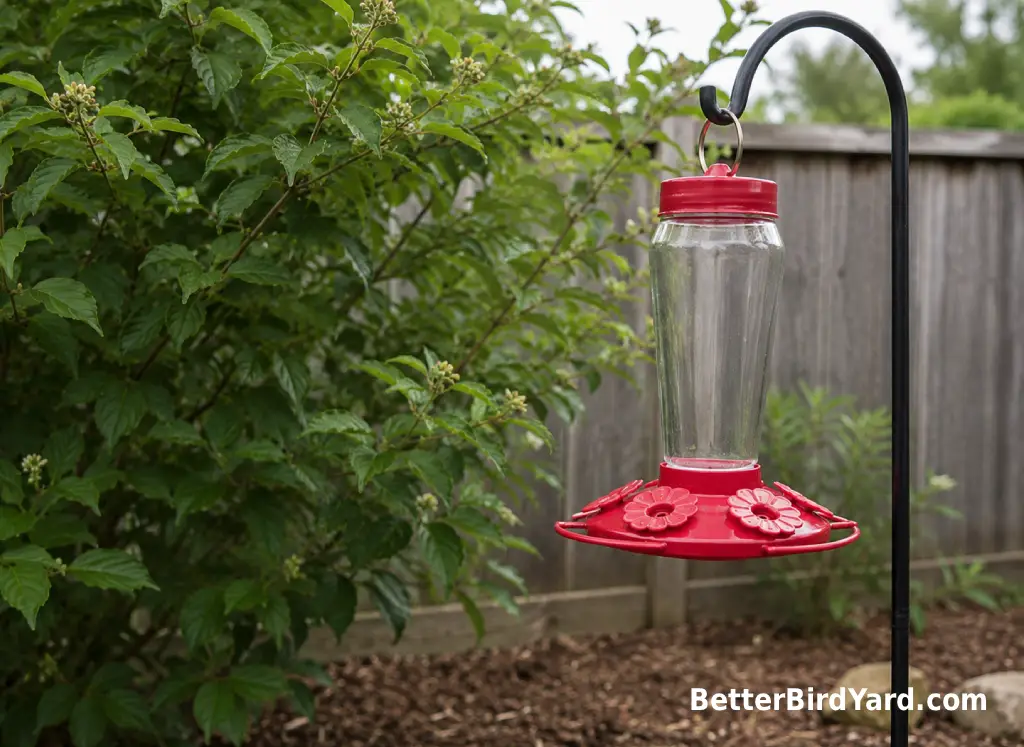
- Keep a shrub, small tree, or safe perch nearby so hummingbirds can rest.
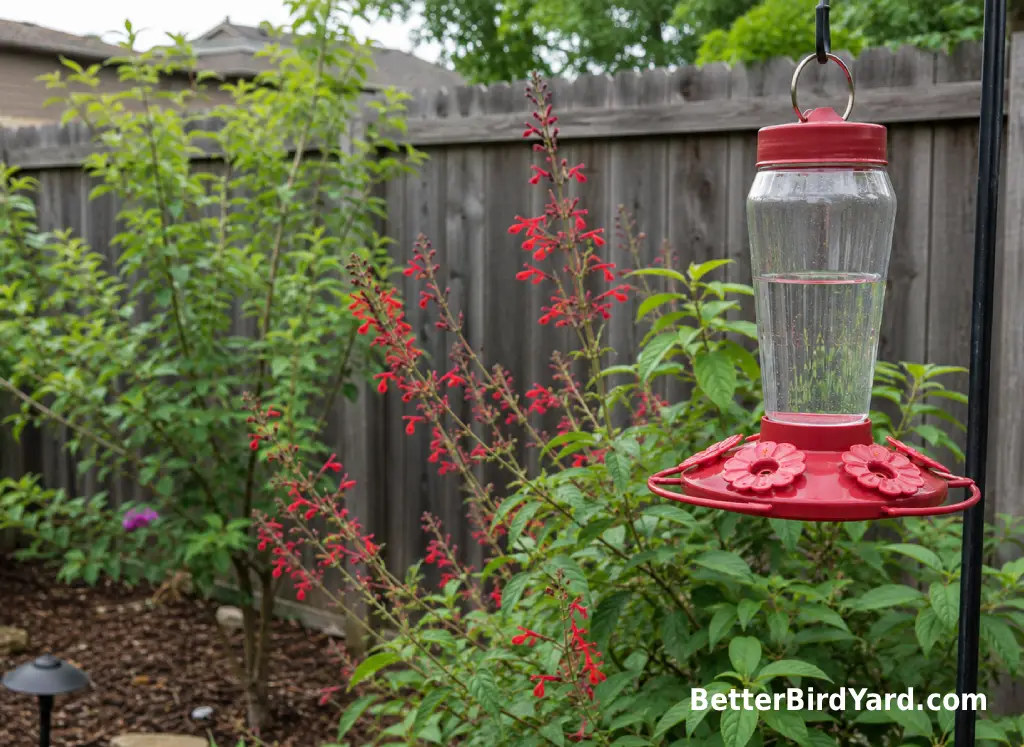
- Add native or region-appropriate tubular flowers where possible.
- Avoid pesticide use around feeder and flower areas, especially where hummingbirds may also be catching small insects.
The standard backyard nectar mix is one part plain white sugar to four parts water. National Wildlife Federation recommends avoiding red nectar solutions, honey, and artificial sweeteners, and Cornell and Project FeederWatch give similar safety guidance on sugar-water feeders.
Editorial Note: If you only change one thing, choose a feeder you can clean without frustration. A beautiful feeder with tiny hidden crevices often becomes a problem in real life because nectar spoils faster than beginners expect.
Common Backyard Mistakes To Avoid
The biggest hummingbird feeder mistakes are usually ordinary maintenance problems, not complicated birding mistakes. Because hummingbirds feed so actively, a neglected feeder can expose many visits to the same spoiled nectar.
- Using Red Dye: Red feeder parts are enough. Skip red dye and red commercial nectar.
- Using Honey Or Brown Sugar: Use plain white sugar only. Honey spoils easily in water, and other sweeteners are not a safe substitute.
- Letting Nectar Sit Too Long: Clean and refill every 1–3 days depending on weather, and sooner if nectar looks cloudy or you see mold.
- Buying A Feeder That Is Hard To Scrub: If a brush cannot reach the ports and corners, choose a simpler feeder.
- Hanging The Feeder Where Birds Lack Cover: A nearby shrub or small tree gives hummingbirds a place to perch and watch.
National Wildlife Federation recommends cleaning hummingbird feeders every 1–3 days depending on conditions, with more frequent cleaning in hot weather. Project FeederWatch notes that bacteria and fungi grow faster as temperature rises and advises cleaning immediately if nectar is cloudy or black mold appears.
For a deeper feeder safety walkthrough, see our homemade hummingbird food guide.
When A Hummingbird Looks Slow, Cold, Or Unwell
A quiet hummingbird is not automatically in trouble. Hummingbirds perch often, rest between feeding trips, and may be less active in chilly weather. A bird sitting still at dawn may simply be warming and becoming alert after a cold night.
At the same time, do not use torpor as a reason to ignore a bird that appears injured, trapped, unable to fly, easy to approach, or in immediate danger from pets, traffic, or a window strike. BetterBirdYard is not a wildlife rehabilitation service, and a backyard watcher cannot diagnose a wild bird’s condition from behavior alone.
Project FeederWatch says only veterinarians or federally licensed wildlife rehabilitators can legally treat wild birds, and it advises people not to try to care for compromised wild birds themselves. If a hummingbird appears injured or unable to survive without help, contact a licensed wildlife rehabilitator, local wildlife agency, animal control, or another qualified local professional.
If you see a bird at your feeder that looks sick or unusually compromised, clean the feeder and feeder area thoroughly, consider pausing that feeder, and check local wildlife agency guidance. Project FeederWatch recommends removing feeders used by a sick bird for a couple of weeks to reduce the chance of spreading disease.
FAQ: Quick Answers About Hummingbird Heartbeats
What Is The Heart Rate Of A Hummingbird?
An active hummingbird’s heart is often described around 1,200 beats per minute, but the real answer depends on the bird’s activity, species, temperature, and whether it is resting or in torpor.
Is A Hummingbird’s Heart Always Beating That Fast?
No. A perched hummingbird is not working as hard as a hovering one, and torpor can slow heart rate dramatically. Black-chinned Hummingbirds, for example, may drop to 45–180 beats per minute during torpor.
Can I Tell A Hummingbird’s Heart Rate By Watching It?
No. You can observe behavior, such as hovering, feeding, chasing, or perching, but you cannot safely measure a wild hummingbird’s heart rate in a backyard setting. Enjoy the bird from a respectful distance.
Does A Fast Heart Rate Mean Hummingbirds Need Constant Feeder Nectar?
No. Feeders can help when they are clean and properly maintained, but hummingbirds also use natural nectar and eat small insects. A safer backyard plan combines fresh nectar, native or region-appropriate flowers, perches, clean water features where appropriate, and reduced pesticide use.
Will Leaving A Feeder Up Stop Migration?
Feeders do not control migration by themselves. Hummingbird movement is shaped by daylight, weather, food availability, species, and region. Keep feeders clean while they are up, and follow local birding or wildlife-agency guidance if your area has special concerns.
A Practical Takeaway For Your Yard
The hummingbird’s heart is the tiny engine behind all that hovering, darting, and feeder guarding. A hummingbird heart rate around 1,200 beats per minute during active flight is amazing, but the slower moments matter just as much. Perching, night roosting, and torpor are all part of how these birds balance extreme energy use with survival.
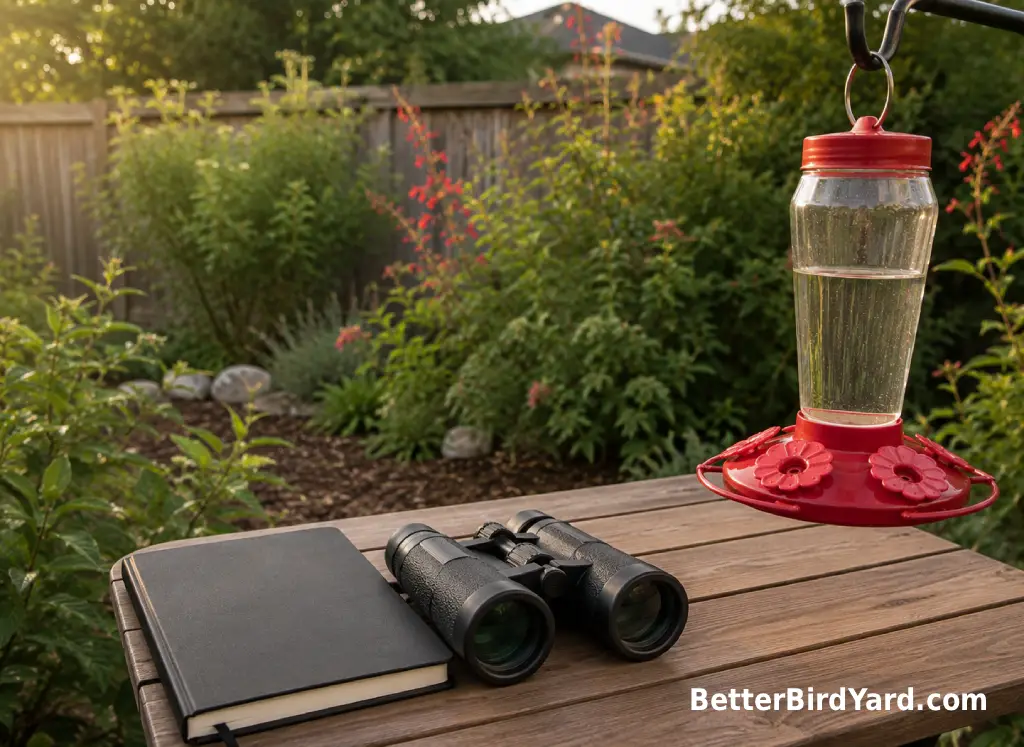
For backyard bird watchers, the best response is practical care. Offer a clean feeder only if you can keep up with it. Use plain white sugar and water, skip dye and honey, replace nectar before it spoils, and choose feeder locations with both visibility and safety in mind. Add flowers, shrubs, and perches so your yard supports more than quick sugar-water visits.
In a small yard or patio, you do not need a complicated setup. A simple clean feeder, a few well-chosen plants, and one safe perch can make hummingbird watching more rewarding and more responsible.