Plants That Attract Hummingbirds In Any Size Yard
The best plants that attract hummingbirds usually have nectar-rich, tubular flowers, especially in red, orange, pink, or purple. But a good hummingbird garden is not just one red flower by the feeder. It is a small, steady buffet of blooms, insects, shelter, and clean water that fits your real space.
That space might be a suburban yard, a mulched bed beside the driveway, a sunny balcony, or a few pots near a patio chair. Cornell Lab’s bird-friendly guidance notes that even a single native potted plant on a balcony can contribute to better habitat, while yards and gardens can help birds rest, refuel, and bridge gaps between larger green spaces.
Use the plant ideas below as a starting point, then check your state extension office, local native plant society, or Audubon native plant database for choices that belong in your region. Hummingbird visits vary by location, season, weather, surrounding habitat, and what else is blooming nearby, so think in terms of improving your odds rather than guaranteeing a bird on day one.
Quick Answer: Best Plants That Attract Hummingbirds
For many US yards, the strongest starting point is a mix of native or regionally appropriate flowers with long bloom windows. Audubon describes native tubular flowers, especially red ones, as an easy answer for attracting and feeding hummingbirds, and the USDA Forest Service lists red or orange color, long tubular shape, and dilute nectar among traits that appeal to hummingbirds.
Good plants to consider include:
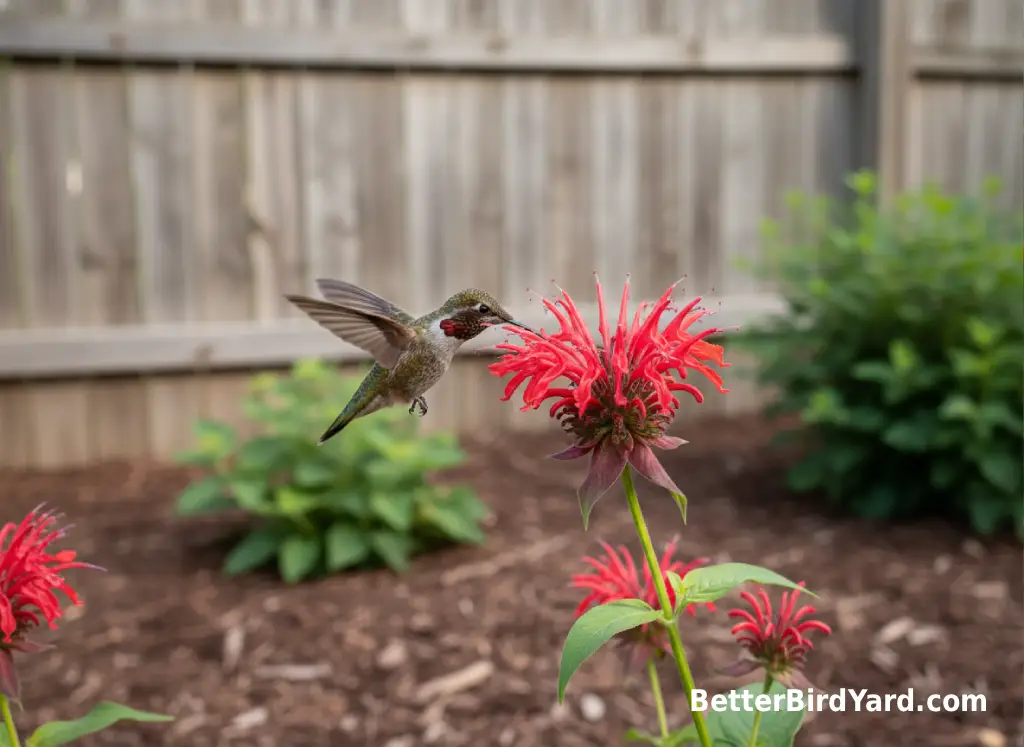
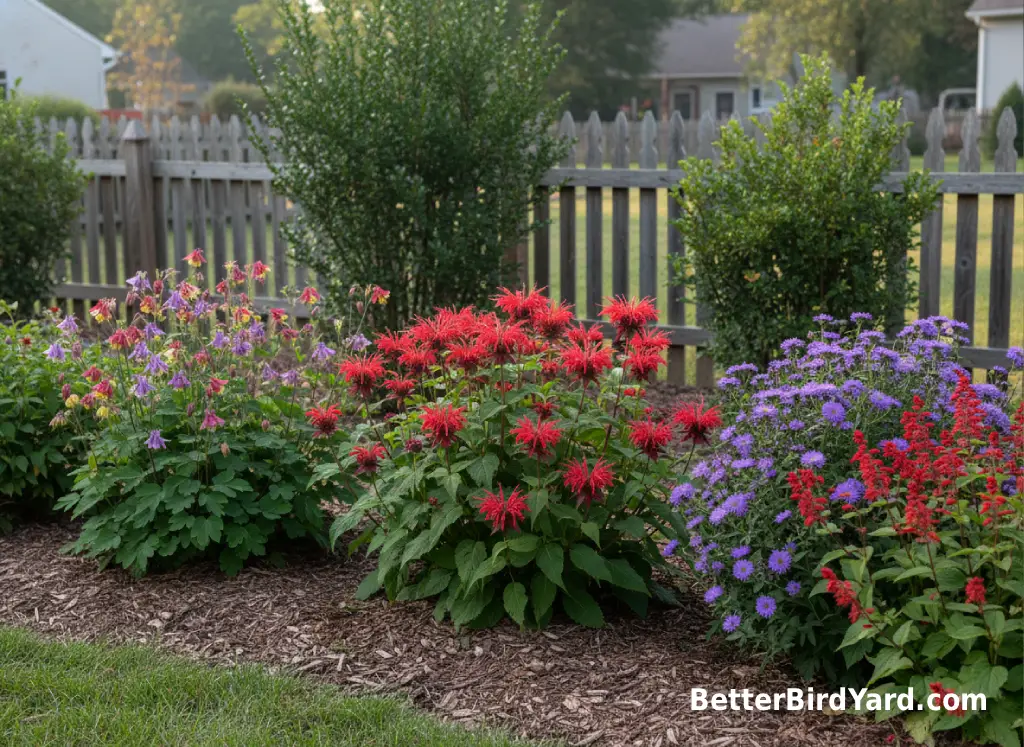
- Bee balm or wild bergamot for sunny beds and pollinator gardens.
- Cardinal flower for moist spots, rain gardens, or areas that do not dry out quickly.
- Coral honeysuckle for a fence, trellis, or large container with support.
- Columbine for spring bloom, especially in partial shade.
- Penstemon or beardtongue for sunny, well-drained beds.
- Native salvia or hummingbird mint where it fits your region and growing conditions.
- Jewelweed for moist, partly shaded areas where it is native and appropriate.
A common beginner mistake is buying one pretty plant and expecting instant hummingbirds. A better approach is to plant several nectar sources that bloom at different times. One spring flower, one summer workhorse, and one late-season bloomer will usually do more than a single isolated pot.
What Flower Characteristics Attract Hummingbirds?
Hummingbirds are visual foragers. Bright flowers help them notice a plant, and tubular blooms match the way they probe flowers with long bills and tongues. Red is famous for a reason, but it is not the only useful color. Audubon notes that tube-shaped or bell-shaped blooms in other colors may also be used by hummingbirds.
When you are standing at a nursery bench wondering what flowers attract hummingbirds, look for these practical clues:
- Tube, trumpet, or bell-shaped flowers rather than flat, shallow blooms.
- Red, orange, coral, pink, purple, or vivid blue flowers.
- Repeated bloom clusters rather than one or two scattered flowers.
- Plants that bloom for several weeks or can rebloom with simple care.
- Flowers that match your light and soil, because stressed plants produce fewer blooms.
Fragrance is less important for hummingbirds than it is for many insect pollinators. A flower can smell wonderful and still be a weak hummingbird plant if the nectar is hard to reach or the bloom shape is not useful. On the other hand, a modest-looking native penstemon or columbine can be surprisingly valuable when it blooms at the right time in the right place.
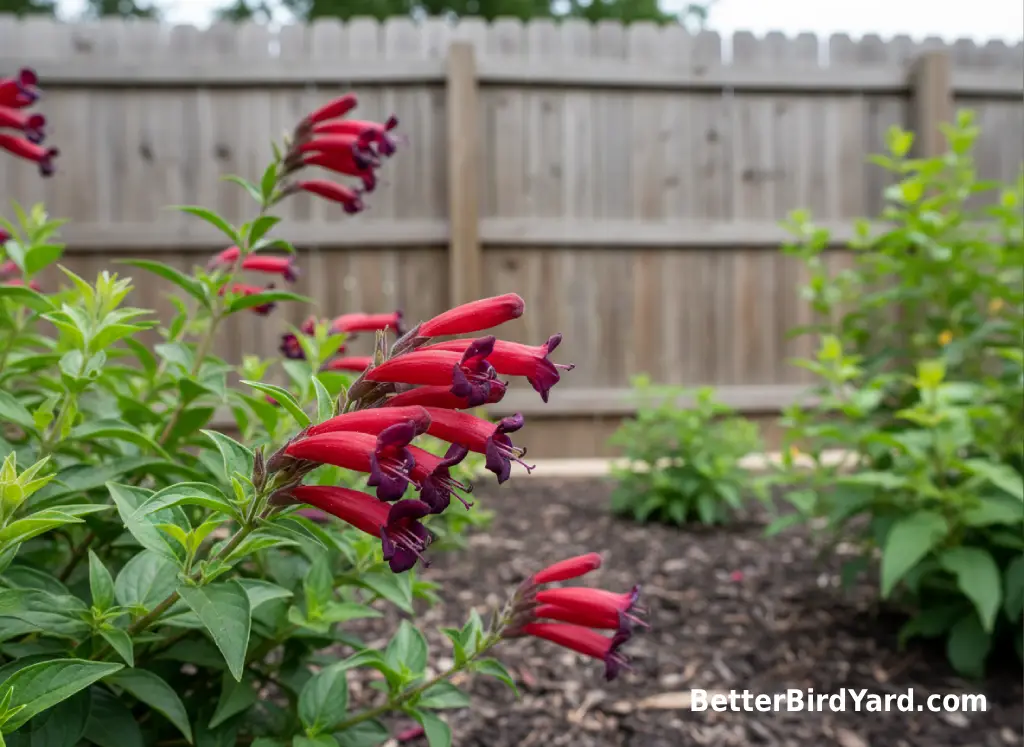
Perennial Plants For Hummingbirds
Perennial plants that attract hummingbirds are often the backbone of a low-maintenance yard. They may cost more upfront than annuals, but once they settle in, many return each year and give you a more reliable bloom pattern. The exact best choices depend on your region, soil moisture, sun exposure, deer pressure, and local invasive plant concerns.
Audubon, the USDA Forest Service, and NC State Extension all list several hummingbird-friendly native or commonly recommended plants, including bee balm, cardinal flower, columbine, coral honeysuckle, penstemon, jewelweed, and trumpet vine. Use regional guidance before planting, especially with vigorous vines.
| Plant | Best Backyard Use | Beginner Notes |
|---|---|---|
| Bee Balm Or Wild Bergamot | Sunny beds and pollinator borders | Good summer bloom; give it airflow to reduce mildew issues. |
| Cardinal Flower | Moist soil, rain gardens, pond edges | Excellent red tubular bloom, but it does not like drying out. |
| Columbine | Spring color in part shade | Useful early bloom; let some seed heads mature if you want volunteers. |
| Penstemon Or Beardtongue | Sunny, well-drained beds | Many regional species exist, so choose one suited to your area. |
| Coral Honeysuckle | Trellises, fences, large containers | Choose native coral honeysuckle rather than invasive Japanese honeysuckle. |
| Jewelweed | Moist, partly shaded native areas | Useful where it belongs naturally; it can self-seed readily. |
In a small yard, I would not try to plant every popular hummingbird flower. I would start with three perennials that match the site: one early, one midsummer, and one late bloomer. Then I would watch which plant gets visited and add more of the winners next season.
Annuals, Pots, And Hanging Baskets For Small Spaces
Potted plants that attract hummingbirds are helpful for renters, balcony bird watchers, and anyone who is not ready to dig up a bed. Cornell Lab’s container plant guidance notes that container gardening can bring nature close to a balcony, deck, or doorstep, but containers dry out faster and are more vulnerable to winter cold than in-ground plants.
For containers, look for compact plants with lots of blooms rather than one tall plant that flops after the first storm. Depending on your region and nursery availability, useful options may include red salvia, compact bee balm, dwarf penstemon, coral bells, native columbine, lantana where appropriate, and annuals such as zinnias or petunias as supplemental color.
For hanging plants that attract hummingbirds, choose baskets that are easy to water and inspect. Fuchsia can work well in cooler, partly shaded conditions. Petunias, trailing salvia types, and other nectar flowers can be useful in sunny baskets, but they need consistent watering. A dry hanging basket stops blooming quickly, and a non-blooming basket is mostly decoration from a hummingbird’s point of view.
For a renter-friendly setup, keep it simple:
- Use one large pot instead of several tiny pots that dry out by lunch.
- Place blooms where you can see them from a window but not directly against glass.
- Choose a pot with drainage holes so roots do not sit in water.
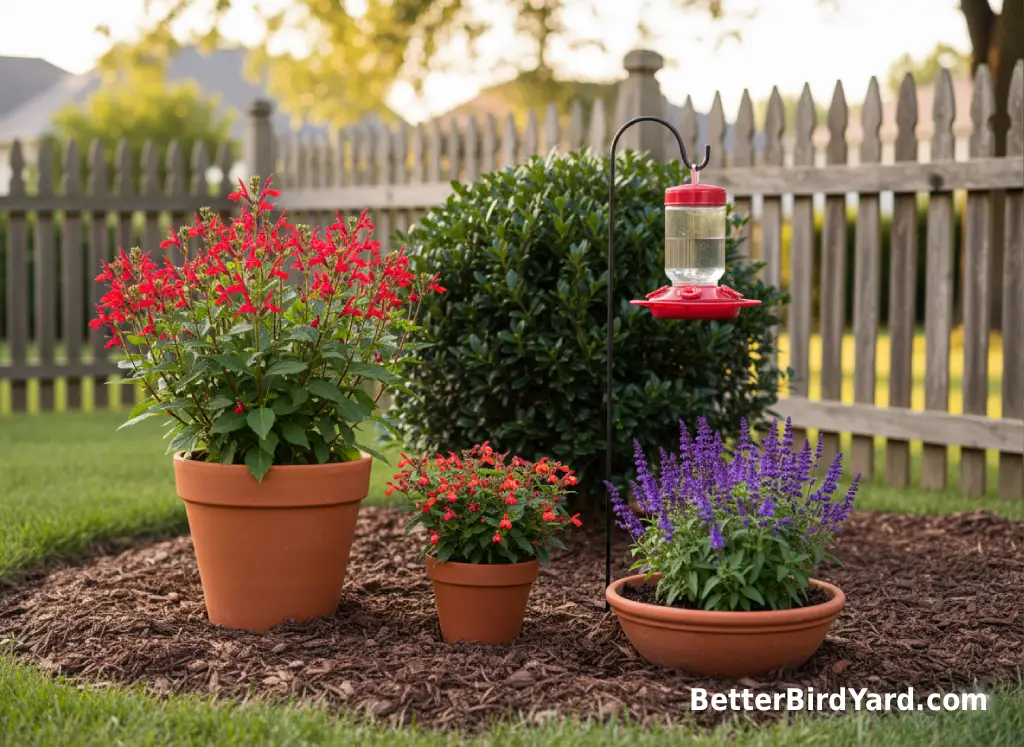
- Group two or three flowering pots near a shrub or small trellis for shelter.
If your patio has reflective glass, add exterior window decals, tape patterns, screens, or other bird-safe glass treatments. The U.S. Fish and Wildlife Service recommends making the entire window visible to birds, including exterior patterns spaced closely enough for small birds such as hummingbirds to notice.
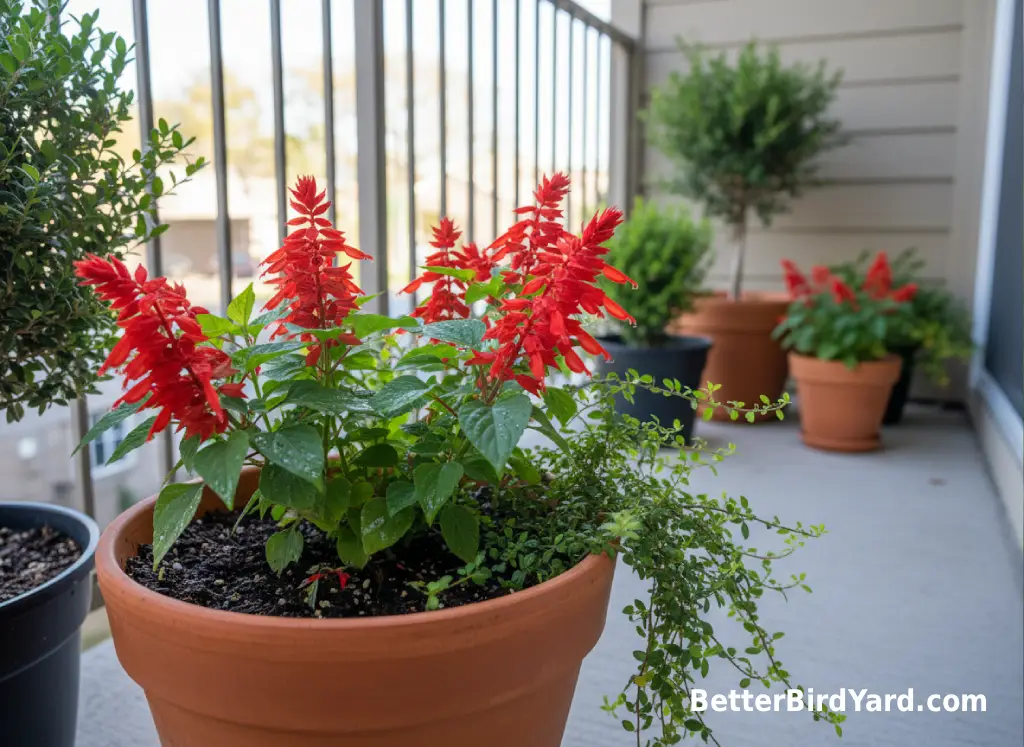
Climbing Plants And Shrubs That Build A Better Feeding Zone
Climbing plants that attract hummingbirds can make a small yard feel more alive because they use vertical space. A fence, trellis, porch post, or large container with a sturdy support can hold flowers at eye level, which is perfect for watching from a chair or kitchen window.
Coral honeysuckle is often one of the better vine choices where it is native or regionally appropriate. It provides tubular flowers without the same invasive reputation as Japanese honeysuckle. Crossvine can also be useful in parts of the Southeast. Trumpet vine is famous for hummingbirds, but it can be aggressive and difficult to manage in some yards, so check local guidance before planting it near siding, fences, or small garden beds.
Shrubs and small trees matter too. They give hummingbirds places to perch, scan, and rest between feeding trips. Cornell Lab guidance for hummingbird feeders notes that hummingbirds prefer feeders near trees and shrubs, where they can perch and feed on nearby natural foods between visits.
This is one of those details that beginners underestimate: flowers bring attention, but structure makes the space usable. A hummingbird may visit a red flower, perch in a nearby shrub, chase a tiny insect, then loop back to feed again. A bare lawn with one flowerpot can work occasionally, but a planted corner with vines, shrubs, and staggered blooms is much more inviting.
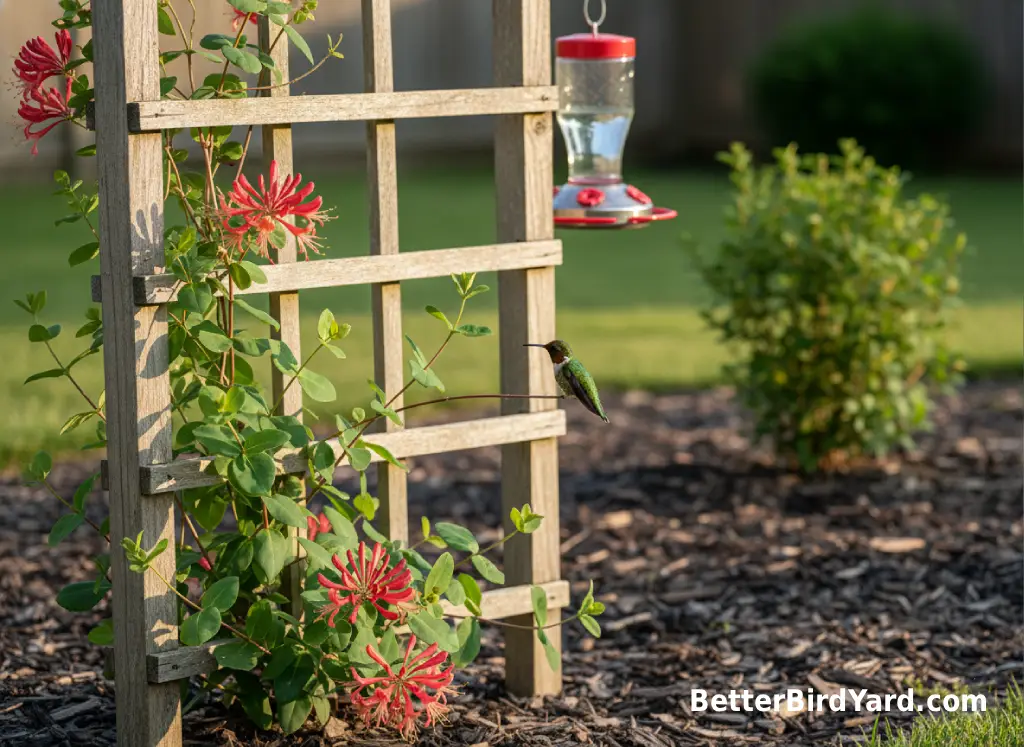
Plants That Attract Hummingbirds And Butterflies
Many plants that attract hummingbirds and butterflies overlap, but the two animals do not use flowers in exactly the same way. Hummingbirds often favor tubular nectar flowers. Butterflies also need nectar, but they need host plants for caterpillars and safe places to complete their life cycle.
NC State Extension recommends providing caterpillar food sources, damp areas such as moist sand or mud for butterfly watering, and avoiding pesticides because butterflies and caterpillars are insects that can be harmed or killed by insecticides.
For flowers that attract hummingbirds and butterflies in the same planting, consider mixing:
- Bee balm for nectar and summer color.
- Native milkweed where appropriate for monarch caterpillars and adult pollinators.
- Joe-pye weed for butterflies and late-season nectar in larger beds.
- Phlox or garden phlox where it fits your region and disease pressure.
- Native asters for late-season butterfly support.
- Penstemon or columbine for hummingbirds and native bees.
Editorial note: do not make the whole garden too tidy. Leaving some stems, leaves, and low cover in out-of-the-way spots can support insects that birds depend on. That does not mean letting a patio become messy or unsafe; it means choosing one back corner, shrub edge, or mulched bed where nature can be a little less polished.
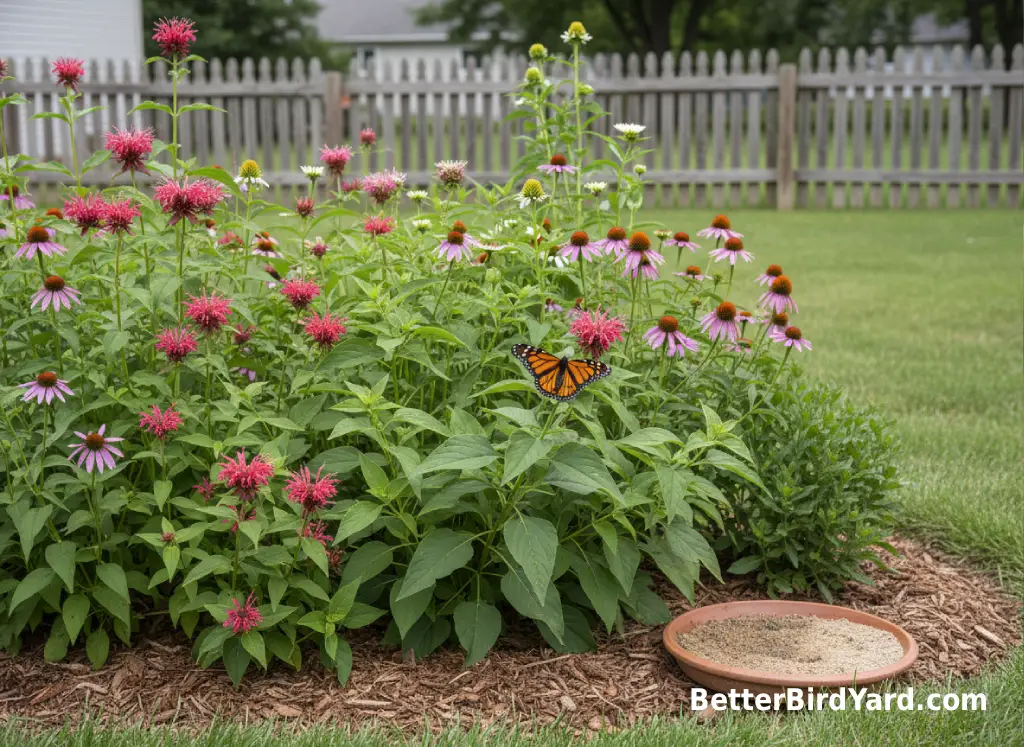
How To Plant For A Longer Hummingbird Season
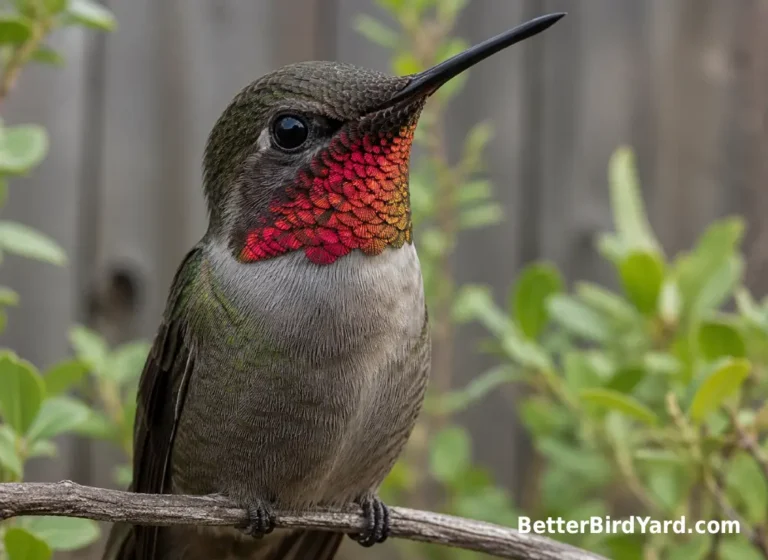
A good hummingbird planting is less about one best flower and more about timing. Hummingbirds need energy during migration, nesting season, and late-season movements, but the exact timing depends on your region and species. In the eastern and central US, many readers are watching for ruby-throated hummingbirds; in the West, several other species may be involved.
The USDA Forest Service notes that ruby-throated hummingbirds use nectar along long migration corridors and also eat spiders and tiny insects for fat and protein. It also lists spring-blooming plants such as columbine and red buckeye, summer plants such as bee balm, and late-season cardinal flower as useful examples.
For an ordinary backyard, try this sequence:
- Spring: columbine, red buckeye, native azalea, or another regional early nectar source.
- Early To Mid-Summer: bee balm, penstemon, salvia, or phlox.
- Late Summer To Fall: cardinal flower, jewelweed, late salvia, native asters, or hummingbird mint where appropriate.
Group similar plants in small clusters when you can. A single red bloom may be noticed, but a patch of three to five plants is easier for a fast-moving hummingbird to spot and revisit. In a tiny garden, that might mean three pots near one corner instead of three lonely pots spread across the patio.
Deadhead annuals and some perennials if they bloom better that way, but leave seed heads on plants that feed other birds later. The balance is simple: keep nectar plants blooming while also allowing parts of the yard to mature into useful habitat.
Common Mistakes To Avoid
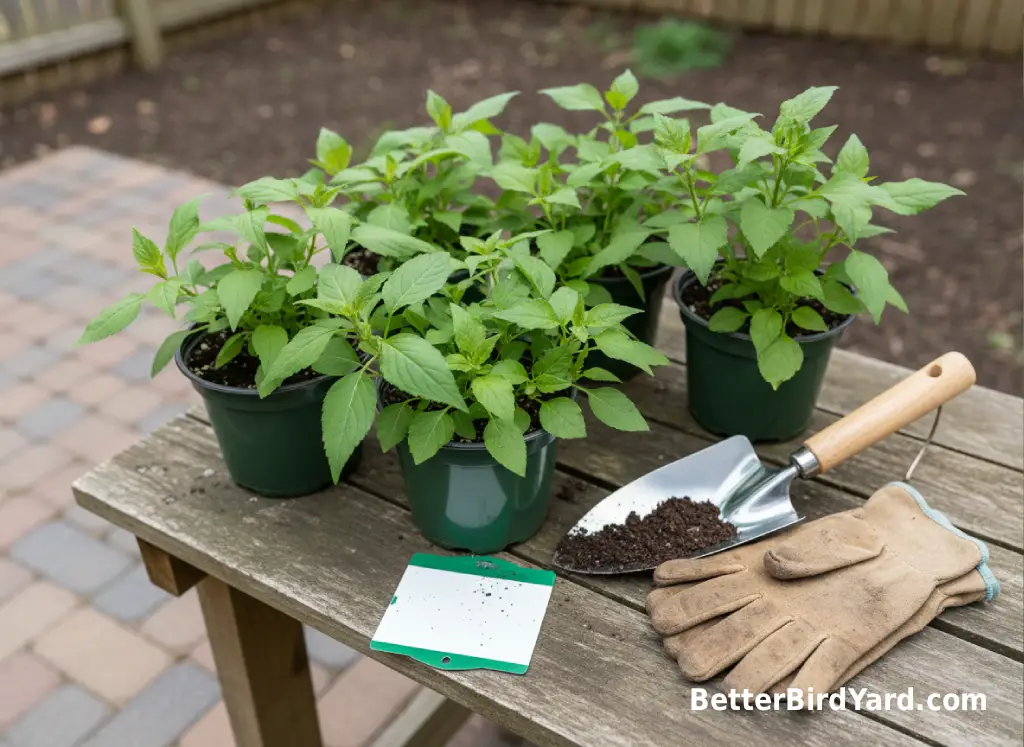
The most common hummingbird planting mistakes are easy to make because garden centers are full of colorful flowers that look useful. Some are excellent. Others are mostly decorative, short-lived, or poorly suited to your local habitat.
- Buying only red flowers without checking nectar value. Red helps with visibility, but bloom shape and nectar access matter too.
- Planting one lonely flower. Hummingbirds are more likely to notice repeated blooms or small clusters.
- Ignoring bloom timing. A yard that blooms hard for two weeks and then stops is less useful than one with staggered flowers.
- Choosing aggressive or invasive plants. Avoid Japanese honeysuckle and check local guidance before planting vigorous vines.
- Using pesticides around a pollinator bed. Hummingbirds eat insects, and butterflies need insects to survive their caterpillar stage.
- Letting pots dry out. Container flowers often need closer attention than in-ground plants, especially in heat.
Audubon’s bird-friendly yard guidance encourages planting native species, reducing pesticide use, conserving water, and removing invasive exotic plants. That is a good practical filter for a hummingbird garden too: choose plants that feed wildlife, fit the site, and do not create a bigger problem later.
Feeders, Water, And Safety Around A Hummingbird Garden
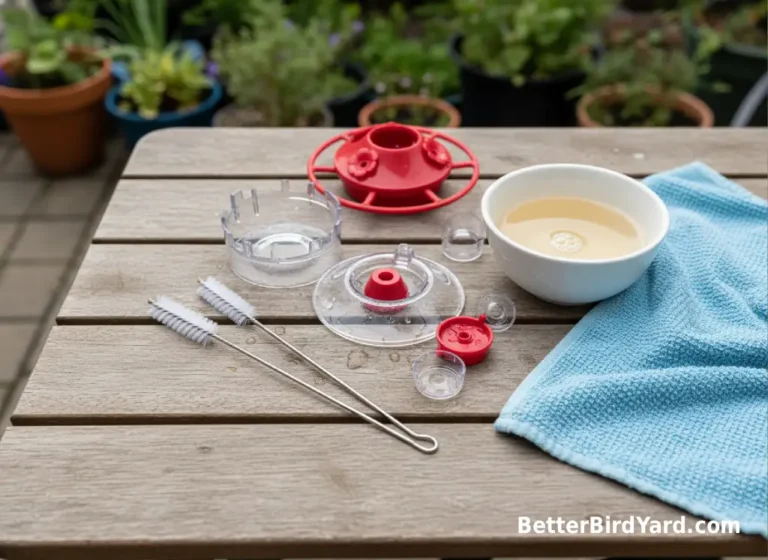
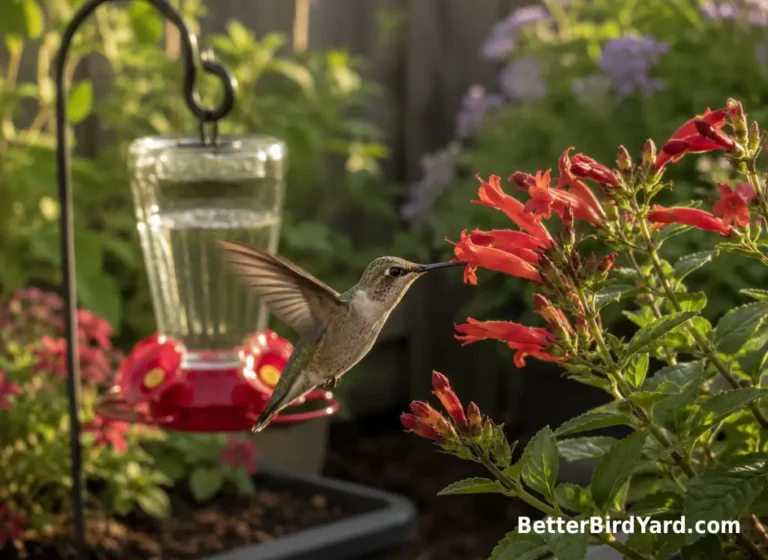
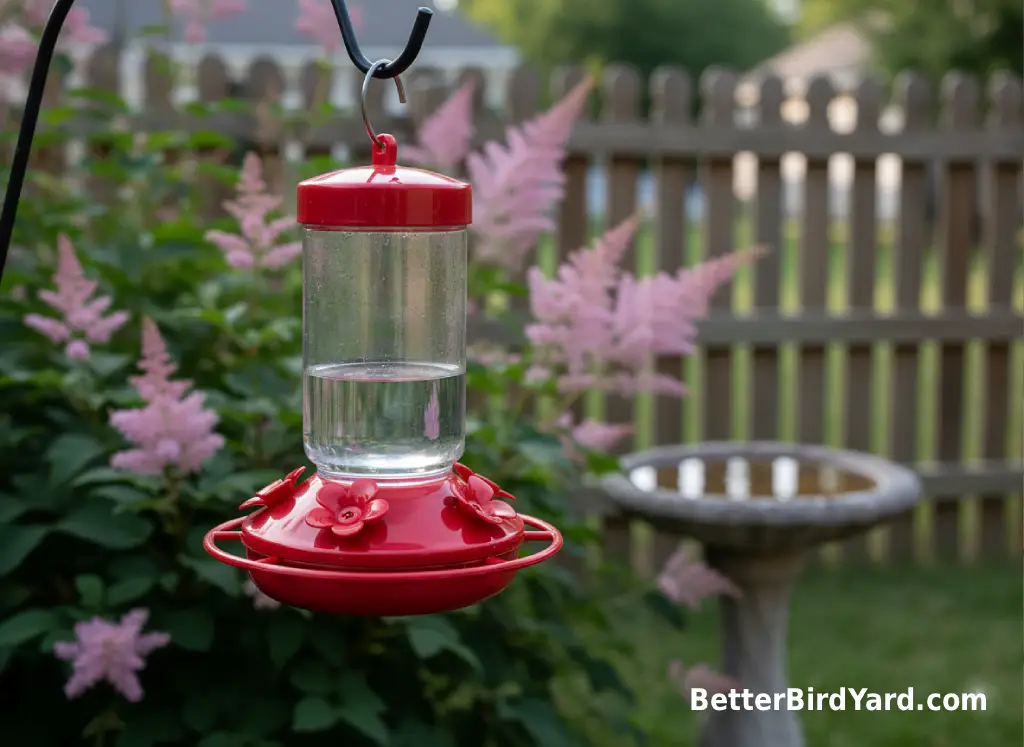
Plants are the safest long-term foundation, but a clean hummingbird feeder can supplement flowers, especially while new plants are getting established. Keep the feeder simple, easy to open, and easy to scrub. Cornell Lab’s hummingbird guidance says a good feeder should be easy to open and clean because unreachable surfaces can foster bacteria and fungi.
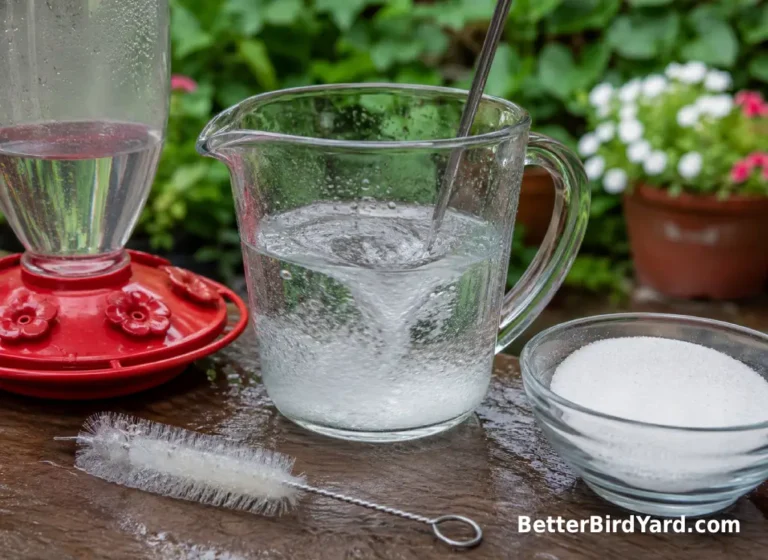
For homemade nectar, use plain granulated white sugar and water. Cornell’s feeder guidance gives the common ratio as 1/4 cup sugar per 1 cup water and warns not to use honey or red food coloring. Honey can ferment faster and foster bacterial and fungal growth, and red dye is unnecessary.
Clean nectar matters more than feeder style. Change nectar every few days, sooner in hot weather, and immediately if it looks cloudy or you see dark mold. Cornell notes that bacteria and fungi grow faster as temperatures rise and recommends discarding cloudy nectar or cleaning immediately when mold is visible.
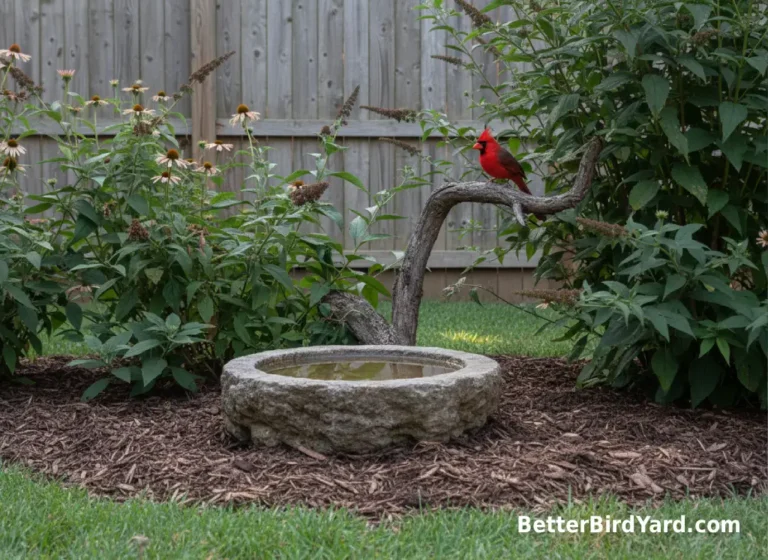
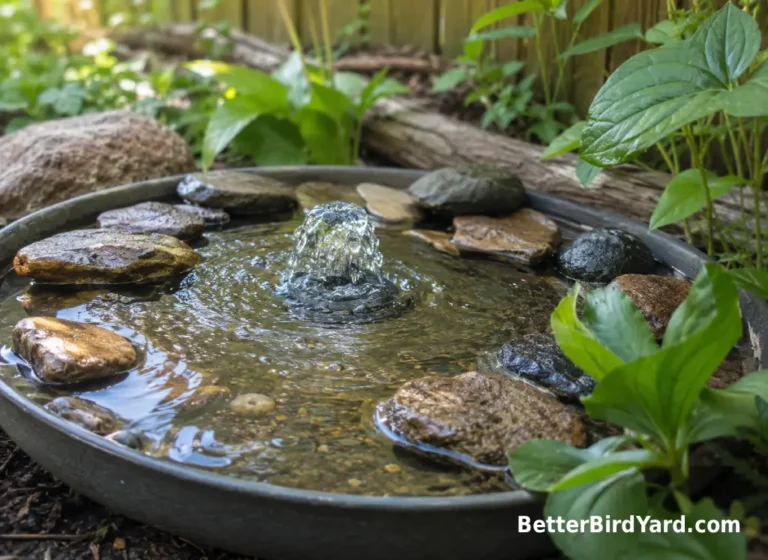
Water can help too, but hummingbirds are more likely to use a fine mister, gentle dripper, or shallow, clean water feature than a deep basin. Keep water fresh, place it away from areas where cats can hide, and scrub bird baths regularly. If you see a hummingbird that appears injured, stunned, tangled, unable to fly, or unusually weak, do not try to treat it yourself. Contact a licensed wildlife rehabilitator, local wildlife agency, animal control, or another qualified local professional for guidance.
For more feeder details, see Where To Hang A Hummingbird Feeder .
A Simple Starter Plan For Beginners
If you are starting from scratch, do not overcomplicate it. A small, well-maintained hummingbird corner is better than an ambitious garden that becomes dry, crowded, or weedy by midsummer.
Here is a practical first-year plan:
- Choose one sunny or partly sunny spot you can see easily from indoors.
- Add one spring or early-season nectar plant suited to your region.
- Add one summer bloomer, such as bee balm, penstemon, or salvia where appropriate.
- Add one late-season bloomer, such as cardinal flower in moist soil or a regional late salvia or aster companion.
- Place shrubs, a trellis, or nearby cover within the broader planting area.
- Add a small, easy-clean feeder only if you can keep the nectar fresh.
- Watch for two seasons before expanding, because local hummingbirds will show you what they actually use.
For a balcony, translate the same idea into containers: one large pot with a nectar plant, one hanging basket or railing planter, and one small shrub or trellis plant if your space and building rules allow it. Check lease, HOA, and balcony rules before attaching hooks, drilling into railings, or adding heavy containers.
For a broader habitat approach, pair nectar flowers with native shrubs, leaf litter in quiet corners, fewer pesticides, safer windows, and indoor cats. The U.S. Fish and Wildlife Service recommends native flowers, shrub and tree cover, clean water away from predators, keeping cats indoors, and pest-management choices that reduce pesticide risks.
Final Thoughts: Make Your Yard Worth Revisiting
The best flowers for hummingbirds are not just the brightest blooms at the nursery. They are the plants that fit your region, bloom reliably, offer accessible nectar, support insects, and create a safe place for a tiny bird to feed and rest.
Start with a few strong choices: a tubular spring flower, a dependable summer bloomer, and a late-season nectar plant. Add a shrub, vine, or small tree nearby so the space has cover, not just color. Keep feeders clean if you use them, skip honey and red dye, avoid pesticide use around the garden, and check local guidance before planting anything that may spread aggressively.
Most hummingbird gardens improve over time. The first year teaches you what grows well. The second year brings fuller plants and better bloom timing. After that, you can refine the space by adding more of the plants that hummingbirds, butterflies, and other pollinators actually use in your yard.