How To Attract Hummingbirds With Feeders, Flowers, And Safe Nectar
Learning how to attract hummingbirds is mostly about making your yard easy to find, safe to visit, and worth returning to. A bright feeder can help, but the best hummingbird yards usually combine three things: fresh sugar-water nectar, nectar-rich flowers, and nearby shelter where birds can perch between quick feeding trips.
For beginners, the biggest surprise is how much maintenance matters. Hummingbird feeders are not “fill it and forget it” decorations. Warm sugar water can spoil quickly, and a feeder that is hard to clean is usually a poor choice no matter how pretty it looks. A simple feeder, a small batch of safe nectar, and a realistic cleaning routine will do more than a row of complicated feeders you cannot keep fresh.
Results vary by region, season, weather, and the hummingbird species that occur near you. In much of the eastern United States, Ruby-throated Hummingbirds are the familiar backyard visitors, while western and southwestern yards may see several other species. The advice below keeps the setup practical for suburban yards, patios, balconies, renters, and small gardens.
Quick Answer: What Attracts Hummingbirds Fastest?
The fastest responsible way to attract hummingbirds is to put up a clean feeder filled with plain homemade nectar, place it where birds can see it, and support it with real flowers nearby. A feeder gives hummingbirds a clear food signal, while flowers and shrubs make the space feel more like useful habitat instead of a single snack stop.
Start with this simple setup:
- Use a small, easy-to-clean hummingbird feeder with red parts, not red dye.
- Fill it with one part refined white sugar dissolved in four parts water.
- Hang it in light shade where it is visible from above and near cover.
- Clean and refill it often, especially in hot weather.
- Add nectar-rich native flowers that bloom at different times of the season.
- Avoid pesticides around the feeder, flowers, and nearby perches.
If you want to attract hummingbirds to a feeder, freshness is the detail that matters most. Hummingbirds may investigate a new feeder within days in a good location, or they may take longer if natural blooms are abundant, migration has not reached your area, or the feeder is tucked where birds do not notice it.
Think of the feeder as an invitation, not a guarantee. A clean feeder invites a quick visit; a hummingbird-friendly yard gives them reasons to keep checking back.
Start With A Clean, Simple Hummingbird Feeder
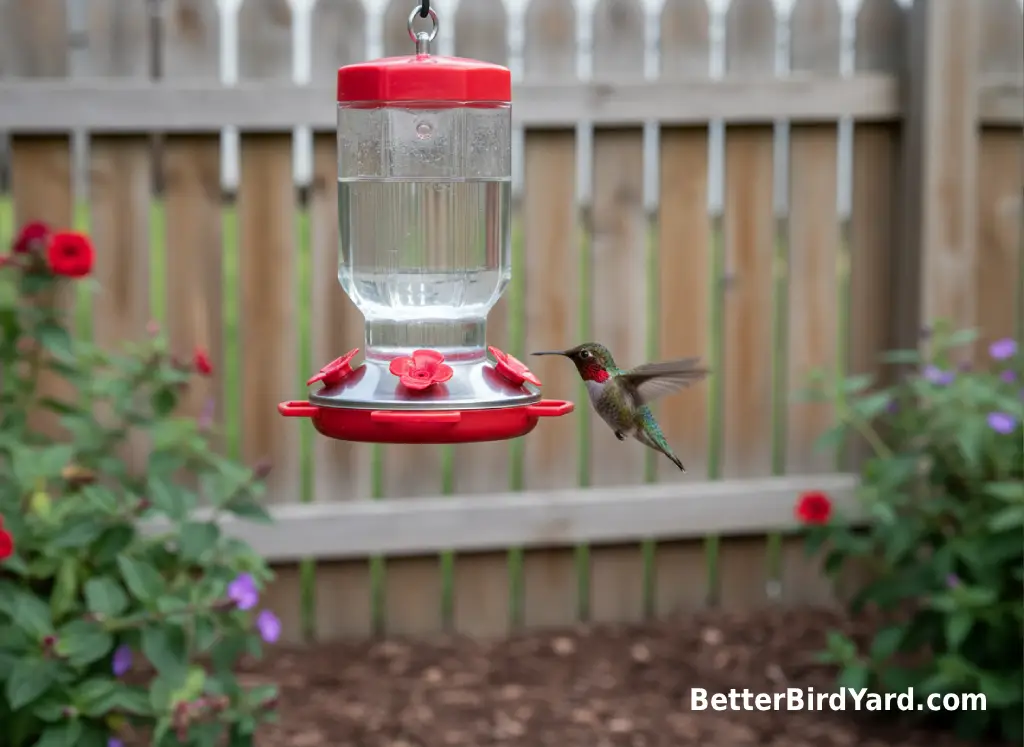
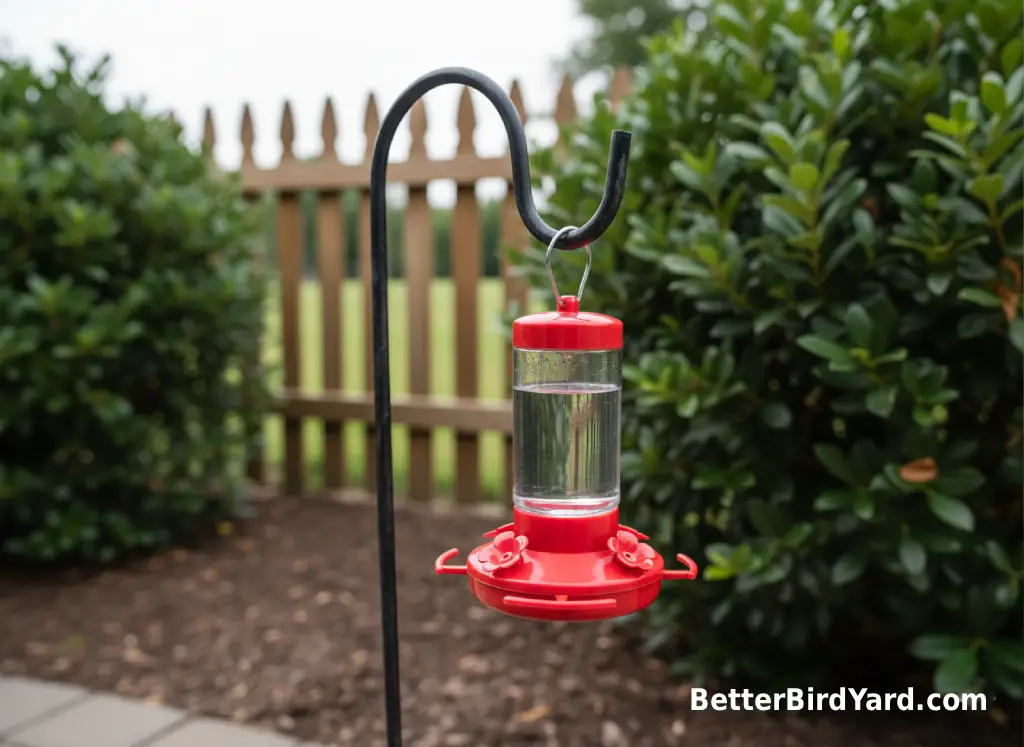
A good hummingbird feeder is simple, visible, and easy to scrub. Beginners often buy the largest or most decorative feeder first, then discover it has narrow corners, fake flowers that trap residue, or a reservoir too large for the number of birds visiting. A smaller feeder is usually better at first because you can refill it with fresh nectar before it spoils.
Look for a feeder that comes apart easily. You should be able to reach every port, seam, and groove with a small brush. Saucer-style feeders are often easier to clean than tall bottle-style feeders, though either can work if you keep up with maintenance. Skip novelty feeders that are hard to inspect, especially if you cannot see whether the nectar is cloudy.
Red feeder parts are useful because hummingbirds notice red and other bright colors, but the nectar itself should stay clear. Smithsonian’s National Zoo recommends plain refined white sugar and water, with no red dye added. It also warns against honey, corn syrup, raw sugar, and powdered sugar for hummingbird nectar.
For a small yard, patio, or balcony, one feeder is enough to start. If a territorial hummingbird guards it constantly, you can add a second feeder out of sight from the first one. Spreading feeders apart can reduce chasing, while clustering several feeders in one tight spot may make one bird easier able to dominate the whole setup.
Make Safe Hummingbird Nectar The Right Way
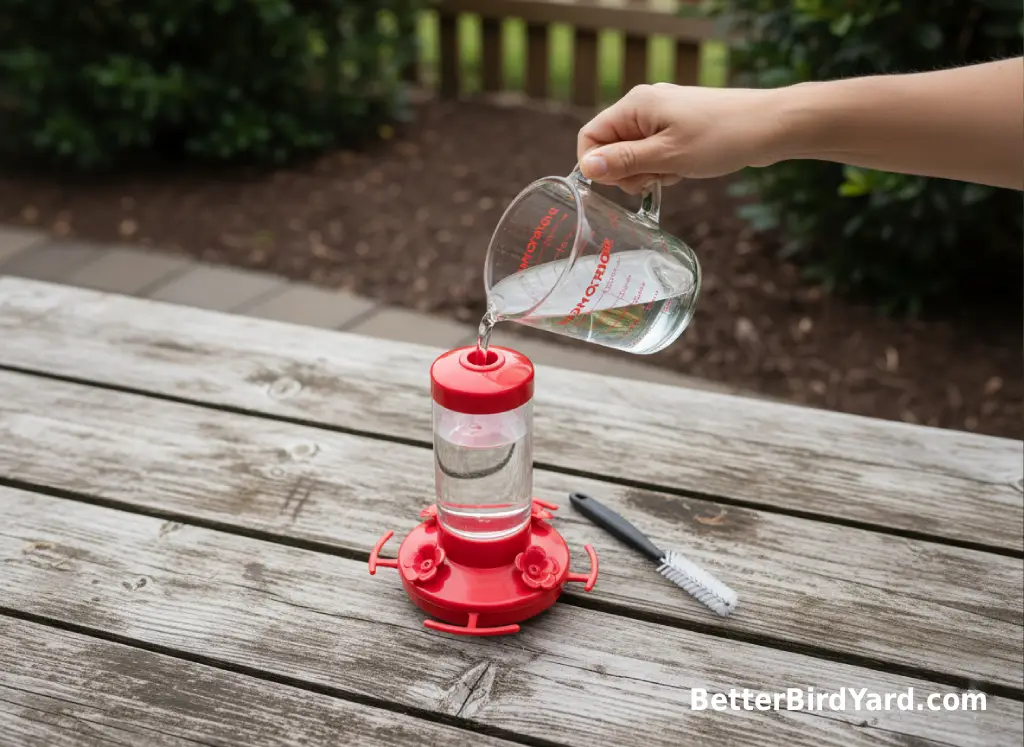
The standard hummingbird nectar recipe is one part refined white sugar to four parts water. For example, mix 1 cup sugar with 4 cups water, or 1/4 cup sugar with 1 cup water for a small feeder. Stir until the sugar dissolves completely, let the nectar cool if you warmed the water, and fill the feeder with only what the birds are likely to drink before the next cleaning.
Do not add red dye, honey, brown sugar, raw sugar, corn syrup, artificial sweeteners, fruit juice, or powdered sugar. Plain white table sugar dissolved in water is the safest simple feeder recipe recommended by major bird and conservation sources. Smithsonian’s National Zoo gives the same one-to-four recipe and says extra sugar water can be stored in the refrigerator for up to one week if it stays clean and mold-free.
Boiling is not required if your water is safe to drink and the sugar fully dissolves, though some people briefly warm the water to dissolve sugar more easily. The more important step is cleaning the feeder thoroughly before each refill. A cloudy feeder with fresh nectar poured on top is still a dirty feeder.
A common beginner mistake is filling a large feeder all the way up before hummingbirds are visiting regularly. In the early season, or when trying a new location, fill the feeder only partway. Less waste makes it easier to keep the nectar fresh and makes cleaning feel less like a chore.
Put The Feeder Where Hummingbirds Can Find It
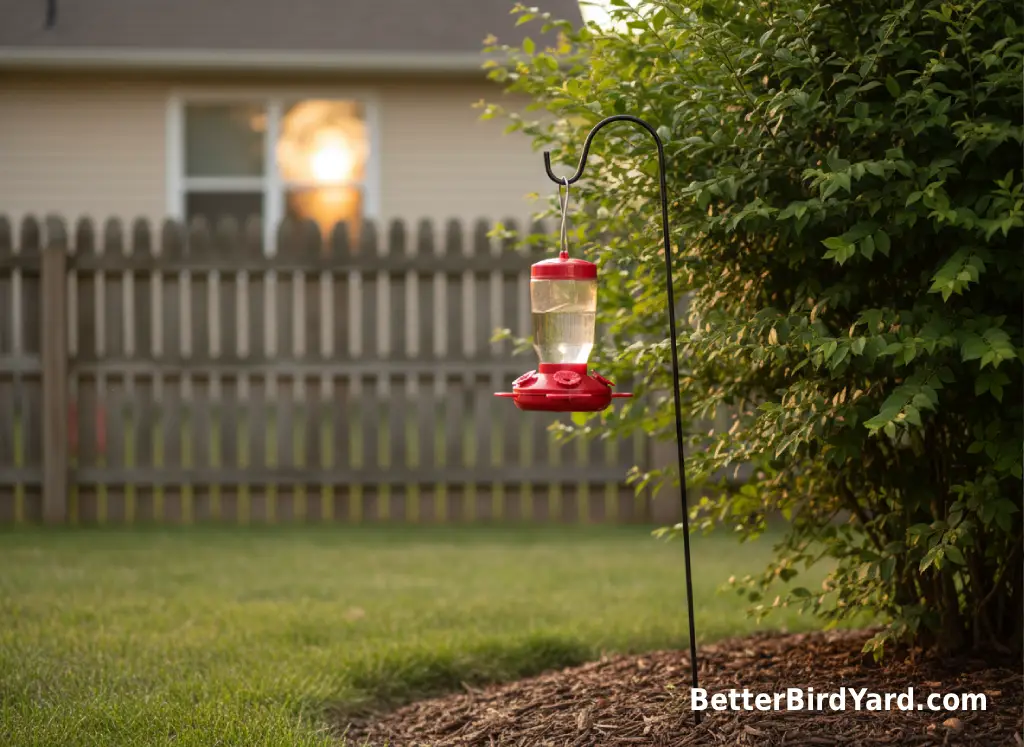
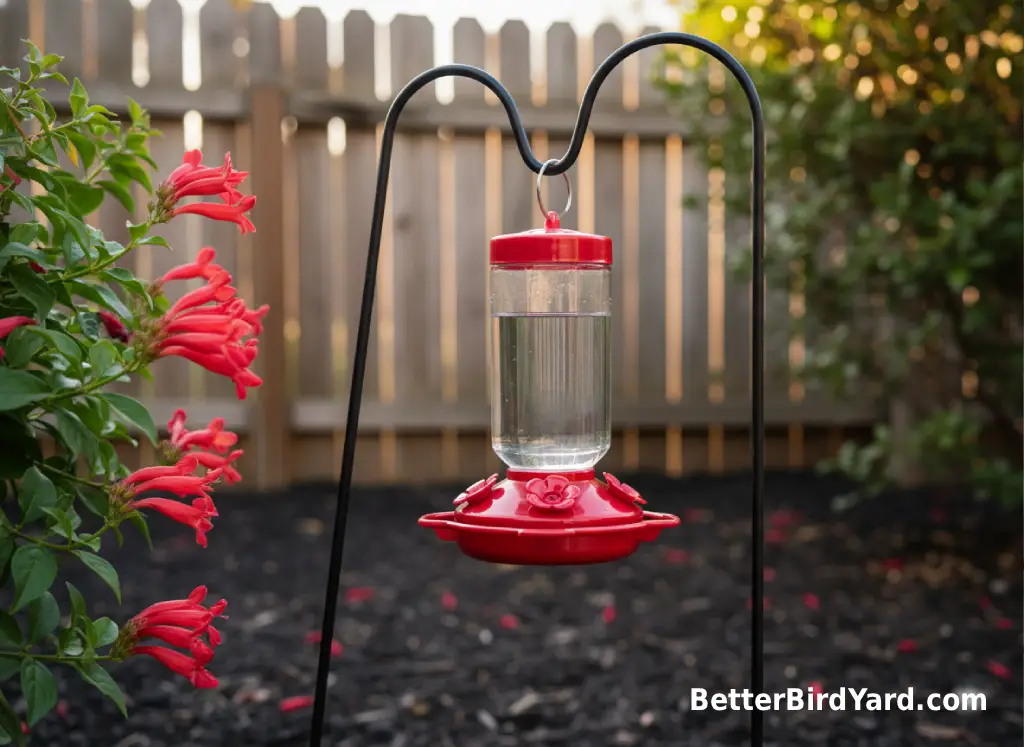
Feeder placement can make the difference between occasional curiosity and steady visits. Hang the feeder where hummingbirds can notice it during normal flight: near flowers, along a garden edge, or beside shrubs where small birds can perch. Light shade helps nectar stay fresh longer than full sun, but avoid hiding the feeder deep inside dense foliage where birds may not see it.
Good placement balances visibility, safety, and convenience:
- Choose light shade or morning sun rather than all-day hot sun.
- Keep the feeder close enough for you to inspect and clean easily.
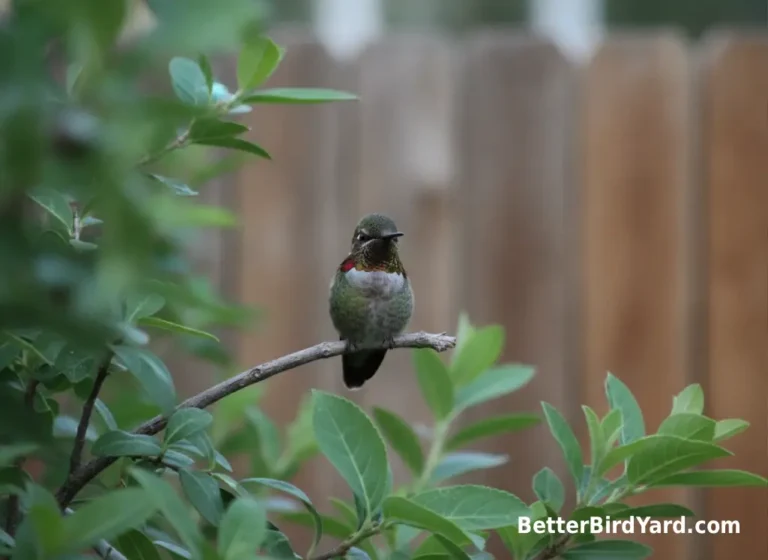
- Provide nearby perches such as small trees, shrubs, or a simple branch.
- Avoid placing the feeder where cats can hide and pounce.
- Think about windows, especially large reflective panes near flight paths.
Window safety deserves attention. Cornell Lab guidance for feeders near buildings notes that collision risk can be reduced by placing feeders very close to a window, within about 3 feet, or much farther away, more than about 30 feet. The risky middle distance is where birds can build speed and still mistake reflections for open space.
For renters and balcony bird watchers, use a clamp-on hook or hanging bracket if building rules allow it, and place the feeder where nectar spills will not drip onto a neighbor’s space. Check apartment, HOA, city, or county rules before installing balcony feeders, especially in areas with concerns about nuisance wildlife.
Add Flowers That Keep Hummingbirds Coming Back
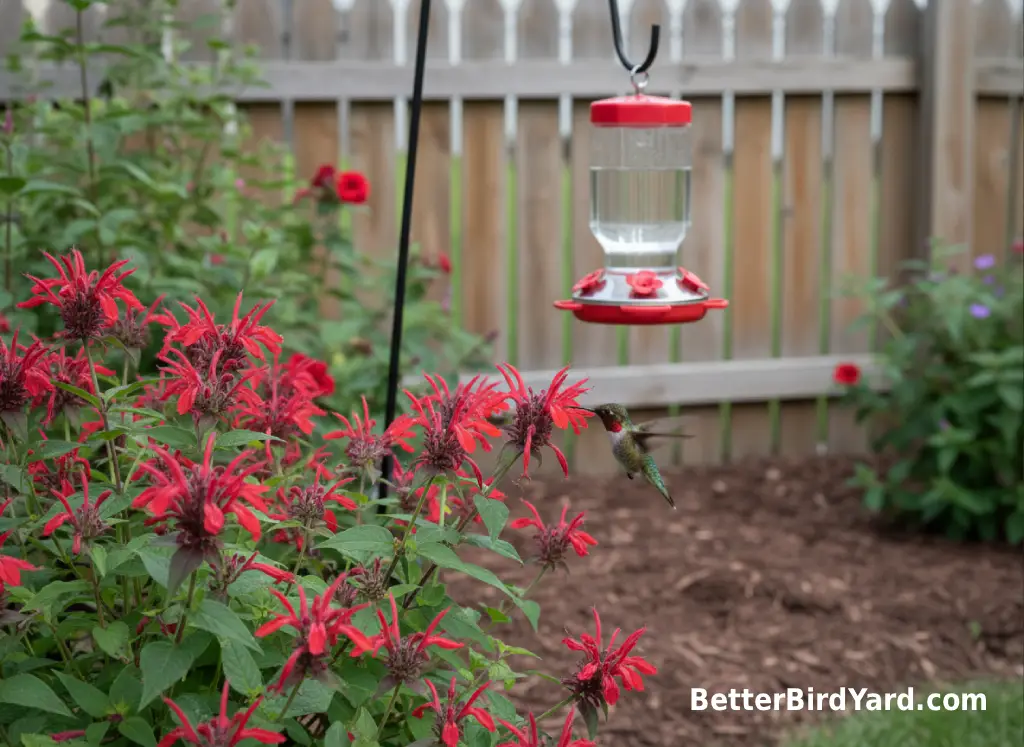
A feeder may bring hummingbirds close, but flowers make your yard more useful. Native plants are especially valuable because they can provide nectar and support the small insects hummingbirds also eat. The USDA Forest Service notes that even small backyard gardens can help when they include native plants adapted to local seasons, climate, and soil.
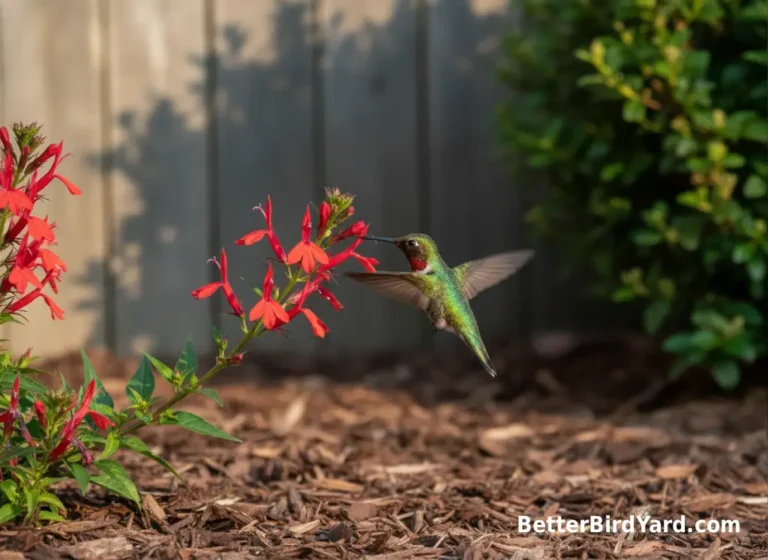
You do not need a huge garden. A few pots on a sunny patio, a narrow border by a fence, or a small native plant bed near a feeder can help create a stronger visual signal. Hummingbirds are often drawn to tubular flowers, especially red or orange blooms, but flower shape and nectar are more important than color alone.
Good hummingbird plant choices vary by region, so use your state extension service, local native plant society, or regional native plant guide before buying. Depending on where you live, possibilities may include bee balm, cardinal flower, columbine, penstemon, salvia, coral honeysuckle, or other nectar-rich native and well-behaved garden plants. Avoid invasive vines or aggressive plants just because they are marketed for hummingbirds.
Plan for bloom sequence rather than one big burst. A spring flower, a summer flower, and a late-season flower give hummingbirds more reasons to revisit. The USDA guide also encourages diverse flowering species with pollen and nectar across the growing season.
Editorial note: In a small yard, we would rather see three healthy, region-appropriate plants that you can water and maintain than a crowded “hummingbird garden” that dries out, gets weedy, or becomes hard to care for.
Build A Small-Space Hummingbird Setup
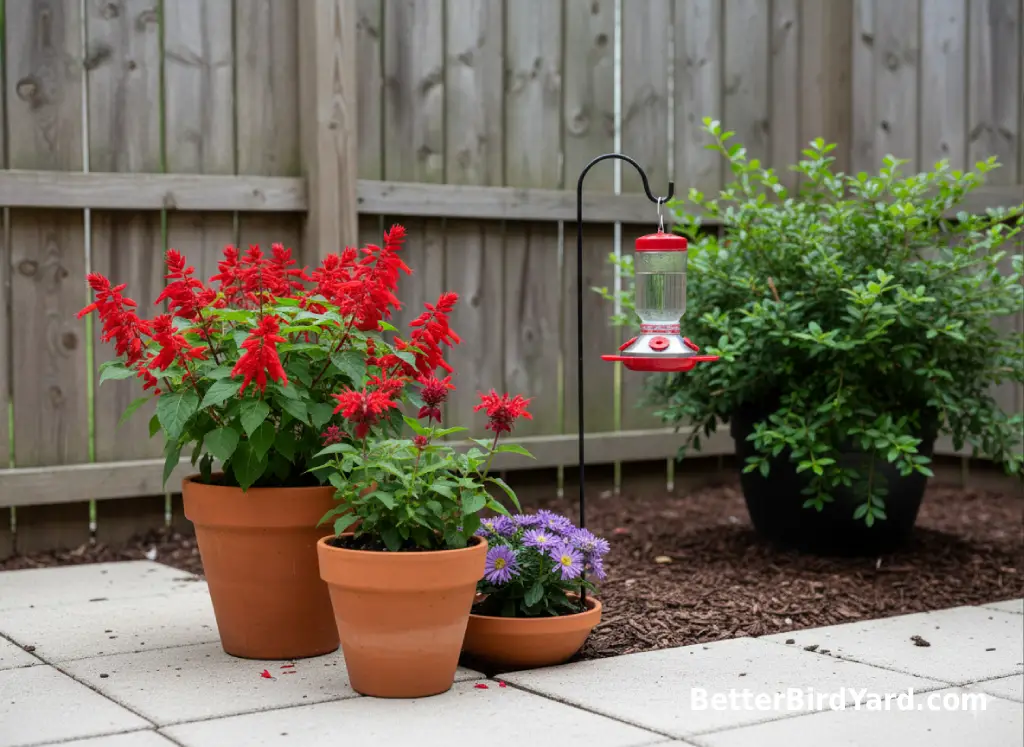
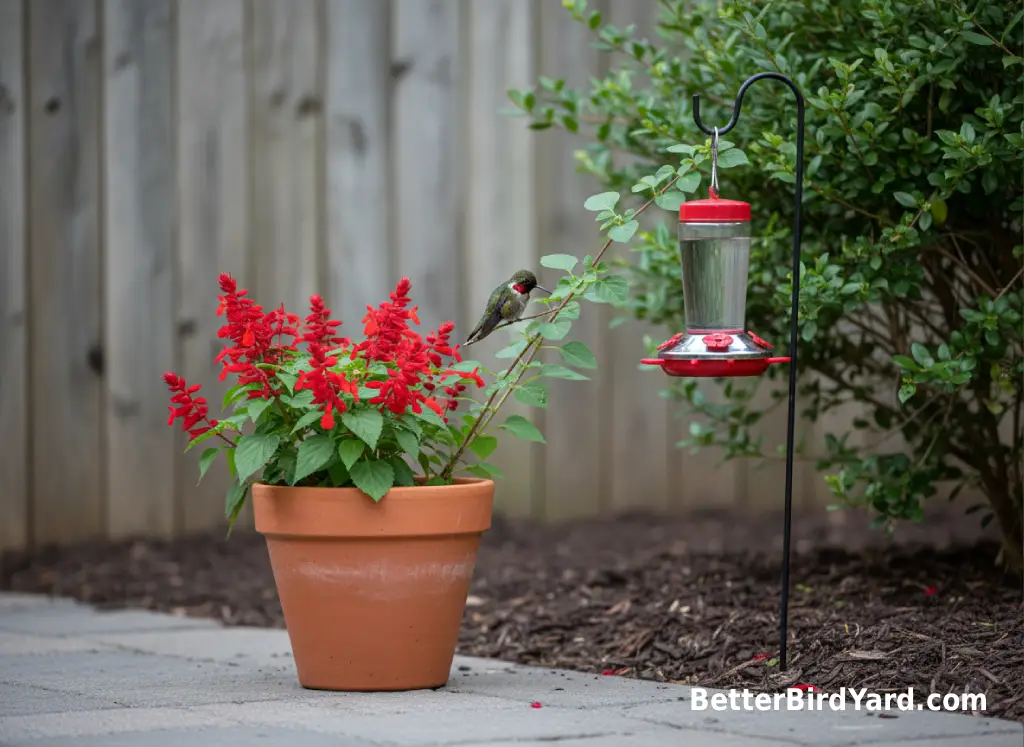
You can attract hummingbirds to your yard even if your “yard” is a patio, deck, balcony, or narrow side garden. The goal is to create a small, readable feeding station: one clean feeder, one or two flower containers, and a nearby perch or shrub if space allows.
For a tiny setup, keep the design simple:
- Use one small feeder rather than a large reservoir.
- Place one pot of nectar flowers nearby without blocking access to the feeder.
- Add a thin branch, trellis, or nearby shrub where birds can perch.
- Keep the feeder easy to reach so cleaning is not skipped.
- Use an ant moat if ants become a problem, but avoid sticky substances near feeder ports.
If bees or wasps crowd the feeder, first check for leaks. Insects are often drawn to dripping nectar or sticky feeder parts. Clean the outside of the feeder, tighten the base, and consider a saucer-style feeder with bee guards rather than spraying pesticides. Hummingbirds also rely on small insects, so a yard with fewer chemicals is generally a better hummingbird yard.
Small spaces also make observation easier. Sit quietly several feet away, and let the birds decide when the feeder feels safe. Hummingbirds can be bold, but they still need room to approach, hover, and retreat without feeling boxed in by furniture, walls, pets, or heavy foot traffic.
Keep Feeders Clean And Watch For Problems
Cleanliness is not a finishing touch; it is part of feeding hummingbirds responsibly. In hot weather, nectar can spoil quickly. Smithsonian’s National Zoo recommends changing feeders every other day and cleaning each time, with at least twice-a-week cleaning in hot weather and weekly cleaning in cooler spring or fall weather. If nectar looks cloudy, has black specks, smells fermented, or the feeder feels slimy, clean it immediately rather than waiting for your usual schedule.
A practical cleaning routine looks like this:
- Take the feeder down before the nectar looks bad.
- Empty old nectar; do not top it off with fresh nectar.
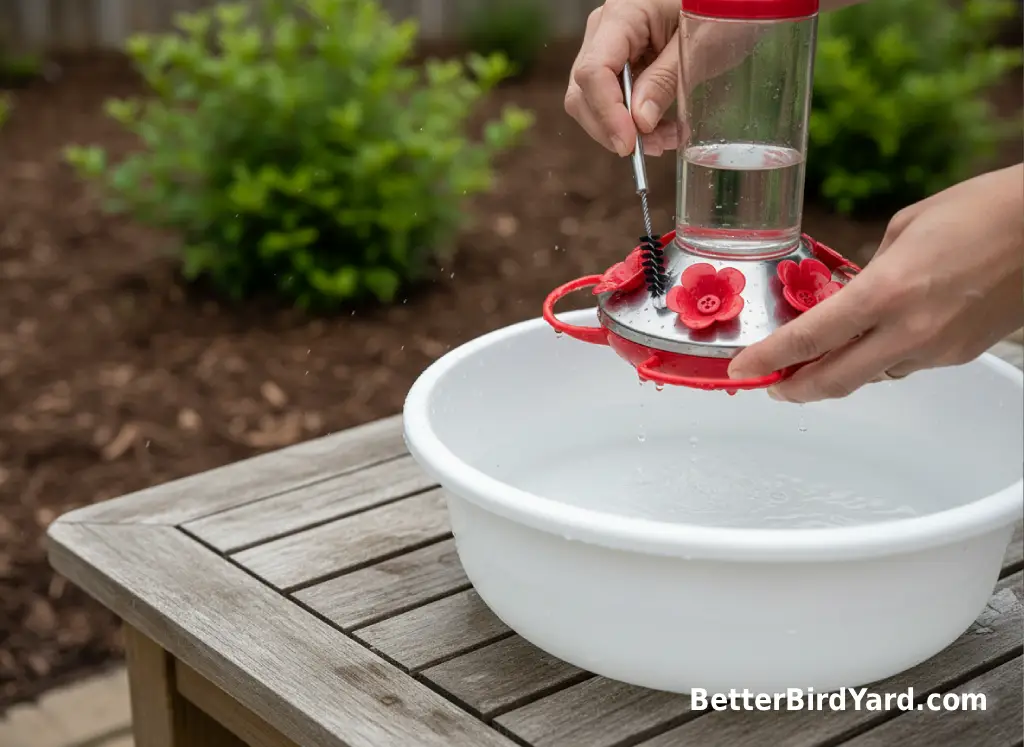
- Scrub all ports, seams, and the reservoir with hot water and a dedicated brush.
- Rinse thoroughly so no residue remains.
- Let parts dry when possible before refilling with fresh nectar.
For general bird feeders, Cornell Lab guidance recommends washing about every two weeks and cleaning thoroughly if you see a sick bird at a feeder. It also describes a cleaning approach that includes soapy water, a one-part bleach to nine-parts water rinse, and complete drying before refilling. Hummingbird feeders need more frequent attention because sugar water spoils faster than dry seed.
If you notice birds that appear unusually lethargic, visibly ill, unable to fly normally, or if your state wildlife agency reports a local outbreak, pause feeding, clean feeders and bird baths, and follow local wildlife guidance. USGS National Wildlife Health Center guidance during a morbidity event notes that birds congregating at feeders and baths can transmit diseases to one another, and recommends contacting state wildlife agencies for sick or dead birds. Avoid diagnosing the problem yourself and do not casually handle sick, injured, stunned, or dead wild birds.
Avoid Common Hummingbird Attraction Mistakes
Most hummingbird problems come from trying to do too much or letting maintenance slide. A yard with one clean feeder and a few useful plants is better than a yard with five sticky feeders, old nectar, and no plan for cleaning.
Avoid these common mistakes:
- Using red dye in nectar instead of choosing a feeder with red parts.
- Making nectar too strong because “more sugar must be better.”
- Letting cloudy nectar sit through hot weather.
- Buying a feeder with tiny decorative parts you cannot scrub.
- Spraying pesticides around flowers, feeders, or perching shrubs.
- Putting the feeder where cats can hide nearby.
- Giving up after a few days when migration or local bloom conditions may be affecting visits.
Another mistake is assuming a feeder alone provides everything a hummingbird needs. Feeders offer supplemental sugar water. Hummingbirds also use natural nectar, small insects, safe perches, trees or shrubs, and seasonal habitat. A more complete yard does not have to be fancy, but it should be clean, safe, and not overly dependent on one feeder.
Predators matter too. The USDA Forest Service’s hummingbird garden guidance specifically warns that domestic cats can kill hummingbirds and encourages keeping cats indoors. In a backyard setting, also avoid placing feeders low in dense cover where outdoor cats or other predators can wait unseen.
Think Seasonally And Locally
Hummingbird timing depends on where you live. Some southern and coastal areas may have hummingbirds for much of the year, while many northern yards see them mainly during migration and breeding season. Smithsonian’s National Zoo gives broad regional timing examples and notes that keeping clean feeders up later in fall does not stop hummingbirds from migrating; migration is driven by internal and seasonal cues such as changing day length.
A practical approach is to put feeders out a little before hummingbirds usually arrive in your area, keep them clean while they are available, and continue for a while after your last regular sighting if you can maintain fresh nectar. Do not leave a dirty feeder out “just in case.” A clean late-season feeder can help a straggler; a neglected feeder helps no one.
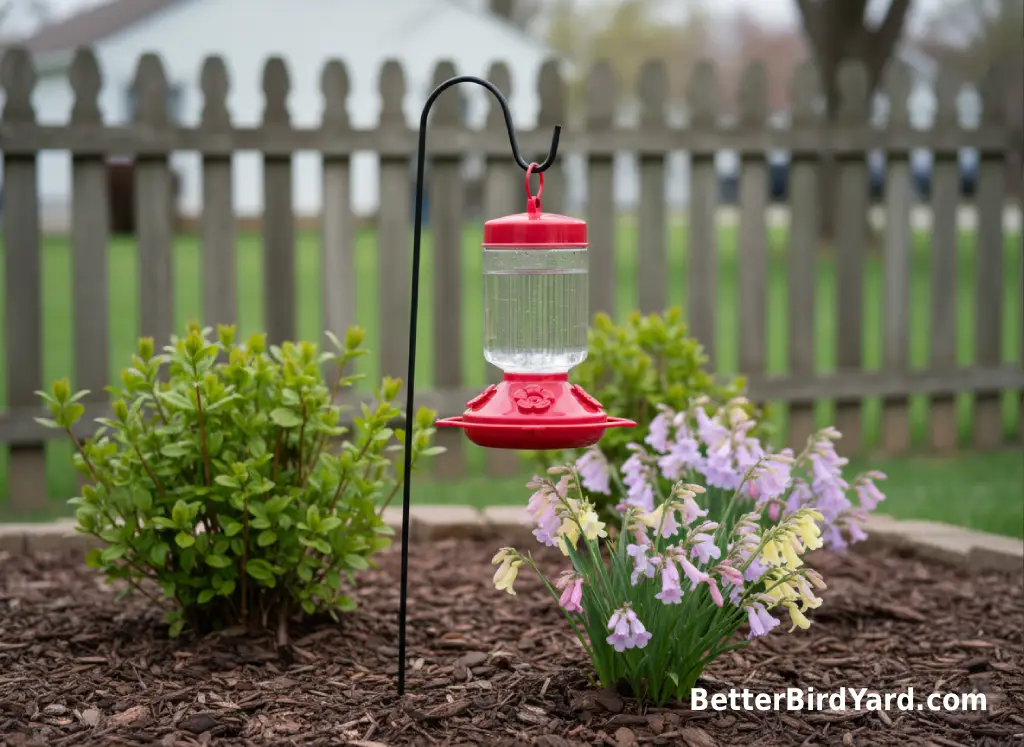
Local planting choices also matter. A plant that supports hummingbirds beautifully in one region may be unsuitable, invasive, or difficult in another. Use state extension resources, local native plant groups, or regional pollinator planting guides before choosing vines, shrubs, or perennials. The USDA Forest Service points readers toward ecoregion-specific planting guidance because plant choices should fit local conditions.
Local rules can matter as well. Some neighborhoods, apartments, HOAs, or communities restrict balcony feeders, outdoor water features, or wildlife feeding because of mess, bears, rodents, or other concerns. Check your local rules before installing a feeder in shared housing or in areas with nuisance wildlife issues.
Frequently Asked Questions About Attracting Hummingbirds
How Do I Attract Hummingbirds To My Feeder?
Make the feeder visible, keep nectar fresh, and place it near flowers or shrubs where hummingbirds are already likely to travel. Use a clean feeder with red parts and clear homemade nectar. If you get no visits, try moving the feeder to a brighter garden edge or near blooming plants, then give it time.
How Long Does It Take For Hummingbirds To Find A New Feeder?
It can take a few days, a few weeks, or longer. Timing depends on migration, local hummingbird numbers, nearby flowers, weather, and whether the feeder is easy to see. Keep the feeder clean while you wait; old nectar will not help attract birds.
Should A Hummingbird Feeder Be In Sun Or Shade?
Light shade is usually a good compromise. The feeder stays visible, but nectar does not heat and spoil as quickly as it can in full sun. If your only good viewing spot gets afternoon sun, fill the feeder lightly and clean it more often.
Do Hummingbirds Need A Bird Bath?
They may use shallow moving water, fine mist, or wet leaves, but a deep traditional bird bath is not always useful for them. If you provide water, keep it shallow, clean, and refreshed. Dirty or stagnant water can create problems for birds and mosquitoes.
Will Leaving A Feeder Up In Fall Stop Hummingbirds From Migrating?
No. Clean feeders left up later in fall do not stop hummingbirds from migrating. Smithsonian’s National Zoo explains that hummingbirds respond to internal and seasonal cues, including changing day length. The important point is to keep late-season feeders fresh or take them down.
A Simple BetterBirdYard Plan For Hummingbirds
The best way to attract hummingbirds is to make your yard dependable without making it complicated. Start with one feeder you can clean easily. Fill it with plain one-to-four sugar-water nectar. Hang it where birds can see it, where you can reach it, and where nearby shrubs or small trees offer perches. Then add region-appropriate flowers so the feeder is part of a larger, healthier setup.
Here is the simple plan we would use in most beginner yards:
-
- Week 1: Hang one small feeder in light shade and fill it only partway.
- Week 2: Watch for activity and use our hummingbird feeder placement guide to adjust the spot if birds are not finding it.
- Ongoing: Clean before nectar clouds, ferments, or shows any specks of mold.
- This season: Add one or two nectar-rich plants suited to your region.
- Long term: Reduce pesticides, keep cats away from feeding areas, and make the yard safer with perches, cover, and window awareness.
Hummingbirds are tiny, fast, and easy to overthink. Give them fresh nectar, real flowers, clean equipment, and a safe place to approach. That steady, simple care is what turns a random flyby into a yard they keep checking throughout the season.