What Do Hummingbirds Eat? Nectar, Bugs, Sap, And Backyard Food
Hummingbirds are famous for sipping nectar, but that is only part of the answer. In a real backyard, hummingbirds eat flower nectar, tiny insects, small spiders, tree sap from sapsucker wells, and, when offered safely, plain white sugar water from clean hummingbird feeders.
The simple way to think about it is this: nectar gives hummingbirds fast energy, while insects and spiders provide protein, fat, and other nutrients they need for daily life, migration, and raising young. Cornell Lab resources describe hummingbirds as relying heavily on nectar for energy while also using protein-rich insects, especially when natural needs are high.
For backyard bird watchers, the best support is not just one red feeder. A safer, more complete approach is clean nectar feeders, native flowers, insect-friendly planting, fresh water nearby, and fewer pesticides around feeding areas. This guide explains what hummingbirds like to eat, what they eat besides nectar, what baby hummingbirds eat, and how to offer food without accidentally creating problems.
The Quick Answer: Nectar, Tiny Insects, Sap, And Feeders
Hummingbirds eat several foods, but most backyard feeding conversations start with nectar. Natural flower nectar is a sugar-rich liquid that gives hummingbirds quick energy for hovering, chasing, displaying, and long flights. A properly mixed sugar-water feeder can imitate the energy part of nectar, but it does not replace the rest of a hummingbird’s diet.
They also eat small insects and spiders. That matters because a hummingbird cannot live well on sugar alone. Insects add protein and fat, and they are especially important during nesting, growth, and migration. Some hummingbirds also visit sap wells made by sapsuckers, taking sap and sometimes tiny insects caught in it; Cornell’s species accounts note this behavior in Anna’s and Calliope Hummingbirds.
| Food Source | What It Provides | Backyard Takeaway |
|---|---|---|
| Flower Nectar | Fast energy | Plant nectar-rich flowers suited to your region. |
| Tiny Insects And Spiders | Protein, fat, and nutrients | Avoid heavy pesticide use and keep some natural planting areas. |
| Tree Sap | Sugary energy, sometimes insects | Mostly a natural food source, not something to create artificially. |
| Clean Sugar-Water Feeders | Supplemental energy | Use the right recipe and clean feeders often. |
A feeder is helpful, but a feeder plus flowers and insects is better. In a small yard or balcony, even a few containers of nectar flowers near a clean feeder can create a more useful feeding spot than a feeder alone.
What Hummingbirds Eat Besides Nectar
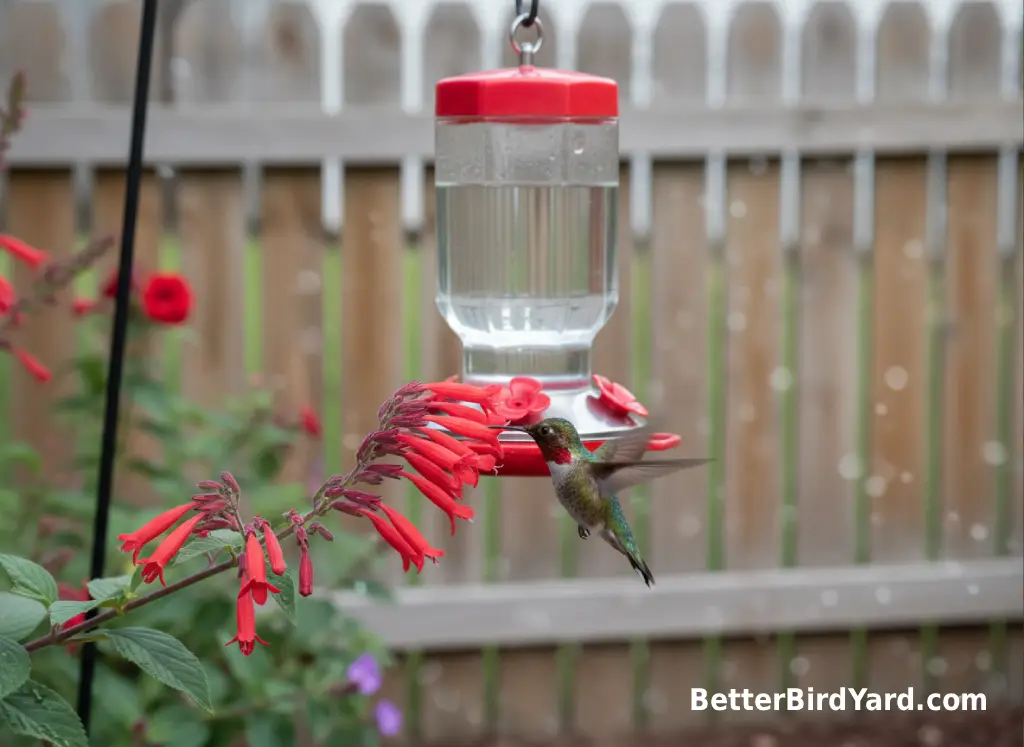
Besides nectar, hummingbirds eat tiny arthropods such as gnats, midges, flies, aphids, leafhoppers, whiteflies, and small spiders. They may catch insects in the air, pick them from leaves or bark, visit flowers where insects gather, or take small prey from spider webs.
This is one reason a very tidy, heavily sprayed yard is not always the best hummingbird yard. If every insect is treated as a problem, hummingbirds lose part of their natural food supply. The National Wildlife Federation recommends native flowers because they can provide nectar while also supporting insects that hummingbirds and other birds use as food.
Hummingbirds may also drink tree sap from natural sap wells, especially when flowers are scarce. Backyard bird watchers do not need to drill trees or try to provide sap. The safer move is to protect existing trees and shrubs, plant region-appropriate flowers, and keep feeders clean if you offer them.
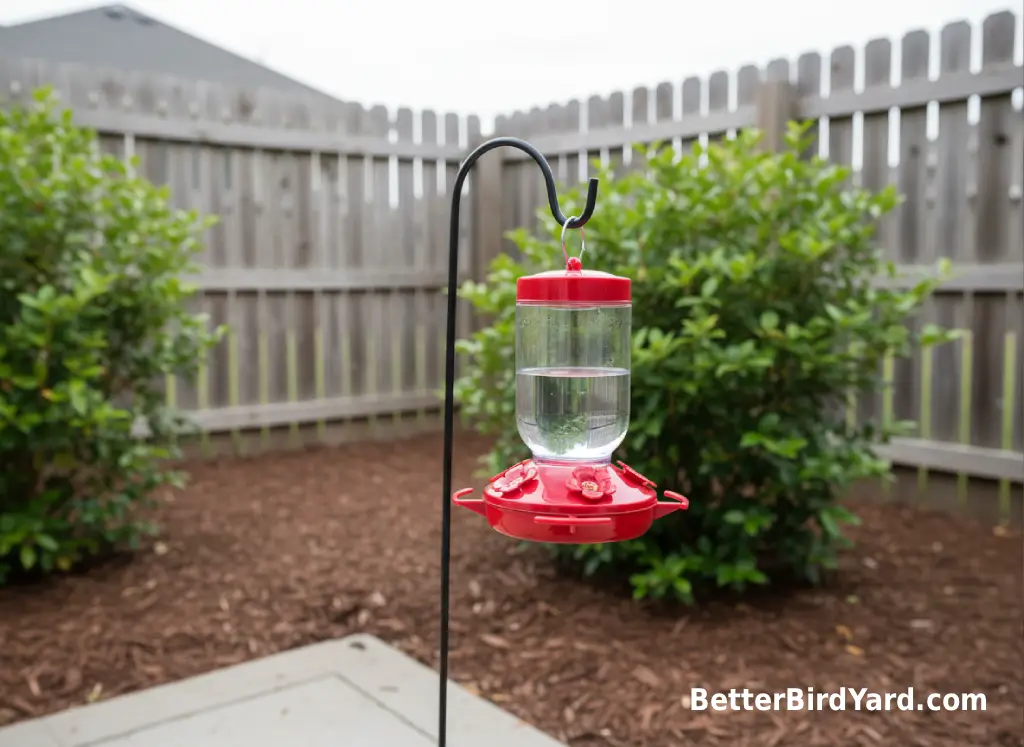
What Bugs And Insects Do Hummingbirds Eat?
Hummingbirds usually go after very small insects and other tiny invertebrates. Species and local conditions vary, but documented foods include gnats, midges, flies, aphids, whiteflies, leafhoppers, and small spiders. Cornell’s Anna’s Hummingbird account describes them taking insects from leaves, crevices, streambanks, spider webs, flowers, and the air.
You probably will not see most of this feeding clearly. At a feeder, a hummingbird pauses long enough for us to notice. When it catches insects, the movement can look like a quick dart, a pause near leaves, or a tiny midair snap.
In a backyard, the most helpful insect-supporting choices are simple:
- Grow a mix of flowers, shrubs, and small trees suited to your region.
- Avoid spraying pesticides near feeders, flowers, and bird baths.
- Keep some leafy cover instead of pruning every plant into bare stems.
- Let a few non-problem insects remain, especially on plants away from doors and seating areas.
- Do not remove every spider web unless it is in a high-traffic human area.
Editorial note: A hummingbird-friendly yard does not need to look wild or messy. Even a small patio with two flowering containers, a clean feeder, and no routine pesticide spraying can be more useful than a larger yard with only lawn and one neglected feeder.
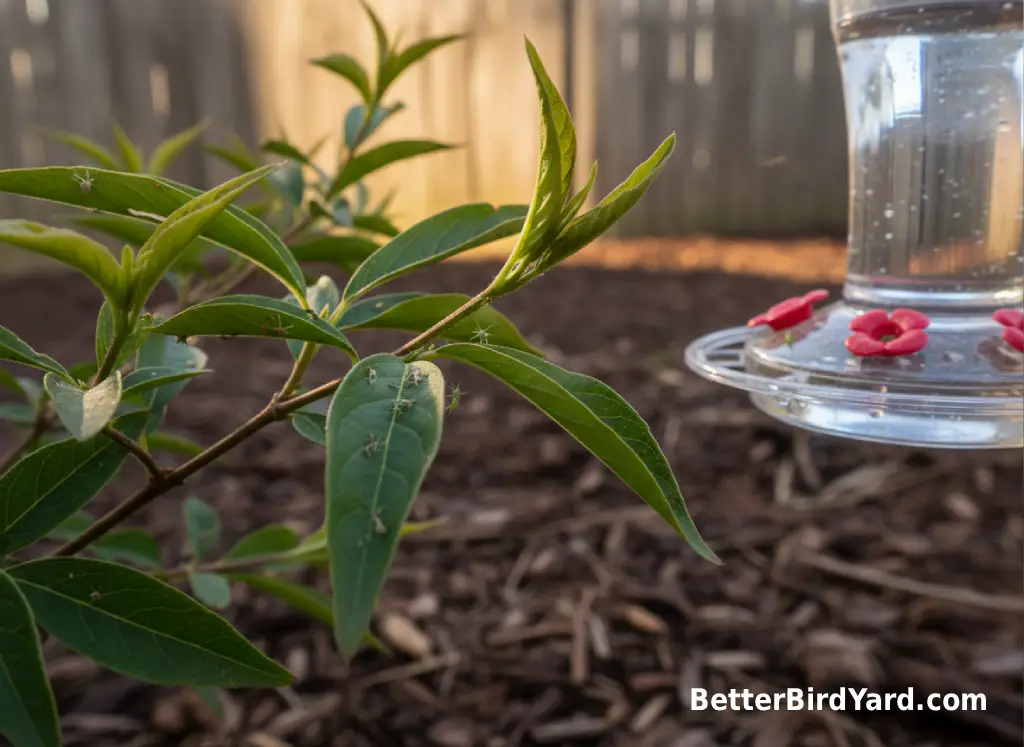
What Baby Hummingbirds Eat
Baby hummingbirds are fed by the mother, not by backyard feeders directly. The mother collects nectar and tiny insects, then feeds the nestlings regurgitated food. Cornell’s Bird Academy describes young hummingbirds being fed regurgitated nectar and insects.
That means two things for homeowners. First, a clean nectar feeder can support the adult female’s energy needs, but insects are still important. Second, people should not try to feed baby hummingbirds sugar water, milk, bread, honey, fruit juice, or anything from a kitchen. Young birds need species-appropriate feeding and care that ordinary backyard bird watchers cannot safely provide.
If you find a baby bird on the ground, watch from a distance first when it is safe to do so. Many young birds are not actually abandoned. If the bird is injured, clearly in danger, or you are unsure what to do, contact a licensed wildlife rehabilitator, local wildlife agency, animal control, or a qualified wildlife professional. NestWatch warns that trying to feed young birds can harm them and advises contacting a certified wildlife rehabilitator or wildlife veterinarian when a young bird is injured.
For hummingbirds nesting nearby, the best backyard help is indirect: keep pets away from the nest area, avoid trimming the nesting shrub or tree, keep feeders clean, and reduce pesticide use while the adults are raising young.
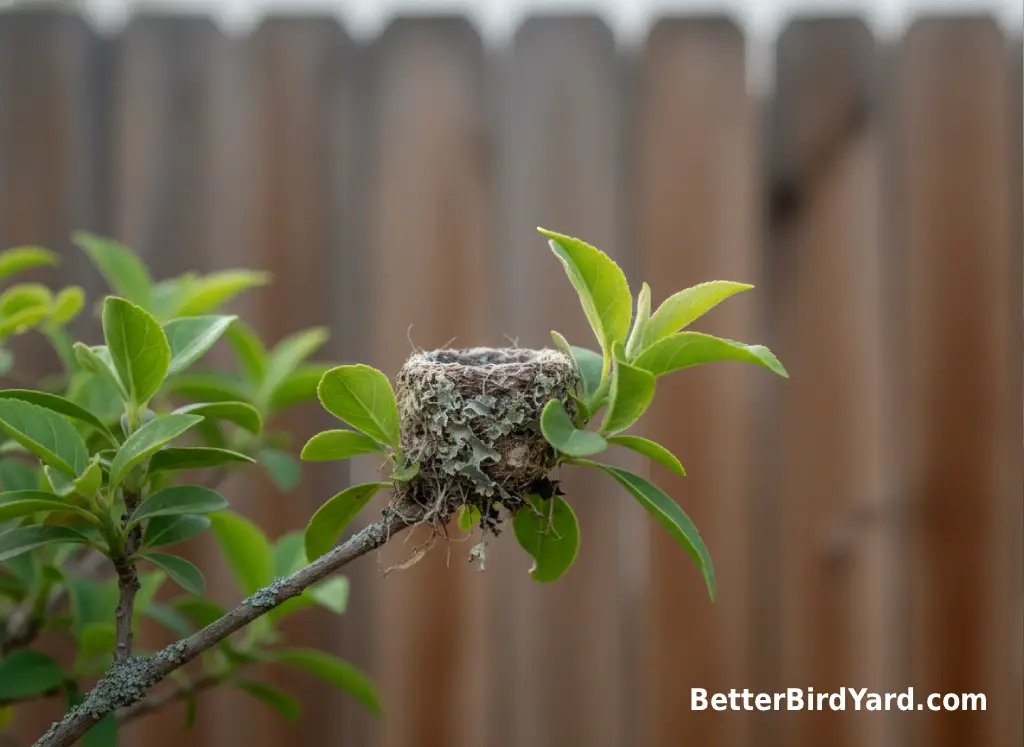
What Hummingbirds Eat In Winter And During Migration
What hummingbirds eat in winter depends heavily on where you live and which species are present. In much of the eastern and central United States, Ruby-throated Hummingbirds leave for the nonbreeding season, so winter feeder activity may be rare. In parts of the West and along some mild coastal areas, species such as Anna’s Hummingbirds may be present through winter.
During migration, hummingbirds still need nectar and insects. Feeders can provide supplemental energy, but natural flowers, insects, and weather all affect what birds use. Cornell notes that migrating Ruby-throated Hummingbirds feed on nectar and insects to fuel long flights.
If you keep a feeder up in fall or winter, the main responsibility is cleanliness. Do not leave old nectar outside just because visits are less frequent. Empty and clean the feeder on schedule, and bring it in if you cannot maintain it. In freezing weather, avoid risky heater setups or improvised electrical fixes near feeders. A safer beginner approach is to rotate a feeder during daylight, keep it clean, and follow local birding or wildlife guidance for your region.
Leaving a clean feeder up does not force healthy migratory hummingbirds to stay behind. Migration is driven by more than feeder presence, including seasonal cues. Still, a winter feeder is only helpful if it stays fresh and safe.
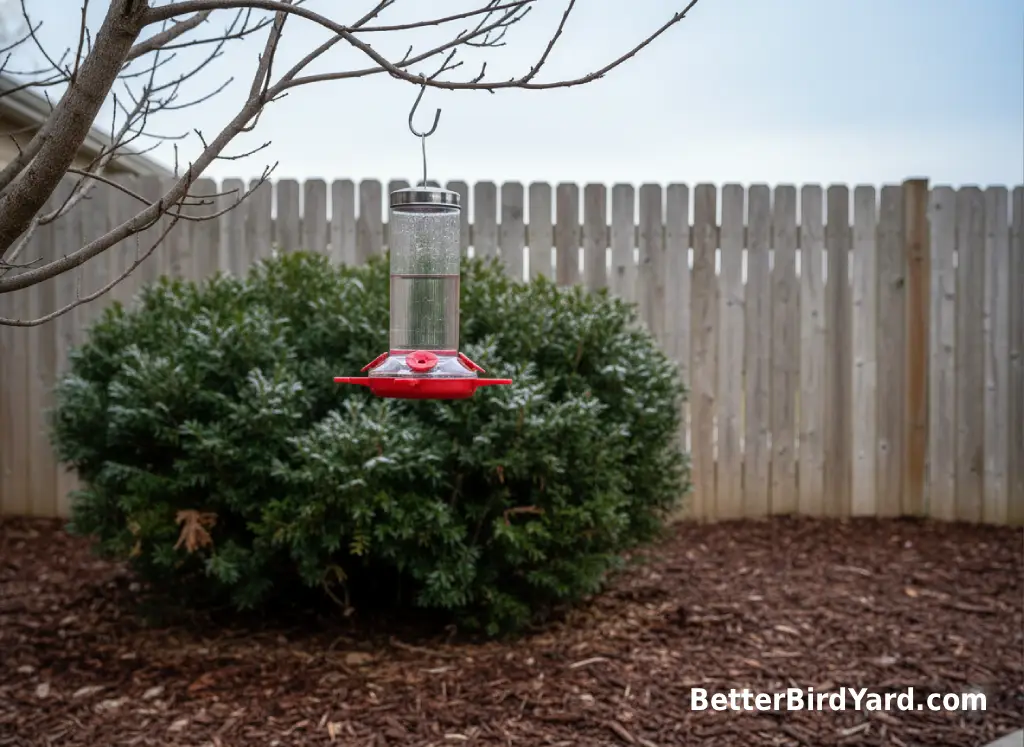
Flowers Hummingbirds Like To Eat From
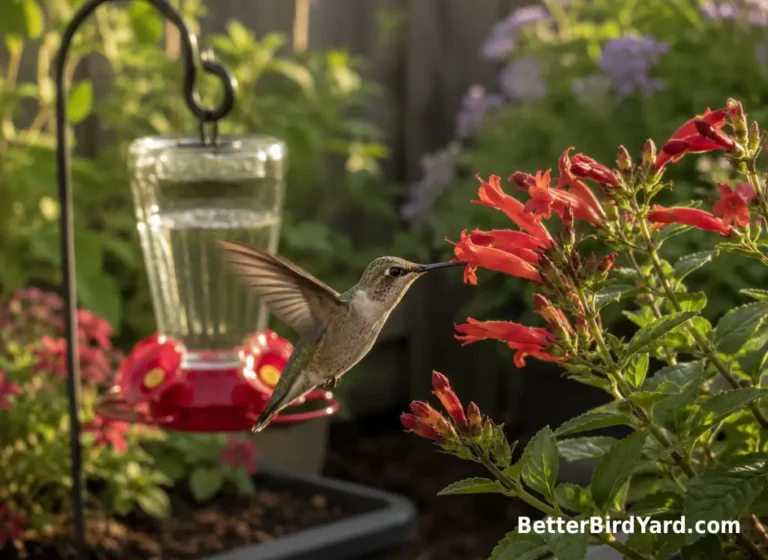
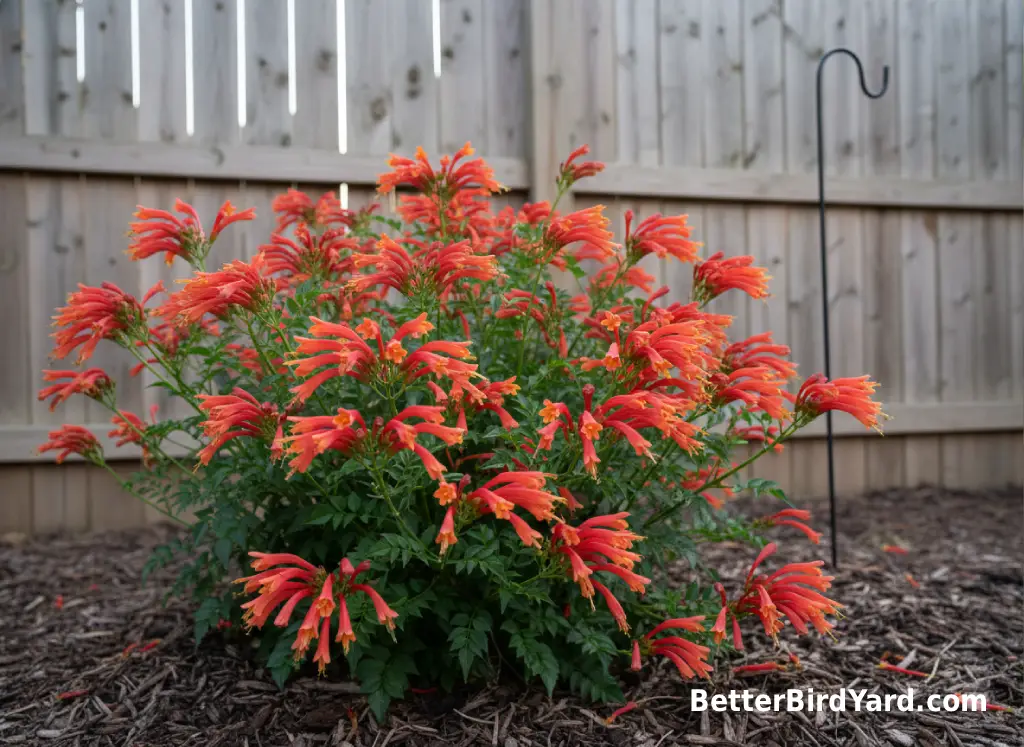
Hummingbirds do not eat flowers themselves; they drink nectar from flowers. They are especially drawn to many tubular blooms, often in red, orange, pink, or purple, though color alone is not the whole story. Flower shape, nectar supply, bloom timing, and local plant suitability all matter.
Good hummingbird flower choices vary by region, so it is better to choose native or well-suited plants for your area than to copy a generic list. Depending on where you live, examples may include bee balm, cardinal flower, columbine, penstemon, coral honeysuckle, salvia, fireweed, currant, or other nectar-rich plants. Some are native in one region but not another, so check your state extension office, local native plant society, or a native plant finder before planting.
For small spaces, keep it practical. A renter with a sunny balcony might use two containers of nectar flowers and one small feeder. A suburban homeowner might add a flowering shrub, a patch of perennials, and a feeder placed where it is easy to clean. For more planting ideas, see our guide to native plants for birds in small yards.
Flowers also support the insect side of the hummingbird diet. That is the quiet benefit beginners often miss: the best hummingbird plants can feed birds directly with nectar and indirectly by supporting tiny insects.
How To Feed Hummingbirds Safely With Sugar Water
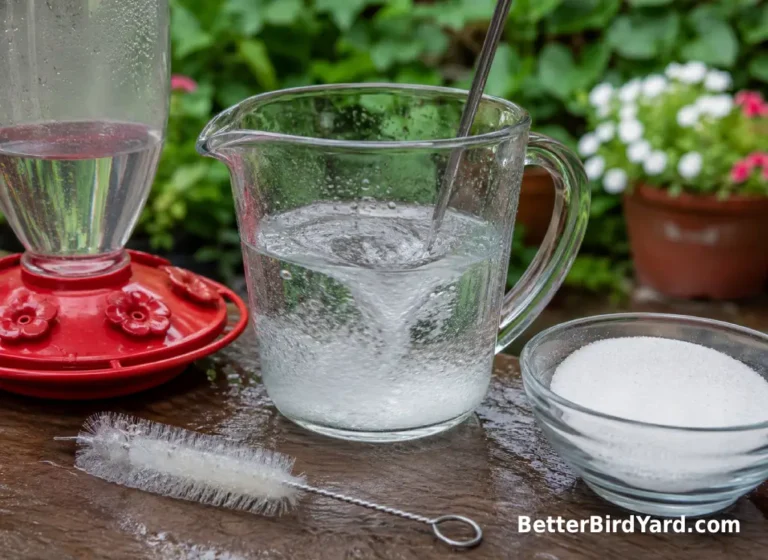
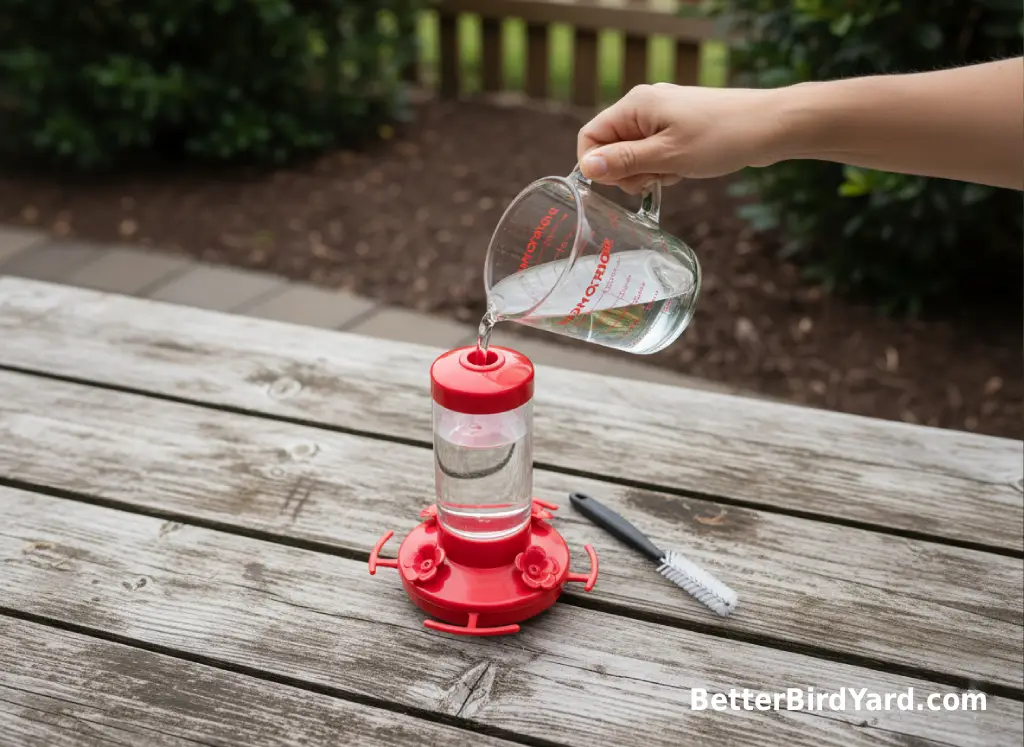
The safest basic hummingbird feeder recipe is four parts water to one part refined white sugar. For example, mix 1 cup of water with 1/4 cup of plain white sugar. Let it cool before filling the feeder. Do not add red dye, honey, brown sugar, molasses, artificial sweeteners, fruit juice, or sports drinks. Audubon recommends the 1:4 white sugar and water mix and advises against red coloring, honey, artificial sweeteners, and other sweeteners.
Cleanliness matters more than feeder size or decoration. Sugar water can spoil, ferment, or grow mold, especially in hot weather. Audubon’s hummingbird yard guidance recommends cleaning feeders every two to three days, or daily in very hot conditions, and cleaning immediately if nectar looks cloudy.
Use this simple routine:
- Choose a feeder that comes apart so every port and seam can be scrubbed.
- Fill with only as much nectar as birds will use before the next cleaning.
- Hang the feeder where you can reach it easily, preferably with some shade.
- Empty, scrub, rinse well, and refill on schedule.
- Take the feeder down if you cannot keep up with cleaning.
A common beginner mistake is buying a large feeder because it looks generous. For one or two hummingbirds, a smaller feeder is usually easier to keep fresh. For a full setup, see our practical hummingbird nectar recipe and feeder cleaning guide.
What Time Of Day Do Hummingbirds Eat?
Hummingbirds may feed throughout the day, but many backyard watchers notice strong activity in the morning and again later in the day. Morning feeding helps replace energy after the night. Late-day feeding can help birds build energy before roosting. On cool, rainy, windy, or migration-heavy days, patterns may change.
Do not worry if your feeder seems quiet at midday. Hummingbirds often rotate among flowers, insects, sap sources, perches, and neighboring yards. A bird that visits your feeder for ten seconds may spend the next stretch feeding from flowers or catching tiny insects where you cannot see it.
Feeder activity can also look different depending on the local population. One dominant hummingbird may guard a feeder and make visits seem dramatic. Several birds may use separate feeding routes if you hang feeders out of sight from one another. In a small patio, even moving a second feeder around a corner can sometimes reduce chasing.
The best daily habit is observation plus maintenance. Notice when birds visit, but do not let visit timing distract from nectar freshness. If the nectar is cloudy, has specks, smells off, or has been out too long for the weather, clean the feeder even if birds are still visiting.
Common Foods And Mistakes To Avoid
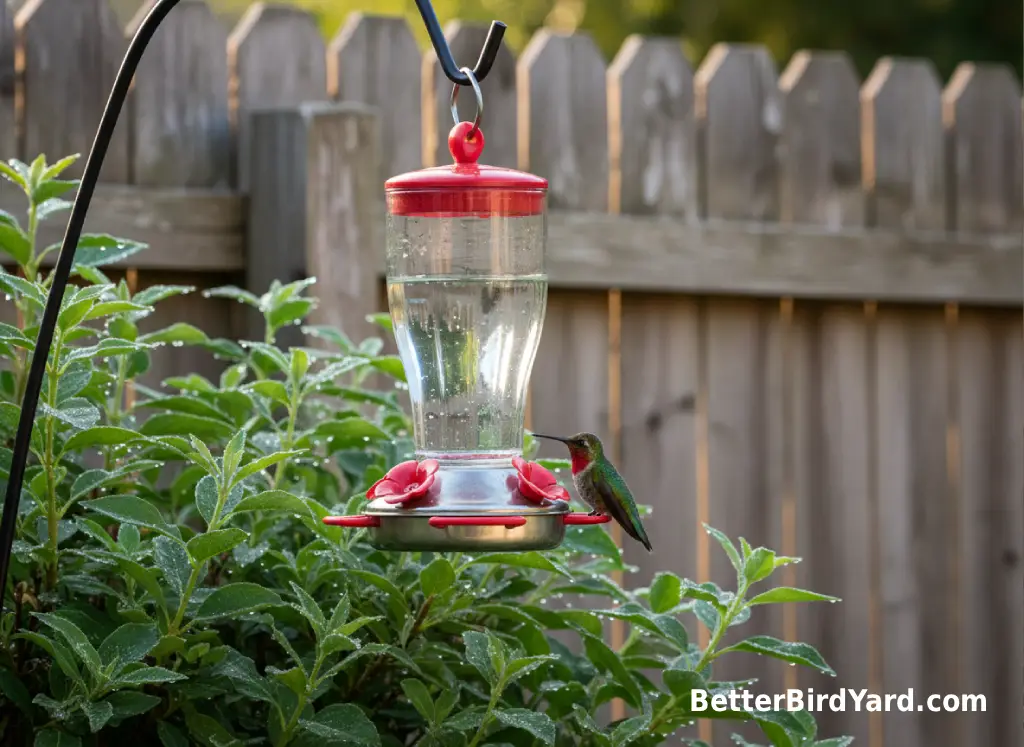
Some foods that sound harmless are not appropriate for hummingbirds. The safest backyard feeder food is plain white sugar water mixed correctly and replaced often. Natural foods should come from flowers, insects, spiders, and habitat, not from improvised kitchen mixtures.
- Do not use honey in hummingbird nectar.
- Do not add red dye or colored drink mixes.
- Do not use brown sugar, molasses, raw sugar, or artificial sweeteners.
- Do not offer bread, milk, jam, syrup, soda, or fruit juice.
- Do not leave cloudy, moldy, or fermented nectar outside.
- Do not spray pesticides near feeders, flowers, or bird baths.
Also avoid placing feeders where ants, bees, wasps, or larger wildlife quickly take over. Built-in bee guards, ant moats used correctly, shade, and smaller nectar batches can help. If bears, raccoons, rodents, or other nuisance wildlife are a concern in your area, follow local wildlife agency guidance and remove attractants rather than escalating the problem.
Hummingbirds are tough little birds, but backyard feeding still requires care. A neglected feeder can do more harm than good. A clean, modest feeder and a few well-chosen plants are usually better than a big setup you cannot maintain.
A Better Backyard Menu For Hummingbirds
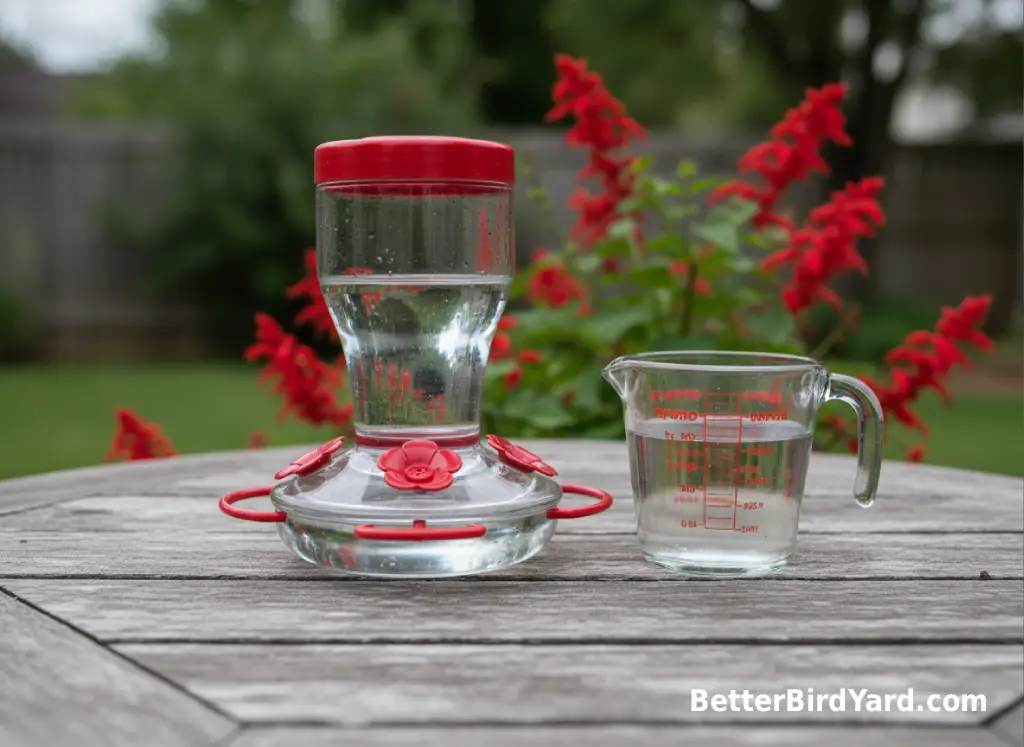
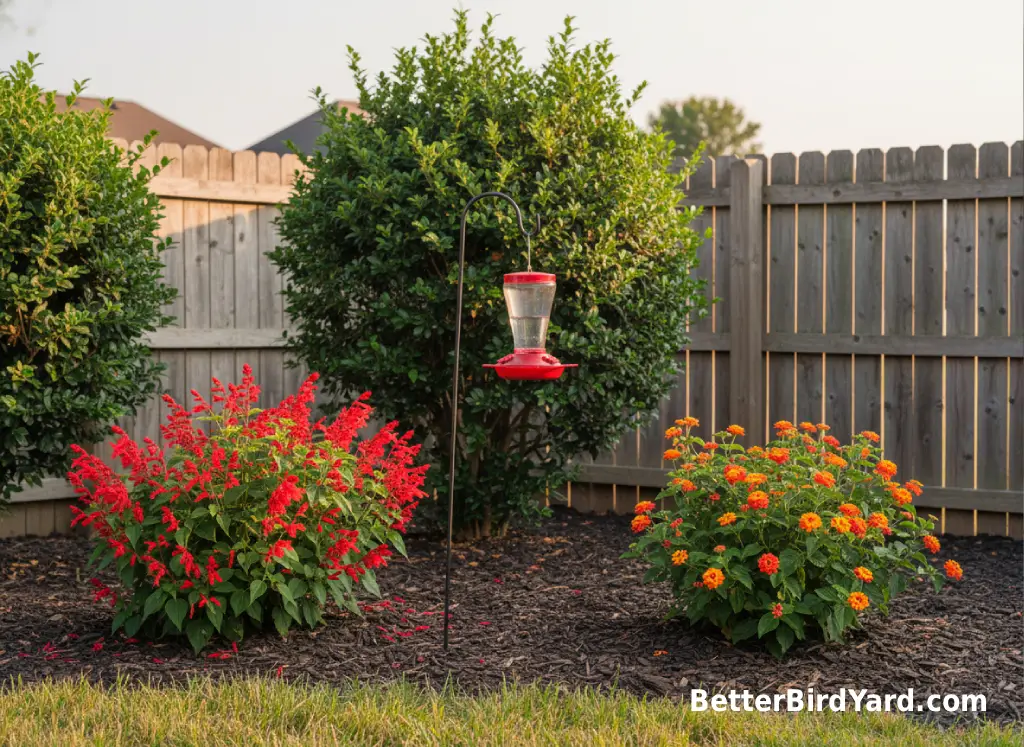
If you want to support hummingbirds responsibly, think beyond what goes in the feeder. A good backyard menu includes several small, safe choices working together.
If you want to support hummingbirds responsibly, think beyond what goes in the feeder. A good backyard menu includes several small, safe choices working together, including safe ways to attract hummingbirds.
Start with one easy-to-clean feeder. Add the correct sugar-water recipe. Clean it often. Then add flowers that make sense for your region and space. Keep a few leafy shrubs or vines where tiny insects can live. Avoid routine pesticide spraying around the feeding area. Keep outdoor cats away from bird activity when possible, especially near low flowers and shrubs.
In a balcony or rental space, your version might be simple: one small feeder, one or two containers of nectar flowers, and a cleaning routine you can actually keep. In a suburban yard, it might be a feeder near a flower bed, a few native shrubs, and a pesticide-light approach to gardening.
The goal is not to make hummingbirds dependent on you. It is to offer safe supplemental energy while the rest of your yard provides natural food. When your feeder is clean and your plants support insects and nectar, hummingbirds can choose from a healthier mix of foods.
Final Thoughts On What Hummingbirds Eat
So, what do hummingbirds eat? They eat nectar for quick energy, tiny insects and spiders for protein and fat, occasional tree sap where available, and safe sugar water from clean feeders when people provide it responsibly.
The most bird-friendly setup is not complicated. Use plain white sugar water in the right ratio, skip dye and honey, clean feeders before nectar spoils, plant flowers suited to your region, and let your yard support small insects naturally. For baby hummingbirds or any wild bird that appears injured, orphaned, stunned, or in distress, do not try to feed or treat it yourself. Contact a licensed wildlife rehabilitator or local wildlife agency for guidance.
Hummingbirds are small, fast, and easy to love, but they do best when our help stays simple and safe. A clean feeder, a few good flowers, and a calmer insect-friendly yard can give them more of what they actually use in the wild.