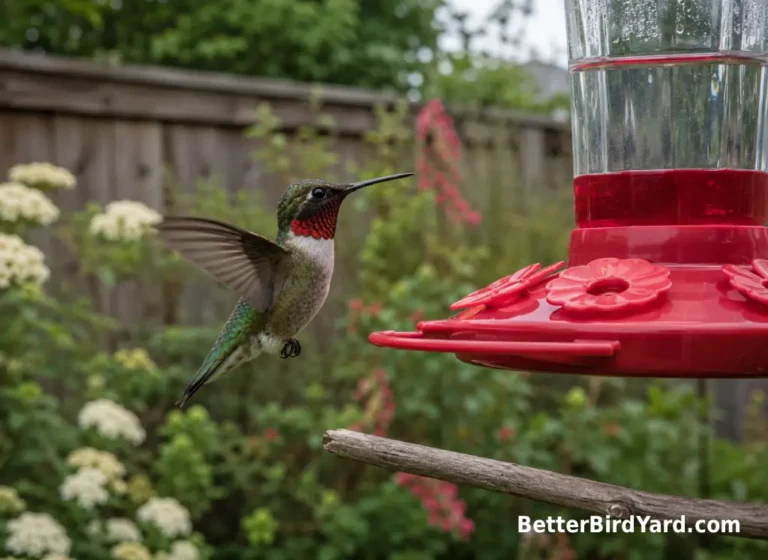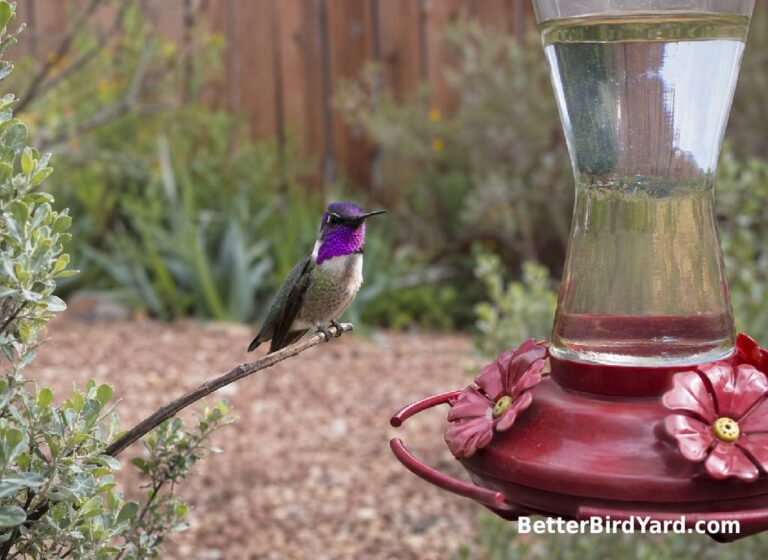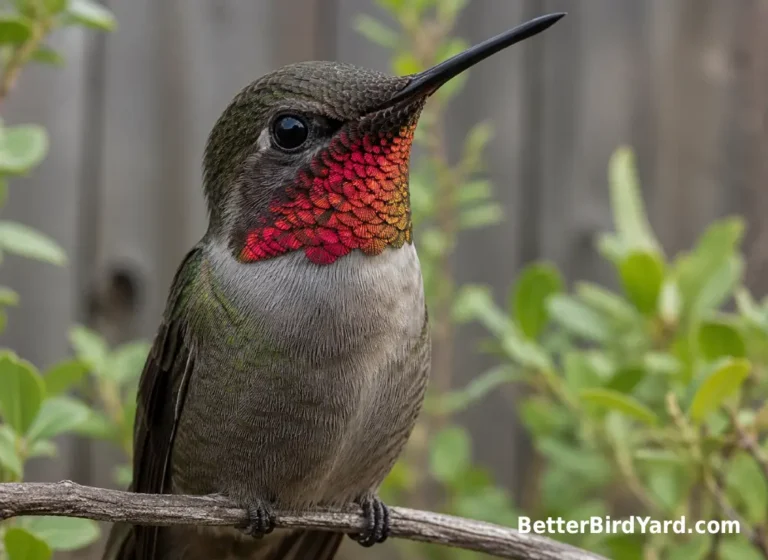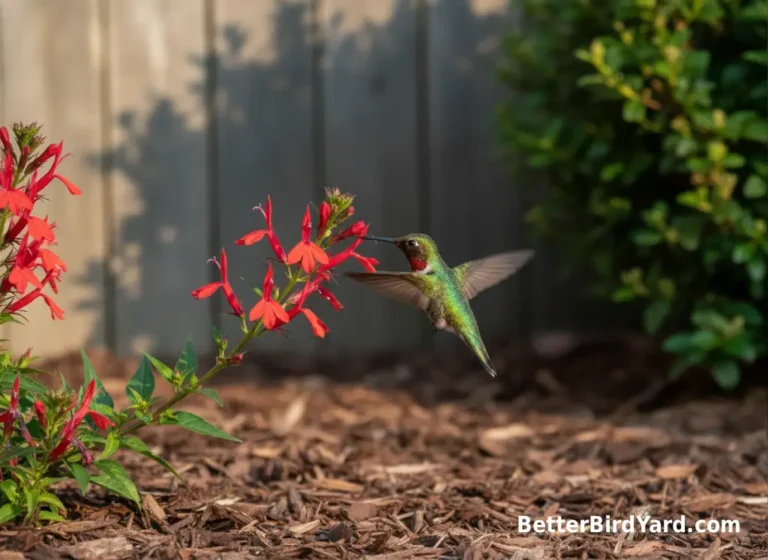
When To Put Out And Take Down Hummingbird Feeders
The best time to stop feeding hummingbirds is not a fixed calendar date. In most of the U.S., keep your feeder up until you have gone about two weeks without seeing a hummingbird, as long as you can keep the nectar fresh and the feeder clean. Leaving a clean feeder up into fall does not stop hummingbirds from migrating. Audubon notes that hummingbirds are migratory and respond to seasonal cues such as day length, not simply whether a backyard feeder is still full.
That said, timing does vary. A renter in Michigan or Wisconsin will usually have a shorter hummingbird season than someone in Texas or Louisiana, where some hummingbirds may appear much later or even overwinter along milder coastal areas. Cornell Lab notes that Ruby-throated Hummingbirds are long-distance migrants, and some remain in North America along parts of the Gulf Coast, southern Atlantic coast, and Florida.
Use this guide as a practical backyard schedule: put feeders out before expected spring arrivals, keep them clean through summer and fall, and take them down only after local activity has truly ended.
Quick Answer: Stop After Your Last Hummingbird, Not On A Fixed Date
For most backyard bird watchers, the easiest rule is this: keep feeding until about two weeks after your last hummingbird sighting, then clean, dry, and store the feeder. Texas Parks and Wildlife gives that two-week guideline and also notes that feeders can stay up year-round in Texas for people hoping to support or observe winter hummingbirds.
If you live in a colder northern state, that usually means your feeder may come down sometime in October, depending on your yard and the season. In warmer states, especially near the Gulf Coast, it may make sense to leave a feeder up much later if you are willing to maintain it. The key phrase is willing to maintain it. A neglected fall feeder with cloudy nectar is not helpful.
A common BetterBirdYard rule we like is simple: if the feeder is up, it is part of your routine. If you are too busy to clean it, take it down for the season.
Why Your Feeder Will Not Stop Migration
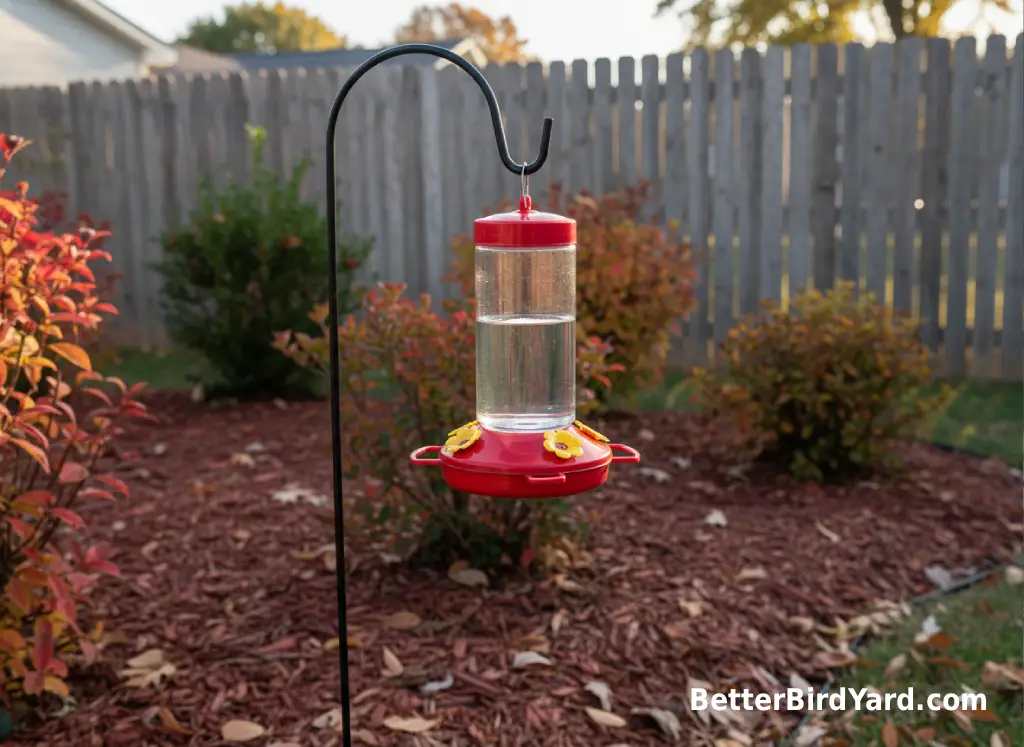
One of the most persistent hummingbird myths is that feeders should come down early so birds will not linger too long. That is not how hummingbird migration works. Audubon explains that leaving a feeder out does not make hummingbirds stay too late; migration is tied to seasonal changes such as daylight.
Missouri Extension gives the same practical reassurance for backyard feeders: continuing to feed in fall will not stop or delay migration, and leaving feeders up through October can help migrant hummingbirds passing through.
Ruby-throated Hummingbirds also eat insects and natural nectar, and they may use many yards, gardens, woodland edges, and native flower patches along the way. Audubon describes the Ruby-throated Hummingbird as mostly feeding on nectar and insects, and also using sugar-water feeders when they are kept clean and free of red dye.
When To Put Out Hummingbird Feeders In Spring
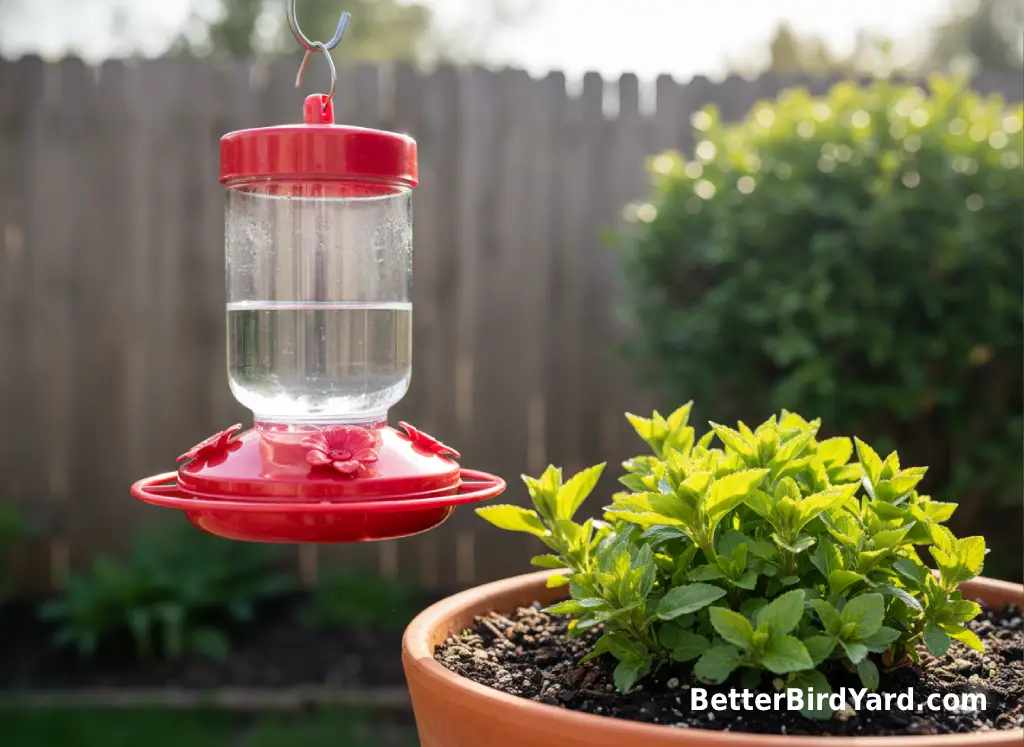
In spring, put your hummingbird feeder out about one week before hummingbirds usually arrive in your area. Audubon recommends using local arrival patterns, local Audubon chapters, or bird clubs if you are unsure.
For many eastern and midwestern yards, that means sometime from late March through late April. In northern states and higher elevations, early May may be more realistic. In Texas, the Gulf Coast, and other mild southern areas, feeders may go up much earlier.
Use a smaller amount of nectar early in the season so you are not throwing away a full feeder every cleaning. A half-filled feeder is usually enough until visits become frequent. What matters more than volume is freshness.
Homemade hummingbird food is plain and simple: 1 part refined white sugar to 4 parts water. Smithsonian’s National Zoo says not to add red dye, and to change and clean feeders regularly to prevent harmful mold growth.
State Timing Guide For Common Reader Questions
These windows are practical starting points, not legal or scientific cutoffs. Weather, elevation, city heat, late cold snaps, storms, flowers, and individual bird movement can shift the timing by a week or two. When in doubt, put the feeder out a little early, use only a small amount of nectar, and clean it whether or not birds have found it yet.
| State | When To Put Feeders Out | When To Stop Feeding | Backyard Notes |
|---|---|---|---|
| Missouri | First week of April in southern Missouri; one to two weeks later in central or northern Missouri. | Leave up through October or until about two weeks after your last sighting. | Missouri Extension specifically says fall feeding will not delay migration. |
| Ohio | Mid-April is a good target; have feeders cleaned and ready earlier if spring warms quickly. | Mid-October is a common guide, or after hummingbirds are no longer visiting. | Ohio State University Extension notes that feeders can remain up through October and that Ohio birds usually return in April. |
| Texas | By March 15 for many areas; earlier in some places where migration can begin in January or February. | Two weeks after the last sighting, or year-round if you maintain feeders carefully. | Texas Parks and Wildlife says year-round feeding is an option and will not stall migration. |
| Virginia | Early to mid-April for many yards, with colder mountain areas often later. | Keep up through fall activity, then remove about two weeks after your last sighting. | Virginia DWR recommends native tube-shaped flowers and plain sugar-water feeders with no food coloring. |
| Illinois | Early to mid-April in much of the state; northern areas may be closer to mid-April. | Leave through fall migration, often into October if you can keep nectar fresh. | Illinois Extension reported northern Illinois first sightings around April 12 in 2023 and stresses frequent cleaning. |
| Tennessee | Late March to early April is a practical setup window; regular Ruby-throated activity often builds in April. | Leave through early October, and longer if birds are still visiting. | TWRA describes Ruby-throated Hummingbirds as familiar summer residents from mid-April to early October, with some western hummingbirds recorded in the non-breeding season. |
| Pennsylvania | Late April to early May, or when early spring flowers begin opening. | Keep through September and into October if birds are still passing through. | Penn State Extension advises placing feeders outside as soon as the first flowers come out in spring because hummingbirds follow blooming flowers north. |
| Colorado | Mid-April in many lower-elevation areas; later in colder mountain locations. | Keep available until mid-October in migration-friendly yards. | Colorado State University Extension notes that Colorado hummingbirds are migratory and return around mid-April, and a fall migration garden guide recommends keeping feeders available until mid-October. |
| Michigan | Late April to early May is a reasonable starting window. | Usually after the last fall visits, often sometime in October. | Michigan DNR recommends hummingbird feeders as a way to observe and support Ruby-throated Hummingbirds during the season. |
| Louisiana | Late February to early March is often reasonable, especially in southern Louisiana. | October is a common seasonal endpoint, but Gulf Coast yards may keep a clean feeder longer. | Cornell notes that some Ruby-throated Hummingbirds stay in North America along the Gulf Coast. |
| Wisconsin | Late April to early May for many yards. | After your last sightings, often in October if the feeder is still being maintained. | Use local sightings and the two-week-after-last-bird rule, especially in colder northern areas. |
Keep The Feeder Up Only If You Can Keep It Clean
The real cutoff is not October, frost, or Labor Day. It is cleanliness. If you leave a feeder up for late migrants, it still needs the same careful maintenance it needed in July.
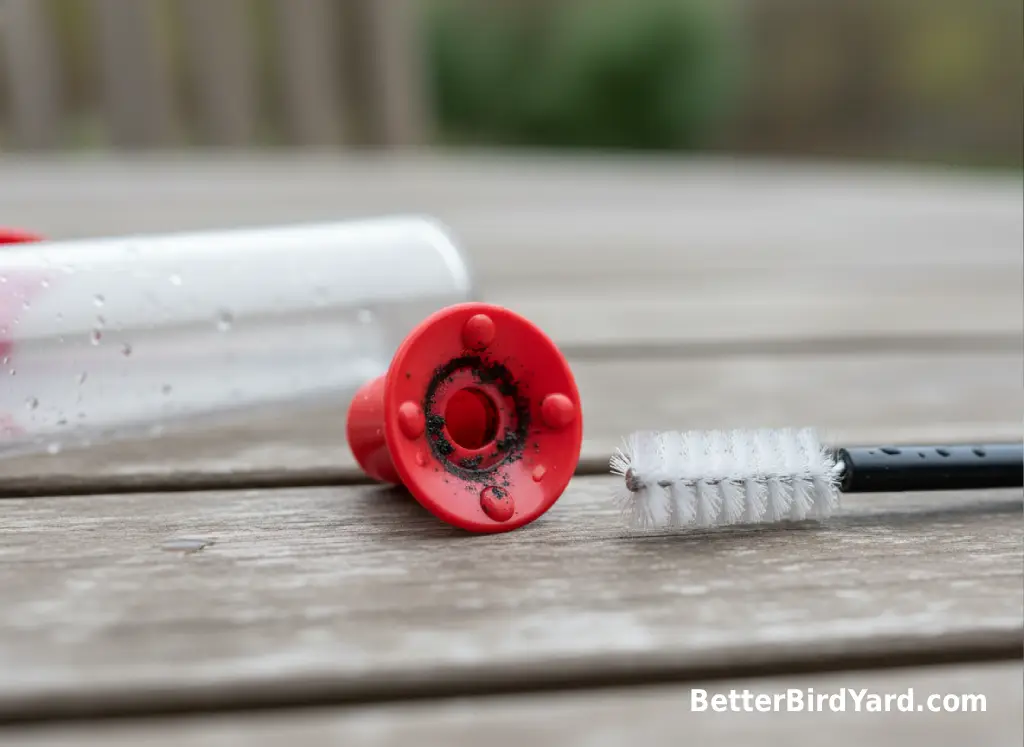
Audubon recommends emptying and cleaning hummingbird feeders every day or every other day in hot weather, about every three days in temperate weather, and twice per week in cooler weather. Audubon also recommends cleaning immediately if you see mold, insect problems, or a sick bird using the feeder.
Smithsonian’s National Zoo gives a simple safe recipe: 1 part refined white sugar to 4 parts water, no red dye, and regular cleaning to prevent mold growth. It also says to avoid honey, corn syrup, raw sugars, and powdered sugar for hummingbird nectar.
- Use refined white table sugar and plain water.
- Skip red dye, honey, brown sugar, raw sugar, corn syrup, and commercial mixes with additives.
- Use a feeder that comes apart easily so every port can be cleaned.
- Dump cloudy, discolored, fermented, or moldy nectar immediately.
- Hang the feeder in partial shade when possible to slow spoilage.
For a deeper feeder-care routine, see our related guide: how to clean hummingbird feeders.
What To Do If Hummingbirds Are Still Visiting In Late Fall
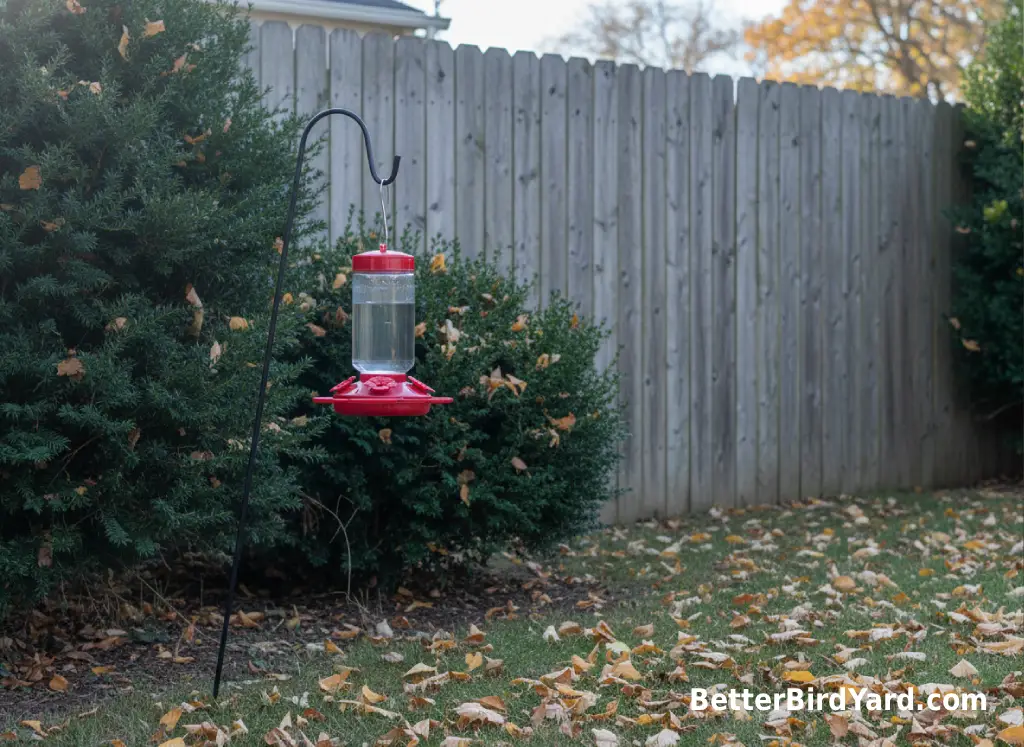
If hummingbirds are still visiting in late fall, do not panic and do not suddenly remove the feeder because you are worried you are trapping them in your yard. A clean feeder may help a late migrant refuel. In some regions, especially Texas, the Gulf Coast, and parts of the Southeast, late or winter hummingbird visits are possible. Cornell notes that some Ruby-throated Hummingbirds remain along the Gulf Coast and southern Atlantic coast, and Audubon says year-round feeding is fine in areas with year-round hummingbirds if feeders are kept clean.
If you want to continue late-season feeding, keep it practical:
- Clean and refill on schedule even if visits are rare.
- Bring the feeder in during hard freezes if nectar is freezing solid.
- Put it back out early in the morning if a bird has been using it.
- Keep a few late-blooming native or region-appropriate flowers where possible.
- Record unusual late hummingbirds with photos and check local birding or wildlife resources.
In a small patio or balcony setup, one clean feeder near sheltered shrubs or container plants is enough. You do not need a row of feeders unless you can keep every one of them fresh.
Common Mistakes To Avoid
Most hummingbird feeder problems come from good intentions paired with missed maintenance. The birds are tiny, but the routine needs to be steady.
- Taking feeders down too early because of the migration myth. Clean fall feeders do not stop migration.
- Leaving nectar up too long because visits have slowed. Nectar can spoil even when birds are not drinking much.
- Using red dye. A red feeder is enough; the nectar should be clear.
- Making nectar too strong. More sugar is not better.
- Using honey or raw sugars. Stick with refined white table sugar.
- Buying a huge feeder for one or two birds. Small feeders are easier to empty and clean.
- Letting ants, bees, wasps, or sticky leaks build up around the ports.
- Placing feeders where outdoor cats can stalk birds or where birds are likely to hit windows.
Editorial note: If you only change one thing, choose an easy-to-clean feeder and fill it only partway. Beginners often think a larger feeder is more generous, but a smaller fresh feeder is usually safer and less wasteful.
A Better Plan Than Feeders Alone
A feeder is useful, but it should not be the whole plan. Hummingbirds also need natural nectar, tiny insects, safe perches, and shelter. Illinois Extension describes feeders as supplemental food sources, especially early in spring and during fall migration, and recommends natural food sources such as nectar-producing plants and insects as part of the habitat.
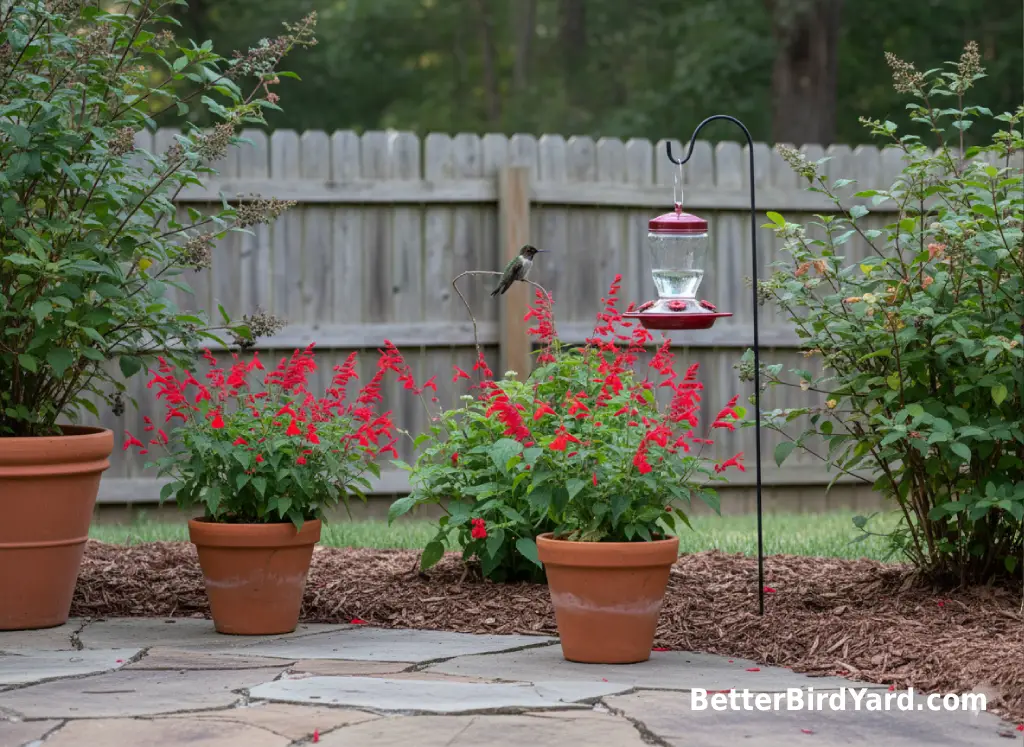
For a suburban yard, start with a few native or well-adapted nectar plants that bloom at different times. For a renter, try containers with region-appropriate flowers near a clean feeder. For a small balcony, one pot of nectar flowers, one feeder, and a shallow water source nearby can still make the space more useful.
A few simple habitat upgrades help:
- Add tubular flowers that bloom in spring, summer, and fall.
- Keep some shrubs or small trees nearby for perching and shelter.
- Avoid spraying pesticides around feeder and flower areas, since hummingbirds eat small insects too.
- Place feeders where you can reach them easily for cleaning.
- Keep cats indoors or away from feeder areas.
For plant ideas, see our companion guide: plants that attract hummingbirds in small yards and patios.
When To Pause Feeding Or Get Local Help
Most hummingbird feeding is routine: fresh nectar, clean feeder, safe placement. But if you see a bird that appears sick, injured, stunned, or unusually weak, do not try to diagnose or treat it yourself. Project FeederWatch says only veterinarians or federally licensed wildlife rehabilitators can legally treat wild birds, and it recommends contacting a wildlife rehabilitator if a bird appears to need intervention.
If a sick-looking bird has been using your feeder, remove that feeder for a couple of weeks, clean the feeder and area thoroughly, and let birds disperse. Project FeederWatch recommends this approach to reduce the chance of disease spreading at feeders.
During local wildlife disease advisories, follow your state wildlife agency’s guidance. Cornell Lab’s 2026 avian flu update notes that songbirds and typical feeder visitors have had relatively few documented HPAI cases and that there was no official recommendation to take down feeders unless you also keep domestic poultry, but it also says to follow state government recommendations.
BetterBirdYard is not a wildlife rehabilitation service, veterinary service, public health agency, or legal authority.
Final Thoughts On When To Stop Feeding Hummingbirds
So, when are you supposed to stop feeding hummingbirds? In most yards, the safest and simplest answer is about two weeks after your last sighting. In colder states, that often means sometime in October. In Texas, Louisiana, and other milder areas, it may mean much later, or not at all if you are intentionally feeding winter hummingbirds and can keep the feeder clean.
Put feeders out before local spring arrivals, keep them fresh through nesting and migration season, and do not let fear of delaying migration make you take them down too soon. A clean feeder can help late travelers. A dirty feeder helps no one.
The BetterBirdYard approach is calm and practical: offer plain nectar, clean often, watch your local birds, support them with flowers and insects too, and adjust your timing to your region rather than copying a single national date.