Hummingbird Colors: What Their Feathers Really Mean In Your Yard
Hummingbird colors can be surprisingly tricky. One bird may flash ruby red at a feeder, turn plain green a second later, and then look almost black when it perches in shade. That does not mean your eyes are playing tricks on you. Hummingbirds are small, fast, and highly iridescent, so light angle matters as much as the bird’s actual feather pattern.
For backyard bird watchers in the United States, the most familiar hummingbird colors are green, gray, white, red, pink, purple, orange, and copper. The exact mix depends on species, sex, age, region, and lighting. A male Ruby-throated Hummingbird, for example, has a brilliant red throat in good light, but Cornell Lab notes that the same throat can look dark when the light is poor.
This guide keeps the focus practical: what you might actually see at a backyard feeder, why a black hummingbird may not be truly black, how rare white or albino-looking hummingbirds happen, and how to support hummingbirds responsibly without red dye, honey, or guesswork.
The Quick Answer: What Color Are Hummingbirds?
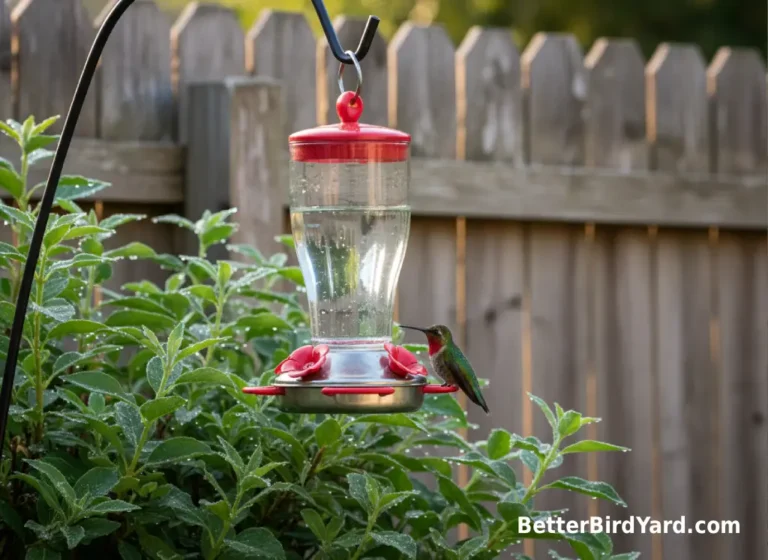
Most hummingbirds seen at US backyard feeders are not rainbow-colored from every angle. Many look green above and pale below, with the brightest color limited to the throat, crown, or sides of the head. The glittery throat patch on many male hummingbirds is called a gorget, and it can flash dramatically when the bird turns toward the light.
In everyday backyard terms, you may see:
- Green backs and crowns on many species, including Ruby-throated and Anna’s Hummingbirds.
- Gray, white, or pale underparts, especially on females and young birds.
- Red, pink, purple, orange, blue, or copper flashes on adult males, depending on species.
- Dark or black-looking throats when an iridescent patch is turned away from direct light.
- Rare white or patchy birds caused by unusual pigment conditions, not a separate feeder species.
The main beginner mistake is expecting hummingbird colors to look fixed, like paint. With hummingbirds, color is often more like a signal that switches on and off. A bird can look plain one moment and jewel-like the next.
Why Hummingbird Colors Change With The Light
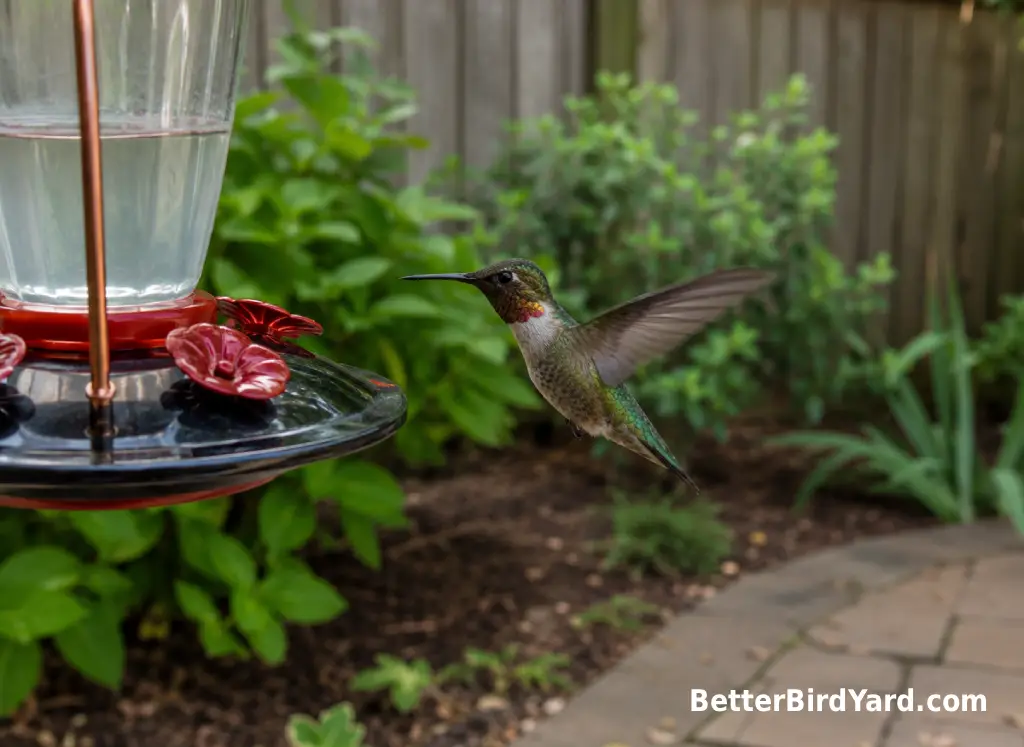
Many of the most colorful hummingbird feathers are iridescent. Cornell Lab explains that these special-effect colors are produced by light interacting with tiny structures inside the feathers, rather than by simple surface pigment alone. That is why a gorget can look red, pink, purple, bronze, gray, or black depending on angle.
This matters at feeders because hummingbirds rarely hold still. A male may hover, swing sideways, face the sun, turn away, and vanish into shade in just a few seconds. If you identify only by the brightest color you saw, you may miss other useful clues such as bill shape, tail pattern, body color, size, and where you live.
For better backyard viewing, stand with the sun behind you when possible, watch perched birds as well as hovering birds, and take several short looks instead of trusting one quick flash. A cheap pair of close-focus binoculars or a slow-motion phone video can make a big difference, especially on a balcony or small patio where birds pass close but quickly.
Ruby-Throated Hummingbird Colors: Male, Female, And Young Birds
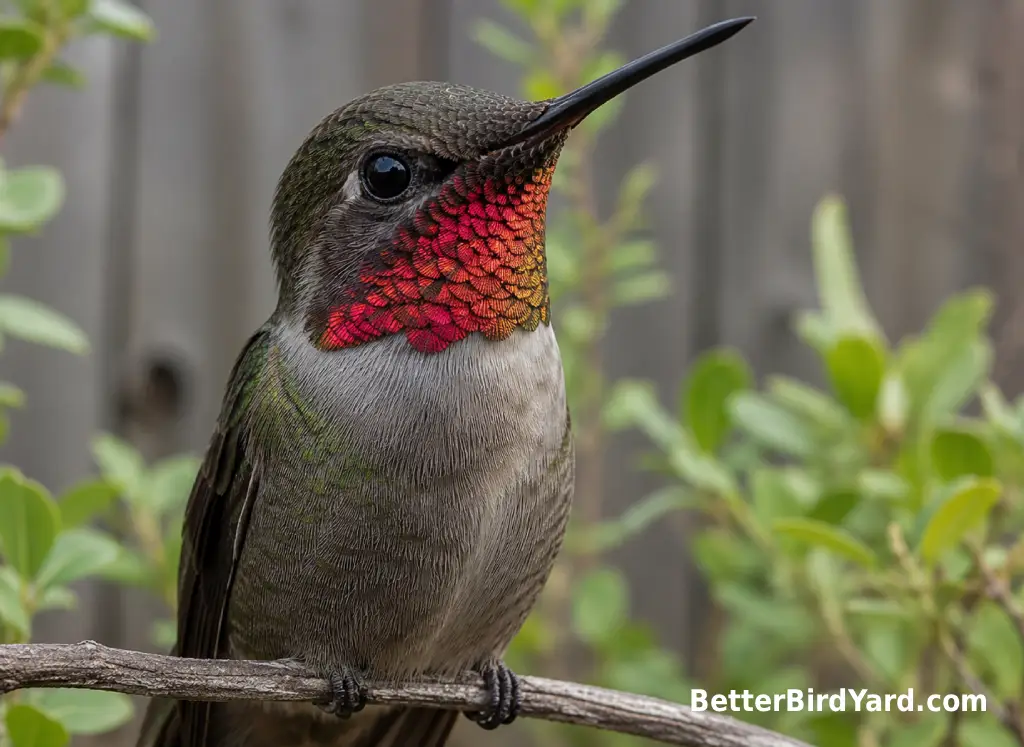
For much of the eastern United States, the Ruby-throated Hummingbird is the regular backyard hummingbird people are trying to identify. Cornell Lab describes Ruby-throated Hummingbirds as bright emerald or golden-green on the back and crown, with gray-white underparts. Adult males have the famous iridescent red throat, while females are golden-green above and whitish below without the male’s ruby throat.
| Bird | Typical Backyard Color Clues | What Beginners Often Notice |
|---|---|---|
| Adult Male Ruby-Throated Hummingbird | Green back and crown, gray-white underside, red throat that may look black in poor light | A ruby flash at the feeder, then a suddenly dark throat |
| Adult Female Ruby-Throated Hummingbird | Green above, pale below, usually no bright red throat | A neat green-and-white hummingbird that looks less colorful than the male |
| Immature Ruby-Throated Hummingbird | Often resembles a female; young males may show small developing throat spots | A bird that seems “in between” and is hard to label quickly |
In a small yard, we would keep identification simple at first: note the green back, pale underside, throat color, tail shape if perched, and your region. Then compare photos later using a trusted guide such as Cornell Lab’s All About Birds or the Merlin Bird ID app.
Why A Hummingbird Can Look Black
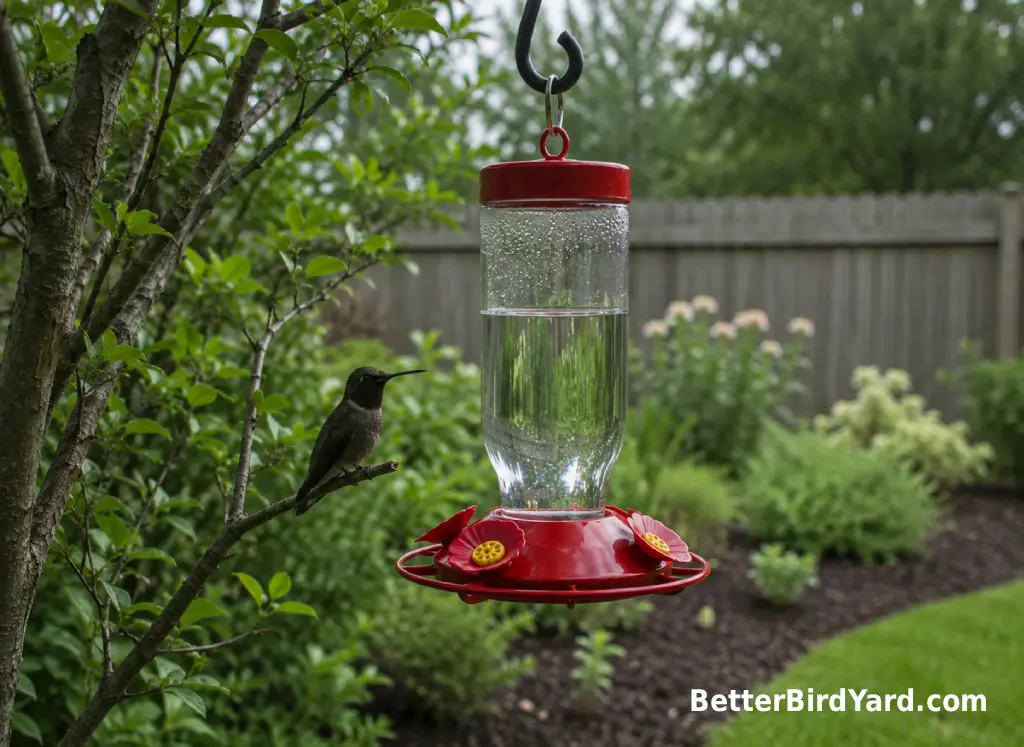
A black hummingbird at your feeder is often not a truly black bird. Several things can make a hummingbird look black: backlighting, shade, a camera exposure problem, or an iridescent throat turned away from the sun. Male Ruby-throated Hummingbirds are a common example because the red throat can look dark when it is not lit well.
There is also a real Black-chinned Hummingbird in the western and southwestern United States. Cornell Lab describes adult males as having a black head and throat with a thin iridescent purple band at the base of the throat; females and immature birds are dull metallic green above with whitish underparts and white-tipped outer tail feathers.
So before deciding you saw an unusual all-black hummingbird, check three things: your region, whether the bird was in shade, and whether any purple or red appeared when it turned. If you can get a photo, even a blurry one, it may reveal color that your eye missed in real time.
Black And White Hummingbirds, Leucistic Birds, And Albino Hummingbirds
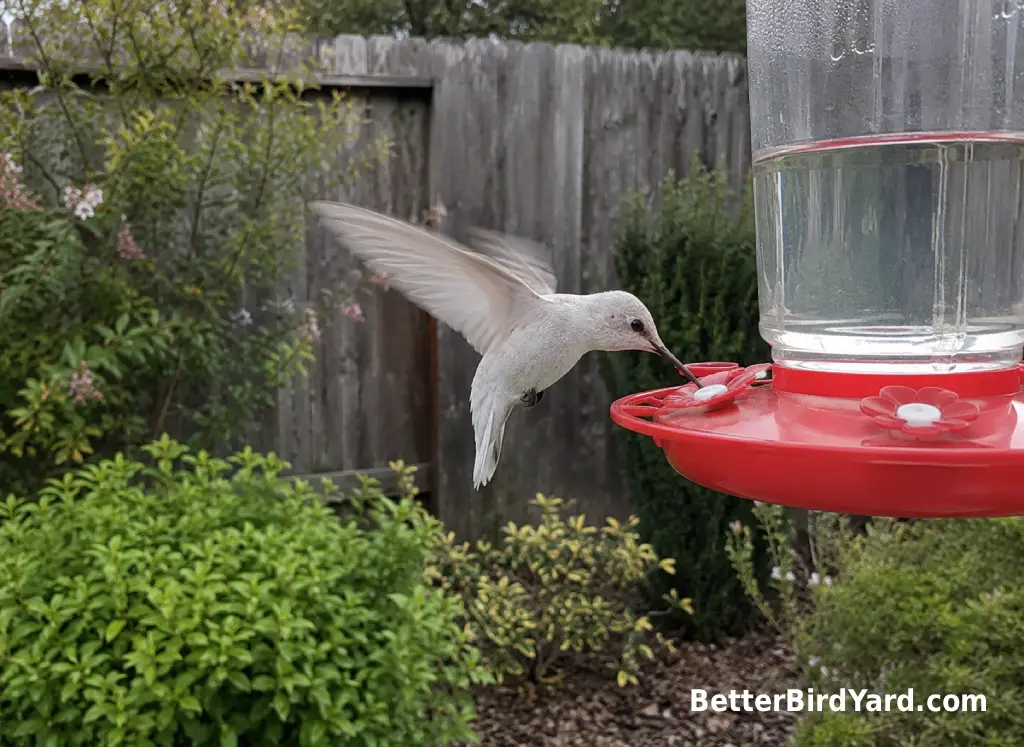
A black and white hummingbird or a mostly white hummingbird can be real, but it is usually an individual bird with unusual pigmentation rather than a normal color phase. Cornell Lab explains that leucism can make birds appear paler than normal or show irregular white patches, while melanism can create excess dark pigmentation.
True albino birds are different from leucistic birds. Audubon notes that albino birds have red or pink eyes, while pale birds with normally colored eyes are typically leucistic. That distinction matters because many backyard reports of an albino Ruby-throated Hummingbird are more likely leucistic birds unless eye color and other details confirm true albinism.
If you see a very pale hummingbird, enjoy the observation from a distance. Do not try to catch it, “help” it, or change your feeder mix. Keep the feeder clean, offer plain sugar-water homemade nectar, and document what you see with photos or notes. If the bird appears injured, unable to fly, trapped, or unusually weak, contact a licensed wildlife rehabilitator, local wildlife agency, or animal control for local guidance.
Colorful Hummingbirds You May See In Different US Regions
Colorful hummingbirds vary by region. The eastern United States is dominated by Ruby-throated Hummingbirds during the warmer months, while the West and Southwest have more regular hummingbird diversity. Local habitat, elevation, season, migration, and planted flowers all affect what you may see.
| Species | Color Clues | Where Backyard Birders Often Encounter Them |
|---|---|---|
| Ruby-Throated Hummingbird | Green above, pale below; adult male has a red throat that can look dark | Commonly expected in much of the eastern US during the warmer season |
| Black-Chinned Hummingbird | Greenish body; adult male has a black throat with a thin purple base | Widespread in parts of the West and Southwest |
| Anna’s Hummingbird | Mostly green and gray; adult male has reddish-pink head and throat that can look dull without sun | Common in many Pacific Coast yards, parks, and residential areas |
| Rufous Hummingbird | Male can glow orange with an iridescent red throat; females show green with rufous washes | Western breeding and migration areas; occasional wanderers elsewhere |
| Costa’s Hummingbird | Adult male has purple crown and throat, with green back | Desert and dry habitats of the Southwest and coastal California areas |
| Broad-Billed Hummingbird | Adult male is rich green with a shimmering blue throat and red bill tipped black | Most expected in parts of the Southwest |
Use range maps carefully. A rare or out-of-range hummingbird can show up, but most backyard IDs should start with the species expected in your state and season. For a careful ID, combine color with shape, behavior, tail pattern, sound, and date.
Do Colors Help Attract Hummingbirds To Feeders?
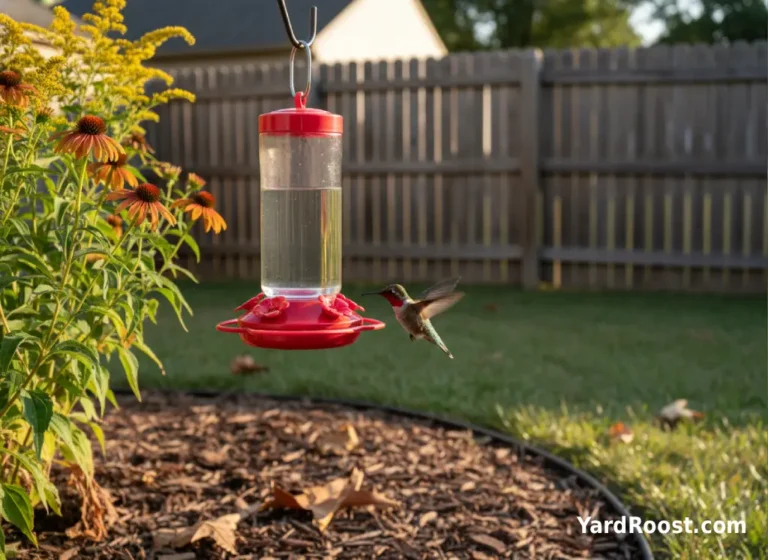
Color can help hummingbirds notice a feeder, but nectar quality and feeder care matter more than making the sugar water red. Audubon explains that hummingbirds can be drawn to red and other warm colors, but red dye is unnecessary, and clear sugar-water nectar is the safer choice.
For a beginner-friendly setup, keep it simple:
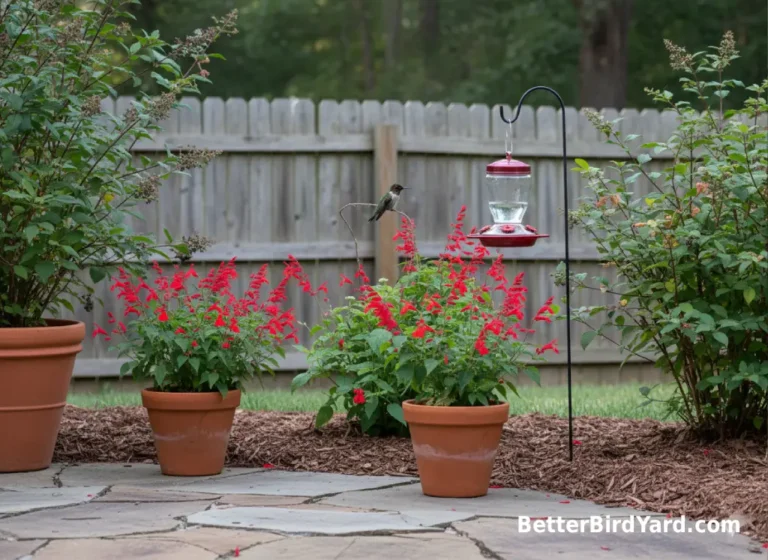
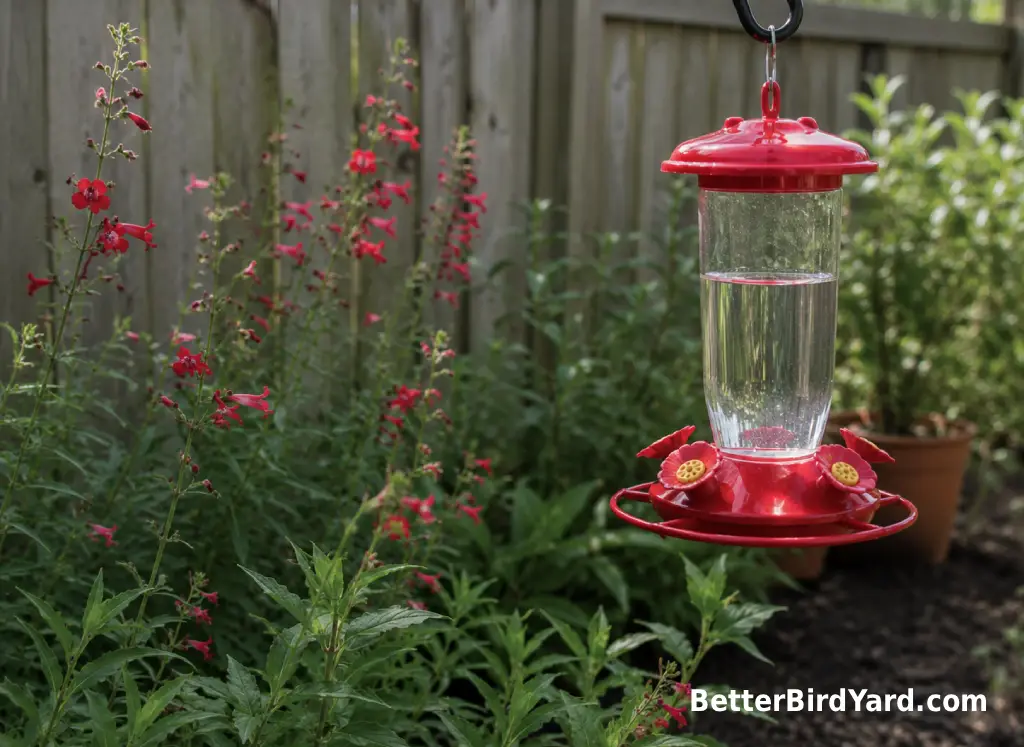
- Choose a feeder with red, orange, or bright accents on the feeder itself.
- Fill it with plain nectar made from 1 part refined white sugar to 4 parts water.
- Do not use honey, brown sugar, molasses, artificial sweeteners, or red food coloring.
- Clean and refill the feeder often, especially in hot weather or whenever nectar looks cloudy.
- Plant region-appropriate nectar flowers nearby so the feeder is only one part of the habitat.
Audubon recommends the 1:4 white sugar-to-water solution and advises against honey and red dye; its feeder FAQ also notes that feeders need more frequent cleaning in hot weather and whenever mold, insects, or other problems appear.
Editorial note: In a small yard or rental patio, one easy-to-clean feeder is better than three neglected feeders. Hummingbird colors are fun to watch, but a clean feeder is what makes the setup responsible. For step-by-step care, see our hummingbird feeder cleaning guide.
How To Watch Hummingbird Colors Without Misidentifying Them
Hummingbird color ID improves when you slow the moment down. Instead of chasing every flash, watch where the bird returns. Many hummingbirds use favorite perches between feeder visits, and a perched bird is much easier to study than a hovering blur.
Try this simple routine:
- Watch the feeder for ten quiet minutes during good light.
- Note the bird’s back color, throat color, underside, and any white tail tips.
- Check whether the throat color changes when the bird turns.
- Take a short video if the bird is too fast to study live.
- Compare your notes with a field guide or trusted app after the bird leaves.
Be careful with camera color. Phones can over-darken a bird against a bright sky or over-brighten a bird in shade. A “black and white hummingbird” in a single photo may turn out to be a normal green-and-white bird photographed in tricky light. Multiple angles are more helpful than one dramatic image.
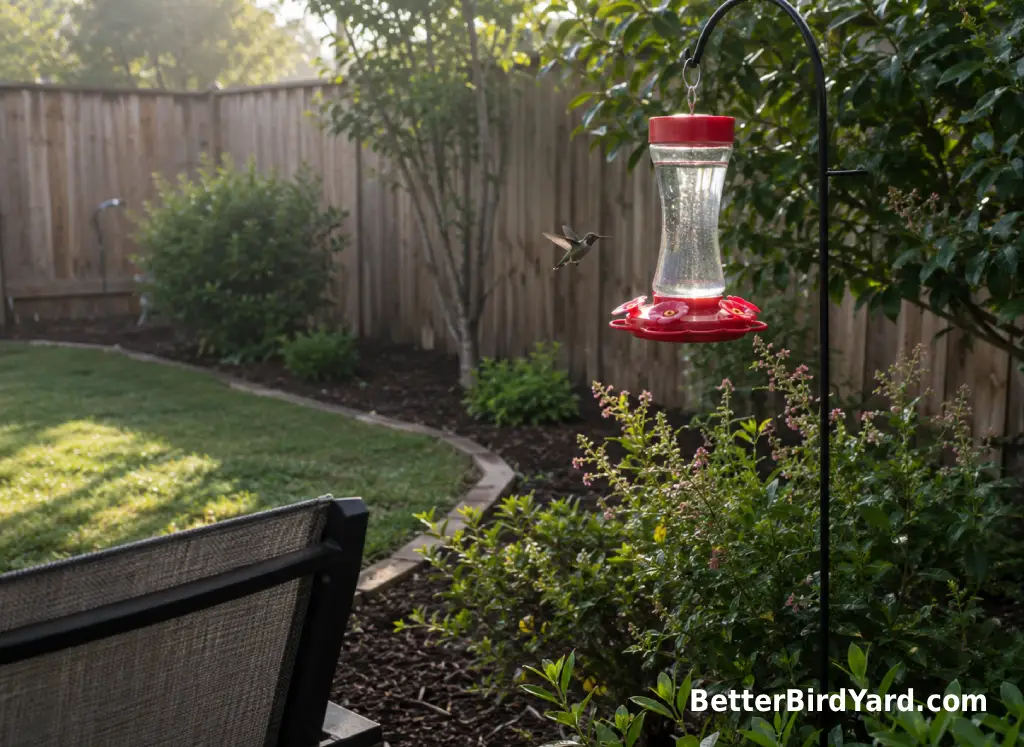
If your feeder is close to a window, also think about window safety. Place feeders either very close to the glass or farther away, and use visible window-strike prevention patterns where reflection is a problem. For more practical setup help, see our guide to where to hang a hummingbird feeder.
Common Hummingbird Color Mistakes To Avoid
A few color mistakes show up again and again in backyard hummingbird watching.
- Calling every dark hummingbird black. First check light angle, shade, and whether the gorget flashes red or purple.
- Assuming every pale hummingbird is albino. True albinism is different from leucism, and eye color is an important clue.
- Identifying only by throat color. Tail pattern, body shape, region, and season also matter.
- Expecting females to look as bright as males. In many species, females and young birds are subtler.
- Using red dye to make nectar more attractive. Use a red-accent feeder, not dyed sugar water.
- Leaving a feeder up because no birds are visiting yet, but forgetting to clean it. Nectar still spoils even when visits are light.
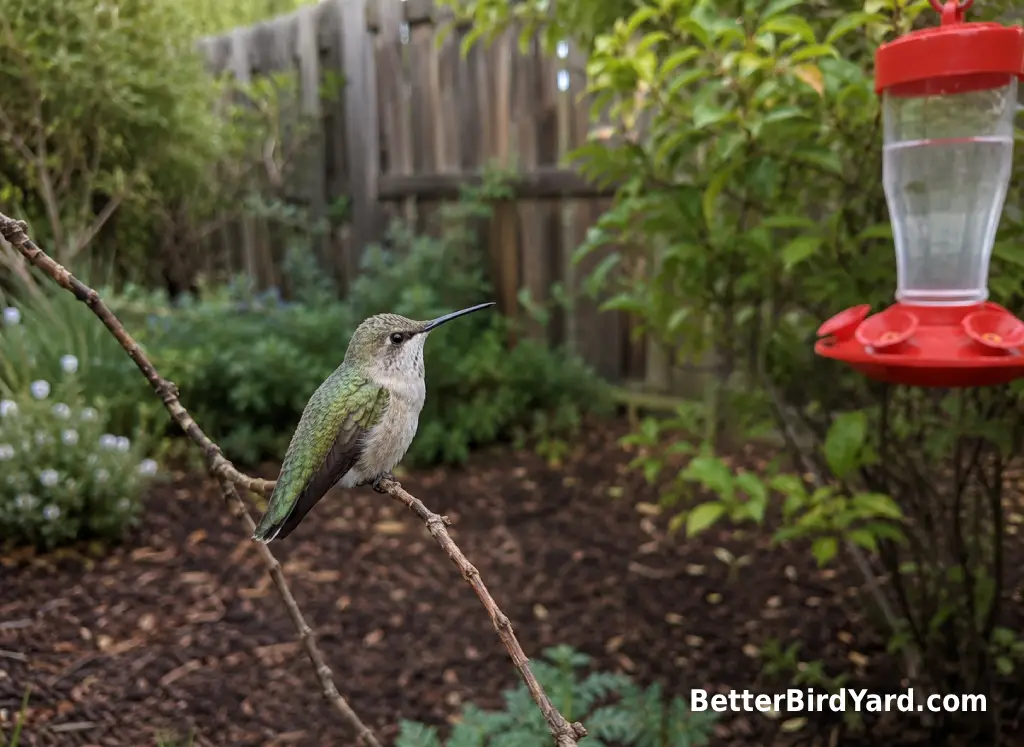
The best habit is to describe what you see before naming the bird: green back, pale belly, dark throat in shade, white tail tips, red flash when turned. That keeps your ID grounded and makes it easier to ask a local bird club or experienced birder for help if you photograph something unusual.
Short FAQ About Hummingbird Colors
Are Hummingbirds Always Colorful?
No. Many hummingbirds look fairly green, gray, or white unless the light catches an iridescent patch. Adult males are often the most colorful, while females and young birds can be much more subtle.
Why Did My Ruby-Throated Hummingbird Look Black?
The male’s red throat can appear black or very dark when it is not facing good light. Backlighting and shade can also make the whole bird look darker than it really is.
Is There Such A Thing As An Albino Ruby-Throated Hummingbird?
It is possible for a Ruby-throated Hummingbird to show very pale or white plumage, but many birds called albino are more likely leucistic unless red or pink eyes and other details confirm true albinism. Enjoy rare pale birds from a distance and avoid handling them.
Does A Red Feeder Attract More Hummingbirds?
Red accents can help a feeder stand out, but the nectar should stay clear. Use plain white sugar and water, keep the feeder clean, and avoid red dye, honey, and other sweeteners.
Final Thoughts On Hummingbird Colors
Hummingbird colors are part identification clue, part light show. Green backs, pale bellies, ruby throats, purple bands, coppery sides, and rare white patches all make sense once you remember that light angle, sex, age, species, and region are working together.
For most backyard bird watchers, the safest approach is also the most satisfying: watch patiently, describe the bird before naming it, take photos when you can, and use trusted bird ID sources for comparison. A bird that looks black may simply be shaded. A bird that looks albino may be leucistic. A plain green female may be just as interesting as the flashy male that steals the first glance.
Most important, let color curiosity lead to better care. Plant suitable nectar flowers where you can, keep feeders clean, use plain clear sugar-water nectar, skip red dye and honey, and give unusual or distressed birds space. The better your setup, the more natural hummingbird behavior you get to watch right outside your window.