Cardinal Eggs And Nests: A Backyard Guide To Nesting Cardinals
Finding a cardinal nest tucked into a shrub is one of the best small surprises in a backyard. Northern Cardinals are familiar feeder birds across much of the eastern and central United States, but their nests are usually hidden low in dense foliage rather than placed in a birdhouse. That can make cardinal eggs feel mysterious, especially if you are trying to tell whether a nest is active, abandoned, or simply being visited quietly.
Here is the quick answer: cardinal eggs are usually grayish white, buffy white, or greenish white with pale gray to brown speckles. A typical clutch has 2 to 5 eggs, and incubation usually lasts 11 to 13 days. The nest is an open cup made mostly of twigs, bark, grasses, stems, rootlets, and other plant fibers, usually wedged in a dense shrub, sapling, vine tangle, or low tree. Cornell Lab’s All About Birds and NestWatch both list Northern Cardinal nests as low, hidden cup nests rather than cavity nests or birdhouse nests.
The most helpful thing a backyard bird watcher can do is give nesting cardinals cover, space, clean water, and a low-disturbance yard. Enjoy the view from a distance, keep pets away, and avoid touching eggs, young birds, or active nests.
What Cardinal Eggs And Nests Look Like
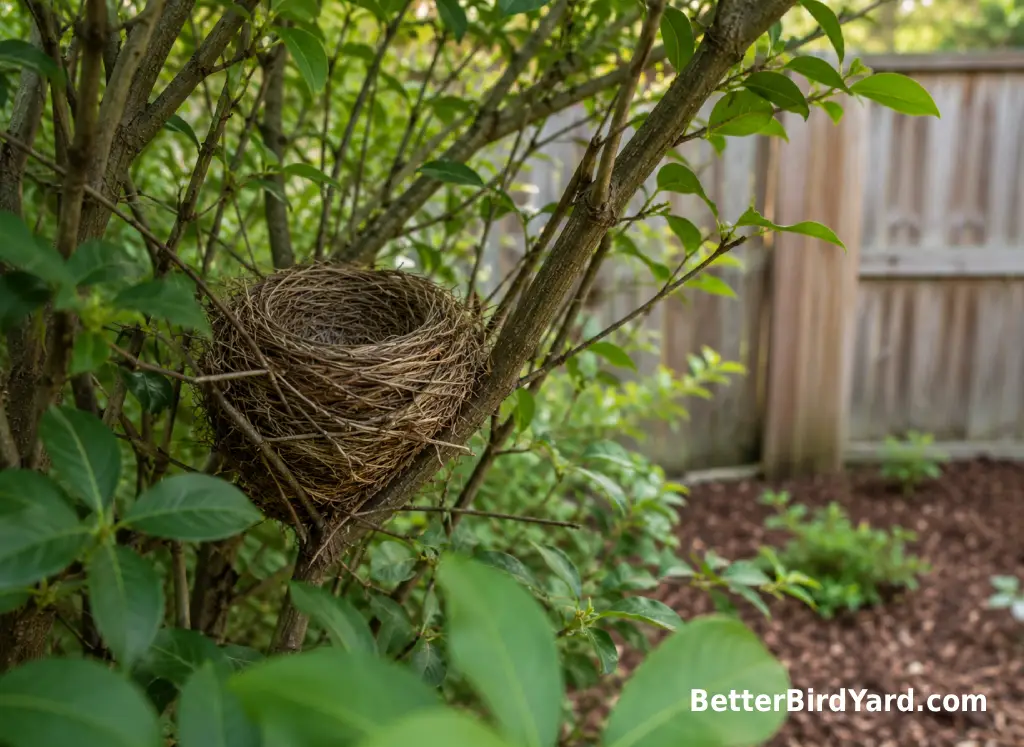
A cardinal bird nest is a small open cup, not a cavity, box, or hanging pouch. Cornell describes the finished Northern Cardinal nest as about 2 to 3 inches tall and about 4 inches across, with an inner cup around 3 inches wide. The female does most of the building, while the male may bring some nesting material. The cup is typically built in layers, with coarse twigs outside and softer plant fibers inside.
Cardinal eggs are not red, even though people sometimes describe them as red cardinal eggs because the adult male is bright red. The egg color is usually pale: grayish white, buffy white, or greenish white, marked with small speckles or blotches in gray, brown, or sometimes purplish tones. Audubon describes Northern Cardinal eggs as whitish to pale bluish or greenish white, marked with brown, purple, and gray.
| Cardinal Nesting Detail | Typical Northern Cardinal Pattern |
|---|---|
| Egg Color | Grayish white, buffy white, or greenish white with gray to brown speckles |
| Clutch Size | Usually 2 to 5 eggs |
| Incubation | About 11 to 13 days |
| Nest Type | Open cup |
| Typical Nest Height | Often low, commonly 1 to 15 feet above ground |
| Birdhouse Use | Cardinals do not normally use enclosed birdhouses |
From a backyard viewing distance, the nest may look like a loose, twiggy bowl. That is normal. It is not as tidy as a robin’s mud-lined cup, and it is often so well hidden that you may notice the adult cardinals before you notice the nest.
Where Cardinals Nest In A Yard
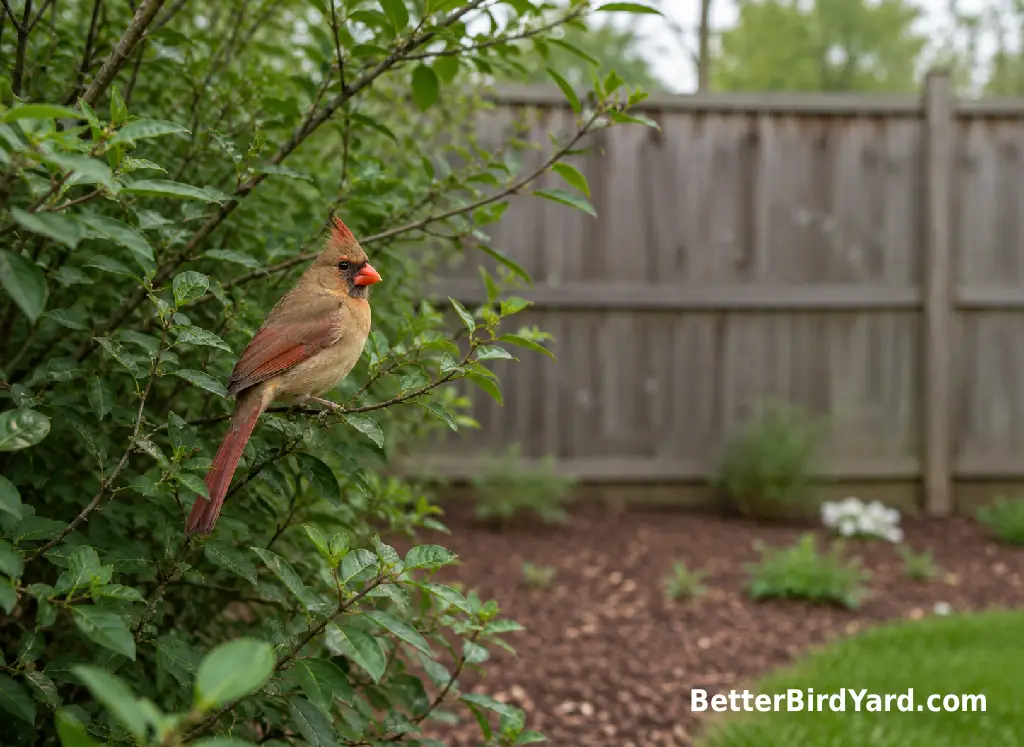
Northern Cardinals nest where they can hide. In ordinary yards, the most likely places are dense shrubs, hedges, young trees, vine tangles, brambles, and evergreen cover. Cornell lists forest edges, hedgerows, backyards, thickets, ornamental landscaping, and other dense shrubby areas as cardinal habitat, and notes that nests are often wedged into a fork of small branches in a shrub, sapling, or vine tangle.
In a small yard or patio garden, that means cardinals are more likely to use layered plant cover than a neat open lawn. A mixed border with shrubs, vines on a trellis, berry-producing native plants where appropriate for your region, and a quiet corner can be more useful than a decorative birdhouse. Cardinals are not typical birdhouse nesters because they do not nest inside cavities.
Common backyard nest sites include:
- Dense evergreen shrubs near a fence line
- Native or ornamental shrubs with branching structure
- Grape, honeysuckle, or other vine tangles, especially where locally appropriate and noninvasive
- Thorny or dense bramble patches where pets and people do not pass constantly
- Low trees with hidden interior branches
Audubon also describes Northern Cardinals as birds of woodland edges, thickets, suburban gardens, towns, and brushy or semi-open habitats where dense bushes are available for nesting.
When Cardinals Lay Eggs And How Long They Take To Hatch
Cardinal nesting can begin surprisingly early in the year, especially in milder parts of their range. Cornell NestWatch notes that Northern Cardinals do not migrate and may begin nest building as early as late February. Animal Diversity Web describes the breeding season as roughly March through September, with timing varying by region and local conditions.
The basic timeline is fairly quick. The female builds the nest, lays the eggs, and does most or nearly all of the incubation. The eggs usually hatch after about 11 to 13 days. Young cardinals remain in the nest only a short time, often around 7 to 13 days after hatching, before they leave as fledglings.
That short timeline is why a nest can look quiet one week and suddenly seem empty the next. Empty does not always mean disaster. Young cardinals may have fledged and scattered into nearby cover, where parents continue feeding them. Audubon notes that both parents feed nestlings, and the male may feed fledglings while the female begins another nesting attempt.
In a backyard, the safest interpretation is usually patience. Watch from indoors, from a porch, or with binoculars. Adults may approach the nest only when they feel safe, so standing nearby can make the nest look abandoned even when it is active.

Do Cardinals Mate For Life?
Cardinals often form strong pair bonds, and many backyard watchers see the same male and female together through much of the year. That is why the question do cardinals mate for life comes up so often. The careful answer is: sometimes pairs may remain together for several seasons, but it is better not to treat lifelong pairing as a guarantee.
Cornell notes that cardinal pairs may stay together through winter, but some pairs split by the next season. Animal Diversity Web describes Northern Cardinals as serially monogamous, with breeding pairs that may remain together year-round and may breed together for several seasons.
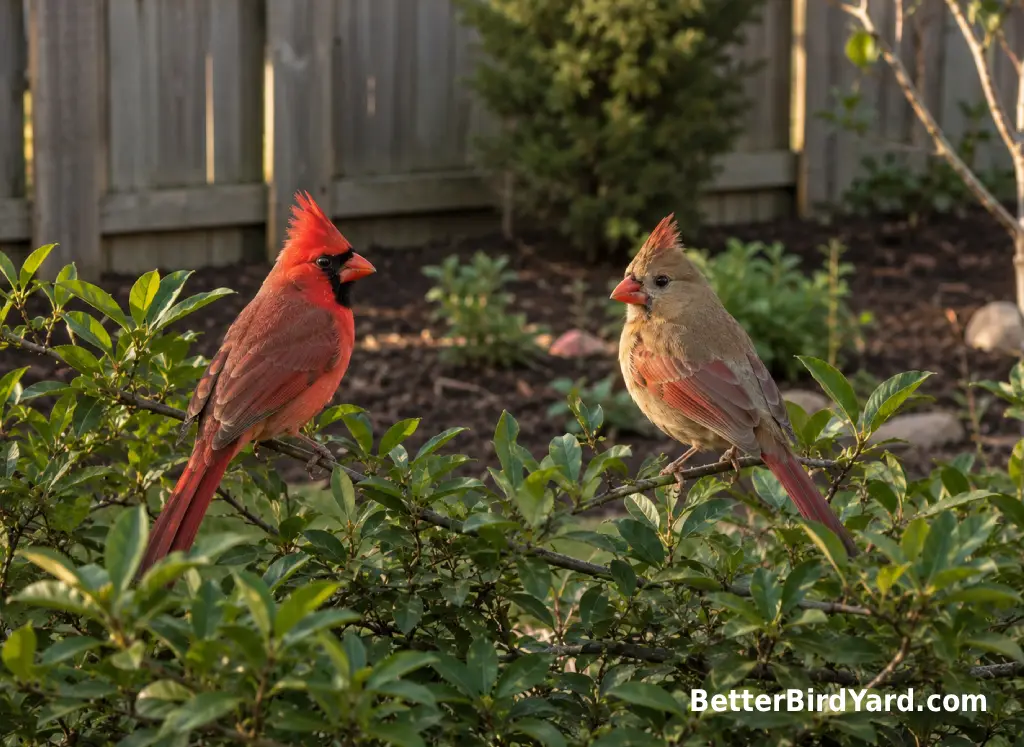
For backyard bird watchers, the practical takeaway is simple. A male and female cardinal moving together, singing, visiting shrubs, or feeding near each other may be a bonded pair, especially during breeding season. But seeing one bird alone does not mean its mate is gone. One adult may be hidden on or near the nest, gathering food, feeding fledglings, or staying quiet while the other bird is more visible.
The familiar courtship-feeding behavior, where a male offers food to a female, can look almost like a kiss. It is a normal pair-bonding behavior, not something that needs human help. Give them cover, quiet space, and a reliable natural yard structure, then let the cardinals do the rest.
How To Support Nesting Cardinals Without Interfering
The best way to help nesting cardinals is not to manage the nest. It is to make the yard safer and calmer around it. Cardinals already know how to build cardinal nests, incubate eggs, and feed young. Your job is to reduce the avoidable problems that backyards can create.
Start with cover. Dense shrubs and small trees give cardinals places to nest, hide fledglings, and escape predators. If you are adding plants, favor native shrubs and small trees that fit your region, your space, and your local rules. A renter with a patio can still help by using container shrubs, a privacy trellis with appropriate vines, or a cluster of potted native plants where allowed.
Then keep the support simple:
- Give the nest area space, especially during egg laying and early incubation.
- Keep cats indoors and supervise dogs near nesting shrubs.
- Place feeders so spilled seed does not build up below a nest site.
- Keep bird baths clean and shallow, and refresh water often in warm weather.
- Avoid pruning dense shrubs during active nesting unless there is a safety issue that requires local professional guidance.
- Skip loose yarn, string, dryer lint, and pet hair as nesting material; natural plant cover is safer and more useful.
Editorial note: in a small yard, the easiest improvement is usually not adding more feeders. It is protecting one quiet, leafy corner from constant trimming, foot traffic, pets, and clutter. For more feeder-side support, see our guide to the best bird feeders for cardinals and our practical bird bath cleaning guide.

Common Mistakes Around Cardinal Nests
The biggest beginner mistake is getting too close too often. A cardinal nest is exciting, but repeated visits can stress adults, leave scent or visible trails for predators, or make the nest area easier for jays, crows, cats, raccoons, or squirrels to investigate. Cornell NestWatch warns that nest monitoring should avoid accidental harm, parental desertion, and attracting predators; its protocol recommends careful, infrequent checks rather than constant disturbance.
Other common mistakes include trimming a shrub before checking carefully for active nests, assuming a quiet nest is abandoned, trying to move a nest to a better spot, or touching eggs for a closer look. A nest may be active even if you do not see an adult every few minutes. Adult cardinals can be cautious when people are nearby.
Another mistake is thinking a birdhouse will solve the problem. Cardinals generally want dense branches and foliage, not an enclosed box. If your goal is to support cardinal bird nesting, spend your effort on shrub cover, clean water, safer windows, and reduced disturbance.
Finally, avoid turning the area into a feeding crowd. A feeder near nesting cover can be fine if it is clean and not attracting pests, but heavy seed buildup can draw squirrels, rodents, and other unwanted attention. If you notice spilled seed, moldy seed, or pest pressure, clean up promptly and consider moving or reducing the feeder until the area is calmer.
What To Do If You Find A Cardinal Egg Or Baby Cardinal
If you find a cardinal egg on the ground, do not try to incubate it, open it, keep it, or move it around the yard. Eggs and active nests of native migratory birds are protected in the United States, and the U.S. Fish and Wildlife Service states that it is illegal to destroy a nest with eggs or chicks or to keep a nest without a permit. Local situations can vary, so contact a licensed wildlife rehabilitator or local wildlife agency if you believe a bird is in immediate danger or a nest is in a hazardous location.
If you find a young cardinal on the ground, first look without rushing in. Cornell Lab explains that many young birds people find are fledglings: feathered, mobile birds that have left the nest but are still being cared for by their parents. These birds often do not need intervention beyond keeping pets away and watching from a distance.
A sparsely feathered nestling that cannot hop or grip normally should still be in a nest. If the nest is obvious and reachable without unsafe handling, Cornell’s general baby bird guidance says a nestling can be placed back quickly. But if the bird is injured, both parents are dead, the nest cannot be found, or you are certain the bird is orphaned, contact a licensed wildlife rehabilitator. Do not attempt to feed, water, medicate, or raise a wild bird at home.

Quick Answers About Cardinal Nesting Habits
What Does A Cardinal Bird Nest Look Like?
A cardinal nest looks like a small open cup made of twigs, bark, grasses, stems, rootlets, and other plant fibers. It is usually hidden in dense shrubs, vines, saplings, or low trees rather than placed in a birdhouse.
What Do Cardinal Eggs Look Like?
Cardinal eggs are usually pale, not red. They are commonly grayish white, buffy white, or greenish white with gray, brown, or purplish markings. Exact color and markings can vary from nest to nest.
How Long Does It Take For Cardinal Eggs To Hatch?
Northern Cardinal eggs usually hatch after about 11 to 13 days of incubation. The young may leave the nest roughly 7 to 13 days after hatching, though they still depend on the adults after fledging.
Do Northern Cardinals Use The Same Nest Again?
Usually, no. Cornell notes that cardinals usually do not use their nests more than once. They may nest again in the same general territory, but the next nest is typically a new structure.
Should I Remove An Old Cardinal Nest?
Only consider removing a nest after you are certain it is inactive and contains no eggs, chicks, or dependent young. Rules can vary by situation, and active nests of native birds are protected. When in doubt, leave the nest alone and check with your state wildlife agency or the U.S. Fish and Wildlife Service guidance.
Final Thoughts On Cardinal Eggs And Nests
Cardinal eggs and nests are easy to appreciate once you know what to look for: a hidden open cup in dense foliage, a small clutch of pale speckled eggs, a short incubation period, and careful parent birds that may be quieter than expected around the nest. The details are interesting, but the safety rule is simple: observe, do not interfere.
For most backyards, the best cardinal nesting support is a calm habitat corner with dense shrubs, clean water, responsible feeder maintenance, fewer disturbances, and pets kept away from nesting cover. Avoid moving nests, touching eggs, trimming active shrubs, or trying to raise young birds yourself.
A Northern Cardinal nest is temporary, but the habitat choices you make can help cardinals and other backyard birds season after season. Keep the yard practical, clean, and quiet where birds are nesting, and you will have a better chance of seeing natural cardinal behavior without putting the nest at risk.