Are Hummingbirds Territorial? What Backyard Feeder Fights Mean
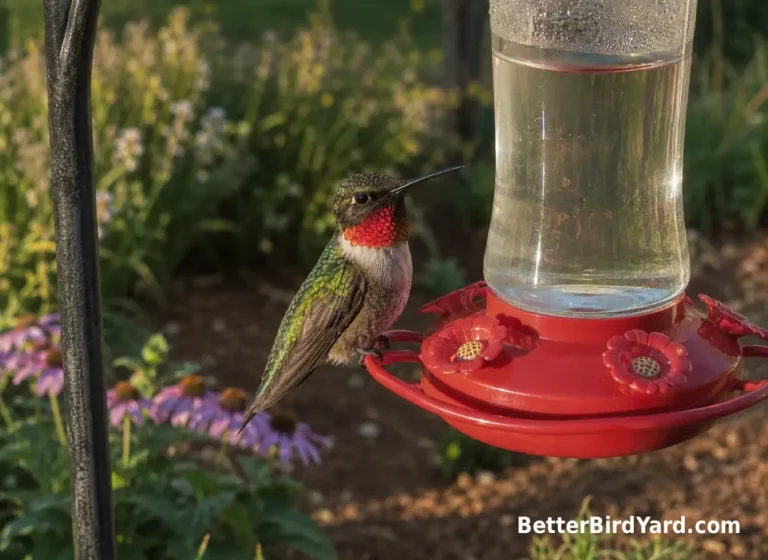
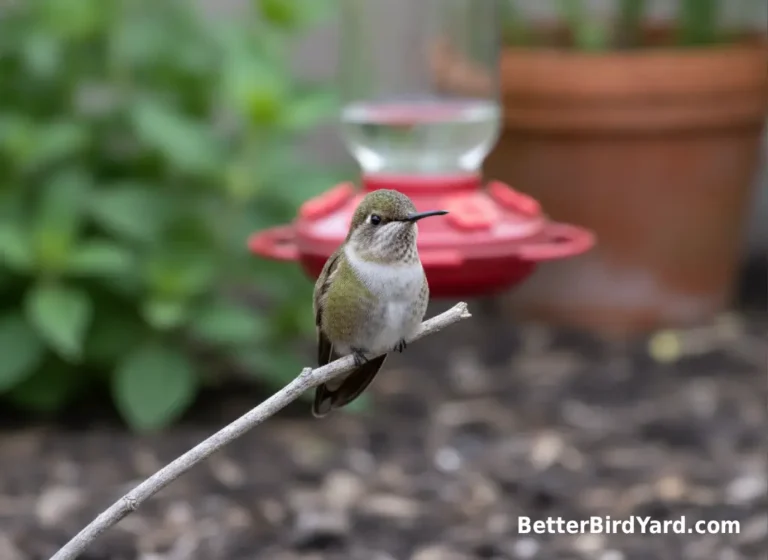
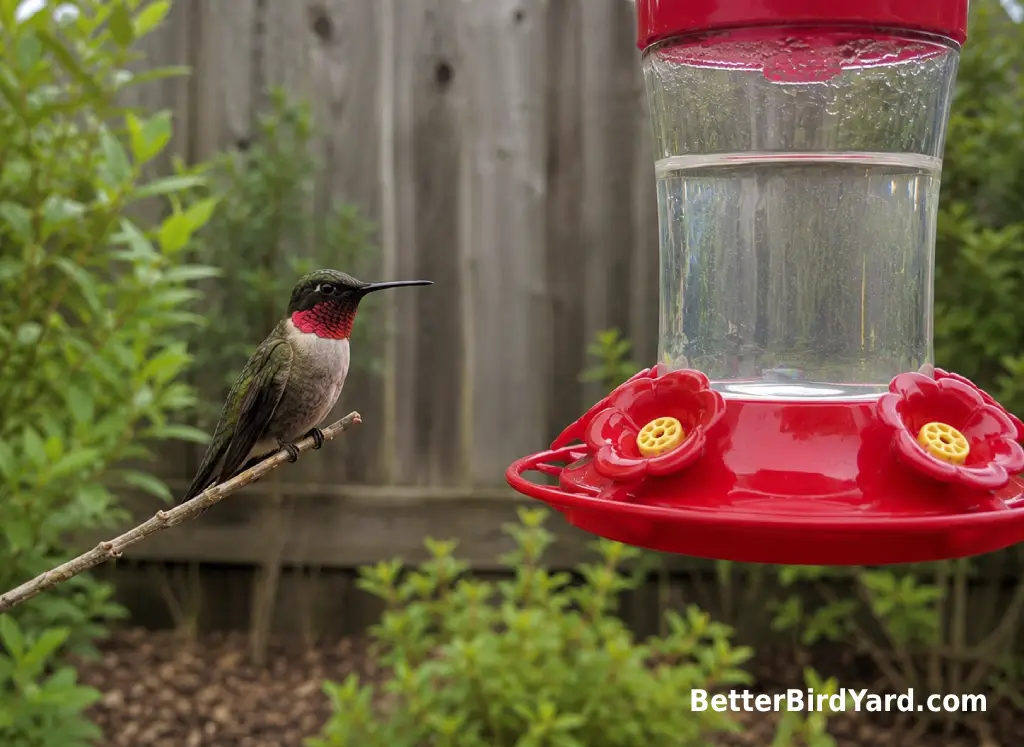
Yes, hummingbirds can be territorial, and the tiny bird guarding your feeder is usually behaving normally. Backyard bird watchers often notice one hummingbird sitting on a nearby twig, shepherd’s hook, tomato cage, fence wire, or patio rail, then launching like a dart whenever another hummingbird comes in to feed.
That behavior can look dramatic, but it makes sense from the bird’s point of view. Hummingbirds depend on high-energy food sources, and in nature a good patch of flowers may be worth defending. Cornell Lab of Ornithology explains that hummingbirds can be fiercely territorial because sharing flowers during low-bloom periods may leave them searching far for more nectar. Feeders are different from flowers, of course, but hummingbirds do not always treat them that way.
For a backyard host, the goal is not to stop every chase. A little buzzing, posturing, and feeder guarding is part of hummingbird life. The better goal is to offer food safely, reduce bottlenecks, and make your yard less stressful for the birds that visit.
Quick Answer: Yes, Hummingbirds Can Be Territorial
Hummingbirds are territorial in the sense that they may defend a useful food source, perch, courtship area, or nesting area from other hummingbirds. Around backyard feeders, this usually shows up as chasing, sudden dives, squeaky chittering, hovering face-offs, and one bird returning again and again to the same lookout perch.
Not every hummingbird behaves the same way. Species, sex, age, season, weather, and food availability all matter. In much of the eastern United States, the Ruby-throated Hummingbird is the regular summer visitor, and Cornell notes that male Ruby-throated Hummingbirds aggressively defend flowers and feeders. In the West, species such as Rufous Hummingbirds are especially well known for intense feeder defense.
A territorial hummingbird is not being “mean.” It is trying to control access to a resource. The funny part, from our human view, is that one bird may try to guard a feeder with several ports even when there is enough nectar for everyone.
Why Are Hummingbirds So Territorial?
Hummingbirds burn a lot of energy, and nectar is a fast fuel source. A bird that finds a reliable patch of flowers or a feeder may defend it because that food source can help it survive, court, migrate, or raise young. Cornell’s explanation is simple and useful for backyard birders: hummingbirds evolved around scattered flowers, not unlimited sugar-water stations, so they may still react to a feeder as if it is a defendable flower patch.
This is why hummingbird behavior often feels more intense when flowers are scarce, during spring nesting activity, during dry spells, or during migration waves. It is also why one dominant bird may seem to spend more time guarding than drinking.
Territorial behavior often includes:
- Perching where the bird can see the feeder clearly.
- Chasing other hummingbirds away before they land.
- Hovering close to a rival in a face-off.
- Making sharp squeaks or chatter-like calls.
- Using the same guard perch throughout the day.
In a small yard or balcony garden, this behavior can seem extra obvious because all the action is compressed into one feeder, one railing, and one favorite perch.
Are Hummingbirds Territorial Over Feeders?
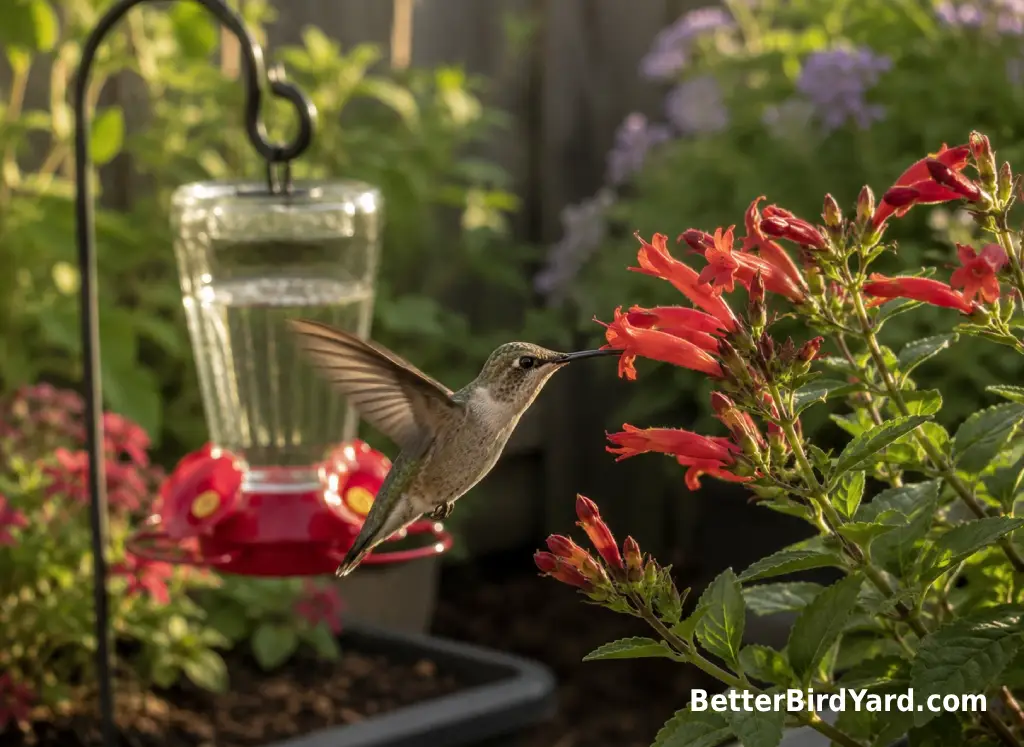
Yes, hummingbirds are often territorial over feeders. This is one of the most common backyard places to see their guarding behavior. A feeder is predictable, concentrated, and easy to monitor from a nearby perch, which makes it worth defending.
Cornell Lab’s hummingbird feeding guidance says more feeders are usually better than one larger feeder because hummingbirds can be extremely territorial around feeding sites. Cornell specifically notes that four tiny one-port feeders placed around a home can support more hummingbirds than one large feeder with several ports.
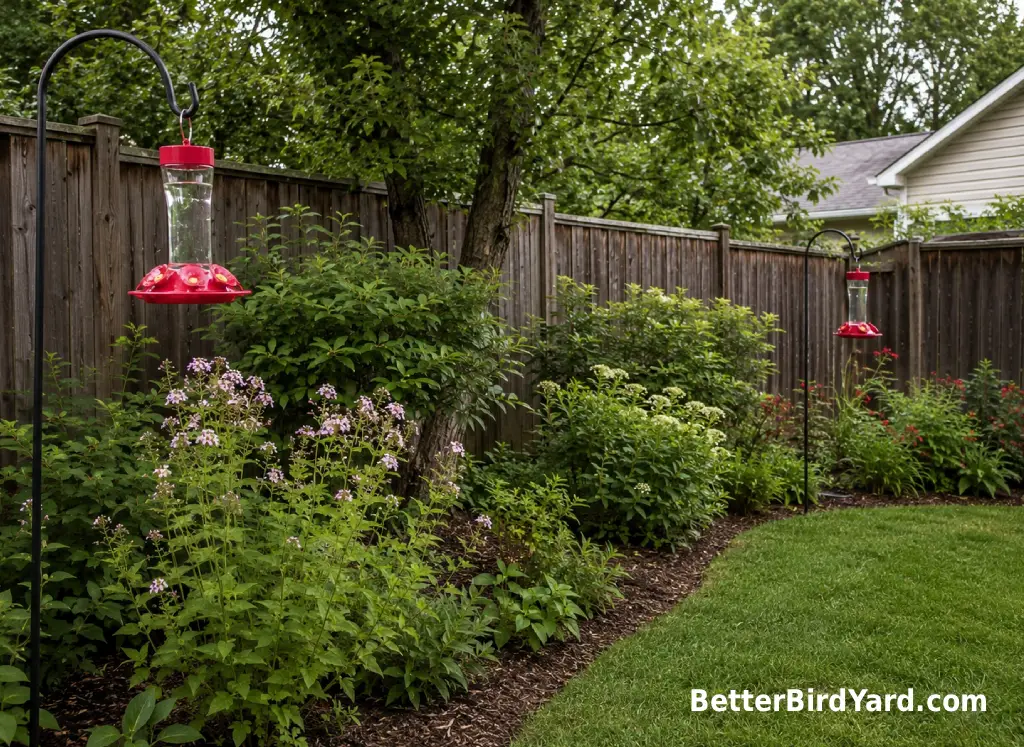
That advice is especially helpful for small-space bird watchers. You do not need a huge yard. You may do better with two small feeders out of direct line of sight than one large decorative feeder hanging in the most visible place on the patio.
A practical setup might look like this:
- One small feeder near a kitchen window, with bird-safe window treatment if needed.
- One small feeder around the corner of a porch or on the far side of a patio.
- A few nectar-rich native flowers in a container or bed nearby.
- A slim bare twig, plant stake, or shrub branch that gives hummingbirds a natural perch.
The key is visibility. If one bird can sit in one spot and see every feeder port, it can try to guard everything.
Are Female Hummingbirds Territorial?
Female hummingbirds can be territorial, though what you notice depends on the species and season. Males often get the attention because they defend breeding territories, courtship areas, flowers, and feeders. But females may also chase other hummingbirds from food sources, defend space near a nest, or compete strongly during migration and late-season feeding.
Rufous Hummingbirds are a good example of why we should avoid assuming only males are feisty. Cornell describes both the orange male and the green-and-orange female Rufous Hummingbird as aggressive attackers at flowers and feeders.
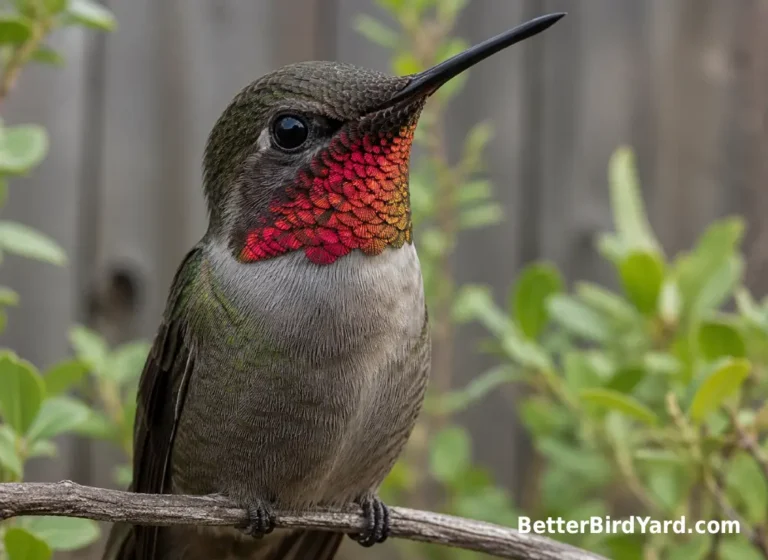
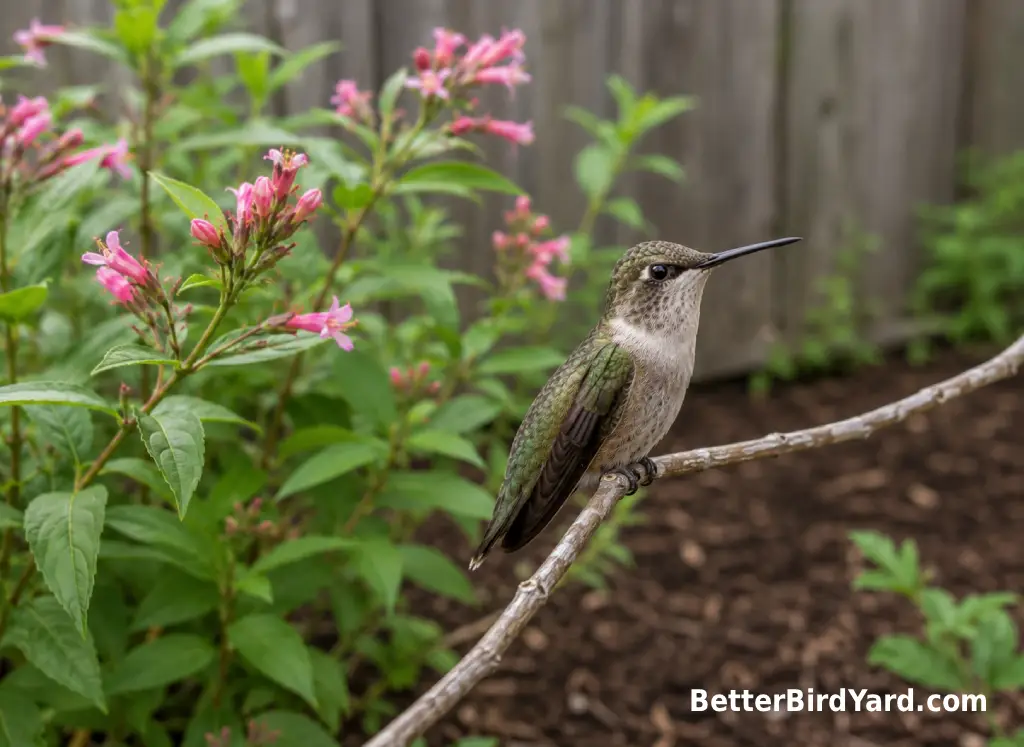
For beginners, the trick is not to over-read every chase. If you see a dull green hummingbird guarding a feeder, it may be a female, an immature male, or a species where females and young birds look less flashy than adult males. Lighting also changes what you see. A male’s gorget can look dark one second and bright the next.
Instead of worrying too much about sexing the bird, watch the pattern. A territorial bird usually returns to the same perch, watches the feeder, and intercepts other birds quickly.
Are Hummingbirds Territorial Toward Humans?
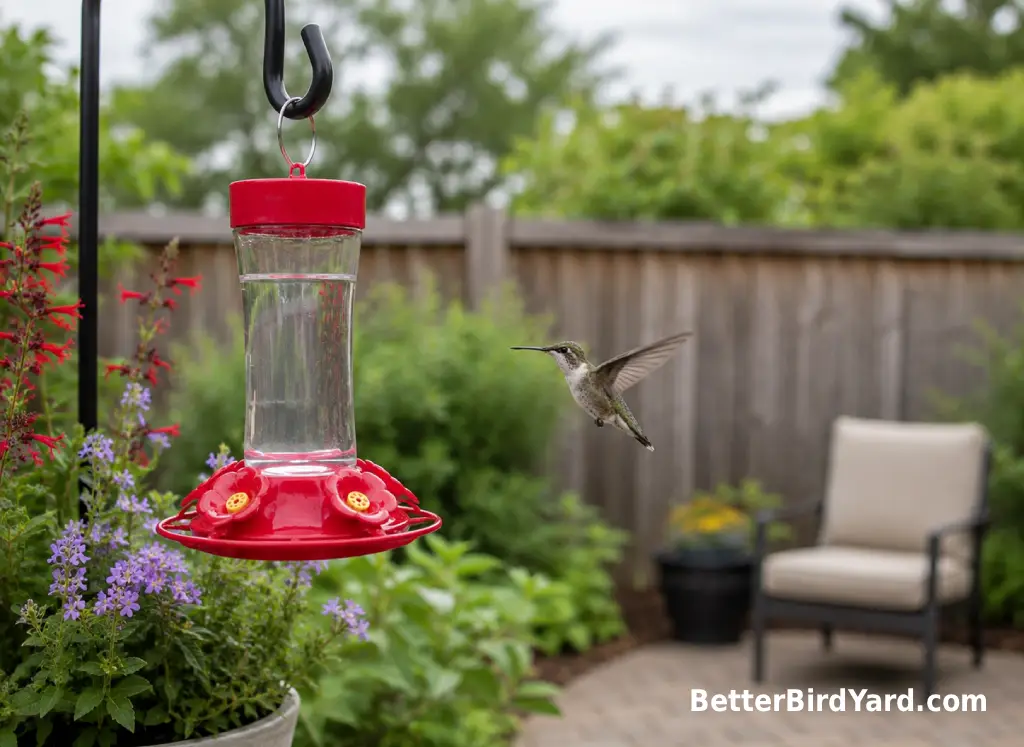
Hummingbirds may buzz close to people, but they are not usually territorial toward humans in the same way they are toward other hummingbirds. Most close fly-bys are curiosity, route checking, feeder approach, courtship display spillover, or a tiny bird trying to move through a space where a person happens to be standing.
Some species can become surprisingly bold around porches and windows. Cornell notes that Ruby-throated Hummingbirds can become quite bold when feeding at hanging plants and feeders near porches or windows. Anna’s Hummingbirds may even include people as display objects during courtship dives, according to Cornell’s species account.
If a hummingbird hovers in front of your face, it is not asking to be touched and it is not trying to be a pet. Stand still, enjoy the moment, and give it space. Avoid hand-feeding as a routine backyard practice; a clean, well-placed feeder and hummingbird-friendly flowers are safer and more practical for most homes.
A common mistake we see is assuming every close buzz is aggression. In most cases, the bird simply wants access to the feeder, flowers, or perch without a large moving animal in the way.
How To Set Up Feeders To Reduce Fighting
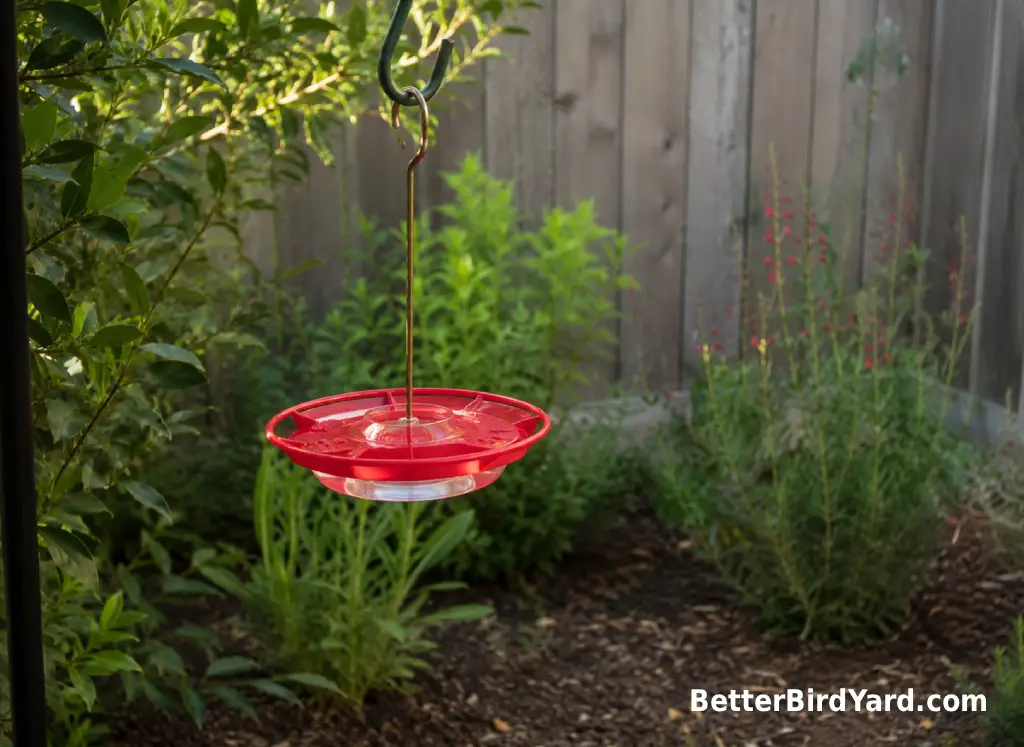
You cannot make hummingbirds share politely, but you can design the feeding area so one bird has a harder time controlling every sip. The best backyard strategy is usually several small, clean feeders rather than one big feeder.
Try this simple setup:
- Use two to four small feeders instead of one large feeder when space allows.
- Place feeders where one guard bird cannot see all of them from a single perch.
- Use corners, porch posts, shrubs, or the side of a shed to break up sight lines.
- Choose feeders that come apart easily for scrubbing.
- Keep feeders out of harsh all-day sun when possible so nectar spoils less quickly.
Clean nectar matters more than feeder size. Audubon recommends a simple nectar mix of four parts water to one part plain white sugar, with no honey, no red dye, and no brown, raw, or organic sugar. Audubon also recommends emptying feeders every few days, more often in hot weather, and choosing feeders that can be scrubbed inside and out.
For a deeper setup guide, see our related BetterBirdYard article on where to hang a hummingbird feeder. If your main issue is cloudy nectar or sticky ports, start with how to clean hummingbird feeders.
Editorial note: If you only change one thing, add a second small feeder out of sight of the first. That single adjustment often changes the whole feel of a busy hummingbird yard.
Common Mistakes That Make Hummingbird Battles Worse
Some feeder choices unintentionally create a perfect little kingdom for one bossy hummingbird. The bird gets a clear view, a central food source, and a guard perch close enough to launch from all day.
Watch for these common mistakes:
- Hanging one large feeder in the most open, visible part of the yard.
- Putting multiple feeders side by side, where they function like one feeder.
- Letting one bare perch overlook every feeding port.
- Leaving nectar up after it turns cloudy, discolored, or has debris inside.
- Using red dye, honey, or specialty sweeteners instead of plain white sugar water.
- Placing feeders close to untreated reflective windows or where cats can stalk easily.
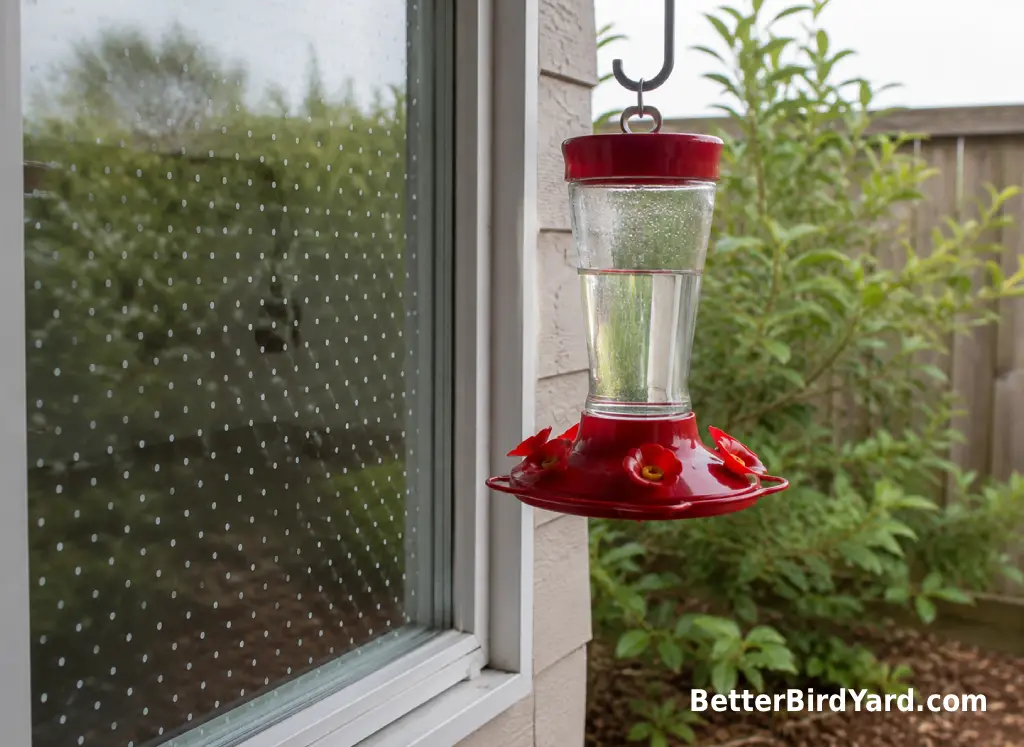
Cornell’s species account for Ruby-throated Hummingbirds notes that feeders can create problems if they make birds easy targets for cats or if they are placed near windows that birds might hit. Cornell’s window guidance also recommends making glass bird-friendly when feeders are near windows, using closely spaced exterior markings for small birds.
Why Hummingbird Activity Changes Through The Season
Hummingbird territorial behavior can shift through the season. In spring, adult males may guard feeding areas and courtship spaces. During nesting season, feeder numbers may seem lower because a dominant bird is keeping others away or because natural food sources and nesting demands have changed. Cornell notes that adult male hummingbirds may drive other males away during the spring nesting season, and that backyard numbers naturally fluctuate through summer and migration.
Later in summer, you may suddenly see more hummingbirds as young birds fledge and migrants begin moving through. In the West and Southwest, species mix can also change as migrants pass through. In coastal parts of the West, some Anna’s Hummingbirds may visit feeders year-round, while many eastern yards mainly see hummingbirds during the warmer months.
Do not panic if the feeder feels quiet for a week. A hummingbird may be using nearby flowers, visiting a neighbor’s feeder, nesting, molting, migrating, or avoiding a dominant bird. If you keep the feeder clean and fresh, the yard remains useful even when activity rises and falls.
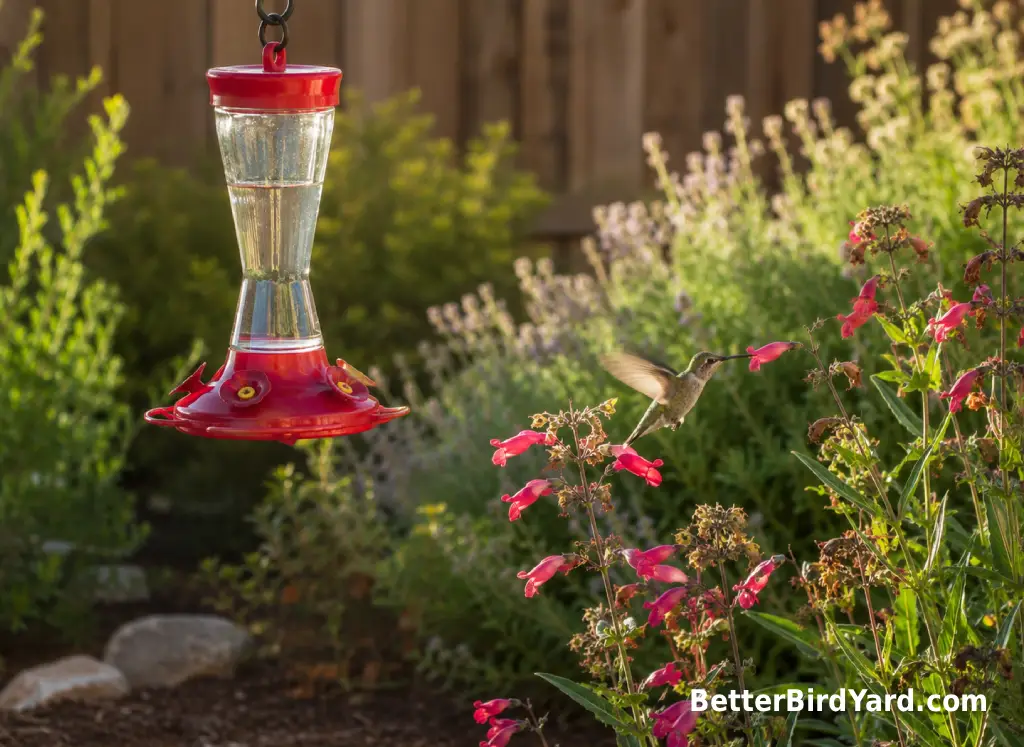
When Territorial Behavior Could Point To A Safety Problem
Most chasing is normal, but feeder hosts should still watch for safety problems. Territorial birds may fly fast around glass, tight porch corners, hanging baskets, and fence lines. If you hear repeated window taps, see a bird striking the same glass, or notice a hummingbird repeatedly hovering at its reflection, treat the window as a risk area.
Cornell describes reflection aggression as a spring behavior in which birds attack their reflection, and its window-safety guidance recommends exterior window treatments that make glass visible to birds. For small birds, including hummingbirds, Cornell recommends closely spaced markings across the outside surface of the glass.
Also pause and reassess if you see birds that look weak, unusually still, unable to fly normally, or repeatedly sitting on the ground. Do not diagnose the bird or try home treatment. Keep pets away and contact a licensed wildlife rehabilitator, local wildlife agency, or animal control for guidance if a bird appears injured, stunned, or unable to leave safely.
For routine feeder care, the safer response to trouble is usually simple: clean the feeder, replace the nectar, reduce crowding if needed, check for window hazards, and keep cats away from the feeding area.
Final Takeaway: Let Them Be Feisty, But Make The Yard Safer
Are hummingbirds territorial? Yes, often. They may guard feeders, flowers, perches, and breeding areas, and that can lead to dramatic chases in even the smallest yard. Female hummingbirds can be territorial too, and a hummingbird buzzing near a person is usually more interested in the feeder or space than in threatening the human.
The most helpful backyard response is not to scold the birds or remove every perch. Instead, spread small feeders apart, keep nectar fresh, avoid red dye and honey, grow nectar-rich flowers where appropriate for your region, and make the feeding area safer from cats and window collisions.
A lively hummingbird yard will never be perfectly peaceful. That is part of the charm. With a thoughtful setup, you can enjoy the aerial drama while giving more birds a fair chance to feed safely.