Do Doves Mate for Life? The Truth About Mourning Dove Pair Bonds +0
If two doves keep appearing together on your fence, beneath your feeder, or near the same nest, it is easy to think you are looking at a lifelong couple. But do doves mate for life?
For the Mourning Dove, the familiar backyard species most US bird watchers have in mind, “mates for life” is stronger than the evidence supports. Audubon describes Mourning Doves as seasonally monogamous. A male and female form a pair bond, cooperate through nesting, and may raise multiple broods together during a breeding season, but that does not mean every pair remains together until one bird dies.
The confusion makes sense because Mourning Doves can look remarkably devoted. Paired birds preen one another, perform coordinated courtship behaviors, build a nest together, and share parental responsibilities. For a backyard observer, that strong partnership is often much easier to see than where one breeding season ends and the next pair bond begins.
Do Mourning Doves Mate for Life?
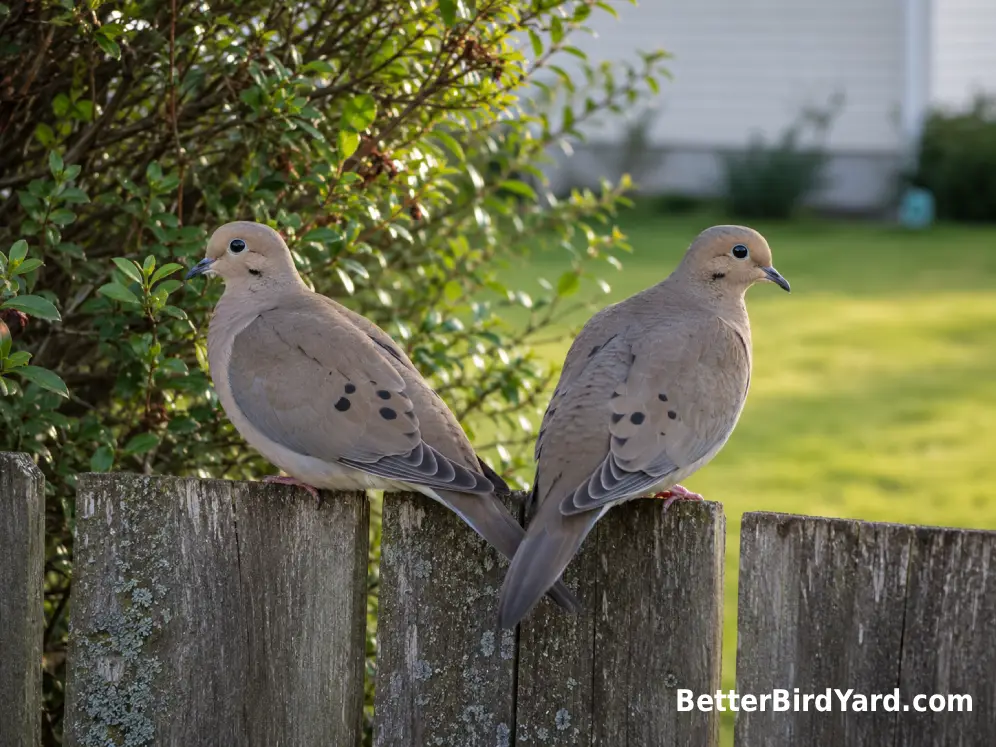
Mourning Doves form real, cooperative pair bonds, but the most accurate beginner-friendly description is that they are seasonally monogamous rather than guaranteed lifelong partners. Audubon specifically uses the term “seasonally monogamous” for the species.
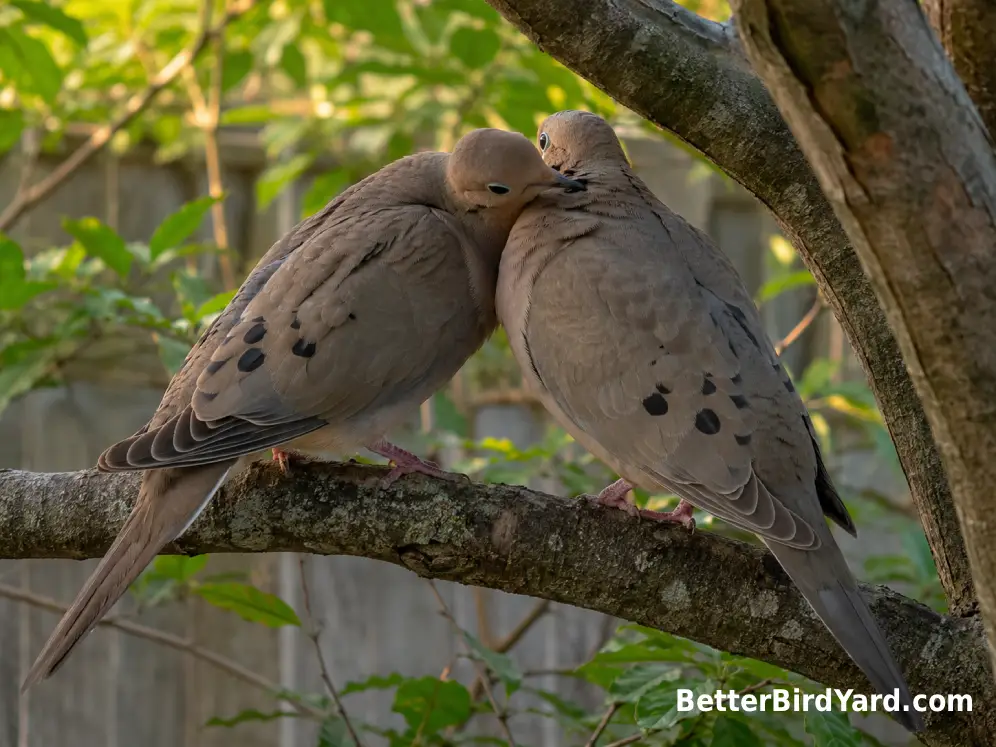
That distinction matters. In bird behavior, a pair bond is the social partnership between two breeding birds, and it can last for one nesting attempt, a breeding season, or longer depending on the species and circumstances. Cornell describes pair bonding in Mourning Doves through behaviors such as mutual preening, beak grasping, and synchronized head bobbing.
So if the same-looking pair occupies your yard for weeks or months, you may indeed be watching an established breeding pair. Mourning Doves can also produce several nesting attempts within a season, allowing the same pair to spend a considerable amount of time together.
What you cannot usually establish from backyard observation is whether those two individuals will remain paired throughout their entire lives. Unless birds are individually marked and followed over time, two nearly identical doves appearing in the same place next year are difficult to identify with certainty.
What A Mourning Dove Pair Bond Looks Like In Your Yard
A bonded pair does more than simply feed near one another. Cornell Lab observations describe Mourning Dove pairs gently preening around each other’s necks, then progressing to beak grasping and coordinated head bobbing. Males also use favorite cooing perches while courting and defending space from competing males.
Once nesting begins, the partnership becomes even easier to notice. The male typically collects nesting material and brings it to the female, who arranges the twigs into the characteristically loose Mourning Dove nest. The adults also share incubation responsibilities, and both parents participate in feeding their young.
From a patio or window, watch for several clues occurring together:
- Two doves repeatedly staying near one another.
- Gentle mutual preening around the head or neck.
- Courtship displays such as head bobbing.
- A male repeatedly carrying small twigs toward a nest site.
- Adults taking turns around an active nest.
One clue by itself is not proof of a mating pair. Doves also gather where food, water, or good resting spots are available. A repeated combination of courtship and nesting behavior is much more informative than simply seeing two birds beneath the feeder.
What Happens If One Dove Loses Its Mate?
A lone Mourning Dove does not necessarily mean that its partner has died. The other bird may be incubating, feeding elsewhere, temporarily out of sight, or simply using another part of its territory.
This is one of those backyard observations where it is better not to attach a human story too quickly. Mourning Doves have strong social bonds, but their seasonal monogamy does not support the idea that every individual has one irreplaceable partner for its entire life.
If a former pair becomes a single bird and you later see that dove associating with another individual, that would not contradict normal dove biology. Pair bonds can change between breeding attempts or seasons. From an ordinary backyard, however, it is usually impossible to know whether you are watching the original bird unless it has distinctive markings or has been scientifically banded and identified.
There is also no need to intervene because a healthy-looking adult dove appears alone. Give wild birds space and observe their behavior instead. If you encounter a bird that is visibly injured, unable to fly normally, or behaving unusually, that is a separate wildlife-help situation and is best discussed with a licensed wildlife rehabilitator or your state wildlife agency rather than treated as a pairing problem.
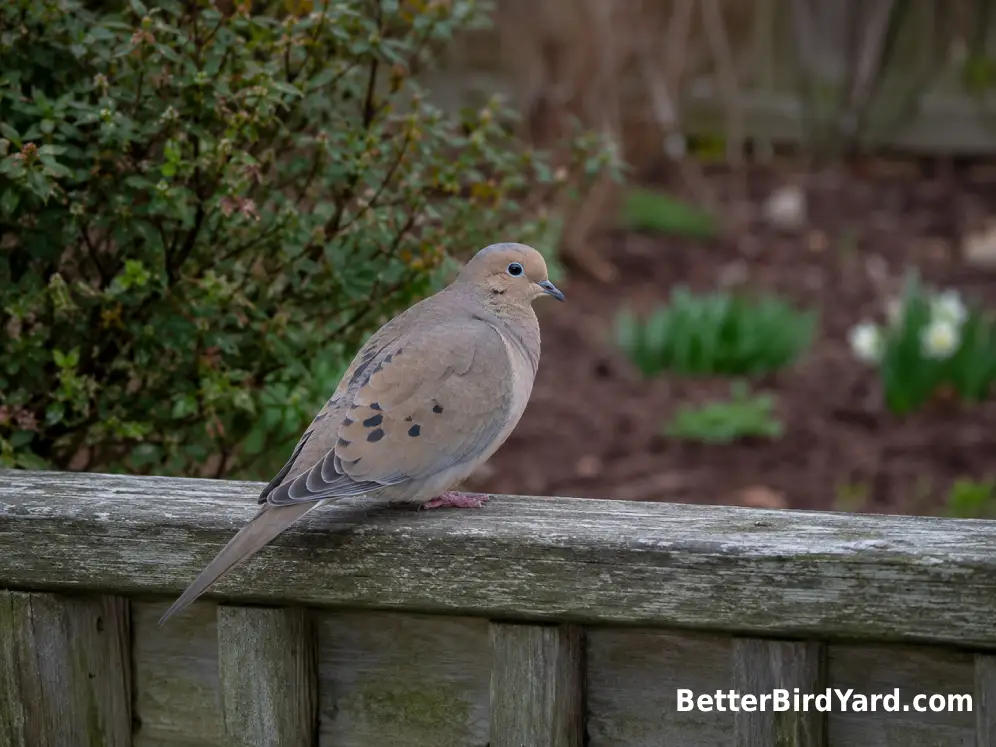
Do Other Dove Species Stay With The Same Mate?
There is no single mating rule for every bird that carries the name dove. Different members of the pigeon and dove family can maintain their pair bonds for different lengths of time.
| Dove Species | What We Know About Pairing |
|---|---|
| Mourning Dove | Seasonally monogamous; paired adults cooperate during nesting and may raise multiple broods together. |
| White-winged Dove | Monogamous and known to remain together for at least one breeding season. |
| Inca Dove | Male and female form monogamous bonds during the breeding season. |
| Common Ground Dove | Cornell reports that bonded pairs can remain together for several years. |
Cornell’s species accounts make the variation especially clear: White-winged Doves stay together for at least one breeding season, Inca Doves form breeding-season monogamous bonds, while Common Ground Dove pairs may remain together for several years.
That is why the broad question “do dove birds mate for life?” needs a species name before it can be answered well.
What About Turtle Doves?
Turtle dove is also not a reliable catch-all name for a single North American backyard species. There are several birds called turtle-doves around the world, including the European and Oriental Turtle-Doves. The Oriental Turtle-Dove, for example, is primarily an Asian species and is only an occasional visitor to Alaska.
If by turtle dove you mean the common dove visiting a typical US backyard, first check whether you are actually seeing a Mourning Dove, Eurasian Collared-Dove, White-winged Dove, or another local species. Pair-bond behavior should be interpreted species by species rather than assuming every turtle dove mates for life.
How To Support A Mourning Dove Pair Without Disturbing It
You do not need to interfere with courtship or nesting to make your yard useful to doves. A quiet feeding area, suitable cover, clean water, and reduced predator pressure can do far more good than trying to get close to a nest.
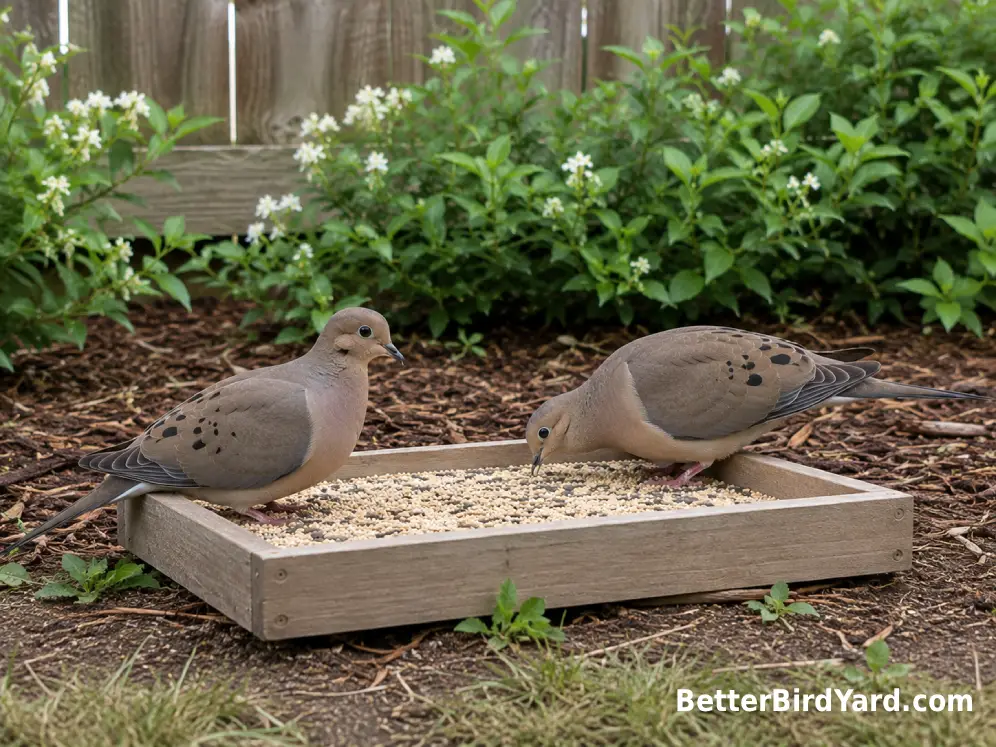
Mourning Doves naturally spend a great deal of time feeding on the ground. Cornell suggests ground feeding or platform feeders and notes that millet is among the seeds they readily use. Dense shrubs and evergreen trees can also provide potential nesting cover.
For an ordinary yard or patio, keep the setup simple:
- Offer seed on a clean platform feeder or other appropriate feeding area rather than letting large amounts accumulate on damp ground.
- Keep food fresh and remove wet, spoiled, or moldy seed.
- Give nesting birds distance instead of repeatedly approaching to photograph or inspect them.
- Keep cats indoors or otherwise separated from areas where ground-feeding birds gather.
- Provide nearby shrubs or other cover where appropriate for your region and space.
A common mistake we see is assuming that attracting a pair means you should start managing the nest yourself. You usually do not need to. Observe from a respectful distance and allow the adults to handle normal nesting behavior. If a nest is in a genuinely hazardous or difficult location, contact your state wildlife agency or another qualified local resource before trying to move or alter it.
For more practical setup ideas, see our guide to feeding Mourning Doves.
Common Myths About Dove Couples
Dove behavior is easy to romanticize because paired birds can be unusually gentle and coordinated. A few common assumptions are worth separating from what you can actually observe.
- Seeing two doves together does not automatically mean they are mates. Feeding areas can bring unrelated birds into the same small space.
- A lone dove is not automatically a bereaved bird. Its partner may simply be somewhere else.
- The name Mourning Dove does not describe a bird grieving for its partner. Audubon notes that the species is named for its familiar mournful-sounding coo.
- Not every dove species maintains its pair bond for the same amount of time.
- Seeing two similar-looking birds return next year does not prove they are the exact same individuals.
The Bottom Line On Dove Pair Bonds
So, do doves mate for life? Sometimes long-lasting pair bonds occur within the dove family, but it is not a rule you can apply to every species.
For Mourning Doves, the clearest answer is no—not in the strict sense of a guaranteed lifelong partnership. They are seasonally monogamous and can form strong, cooperative bonds involving courtship, mutual preening, nest building, incubation, and care of their young. Those behaviors can make a pair look inseparable throughout the breeding season.
For backyard bird watchers, that is part of what makes them so interesting to observe. Watch the behavior rather than trying to assign a permanent relationship: notice the cooing perch, the gentle preening, the twig deliveries, and the adults quietly trading responsibilities around the nest.
A clean feeding area, safe cover, distance from active nests, and protection from roaming cats are useful ways to support the birds without interfering with the partnership you are watching.