Gray Doves Nesting in Your Yard: Understanding Mourning Dove Nests
If you have noticed a pair of soft gray-brown doves carrying twigs into a tree, sitting quietly in a hanging planter, or returning to the same porch ledge, you may be watching mourning doves nesting in your yard.
These familiar backyard birds often choose surprisingly ordinary places to raise their young. A mourning dove nest might appear among leafy branches, on a sheltered beam, or even inside a flowerpot. Their nests are usually small, shallow collections of twigs that can look barely sturdy enough to hold two eggs.
The good news is that mourning doves are comfortable nesting around people, and you do not need a large property or an elaborate birdhouse to support them. The most useful approach is to provide suitable habitat, reduce disturbances, and allow the birds to choose where they settle.
Here is what to know about identifying gray doves, their nesting habits, eggs, nesting platforms, and what to do when a pair decides that your backyard or patio is the right place to raise a family.
Are the Gray Doves in Your Yard Mourning Doves?
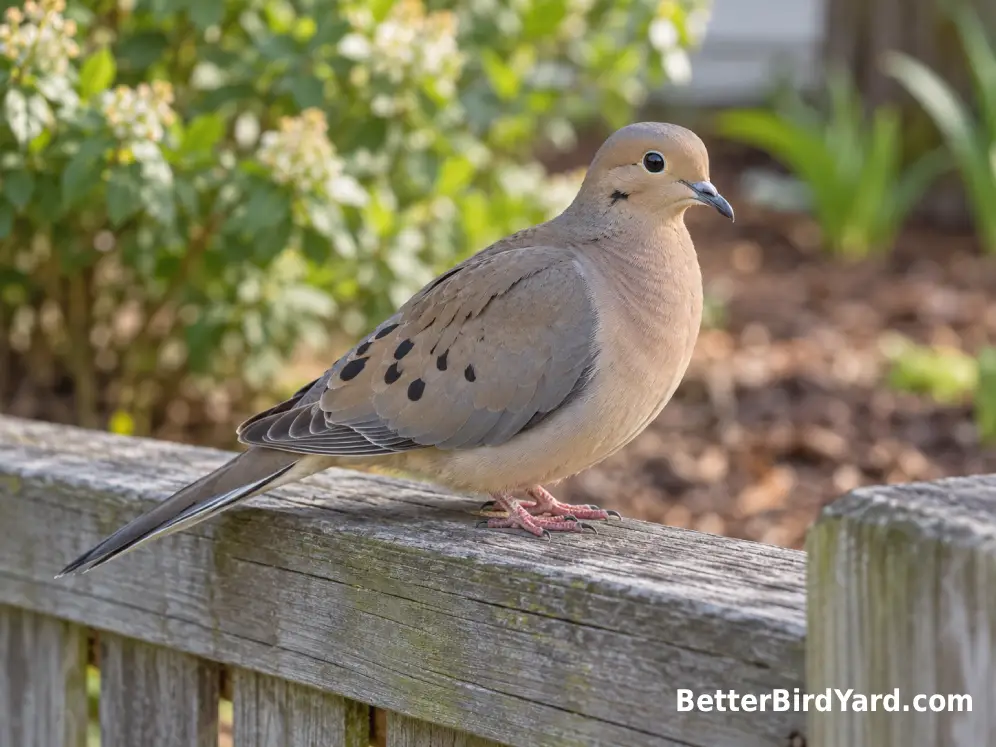
In much of the United States, the gray or light brown doves commonly seen around lawns, driveways, and bird feeders are mourning doves. Their scientific name is Zenaida macroura, and they are widespread across the country.
Mourning doves have several features that make them relatively easy to recognize:
- A small, rounded head and slender dark bill.
- Soft gray-brown upperparts with a warmer, pale peach-colored breast.
- Distinctive black spots along the folded wings.
- A long, pointed tail with white edges visible in flight.
- A gentle, drawn-out cooing call that can sound almost like an owl.
Not every gray dove is a mourning dove, however. Eurasian collared-doves also live in many American neighborhoods. They tend to be larger and paler, with a noticeable black crescent on the back of the neck and a more squared-off tail.
This difference matters because their nesting habits are similar but not identical. Both species build fairly simple nests, yet their preferred locations, breeding patterns, and timing can differ.
If you are unsure which species has settled into your yard, pay attention to the adult bird’s shape, wing markings, and tail rather than identifying it by the nest alone. The Cornell Lab of Ornithology provides useful visual comparisons in its Mourning Dove identification guide.
Where Do Mourning Doves Build Their Nests?
Mourning doves typically nest on a relatively flat, supported surface, often partly sheltered by foliage. They are flexible about location, which explains why their nests sometimes appear in places that surprise homeowners.
Common nesting sites include:
- Horizontal tree branches and forks.
- Evergreen trees and dense shrubs.
- Vines growing along fences or buildings.
- Protected porch beams, eaves, and ledges.
- Hanging baskets and large outdoor planters.
- Occasionally, the ground, particularly in some western habitats.
A suburban yard with scattered trees, shrubs, and nearby open ground can offer suitable nesting opportunities. The birds do not need a dense forest. In fact, mourning doves commonly use woodland edges, gardens, neighborhoods, and other relatively open habitats.
They also seem remarkably tolerant of familiar human activity. A pair may nest close to a window or frequently used patio, although tolerance varies between individual birds and nesting sites.
One detail beginners sometimes overlook is the importance of the surface beneath the nest. Mourning doves do not usually suspend elaborate woven nests between branches. Instead, they use a platform of twigs supported by a branch, ledge, or other structure.
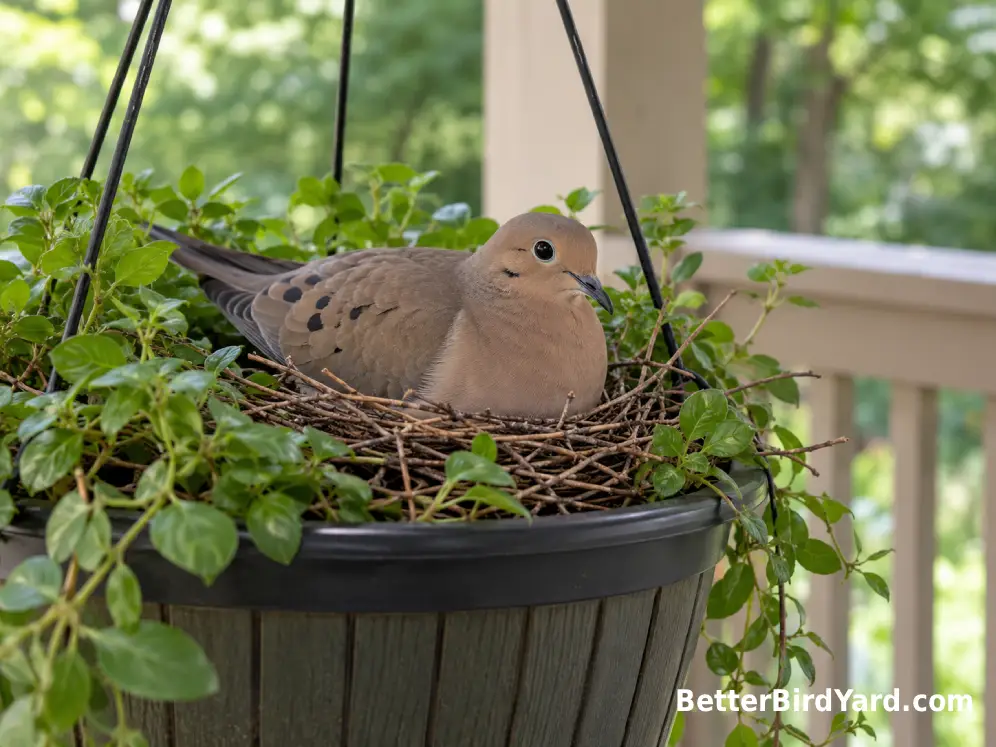
A hanging planter can provide that support, but it can also create a problem if the planter needs daily watering or frequent movement. If doves begin nesting there, keeping the planter undisturbed becomes much more important than maintaining its usual appearance.
What Does a Mourning Dove Nest Look Like?
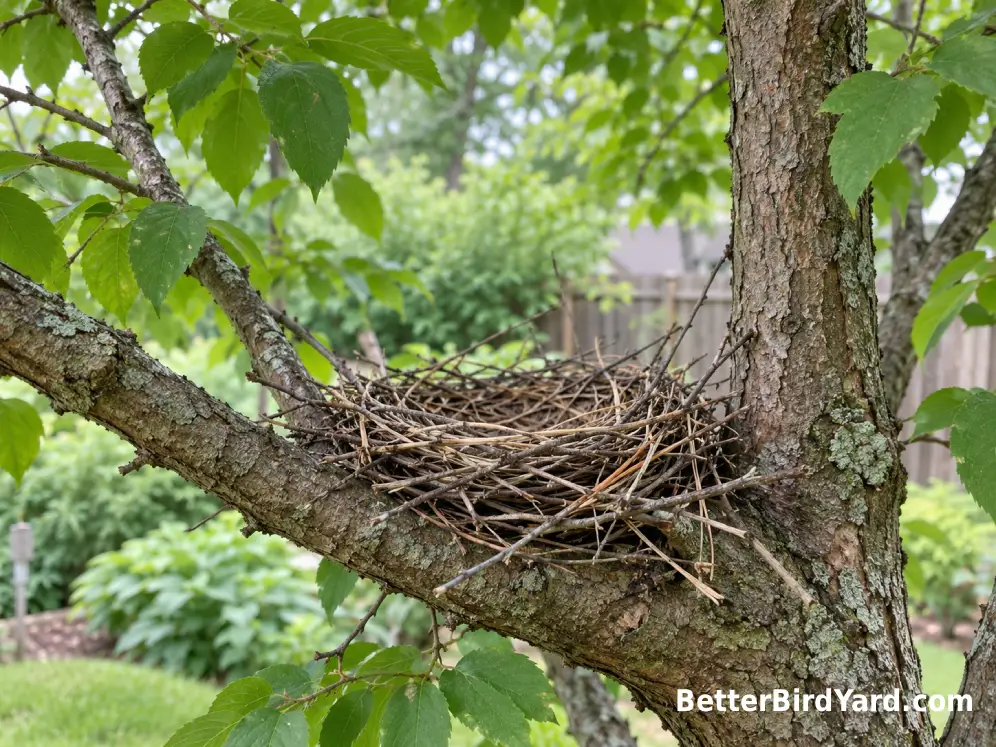
A typical mourning dove bird nest is a loose, shallow platform made from twigs, pine needles, grass stems, and other small natural materials.
It can look unfinished, particularly compared with the tightly woven nests of robins or other backyard songbirds. Sometimes there are so few twigs that you can see through the bottom.
According to the Cornell Lab of Ornithology, mourning dove nests are commonly about 8 inches across and take roughly two to four days to build.
Both parents contribute, although they have different jobs. The male typically gathers twigs and delivers them to the female, who arranges the materials into a shallow nesting platform. The female may remain at the nesting site while the male makes repeated trips for additional materials.
Once the nest is ready, the female usually lays two plain white eggs.
From a backyard observer’s perspective, the best response to an unusually simple-looking dove nest is usually to leave it alone and watch from a distance.
How Long Do Mourning Dove Eggs and Chicks Stay in the Nest?
Mourning dove nesting moves relatively quickly. From egg laying to the point when the young leave the nest, the process often takes about four weeks, although individual nesting attempts vary.
The following timeline is based on nesting information published by the Cornell Lab of Ornithology.
| Nesting Stage | Typical Timing | What You May Notice |
|---|---|---|
| Nest building | 2–4 days | Adults carrying small twigs and arranging a shallow platform. |
| Egg laying | Usually 2 eggs per clutch | Plain white eggs resting in the nest. |
| Incubation | About 14 days | An adult sitting quietly over the eggs for long periods. |
| Nestling period | About 12–15 days | Parents feeding and sheltering the growing chicks. |
| After fledging | Variable | Young birds may remain nearby while parents continue caring for them. |
Do Both Mourning Dove Parents Care for the Eggs?
Yes. Male and female mourning doves share incubation duties and help care for their offspring.
You might notice a bird sitting on the nest through much of the day, followed by another adult taking its place. This shared responsibility is normal mourning dove nesting behavior.
Both parents also feed the young. Like other pigeons and doves, they initially provide a specialized nutrient-rich substance commonly called crop milk. It is produced by the adult birds and is not the same as mammalian milk.
As the chicks develop, their diet gradually changes. There is no need to provide baby bird food, milk, soaked bread, or other homemade mixtures.
Do Mourning Doves Nest More Than Once a Year?
They can. Mourning doves may raise several broods during a breeding season, especially where weather and food conditions allow a longer nesting period.
In many parts of the country, nesting activity is especially noticeable in spring and summer. In warmer regions, breeding may extend across a longer part of the year.
A pair that returns to the same porch or tree after a successful nesting attempt may be starting another brood. However, seeing doves repeatedly visiting one location does not guarantee they are the same individual birds.
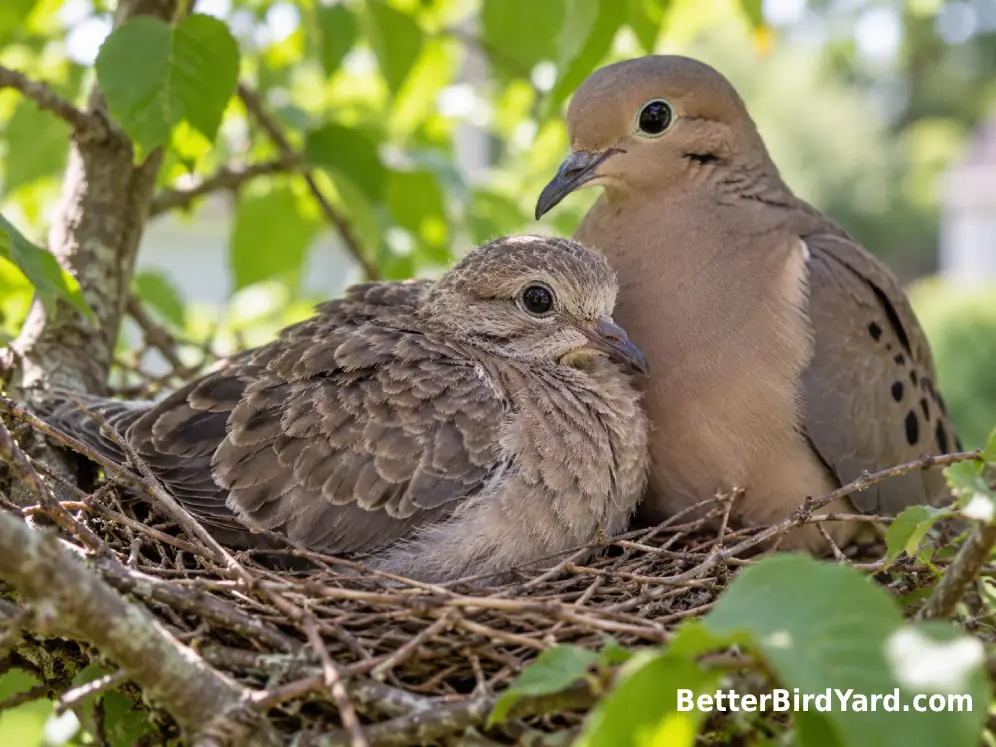
Will Mourning Doves Use a Nesting Box or Platform?
If you are considering a mourning dove nesting box, the most important thing to understand is that these birds are not typical cavity nesters.
A conventional wooden birdhouse with a small entrance hole is designed for birds such as chickadees, wrens, or bluebirds. Mourning doves generally prefer an open nesting surface rather than an enclosed box.
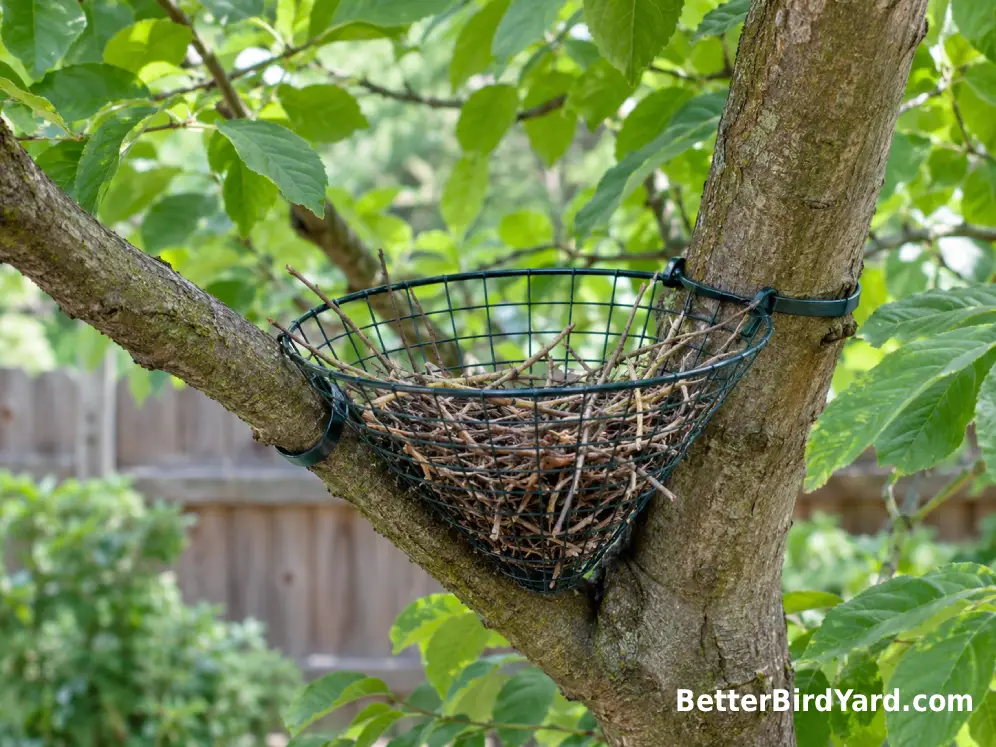
For that reason, an open nesting cone or a properly designed nesting platform is usually more suitable than a traditional birdhouse.
Cornell Lab’s NestWatch mourning dove guidance recommends placing a nesting cone in a shaded part of a tree, supported by branches overhead, and securely fastening it in a horizontal branch fork.
Choosing a Suitable Nesting Location
For a beginner setting up a nesting structure before breeding begins, these are useful considerations:
- Choose a stable, sheltered branch arrangement rather than an exposed, swaying limb.
- Look for some overhead foliage that provides shade and partial cover.
- Follow the structure manufacturer’s instructions or an established wildlife nesting plan.
- Consider NestWatch’s suggested nesting cone placement range of approximately 6–10 feet above the ground.
- Keep the location away from frequently opened doors, climbing pets, and routine yard maintenance.
A nesting platform can help provide a stable foundation, but it is not a guarantee that doves will use it. Suitable natural nesting locations may be more appealing than any structure you install.
In a small rental patio or balcony, avoid fastening a platform to shared property without permission. Also consider whether the location would remain reasonably quiet throughout the nesting period.
Any platform, cone, or nesting shelf should be installed before birds begin nesting. Once a nest is active, do not move or modify it yourself.
Do Doves Take Over Other Birds’ Nests?
Yes, mourning doves sometimes use nests originally built by other bird species. However, this does not necessarily mean they aggressively steal an occupied nest.
The Cornell Lab of Ornithology reports that mourning doves sometimes reuse their own nests or nests constructed by other species.
An old, abandoned nesting platform can provide a convenient foundation, especially for a bird that naturally builds such a simple structure.
This behavior is different from actively driving another nesting bird away from eggs or chicks. Seeing a dove sitting in a nest that previously held another species does not prove a takeover occurred.
Will Mourning Doves Reuse the Same Nest?
They may. Some mourning doves return to an existing nest or reuse a familiar nesting location for another breeding attempt.
Others build a new nest nearby. Whether an old nest is reused can depend on its condition, the surrounding habitat, and the birds’ behavior.
If doves successfully nest in your yard, there is no need to immediately dismantle the structure after the young leave. First, make sure the nesting attempt is truly finished and that the birds are not preparing another brood.
Avoid adding materials to old nests or transferring nests between locations. Even when a structure appears abandoned, nest removal and handling may be subject to wildlife protections and local rules.
For homeowners, the practical lesson is simple: allow doves to make their own nesting choices whenever the site is safe and does not create an urgent conflict.
How Can You Make a Small Yard Friendlier to Nesting Doves?
Supporting mourning doves does not require turning your backyard into a nesting sanctuary filled with special equipment.
A few practical habitat improvements can make an ordinary garden more suitable for birds while also benefiting other backyard wildlife.
Start with conditions that mourning doves naturally use: scattered trees or shrubs for cover, accessible ground for foraging, and relatively quiet places where nesting birds are less likely to be disturbed.
Five Practical Ways to Help
- Keep suitable shrubs and trees. Established trees, evergreens, and dense shrubs can provide nesting support and shelter. Choose plants native to your region where practical.
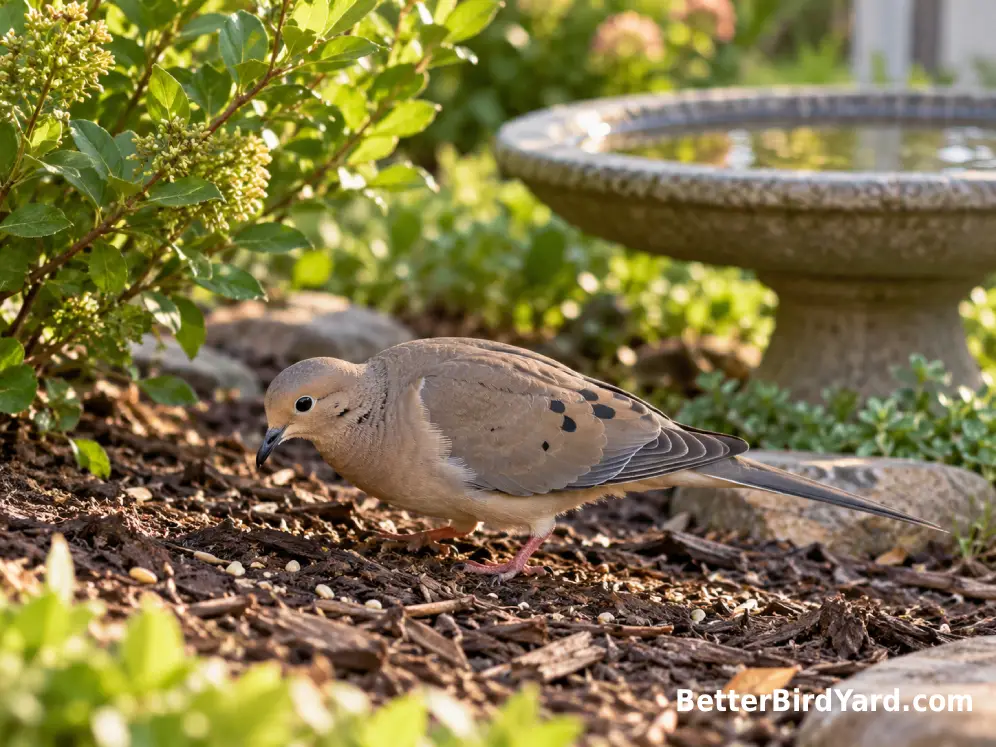
- Provide accessible fresh water. A shallow, stable bird bath can offer drinking and bathing opportunities. Replace dirty water promptly and clean the bath regularly, especially during warm weather.
- Offer appropriate seeds in moderation. Mourning doves eat mostly seeds and often forage on the ground or use platform feeders. Millet and other suitable birdseed may attract visiting doves, although nesting is never guaranteed.
- Reduce predator risks. Keep cats indoors or in secure outdoor enclosures. Avoid placing food or nesting structures where pets can easily approach birds.
- Limit unnecessary disturbance. Delay pruning around an active nest and avoid frequently approaching or photographing nesting birds at close range.
In a compact suburban yard, it is often better to maintain one useful area of cover than to add several nesting structures. Existing shrubs can offer the birds more choices without creating additional maintenance.
f you provide water, our bird bath guide can help you keep it safe and inviting.
A Few Common Mistakes to Avoid
Well-intentioned homeowners sometimes make nesting areas less suitable by trying too hard to help.
A common mistake is putting food directly beside an active nest. While doves may visit bird feeders, attracting frequent traffic to a nest can create unnecessary disturbance. Keep feeding areas separate from nesting sites and clean up spilled seed to reduce rodent activity.
Another mistake is leaving loose string, synthetic fibers, dryer lint, or similar materials outdoors for nest building. Natural vegetation is a safer way to make suitable nesting materials available.
BetterBirdYard note: If a pair of doves chooses a sheltered branch without any help from you, that is perfectly fine. A quiet nesting location is often more valuable than a decorative birdhouse or an added platform.
What Should You Do If Doves Nest on Your Porch or a Baby Is on the Ground?
Discovering an active mourning dove nest close to your home can be exciting, but it can also create practical challenges. You may find a nest in a hanging flower basket that needs watering, near a frequently opened door, or on a porch ledge where people normally sit.
When eggs or chicks are already present, the safest general approach is to leave the nest undisturbed and temporarily adjust your routine.
The National Audubon Society and Cornell’s NestWatch both advise against moving active nests. In the United States, native mourning doves and their active nests are generally protected by federal wildlife law, and additional state or local protections may apply.
What to Do When a Nest Is in an Inconvenient Place
- Avoid moving the nest. Even shifting it a short distance can put eggs or chicks at risk and may cause adults to abandon the site.
- Give the birds space. Use another entrance or reduce nearby activity if practical.
- Keep pets away. Prevent cats and dogs from approaching the nest or young birds.
- Adjust planter care carefully. If a nest is in a hanging basket, avoid soaking the nest or disturbing the birds. You may need to reduce watering or accept some temporary plant damage.
- Ask for qualified help if needed. If a nest creates a serious safety concern, contact your state wildlife agency or a licensed wildlife rehabilitator before taking action.
What If a Young Mourning Dove Is on the Ground?
A young dove outside the nest is not automatically an orphan. A fully feathered juvenile that is alert, standing, hopping, or making short flights may be a fledgling. Young birds can spend time on the ground while their parents continue feeding them. In that situation, watch from a distance and keep pets away. Avoid feeding the bird, offering water directly into its bill, or taking it indoors.
A very young bird with little feathering, an apparently injured bird, or one showing unusual weakness may need professional assessment. Contact a licensed wildlife rehabilitator or your local wildlife agency for guidance rather than attempting home treatment.
If you see an adult dove sitting motionless for an unusually long time, remember that incubation itself involves extended periods of quiet sitting. Behavior should be considered in context, and appearance alone is not enough to diagnose illness or injury.
For more information about unexpected nesting locations, see Audubon’s guidance on nests near homes. Cornell’s NestWatch guidance on young birds outside nests also explains how fledglings differ from younger nestlings.
Helping Mourning Doves Nest Successfully in Your Backyard
Watching gray mourning doves build a nest is one of the quieter pleasures of backyard bird watching. Their simple nests, shared parenting duties, and willingness to settle near homes make them fascinating birds to observe.
They may choose a leafy branch, a sheltered porch beam, or a surprisingly small planter. In most cases, they need very little direct assistance once nesting begins.
For beginners, the most helpful steps are straightforward: identify the birds correctly, preserve suitable nesting cover, provide clean water, keep cats away, and avoid disturbing an occupied nest.
If you want to encourage future nesting, focus on creating a bird-friendly outdoor space rather than trying to control exactly where a pair settles. Native shrubs, stable nesting surfaces, natural food sources, and a quieter corner of the yard can all contribute to a more welcoming habitat.
And if mourning doves have already chosen your backyard, sometimes the best thing you can do is simply give them space, watch from a comfortable distance, and allow their nesting behavior to unfold naturally.