Cedar Waxwing Bird: Meet the Sleek, Social Berry Specialist
A flock of cedar waxwings can turn an ordinary fruiting tree into one of the best bird-watching spots in the neighborhood. The cedar waxwing bird, scientifically known as Bombycilla cedrorum, is a sleek North American songbird with a swept-back crest, narrow black mask, soft brown-to-gray plumage, and a bright band across the end of its tail.
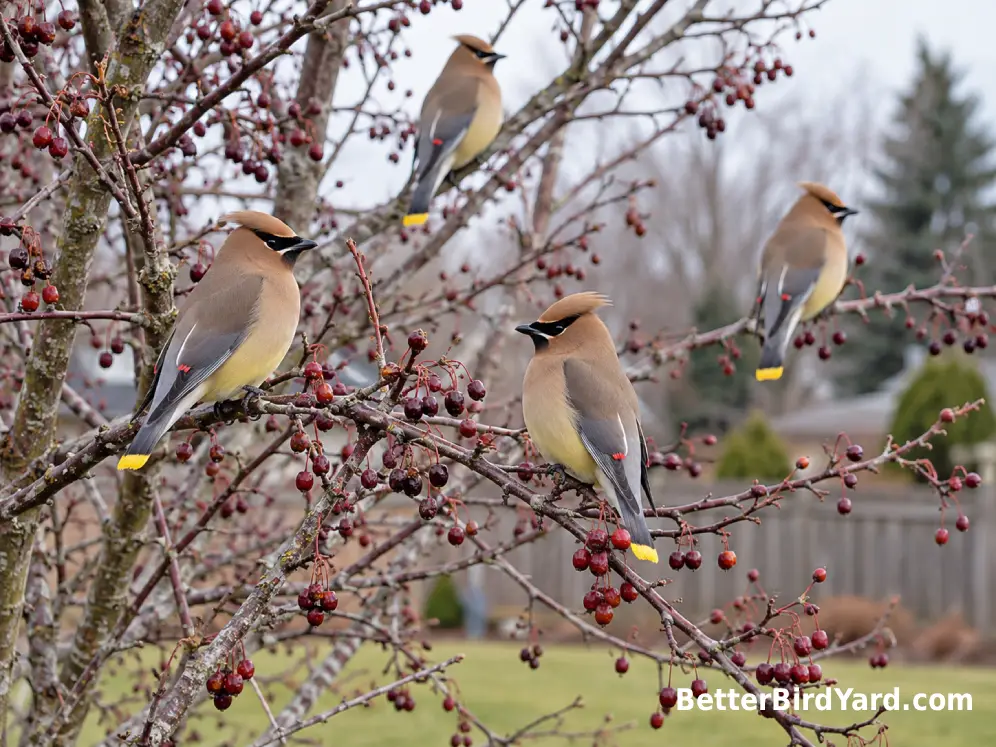
Cedar waxwings are especially tied to fruit. They travel in social flocks, often appearing wherever berries and small fruits are abundant rather than behaving like predictable daily visitors to a seed feeder. Cornell Lab describes them as highly social birds commonly found around fruiting trees and shrubs in woodlands, parks, farms, orchards, and suburban gardens.
For backyard bird watchers, that changes the usual attraction strategy. Instead of buying another tube feeder, think about berry-producing native plants, clean water, safe cover, and windows that birds can see. A small yard or patio cannot guarantee a waxwing visit, but it can provide a useful stop when a flock moves through your area.
How To Identify A Cedar Waxwing
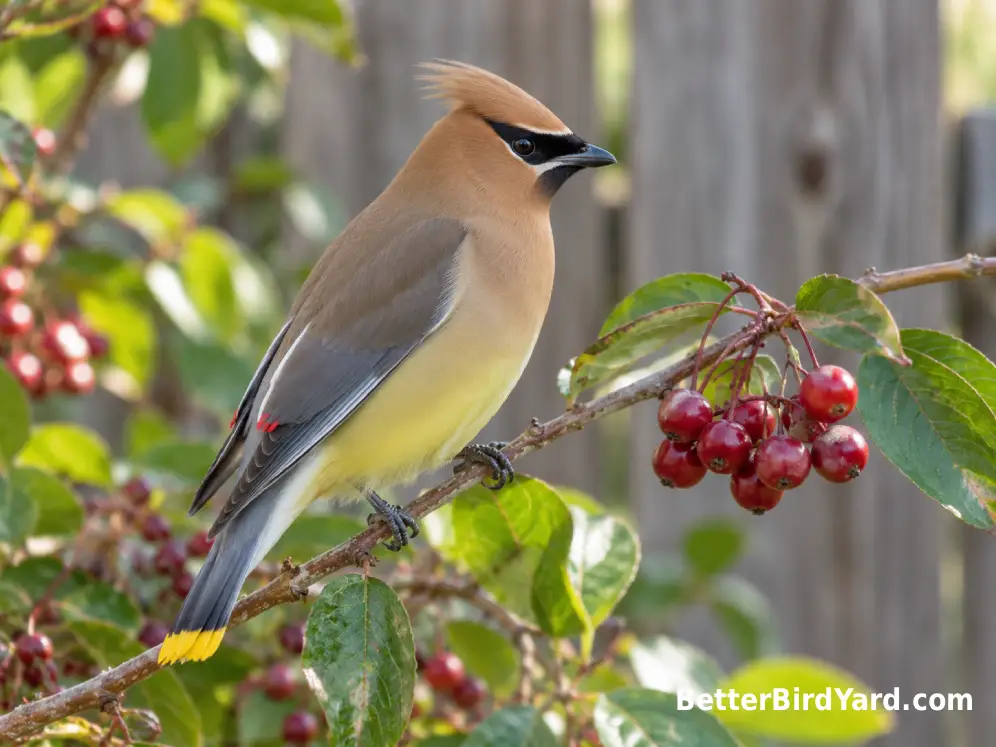
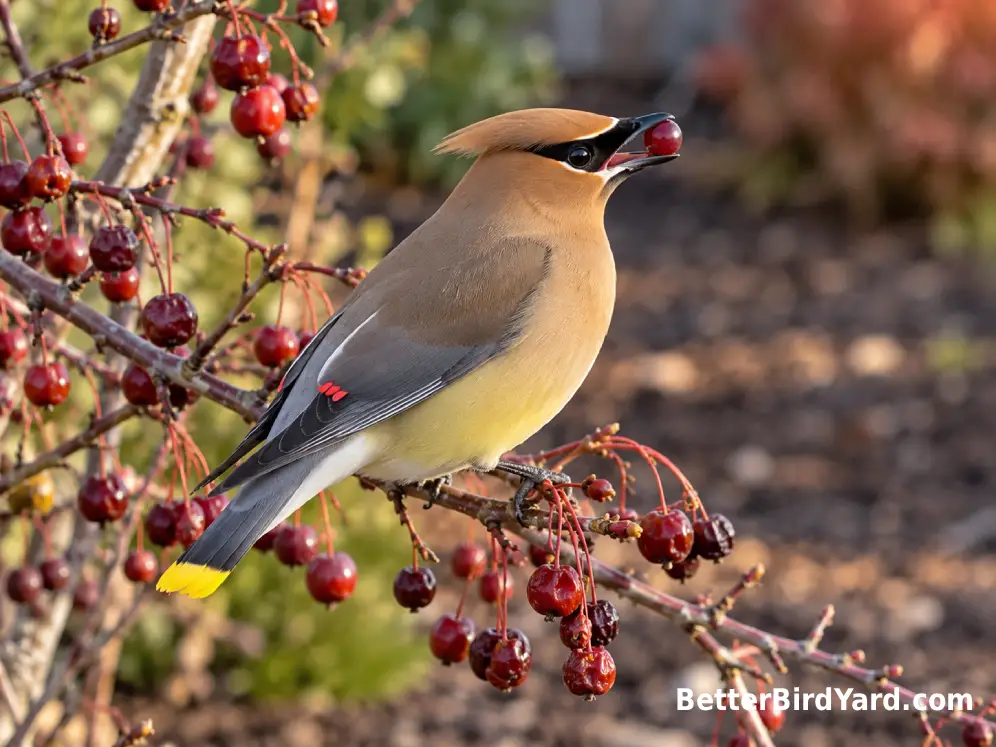
A good cedar waxwing identification starts with the bird’s unusually smooth appearance. Adults have a warm brown head and chest that fade into gray wings, a pale yellow belly, a short crest, and a narrow black mask edged with white. The square-ended gray tail normally carries a conspicuous yellow terminal band. Adults measure about 5.5 to 6.7 inches long, putting them between a sparrow and an American Robin in overall size.
| Field Mark | What To Look For |
|---|---|
| Head | Smooth tan-brown head with a pointed, swept-back crest |
| Face | Neat black mask bordered by narrow white lines |
| Wings | Soft gray wings; some adults show small red wax-like tips |
| Belly | Pale yellow |
| Tail | Short gray tail ending in a bright yellow band on most birds |
The tiny red marks that give waxwings their name occur on the secondary wing feathers, but they are not equally obvious on every bird. A lack of visible red tips does not rule out a cedar waxwing. Juveniles are less polished-looking than adults, with gray-brown upperparts and noticeably streaked underparts.
One unusual variation can make photographs confusing: Cornell notes that some cedar waxwings develop orange rather than yellow tail tips after eating pigments from introduced honeysuckle berries while their tail feathers are growing. That color difference alone does not make the bird another species.
Where And When Cedar Waxwings Show Up
Cedar waxwings occur widely across North America, but they are not always predictable at the scale of one backyard. Fruit availability can influence where flocks gather, and wintering and migratory movements can shift from year to year. Audubon describes them in open woodland, forest edges, orchards, parks, suburban yards, and other places with abundant fruiting vegetation.
That explains a familiar backyard experience: nothing happens for weeks, and then dozens of waxwings suddenly descend on one berry-covered tree. They may feed intensely and move on once the fruit is depleted.
Listen as well as look. Waxwings often communicate with very high, thin whistles and trills. A flock calling from the tops of trees can be easier to detect by ear before you notice its members among the branches.
Season matters, but local food matters too. Avoid treating a national migration calendar as a promise that waxwings will arrive in your neighborhood during a particular week. Their presence varies with geography, weather, habitat, and the changing supply of fruit.
What Do Cedar Waxwings Eat?
Fruit is the centerpiece of the cedar waxwing diet. Cornell lists serviceberry, strawberry, mulberry, dogwood, raspberry, cedar, juniper, crabapple, hawthorn, and other fruits among the foods waxwings use. They commonly swallow small berries whole. During warmer months they also catch insects, including flying insects taken on the wing.
This diet is why a standard sunflower-seed feeder is not the most important feature for attracting them. Waxwings may investigate backyard feeding stations under some circumstances, but a yard containing useful fruiting plants is generally a more natural match for their feeding behavior. Cornell specifically recommends native fruit-bearing trees and shrubs for people hoping to attract waxwings.
If you experiment with fruit at a feeder, keep portions modest and remove fruit once it is spoiled, moldy, or attracting unwanted pests. Cornell notes that fresh berries and pieces of fresh fruit can attract some fruit-eating birds, including waxwings, although individual birds may not recognize a feeder as a food source.
How To Make Your Yard More Welcoming To Cedar Waxwings
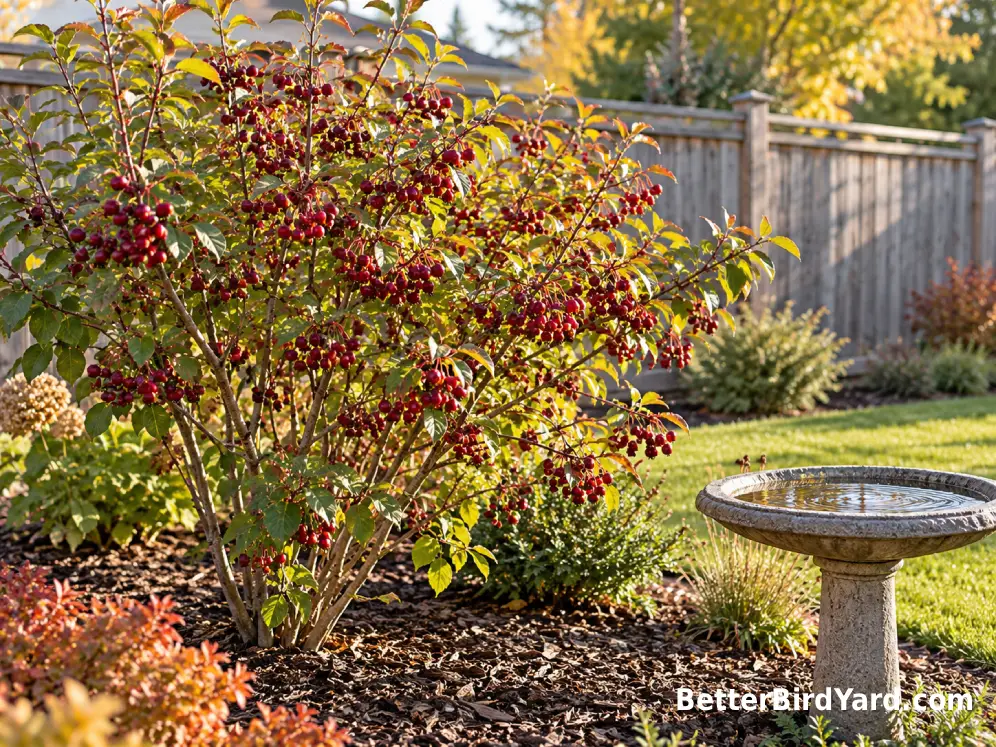
If cedar waxwings already occur in your region, food-producing habitat can make your property a more useful place for a passing flock. The simplest strategy is to grow locally native shrubs or small trees that produce appropriately sized fruit. Cornell suggests plants such as dogwood, serviceberry, juniper, hawthorn, winterberry, and native cedars, while Audubon emphasizes choosing species that are actually native to your particular region rather than relying on a one-size-fits-all national plant list.
- Choose locally native fruiting plants suited to your soil, light, and climate.
- Include plants that fruit at different times when your space allows.
- Keep a clean, shallow water source available.
- Leave some dense shrub cover rather than making every corner of the yard bare and manicured.
- Reduce pesticide use where practical so insect-eating birds also have natural food available.
For a small patio or rental, keep the goal realistic. A large fruiting tree may be impossible, but an appropriately sized native shrub in a substantial container can still add habitat where local growing conditions allow.
A common mistake is planting whatever berry shrub happens to be sold nearby without checking whether it belongs in the local ecosystem. Native ranges vary enormously across the United States, so use a state extension service, native plant society, or Audubon’s regional plant resources to narrow the choices for your area.
Cedar Waxwing Vs. Bohemian Waxwing And Other Look-Alikes
The Bohemian Waxwing is the species most likely to create a genuine waxwing identification puzzle. It is somewhat larger and grayer than a cedar waxwing and shows additional markings on the wings. Cedar Waxwings have a warmer tan or sandy appearance, a pale to whitish undertail area, and wings that lack the Bohemian Waxwing’s conspicuous white and yellow patterning.
| Clue | Cedar Waxwing | Bohemian Waxwing |
|---|---|---|
| Overall Tone | Warmer tan or brown | Generally grayer |
| Size | Slightly smaller | Slightly larger |
| Wings | Relatively plain gray | More obvious white and yellow markings |
| Undertail | Pale or whitish | Rusty coloration |
European Starlings can also be confusing at a distance because both species may form sizeable flocks and have a similar general body size. Once you get a clear view, the cedar waxwing’s crest, crisp black mask, silky plumage, and colored tail tip are much stronger clues than flock behavior alone. Cornell includes both Bohemian Waxwing and European Starling among the species worth comparing during identification.
Can Cedar Waxwings Really Get Drunk From Berries?
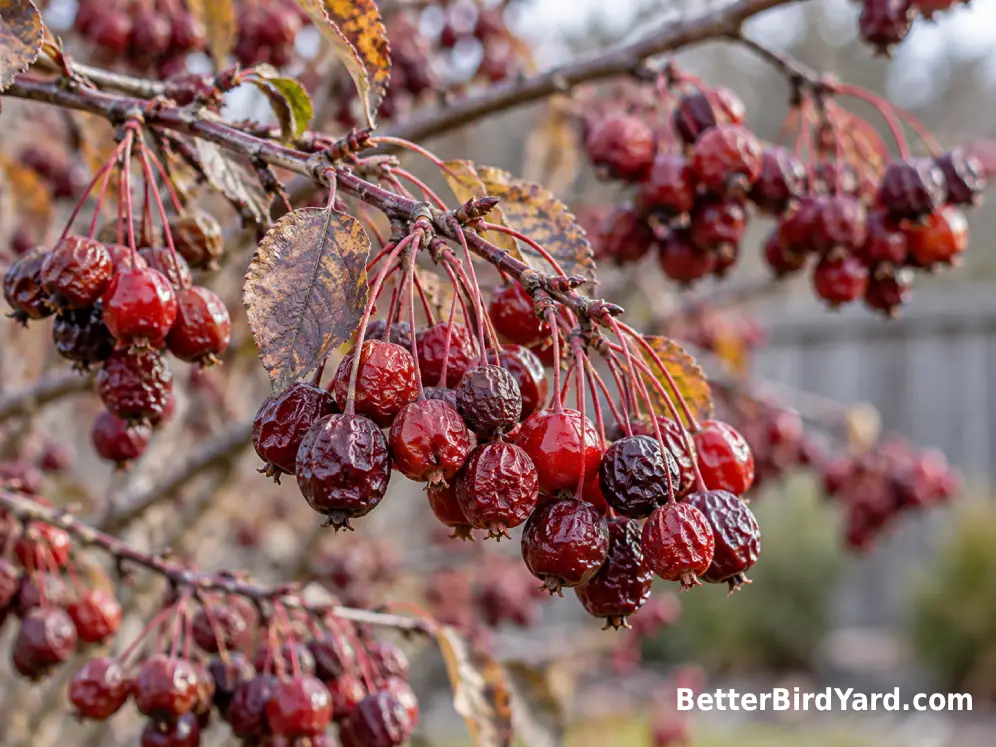
Yes, cedar waxwings can sometimes become intoxicated after consuming fruit in which fermentation has produced alcohol. Cornell notes that fermented overripe berries can occasionally intoxicate waxwings, and the California Department of Fish and Wildlife describes fruit-eating birds, including cedar waxwings, becoming uncoordinated after consuming fermented berries.
That does not mean every cedar waxwing that behaves strangely is drunk. Trouble balancing, inability to fly normally, repeated collisions, remaining grounded, or unusual lethargy can have many possible causes, including injury, illness, poisoning, or collision trauma. A backyard observation is not enough to diagnose the cause.
If you find an obviously impaired or injured wild bird, keep people and pets away and contact a licensed wildlife rehabilitator or your state or local wildlife agency for situation-specific guidance rather than trying to treat or feed the bird yourself.
There is another fruit-related reason to favor well-chosen native plants. University of Georgia veterinary researchers documented cedar waxwing deaths associated with heavy consumption of Nandina domestica berries in a Georgia incident. That single event should not be generalized to every berry-producing plant, but it is a useful reminder that ornamental fruit is not automatically wildlife-friendly simply because birds will eat it.
Common Cedar Waxwing Mistakes To Avoid
Because waxwings behave differently from many familiar feeder birds, a few assumptions can lead backyard bird watchers in the wrong direction.
- Do not expect a sunflower-seed tube feeder to be the main attraction. Fruit-bearing habitat is a better fit for waxwing feeding behavior.
- Do not assume every adult must show obvious red wing tips. Those markings can be subtle or absent from view.
- Do not identify an unusual bird from tail color alone. Some cedar waxwings can develop orange tail tips instead of yellow ones.
- Do not assume an uncoordinated bird has simply eaten fermented fruit. Unusual behavior deserves cautious observation and qualified wildlife help when a bird appears injured or unable to function normally.
- Do not ignore reflective windows near fruiting shrubs or trees where birds concentrate.
That last point matters because a berry-covered plant can bring an entire flock close to a house. Cornell recommends making hazardous glass more visible with effective exterior treatments rather than relying on one or two isolated window decals.
If fruiting plants sit beside large reflective windows, our window bird feeders guide is worth addressing before the berries ripen.
A Simple Waxwing-Friendly Backyard Plan
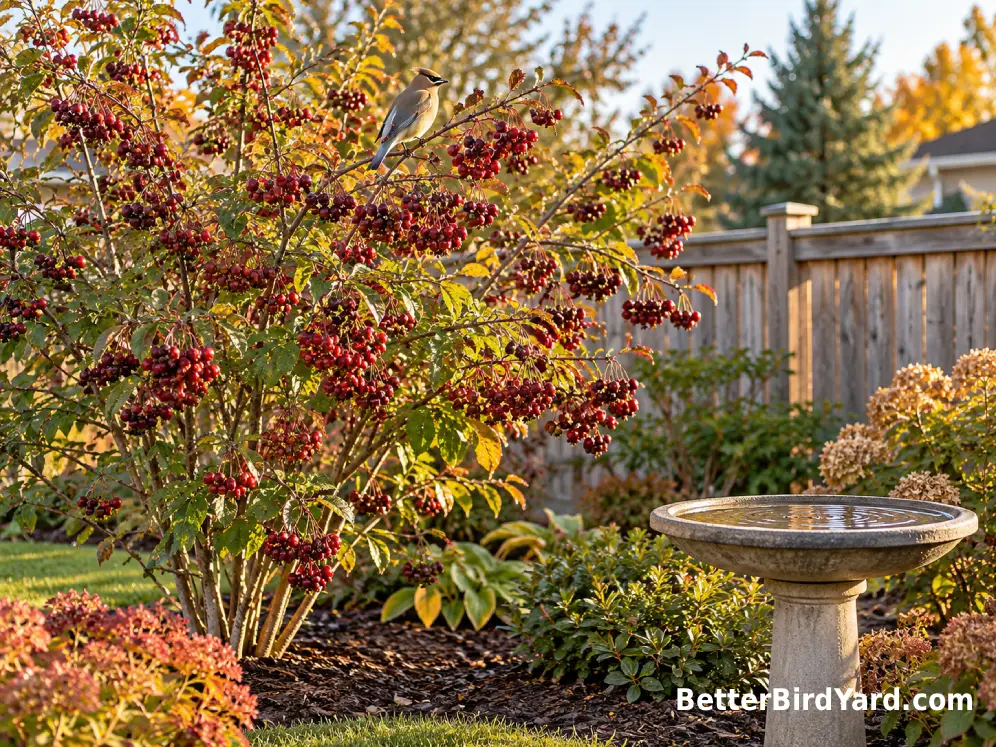
You do not need to redesign an entire property for cedar waxwings. Start with the features that provide value whether a waxwing flock visits tomorrow, next winter, or not at all. Native fruit, insects, water, cover, and safer windows support a much broader backyard bird community.
For an ordinary suburban yard, balcony, or patio, keep the plan manageable:
- Add one locally appropriate native fruiting shrub or small tree if space allows.
- Provide clean water and refresh it whenever it becomes dirty.
- Keep cats indoors or otherwise separated from visiting birds.
- Check nearby windows for strong sky or vegetation reflections.
- Watch fruiting plants rather than only watching your seed feeders.
A BetterBirdYard editorial note: if you only change one thing for waxwings, make it the plant choice. A well-sited native shrub can provide fruit, insect habitat, perching cover, and seasonal structure without requiring another feeder to clean or refill. Audubon and Cornell both emphasize native plants as a practical way to provide natural bird food, while also noting that the right species depends on where you live.
Cedar waxwings reward patience. You may not see them every day, and no plant or feeder can guarantee a visit. But once you learn the pointed crest, black mask, yellow-tipped tail, thin calls, and flocking behavior, they become surprisingly easy to recognize. Build the yard around healthy habitat rather than a single species, then keep an eye on the berries. When cedar waxwings finally arrive, they often make the wait memorable.