Window Bird Feeders: A Closer, Safer Way to Watch Backyard Birds
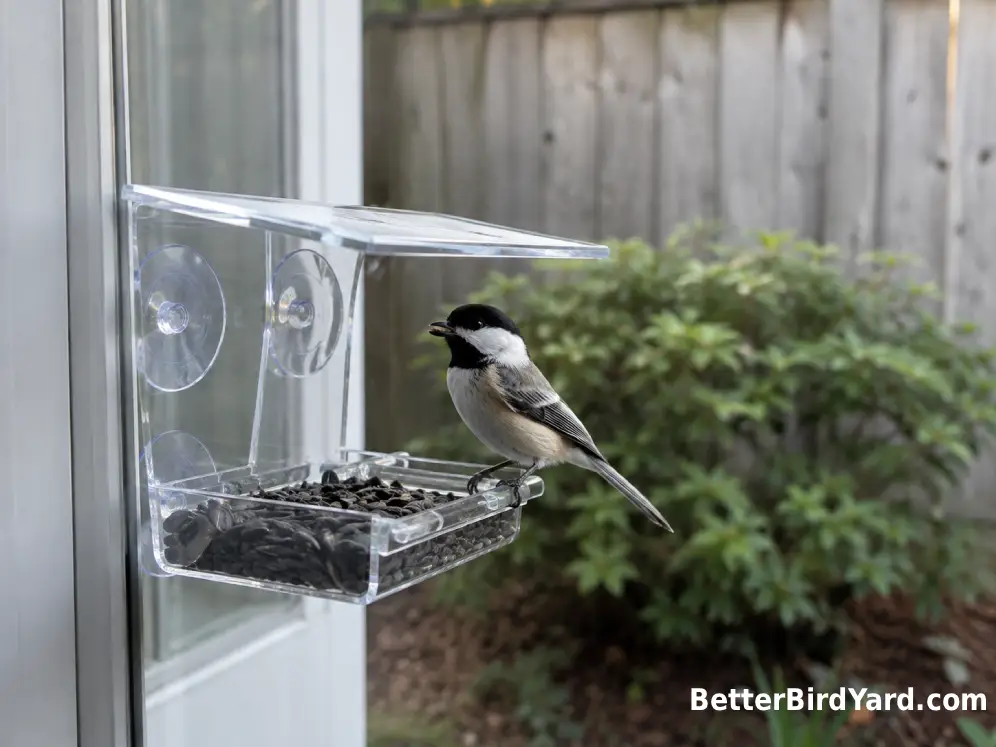
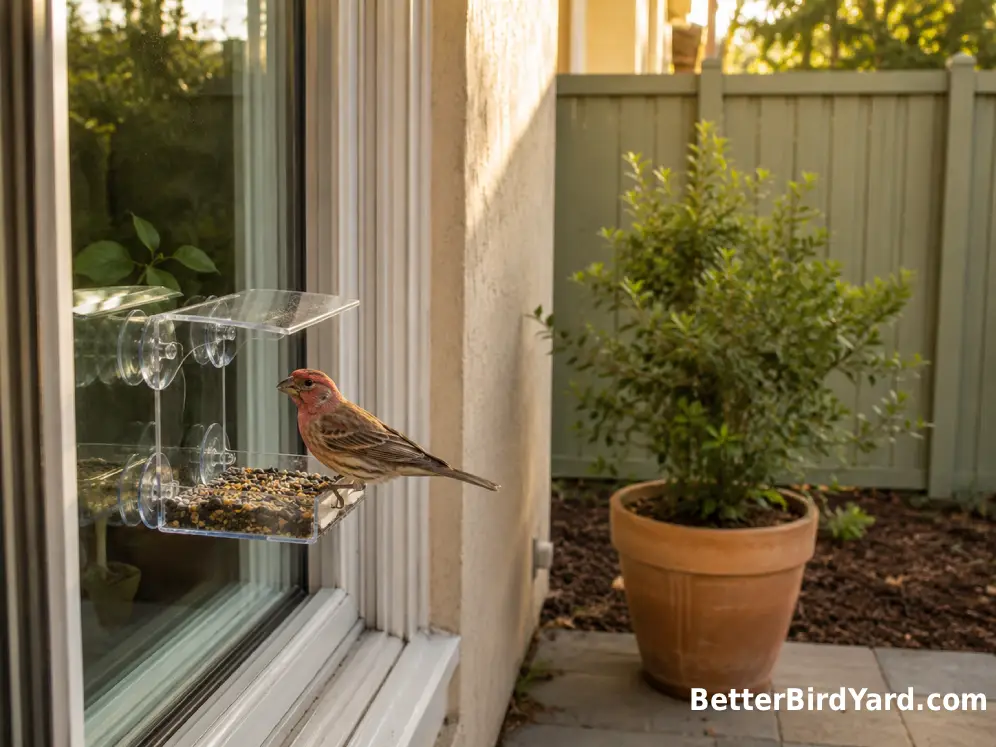
Window bird feeders bring feeding birds close enough to watch from a kitchen table, desk, or apartment living room. Most models use suction cups to hold a small seed tray directly against the outside of the glass, making them especially useful when you do not have room for a pole-mounted feeding station.
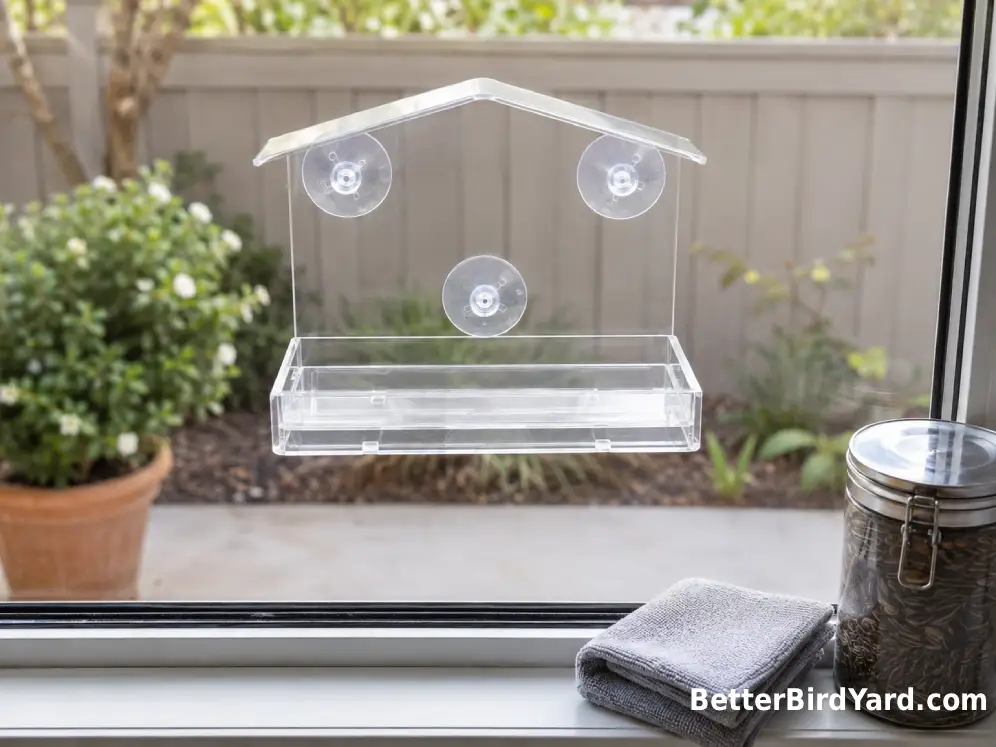
A good window feeder is simple rather than elaborate. It should stay securely attached, keep most rain away from the food, drain after wet weather, and come apart easily for cleaning. Clear acrylic models provide an open view, while compact window sill bird feeders may offer more capacity where the window design allows them.
Placement still deserves careful attention. A feeder attached directly to a window may reduce the speed a bird can build before reaching that pane, but it does not make reflective glass harmless. Nearby windows, glass doors, and reflective sections of the same window may still need exterior collision-prevention treatments. The safest setup combines a well-mounted feeder with clean food, regular maintenance, visible glass, and sensible protection from pets and predators.
Are Window Bird Feeders a Good Choice?
Window feeders for birds work particularly well for people who value visibility and convenience more than large seed capacity. They can fit on many kitchen, bedroom, office, and patio windows without requiring a post, shepherd’s hook, or permanent mounting hardware.
They are often a practical option for:
- Renters who are not allowed to drill into walls or railings
- Apartment residents with an accessible exterior window
- People with compact patios, courtyards, or small yards
- Children or adults who benefit from close-range bird observation
- Anyone who wants a small feeder that is easy to inspect from indoors
The main tradeoff is maintenance. A small tray can become empty, wet, or soiled faster than a large covered feeder. Because the feeder sits close to your living space, scattered shells and droppings are also more noticeable. That visibility can be helpful: you are more likely to catch damp seed, a loose suction cup, or an accumulating mess before it becomes a larger problem.
Do not expect every bird in the neighborhood to use one. Visits depend on your region, season, nearby vegetation, local bird populations, food choice, and how exposed the window feels. Some birds investigate a new feeder quickly, while others take days or weeks to approach.
What to Look for in the Best Window Bird Feeders
The best window bird feeder is the one you can mount securely, refill without spilling seed, and clean without wrestling with small crevices. Product photos can make nearly every feeder look spacious and sturdy, so pay more attention to its construction than to decorative extras.
Useful features include:
- A removable tray that lifts or slides out without detaching the entire feeder
- Drainage openings that allow rainwater to escape
- A roof or overhang that provides some protection from falling rain
- Two or more substantial suction cups rather than one small attachment point
- Smooth corners and accessible surfaces that are easy to scrub
- A tray shallow enough that old seed cannot disappear beneath a fresh layer
Capacity is less important than it first appears. A deep bin may reduce refill trips, but it can also hold more food than local birds will eat before weather affects it. For an exposed apartment window or rainy climate, a smaller tray filled more frequently is often easier to manage responsibly.
A common mistake we see is choosing a feeder mainly because it has an oversized viewing chamber. In practice, drainage, cleanability, and a stable attachment matter more. If you only change one thing in your shopping process, check whether the seed tray comes out independently.
Whether you compare Amazon window bird feeders, models at a specialty bird store, or feeders from a local garden center, read the measurements carefully. Confirm that you can reach the mounting spot safely from inside or from stable ground. A bargain feeder is not useful when the only way to refill it involves leaning dangerously from an upper-story window.
How to Install a Suction Cup Window Feeder
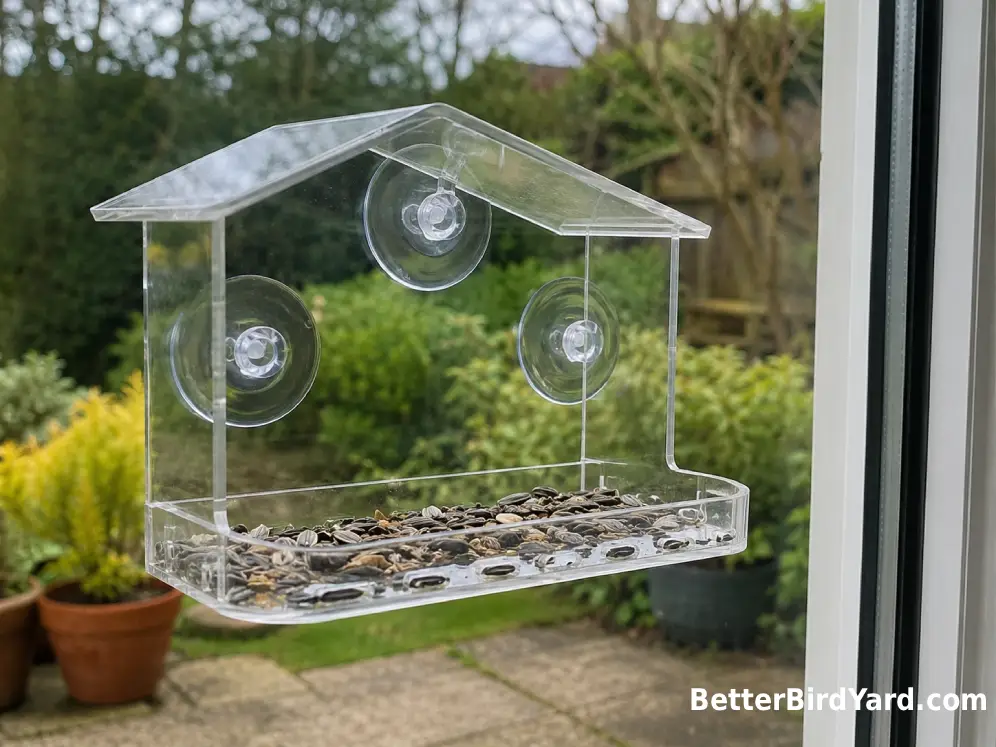
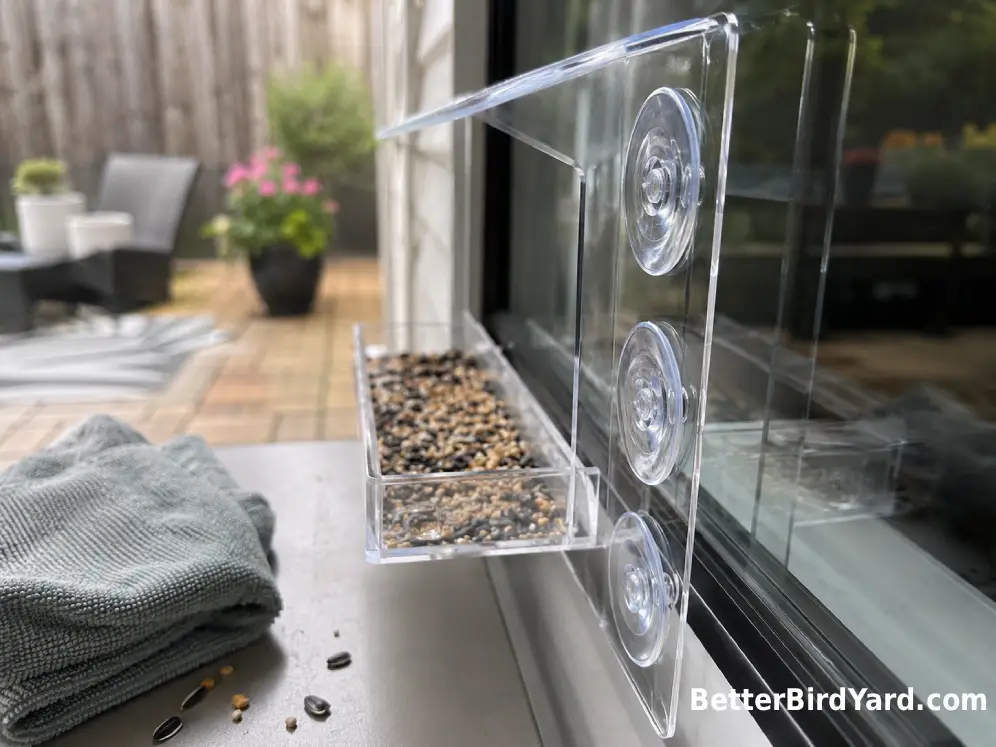
Suction cup bird feeders for windows depend on clean, smooth contact between the cups and glass. Dust, cooking residue, pollen, dried cleaner, and textured surfaces can weaken that contact. Follow the feeder manufacturer’s instructions, particularly if your window has an exterior film, specialty coating, removable panel, or unusual finish.
- Choose smooth exterior glass that you can reach safely for refilling and cleaning.
- Wash the mounting area and the suction cups, then remove any oily residue.
- Inspect each cup for cracks, stiffness, warping, or damaged edges.
- Press every suction cup firmly and evenly against the glass.
- Attach the empty feeder and give it a careful downward tug.
- Add only a small amount of seed for the first few days.
- Recheck the attachment daily at first and after severe temperature changes or storms.
Do not mount the feeder over a walkway, vehicle, fragile planting pot, or area where a fall could cause damage. Even a reliable suction cup can eventually loosen as outdoor conditions change.
A feeder should remain level when filled. If one corner sags, remove it and start again rather than trying to push the loose cup back into place while the tray contains seed. Check that the window can still open, close, and lock normally without striking the feeder.
Some bird feeders that stick to the window use a separate mounting bracket, allowing the tray to slide off while the suction cups remain attached. That arrangement can make routine cleaning easier and reduce repeated stress on the cups.
Make the Window Visible to Birds
Direct window placement is commonly recommended as one way to limit the momentum birds can build before reaching that pane. The U.S. Fish and Wildlife Service advises keeping feeders and water sources within 3 feet of glass, and Audubon includes feeders placed directly on windows among its collision-reduction measures.
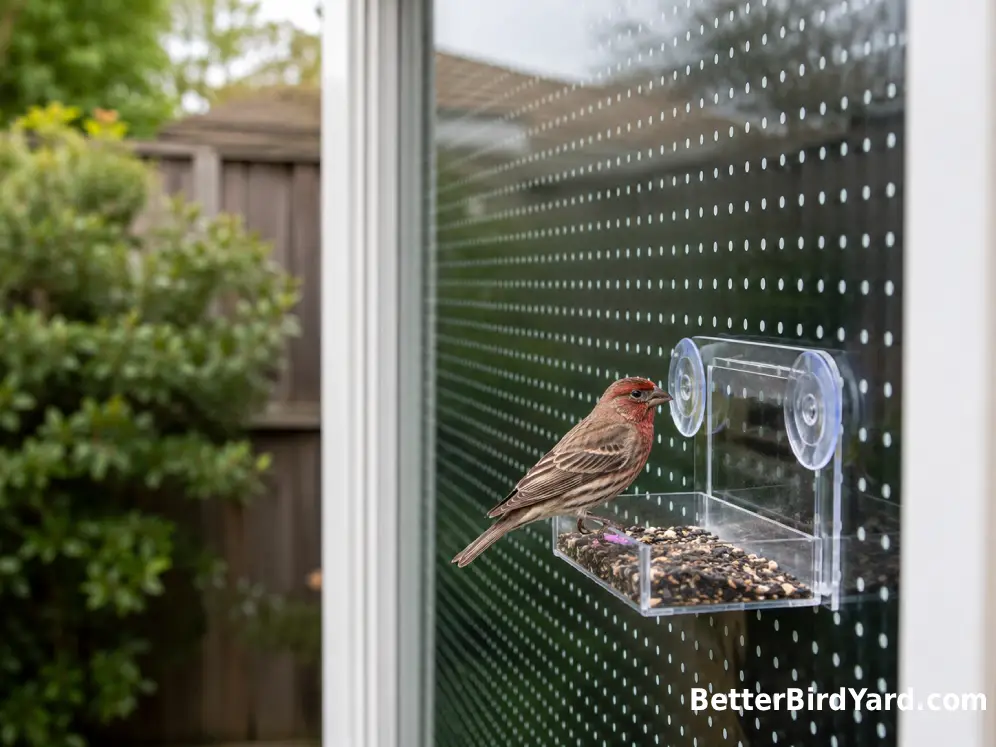
However, feeder distance should not be your only protection. Cornell’s current guidance emphasizes making windows bird-friendly whenever feeders are nearby, regardless of the measured distance. Birds may still respond to reflected sky, trees, or open-looking space elsewhere on the window.
Go outside during the brightest part of the day and look at the glass from several angles. Strong reflections of foliage or sky are a warning sign. Also inspect adjacent panes, corner windows, patio doors, and any window directly across the room that creates the appearance of an open flight path.
Effective treatments create a visible pattern across the exterior surface rather than relying on one or two decorative decals. Cornell and the U.S. Fish and Wildlife Service recommend closely spaced exterior markings, with a 2-by-2-inch pattern providing protection for small birds. Exterior screens and closely spaced hanging cords are other options.
What Food Works Well in a Window Feeder?
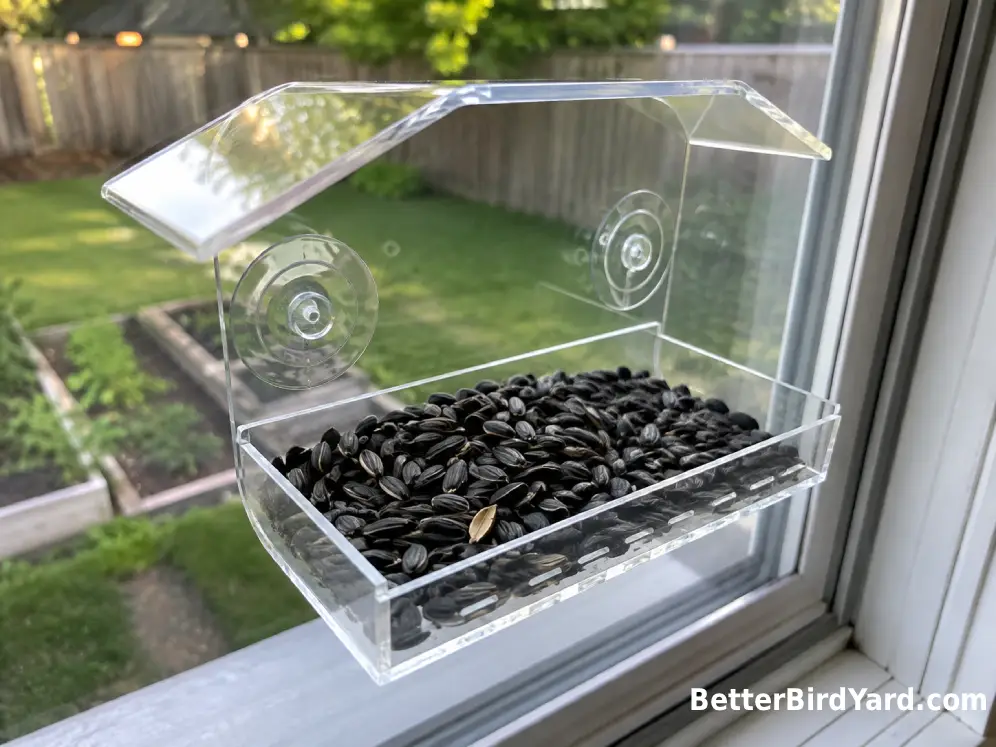
A simple sunflower-based food is a practical starting point for many tray-style window feeders. Black oil sunflower seed and sunflower chips are used by a range of common seed-eating birds, although the species you see will vary by location, habitat, and season.
Sunflower chips create less shell waste, which can be helpful over a patio, balcony, or window ledge. Because the protective hull has been removed, however, chips can deteriorate faster when exposed to moisture. Offer small amounts and replace them whenever they become wet, clumped, stale-smelling, or visibly spoiled.
Avoid filling the tray to the rim. Start with roughly the amount local birds consume in a day or two, then adjust. A shallow layer makes it easier to notice damp food and prevents older seed from remaining hidden underneath new seed.
Large inexpensive mixes often contain ingredients that local birds leave behind. Uneaten pieces accumulate in the tray or fall below the window, where they can attract rodents and other wildlife. The U.S. Fish and Wildlife Service recommends removing discarded or moldy seed beneath feeders to reduce sanitation problems and discourage unwanted visitors.
Do not offer moldy seed, salty snacks, heavily processed food, or bread as routine feeder food. A window feeder is supplemental; nearby native plants, natural cover, insects, and clean water remain important parts of a bird-friendly space.
Keep the Feeder Clean and the Seed Dry
Small window feeders need the same sanitation care as larger feeding stations. Shared feeding surfaces can increase opportunities for contamination when seed, droppings, moisture, and debris accumulate. Project FeederWatch recommends regular cleaning even when no visibly sick birds are present.
Inspect the feeder whenever you refill it. Empty it immediately if the food is wet, moldy, clumped, unusually dusty, or has an unpleasant odor. Clear drainage openings and wipe away droppings rather than adding fresh seed on top of a dirty tray.
As a practical baseline, clean a seed feeder at least every two weeks and sooner during wet weather, heavy use, or visible contamination. The U.S. Fish and Wildlife Service cites the Cornell Lab’s recommendation to clean feeders at least once every two weeks.
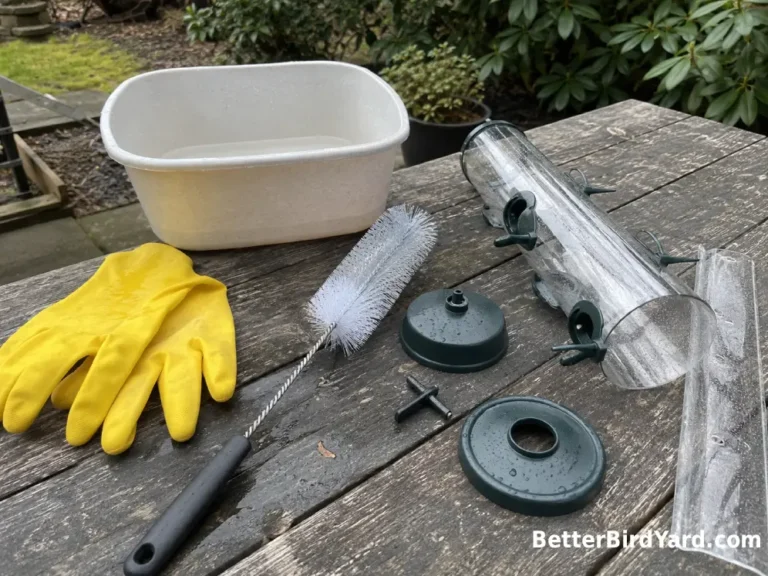
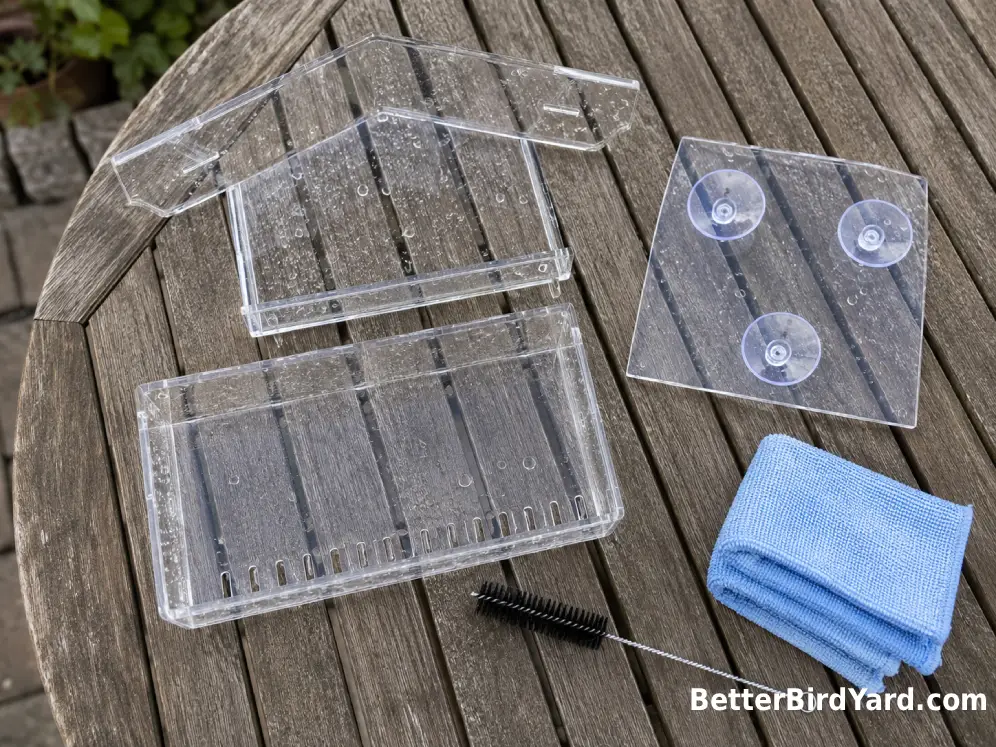
Take the feeder apart and remove all visible debris before disinfecting it. Cornell guidance allows hand washing with soap and hot water or the use of a diluted bleach solution no stronger than one part bleach to nine parts water. Rinse every surface thoroughly and let all parts dry completely before adding seed. Never mix bleach with vinegar, ammonia, or other cleaners.
Clean the exterior glass behind and below the feeder as well. A removable tray makes this much easier. Our complete bird feeder cleaning guide covers brushes, drying, storage, and cleaning feeders during periods of heavy activity.
Common Window Feeder Problems and Practical Fixes
The Suction Cups Keep Falling
Remove the feeder, empty it, and clean both the glass and cups before trying again. Replace cups that have cracked, hardened, curled, or lost their shape. Avoid improvising with tape, glue, or fasteners that the manufacturer did not approve, particularly on upper-story windows.
Rain Soaks the Seed
Use smaller portions and empty the tray after driving rain. Check that drainage slots are open and that the feeder sits level. A larger roof can help with vertical rain, but no small open feeder remains completely dry during wind-driven weather.
Birds Have Not Found the Feeder
Give them time and keep the food fresh. Nearby shrubs or trees may make the location feel more familiar, but do not crowd the feeder with dense cover that could conceal a stalking cat. Avoid repeatedly moving the feeder after only a day or two unless the location is clearly unsafe.
One Bird Guards the Feeder
Territorial behavior can temporarily reduce visits by other birds. A second feeding point elsewhere may spread activity, provided you can keep both stations clean and protect nearby glass. Results vary with species, season, and the layout of the property.
Seed and Droppings Collect Below the Window
Offer less food, use a no-shell option, and clean the ledge or ground regularly. Pause feeding if waste begins attracting rodents, raccoons, bears, or other nuisance wildlife, and follow local wildlife agency guidance for your area.
Using Window Feeders at Apartments and Rental Homes
Bird feeders for apartment windows can provide a close view without taking up floor space, but access and building rules come first. Check your lease, property policies, condominium rules, or homeowners association requirements before installing a feeder. Rules may address wildlife feeding, exterior attachments, falling objects, or debris on neighboring balconies.
Choose a window you can reach without leaning outside. Upper-floor residents should be able to remove, clean, and refill the feeder entirely from a safely opened window or another secure access point. Do not climb on furniture or rely on a loose screen for support.
Consider where shells, seed, and droppings will land. A feeder positioned directly above another resident’s patio, an entrance, an air-conditioning unit, or parked vehicles is likely to create conflict. No-shell seed and small portions reduce mess but do not eliminate it.
Window screens can complicate installation. Do not compress a feeder between a screen and the glass unless the product is specifically designed for that arrangement. A screen should not be cut, bent, or removed when doing so violates building rules or creates a fall hazard.
Small spaces also make predator awareness important. Keep pet cats indoors and do not place the feeder beside a railing, shelf, or structure that gives an outdoor cat an easy ambush point. The U.S. Fish and Wildlife Service advises reconsidering feeder placement where cats regularly hunt.
When to Pause Feeding or Seek Qualified Help
A close feeder makes it easier to notice unusual behavior, but it does not make it possible to diagnose a wild bird. A bird that remains fluffed up, appears unusually inactive, has crusted or swollen eyes, shows visible growths, or allows people to approach very closely may be ill or injured for several possible reasons.
Project FeederWatch recommends removing feeders used by a bird that appears sick for a couple of weeks, thoroughly cleaning the feeders and surrounding area, and allowing birds to disperse. Check your state wildlife agency for current local guidance, especially if several birds appear affected or an outbreak has been reported nearby.
Do not attempt to diagnose, medicate, feed, or casually handle the bird. Contact a licensed wildlife rehabilitator, local wildlife agency, animal control office, or other qualified professional when intervention may be needed. Project FeederWatch notes that wild bird treatment belongs with veterinarians or federally licensed wildlife rehabilitators.
A window collision also deserves prompt attention. Even when a bird flies away after appearing stunned, injuries may not be visible. Contact a licensed wildlife rehabilitator for instructions, and improve the exterior glass treatment before resuming normal feeder use.
A Small Feeder With a Remarkably Close View
Window bird feeders are most successful when they remain small, simple, and easy to manage. Choose a model with reliable suction cups, drainage, weather protection, and a removable tray. Install it only where you can reach it safely, then inspect the attachment and food each time you refill it.
Most importantly, treat the window as part of the feeding station. Look for reflections, add dense exterior markings or a suitable exterior screen where needed, and protect adjacent glass rather than assuming the feeder alone prevents collisions. Keep the tray clean, offer modest portions of fresh food, and remove waste before it creates a sanitation or nuisance-wildlife problem.
Visits may begin slowly, especially at a new feeding location. Give local birds time to discover the feeder and adjust your setup based on what you actually observe. A carefully maintained feeder may eventually turn an ordinary window into one of the most useful bird-watching spots in the home—without requiring a large yard or permanent installation.