Suet Bird Feeders: Choose the Right Style for Your Yard
Suet bird feeders offer a concentrated, high-energy food that commonly attracts woodpeckers, nuthatches, chickadees, titmice, jays, and several other backyard visitors. The familiar wire cake cage is a good starting point, but it is not the best answer for every yard. A long-tailed woodpecker may need more support, squirrels may require a baffled pole or weight-activated design, and persistent starlings may call for an upside-down feeder.
For most beginners, the best suet feeder is a durable, easy-to-clean cage with a secure latch. Add a tail prop when woodpeckers are the priority. Choose an upside-down or exclusion-cage model when larger birds dominate. Treat any “squirrel proof” label cautiously because feeder placement is usually as important as the feeder itself.
This guide explains how the main suet holder bird feeders work, who each design suits, and how to place and maintain one responsibly in a suburban yard, patio garden, balcony, or other small outdoor space.
Which Suet Feeder Should You Choose?
Start with the problem you need the feeder to solve rather than searching for one universally best suet bird feeder.
- Choose a basic wire cage for an inexpensive, uncomplicated first feeder.
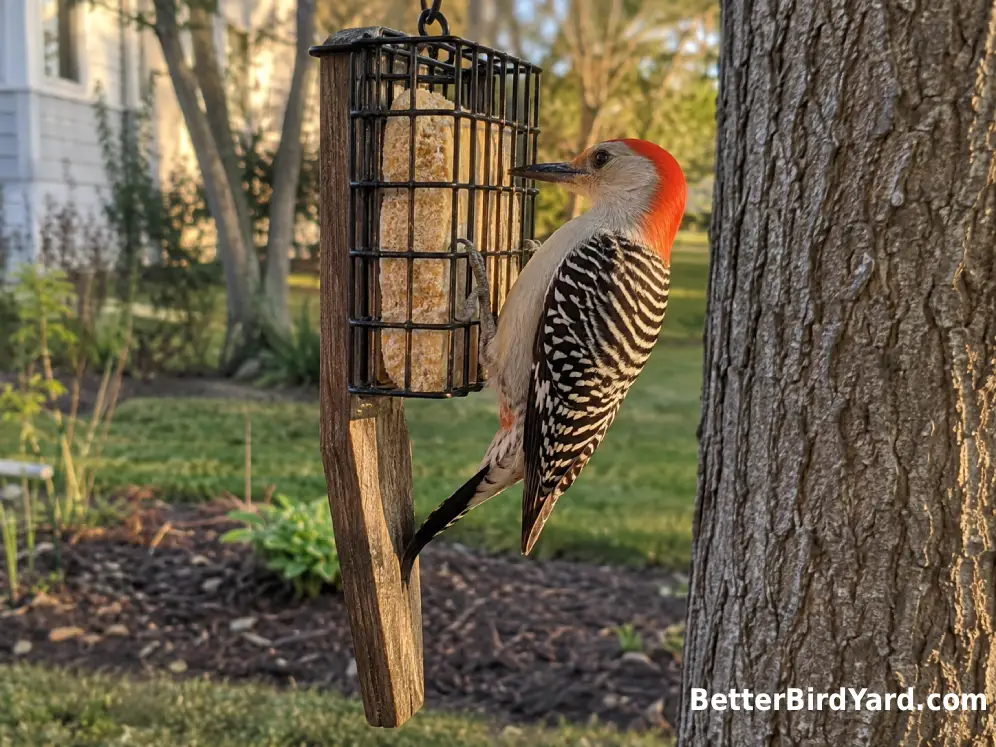
- Choose a tail-prop feeder when woodpeckers are your main interest.
- Choose an upside-down suet feeder when starlings, grackles, or jays empty cakes too quickly.
- Choose an outer exclusion cage when you want to favor smaller clinging birds.
- Choose a baffled pole or weight-sensitive design when squirrels are the main problem.
- Choose a rigid suet ball holder when you use manufactured suet balls instead of standard rectangular cakes.
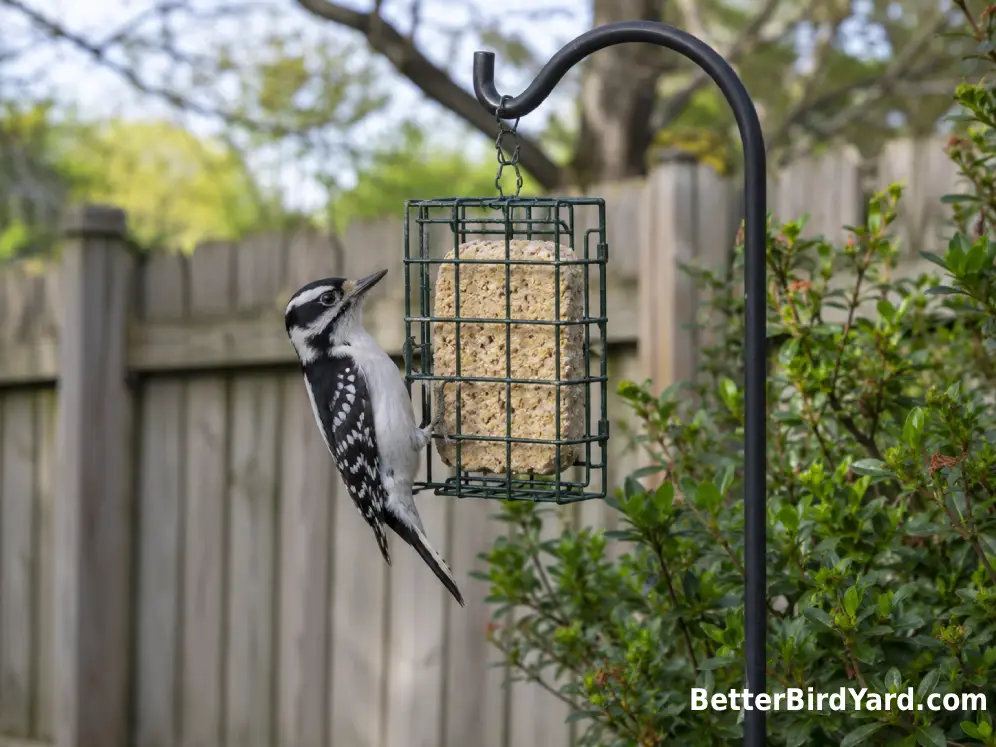
A common source of confusion is the term caged suet feeder. It can describe the simple wire holder that directly contains a suet cake, or it can mean a second, larger cage surrounding the food. The outer-cage version restricts access by body size, so it may also exclude larger woodpeckers you hoped to attract.
Whatever style you select, favor a secure closure, smooth edges, drainage, and parts you can reach with a brush. A feeder that is difficult to open or scrub usually becomes a maintenance problem long before it wears out.
How The Main Suet Feeder Designs Compare
| Feeder Type | Best For | Main Advantage | Important Tradeoff |
|---|---|---|---|
| Basic wire cake cage | Beginners and general bird feeding | Affordable, visible, and easy to refill | Offers little control over squirrels or larger birds |
| Tail-prop feeder | Downy, Hairy, Red-bellied, and larger woodpeckers | Provides a surface where a woodpecker can brace its tail | Wooden models can be harder to clean thoroughly |
| Upside-down feeder | Woodpeckers, nuthatches, and chickadees | Favors birds comfortable feeding while suspended | Some desired birds may take time to learn it |
| Outer exclusion cage | Smaller clinging birds | Restricts access by larger birds and some squirrels | May exclude large woodpeckers |
| Weight-activated feeder | Persistent squirrels or large nuisance birds | Closes or blocks access under greater weight | Costs more and requires occasional adjustment |
| Rigid suet ball holder | Patios and households using suet balls | Compact and easy to monitor | Capacity and bird support vary by design |
Cornell Lab guidance notes that downward-facing suet feeders tend to favor agile clinging birds such as woodpeckers and nuthatches while making access more difficult for many starlings and jays. That makes an upside-down feeder a targeted solution, not automatically a better feeder for every bird.
For a first purchase, a powder-coated metal cage is usually the simplest choice. Use it for several weeks before adding more complicated defenses. The birds visiting your particular yard will show whether you actually need a tail prop, exclusion cage, or squirrel-resistant system.
Choosing A Suet Feeder For Woodpeckers
Most woodpeckers can cling to a plain wire cage, but a tail prop gives them a more trunk-like feeding posture. Look for a prop that extends well below the cake rather than a decorative strip that barely reaches the bird’s tail.
Downy Woodpeckers are small and readily use basic cages. Hairy and Red-bellied Woodpeckers benefit from more room, while Northern Flickers may prefer a stable feeder that does not twist dramatically under their weight. These birds may visit suet feeders where they occur, but visits still depend on local range, surrounding habitat, season, weather, and natural food availability.
For a practical woodpecker suet feeder, check for:
- A broad tail board extending below the food
- A rigid mount or short hanging chain that limits spinning
- A cage large enough to expose a useful feeding surface
- A latch that raccoons and squirrels cannot easily flip open
- Materials and corners that can be scrubbed without trapping old food
Suet feeders for Pileated Woodpeckers need to be especially sturdy. Pileated Woodpeckers only sometimes visit backyard feeders, and they are strongly associated with mature wooded habitat, dead trees, downed logs, and other natural foraging opportunities. Where the species is present, a securely mounted feeder with a long tail prop and generous landing space is more sensible than a lightweight swinging cage. Even then, a feeder cannot compensate for unsuitable habitat.
BetterBirdYard editorial note: If your goal is simply to see your first woodpecker, do not begin with the largest or most elaborate feeder. A basic cage placed where a Downy or Red-bellied Woodpecker can discover it is often the more practical test.
Keeping Squirrels And Starlings From Taking Over
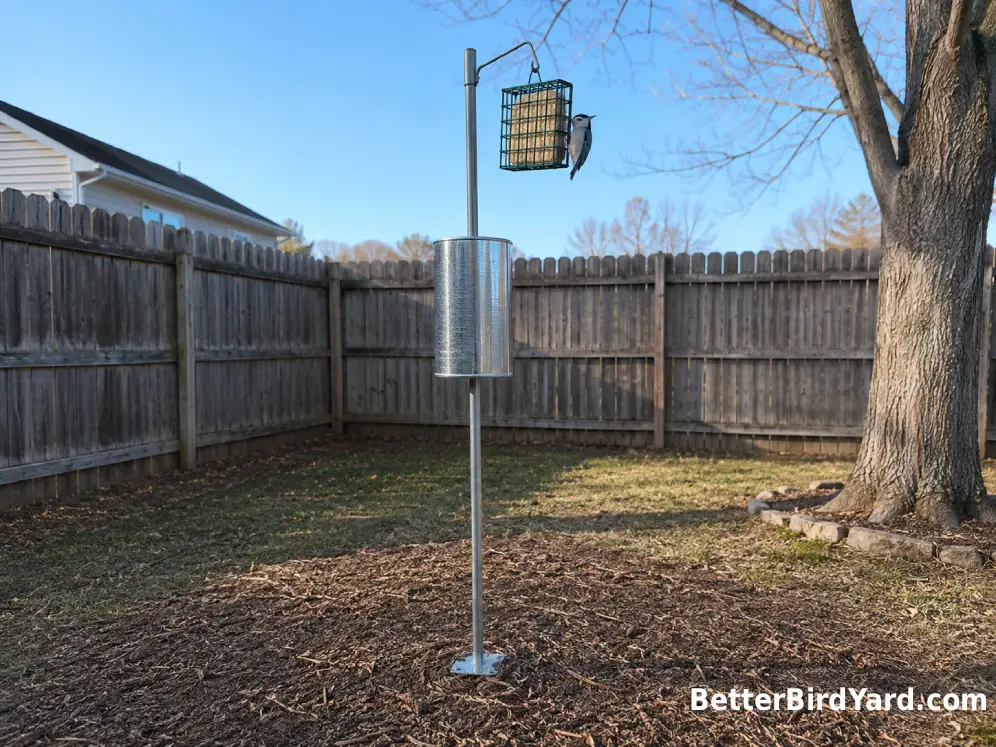
There is a difference between a squirrel-resistant feeder and a squirrel-resistant feeding station. A strong cage cannot help much when it hangs beside a fence, roof, railing, or branch that gives a squirrel an easy launch point.
For yards with enough open space, Audubon recommends a pole-and-baffle arrangement as the strongest starting setup. Its 2025 guidance suggests keeping the pole approximately 8 to 10 feet from trees, fences, buildings, and other launch points, with the baffle roughly 4 to 5 feet above the ground. Local squirrel species and the shape of your yard may still require adjustment.
Renters and patio users may not have room for that arrangement. In a tight space, consider a weight-activated feeder, an outer exclusion cage, or a feeder mounted where a squirrel cannot reach it from a railing. Watch the first few raids before changing the setup; squirrels often reveal the exact branch, roof edge, or support they are using.
To reduce starling pressure, try these changes one at a time:
- Turn the feeding surface downward with an upside-down suet feeder.
- Use a feeder with no large platform beneath the cake.
- Offer only one cake so excess food is not continuously available.
- Move the feeder away from other crowded feeding stations.
- Use an outer cage only when excluding larger woodpeckers is acceptable.
Upside-down feeders can reduce access by birds that are less comfortable hanging beneath the food, although persistent individuals may still learn to use them. Woodpeckers, chickadees, and nuthatches are generally better suited to this feeding position.
Avoid escalating a minor squirrel problem into a complicated, cluttered station. In many yards, relocating the feeder and installing one properly positioned metal baffle accomplishes more than buying several feeders labeled squirrel proof.
Where To Hang A Suet Feeder Safely
Choose a location that balances visibility, escape cover, sanitation, window safety, and nuisance-wildlife control. The most convenient branch is not always the safest place.
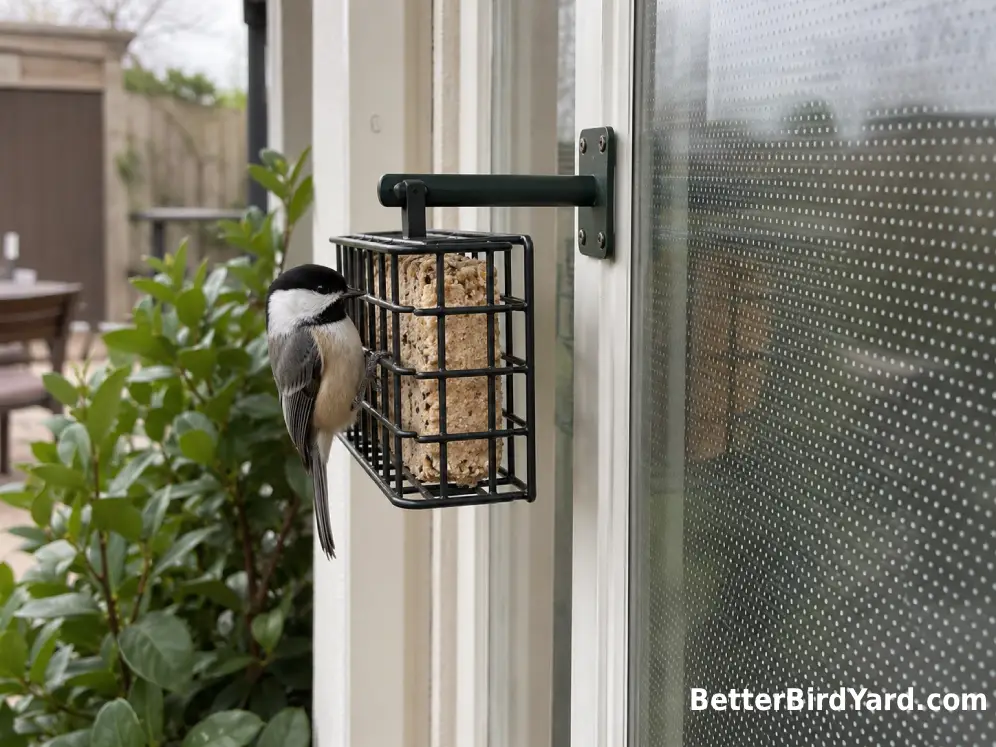
Window placement deserves particular attention. Cornell Lab and Audubon guidance recommends placing feeders very close to a window—generally within about 3 feet—or more than 30 feet away. At intermediate distances, a startled bird may have room to build speed before striking reflective glass. Exterior screens or closely spaced markings on the outside of the glass provide additional protection.
A useful placement sequence is:
- Select a window-safe location with a clear viewing angle.
- Check for nearby cat hiding places and squirrel launch points.
- Keep the feeder high enough that pets and children cannot reach the food.
- Place it where fallen crumbs can be swept or raked easily.
- Confirm that you can remove and clean the feeder without a ladder.
Some nearby vegetation can offer birds a place to pause or escape, but dense cover immediately beneath a feeder may conceal a roaming cat. Keep pet cats indoors, and reposition the feeder if you notice a cat repeatedly stalking underneath it. Project FeederWatch identifies cats and window collisions as important risks around feeding stations.
On a balcony, use a short, secure bracket rather than hanging the feeder over a shared walkway or another resident’s space. Keep greasy crumbs and droppings off railings and floors, and check lease, building, fire-safety, city, and HOA rules before installing hardware.
How To Fill, Clean, And Maintain A Suet Feeder
Use a manufactured suet cake that remains firm under current weather conditions. Remove the wrapper completely, place the cake inside the holder, and close the latch before hanging the feeder. Do not force an oversized cake into a bent cage or leave sharp wire ends exposed.
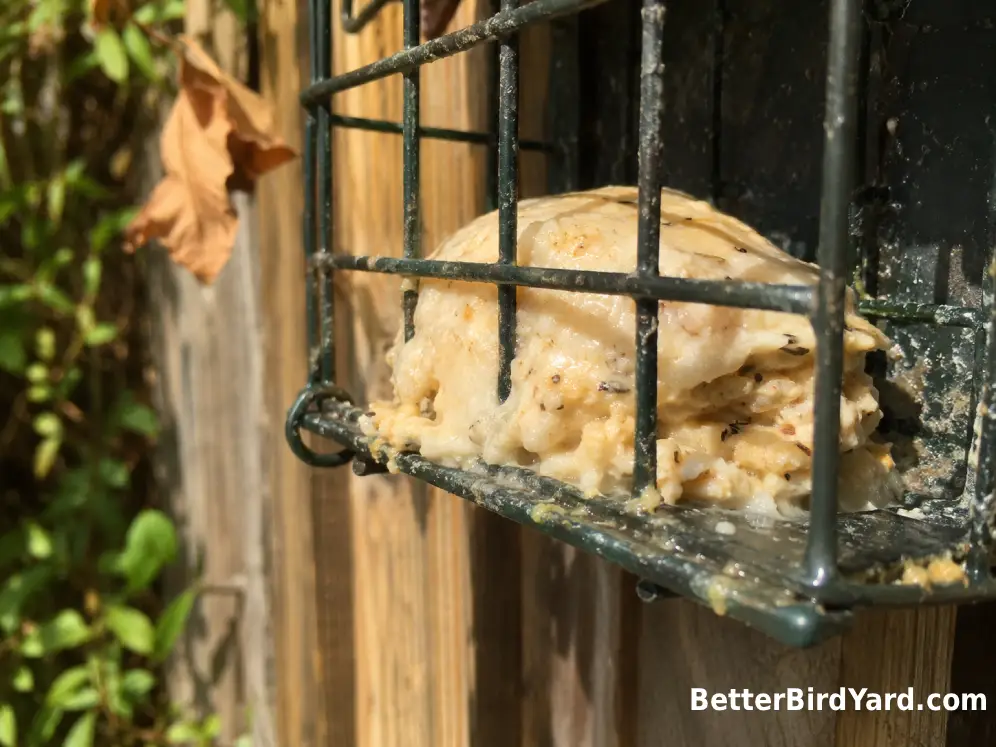
Inspect the food whenever you refill or pass the feeder. Remove suet that is moldy, wet, unusually soft, oily, foul-smelling, contaminated with droppings, or otherwise spoiled. Raw suet deteriorates quickly in mild weather, and even rendered cakes can soften during heat. Stop offering a cake if it becomes greasy enough to smear onto feathers.
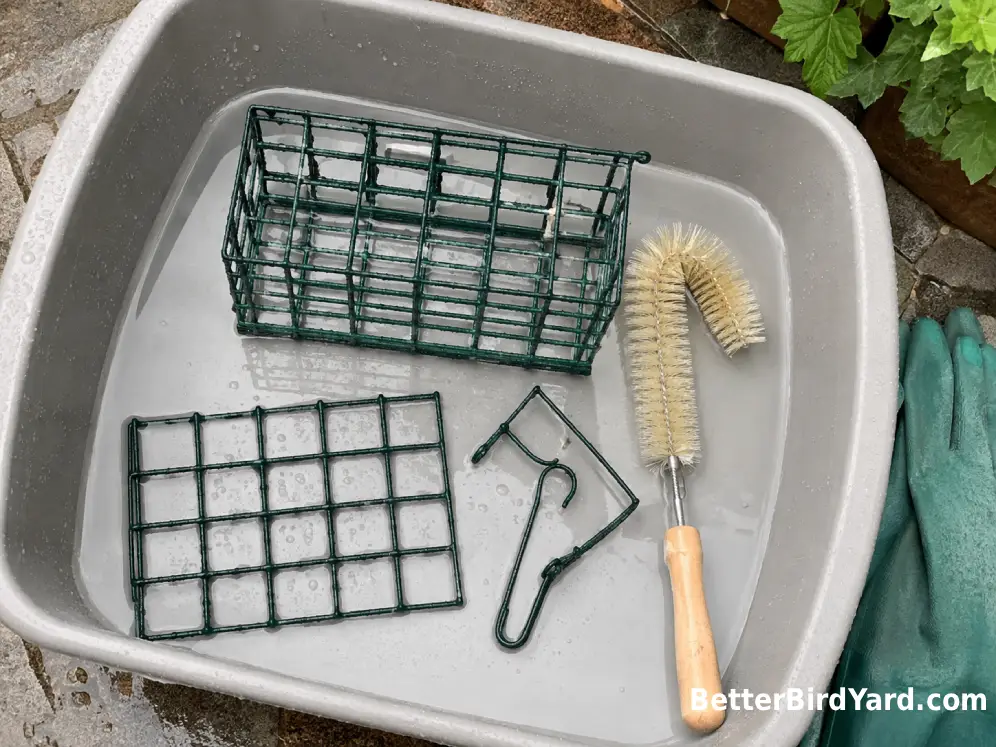
Project FeederWatch recommends cleaning seed and suet feeders about every week or two, with more frequent cleaning during heavy use or wet weather. Take the feeder apart, remove food debris, scrub it with warm water and dish soap, rinse thoroughly, and allow every part to dry before refilling. Smooth metal or durable plastic parts are generally easier to wash than porous, unfinished wood.
A manageable routine looks like this:
- Daily glance: check for soft food, mold, droppings, damage, or trapped debris.
- Each refill: brush away crumbs and examine the latch and hanging hardware.
- Every week or two: disassemble, wash, rinse, and dry the feeder.
- After prolonged rain or heavy activity: clean sooner rather than waiting for the routine date.
- Under the feeder: sweep or rake accumulated crumbs that could spoil or attract rodents.
Wear gloves when handling dirty feeders, wash your hands afterward, and avoid preparing or cleaning bird-feeding equipment beside human food. Project FeederWatch also recommends respiratory protection when sweeping or raking dusty debris beneath heavily used feeding areas.
If you see birds that appear unusually lethargic, remain fluffed up for extended periods, have crusted eyes, or show other concerning signs, do not attempt to diagnose or treat them. Clean the feeding area, consider pausing or reducing feeding according to current local guidance, and contact a licensed wildlife rehabilitator or local wildlife agency when a bird may need intervention. Project FeederWatch advises thoroughly cleaning affected feeders and taking steps to disperse congregations when illness is suspected.
Common Suet Feeder Mistakes To Avoid
Buying A Feeder That Solves The Wrong Problem
An exclusion cage may stop larger birds, but it can also block the Hairy, Red-bellied, Northern Flicker, or Pileated Woodpecker you wanted to see. An upside-down design can discourage some starlings, but it will not prevent a squirrel from reaching the entire feeder. Match the design to the visitor you are trying to accommodate or deter.
Hanging It Beside A Squirrel Launch Point
A feeder suspended beside a fence or branch is rarely squirrel resistant, regardless of its packaging. Observe the whole access route, including overhead branches, railings, downspouts, screens, and nearby furniture.
Offering Too Much Suet At Once
More capacity is not always useful. A double-cake feeder can leave food exposed longer than necessary in a quiet yard. Begin with one cake or even a partial cake if visits are infrequent, then increase only when the food is being consumed while still fresh.
Ignoring Warm Or Wet Weather
“No-melt” and warm-weather formulations still require inspection. Shade may slow softening, but it does not make spoiled food safe. Remove suet whenever its smell, texture, or appearance becomes questionable.
Letting Old Food Build Up In Corners
Crumbs can become packed behind a tail board, beneath a roof, or around a hinged door. Open the feeder fully during cleaning rather than wiping only the visible surface.
Expecting A Guaranteed Species
Suet can make a yard more appealing to many insect-eating and omnivorous feeder birds, but no feeder guarantees a particular woodpecker. Regional range, habitat, season, weather, predators, and natural food supplies all influence visits.
Seasonal And Small-Space Considerations
Suet is most straightforward in cool weather, when the food stays firm and birds may benefit from an easily accessible high-energy supplement. It can also be offered at other times when an appropriate commercial formulation remains firm, but warm-weather feeding requires closer inspection. Cornell Lab advises stopping when suet softens enough to smear onto plumage.
In a cold or windy yard, choose a feeder with a stable mount rather than a long chain that swings constantly. After snow, freezing rain, or a hard storm, check that the cage door still opens and that the cake is not encased in ice.
For a small patio or balcony, keep the setup modest:
- Use one compact feeder rather than a crowded cluster.
- Choose a rigid holder that can be removed without tools.
- Fill with a small amount until you understand local demand.
- Clean the floor or railing before crumbs accumulate.
- Mount close to a window and address reflections on the exterior glass.
- Remove the feeder if it attracts rodents or violates building rules.
In bear country, suet can become a serious wildlife attractant. BearWise and wildlife professionals cited by Audubon recommend removing bird feeders while bears are active and checking with the state wildlife agency because activity periods vary by location and weather. A baffle designed for squirrels does not make a suet feeder safe from bears.
Seasonal changes in feeder activity are normal. Birds may visit less when insects, fruits, nuts, and other natural foods are abundant. Avoid repeatedly relocating a safe feeder simply because activity drops for a few days.
A Simple, Responsible Starting Setup
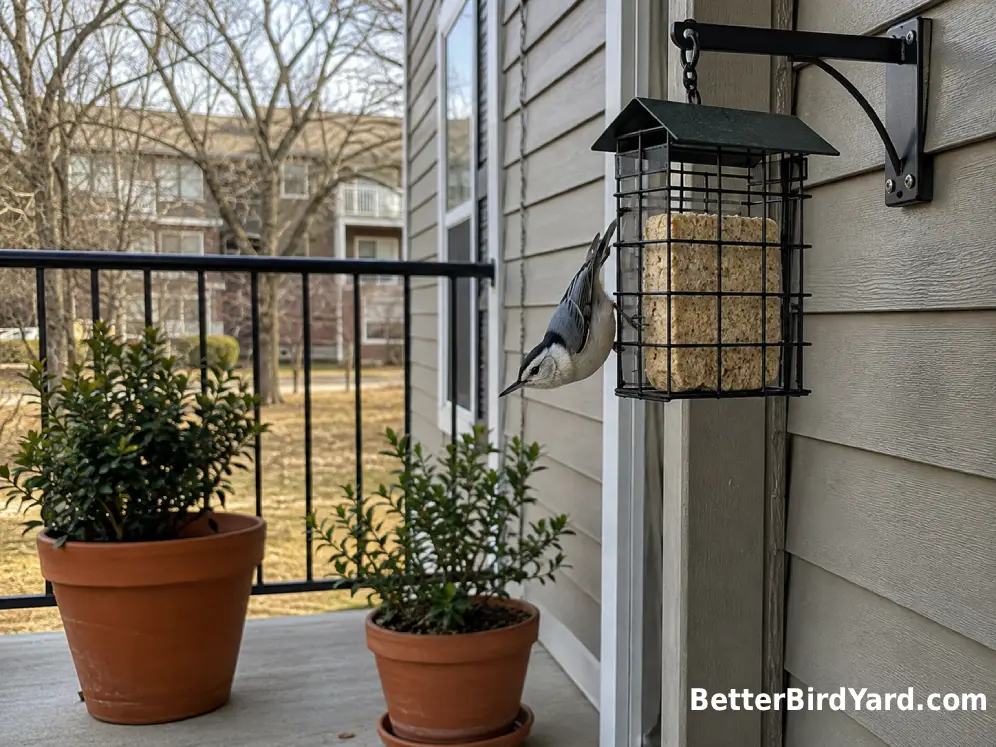
For most beginners, we would start with one securely latched metal suet cage or a simple tail-prop model. Place it in a window-safe location, keep it away from obvious squirrel launch points, and offer one firm commercial cake. Watch who visits before investing in additional defenses.
If starlings dominate, switch to a downward-facing design. If squirrels reach the feeder, correct the pole, baffle, or surrounding launch points before replacing the feeder. If large woodpeckers struggle to balance, add a longer tail prop or use a more stable mount. If food remains untouched, reduce the portion and give birds time to discover it rather than leaving the same cake outside indefinitely.
The best suet bird feeders are not necessarily the most elaborate. They are feeders that match the birds and constraints of the yard, remain firm and secure in local weather, and are simple enough for the owner to inspect and clean consistently.