Woodpecker Feeder Tips To Attract More Backyard Birds
A woodpecker suet feeder is one of the simplest ways to make your backyard feeding station more appealing to Downy, Hairy, Red-bellied, Northern Flicker, and sometimes Pileated Woodpeckers. The key is not just hanging any suet cage and hoping for the best. Woodpeckers are clinging birds, so feeder size, grip, placement, squirrel pressure, freshness, and nearby habitat all matter.
For most beginner and intermediate backyard bird watchers, the best starting point is a sturdy suet cage or tail-prop suet feeder placed where birds can approach from trees or shrubs but are not boxed in by cats, squirrels, or reflective windows. Suet is especially useful in cool weather because it offers high-energy food for insect-eating birds, but it can spoil or soften in heat, so maintenance matters. Cornell Lab’s Project FeederWatch notes that suet feeders are especially attractive to woodpeckers, nuthatches, chickadees, titmice, jays, and a few other feeder visitors.
This guide keeps the setup practical for ordinary US yards, small patios, rental spaces, and suburban neighborhoods where you want to enjoy feeding woodpeckers without creating avoidable risks for birds, pets, or your home.
The Quick Answer: Start With A Tail-Prop Suet Feeder
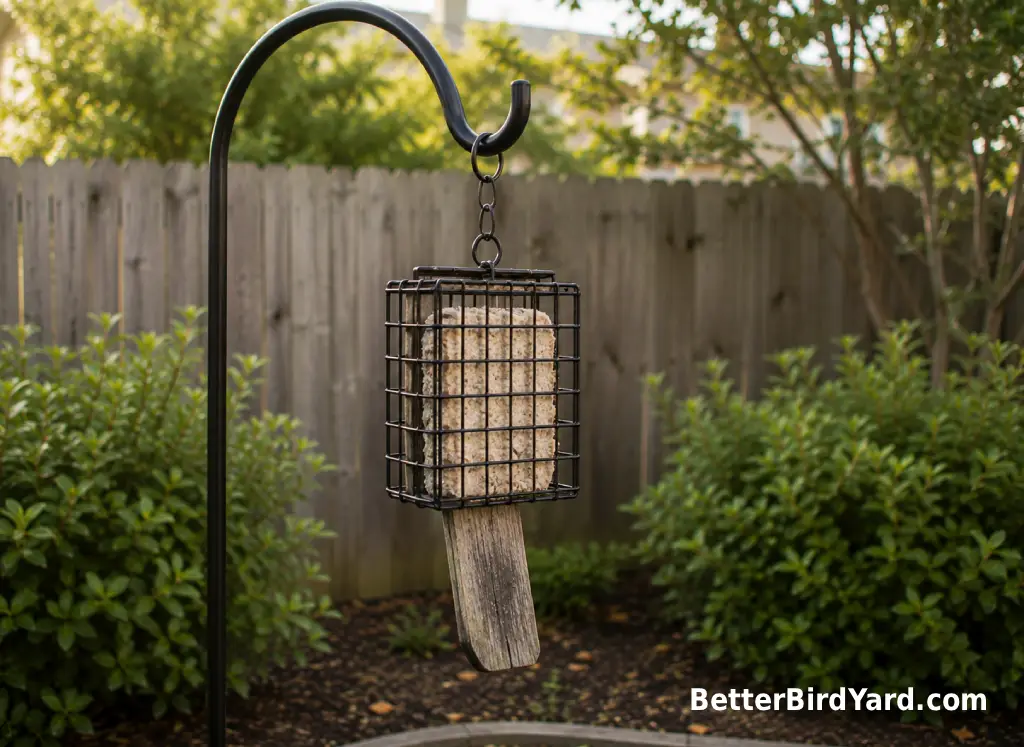
For a first woodpecker feeder, choose a metal suet cage with a tail prop, a secure latch, and easy-to-clean construction. A tail prop is the extended lower panel or backing board that gives larger woodpeckers a place to brace their stiff tail feathers while they cling and feed. Small Downy Woodpeckers can use basic cages, but Hairy, Red-bellied, and Pileated Woodpeckers are often more comfortable on a larger, more stable feeder.
If you only want one setup, keep it simple:
- Use a standard suet cake feeder with a tail prop.
- Hang it from a pole or shepherd hook with a squirrel baffle.
- Place it near trees or shrubs, but not where cats can hide directly below.
- Start with plain rendered suet or a nut-and-insect-style suet cake.
- Clean the feeder regularly and remove any spoiled or greasy suet.
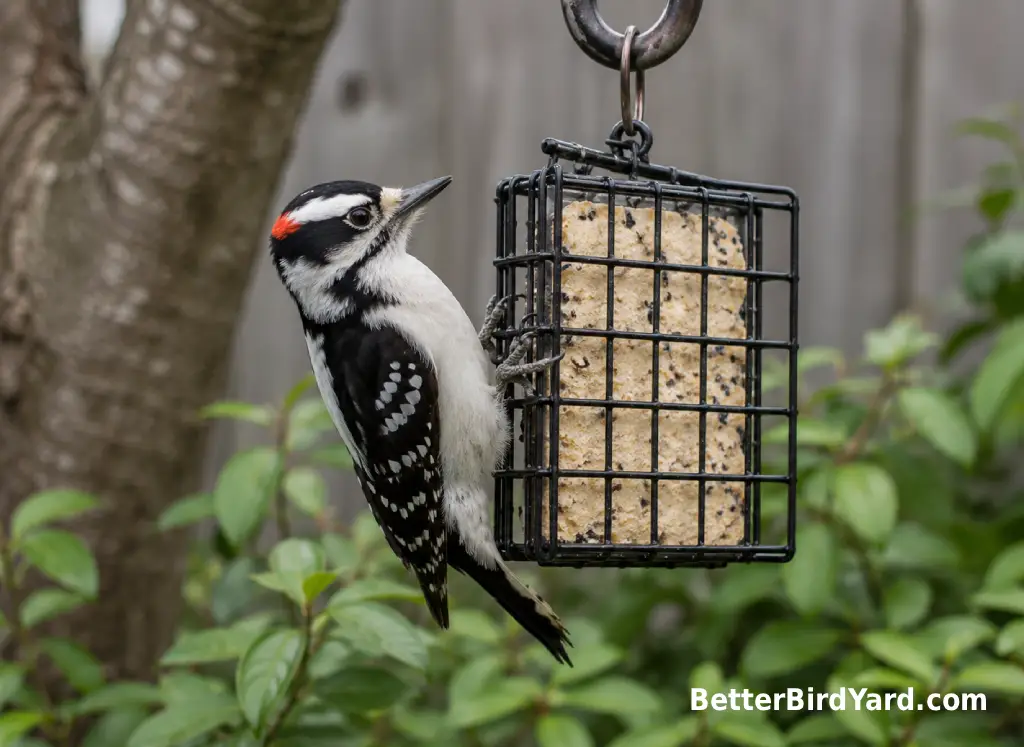
A small cage can work well for Downy Woodpeckers and chickadees. A larger tail-prop model is better if your goal includes a red-bellied woodpecker feeder or a pileated woodpecker suet feeder.
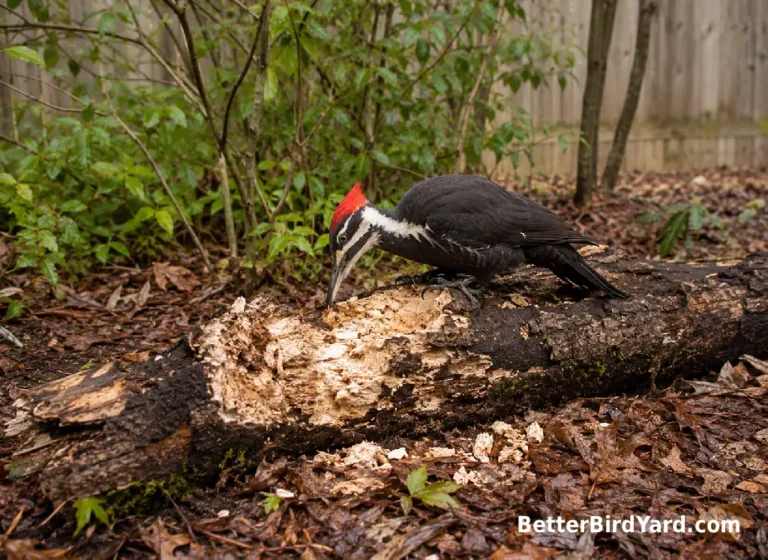
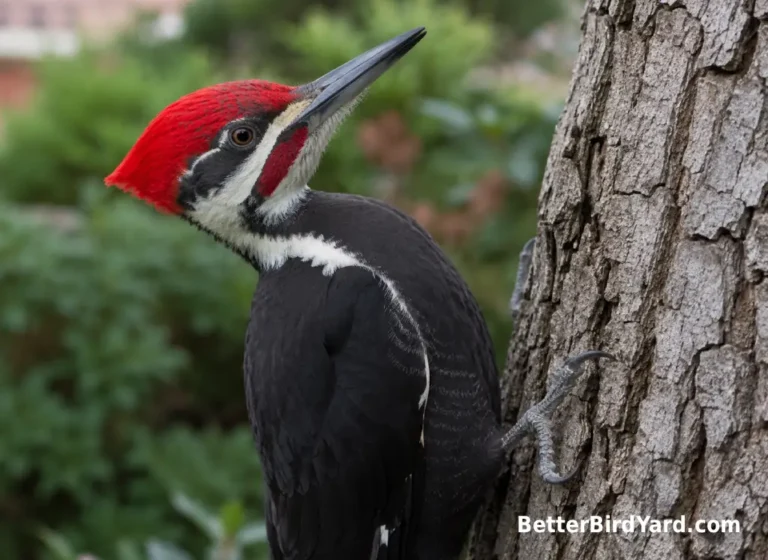
Pileated Woodpeckers are large, crow-sized forest birds, so they need more room and a stable landing surface if they visit at all. Cornell Lab notes that Pileated Woodpeckers sometimes visit backyard feeders, especially for suet, but they are strongly tied to mature woods, dead trees, and downed logs.
Why Suet Works So Well For Woodpeckers
Woodpeckers spend much of their natural feeding time probing bark, dead wood, branches, and logs for insects and larvae. Suet does not replace that natural diet, but it can be an appealing supplemental food because it is rich in fat and easy for clinging birds to peck from a cage.
Audubon describes suet as beef fat that attracts insect-eating birds such as woodpeckers, chickadees, nuthatches, titmice, and wrens, especially in cool weather. Audubon also cautions against offering traditional suet in hot weather because it can turn rancid and because dripping fat may affect feather function. Cornell Lab’s feeder guide gives similar practical guidance: suet feeders are commonly used in cooler temperatures, while raw suet can become rancid quickly above freezing and rendered suet can soften in high heat.
This is why a woodpecker bird feeder should be managed differently from a basic seed feeder. Seed can get wet and moldy. Suet can soften, spoil, attract squirrels, or become messy on feathers. Both need attention, but suet gives you a focused way to support birds that may not be very interested in a tube feeder full of finch seed.
In a typical suburban yard, you might see a Downy Woodpecker discover the suet first, followed by chickadees or nuthatches. Red-bellied Woodpeckers may become regular visitors if you live near wooded patches. Cornell Lab says Red-bellied Woodpeckers may be attracted with winter suet, peanuts, and sometimes sunflower seeds where suitable wooded habitat is nearby.
Choose The Right Woodpecker Feeder Style
The best bird feeder for woodpeckers depends on which birds are likely in your area, how much space you have, and how much squirrel pressure you deal with. A renter with a small patio may need a compact hanging cage. A homeowner near mature woods may want a larger tail-prop feeder. A patient bird watcher hoping for a Pileated Woodpecker needs a bigger, sturdier setup and realistic expectations.
| Feeder Style | Best For | Watch-Out |
|---|---|---|
| Basic Suet Cage | Downy Woodpeckers, chickadees, nuthatches, small spaces | Can feel cramped for larger woodpeckers |
| Tail-Prop Suet Feeder | Hairy, Red-bellied, and larger woodpeckers | Needs a strong hook or pole because larger birds land with force |
| Upside-Down Suet Feeder | Woodpeckers and nuthatches where starlings dominate | Some woodpeckers may need time to learn it |
| Suet Plug Log Feeder | Natural-looking feeding and clinging behavior | Wood can be harder to sanitize than metal |
| Large Pileated Feeder | Yards near mature woods where Pileated Woodpeckers already occur | Not useful if habitat is wrong or the feeder is too flimsy |
Cornell Lab notes that suet feeders commonly come as wire cages for suet blocks or log-style feeders where suet or peanut butter can be tucked into holes or crevices. It also notes that easy cleaning, durability, and squirrel resistance are important feeder-selection traits.
For most BetterBirdYard readers, we would start with a metal tail-prop feeder instead of a decorative wood feeder. Metal cages are usually easier to scrub, less likely to hold residue, and less inviting to chewing squirrels. If you love the look of suet plugs for a woodpecker feeder, use them during cool weather and treat the log as a short-term feeding tool, not a forever-clean surface.
How To Attract Pileated Woodpeckers Without Overpromising
A pileated woodpecker feeder is not a magic invitation. These birds are large, wide-ranging, and strongly associated with mature wooded habitat. If your home backs up to older woods, a wooded ravine, a large park, or a property with dead trees and fallen logs, you have a better chance than someone on a treeless balcony in the middle of a dense urban block.
Cornell Lab describes Pileated Woodpeckers as birds of mature forest with dead trees and downed logs, where they search for carpenter ants and leave distinctive rectangular excavations. Cornell also notes that they sometimes visit backyard feeders for suet and that dead or dying trees and snags may attract them for foraging, roosting, or nesting when those trees can be left safely.
If you want to know how to attract pileated woodpeckers to your yard, think habitat first and feeder second:
- Use a large tail-prop suet feeder with enough room for a crow-sized bird to brace.
- Place it near mature trees or a wooded edge, not in a fully exposed open lawn.
- Offer suet in cool weather and keep it fresh.
- Leave safe snags, dead limbs, and downed logs only when they do not threaten people, pets, homes, fences, or power lines.
- Add native trees and shrubs over time instead of relying only on feeders.
Check local rules, HOA expectations, and arborist safety advice before leaving dead wood standing. A snag that is wonderful for wildlife can still be unsafe if it could fall on a walkway, driveway, neighbor’s fence, or structure.
Where To Hang A Woodpecker Suet Feeder
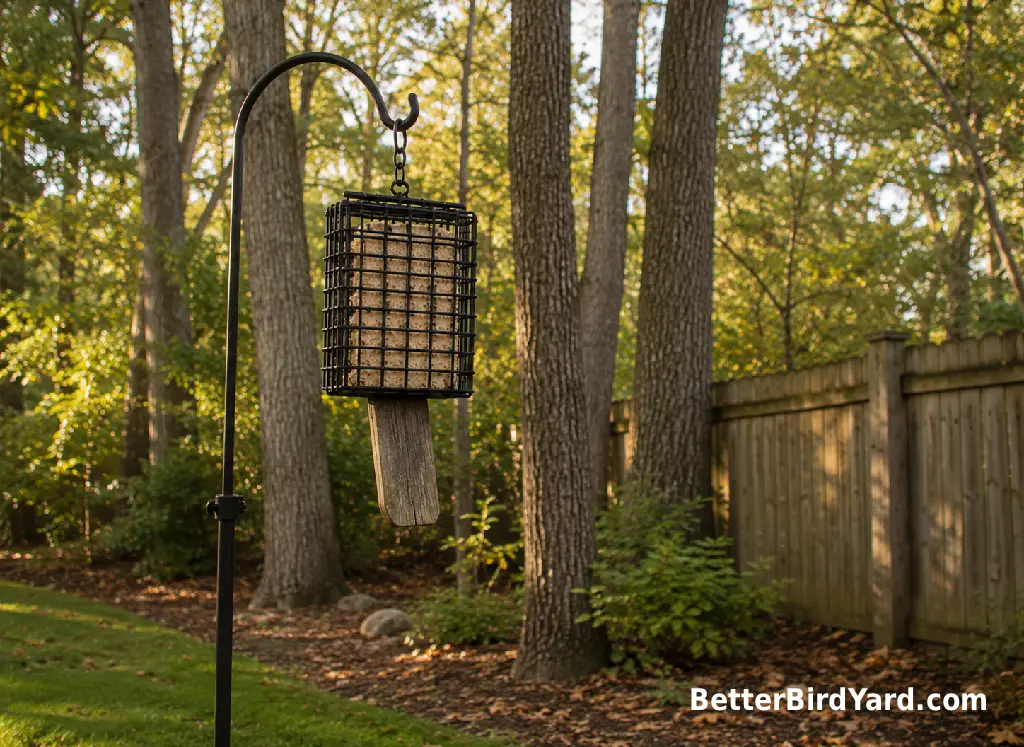
Placement affects which birds visit, how safe they are, and how easy the feeder is to maintain. A good bird feeder for woodpeckers should feel close enough to cover that birds can approach confidently, but open enough that a cat cannot hide directly underneath. It should also be reachable for cleaning. A feeder that requires a ladder every time you refill it will not stay clean for long.
Project FeederWatch recommends reducing bird-window collision risk by helping birds see glass as a barrier, including outside window markings spaced no more than 2 inches apart. It also strongly recommends keeping cats indoors because feeder birds can be easy prey.
A practical setup for many yards is:
- Hang the suet feeder from a pole with a baffle, not directly from a low deck rail where squirrels can reach it easily.
- Keep nearby shrubs or trees available as approach cover, but avoid dense hiding spots directly below the feeder.
- Watch nearby windows for reflections of sky or vegetation and add outside window treatments if strikes are a concern.
- Keep the feeder where you can remove it quickly during heat, heavy rain, raccoon visits, or signs of sick birds.
What To Feed Woodpeckers Safely
The phrase woodpecker bird feed usually means suet first, then a few supporting foods such as unsalted peanuts or sunflower seed, depending on the species. Red-bellied Woodpeckers may visit feeders with winter suet, peanuts, and sometimes sunflower seed if wooded patches are nearby. Pileated Woodpeckers are more specialized around mature wooded habitat, so suet may tempt them only where they already occur nearby.
Good feeder choices include:
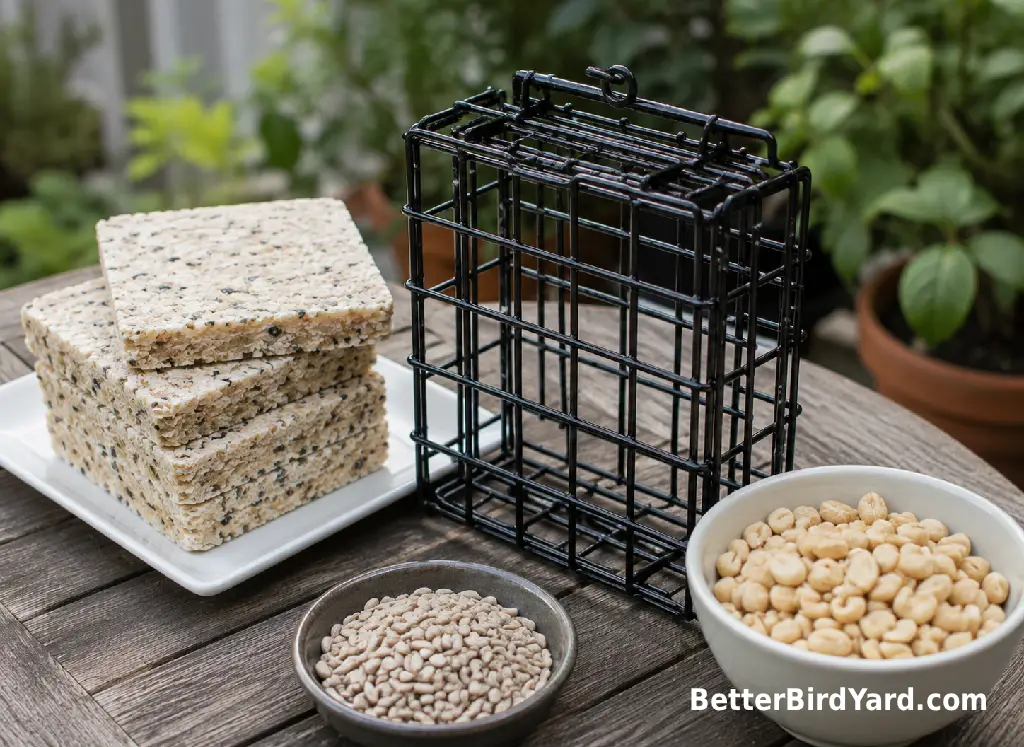
- Plain rendered suet cakes in cool weather.
- Suet cakes with nuts, insects, or simple seed blends.
- Unsalted shelled peanuts in a suitable peanut feeder.
- Black oil sunflower seed or sunflower hearts in a separate feeder.
- Suet plugs used in a log feeder during cool conditions.
Avoid moldy seed, stale nuts, rancid suet, salty foods, bread, greasy table scraps, and heavily processed snacks. Audubon warns that damp seed may grow mold and that suet can turn rancid in hot weather. Cornell Lab also cautions that moldy or spoiled food is unhealthy for birds and can attract rodents.
Hot pepper suet is sometimes sold as a squirrel deterrent. Some backyard birders use it, but we prefer starting with physical squirrel control first: a baffled pole, better placement, and smaller amounts of fresh food. If a product makes you uncomfortable, skip it. Birds do not need specialty suet to benefit from a clean, simple feeder.
Cleaning, Freshness, And Disease-Safe Habits
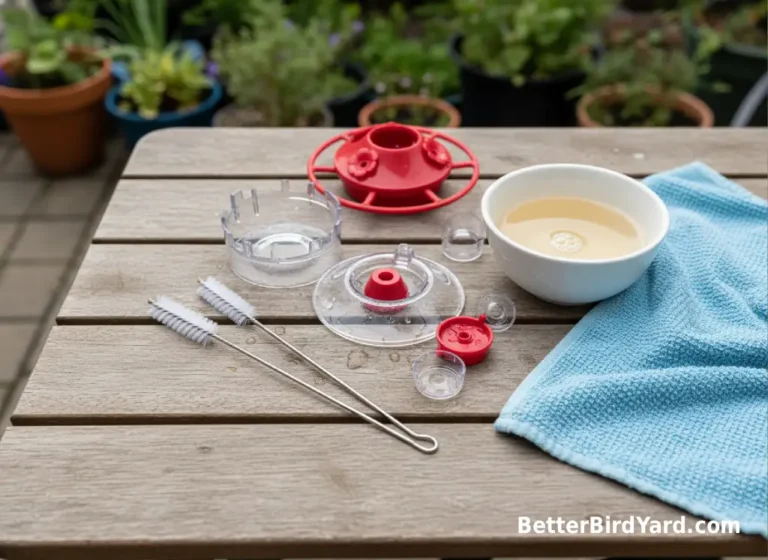
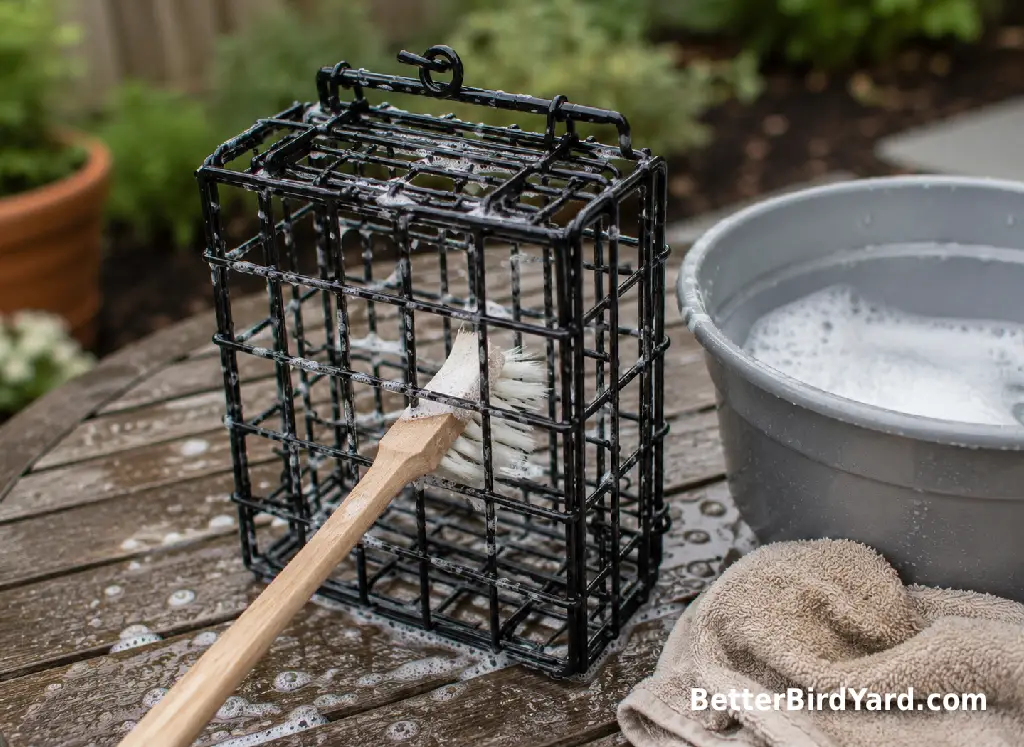
Feeder care is part of feeding woodpeckers responsibly. Suet residue, droppings, softened fat, old seed bits, and wet debris can build up around a feeder. Project FeederWatch recommends cleaning seed or suet feeders regularly, such as every week or two, and more often during heavy use or wet weather. The same guidance says to take feeders apart, scrub debris, wash thoroughly with warm water and dish soap, rinse well, and let feeders dry completely before refilling.
Use these simple triggers:
- If suet smells sour, oily, or rancid, throw it away.
- If suet is melting, dripping, or smearing on feathers, remove it.
- If the feeder feels greasy or has stuck-on debris, clean it before refilling.
- If the ground below the feeder collects crumbs or hulls, rake or sweep it.
- If you see birds that appear lethargic, fluffed up, crusty-eyed, injured, or unusually easy to approach, pause and reassess.
Do not try to diagnose or treat a wild bird at your feeder. Project FeederWatch says only veterinarians or federally licensed wildlife rehabilitators can legally treat wild birds, and it recommends removing feeders used by a sick bird for a couple of weeks while cleaning the feeders and feeder area thoroughly. During disease advisories or unusual local bird mortality events, follow your state wildlife agency’s guidance.
Squirrels, Starlings, And Other Feeder Problems
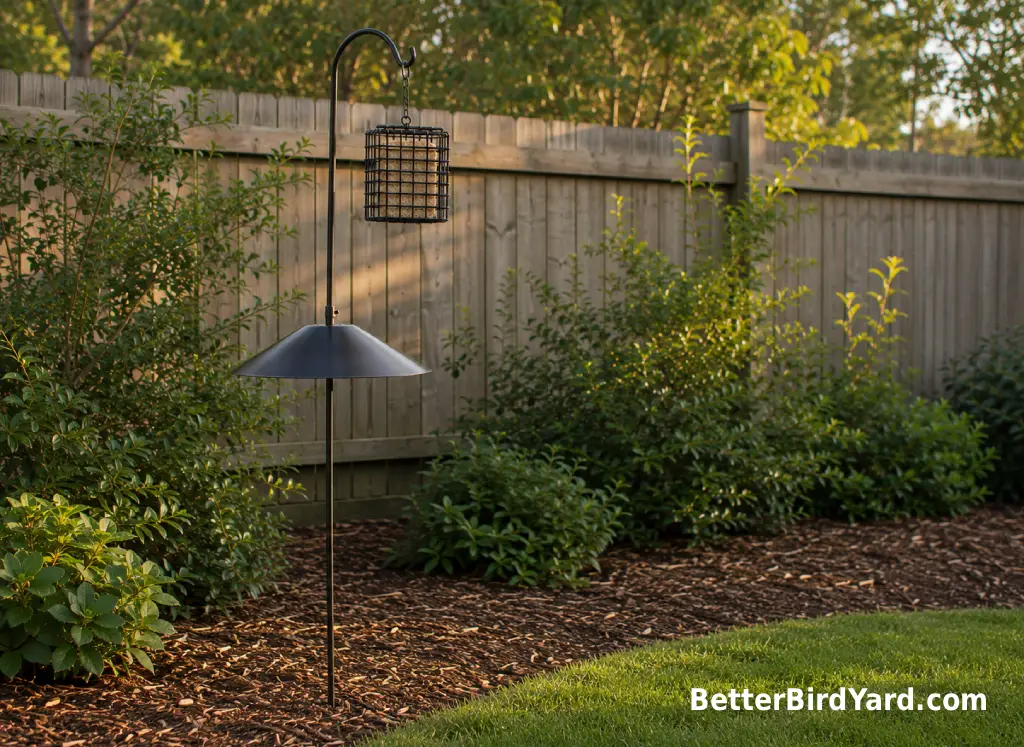
A squirrel proof bird feeder for woodpeckers is really a squirrel-resistant setup. Squirrels are persistent, and no feeder is perfect in every yard. The most reliable first step is usually not a fancy cage; it is placement. Cornell Lab recommends using squirrel baffles on feeder supports and choosing feeder construction with squirrel resistance in mind.
For suet feeders, try these fixes before giving up:
- Use a pole-mounted feeder with a properly placed baffle.
- Avoid hanging suet from a tree limb that squirrels can reach from above.
- Offer smaller amounts so leftover suet does not sit out for days.
- Bring feeders in overnight if raccoons or bears are a concern in your area.
- Use an upside-down suet feeder if starlings or jays are dominating the cake.
Upside-down suet feeders can favor agile clinging birds such as woodpeckers and nuthatches while making access harder for some larger birds. Cornell Lab specifically notes downward-facing suet designs as a way to limit starlings or jays at suet feeders.
If you live where bears are active, check your state wildlife agency’s recommendations before feeding birds. In some places and seasons, bird feeders can attract bears or other nuisance wildlife, and the safest answer may be to take feeders down temporarily.
Common Mistakes To Avoid
The most common woodpecker feeder mistakes are usually small, fixable habits rather than big failures. A feeder is too low. The suet sits out too long in heat. The cage gets refilled without being cleaned. The whole station becomes a squirrel gym. Or the reader expects a Pileated Woodpecker in a yard with no mature trees nearby.
A better approach is to adjust one thing at a time:
- Do not leave greasy or rancid suet out because birds used to like that spot.
- Do not keep adding fresh suet on top of old residue.
- Do not hang a feeder where cats can crouch below it.
- Do not assume a small cage is enough for larger woodpeckers.
- Do not expect guaranteed species visits from any feeder, even a good one.
- Do not ignore window reflections near a busy feeding station.
It is also easy to overfeed. A single suet cake can last a while if only one or two birds are visiting. If the cake sits untouched, move the feeder, reduce the amount offered, or take a break until cooler weather. Fresh, modest feeding is usually safer than keeping a full feeder outside just because it looks inviting.
Small-Yard, Patio, And Seasonal Tips
You do not need a large property to offer a suet feeder for woodpeckers, but you do need to be realistic. A balcony or small patio may attract Downy Woodpeckers, chickadees, or nuthatches if those birds already move through the neighborhood. A Pileated Woodpecker is unlikely to become a regular visitor unless suitable mature wooded habitat is close by.
For small spaces, use a compact cage or small tail-prop feeder that you can remove and clean easily. Keep the area below it swept. Avoid placing suet over outdoor furniture, railings, shared walkways, or places where crumbs could bother neighbors or attract rodents. Renters should check lease terms, HOA rules, and local ordinances before adding feeders, especially on balconies or shared buildings.
Seasonally, suet is usually easiest to manage in fall, winter, and cool spring weather. In summer heat, switch to a smaller amount, a more heat-stable rendered product, or pause suet entirely if it softens or spoils. Cornell Lab notes that rendered suet sold as bird food may remain hard up to about 90°F, but it can soften above that and should be stopped during hot months if it becomes messy.
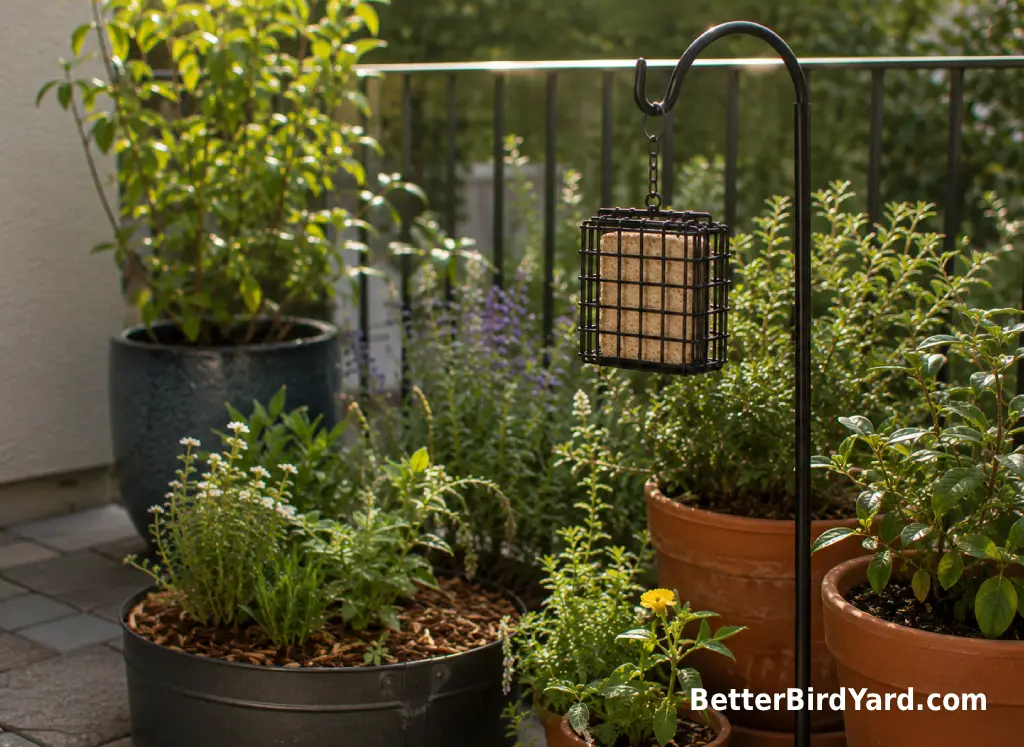
Native plants can also do quiet work in the background. Even a few container shrubs or native flowers can support insects, shade, and cover better than a bare patio. Project FeederWatch points out that native plantings can support birds and insect populations even in small container gardens or window boxes.
A Responsible Woodpecker Feeder Starts Simple
The best woodpecker suet feeder is not the fanciest one. It is the feeder you can place safely, clean regularly, protect from squirrels, and keep stocked with fresh suet during appropriate weather. For most yards, that means a metal tail-prop suet feeder on a baffled pole, near trees or shrubs but away from cat cover and risky window reflections.
If your main goal is feeding woodpeckers, focus on the birds most likely in your neighborhood first. Downy and Hairy Woodpeckers may use smaller suet feeders. Red-bellied Woodpeckers may respond well where wooded patches are nearby. Pileated Woodpeckers require more habitat, more feeder space, and more patience. A feeder can help, but mature trees, dead wood where safe, native plantings, and low-disturbance yard habits often matter just as much.
Keep expectations calm and bird-safe. Watch what visits. Clean before there is a problem. Remove spoiled suet quickly. Pause feeding if you cannot keep up with maintenance or if local wildlife guidance recommends it. That kind of steady, responsible setup is what turns a simple suet cage into a better backyard bird station.