What Do Woodpeckers Eat? A Practical Backyard Diet Guide
Woodpeckers eat far more than bird seed. In the wild, their diet usually includes insects and larvae found in bark, dead wood, branches, plant stems, and sometimes the ground. Many species also eat fruit, berries, acorns, nuts, sap, and other plant foods. At backyard feeders, woodpeckers may visit suet, peanuts, sunflower seed, fruit, and sturdy platform or suet feeders, depending on the species and season.
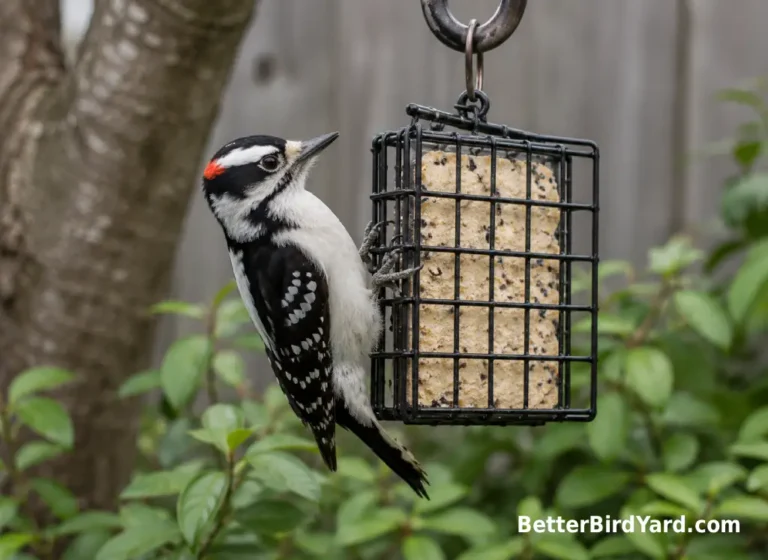
The simple answer is that woodpeckers are flexible foragers. A Downy Woodpecker on a small patio suet cage is not eating exactly like a Pileated Woodpecker opening a dead log for carpenter ants, and a Gila Woodpecker in the Southwest has different natural foods than a Red-bellied Woodpecker in an eastern suburb. Cornell Lab and Audubon species accounts describe this same pattern: insects matter a lot, but many woodpeckers also use plant foods and feeders when available.
For backyard bird watchers, the best approach is not to replace a woodpecker’s natural diet. It is to support it with clean supplemental food, safe feeder placement, native plants where possible, and a yard that still has some real insect life.
The Quick Answer: What Woodpeckers Eat
Most woodpeckers eat a mix of animal and plant foods. The animal side often includes ants, beetles, beetle larvae, termites, caterpillars, aphids, scale insects, grasshoppers, cicadas, and other insects. Some species probe into bark, some chip into dead wood, some glean from branches, and a few catch insects in the air or forage on the ground.
The plant side of the diet can include acorns, beechnuts, pecans, wild berries, cultivated fruit, cactus fruit, seeds, and tree sap. At feeders, woodpeckers are most often interested in high-energy foods that resemble their natural diet in texture or nutrition: suet, peanuts, sunflower seed, and sometimes fruit or corn.
In a backyard, that means the most useful question is not only what does a woodpecker eat, but what can you offer without creating a dirty, crowded, or unsafe feeding station. A clean suet feeder in cool weather, a small amount of unsalted peanuts, and native fruiting shrubs will usually do more good than a big, messy seed mix that sits wet for days.
Why Insects Matter So Much
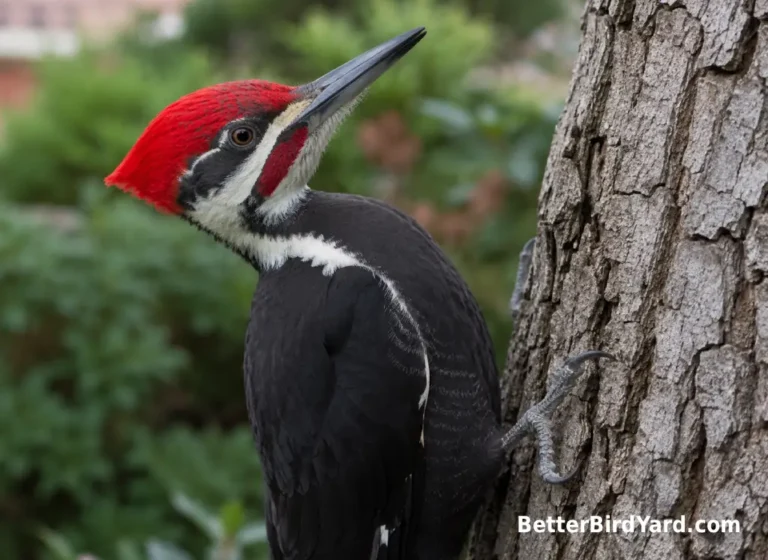
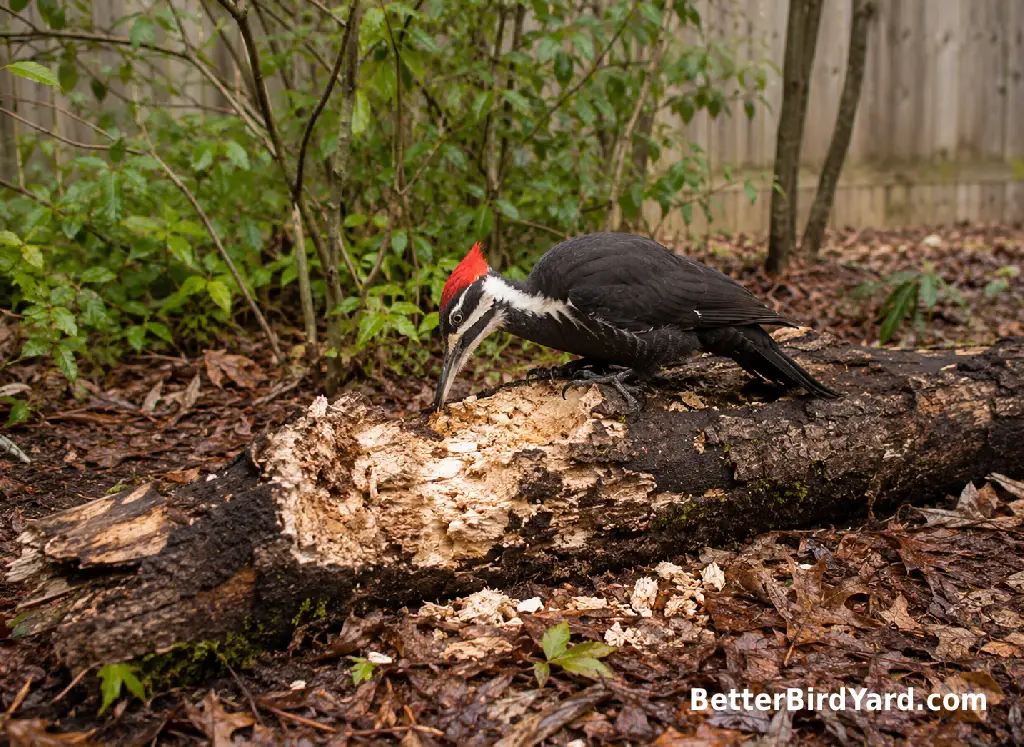
Insects are the backbone of many woodpecker diets. Pileated Woodpeckers are closely tied to carpenter ants and other insects in wood. Downy Woodpeckers eat many insects and larvae on bark, branches, and plant stems. Gila Woodpeckers take a wide range of insects in desert vegetation, along with fruit and other foods.
This is why woodpeckers spend so much time tapping, probing, flaking bark, and hitching along trunks. They are not pecking randomly. They are searching for hidden food, testing bark, listening and feeling for hollow spots, and using their bills and tongues to reach prey most birds cannot access.
For a bird-friendly yard, that means insect life is not automatically a problem to eliminate. A yard treated heavily with broad insecticides may look tidy, but it can also remove natural food for woodpeckers and many other birds. In a small suburban yard or rental patio, you do not need a wild forest. You can still help by planting a few region-appropriate native shrubs, leaving seed heads where practical, and keeping any safe dead branch or snag only if it does not threaten people, pets, buildings, or utility lines.
A common beginner mistake is assuming woodpeckers are only interested in tree-damaging insects. They do eat wood-boring larvae and ants, but they also eat many insects from bark surfaces, leaves, stems, fruiting plants, and the ground. The more natural foraging texture your yard has, the more useful it becomes.
Do Woodpeckers Eat Bird Seed?
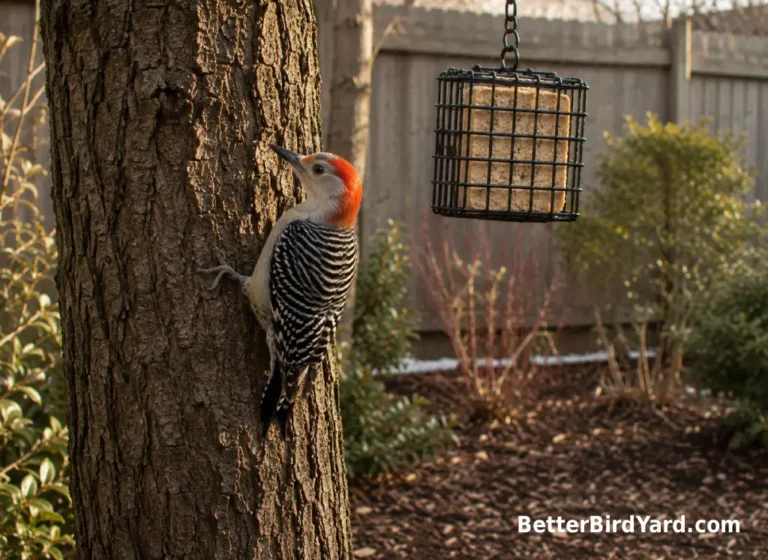
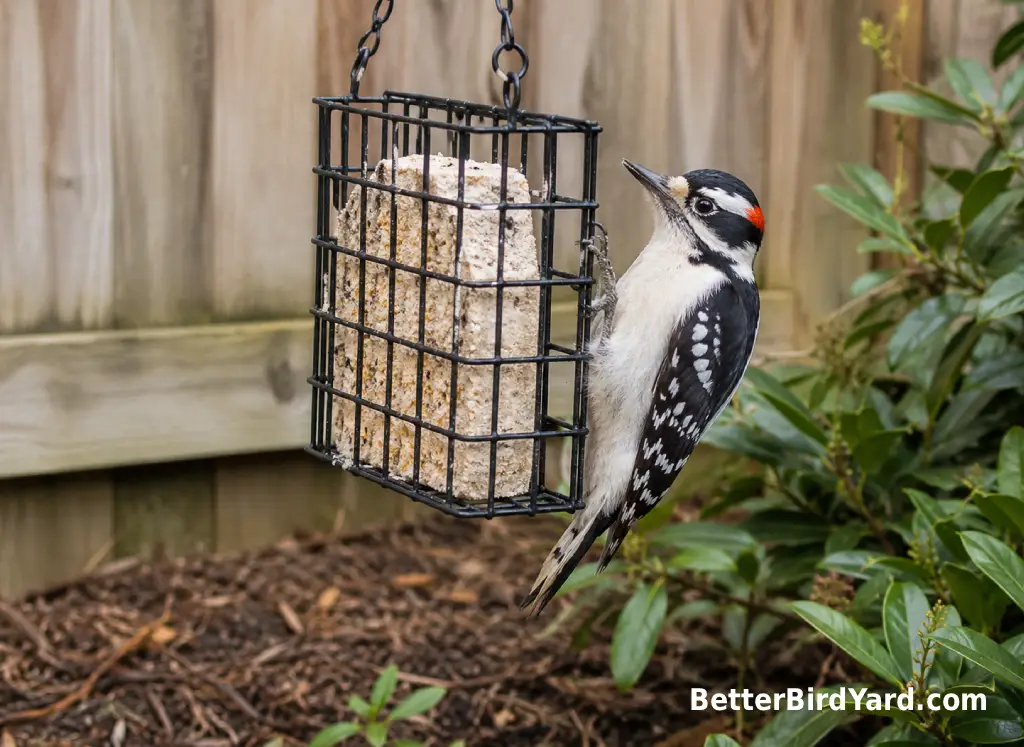
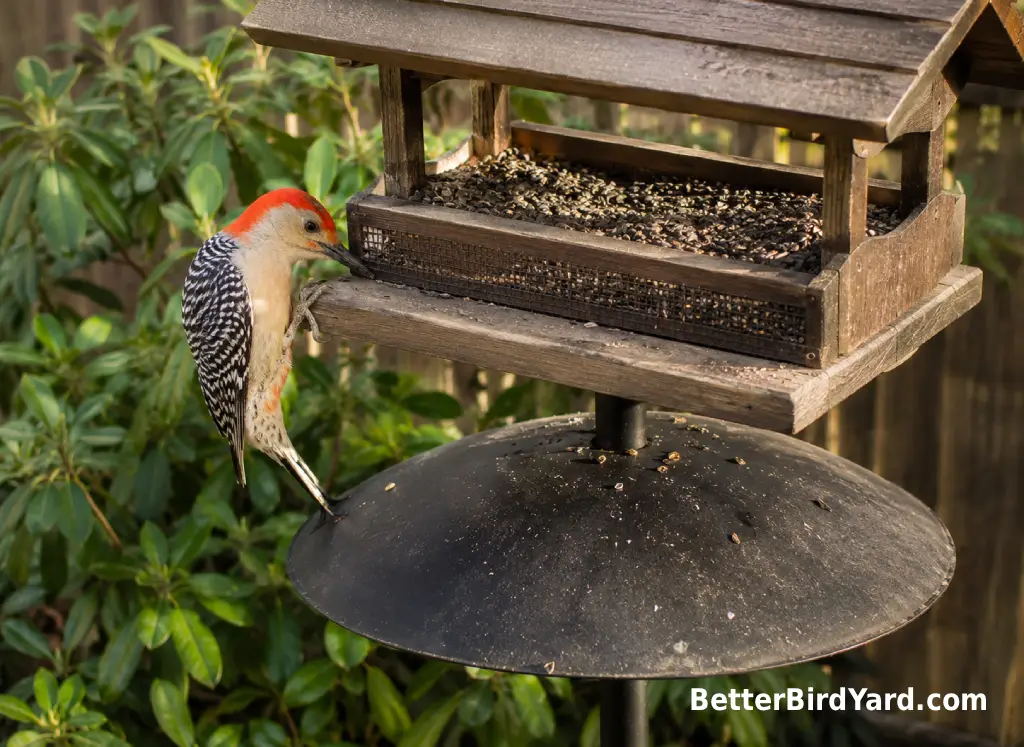
Yes, woodpeckers do eat bird seed, but seed is usually supplemental rather than the center of their natural diet. Downy Woodpeckers are regular feeder visitors in many neighborhoods and may eat suet, black oil sunflower seed, millet, and peanuts. Red-bellied Woodpeckers may take seeds and nuts, especially when plant foods are important in their seasonal diet. Cornell’s feeder guidance also notes that sunflower seed attracts a wide variety of birds, while peanuts are popular with woodpeckers and several other feeder species.
For most backyards, the better woodpecker feeder foods are:
- Suet cakes or suet plugs in a sturdy cage, especially in cool weather.
- Unsalted peanuts, served dry and in small amounts.
- Black oil sunflower seed or sunflower chips, especially if other birds will share the feeder.
- Fruit in moderation, such as apple or orange pieces, removed before it spoils.
- Cracked corn only with extra caution, because it can attract unwanted wildlife and must stay dry.
Skip bread, salty snacks, greasy kitchen scraps, moldy seed, rancid suet, and any food that has become wet, clumped, sour-smelling, or dirty. A woodpecker feeder should look boringly clean. That is a compliment.
What Woodpeckers Eat In Winter
In winter, woodpeckers keep working natural food sources. They may dig into dead wood for ants, beetle larvae, and other insects. They may also use acorns, nuts, stored food, berries, fruit, and seeds, depending on the species and what is available locally. Pileated Woodpeckers still rely heavily on carpenter ants and other insects, while Red-headed Woodpeckers may use acorns, beechnuts, fruits, seeds, and winter suet when they visit feeders.
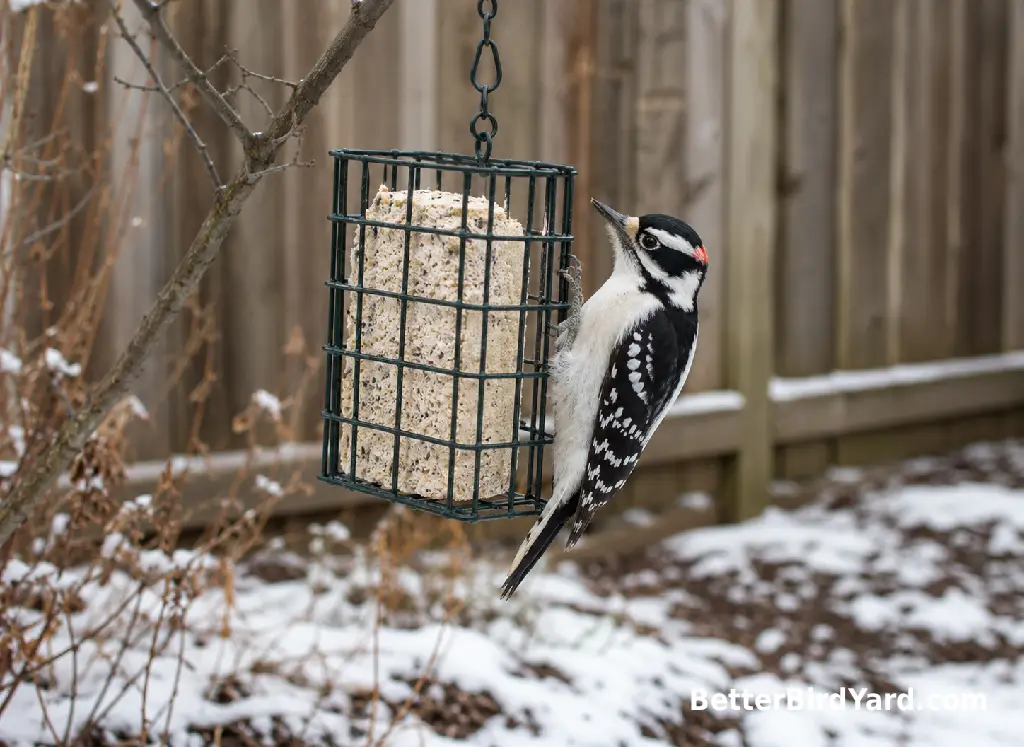
Backyard feeding can be helpful in cold weather, but it should stay clean and manageable. Suet is often the most practical winter woodpecker food because it is high in fat, easy to serve in a cage, and less likely to freeze into an unusable block than wet fruit or seed. Peanuts and sunflower seed can also help, as long as they stay dry.
A simple winter setup for beginners is one suet cage with a tail prop, one small feeder with sunflower or peanuts, and a nearby shrub or tree for cover. Refill only what birds are actually eating. If seed sits untouched after snow or rain, empty it before it molds. Cornell’s feeder-cleaning guidance recommends cleaning feeders about every two weeks, and more often during wet weather, heavy use, local disease reports, or if you see sick birds.
Do not panic if you need to take feeders down for cleaning, travel, storms, or wildlife problems. Woodpeckers are wild foragers, not pets, and they continue to use natural food sources. A clean pause is better than keeping a dirty feeder open.
Species-Specific Woodpecker Diet Guide
Different woodpeckers overlap in diet, but they do not all feed the same way. The table below focuses on common reader questions about Downy, Pileated, Red-bellied, Red-headed, and Gila Woodpeckers using Cornell Lab and Audubon species accounts as the main reference points.
| Woodpecker Species | Natural Foods | Backyard Foods They May Use | Beginner Note |
|---|---|---|---|
| Downy Woodpecker | Mostly insects, including beetle larvae, ants, caterpillars, and other bark or stem insects; also berries, acorns, and grains. | Suet, black oil sunflower seed, peanuts, and sometimes other feeder foods. | Often the easiest woodpecker to attract in suburbs and small yards where it occurs. |
| Pileated Woodpecker | Carpenter ants, other ants, wood-boring beetle larvae, termites, other insects, wild fruits, berries, and nuts. | Large suet feeders and sometimes peanuts or nuts. | Needs larger trees or wooded habitat nearby; a tiny patio feeder alone may not bring one in. |
| Red-bellied Woodpecker | Insects, acorns, other nuts, fruits, seeds, sap, and occasional animal foods. | Suet, peanuts, sunflower seed, and fruit in moderation. | Despite the name, the red on the head is usually easier to notice than the faint red belly. |
| Red-headed Woodpecker | Insects, acorns, beechnuts, pecans, seeds, corn, and many fruits; known for storing food. | Winter suet, seeds, corn, nuts, and fruit where the species occurs. | More habitat-specific than Downy or Red-bellied Woodpeckers, so feeder visits vary a lot by location. |
| Gila Woodpecker | Insects, berries, cactus fruit, and other desert foods; also a range of insects and occasional small vertebrates. | Suet, corn, fruits, nuts, and pecans at feeding stations. | A Southwestern species tied to desert habitats, including saguaro country and desert-edge neighborhoods. |
This species-by-species view helps explain why one neighbor may have Downy Woodpeckers on suet every morning while another sees Red-bellied Woodpeckers taking peanuts, or no woodpeckers at all. Region, habitat, mature trees, local insect supply, weather, and feeder cleanliness all matter.
How To Feed Woodpeckers Without Creating Problems
Woodpecker feeding works best when it is small, clean, and easy to maintain. A single suet feeder that you can reach comfortably is better than a complicated feeding station that becomes greasy, moldy, or crowded.
Start with these practical choices:
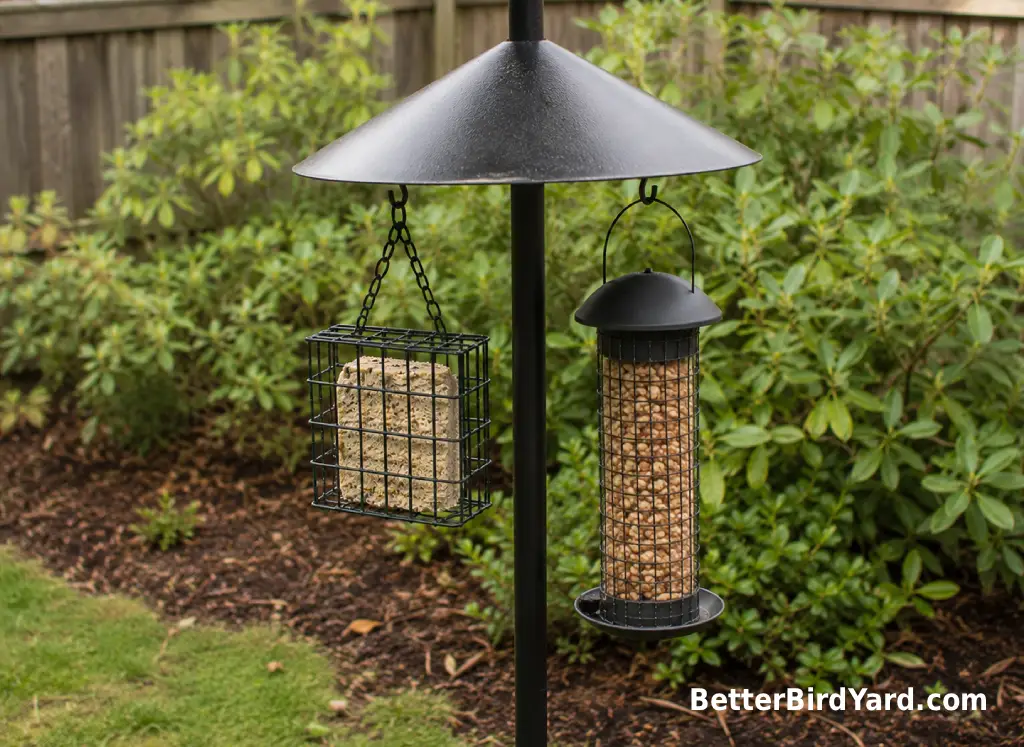
- Use a sturdy suet cage, preferably one with a tail prop for larger woodpeckers.
- Offer unsalted peanuts in a covered mesh or platform feeder, and keep them dry.
- Use black oil sunflower seed if you want one seed that many birds can share.
- Place feeders where you can clean below them and watch for spilled food.
- Use a squirrel baffle if squirrels are taking over or scattering food.
- Remove food that smells sour, looks moldy, feels wet, or is no longer being eaten.
This is one of those details that matters more than beginners expect: woodpeckers may like high-fat foods, but fat spoils. Suet can become soft or rancid in warm weather. Peanuts and corn must stay dry. Fruit should be offered in small pieces and removed before it ferments or attracts insects, rodents, raccoons, or other unwanted visitors.
Editorial note: In a small yard, we would keep the woodpecker setup very simple. One clean suet cage in cool weather, a modest amount of peanuts or sunflower, and a native shrub nearby is enough to learn what your local birds actually use.
If you notice birds that appear sick, unusually weak, unable to fly normally, or gathered around dirty food, do not try to diagnose or handle them casually. Take feeders down, discard contaminated food, clean feeders and the area below, and check your state wildlife agency or a licensed wildlife rehabilitator for local guidance.
Common Mistakes To Avoid
The most common woodpecker-feeding mistakes are usually maintenance mistakes, not bird identification mistakes.
- Leaving suet out after it softens, melts, smells off, or stops being eaten.
- Using salted peanuts, flavored nuts, greasy scraps, bread, or processed snack foods.
- Putting out too much fruit or corn and attracting rodents, raccoons, or other nuisance wildlife.
- Letting seed hulls, droppings, and spilled food build up under feeders.
- Expecting a feeder to attract a species that does not live nearby or lacks suitable habitat around the yard.
- Ignoring window reflection, outdoor cats, and predator cover near feeding areas.
A clean feeder is part of the food. Cornell’s feeder guidance warns that wet seed can spoil, mold, or sprout, and its feeder-cleaning guidance notes that moldy or decomposing seeds and hulls can make birds sick.
When in doubt, simplify. Put out less food, clean more often, and watch what actually happens over a week or two. If birds empty a suet cake quickly in cool weather, you can keep using it. If a peanut feeder stays full through rain, empty it, clean it, and try a smaller amount next time.
A Simple Woodpecker-Friendly Yard Plan
You do not need a large property to support woodpeckers responsibly. What you need is a mix of natural food, safe supplemental food, and steady maintenance.
- Start with habitat: keep mature trees where safe, plant region-appropriate native shrubs, and avoid unnecessary pesticide use around bird feeding and planting areas.
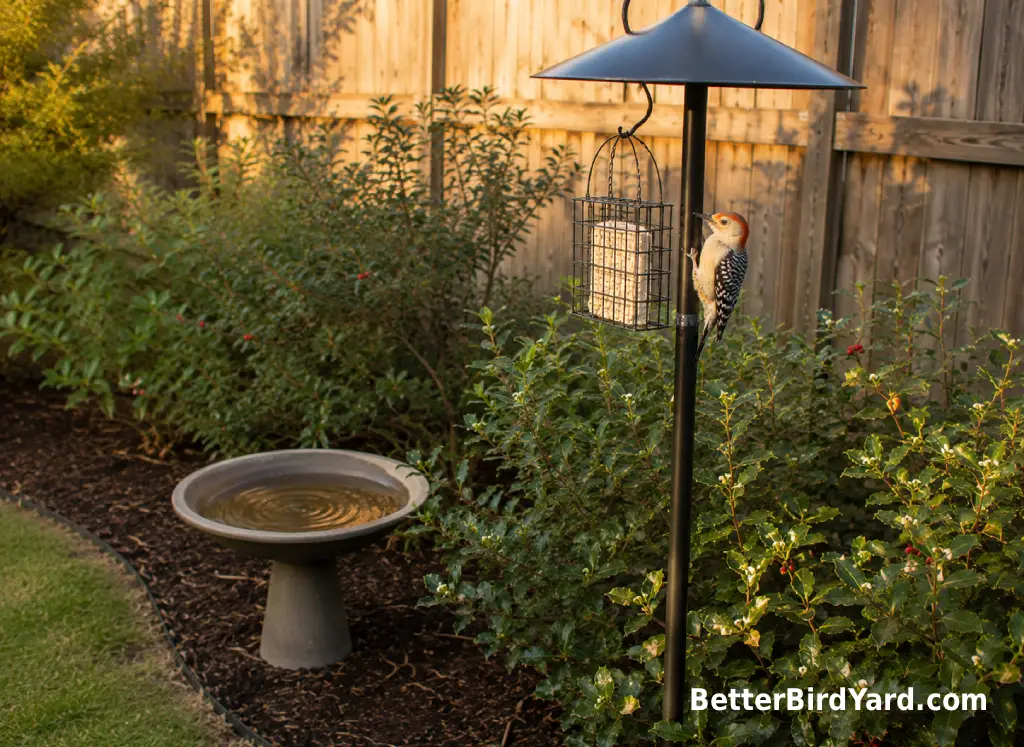
- Add one feeder: choose a suet cage or peanut feeder that comes apart easily for cleaning.
- Keep food fresh: offer small amounts, especially with peanuts, fruit, corn, and sunflower chips.
- Watch for patterns: note which species visit, what they eat, and when food starts to sit too long.
- Adjust by season: use suet more confidently in cool weather, and be more cautious with fat-based foods in heat.
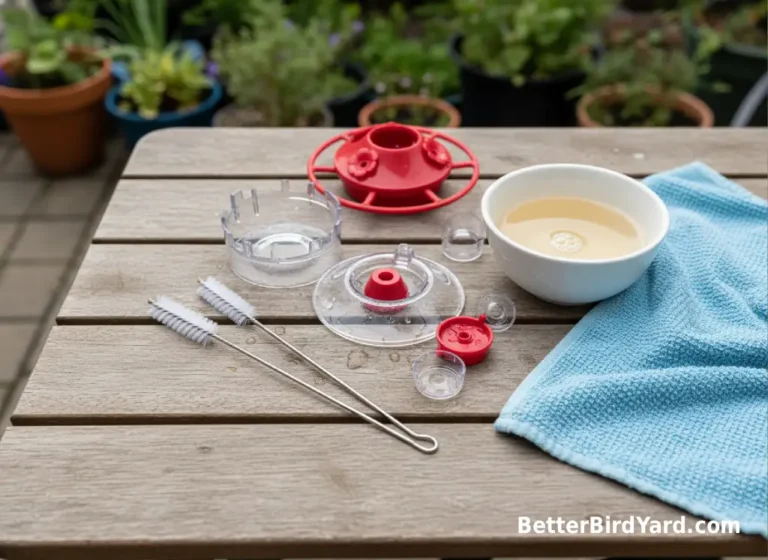
- Clean on a schedule: wash feeders regularly and clean sooner after rain, heavy use, spoiled food, or sick-bird concerns.
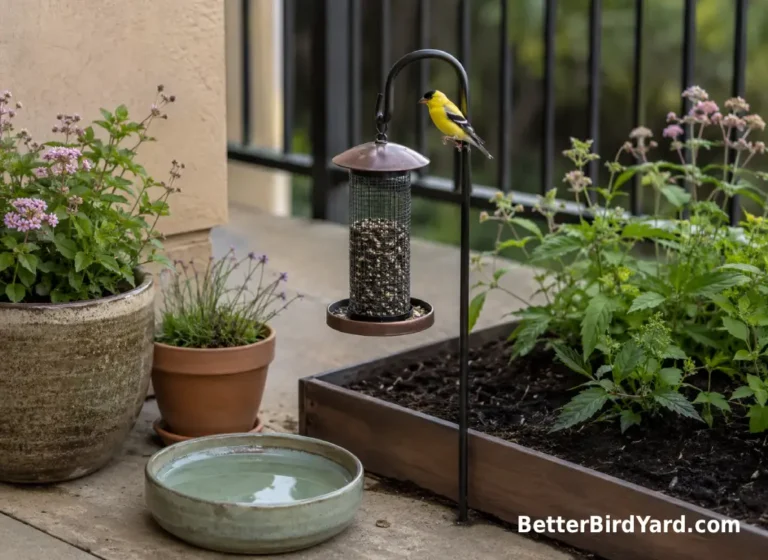
For small patios and rental spaces, a single hanging suet feeder may be the easiest place to begin. Choose a spot where you can sweep below it, keep food away from doors and trash areas, and avoid creating a mess for neighbors. If your building, HOA, city, county, or state has rules about feeding wildlife, follow those local requirements.
If you want to build more natural food into the yard, consider oaks, serviceberry, dogwood, elderberry, sumac, native vines, or other native plants recommended by your local extension service or native plant society. The right choices vary by region, but the principle is steady across the country: native plants can support insects, fruit, shelter, and natural foraging opportunities that feeders alone cannot provide.
Final Takeaway
So, what do woodpeckers like to eat? Insects first, in many cases, especially ants, beetle larvae, termites, caterpillars, and other hidden prey. Many woodpeckers also eat fruit, berries, acorns, nuts, sap, seeds, and feeder foods such as suet, peanuts, and sunflower seed.
The best backyard support is a balance. Let woodpeckers keep being wild foragers, and offer supplemental food in a clean, modest way. Choose suet or peanuts over messy filler mixes, keep everything dry, clean feeders before they look bad, and pay attention to local species rather than expecting every woodpecker to behave the same way.
If you only change one thing, start with a clean suet feeder in the cooler months and watch carefully. The woodpeckers in your area will show you what matters: which foods they use, which feeders they trust, and how much your yard’s trees, shrubs, and insect life are already feeding them.