Do Woodpeckers Migrate? What Backyard Birders See In Winter
Do woodpeckers migrate? Usually, not in the dramatic way many songbirds do. Many familiar backyard woodpeckers in the United States stay in the same general region all year, especially Downy Woodpeckers, Red-bellied Woodpeckers, and Pileated Woodpeckers. Others, including Red-headed Woodpeckers, Northern Flickers, and Yellow-bellied Sapsuckers, may move seasonally depending on species, region, food, and winter conditions. Cornell Lab range information lists Pileated Woodpeckers, Downy Woodpeckers, and Red-bellied Woodpeckers as resident species, while Red-headed Woodpeckers are irregular short-distance or partial migrants and Yellow-bellied Sapsuckers are migratory.
For backyard bird watchers, the practical answer is this: the woodpecker you saw in summer may still be nearby in winter, but it may shift its routine. It might spend more time in mature trees, visit suet less often during a good acorn year, or appear only when cold weather makes feeder food worth the trip. A quiet feeder does not always mean the bird left town.
Quick Answer: Most Backyard Woodpeckers Stay Nearby
Most common feeder woodpeckers are year-round birds in much of their range. Downy Woodpeckers are a good example: they are small, adaptable, and common in woodlots, city parks, suburbs, and yards with trees. Cornell Lab describes Downy Woodpeckers as resident, and notes that they are often the woodpecker most likely to visit backyard feeders where they occur.
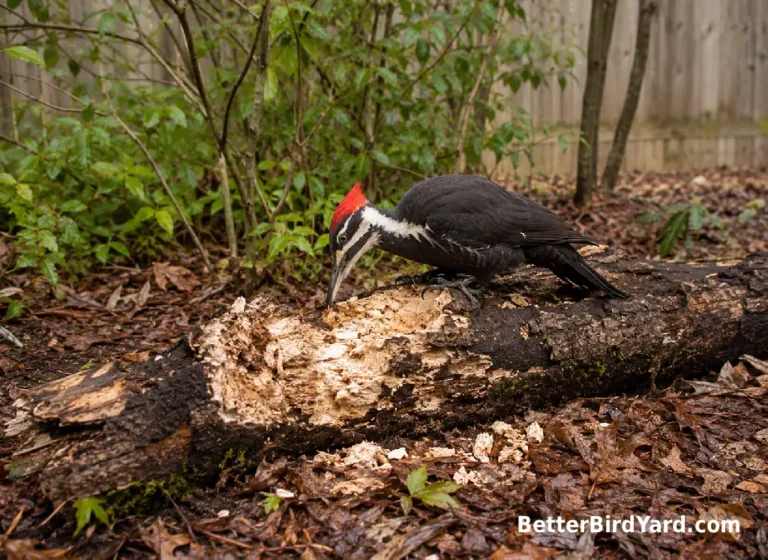
Pileated Woodpeckers are also generally nonmigratory. They need larger wooded areas, dead trees, downed logs, and mature habitat, so many suburban yards will not host them daily. But if one lives in a nearby wooded corridor, it may be present all year even if you only hear it or see large rectangular feeding holes on dead wood. Cornell Lab lists Pileated Woodpeckers as resident and recommends looking for them in mature forest with dead trees and logs.
Red-bellied Woodpeckers are another familiar eastern backyard species that usually stay put. They may seem more noticeable in winter because bare branches make them easier to spot and feeder activity can concentrate around suet, peanuts, and sunflower seed. Cornell Lab lists Red-bellied Woodpeckers as resident and describes them as birds to watch for in eastern woodlands all year.
Why Woodpeckers Seem To Disappear In Winter
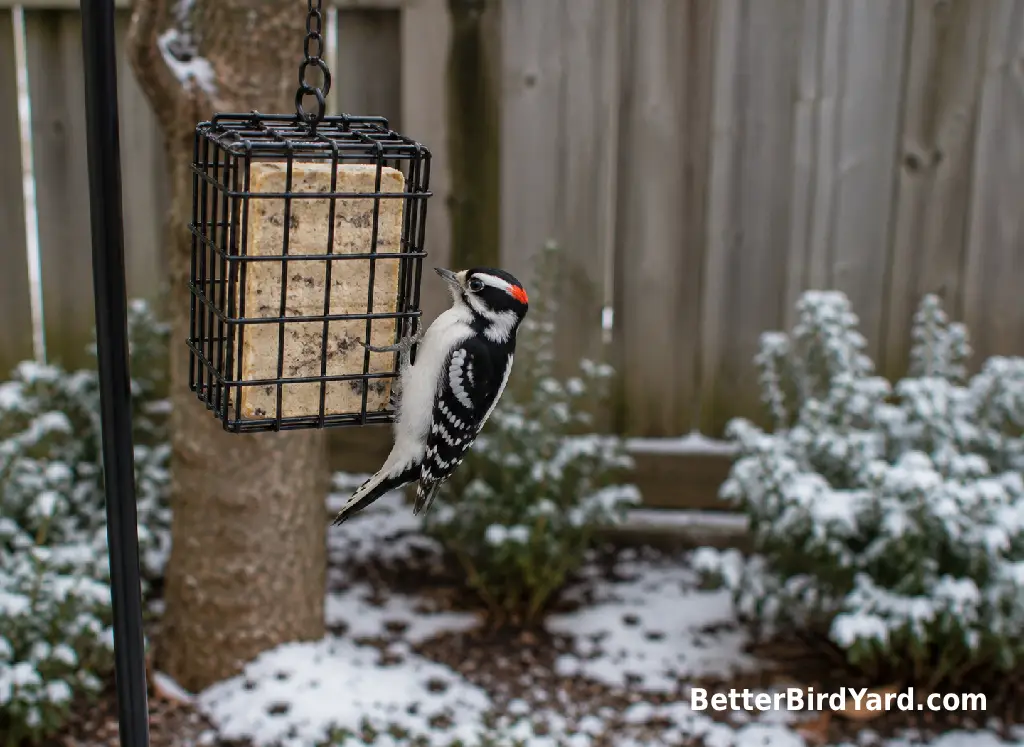
A woodpecker can be present in your neighborhood and still vanish from your feeder for days or weeks. Winter woodpecker behavior depends heavily on food. If trees nearby are full of insects, acorns, nuts, or stored food, a bird may not need your feeder. If a cold snap, ice, or snow covers natural food, the same bird may suddenly become a daily visitor.
Territory also matters. Some woodpeckers defend feeding areas, roosting spots, or favorite trees. A bird that was easy to see during nesting season may shift deeper into a wooded strip once breeding activity ends. Younger birds may disperse after leaving their parents’ territory, which can make local numbers feel uneven from one month to the next.
Beginners often assume migration is the only explanation for a missing bird. More often, the explanation is smaller and more local: a neighbor added suet, a dead limb with beetle larvae became attractive, acorn crops are strong, or your feeder got wet and less appealing. Cornell’s winter feeding guidance notes that bird feeding does not generally drive migration because changing day length is a major cue for many birds, while natural food availability, weather, and local conditions still shape feeder use.
Common Woodpeckers: Who Migrates And Who Usually Stays
Woodpecker migration is species-specific. The same winter yard might host a resident Downy Woodpecker, lose a summer sapsucker, and gain a Northern Flicker from farther north. Use this table as a practical backyard starting point, then compare it with your region, habitat, and local bird reports.
| Woodpecker Species | Typical Migration Pattern | Backyard Takeaway |
|---|---|---|
| Pileated Woodpecker | Resident and generally nonmigratory. | May stay near mature woods all year; more likely if your area has large trees, dead wood, and wooded corridors. |
| Downy Woodpecker | Resident. | Often the easiest woodpecker to attract to suet in suburbs, parks, and small yards with trees. |
| Red-bellied Woodpecker | Resident in much of its range. | Commonly seen year-round in many eastern yards, especially where there are trees and suet or nut offerings. |
| Red-headed Woodpecker | Irregular short-distance or partial migrant; winter movement can depend on acorn and beech nut crops. | May leave northern or western parts of its range for winter, but local food can change what you see. |
| Yellow-bellied Sapsucker | Short- to long-distance migrant. | Often a true seasonal mover; in eastern North America it is the woodpecker most likely to fit a classic migration pattern. |
| Northern Flicker | Resident or short-distance migrant; many northern birds move south for winter. | You may see winter flickers even if the exact individuals are not the same ones that nested nearby. |
| Hairy Woodpecker | Resident, though some northern or high-elevation birds may wander in winter. | Looks like a larger Downy Woodpecker; may visit suet in wooded suburban yards. |
Do Pileated, Downy, Red-Headed, And Red-Bellied Woodpeckers Migrate?
Pileated Woodpeckers usually do not migrate. They are large birds tied to wooded habitat, so the bigger question for a homeowner is not winter migration but whether the surrounding landscape has enough mature trees, snags, and downed logs to support them. If your yard backs up to woods, a creek corridor, or older trees, you may hear their loud calls and deep drumming year-round.
Downy Woodpeckers usually stay in the same general area, too. They are adaptable and often join mixed winter flocks with chickadees and nuthatches. For a small yard or patio, a simple suet cage and nearby woody cover may be enough to bring one within view, though visits are never guaranteed.
Red-bellied Woodpeckers are generally resident in their range. They are especially familiar in the eastern United States, where their rolling calls can carry through neighborhoods even when the bird is hidden behind tree trunks and branches.
Red-headed Woodpeckers are the exception in this reader keyword group. They can be partial or irregular short-distance migrants, and Cornell Lab notes that winter movement often depends on acorn and beech nut crops. Audubon also describes them as short-distance migrants, with small groups sometimes noticeable in early fall and late spring.
How To Support Woodpeckers Through Winter
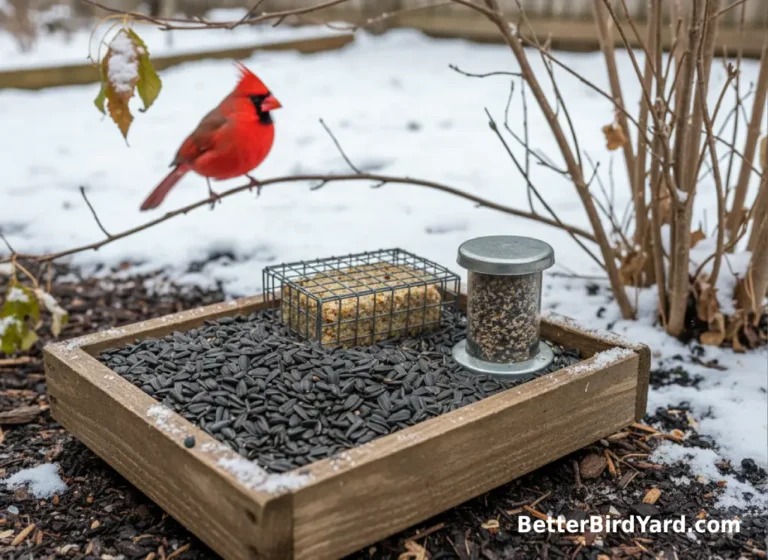
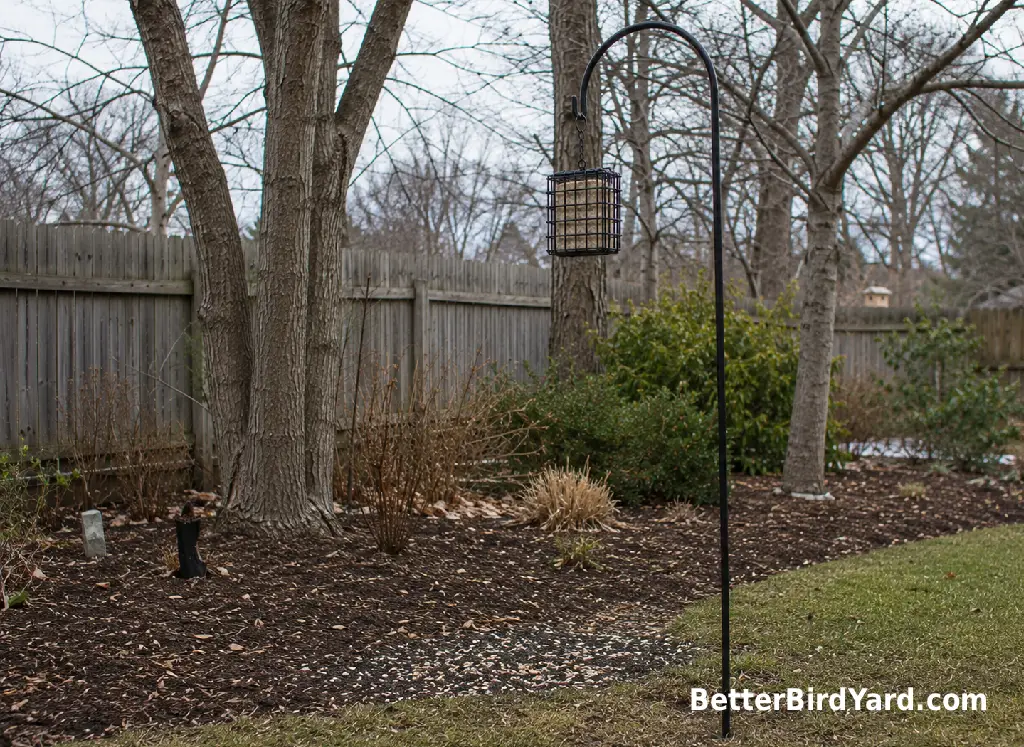
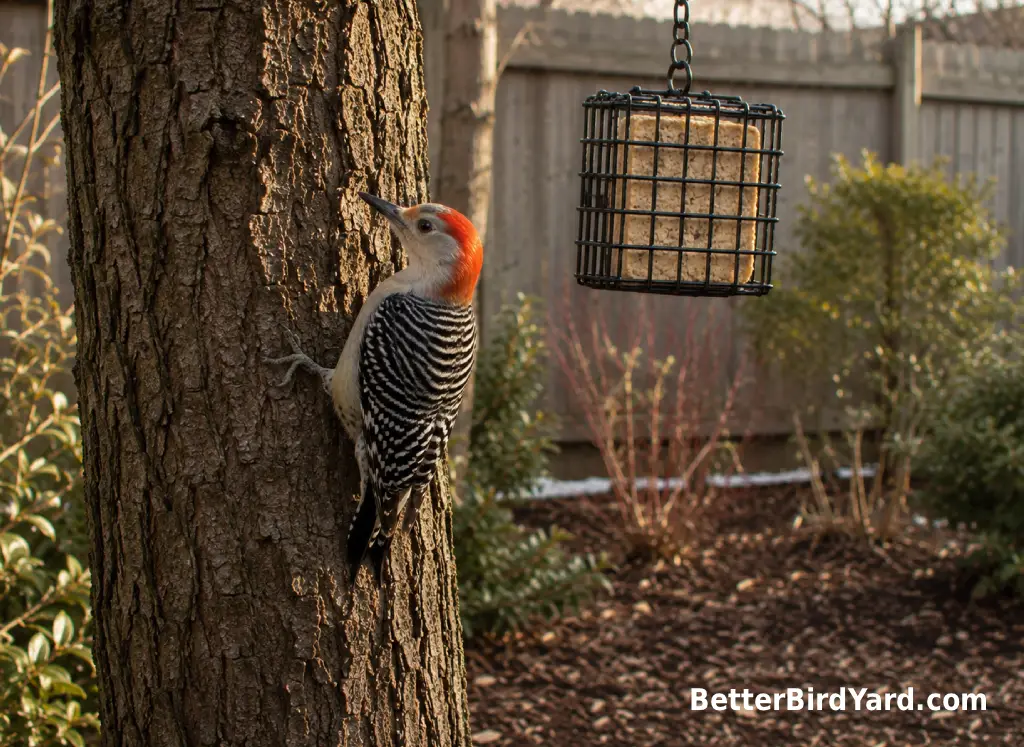
Winter support for woodpeckers should be simple, clean, and habitat-minded. Suet is often the most useful feeder food for woodpeckers because it is high in energy and easy to serve in a wire cage. Cornell’s winter feeding guidance lists suet as a food eaten by woodpeckers and notes that high-energy foods such as suet can be especially useful in cold climates; it also cautions that suet can become rancid in warm weather.
In a small yard, I would start with one suet cage, one clean seed feeder with black oil sunflower seed, and a shallow water source if you can keep it clean and unfrozen. Do not overbuild the setup. More feeders can mean more cleaning, more spilled seed, and more squirrel or rodent pressure.
- Use a sturdy suet cage and remove old or spoiled suet promptly.
- Offer black oil sunflower seed or unsalted shelled peanuts only if you can keep them dry and fresh.
- Keep feeders close enough to shrubs or trees for escape cover, but not so buried in cover that cats can ambush birds.
- Leave safe dead limbs or snags only when they are not a hazard to people, buildings, paths, or utility lines.
- Clean feeders about every two weeks, and more often during warm weather, heavy use, or visible mess.
Editorial note: the best woodpecker habitat is not always a feeder. A safe snag, mature tree, native shrub border, or quiet wooded edge can matter more than another specialty food. National Wildlife Federation describes snags as important habitat trees, and Cornell Lab specifically notes that dead or dying trees can attract Pileated Woodpeckers and other cavity-using birds when they can be left safely.
For more feeder-specific setup ideas, see our related guide to suet feeders for woodpeckers.
What Not To Assume About Winter Feeder Visits
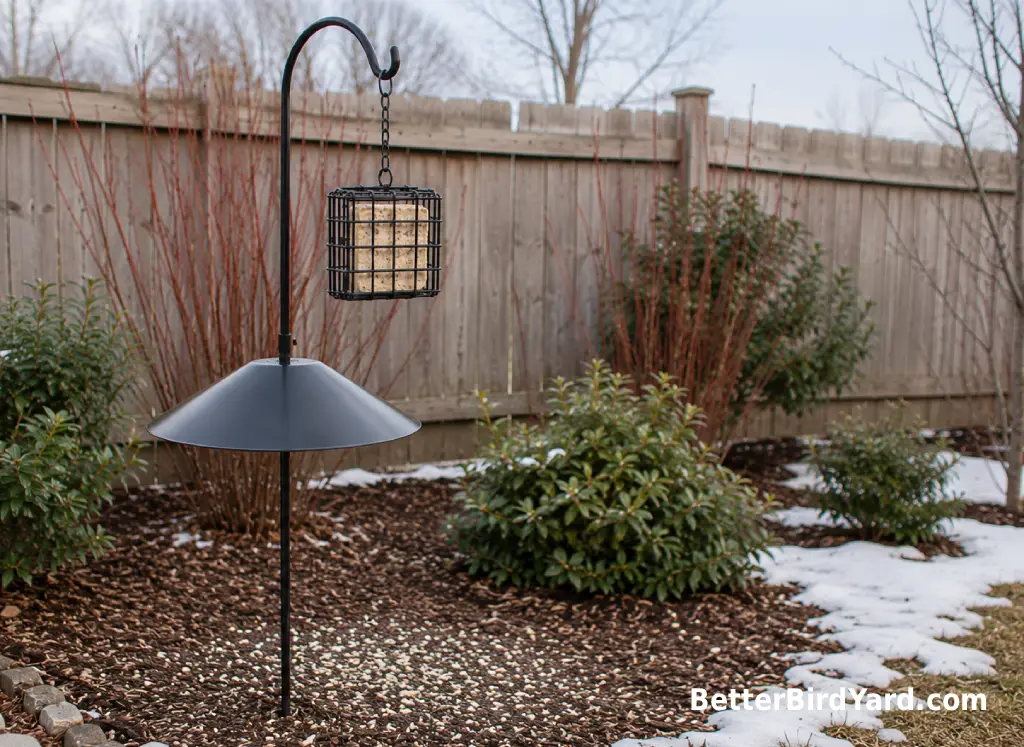
A feeder is a supplement, not a steering wheel for migration. Leaving suet out does not make a migratory woodpecker forget to migrate, and taking the feeder down does not force a resident woodpecker to leave. Cornell’s winter feeding guidance explains that changing day length is a key cue many birds use for migration, not simply whether backyard food is available.
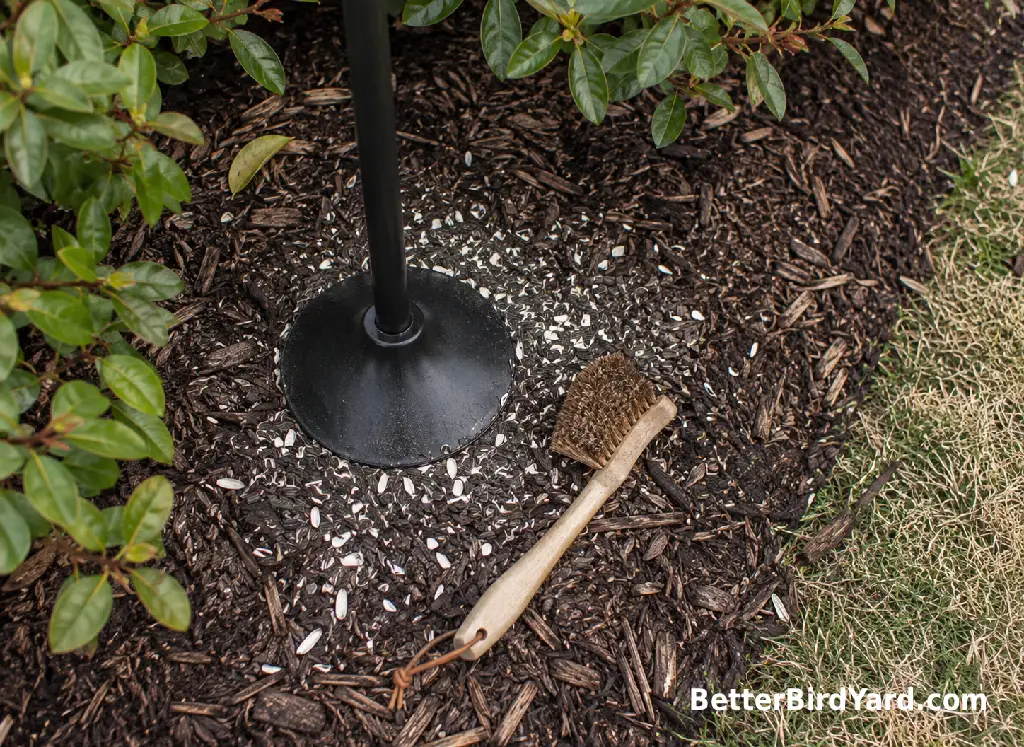
Also avoid assuming that more food is always better. Wet seed, old suet, and crowded feeding spots can create problems. Cornell’s winter feeding guidance recommends cleaning feeders about every two weeks, more often in warm weather or heavy use, and raking up seed hulls because decomposing hulls may harbor bacteria or mold. Audubon, citing Project FeederWatch, gives similar feeder-cleaning advice and recommends more frequent cleaning if disease is suspected.
Here are practical triggers to adjust your setup:
- If suet smells sour, looks melted, or sits uneaten, remove it.
- If seed gets wet, clumps, or shows mold, discard it and clean the feeder.
- If spilled food builds up under feeders, rake or sweep the area and reduce how much you offer.
- If squirrels, raccoons, or rodents become regular visitors, use baffles, reduce spilled seed, or pause feeding.
- If you see birds that appear sick, unusually weak, or unable to fly normally, pause feeding, clean feeders and baths, keep pets away, and check local wildlife agency guidance.
When A Woodpecker Needs Local Help
Migration questions sometimes come from seeing a woodpecker in an unexpected place or at an unusual time. A winter woodpecker on the ground is not automatically in trouble; flickers often feed on the ground, and other woodpeckers may briefly drop down for food or water. But a bird that cannot fly, is visibly injured, has been caught by a cat, has struck a window and does not recover promptly, or remains unusually still should be treated as a possible wildlife-help situation, not as a migration puzzle.
Keep children and pets away, avoid casual handling, and contact a licensed wildlife rehabilitator, local wildlife agency, animal control, or a veterinarian who works with wildlife. Cornell Lab advises contacting a wildlife rehabilitator or local veterinarian for a sick or injured bird and calling first because not every clinic can safely accept wild birds.
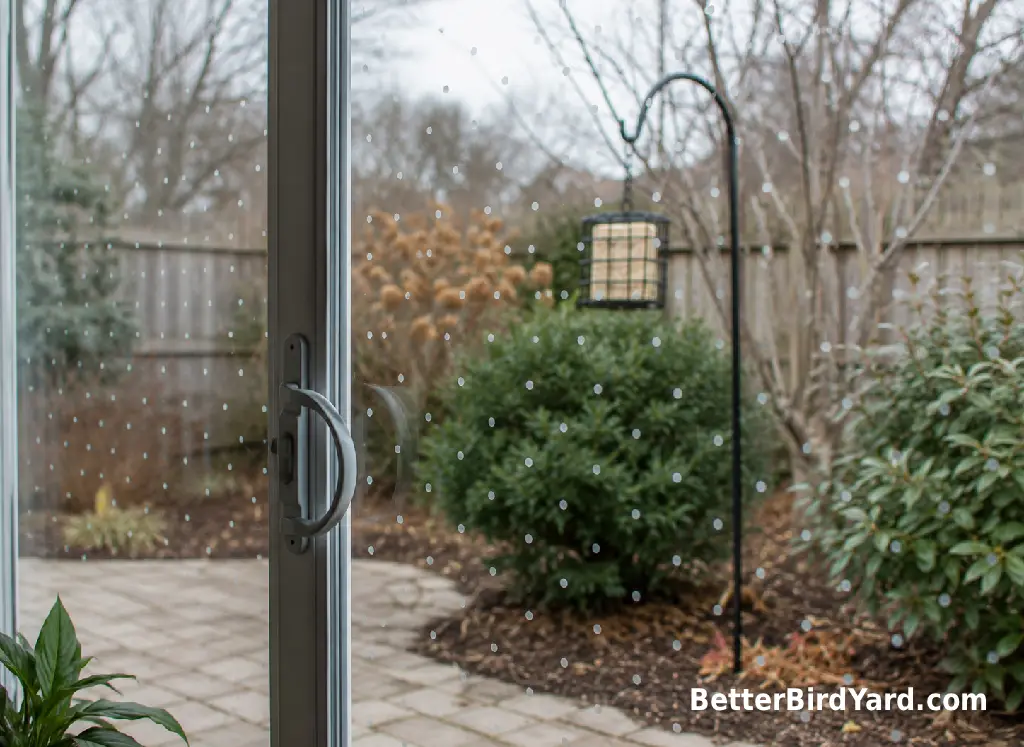
You can also reduce future risk around feeders. Project FeederWatch recommends marking windows with close repeating patterns, using exterior screens where possible, dimming lights during migration periods, and keeping cats indoors to reduce bird injuries around homes.
Bottom Line For Backyard Bird Watchers
So, do woodpeckers migrate in winter? Some do, but many of the woodpeckers backyard birders know best are year-round residents. Downy, Red-bellied, and Pileated Woodpeckers usually stay in the same general region. Red-headed Woodpeckers can move irregularly or short distances, especially where winter food changes. Yellow-bellied Sapsuckers and many Northern Flickers are more clearly migratory or partly migratory, depending on where you live.
The useful backyard approach is to watch patterns rather than assume a single answer. Note the species, the season, the weather, and what natural food is available nearby. A woodpecker that skips your feeder may still be working the tree line. A bird that appears after the first snow may have been close all along. Clean feeders, fresh suet, safe dead wood where appropriate, native plantings, and window and cat safety will support woodpeckers more responsibly than trying to “hold” them in your yard.
When in doubt, let the bird’s species and behavior guide your interpretation. Migration is part of the story for some woodpeckers, but for many backyard sightings, winter movement is local, flexible, and closely tied to food, shelter, and safe habitat.