Tube Bird Feeders: How To Choose The Right One
Tube bird feeders are one of the easiest feeder styles to start with because they are compact, familiar, and simple to hang from a pole, hook, deck arm, or small patio setup. A good tube bird feeder can serve finches, chickadees, titmice, nuthatches, and other small backyard birds without taking over the yard.
The catch is that not all bird feeder tubes solve the same problem. Some are made for black oil sunflower seed, some are built for tiny nyjer seed, some are caged to discourage squirrels and larger birds, and some large tube bird feeders hold more seed than a beginner can keep fresh. A feeder that looks convenient in the store may become a moldy, squirrel-chewed, hard-to-clean tube after a few rainy weeks.
This guide focuses on practical, responsible use: choosing the right tube feeder for your space, keeping seed dry, reducing squirrel pressure, avoiding common beginner mistakes, and knowing when to clean, pause, or adjust your setup. For related feeding basics, see our guide to choosing backyard bird seed.
What Tube Bird Feeders Do Best
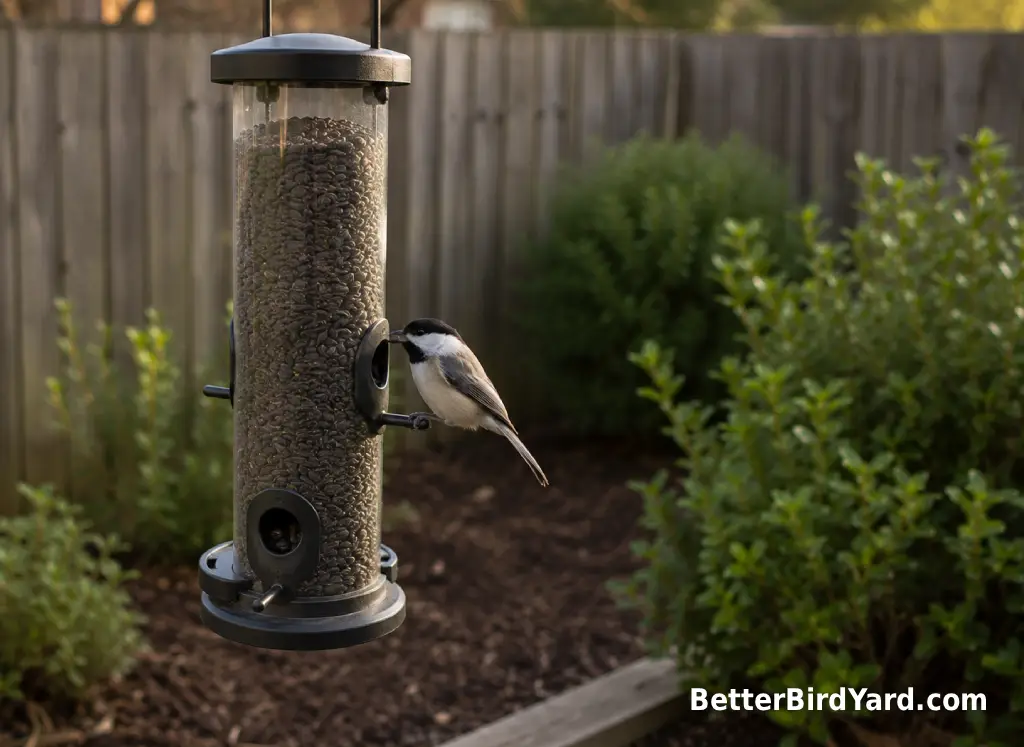
Tube feeders work best when you want a tidy, vertical feeder for small perching birds. The seed sits inside a narrow tube and birds feed from small ports along the sides. That design is useful in small yards and patios because it takes up little space, keeps most seed contained, and lets you watch birds closely without using a large platform or hopper feeder.
A basic tube feeder for birds is usually a good match for black oil sunflower seed or hulled sunflower chips. A narrow-port finch tube is better for nyjer seed, which is tiny and would spill from larger ports. Cornell Lab’s feeder guidance notes that tube feeders can be useful, but old seed can sit below the lowest feeding ports where birds cannot reach it, so the bottom of the tube deserves attention during cleaning and refilling.
Tube feeders are not magic species magnets. They simply make certain foods easier for small birds to access. Which birds show up will still depend on your region, season, nearby habitat, weather, local predators, and what natural food is available. In many US yards, tube feeders are most useful for smaller seed-eating birds rather than doves, jays, blackbirds, or other larger birds that prefer platforms, hoppers, or the ground.
Choose The Right Tube Feeder For Your Seed
The easiest way to choose among tube feeders for birds is to start with the seed, not the feeder shape. Port size matters. If the ports are too large, small seed spills out. If the ports are too small, larger sunflower seed can jam or sit unused.
| Seed Type | Best Tube Feeder Style | Good Fit For | Watch For |
|---|---|---|---|
| Black Oil Sunflower | Standard mixed-seed tube with regular ports | Chickadees, titmice, nuthatches, finches, cardinals nearby | Shell mess under the feeder |
| Hulled Sunflower Chips | Standard tube with good drainage | Small spaces where less shell mess is helpful | Moisture spoilage if seed sits too long |
| Nyjer | Finch tube with tiny ports or mesh | Goldfinches, siskins, and some small finches where present | Seed freshness; old nyjer is often ignored |
| Cheap Mixed Seed | Not ideal for most tube feeders | Only if the mix is clean and birds eat most of it | Filler seed, waste, and damp buildup |
Cornell Lab’s seed guide lists sunflower, safflower, nyjer, millet, cracked corn, peanuts, and other foods as common feeder offerings, but the feeder style should match the food. For most beginners, one standard tube feeder with black oil sunflower seed is simpler than buying a three tube bird feeder right away. Add a separate nyjer tube later only if finches are common in your area and you are ready to keep that seed fresh.
Metal, Plastic, Caged, And Three-Tube Designs Compared
Metal tube bird feeders are usually the better long-term choice if squirrels, sun exposure, or cracked plastic have been problems. Metal caps, bases, perches, and ports tend to hold up better than thin plastic parts. The tube itself is often still clear plastic or polycarbonate, but the parts that get chewed or stressed are stronger.
Plastic tube bird feeders can work well as starter feeders, especially on a covered patio or low-pressure setup. Look for a tube that comes apart easily, has drainage holes, and does not trap wet seed in unreachable corners. Avoid bargain feeders with flimsy lids, rough seams, or tiny openings that make scrubbing difficult.
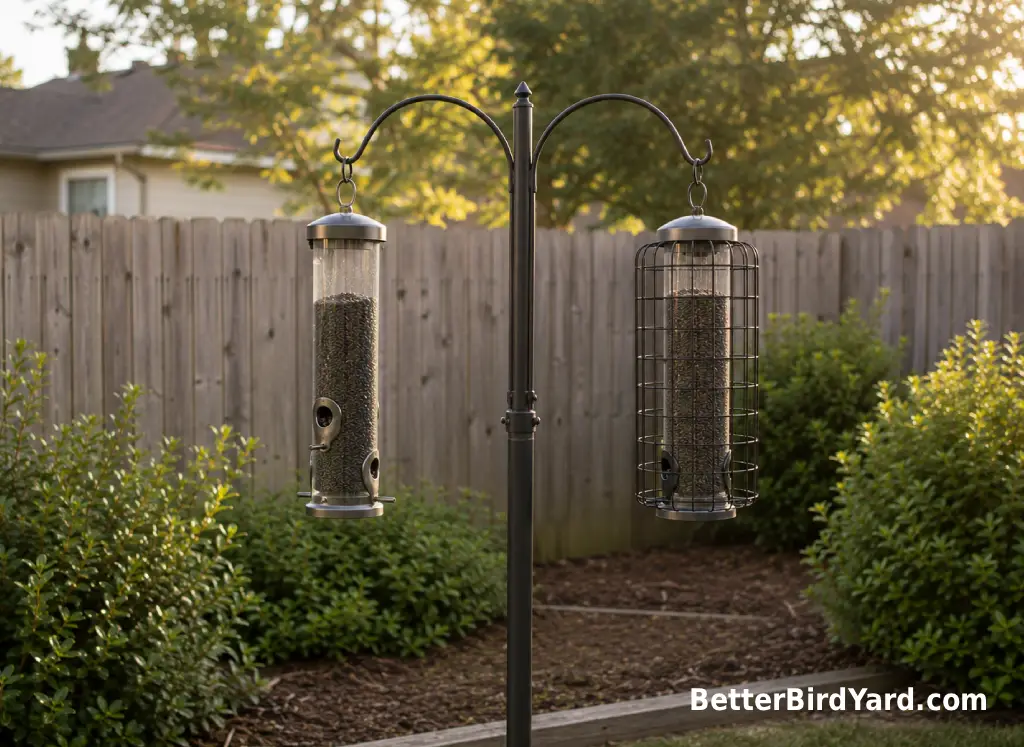
Caged tube feeders add a wire cage around the feeding tube. The goal is to let smaller birds slip through while discouraging squirrels and larger birds. They are not perfect in every yard, but they can be helpful when starlings, grackles, jays, or squirrels dominate a regular tube feeder. A product like an Audubon wild bird caged tube bird feeder fits this general category, but judge any feeder by its build, cleanability, port design, and how it fits your pole or hook rather than the label alone.
Large tube bird feeders and extra large tube bird feeders are useful only when you have enough bird traffic to empty them before seed gets stale or damp. A three tube bird feeder can look efficient, but it is more feeder to clean, more seed to monitor, and more weight on the hanger. In a small yard, one medium tube is often safer and cleaner than three neglected tubes.
Where To Hang A Tube Feeder Safely
Good placement makes a tube bird feeder safer, cleaner, and easier to maintain. Put it where you can reach it comfortably for refilling and cleaning, because a hard-to-reach feeder often becomes a dirty feeder. For renters and patio bird watchers, a freestanding pole or clamp-on deck arm may be easier than drilling into a wall or railing, but check lease, HOA, balcony, and local rules before installing feeders.
Window placement deserves special care. Cornell Lab advises that feeders are often safer either very close to windows, such as within about 3 feet, or farther away, because birds leaving a feeder near glass may not build up as much speed before a collision. Audubon also recommends making reflective glass more visible with exterior patterns, screens, or other treatments spaced closely enough for birds to notice.
Nearby shrubs can give small birds a place to retreat, but avoid placing a feeder directly inside dense cover where cats or other predators can ambush feeding birds. If outdoor cats regularly hunt near the feeder, move the feeder, add protective spacing, or pause feeding. A feeder should not become a predictable trap.
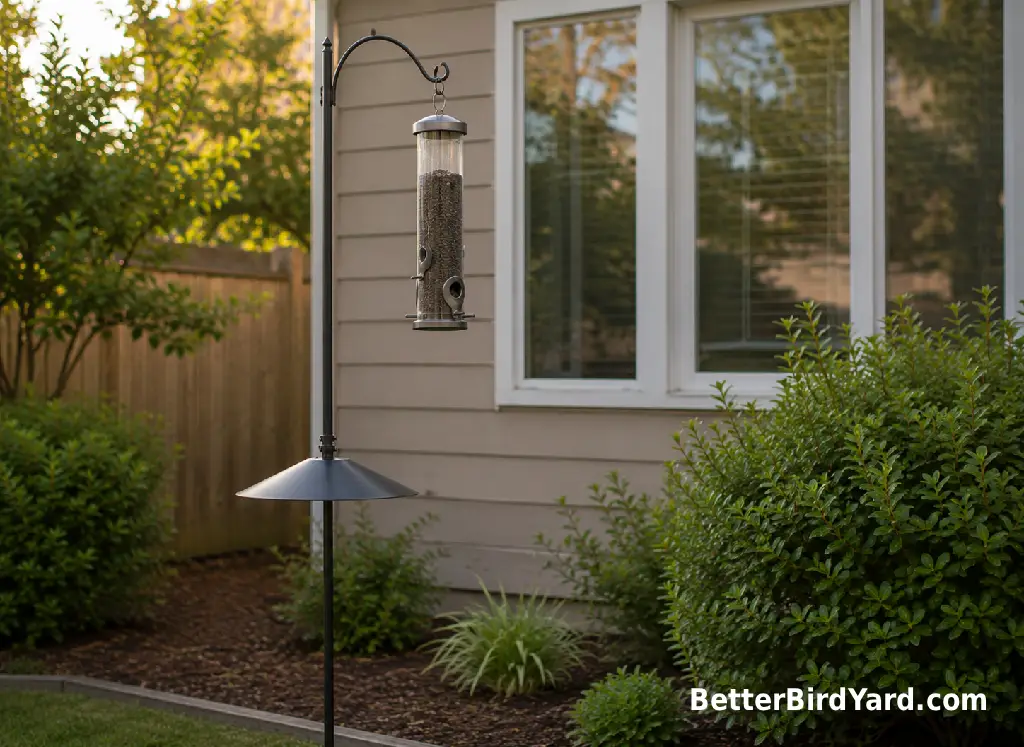
For squirrels, placement matters as much as the feeder. A pole-mounted setup with a properly placed baffle often performs better than a fancy tube feeder hung from a tree branch. If squirrels can leap from a fence, railing, tree, roofline, or patio furniture, even many tube bird feeders labeled squirrel proof will struggle.
How To Fill And Clean A Tube Feeder
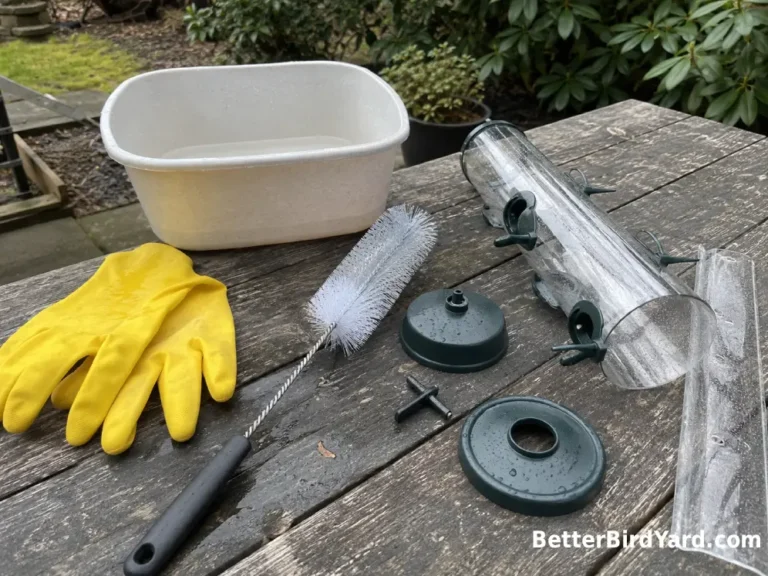
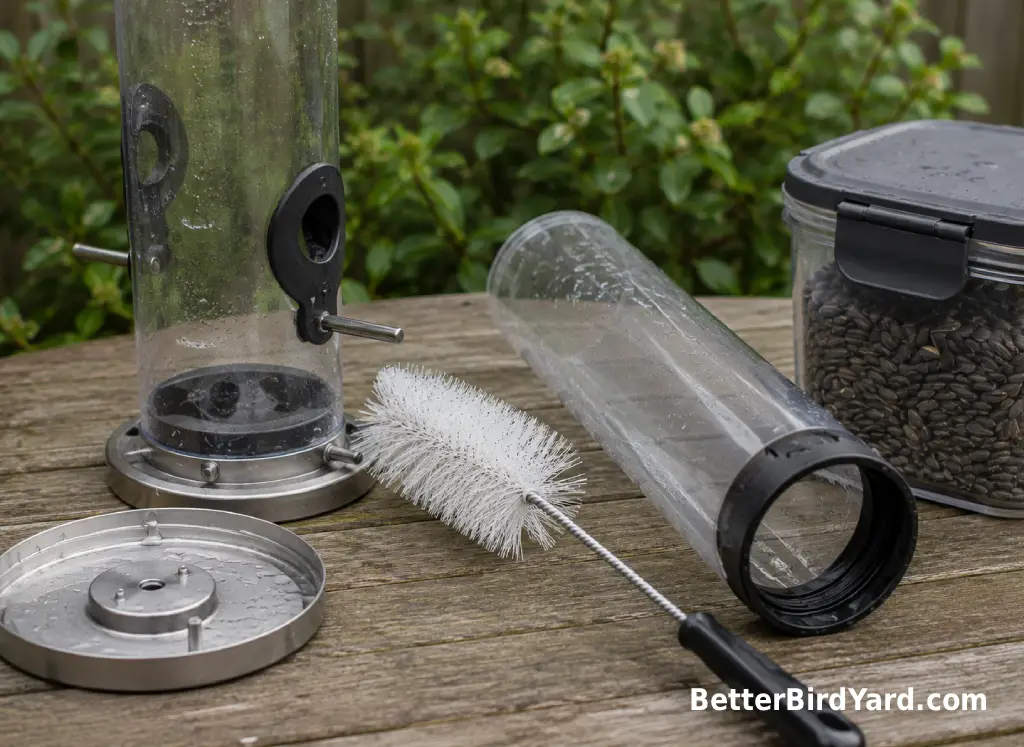
Tube feeders are simple to use, but they should not be topped off forever. Old seed can remain at the bottom, especially below the lowest feeding ports. Before adding fresh seed, empty the tube, check the bottom, and discard damp, clumped, moldy, or stale food. Cornell Lab’s feeder cleaning guidance warns that moldy or decomposing seed and hulls can make birds sick, and recommends cleaning feeders about every two weeks, more often in heavy use, wet weather, local disease reports, or when sick birds appear.
A practical routine looks like this:
- Empty old seed before refilling, especially after rain or humid weather.
- Brush out ports, seams, perches, and the bottom cap where debris collects.
- Wash with hot soapy water, rinse well, and disinfect when needed.
- Let every part dry completely before adding seed.
- Store seed in a sealed, dry container away from heat, moisture, and rodents.
Cornell’s classroom feeder guidance describes washing feeders, rinsing with a 1-part bleach to 9-parts water solution, and drying completely before refilling. If you use disinfectant, rinse thoroughly and let the feeder dry. Never refill a damp tube just because birds are waiting. Damp seed inside a tube can clump, sour, and become much harder to remove.
Editorial note: if cleaning the feeder feels annoying, choose a smaller, simpler model. The best tube bird feeders for real life are the ones you will actually take apart and clean.
Common Mistakes To Avoid With Tube Feeders
Most tube feeder problems come from too much seed, too little cleaning, or a poor match between feeder and food. These mistakes are easy to fix once you know what to watch for.
- Filling A Large Tube Too Full: Big capacity is only helpful if birds empty the seed while it is still fresh. In a new yard, fill the tube halfway until you learn the traffic pattern.
- Using The Wrong Ports: Nyjer needs tiny ports or mesh. Sunflower seed needs larger ports. Mixed seed can bridge, spill, or leave rejected filler behind.
- Ignoring The Bottom Inch: Seed below the lowest ports may sit untouched. Empty the tube fully rather than topping off old seed.
- Letting Hulls Build Up: Shells and spilled seed under the feeder can attract rodents, hold moisture, and make the feeding area less healthy.
- Buying For Looks Only: A pretty bird feeding tube that is hard to open, scrub, or dry is not a good daily feeder.
Squirrels, Mess, And Small-Space Problems
Tube bird feeders squirrel proof claims should be read carefully. A caged tube, weight-sensitive perch, or metal feeder can reduce squirrel access, but squirrels often beat poor placement. Start with a pole and baffle if your space allows it. Keep the feeder away from jump points such as fences, deck rails, trees, outdoor furniture, and roof edges. In tight patios, a caged tube feeder may be more realistic than trying to create perfect squirrel spacing.
Mess is the next issue. Black oil sunflower shells collect quickly under a busy tube feeder. If you feed over a balcony, shared patio, or small strip of mulch, hulled sunflower chips may be cleaner, but they spoil faster when wet. Use smaller amounts and clean under the feeder often. A seed tray can catch some waste, but it also becomes another surface to wash.
In bear country or areas with raccoons, rats, or other nuisance wildlife, follow local wildlife agency guidance. Bird feeders can attract animals other than birds, and rules or seasonal recommendations vary by city, county, state, and neighborhood. The U.S. Fish and Wildlife Service cautions that feeding wildlife can create problems when animals associate people with food, so backyard feeding should stay clean, limited, and closely managed.
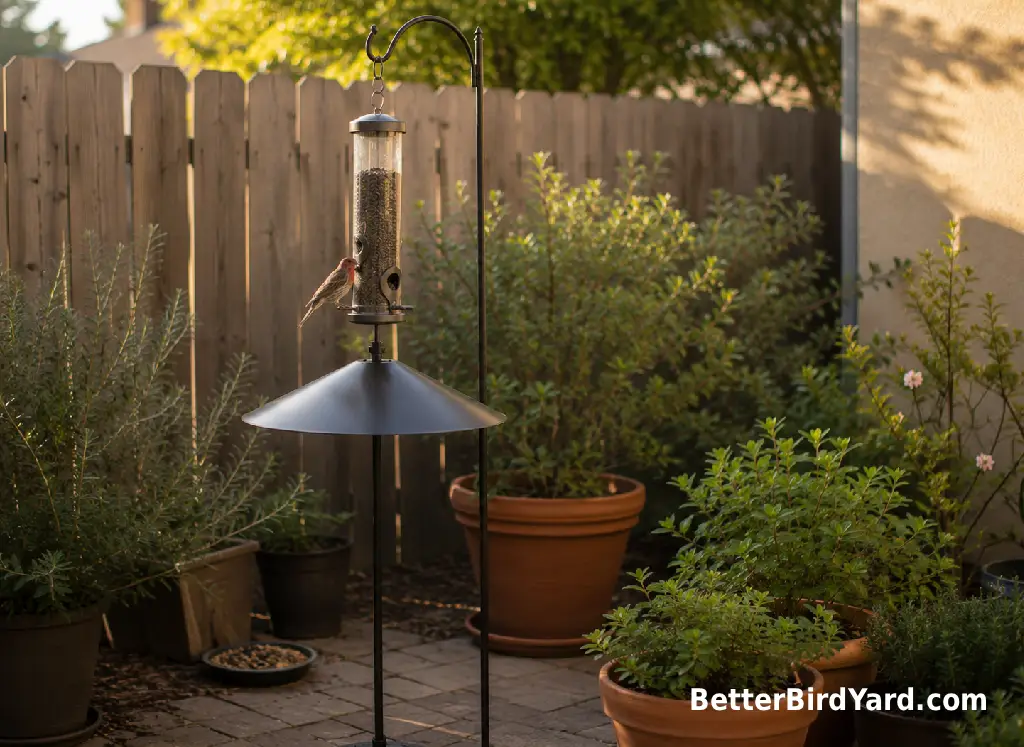
For a small-space setup, I would keep it simple: one medium metal tube feeder, one easy-to-clean pole or hook, a baffle where possible, and only enough seed for a few days of activity. That small routine usually beats a crowded cluster of feeders that looks exciting at first and then becomes hard to maintain.
When To Pause Feeding Or Get Local Help
Pause feeding if you see birds that appear sick, unusually weak, unable to fly normally, crusted around the eyes, fluffed up for long periods in mild weather, or if you find dead birds near the feeder. Do not try to diagnose the cause. Take the feeder down, discard old seed, clean and dry the feeder and nearby bird bath, and check your state wildlife agency or local bird health advisories for current guidance.
USGS notes that bird feeders and bird baths should be washed or disinfected regularly, and that people should wash their hands after touching them. During unusual mortality events, USGS and partner agencies have recommended pausing feeding, cleaning feeders and bird baths with a 10% bleach solution, rinsing, drying, and avoiding unnecessary handling of birds.
Avian flu guidance changes with outbreaks and local conditions. The U.S. Fish and Wildlife Service says bird feeders are unlikely to increase avian influenza spread because the species that usually visit feeders are not commonly infected, but feeders can still concentrate songbirds and increase the risk of other diseases such as salmonella, E. coli, and mycoplasma. The CDC recommends regular feeder and bird bath cleaning, disposable gloves when cleaning, and handwashing afterward.
If you find a sick, injured, stunned, orphaned, or unusually behaving wild bird, keep pets and children away and contact a licensed wildlife rehabilitator, local wildlife agency, animal control, or another qualified local professional. BetterBirdYard is not a wildlife rehabilitation, veterinary, legal, or public health service, so serious wildlife and disease concerns should be handled through qualified local help.
The Simple Tube Feeder Setup I Would Start With
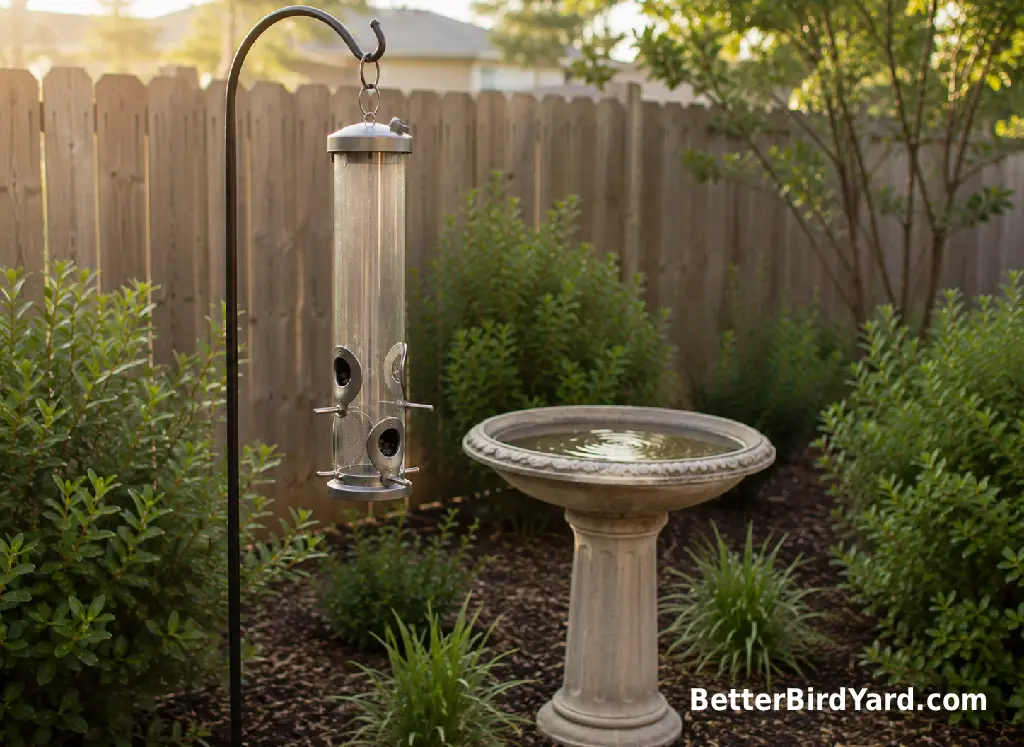
For most beginner-to-intermediate backyard bird watchers, the best starting point is not the biggest or most complicated feeder. Start with one medium metal tube bird feeder that comes apart easily, has drainage, and fits a sturdy pole or hook. Fill it halfway with black oil sunflower seed or hulled sunflower chips, watch how quickly birds use it, and clean it before the seed gets stale.
Add features only when you have a reason. Choose a caged tube if squirrels or larger birds dominate. Add a nyjer tube if finches are common and you can keep the seed fresh. Consider a larger or three tube bird feeder only after you know your yard has enough bird traffic and you are comfortable with the cleaning routine.
A good tube feeder should make bird feeding calmer, not more complicated. Keep it reachable, keep the seed dry, clean it regularly, and move or pause the setup when birds, weather, squirrels, local rules, or disease advisories tell you something needs to change. For the next step, pair your feeder with safer placement and habitat basics in our guide to where to put a bird feeder.
Tube feeders are popular because they are simple. Used thoughtfully, they can stay that way: one clean feeder, the right seed, a safe location, and enough observation to notice when your backyard birds need you to adjust.