Male Vs Female Hummingbirds: What To Look For
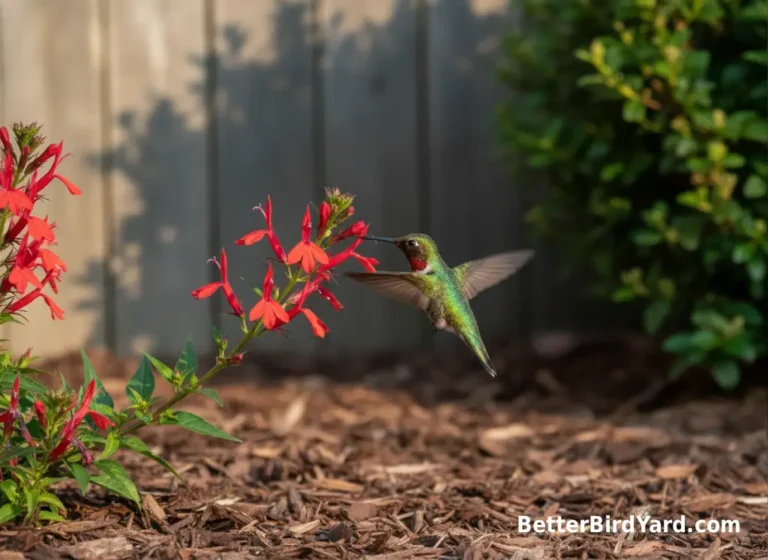
Male and female hummingbirds can look surprisingly different, but they can also be frustratingly hard to separate when they are moving fast at a feeder. The simplest clue is usually color: adult males often have a brighter throat patch, called a gorget, while females tend to look greener above and paler or more softly marked below. But there are important exceptions, especially with young males, poor light, and species such as Anna’s Hummingbird, where females can show reddish throat spots too. Cornell Lab notes that a male Ruby-throated Hummingbird’s red throat can look dark when the light is not right, which is one reason backyard identification is not always as easy as it sounds.
For most US backyard bird watchers, the two most useful examples are Ruby-throated Hummingbirds in the East and Anna’s Hummingbirds in much of the West. Once you know what to look for—throat color, tail shape, eye marks, behavior, and age—you can make much better guesses without needing to handle, disturb, or chase the bird.
The Quickest Backyard Clues
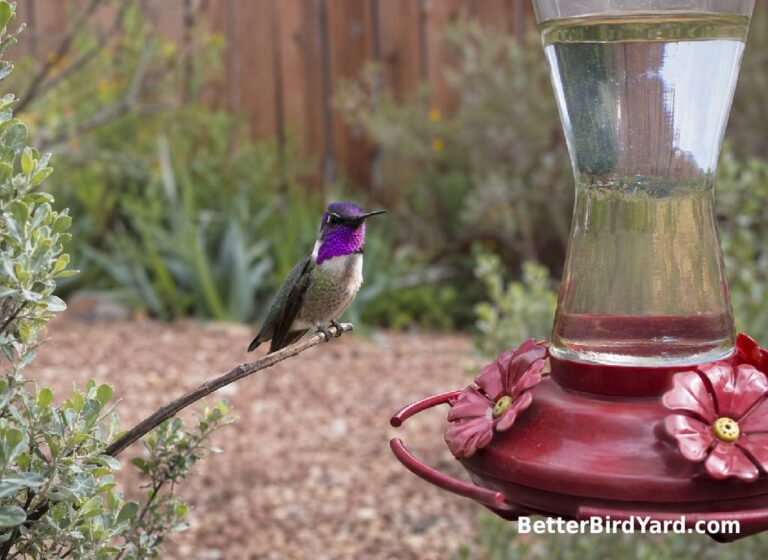
The fastest way to compare male vs female hummingbirds is to look for a bright, reflective throat or head patch, then check the tail and overall body markings. In many species, the adult male is showier. Females and immature birds are usually more muted, which helps them stay less noticeable around nesting areas.
| Clue | Adult Male Often Shows | Female Often Shows |
|---|---|---|
| Throat | Bright iridescent gorget, though it may look dark in shade | White, gray, pale, or lightly spotted throat depending on species |
| Head | Sometimes bright color on crown, especially in Anna’s Hummingbird | Usually green or gray-green, often less flashy |
| Tail | Can be darker, more forked, or less white-tipped depending on species | Often rounded or white-tipped in several common species |
| Behavior | More likely to perform courtship displays and defend a feeder | More likely to be associated with nesting and feeding young |
Use these as clues, not guarantees. A hummingbird flashing ruby, pink, or purple for half a second may be an adult male, but an immature male can look much like a female.
A female Anna’s Hummingbird can also show reddish-pink throat feathers, so hummingbird color alone is not always enough. Cornell Lab describes female and immature Anna’s Hummingbirds as metallic green above with some reddish-pink feathers on the throat.
Ruby-Throated Hummingbird Male Vs Female
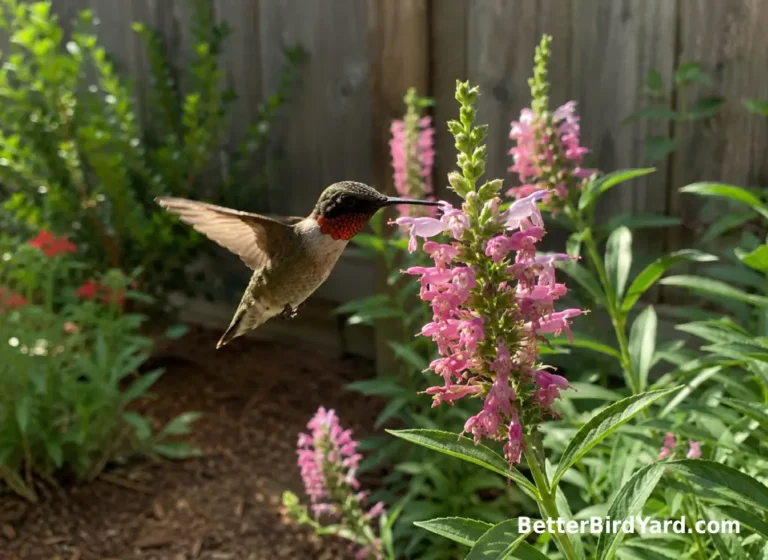
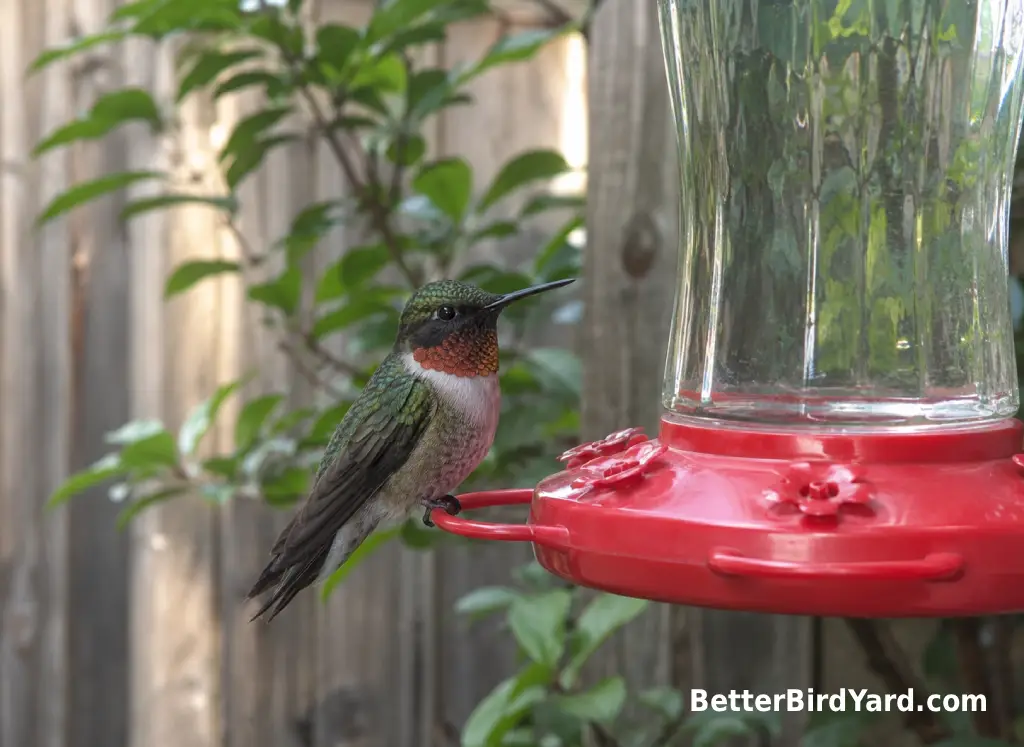
For many eastern US readers, the most likely backyard comparison is Ruby-throated Hummingbird male vs female. Cornell Lab describes Ruby-throated Hummingbirds as bright emerald or golden-green above with gray-white underparts, while adult males have a brilliant iridescent red throat that can look dark without the right light.
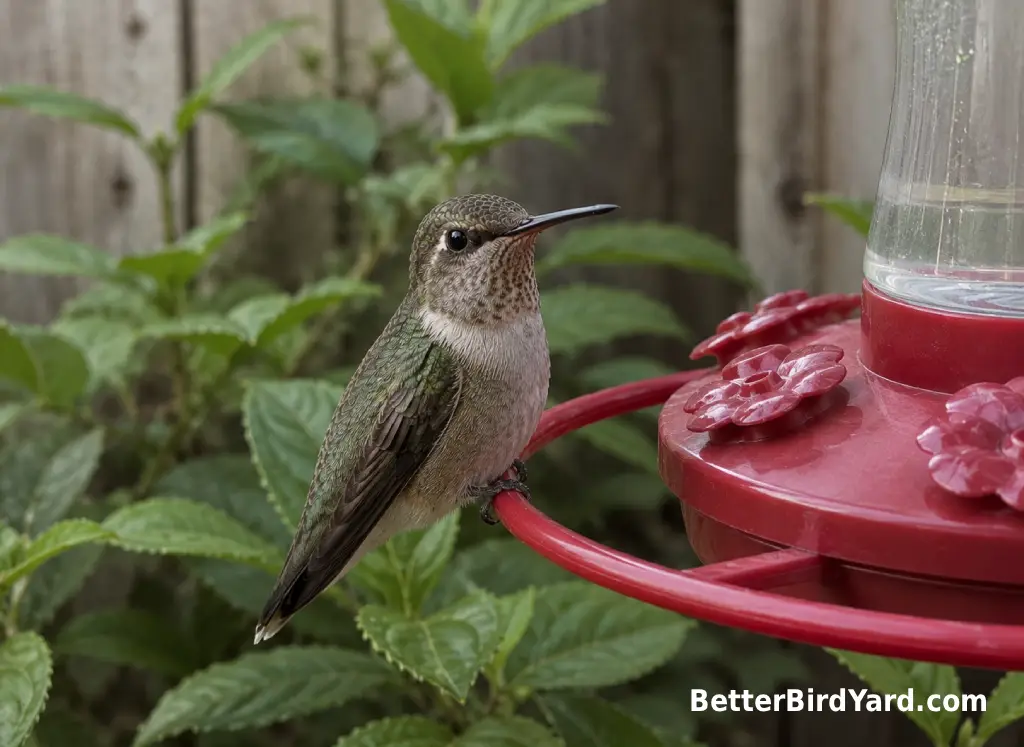
Audubon’s field guide gives the most useful backyard details: both adult male and female Ruby-throated Hummingbirds are metallic green on the back, but the adult male has a bright ruby throat, a forked black tail, and bright green back and sides. The female has a dull grayish-white throat, is golden-green above and whitish below, and shows white tips on the outer tail feathers. Audubon also notes that females are slightly larger.
In a real yard, the throat is usually the first thing people notice. If the bird turns and the throat suddenly flashes red, you are likely seeing an adult male Ruby-throated Hummingbird. If the throat stays pale and the outer tail corners show white when the bird fans or turns, it is more likely a female or young bird.
A practical tip: watch the same bird for several visits before deciding. At a feeder, a male’s gorget may look black from one angle, then red a second later. That color shift is normal iridescence, not a different bird.
Anna’s Hummingbird Male Vs Female
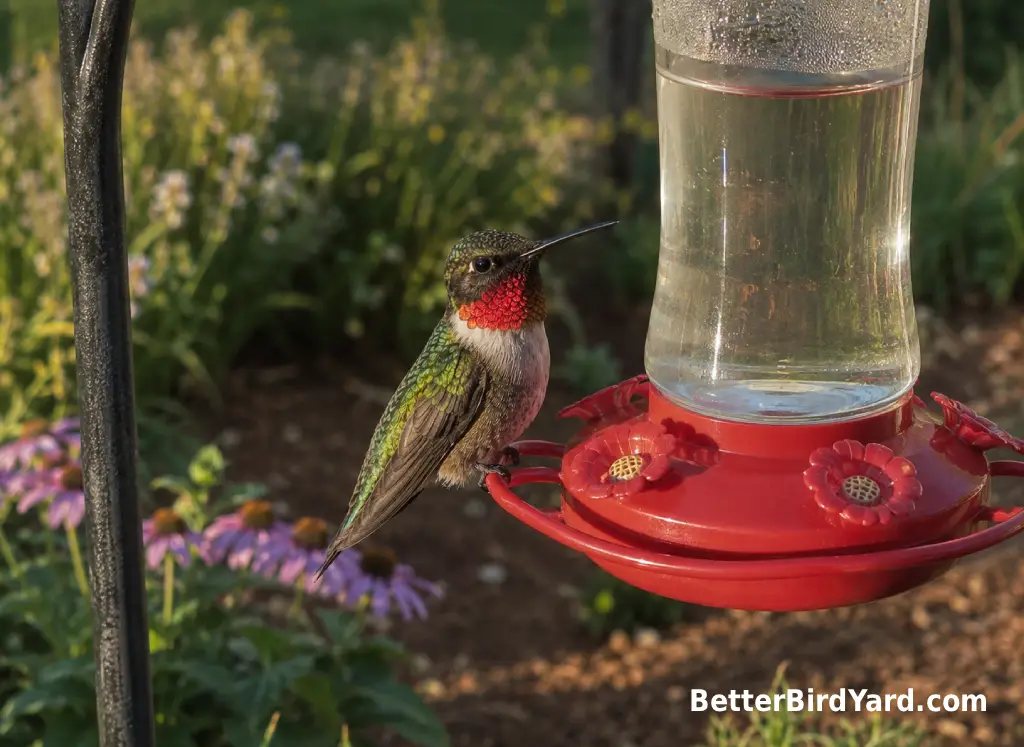
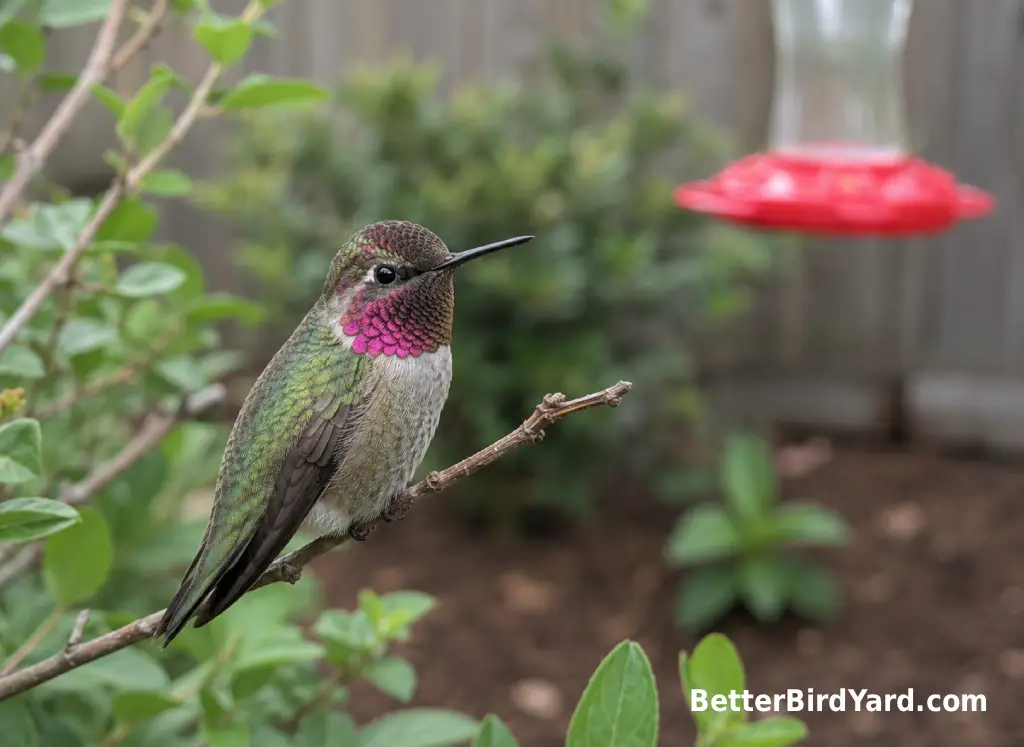
Anna’s Hummingbirds are a common backyard species in many western neighborhoods, and they can be a little trickier than Ruby-throated Hummingbirds because females can show reddish-pink throat spots. Cornell Lab describes adult male Anna’s Hummingbirds as having a rose-pink throat and crown, while females and immatures are metallic green above with some reddish-pink feathers on the throat.
Audubon’s field guide describes the adult male Anna’s Hummingbird as having rose red on the throat and crown, though that color may look black or gold in some lights. Females are plain green above and dingy gray below, often with red spots on the throat.
For a backyard watcher, the biggest difference is the head. A full bright pink or rose-red head and throat strongly suggests an adult male Anna’s Hummingbird. A greener head, grayish underside, pale eye line, and only a few reddish throat spots point more toward a female or immature bird.
Because Anna’s Hummingbirds can visit patios, balcony feeders, flowering shrubs, and urban gardens, they are a great species to practice with. Take photos from a respectful distance if you can. Even a slightly blurry side view can show whether the color covers the whole head or is limited to a few throat feathers.
Why Young Males And Bad Light Cause Confusion
The hardest hummingbird male vs female moments usually involve immature males. Young males often do not have the full adult gorget yet. Cornell Lab notes that immature male Anna’s Hummingbirds are duller than adult males and lack a full gorget, while some show blotchy rose-pink crown and throat feathers.
Light can be just as confusing. Iridescent feathers do not work like flat paint. The same male hummingbird can look brilliant red, pink, purple, blackish, or dull depending on the angle of the sun, the bird’s head position, and your viewing angle. Cornell Lab specifically notes that a small shift in head position changes the color and intensity of a male Anna’s gorget and crown feathers.
In a small yard or patio, give yourself a better view by placing a feeder where you can watch from the side, not just from below. A feeder near a chair, kitchen window, or shaded porch can help you see tail tips and throat marks without crowding the bird. Just make sure window reflections are addressed and the feeder is not placed where cats can stalk visiting birds.
What Behavior Can Tell You
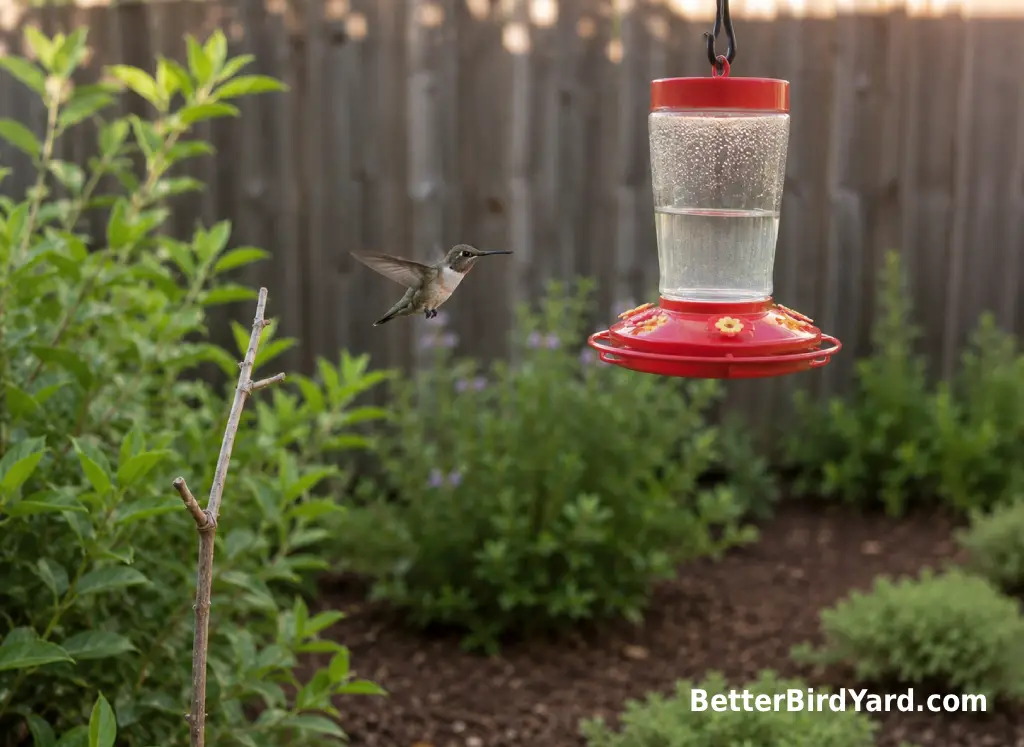
Behavior can support your identification, but it should not be your only clue. Male hummingbirds are often more noticeable during courtship or territorial displays. Cornell Lab describes male Anna’s Hummingbirds climbing high into the air before diving and producing a sound with their tail feathers; it also notes that males and females do not form pairs and that only females care for the young.
Ruby-throated Hummingbirds show similar separation of roles around nesting. Audubon states that incubation is by the female only and that the female feeds the young. The male’s role is courtship display, not nest building or chick care.
Useful behavior clues include:
- A bird sitting on or tending a nest is very likely female.
- A bird doing repeated dramatic dives near another hummingbird is more likely male.
- A bird aggressively guarding a feeder may be male, but females and young birds can also be feisty around food.
- A bird making many quiet trips into a leafy shrub during nesting season may be a female, but never approach or search closely for a nest.
How To Support Male And Female Hummingbirds Responsibly
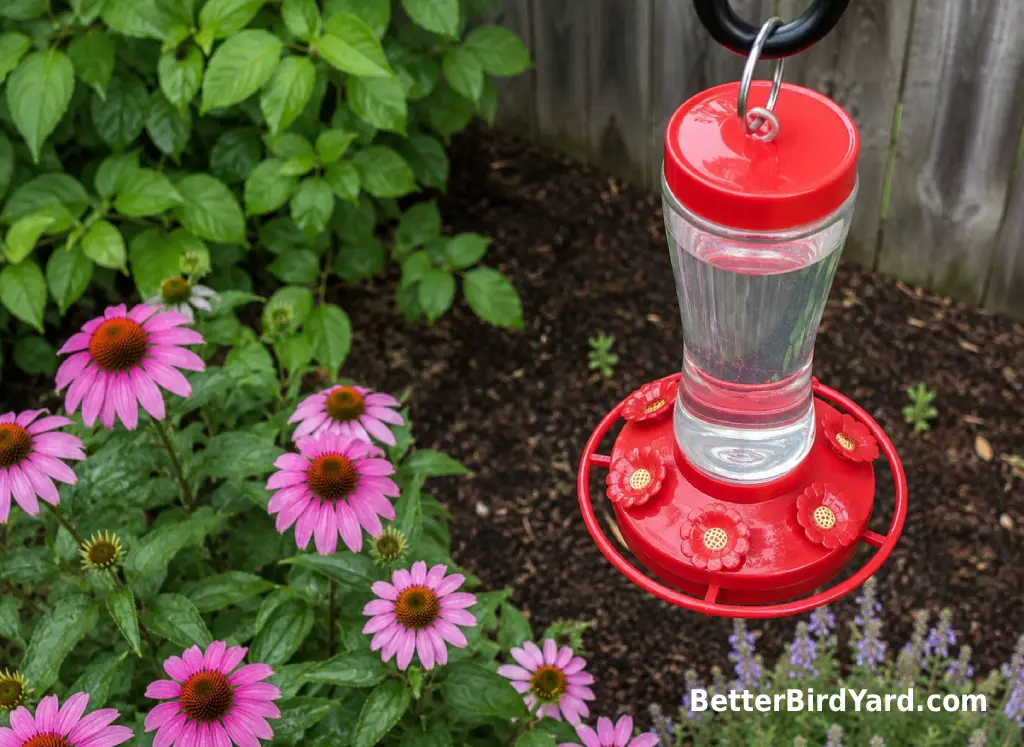
Male and female hummingbirds both benefit from clean feeders, natural nectar plants, insects, safe perches, and cover. Feeders can be helpful, but they are only helpful if you can keep them clean. Smithsonian’s National Zoo recommends a simple nectar mix of 1 part refined white sugar to 4 parts water, no red dye, and changing and cleaning feeders every other day to help prevent harmful mold growth.
Keep the setup simple. Use a feeder that comes apart easily, fill it with only as much nectar as the birds will use quickly, and clean it more often in hot weather or whenever the nectar looks cloudy. For more detailed maintenance, see our guide to cleaning hummingbird feeders and our simple hummingbird nectar recipe.
A bird-friendly hummingbird setup can include:
- A small, easy-to-clean feeder with plain sugar water.
- Native or well-adapted nectar flowers that bloom at different times.
- Shrubs or small trees nearby for resting and lookout perches.
- No honey, red dye, brown sugar, raw sugar, or cloudy old nectar.
- Reduced pesticide use, since hummingbirds also eat tiny insects and spiders.
If you see a hummingbird or other wild bird that appears sick, injured, unusually weak, or unable to fly normally, do not try to diagnose or treat it yourself. Project FeederWatch recommends removing the feeder being used by a sick bird, cleaning the feeder and feeder area thoroughly, and contacting a licensed wildlife rehabilitator or appropriate wildlife agency when a bird may need intervention.
Common Mistakes To Avoid
The most common mistake is deciding too quickly. A flash of red or pink is helpful, but throat color can vanish in shade, and young males may look female-like for a while. Watch tail shape, throat pattern, crown color, and behavior together before settling on an identification.
- Do not assume every pale-throated bird is female. It may be an immature male.
- Do not assume every aggressive feeder bird is male. Females and young birds can defend food too.
- Do not rely on one blurry photo if the bird was in shade or backlit.
- Do not crowd a bird, nest, or shrub to confirm sex. Distance is safer for the bird and usually gives you better behavior clues.
- Do not use red dye to attract hummingbirds. Cornell Lab says natural nectar is clear and there is no reason to add red dye to hummingbird sugar water.
Another mistake is forgetting that species matters. A male Ruby-throated Hummingbird and a male Anna’s Hummingbird do not show the same pattern. In Ruby-throated Hummingbirds, the adult male’s main flashy patch is the throat. In Anna’s Hummingbirds, the adult male can show rose-pink on both the throat and crown.
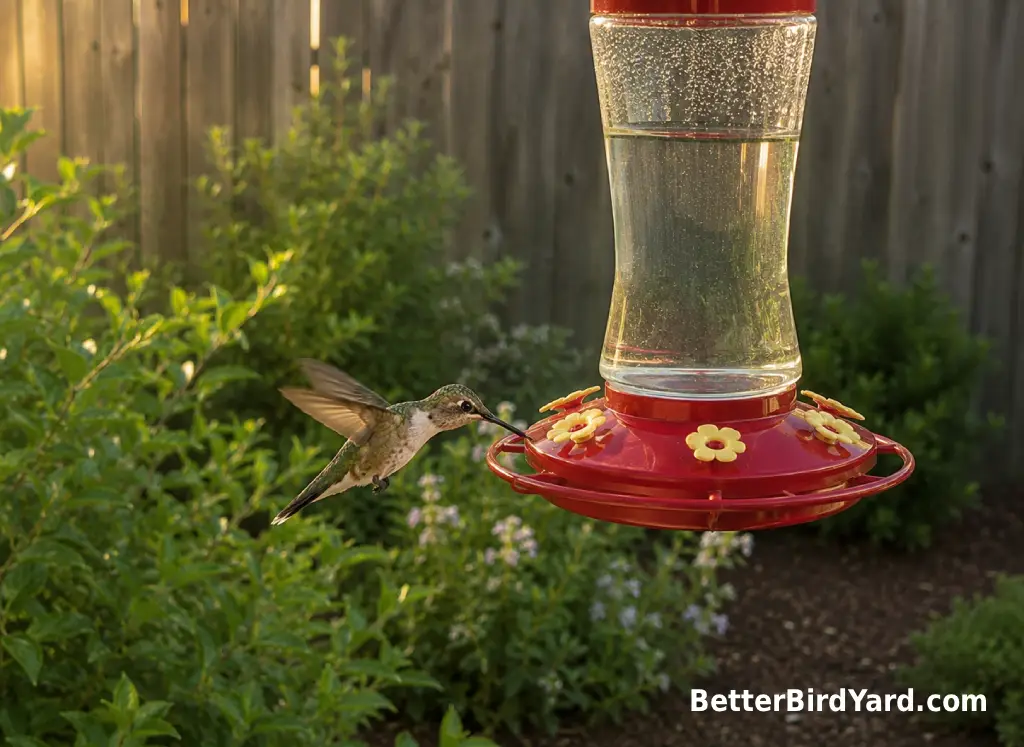
Final Thoughts
The difference between male and female hummingbirds usually comes down to a mix of color, age, species, light, tail marks, and behavior. Adult males are often the bright show-offs, especially when their gorgets catch the sun. Females are usually subtler, and they do the nesting work. Young males sit right in the confusing middle, often looking female-like until more adult feathers come in.
For backyard bird watchers, the best approach is calm observation. Watch the throat from several angles, look for tail tips when the bird turns, compare the head and underside, and note behavior without disturbing the bird. A clean feeder, a few nectar-rich flowers, and safe nearby cover will give you more chances to observe male and female hummingbirds naturally—and will support the birds better than any single identification trick.