House Finch Male And Female: A Simple Backyard ID Guide
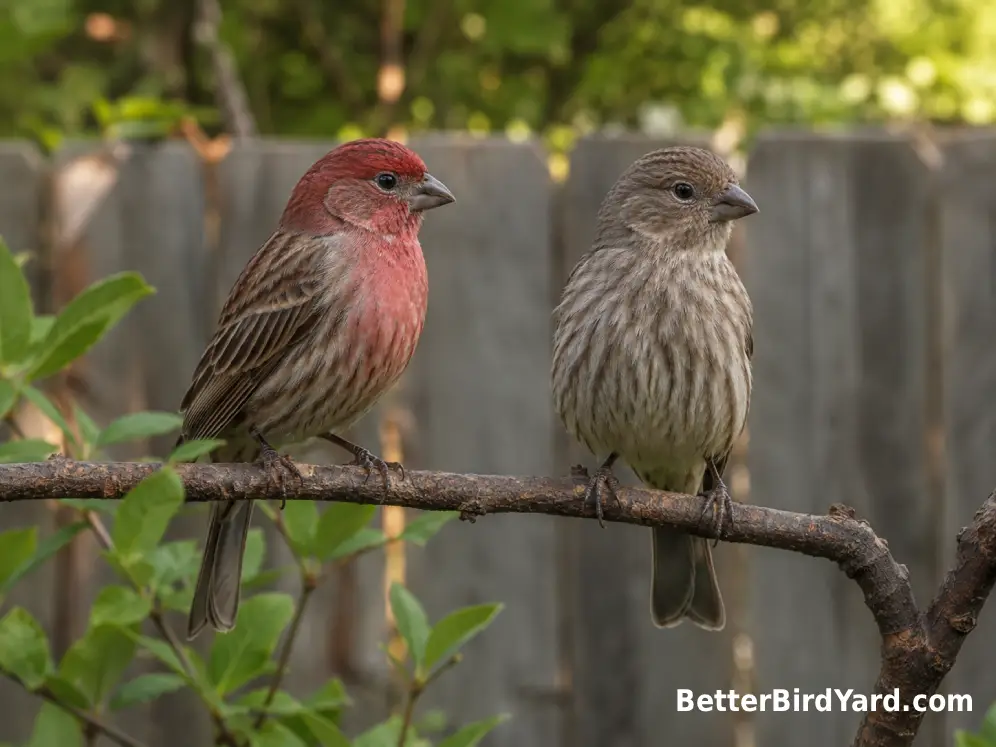
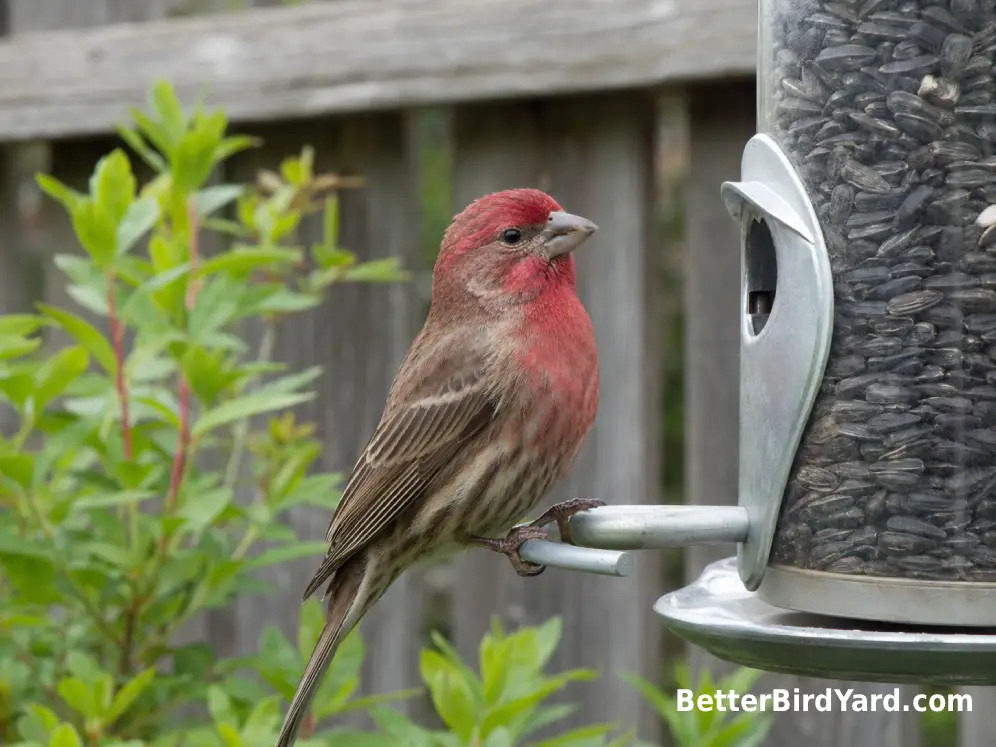
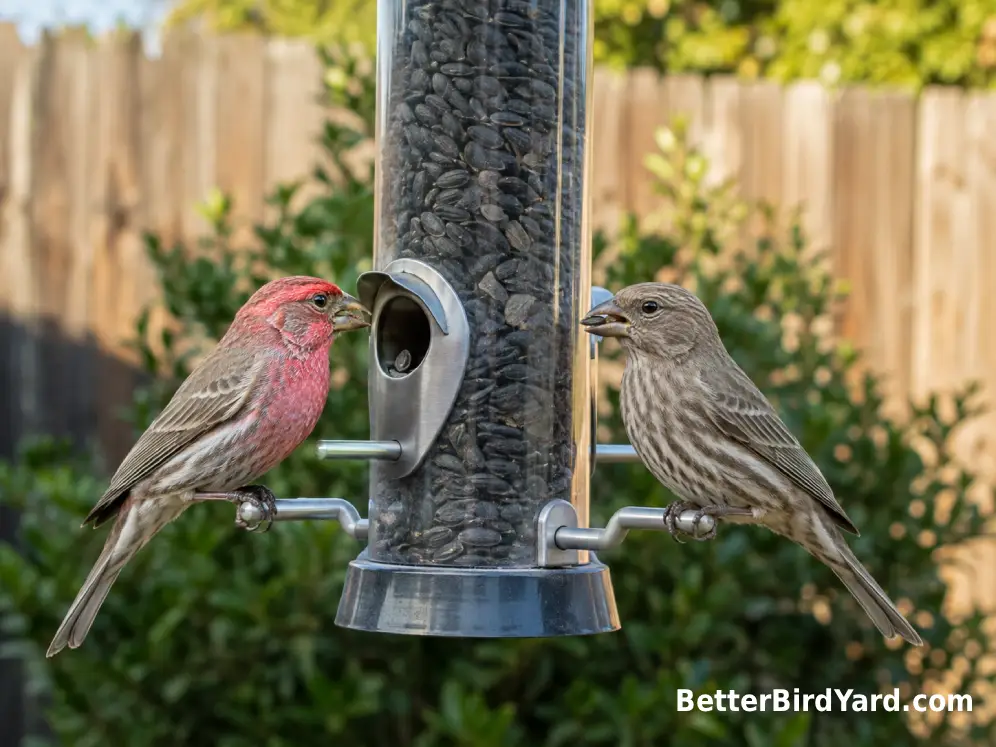
A House Finch male and female can look so different that beginners sometimes assume they are separate species. The quickest clue is color: an adult male usually has red, orange, or occasionally yellow coloring around the face and upper breast, while an adult female is grayish-brown with blurry brown streaks and no red plumage.
Color is only the starting point. Both sexes share the same basic House Finch shape: a small, fairly slender bird with a thick conical seed-cracking bill and a relatively long tail with a shallow notch. Looking at shape, streaking, and face pattern together makes identification much more reliable than relying on a single patch of color. Cornell Lab’s All About Birds describes adult males as rosy around the face and upper breast and females as plain grayish-brown with thick, blurry streaks.
There is one useful complication to remember: some immature males can look much like females. If a brown bird does not show obvious male color, “female/immature House Finch” can sometimes be the most accurate field identification until you have more evidence.
House Finch Male Vs Female: Quick ID
At a good side view, the difference between an adult male and an adult female is usually obvious. The table below gives you the field marks worth checking first.
| Feature | Adult Male House Finch | Adult Female House Finch |
|---|---|---|
| Head And Chest | Usually red to reddish-orange around the forehead, face, throat, and upper breast | Grayish-brown with no normal red plumage |
| Underparts | Pale belly and flanks with noticeable brown streaking | Pale gray-brown underparts with thick, blurry brown streaks |
| Face | Colored areas mixed with brown, especially around the cheek | Fairly plain and indistinct, without a bold eyebrow pattern |
| Bill | Thick, short, conical seed-cracking bill | Same basic thick, conical bill |
| Tail | Fairly long with a shallow notch | Same basic tail shape |
| Best First Clue | Red, orange, or yellowish male coloration | Brown overall with streaked breast and belly |
The shared shape matters. If the supposed female is stockier, has plain unstreaked underparts, or shows a strong pale eyebrow, take another look before calling it a House Finch.
What A Male House Finch Looks Like
The classic male House Finch has rosy-red coloring concentrated around the forehead, eyebrow area, throat, and upper chest. The back remains brown and streaked, and the lower belly and flanks are usually pale with brown streaks. That combination is important: a male House Finch is not simply a solid red bird.
Not every male is bright crimson. Male plumage can range through orange and yellowish tones because carotenoid pigments obtained from food while new feathers are growing influence the resulting color. Project FeederWatch notes that this natural variation is largely diet-related.
That means an orange or yellow House Finch should not automatically be dismissed as another species. Look beyond the exact hue and check the familiar House Finch pattern: colored face and upper chest, brown streaked back, streaked flanks, thick bill, and relatively long tail.
A common beginner mistake is using brightness as a sex test. Color tells you that a normally plumaged bird with red, orange, or yellow male-type feathers is a male, but the precise shade alone is not a dependable way to judge age, health, or identity.
What A Female House Finch Looks Like
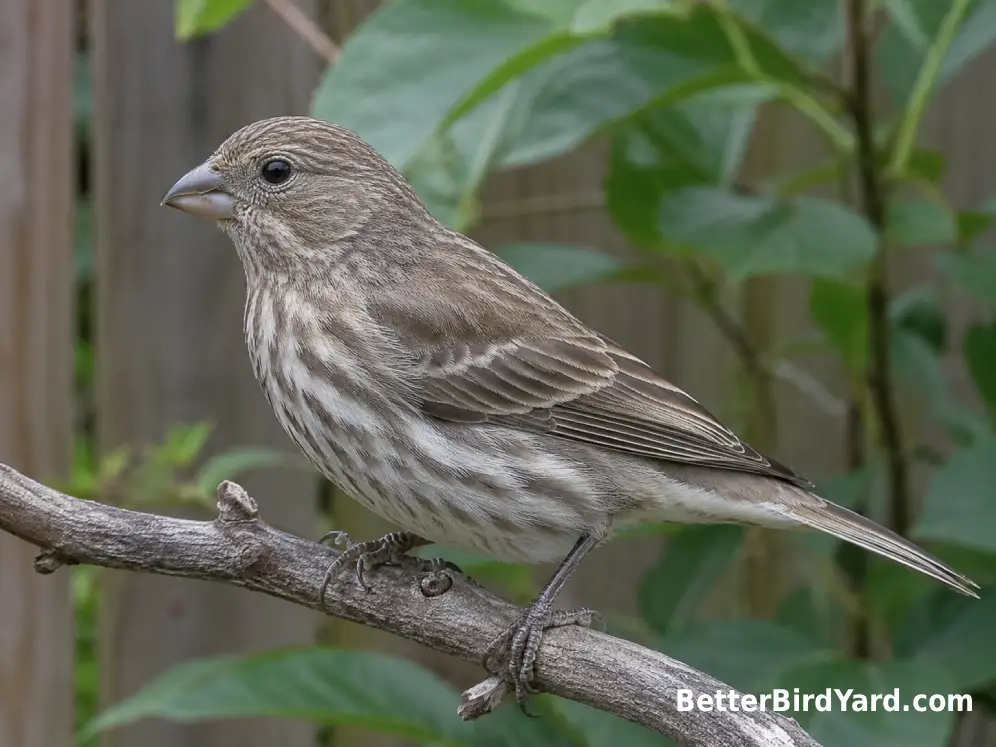
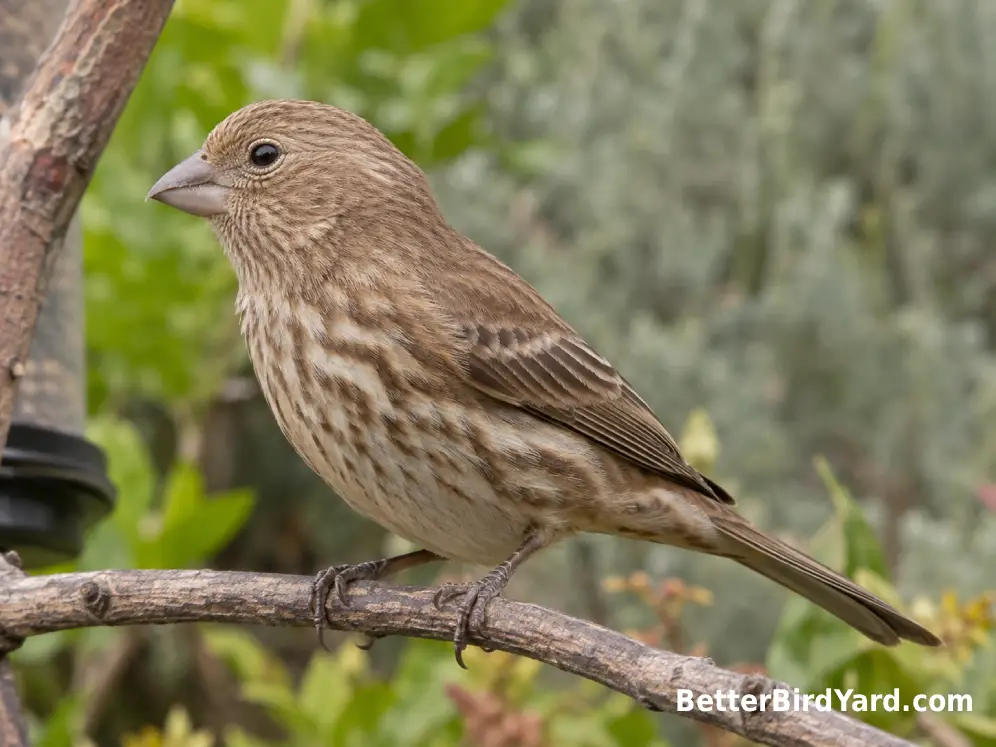
A female House Finch is less colorful but has an excellent set of identification clues. She is brown to grayish-brown overall, with diffuse dark streaks running down the breast, belly, and flanks. Her face tends to look plain rather than crisply patterned. Cornell specifically notes the combination of thick, blurry streaks and an indistinct face.
The plain face is especially helpful when you are trying to separate a female House Finch from a female Purple Finch. A Purple Finch typically shows a much stronger facial pattern, including a distinct pale eyebrow and mustache-like stripe, while the House Finch face looks comparatively washed out.
One caution makes female identification more accurate: a brown House Finch is not automatically an adult female. Some first-year males can retain female-like plumage and may be difficult or impossible to separate from females by appearance alone. Cornell identification materials therefore commonly group them as “female/immature.”
For everyday backyard birding, that is a useful label rather than a failure to identify the bird. If all you can confidently see is a brown, streaked House Finch with no male coloration, recording it as female/immature is often the careful choice.
How To Sex A House Finch At Your Feeder
A feeder gives you something a quick flyover does not: time. House Finches often remain in place while cracking seeds with their stout bills, so you may get several seconds to study the face, breast, streaking, and tail. Cornell notes that they are frequent feeder visitors and often sit at the feeder while opening seeds.
Use the same short routine each time:
- Confirm the House Finch shape first: small body, substantial conical bill, relatively long tail, and shallow tail notch.
- Look for red, orange, or yellow male-type coloring on the face and upper breast. If it is present in the normal House Finch pattern, you are looking at a male.
- If the bird is entirely brown, check for blurry streaks below and a plain face. Those features support female/immature House Finch.
- Do not force the sex of a brown bird when age is uncertain. “Female/immature” may be the most defensible identification.
- Watch more than one angle. A front view reveals breast streaking, while a side view is usually better for the face, bill, back, and tail.
BetterBirdYard editorial note: If you only change one identification habit, stop relying on color alone. Shape plus face pattern plus streaking will solve far more backyard ID problems than asking whether a bird looks “red enough.”
If you want more time to observe these birds, a clean sunflower feeder can be useful. Our House Finch feeder guide covers practical feeder and seed choices without promising that any particular setup will bring birds to every yard.
Common Look-Alikes That Cause Mistakes
The hardest House Finch identifications usually involve another brown finch or a female House Sparrow. Comparing several field marks at once is safer than searching for one perfect feature.
| Bird | Useful Difference From A House Finch |
|---|---|
| Female Purple Finch | Usually has crisper underpart streaking and a much more obvious pale eyebrow and mustache-like facial pattern. |
| Male Purple Finch | Tends to show more extensive reddish coloring across the head and back, rather than the browner-backed look of a typical male House Finch. |
| Female House Sparrow | Usually looks stockier and buffier, with relatively plain underparts and a broad pale eyebrow instead of the House Finch’s heavily streaked breast and belly. |
| Cassin’s Finch | Can create additional confusion in parts of the West; range, head shape, bill shape, and plumage pattern should all be considered before making the call. |
Cornell’s comparison material emphasizes the female Purple Finch’s crisp streaks and strong facial markings, while female House Finches have blurrier streaking and a plainer face. Female House Sparrows, meanwhile, have a broad pale eyebrow and much plainer gray-brown underparts.
Lighting can make all of these birds harder. Warm evening light can make brown feathers look reddish, and deep shade can hide a male’s color. If the identification feels uncertain, wait for a better view instead of turning an ambiguous glimpse into a confident species or sex call.
What To Look For In House Finch Photos
Good female House Finch images are useful because several small details become easier to compare when the bird is frozen in a photograph. A clean side-profile photo is usually more helpful than a dramatic front-facing portrait.
When reviewing female House Finch photos or pictures, zoom in on four areas:
- The face should appear relatively plain, without the bold pale eyebrow of a female Purple Finch or female House Sparrow.
- The breast and belly should show obvious but somewhat blurry brown streaking.
- The bill should look thick and conical rather than thin and pointed.
- The tail should appear fairly long for the body, with a shallow notch when the tip is visible.
A second photo from the front can help confirm the streaking, while a side view gives you the best overall combination of face pattern, bill shape, body proportions, and tail.
Be cautious with heavily edited pictures. Increased saturation can exaggerate reddish tones, while strong sharpening can make soft House Finch streaks appear crisper than they looked in the field. Cornell’s Macaulay Library and Audubon’s field guide galleries are useful reference collections because they show many individuals, ages, poses, seasons, and lighting conditions rather than one idealized bird.
Watching And Feeding House Finches Responsibly
House Finches are familiar visitors to neighborhoods, patios, parks, and feeding stations. Cornell reports that they readily use feeders and commonly eat black oil sunflower seed, along with other seeds and plant foods.
You do not need a large yard to observe them. A simple tube, hopper, or platform-style feeder in a small outdoor space may provide good viewing opportunities where House Finches already occur. Keep expectations realistic: feeder visitors depend on your region, season, surrounding habitat, weather, and the birds already moving through your neighborhood.
Cleanliness matters particularly when birds repeatedly gather at one feeding point. Project FeederWatch currently recommends cleaning seed and suet feeders regularly, such as every week or two, and more frequently during heavy use or wet weather. Remove accumulated debris and wet or spoiled seed rather than topping it off with fresh food.
If you notice birds with swollen, runny, or crusty-looking eyes, unusual lethargy, or other concerning signs, do not try to diagnose or treat them yourself. Clean feeders and the surrounding feeding area, and check current Project FeederWatch and local wildlife agency guidance about whether feeding should be reduced or temporarily paused under your circumstances. House Finches are among the birds affected by eye disease, but similar visible signs should not be used as a backyard diagnosis.
If an individual bird appears injured or unable to function normally and may need intervention, contact a licensed wildlife rehabilitator, local wildlife agency, animal control, or another qualified local professional rather than attempting home treatment.
For a practical routine, see our bird feeder cleaning guide.
Once you know the pattern, separating an adult male House Finch from an adult female is usually straightforward. Look for male-type red, orange, or yellow coloring around the face and upper breast versus the female’s brown, streaked plumage. Then confirm the shared House Finch structure: stout conical bill, slender finch shape, relatively long tail, and soft streaking.
The most useful habit is also the simplest: identify the whole bird rather than one color patch. A red male may be dull, orange, or yellowish, and a brown bird may be a female or an immature male. Face pattern, streaking, bill shape, body proportions, and a good side view will give you a much more dependable answer—and make the next male and female House Finch at your feeder easier to recognize almost at a glance.