What Do Doves Eat? A Practical Backyard Feeding Guide
What do doves eat? For most of the doves you are likely to see around US backyards, the simple answer is seeds and grains. Mourning Doves are especially seed-focused, while other backyard species may also eat berries, fruit, plant material, or occasional invertebrates. If your goal is to feed Mourning Doves, millet, cracked corn, sunflower seed, and similar grains are sensible starting choices.
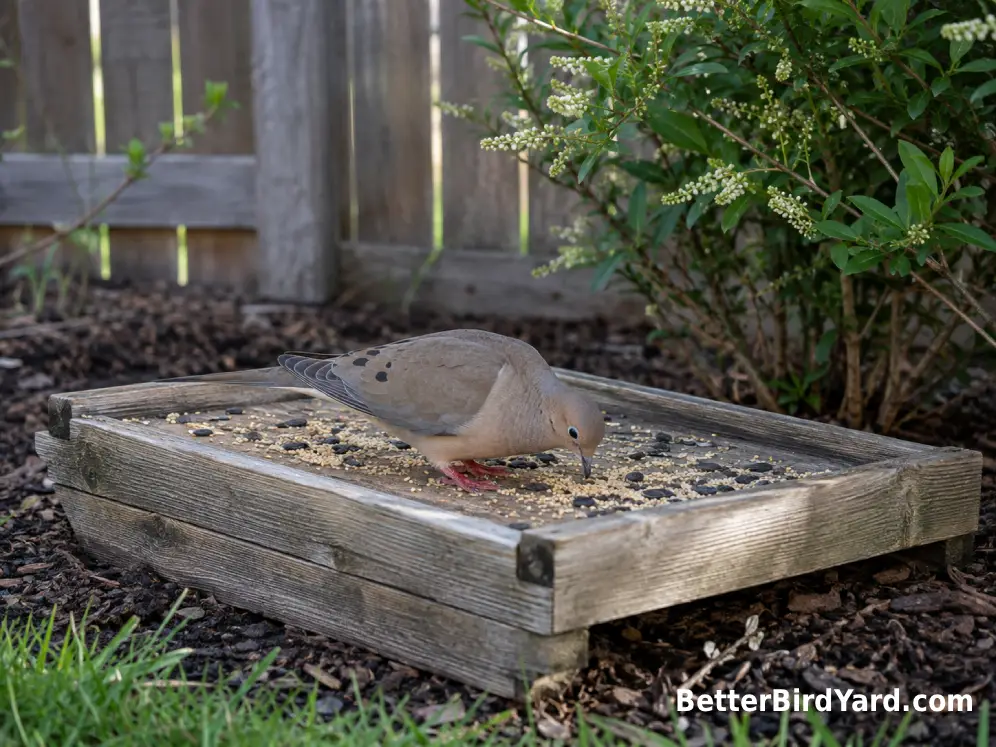
The feeder matters almost as much as the food. Doves are comfortable walking and feeding on flat surfaces, so a platform feeder or a carefully maintained ground-feeding spot usually suits them better than a small hanging feeder with narrow perches. Cornell Lab describes Mourning Doves as ground foragers and reports that seeds make up about 99 percent of their diet.
A quick naming note: the familiar backyard species is spelled Mourning Dove; morning dove is a common misspelling.
What Doves Eat: The Quick Answer
Doves are a diverse group, so there is no single diet that describes every species. Still, several familiar US backyard doves are strongly oriented toward seeds and grains. Mourning Doves eat almost entirely seeds. Eurasian Collared-Doves commonly eat millet, sunflower, milo, wheat, and corn. Inca Doves also rely heavily on seeds, including grass seeds and grains they find around feeders.
| Food | Good Backyard Choice? | Practical Note |
|---|---|---|
| Millet | Yes | A particularly useful small seed for Mourning Doves and other seed-eating doves. |
| Cracked corn | Yes | Easy for ground-feeding birds to pick up; offer modest amounts to limit leftovers. |
| Sunflower seed | Yes | Hulled sunflower can reduce the amount of shells accumulating below the feeder. |
| Safflower | Yes | A grain-like feeder option used by some dove species, including White-winged Doves. |
| Milo or sorghum | Sometimes | Accepted by several dove species but may be less useful for some other feeder birds. |
| Natural grass and weed seeds | Yes | An important part of the natural diet of many ground-feeding doves. |
Project FeederWatch specifically notes that cracked corn can attract doves and suggests combining it with millet on the ground or a platform feeder.
Best Foods To Offer Mourning Doves
If Mourning Doves are the birds visiting your yard, keep the menu uncomplicated. Millet is an especially good fit. Cornell Lab specifically recommends scattering millet on the ground or offering it on a platform feeder for Mourning Doves. Cracked corn is another practical choice, and sunflower seeds can add variety.
A basic dove mix does not need dozens of ingredients. In a small backyard or patio, I would rather put out a modest amount of two or three useful seeds than fill a large tray with a cheap blend that leaves piles of uneaten filler behind. If you are choosing seed for several backyard species at once, our bird seed guide can help you balance dove-friendly foods with choices for finches, chickadees, cardinals, and other visitors.
Mourning Doves do not normally need fruit, mealworms, suet, or nectar from you. Their natural diet is overwhelmingly seed-based. They occasionally consume other foods, but those exceptions are not a reason to turn a dove feeding station into a complicated buffet.
Watch what disappears and what remains. If one ingredient consistently sits untouched while millet and sunflower vanish, reduce the unwanted seed rather than continually topping off the mix. That small adjustment keeps food fresher and makes cleanup easier.
How To Feed Doves Without Creating A Mess
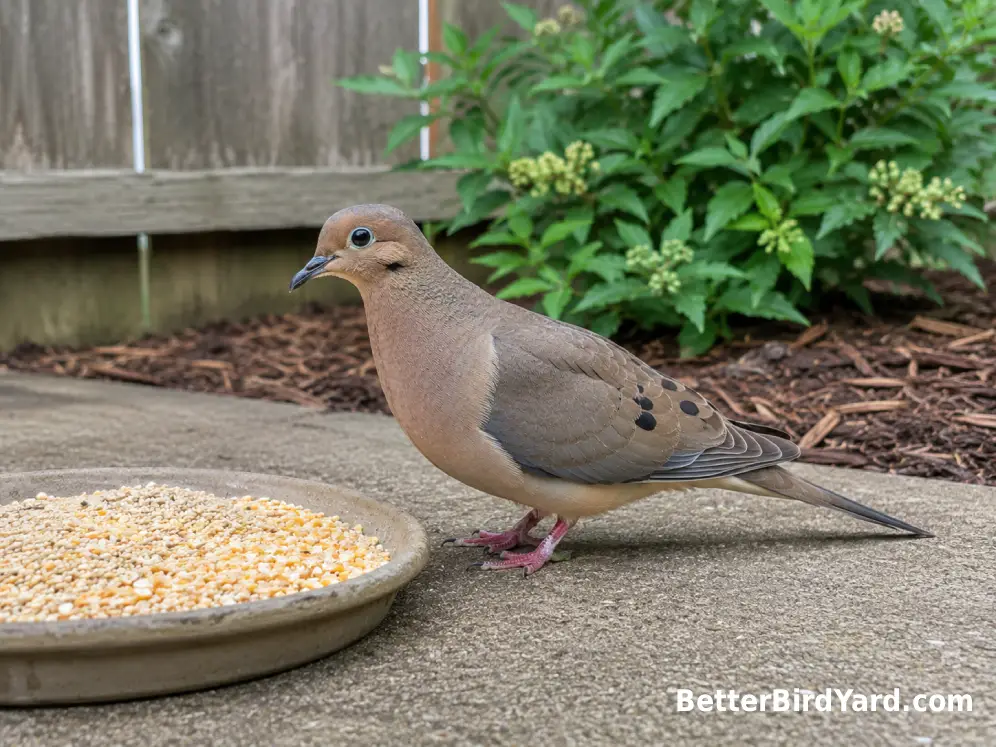
Mourning Doves naturally forage on the ground, and Audubon notes that they often eat spilled seed beneath elevated feeders. That does not mean the best strategy is dumping a large pile of grain onto the lawn. Concentrated leftovers can get wet, mix with droppings, and attract rodents.
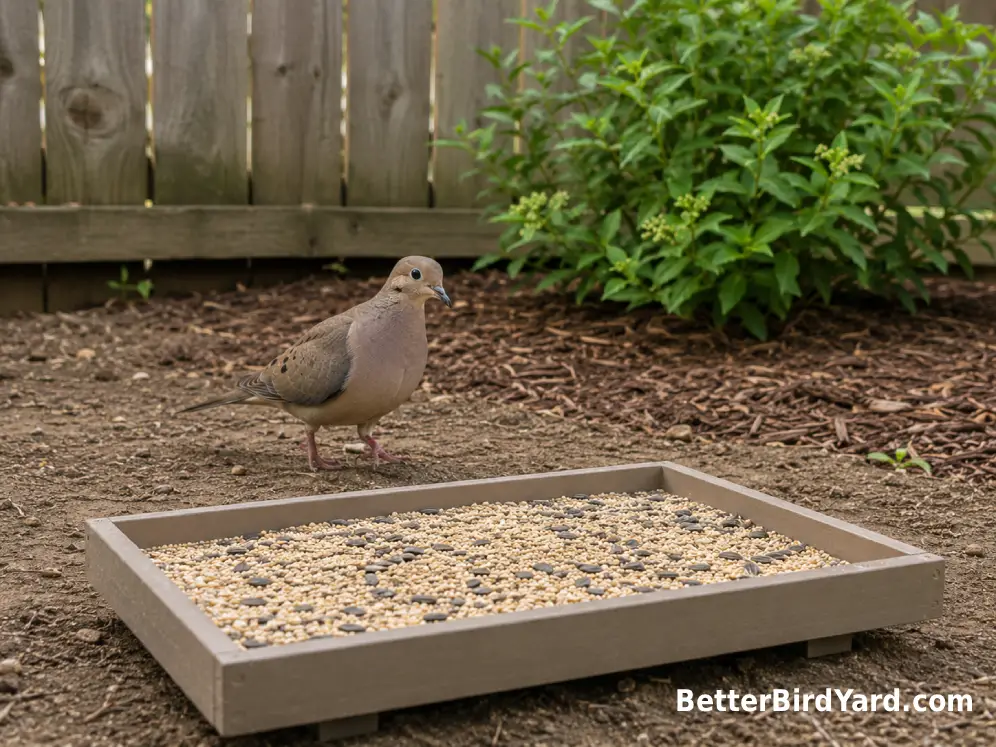
A low platform or tray can give doves the flat feeding surface they prefer while making it easier for you to monitor how much food remains. Direct ground feeding can also work where conditions are suitable, but keep portions small and choose an open spot that is easy to inspect and clean.
- Offer only as much seed as the birds are likely to use while it is fresh.
- Remove wet, moldy, spoiled, or heavily soiled food instead of adding fresh seed on top.
- Sweep or rake accumulated hulls, old seed, and droppings from the feeding area.
- Move or rotate ground-feeding spots when buildup becomes difficult to control.
- Keep cats indoors and avoid placing a feeding site where predators can easily hide immediately beside feeding birds.
Project FeederWatch recommends keeping the ground under feeders tidy because discarded food and waste can contribute to unhealthy conditions and attract rodents. It also advises cleaning seed feeders regularly, with more frequent attention during heavy use or wet weather.
A common mistake we see is treating scattered seed as maintenance-free because it is not technically inside a feeder. The opposite is often true. Seed on soil or concrete is exposed to moisture and contamination, so check it closely after rain and whenever food begins accumulating faster than birds are eating it.
What Doves Eat In The Wild
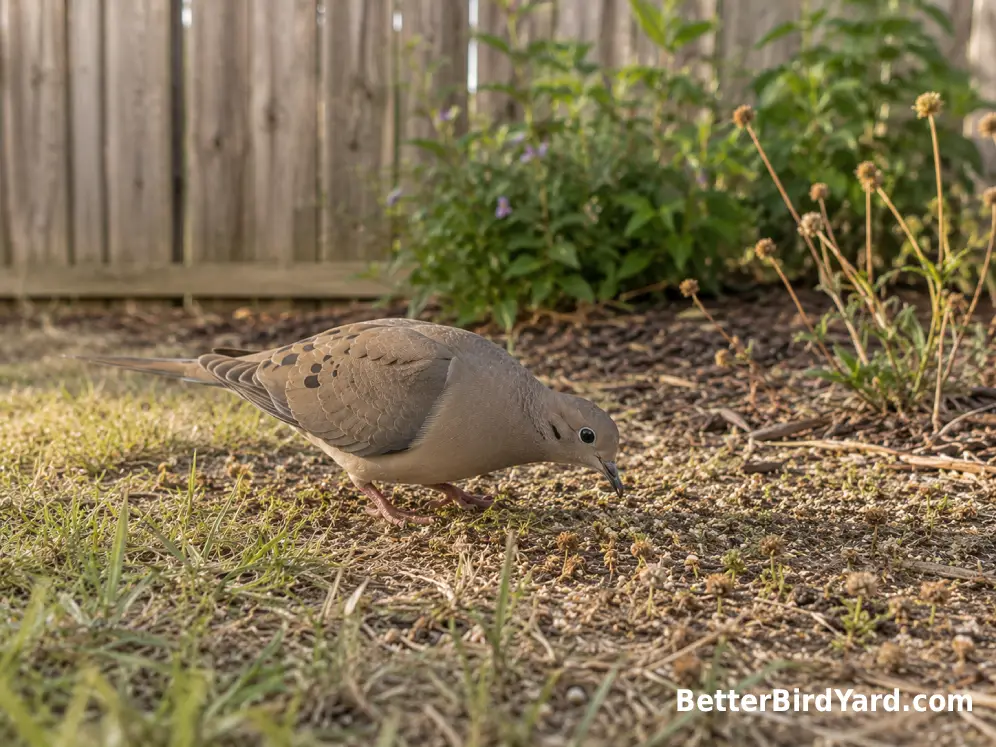
In the wild, Mourning Doves walk across open ground collecting seeds from grasses, weeds, herbs, agricultural plants, and other seed-producing vegetation. They peck at the surface rather than scratching through litter in the manner of some ground-feeding birds. Cornell Lab describes seeds as about 99 percent of the Mourning Dove diet.
This seed-heavy diet is one reason a slightly untidy garden edge can sometimes be useful. Allowing appropriate plants to mature and set seed gives birds natural foraging opportunities after flowers fade. Plant choices vary widely across the country, so favor species appropriate to your region rather than assuming one seed-producing plant is native everywhere.
Other doves broaden the pattern somewhat. Eurasian Collared-Doves eat mostly seeds and cereal grains but may also take berries, green plant material, and invertebrates. Common Ground Doves eat many small seeds and may consume berries and insects, while White-winged Doves can make substantial use of fruits and other plant foods in parts of their range.
That is why the answer to what dove birds eat changes slightly with the species. For a typical US backyard, though, seeds and grains remain the most useful foods to think about first.
What Baby Doves Eat
Baby doves do not simply start life eating the loose birdseed you put on a feeder. Both dove parents produce a specialized substance commonly called crop milk or pigeon milk and feed it to their newly hatched young. As the chicks develop, their diet transitions toward food supplied by the parents, including regurgitated seeds. This unusual feeding system occurs throughout the dove and pigeon family.
If you find a feathered young dove on the ground, do not assume it is starving. Young birds commonly leave the nest before they are accomplished fliers, and their parents may continue caring for them nearby. Cornell Lab advises that most fledglings people encounter do not need to be rescued; keeping pets away and observing from a distance is often the appropriate response.
Do not experiment with cow’s milk, bread, homemade formulas, seed forced into the bill, or water delivered by hand. Audubon wildlife guidance specifically cautions against feeding or giving water to distressed wild birds before professional advice because improper feeding can cause harm.
Foods And Feeding Mistakes To Avoid
The easiest dove-feeding mistakes are usually not about buying the wrong premium seed. They are about offering too much food, allowing leftovers to stay wet, or assuming anything edible to people must also be useful bird food.
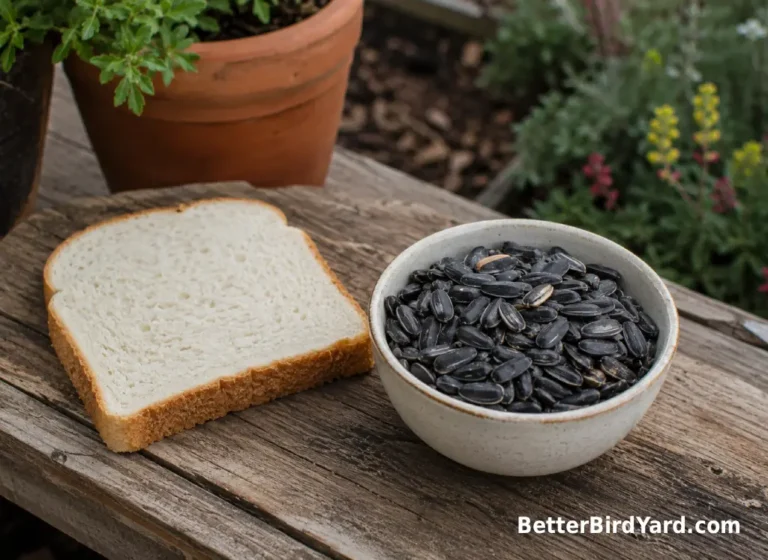
Skip bread and heavily processed or salty human snacks as routine bird food. They do not provide a good substitute for the seeds and grains doves naturally rely on. More importantly, never leave moldy, spoiled, or waterlogged seed available. Project FeederWatch emphasizes removing accumulated old food and keeping feeding areas clean.
Be careful with oversized ground piles as well. Doves may happily gather around an abundant food source, but more food is not automatically better. A large amount that sits overnight can draw rodents and becomes harder to keep sanitary after rain or heavy bird traffic.
If you notice birds that look unusually lethargic, have obvious swelling or crusting around the eyes, or otherwise appear unwell, avoid trying to diagnose or treat them yourself. Clean the feeding area and feeders, consider reducing or pausing feeding as appropriate, and check current guidance from your state wildlife agency or Project FeederWatch. Licensed wildlife rehabilitators are the appropriate professionals for individual wild birds that need intervention.
If cleaning tends to fall off your routine, our bird feeder cleaning guide can help you set up a simpler maintenance schedule.
A Simple Dove-Friendly Backyard Plan
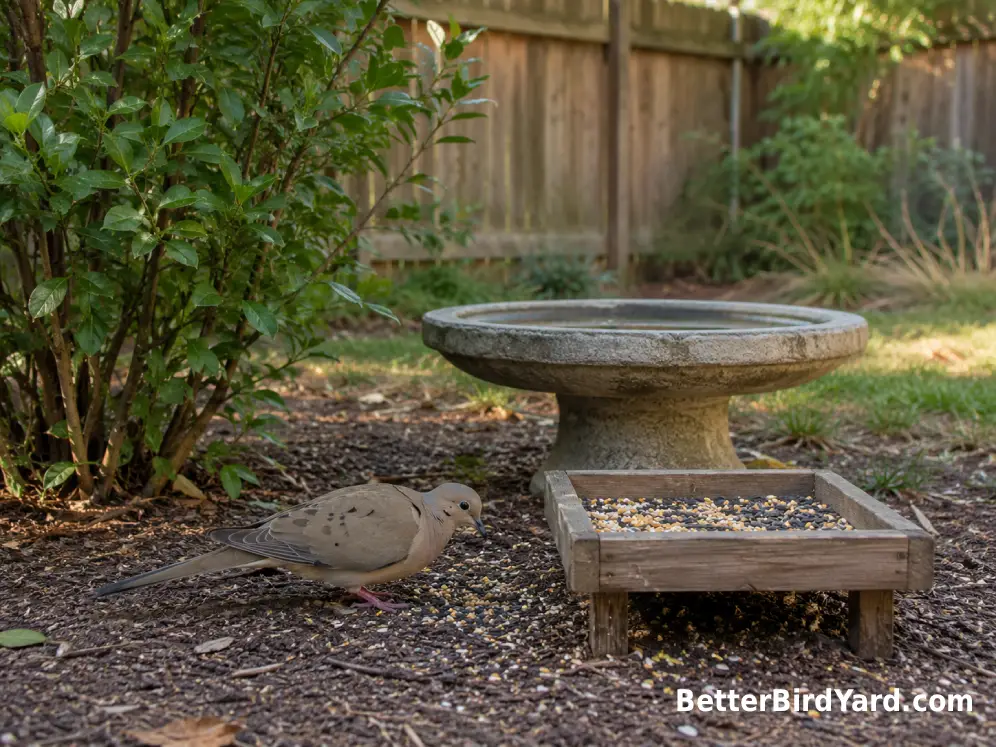
If you want to support doves without turning your yard into a high-maintenance feeding station, start small. Put millet, cracked corn, sunflower, or another suitable seed on a clean platform or in a modest, easy-to-monitor ground-feeding area. Then watch what the birds actually eat before increasing the amount.
Fresh water is useful too. A clean bird bath can complement food and habitat, but treat it as another item that needs regular attention. Project FeederWatch recommends replacing bird-bath water frequently and cleaning the bath when it becomes dirty, cloudy, or contaminated with droppings.
Nearby shrubs and regionally appropriate plants can add cover and natural food without requiring you to keep a feeder full every day. Ground-feeding doves are also particularly vulnerable to prowling cats, so keeping cats indoors is an important part of making the feeding area safer. Cornell specifically highlights this concern for Mourning Doves because they spend so much time feeding on the ground.
For most backyards, that is enough: appropriate seed, a feeding surface that fits dove behavior, fresh water, regular cleanup, and a yard where birds can forage without being crowded into one dirty spot. Mourning Doves do not need an elaborate menu. Give them the foods they are built to eat, keep those foods fresh, and let the birds decide whether your yard fits into their daily routine.