Can Birds Eat Bread? Safer Answers For Backyard Bird Feeders
Can birds eat bread? Technically, many birds will peck at bread if they find it, but that does not make it a good food for them. For backyard bird watchers, the better answer is simple: do not feed bread to wild birds on purpose.
Bread fills birds up without giving them the balanced nutrition they would get from seeds, insects, berries, suet, nectar, or other natural foods. Bread crumbs, sourdough pieces, sandwich scraps, and stale slices all create the same basic problem. Moldy bread is worse and should never be offered to birds.
This does not mean you have to stop feeding birds altogether. It means choosing foods that actually support them and keeping your feeding area clean enough that you are not trading a pleasant bird visit for a sanitation problem. Audubon warns against feeding bread to ducks and other birds because human foods can have harmful effects, especially when they replace more suitable natural foods.
The Quick Answer: Skip Bread At The Feeder
Yes, birds may eat bread if it is offered. Sparrows, starlings, pigeons, crows, gulls, ducks, geese, and some backyard songbirds may all investigate bread because it is easy food. The issue is not whether birds can swallow it. The issue is whether it helps them.
For routine backyard feeding, bread is not useful bird food. It is a low-value handout that can crowd out better choices, attract rodents, create soggy messes, and encourage birds to gather where food waste builds up. The U.S. Fish and Wildlife Service notes that feeding wild birds can bring joy, but it also carries risks such as disease, predation, and window collisions when birds are drawn into close contact around feeding areas.
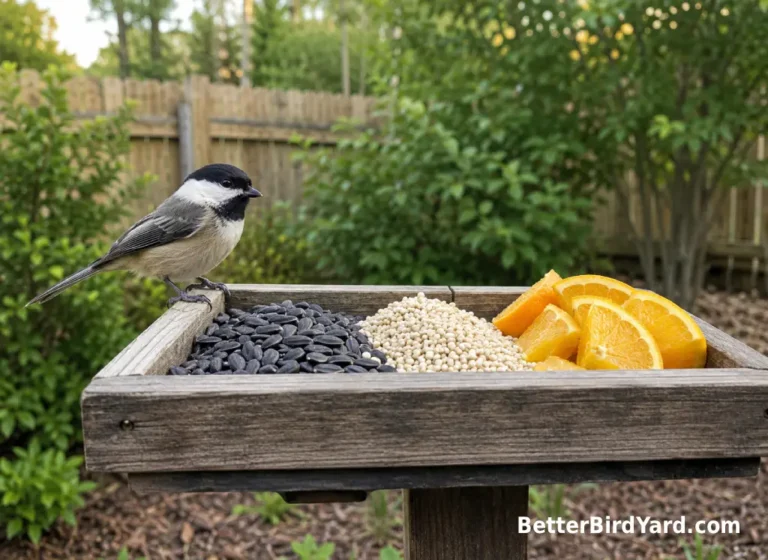
In a small yard or patio, the simplest rule is this: keep bread out of the feeder area and use a small amount of high-quality bird food instead. A clean feeder with sunflower, safflower, nyjer, suet, or another appropriate food is far better than tossing out leftover toast.
Why Bread Is Bad For Birds
Bread is bad for birds because it offers little of what wild birds are usually looking for: protein, fat, minerals, and species-appropriate energy. Birds have different diets depending on species and season, but most backyard birds rely on a mix of seeds, insects, fruit, nuts, nectar, or other natural foods. Bread does not work as a meaningful replacement.
A bird that fills up on bread may spend less time eating more suitable foods. That matters most for young birds, cold-weather birds, molting birds, and birds already under stress from weather, predators, or limited habitat. Audubon’s waterfowl-focused guidance is especially clear that bread from people is not a good way to help birds at ponds or parks.
There is also the mess problem. Bread softens quickly outdoors. Once damp, it can stick to surfaces, break apart under feeders, and mix with droppings, seed hulls, and soil. Cornell Lab’s All About Birds warns that moldy or decomposing seeds and hulls around feeder trays can make birds sick, and the same common-sense sanitation concern applies to spoiled table scraps left where birds feed.
What About Bread Crumbs, Sourdough, Or A Tiny Piece?
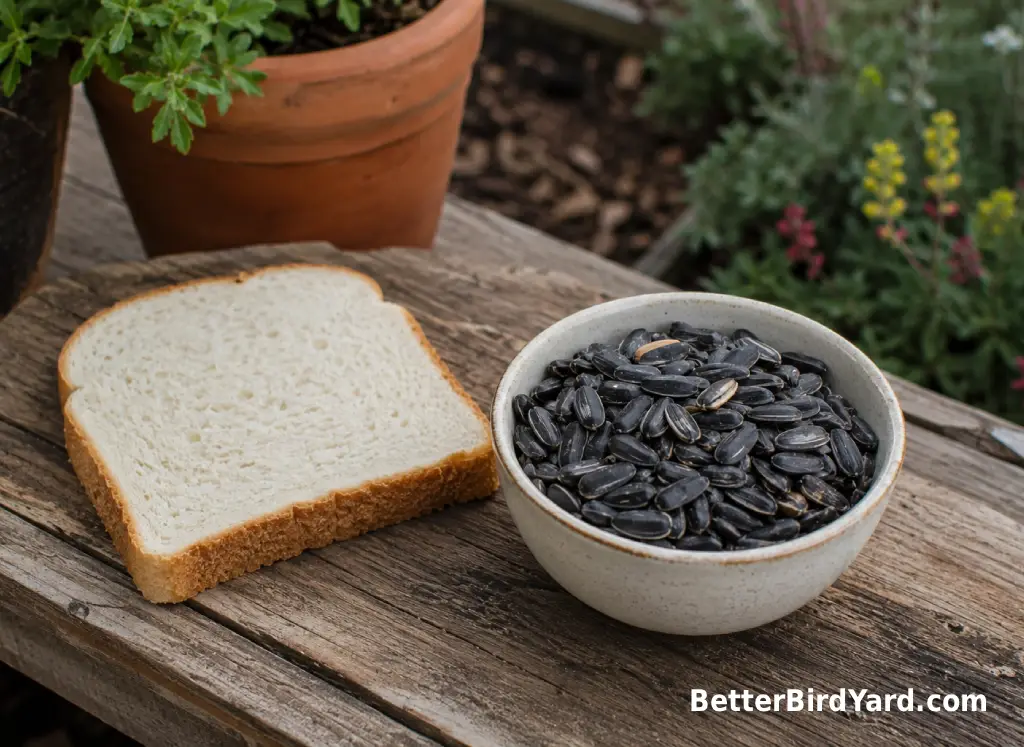
Bread crumbs are still bread. Sourdough is still bread. A tiny piece is less risky than a pile of slices, but it still does not become a good bird food. The crumb size, toast level, or homemade label does not solve the nutrition problem.
If a bird snatches a crumb once, there is no reason to panic. Backyard birds encounter odd scraps in human spaces all the time. The important part is not turning bread into a habit, especially in a place where birds gather daily.
Here is the practical BetterBirdYard rule we would use in an ordinary yard or balcony:
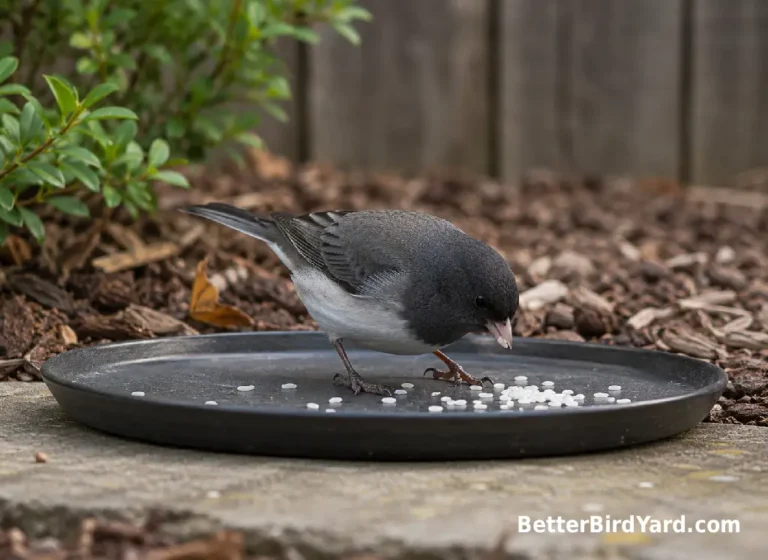
- Do not put bread in feeders, trays, bird baths, or on the ground.
- Do not toss bread crumbs under shrubs “for the birds.”
- Do not use bread as a children’s bird-feeding activity at ponds or parks.
- Do not mix bread into seed, suet, peanut pieces, or fruit.
- Do compost or discard leftover bread in a way that does not attract wildlife.
Moldy Bread Is A Hard No
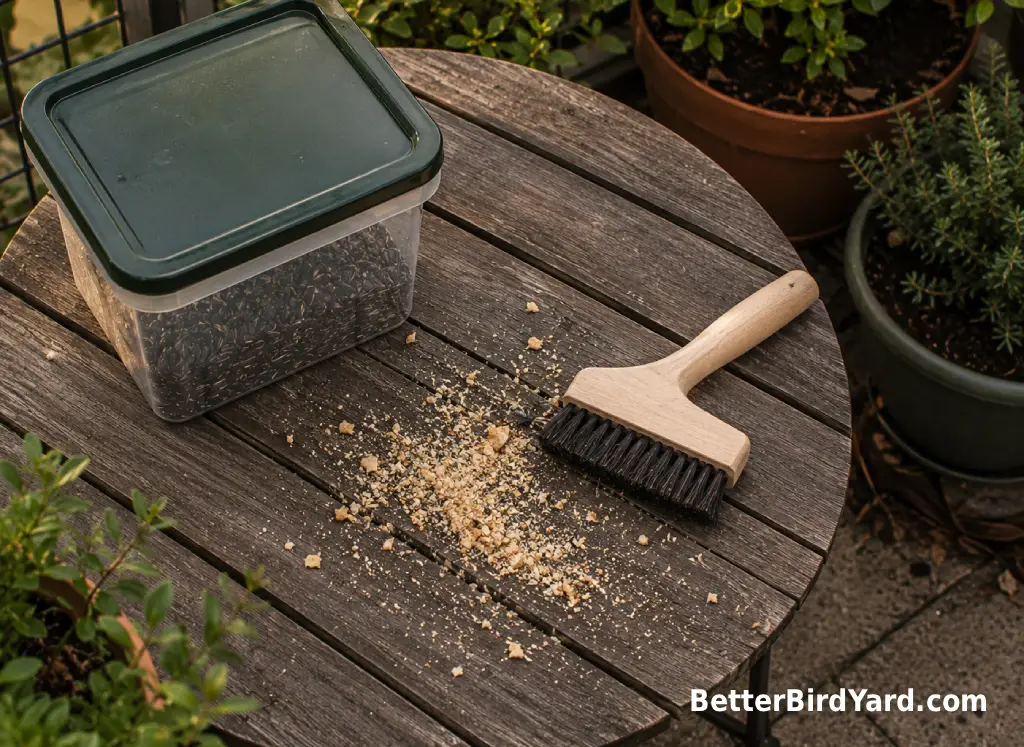
Can birds eat moldy bread? No. Moldy bread, or mouldy bread, should never be given to wild birds. If bread has visible mold, smells sour or spoiled, feels wet and slimy, or has been sitting outside, treat it as waste, not bird food.
Bird feeding areas already need careful hygiene because birds gather closely on shared surfaces. Project FeederWatch explains that feeders can spread pathogens through direct contact or indirectly through droppings, and recommends regular cleaning to reduce disease risk.
Moldy food also creates a bigger yard problem. It can attract rodents and nuisance wildlife, and it can leave residue in grass, mulch, deck cracks, and feeder trays. Cornell Lab’s feeder-cleaning guidance recommends cleaning the ground below feeders to prevent buildup of hulls, uneaten seeds, and other waste, noting that moldy or spoiled food is unhealthy for birds and pets and can attract rodents.
If you find moldy bread near your feeder, remove it, clean the surface it touched, and check whether other food in the area has gotten wet or spoiled. In a small patio space, a lidded trash or compost container is much better than leaving scraps where wildlife can reach them.
Better Foods To Offer Instead
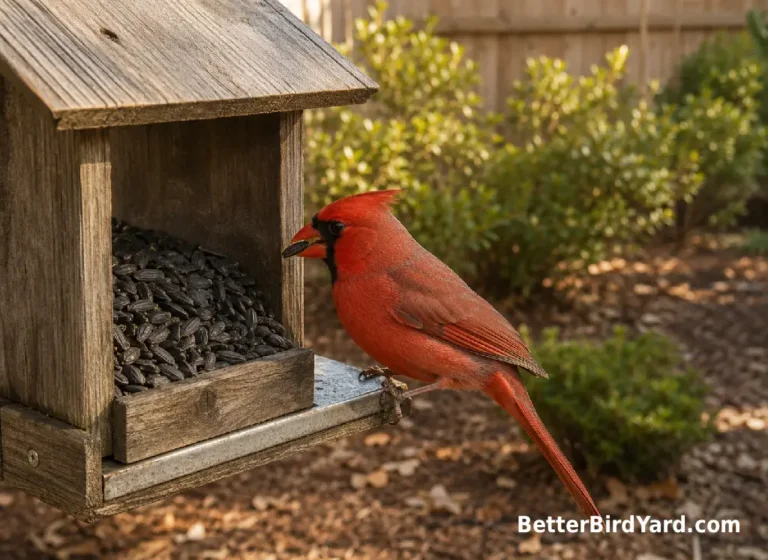
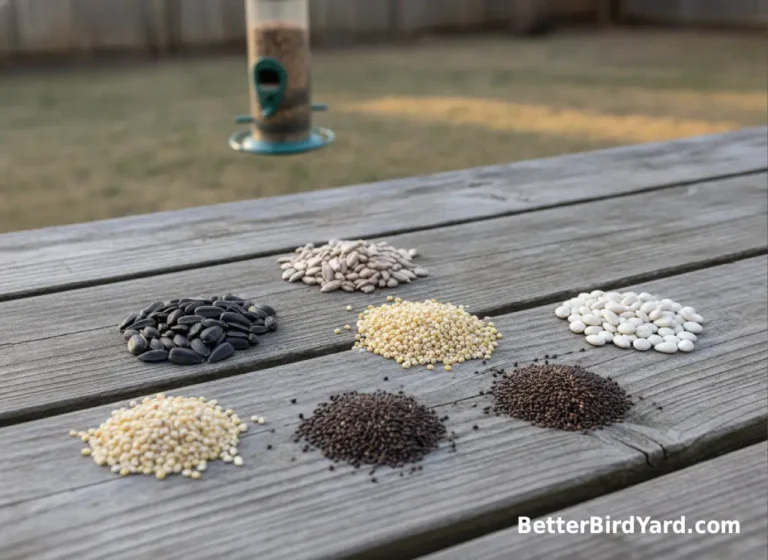
If you want to feed wild birds, choose foods that fit the birds visiting your yard and that you can keep fresh. Cornell Lab’s seed guide describes sunflower as the seed that attracts the widest variety of birds, with black oil sunflower especially useful because its thin shell is easy for many seed-eating birds to open and its kernel is high in fat.
| Food | Best Use | Beginner Note |
|---|---|---|
| Black Oil Sunflower | General backyard feeding | A strong first choice for many seed-eating birds. |
| Safflower | Tray or hopper feeders | Often used by cardinals, grosbeaks, chickadees, doves, and native sparrows, though results vary by yard. |
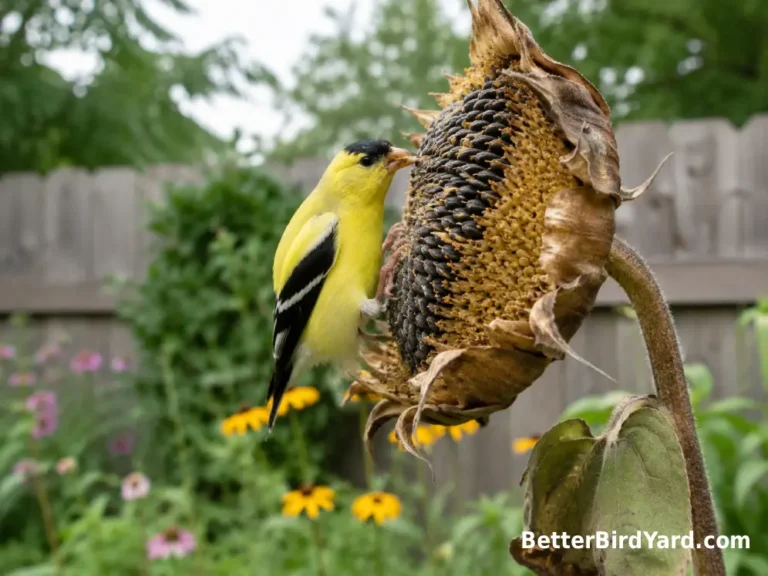
| Nyjer | Finch feeders | Best in a clean tube or mesh feeder designed for tiny seeds. |
| Suet | Cool-weather feeding and woodpecker visits | Use a proper suet cage and replace spoiled pieces. |
| Native Plants | Long-term bird support | Seeds, berries, insects, shelter, and nesting cover can all come from the right local plants. |
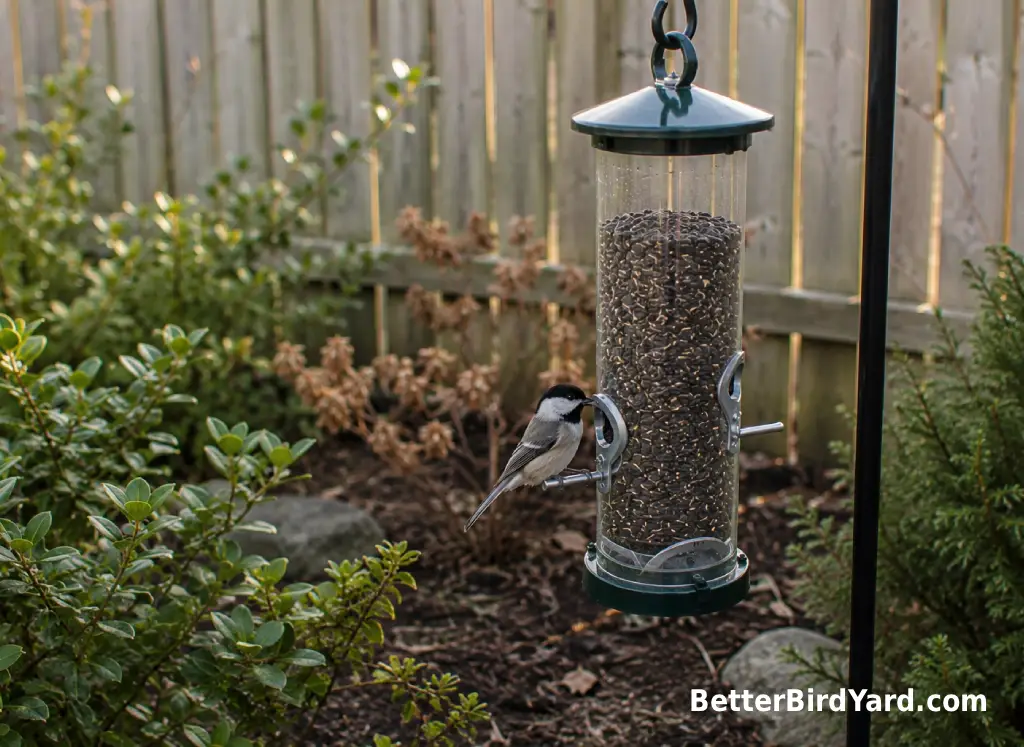
For renters and small-space bird watchers, start modestly. A small tube feeder with sunflower hearts may reduce shell mess, but Cornell notes that shelled sunflower spoils faster without the shell, so offer only what birds can finish in a day or two.
If you would rather support birds without managing feeders every week, native plants are often the better long-term move. Cornell Lab notes that native plants provide birds with buds, fruits, seeds, insects, shelter, and nesting places, while also fitting local conditions when chosen carefully.
How To Handle Leftover Bread Without Attracting Problems
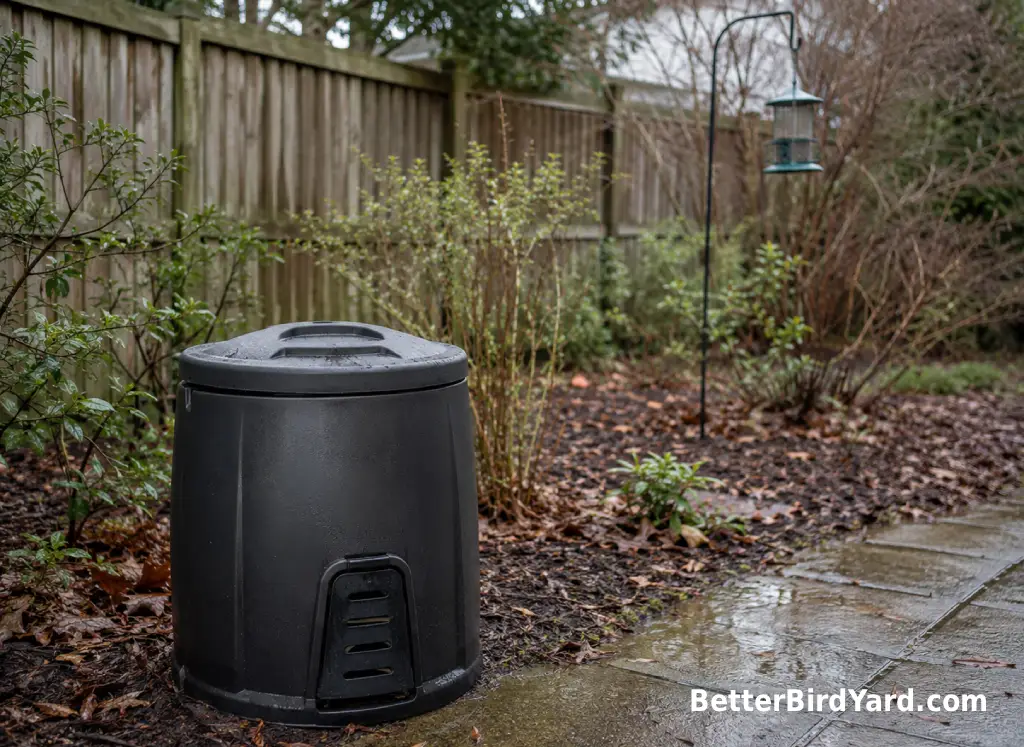
Leftover bread should not become wildlife bait. Put it in a secure trash or compost system that fits your home, local rules, and pest situation. In apartments, that may mean indoor compost collection or regular trash. In suburban yards, it may mean a lidded compost bin that does not draw raccoons, rats, bears, or neighborhood dogs.
Do not leave bread on a deck rail, toss it into the lawn, or scatter it at the edge of a parking lot, pond, or storm drain. Uneaten bread can break down into a sticky mess, and wildlife may learn to check the spot repeatedly for handouts.
If children want to help birds, give them a better job than tossing bread. They can rinse a bird bath, help refill a clean feeder, count birds from a window, or plant a small pot of native flowers where local rules allow. In a balcony setting, even one appropriate container plant can be more bird-friendly than a pile of crumbs.
Common Backyard Feeding Mistakes To Avoid
Most bread-feeding problems start with good intentions. Someone wants to help birds, use leftovers, or make bird watching fun for kids. The better approach is to make the helpful choice easy and the messy choice unlikely.
- Do not use bread to stretch expensive seed. It lowers the value of the food mix and can spoil outdoors.
- Do not place bread in platform feeders. Flat trays already collect droppings and old food more easily than some enclosed feeders.
- Do not feed more seed than birds finish. Excess food on the ground can spoil and attract rodents.
- Do not ignore wet food. Rain-soaked seed, damp suet, and soggy scraps should be removed.
- Do not keep feeding through a visible sick-bird problem without changing your routine.
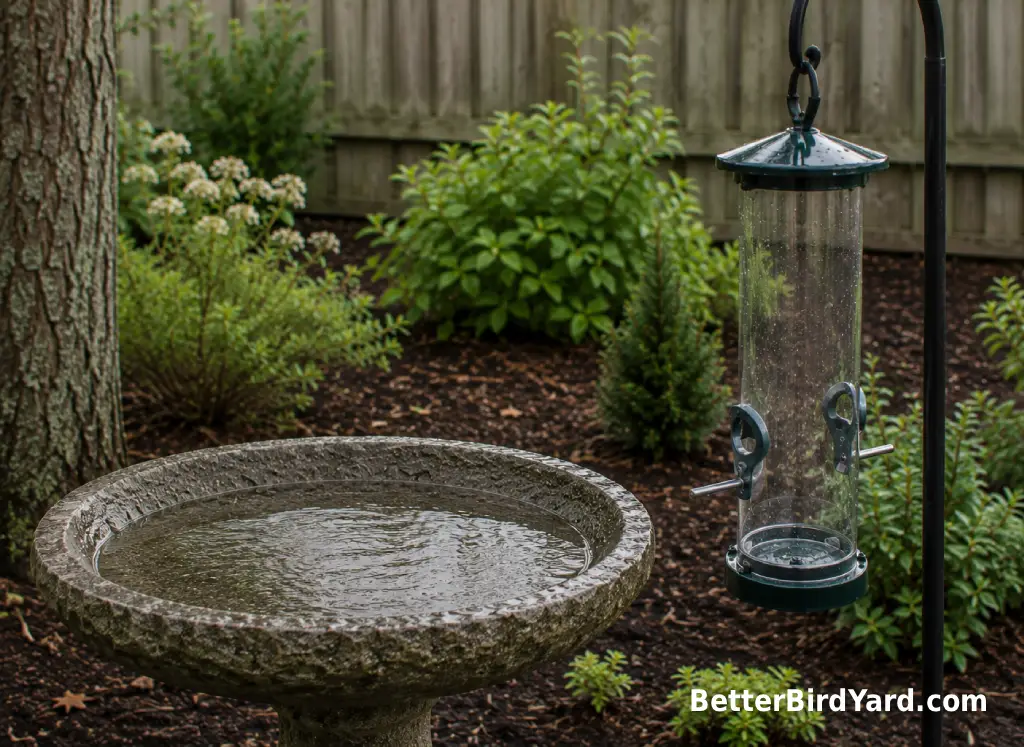
Project FeederWatch recommends cleaning seed and suet feeders about every week or two, more often during heavy use or wet weather, and allowing feeders to dry completely before refilling. It also recommends keeping the area below feeders clean so droppings, moldy food, and waste do not build up.
Editorial note: if feeder care feels like too much during a busy month, reduce the number of feeders instead of cutting corners. One clean feeder is better than three neglected ones. Our bird feeder cleaning guide can help you set a simple routine.
When To Pause Feeding Or Get Local Help
If you see birds that look unusually lethargic, fluffed up for long periods, unable to fly normally, or showing crusty eyes or abnormal growths, do not try to diagnose the problem from your yard. Remove spoiled food, clean feeders and bird baths, and check guidance from your state wildlife agency or local wildlife authority. Project FeederWatch suggests cleaning more often, considering disinfection, and sometimes temporarily removing feeders when sick birds are observed, depending on local conditions and disease concerns.
If a bird appears injured, stunned, orphaned, or unable to move away from danger, contact a licensed wildlife rehabilitator, local wildlife agency, animal control, or another qualified local professional. BetterBirdYard is not a wildlife rehabilitation service, and backyard feeding advice is not a substitute for local wildlife help.
Also check local rules before feeding wildlife in shared spaces, apartment complexes, HOAs, city parks, waterfront areas, or neighborhoods with bear, raccoon, rat, or goose conflicts. Rules and best practices vary by city, county, state, and property type.
The main takeaway is simple: birds may eat bread, but bread is not a responsible backyard bird food. Skip the bread, never offer moldy bread, keep feeding areas clean, and choose foods or native plants that match the birds in your own yard. A small, clean, well-managed setup does more good than a large feeder station full of scraps.