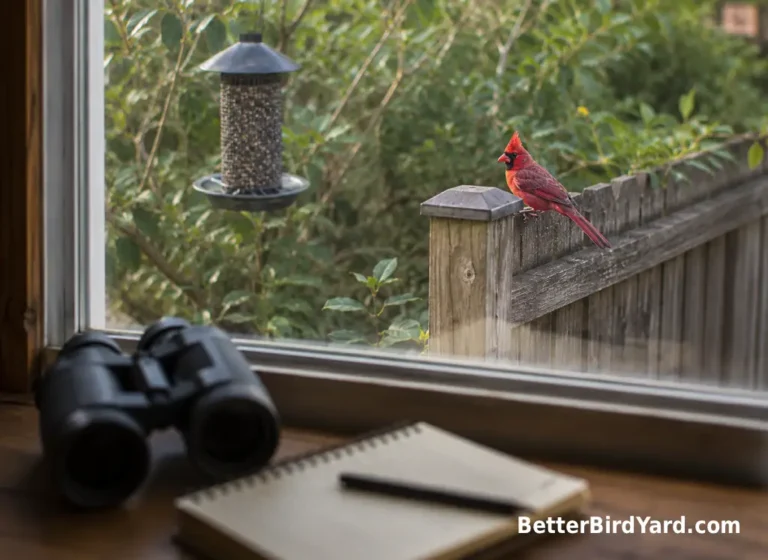
What Do Cardinals Eat? A Practical Backyard Food Guide
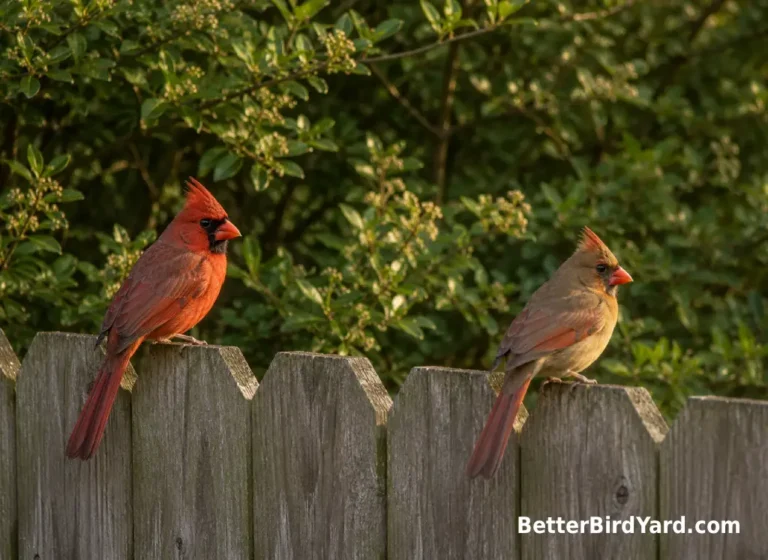
Northern Cardinals eat a varied diet of seeds, fruits, and insects. At backyard feeders, they are especially likely to visit for sunflower seed, safflower, and other easy-to-crack foods served in a feeder that gives them enough room to perch. In the wild, they also eat berries, weed seeds, grains, and many kinds of insects, with insects becoming especially important during nesting season. Cornell Lab of Ornithology describes Northern Cardinals as eating mainly seeds and fruit, with insects added to the diet, and notes that nestlings are fed mostly insects.
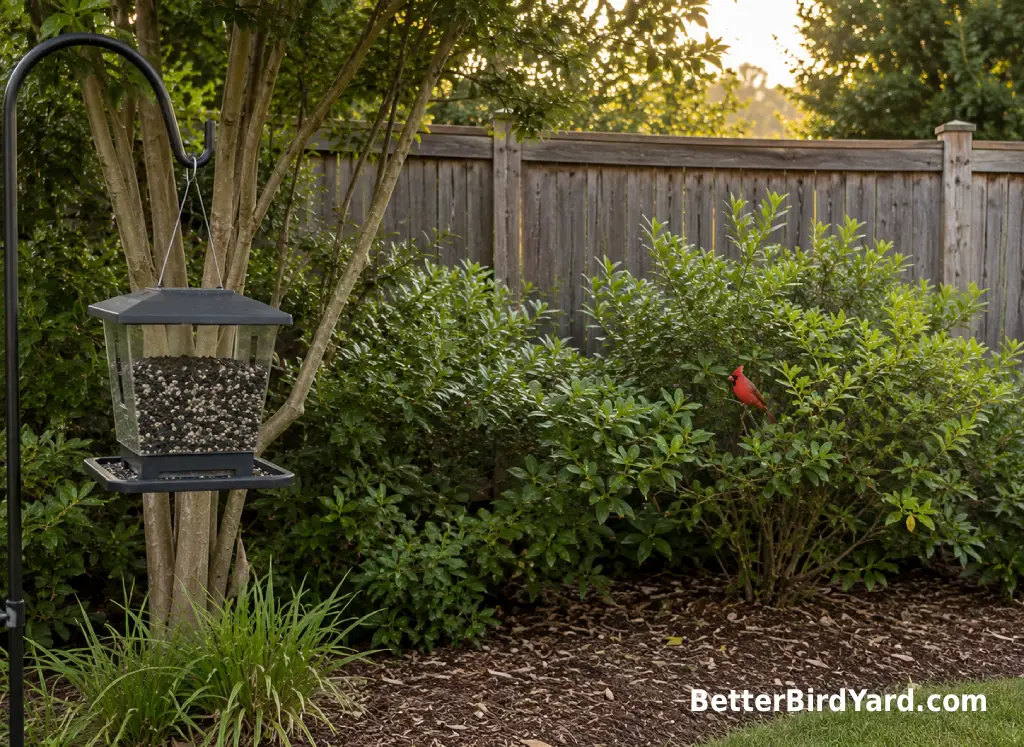
For a beginner, the simplest answer is this: start with black oil sunflower seed or safflower in a hopper, platform, or sturdy tray feeder, keep the food dry, and place the feeder near shrubs or small trees where cardinals can approach with cover nearby. That gives you a practical setup without turning your yard into a messy, crowded feeding station.
Feeding cardinal birds responsibly is not just about choosing cardinal bird food. It also means avoiding moldy seed, cleaning feeders, watching for sick birds, and remembering that feeders are only supplemental. Natural foods, native shrubs, insects, and safe cover matter too.
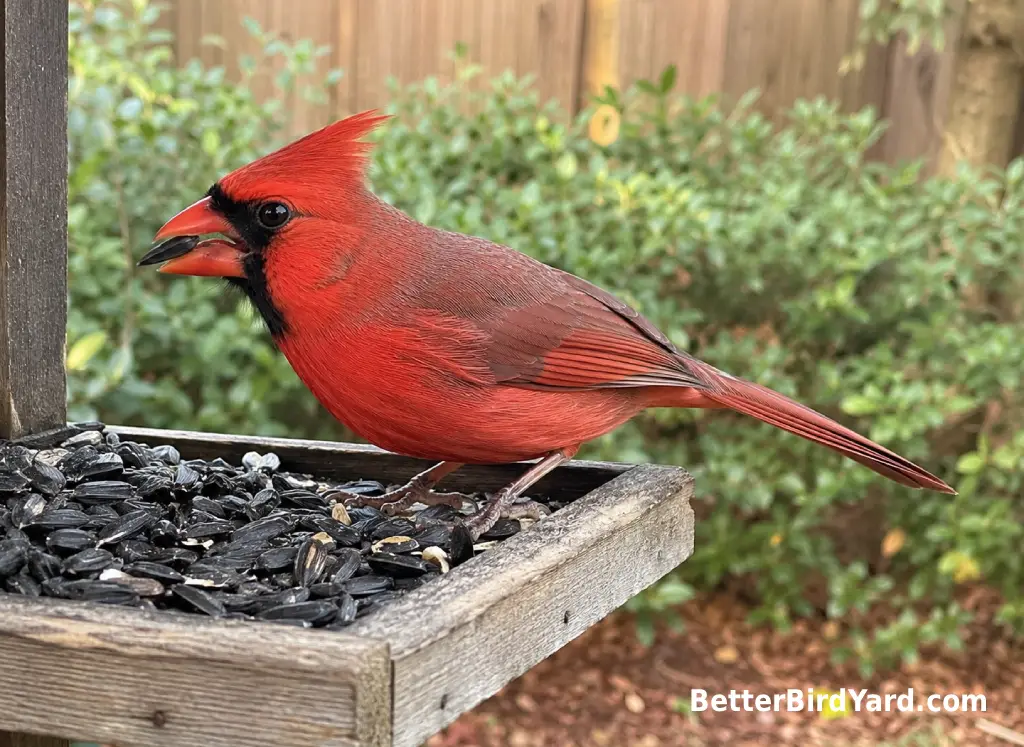
Quick Answer: The Foods Cardinals Eat Most Often
Cardinals are seed-cracking birds with strong, cone-shaped bills, but they are not seed-only birds. Their natural diet includes seeds, grains, fruits, berries, insects, and other small invertebrates. Audubon summarizes the Northern Cardinal diet as mostly seeds, insects, and berries, with young birds fed mostly insects.
For backyard feeding, the most useful cardinal food choices are:
- Black oil sunflower seed
- Striped sunflower seed
- Safflower seed
- Sunflower hearts or chips
- Peanut pieces, in moderation
- Occasional suet in cool weather
- Native berries and seeds from bird-friendly plants
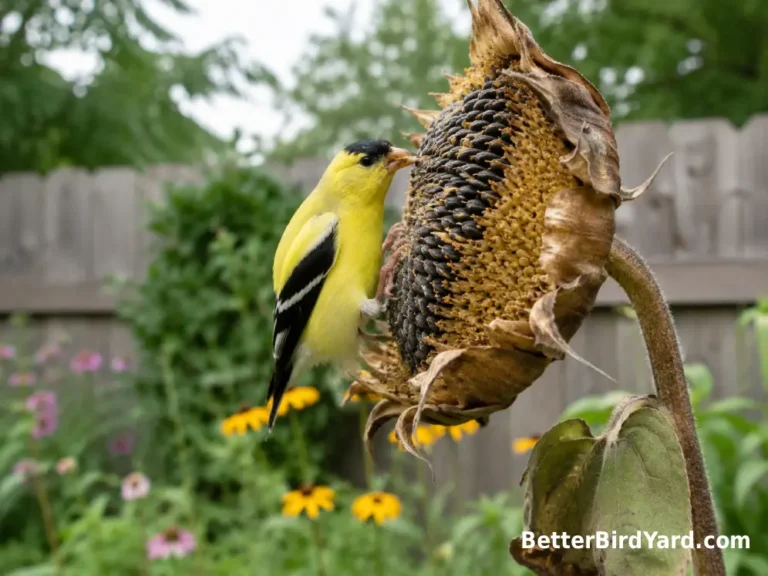
If you are trying to choose one bird seed for cardinals, black oil sunflower is usually the best starting point because it attracts many backyard birds and is widely recommended as a main feeder seed. Cornell Lab notes that sunflower attracts the widest variety of birds and warns that mixes heavy in filler grains can create waste as birds sort through them.
Cardinals also spend plenty of time feeding low or near the ground. That does not mean you should scatter piles of seed across the lawn. A low platform feeder, tray with drainage, or covered ground-feeding area is usually easier to keep clean than loose seed on damp soil.
What Northern Cardinals Eat In The Wild
In the wild, Northern Cardinals eat what the season and habitat provide. Cornell lists fruits and seeds from plants such as dogwood, wild grape, grasses, sedges, mulberry, hackberry, blackberry, sumac, and corn, along with insects and other small invertebrates.
That matters for backyard bird watchers because feeders are only one piece of the picture. A yard with shrubs, seed-bearing plants, leaf litter, and fewer pesticide pressures can support more of the natural foods cardinals use outside the feeder. You do not need a large property. Even a small patio edge with a few region-appropriate native shrubs can offer cover and seasonal food.
A common beginner mistake is thinking of cardinal bird food only as a bag of seed. Seed helps, but cardinals also benefit from insects for nesting season, berries in colder months, and dense cover where they can retreat. Audubon’s native plant guidance emphasizes that plants can provide food, cover, nesting habitat, and insect foraging opportunities for birds, though the best plant choices vary by region.
For a simple BetterBirdYard approach, combine one reliable feeder with one habitat improvement. Add a shrub, leave a small natural mulched area under plantings, or choose native berry-producing plants recommended by your state extension office or local native plant society.
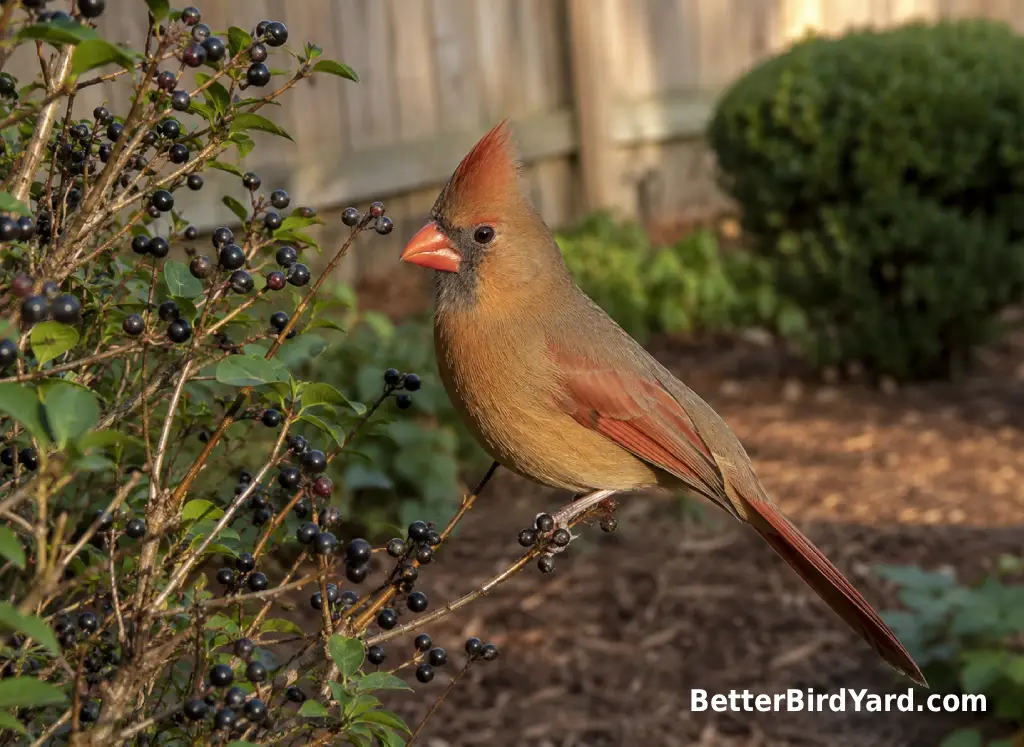
The Best Bird Seed For Cardinals At Feeders
The best bird seed for cardinals is usually a simple, high-quality seed rather than a cheap mix with many filler ingredients. Black oil sunflower seed is the easiest first choice for most yards. Safflower is also worth trying, especially if you want a seed cardinals often accept while some nuisance feeder visitors may be less interested in it. Cornell’s winter feeding guidance notes that cardinals appreciate safflower, while Cornell’s seed guide recommends sunflower as a main feeder seed and cautions that filler-heavy mixes can lead to waste.
| Cardinal Food | How To Use It | Backyard Notes |
|---|---|---|
| Black Oil Sunflower Seed | Use in hopper, platform, or large tube feeders | A strong all-around choice, but shells can make a mess |
| Safflower Seed | Offer alone or mixed with sunflower | Often useful for cardinals, though results vary by yard |
| Sunflower Hearts | Use where shell mess is a problem | Cleaner, but can spoil faster when damp |
| Peanut Pieces | Offer sparingly in a clean feeder | Use unsalted pieces and remove damp leftovers |
| Suet | Offer in cool weather in a suet cage | Cardinals may visit occasionally, but it is not their main feeder food |
For most homes, a practical cardinal bird seed mix would be mostly black oil sunflower with some safflower. If you want less mess on a balcony or small patio, sunflower hearts can help, but they need more attention in wet weather because hulled seed can spoil quickly.
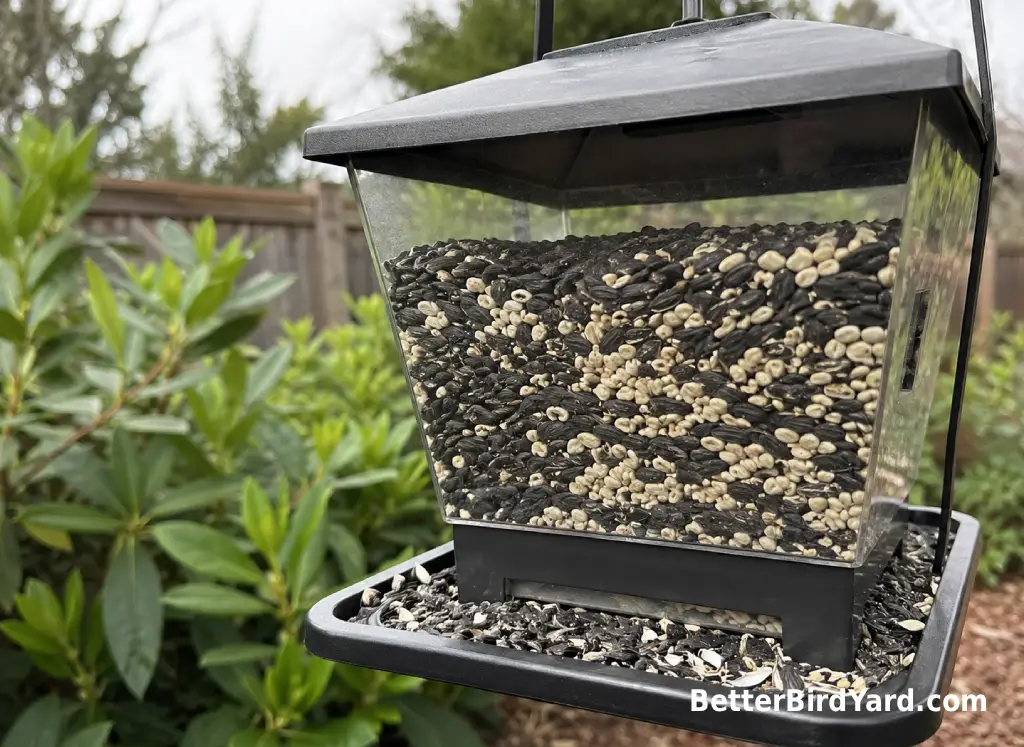
Feeder Styles That Make Cardinals More Comfortable
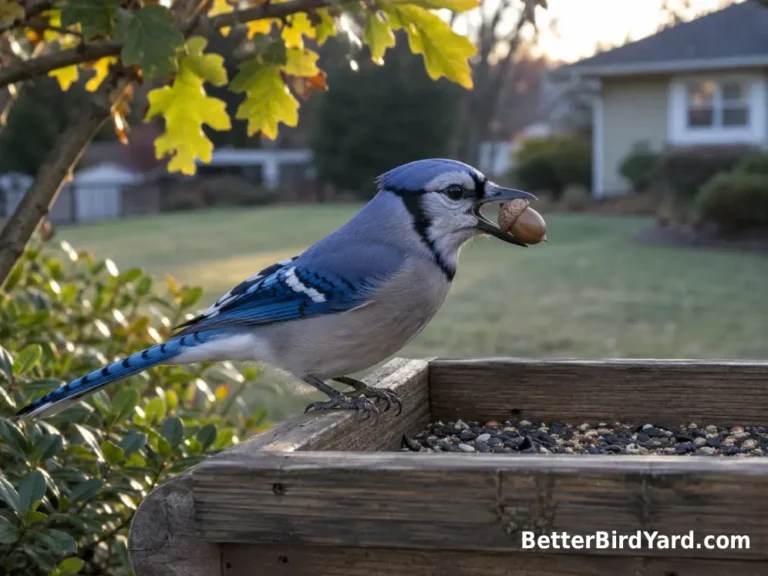
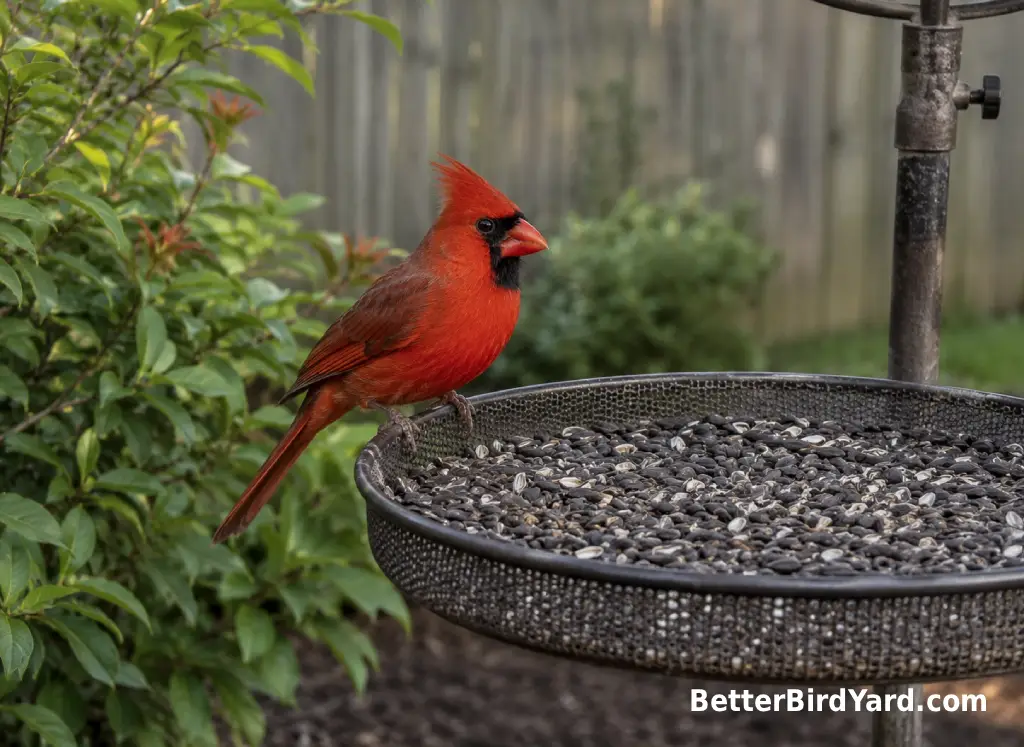
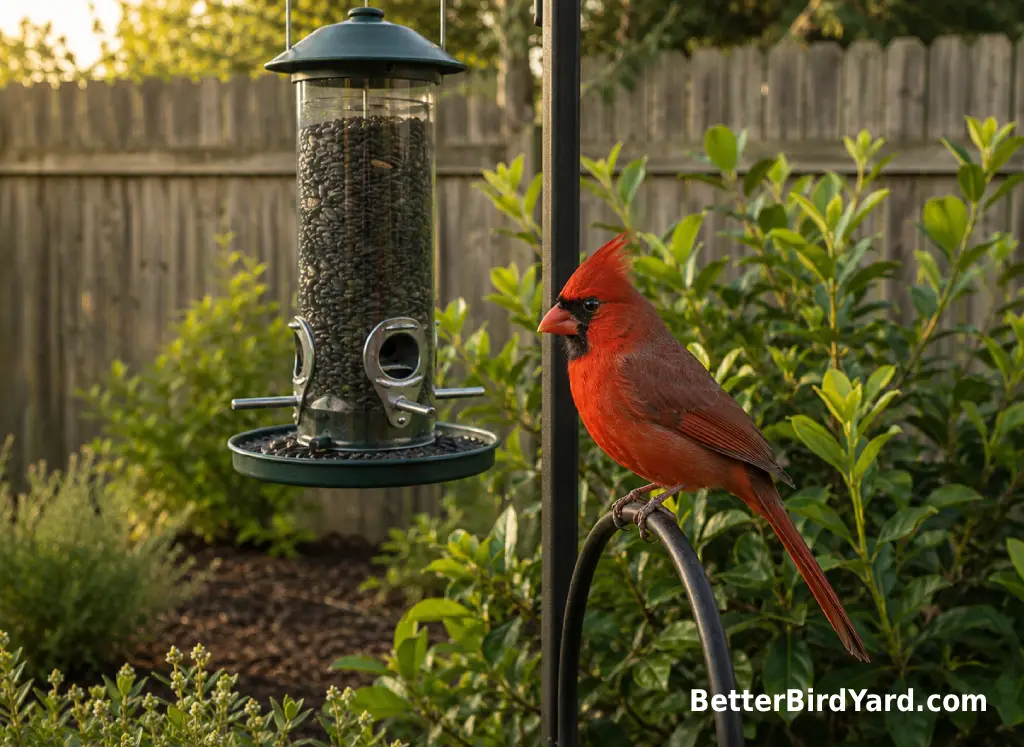
Cardinals are not tiny clinging finches. They usually do better with feeder styles that give them room to land, balance, and face the seed. Cornell Lab notes that large tube feeders, large hopper feeders, platform feeders, and ground feeders are best for attracting Northern Cardinals.
In a real backyard, the easiest options are:
- A hopper feeder with a broad ledge
- A platform feeder with drainage
- A tray attached below a tube feeder
- A low, covered feeder that keeps seed off wet ground
Placement matters almost as much as the food. Cardinals often like to approach from shrubs, hedges, or small trees rather than crossing a wide open space. Set the feeder close enough to cover that they can retreat, but not so buried in brush that cats or other predators have easy hiding places. In small yards and patios, even one dense shrub or a potted evergreen near the feeder can make the setup feel safer to birds.
What Cardinals Eat In Winter
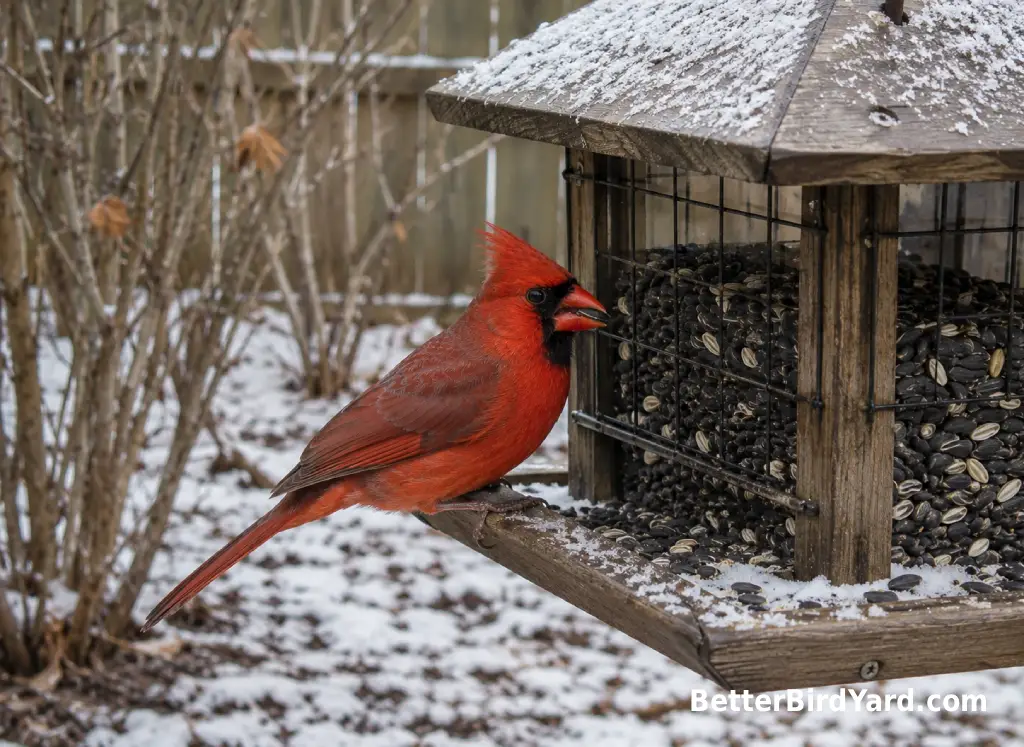
In winter, cardinals still eat seeds and fruits, and they may use feeders more noticeably when natural food is harder to reach. They do not need fancy winter-only food. A steady supply of dry sunflower seed or safflower, plus nearby shrubs and access to unfrozen water when practical, is more useful than constantly changing foods.
Suet can be a helpful high-energy option for many birds in cold weather, and Cornell notes that cardinals may occasionally visit suet feeders. Still, suet is not the main answer to what cardinals eat in winter. For cardinals, seed remains the more reliable feeder food.
Winter feeding is also when mess can sneak up on you. Snow, rain, and freeze-thaw cycles can leave seed wet inside trays or under feeders. Wet seed can clump, spoil, and become less safe. Project FeederWatch has highlighted the importance of keeping seed dry because damp feeding conditions can increase disease-related concerns.
If you only change one thing for winter cardinals, use a covered feeder or weather guard and check the tray after storms. Dump clumped, wet, or moldy seed instead of topping it off with fresh seed.
What Baby Cardinals Eat
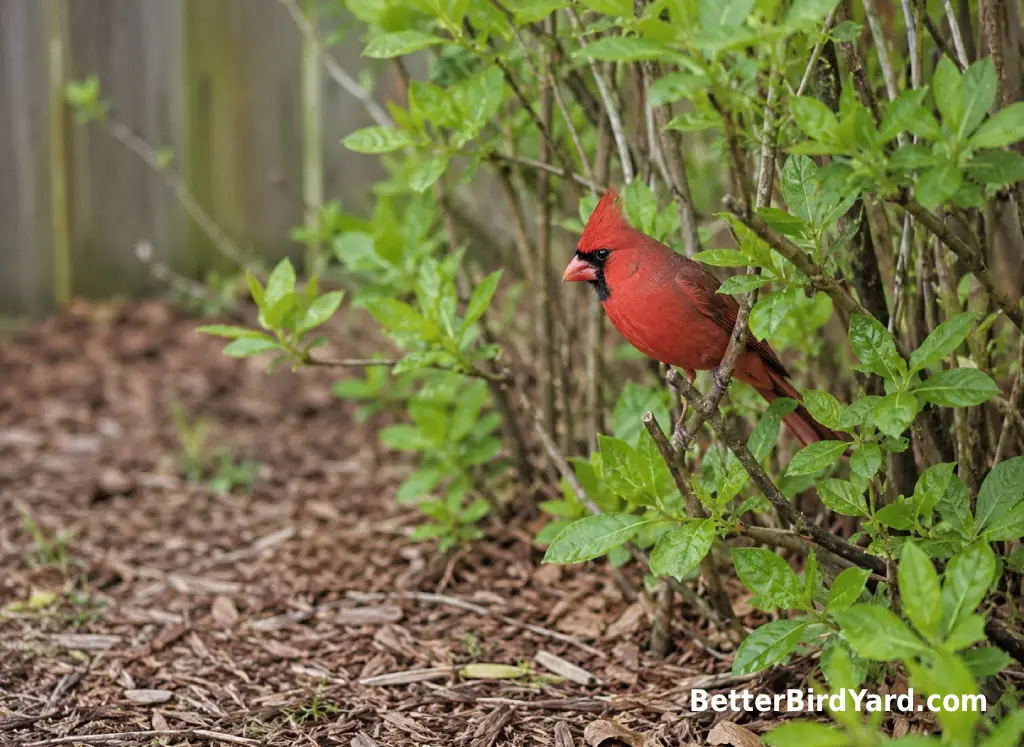
Baby cardinals are fed mostly insects by their parents. That is an important distinction from adult feeder habits. Adult cardinals may eat plenty of seed, but growing nestlings need protein-rich natural foods, and Cornell specifically notes that Northern Cardinal nestlings are fed mostly insects.
Backyard bird watchers should not try to feed baby cardinals by hand. If you find a young bird, the safe next step depends on whether it is a normal fledgling on the ground, a visibly injured bird, or a bird in immediate danger. BetterBirdYard is not a wildlife rehabilitation service, so for injured, orphaned, or clearly distressed birds, contact a licensed wildlife rehabilitator, local wildlife agency, or animal control for local guidance.
The best way to support nesting cardinals is indirect: reduce pesticide use where possible, keep cats indoors or safely contained, avoid trimming dense shrubs during active nesting when you can, and grow region-appropriate plants that support insects and berries. These steps help adult birds find natural food without encouraging people to interfere with nests or young birds.
A common mistake we see is assuming a young bird alone must be abandoned. Many fledglings spend time on or near the ground while parents continue feeding them nearby. Watch from a distance, keep pets away, and call qualified local help if the bird appears injured or truly at risk.
Cardinal Foods To Avoid
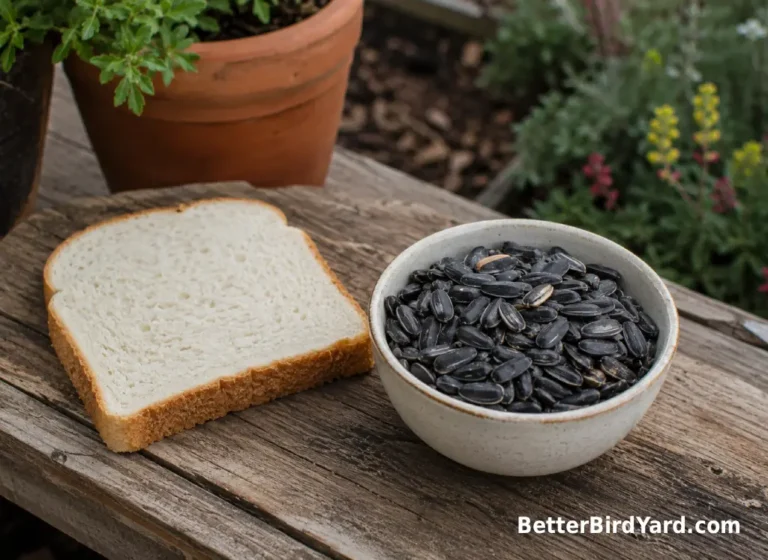
Cardinals are flexible eaters, but that does not mean every food is a good feeder choice. Avoid bread, salty snack foods, seasoned nuts, moldy seed, spoiled fruit, and anything that has been wet long enough to smell sour or look clumped. These foods are either low-value, risky, or likely to create mess that attracts rodents and other nuisance wildlife.
Peanuts should be unsalted and offered in small amounts. Fruit should be fresh, used sparingly, and removed before it spoils. Suet should be kept fresh, especially during warm weather. If a food looks questionable, throw it away.
Cheap seed mixes can be another hidden problem. Some cardinals may pick through them, but mixes heavy in filler grains often leave waste below the cardinal feeder. Cornell’s seed guide cautions that filler-heavy mixes can be unattractive to many birds and lead to waste as birds sort through them.
In a small yard or balcony, waste matters even more. Seed piles can draw mice, rats, squirrels, raccoons, or other animals depending on where you live. Use a tray, sweep regularly, and store seed in a sealed container. If local rules, lease terms, or HOA guidelines limit feeding, follow those requirements.
A Simple Backyard Setup For Feeding Cardinal Birds
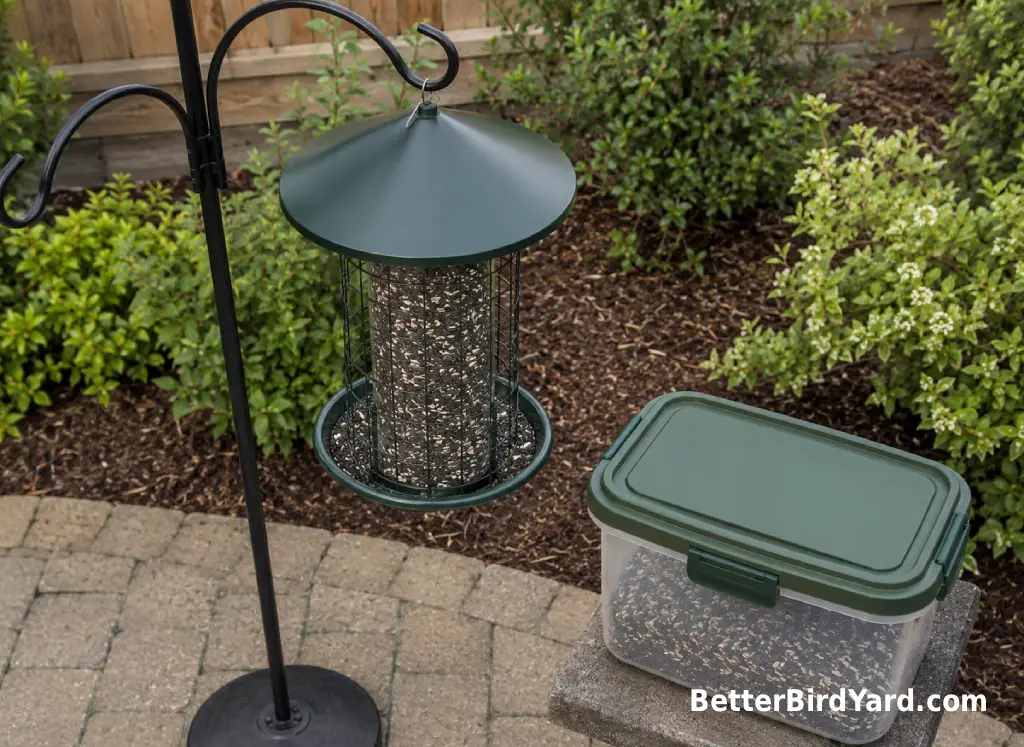
You do not need a complicated station to attract cardinals responsibly. A simple setup is often easier to maintain and safer for birds because food stays fresher and crowding is easier to manage.
Start with this basic plan:
- Choose one roomy hopper, tray, or platform feeder.
- Fill it with black oil sunflower seed, safflower, or a simple mix of both.
- Place it near shrubs or small trees, but away from obvious cat hiding spots.
- Add a tray or choose a feeder with good drainage to reduce seed waste.
- Check seed after rain and clean the feeder before buildup becomes heavy.
For renters and small-space bird watchers, keep the setup modest. A clamp-on tray or small hopper feeder may work on a patio if your lease allows feeding. Use no-mess sunflower hearts if shells are a problem, but offer smaller amounts and replace damp food quickly.
Editorial note: In a small yard, we would rather see one clean, well-placed feeder than four feeders that are hard to clean and constantly dropping seed. Cardinals are regular backyard visitors in many parts of the U.S., but results still vary by region, season, cover, neighborhood habitat, and local food availability.
Cleaning, Disease Cautions, And When To Get Local Help
Good cardinal feeding habits include cleaning. Feeders concentrate birds in one place, which can make hygiene more important than many beginners realize. Project FeederWatch recommends regular feeder cleaning and says that, when sick birds visit, removing the feeders they used for a couple of weeks can help birds disperse while you clean the feeders and feeding area.
For routine care, scrub feeders when you see buildup, old hulls, droppings, or damp seed residue. Project FeederWatch recommends soaking or scrubbing feeders with a dilute bleach solution, rinsing thoroughly, and letting them dry before refilling.
Watch for these practical triggers:
- Seed is wet, clumped, sprouting, or moldy.
- Bird droppings are visible on feeder surfaces.
- Several birds look unusually puffed up, weak, or reluctant to leave.
- Your state wildlife agency has posted local feeder disease guidance.
- Rodents or other nuisance wildlife are visiting the feeding area.
Do not try to diagnose a wild bird at the feeder. If you notice sick or injured birds, pause or reduce feeding, clean the area, and check guidance from your state wildlife agency or a qualified wildlife health source. If a bird appears injured, orphaned, or unable to survive without help, contact a licensed wildlife rehabilitator or local wildlife authority rather than attempting home treatment.
Final Thoughts On What Cardinals Eat
So, what do cardinals eat? Northern Cardinals eat seeds, fruits, berries, and insects, with sunflower seed and safflower being two of the most practical feeder foods for backyard bird watchers. In winter, keep the food simple, dry, and fresh. During nesting season, remember that baby cardinals depend heavily on insects brought by their parents, not handouts from people.
The best food for cardinals is not only a seed choice. It is the whole setup: roomy feeder, nearby cover, clean feeding area, dry seed, and a yard that supports natural foods where possible. Start small, watch what happens, and adjust based on your own yard rather than chasing every seed mix on the shelf.
A well-kept feeder with black oil sunflower or safflower can be a dependable way to enjoy cardinals up close. Pair it with native shrubs, careful cleaning, and safe distance from young or injured birds, and you will be supporting cardinals in a way that is practical, responsible, and enjoyable for everyday backyard bird watching.