Can Birds Eat Rice? Cooked, Uncooked, and Safe Options
Yes, birds can eat rice. Plain cooked rice and uncooked rice are generally safe for wild birds, and dry rice will not swell inside a bird and make it explode. Cornell Lab of Ornithology notes that many birds naturally eat rice and digest it without difficulty, while Audubon confirms that uncooked grains are a normal part of many birds’ diets.
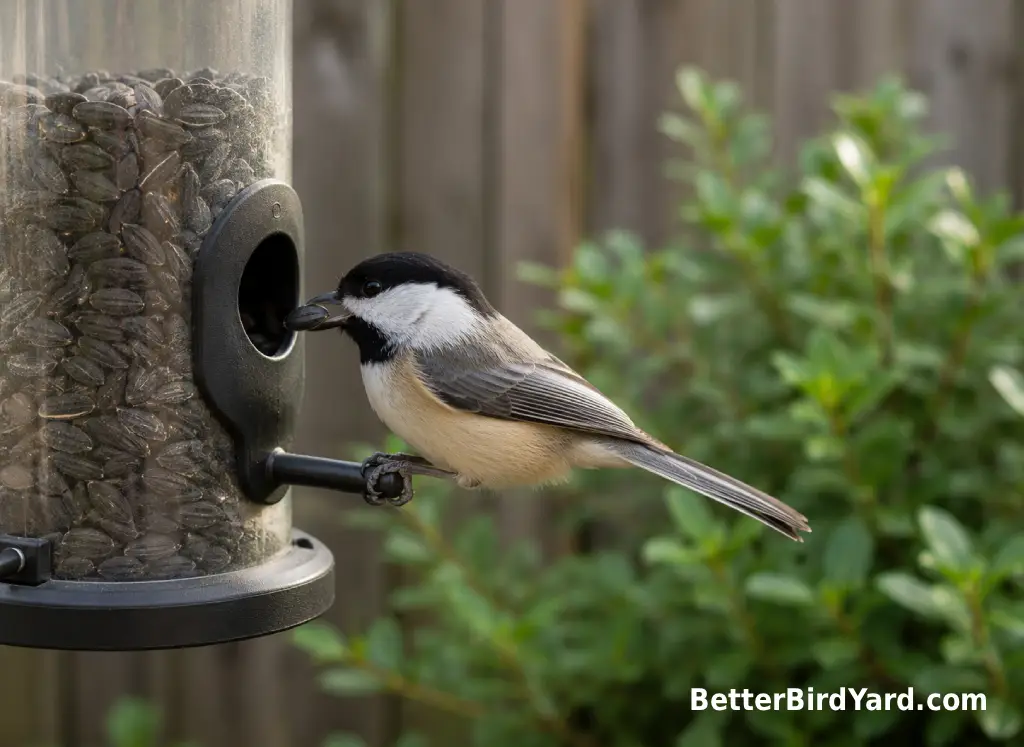
That does not mean rice should replace a balanced feeder setup. Rice is best treated as an occasional supplemental food rather than the main item offered every day. For most US backyards, dependable foods such as black-oil sunflower seed, millet, peanuts, and species-appropriate suet provide a more useful starting point. Cornell’s Project FeederWatch describes feeders as a supplement to the varied foods birds find naturally.
The practical answer also depends on how the rice is prepared. Plain rice is very different from fried rice, heavily salted leftovers, sugary cereal, or rice covered in sauce. Here is how to make the bird-safe choice without creating spoiled food, patio mess, or unwanted rodent activity.
The Quick Answer: Which Rice Can Birds Eat?
Both cooked and uncooked rice can be offered when they are plain, fresh, and free from seasonings. The main differences involve moisture, cleanup, and how quickly the food can spoil—not whether dry grains are dangerous. Cornell and Audubon both reject the claim that uncooked rice harms birds.
| Type of Rice | Suitable for Birds? | Practical Guidance |
|---|---|---|
| Plain uncooked white rice | Yes | Offer only a small amount on a clean platform or tray. |
| Plain uncooked brown rice | Yes | Safe as an occasional grain, although not every feeder visitor will choose it. |
| Plain boiled or steamed rice | Yes | Cool it first, offer a small portion, and remove uneaten rice promptly. |
| Salted or seasoned rice | No | Keep dishes containing sauces, seasoning blends, or excess salt indoors. |
| Fried rice or buttery rice | Not Recommended | It is a processed leftover rather than a suitable feeder food. |
| Rice breakfast cereal | Not Recommended | Use plain birdseed instead of processed cereal. |
| Moldy, sour, or dirty rice | No | Discard it rather than putting it outdoors. |
Can Birds Eat Cooked Rice?
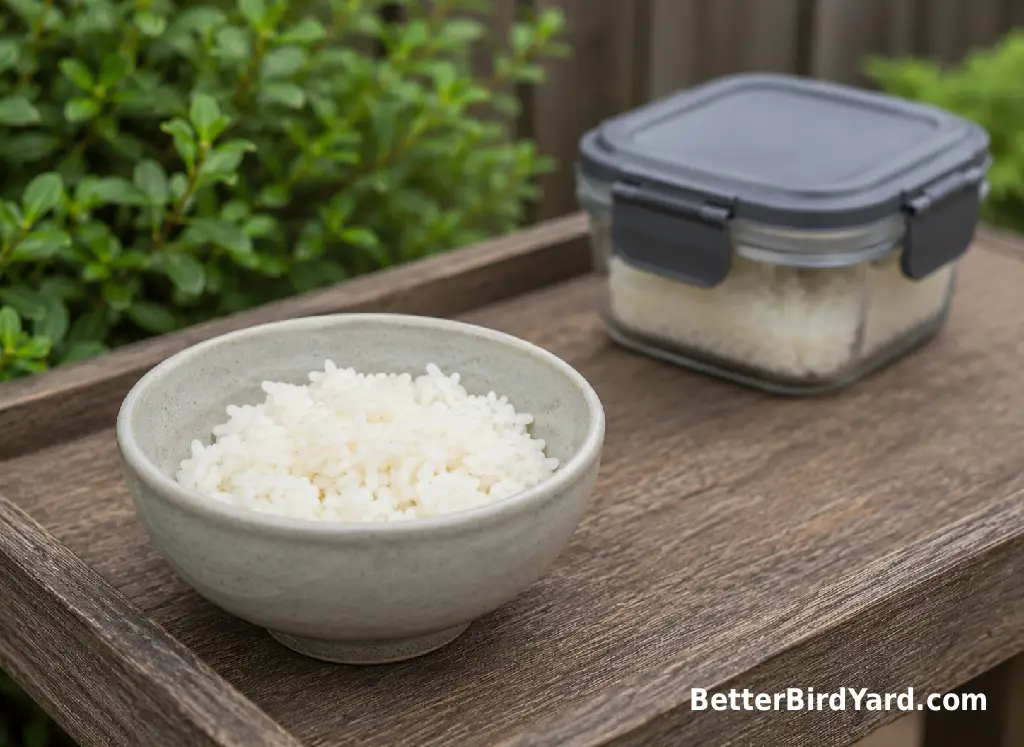
Birds can eat cooked rice when it is plain. Boiled or steamed white or brown rice may be offered after it has cooled, provided it contains no sauce, seasoning, butter, or other meal ingredients.
The extra moisture in cooked rice makes maintenance more important. Put out only what visiting birds are likely to finish quickly, and clear away leftovers before they become dried onto the tray, contaminated with droppings, or spoiled by warm and damp weather. Wildlife agencies emphasize limiting food to manageable quantities and keeping feeding areas clean because accumulated or poorly maintained food can contribute to disease and attract other animals.
A common mistake is emptying a large bowl of leftover rice onto the lawn. That creates more food than a few backyard birds can reasonably consume, particularly in a small yard or apartment patio. A thin portion on a washable platform is easier to monitor and remove.
Cooked rice should remain an occasional extra. Birds visiting feeders benefit from foods selected for their normal feeding habits, and many species will simply ignore rice when sunflower seed or other preferred foods are available. Feeder preferences vary with species, location, season, and the natural foods nearby.
Can Birds Eat Uncooked Or Raw Rice?
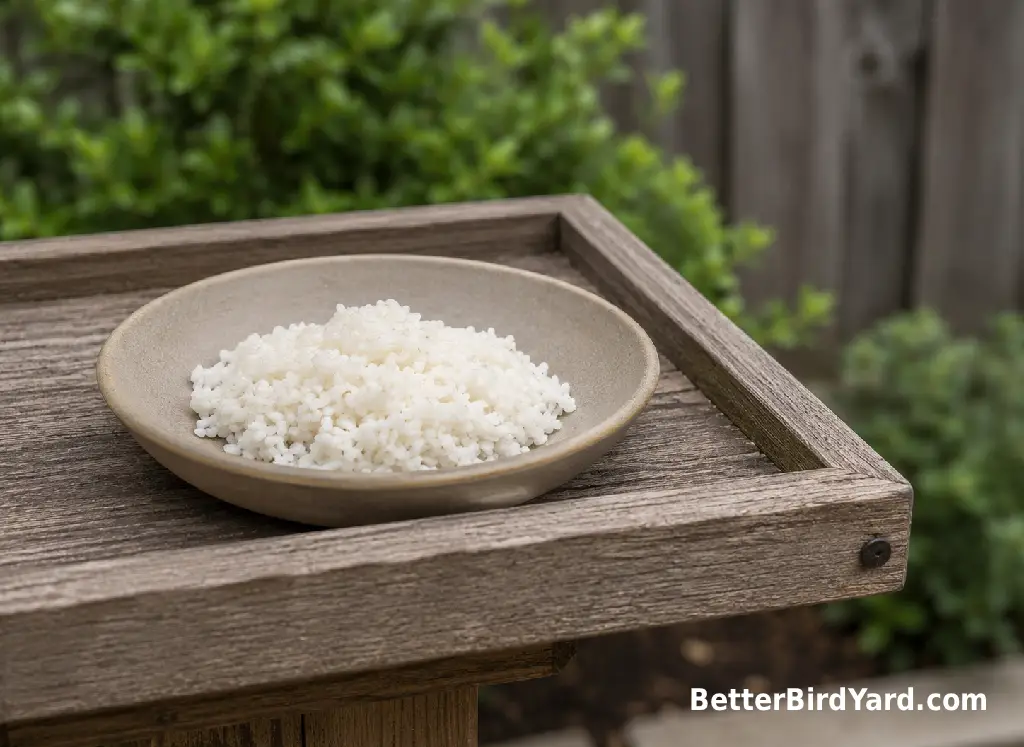
Uncooked rice is not harmful to birds. In everyday kitchen language, raw rice usually means the same thing as dry, uncooked rice from the pantry. Many wild birds routinely eat firm seeds and grains, and Audubon specifically identifies uncooked grains as staple foods for numerous bird species.
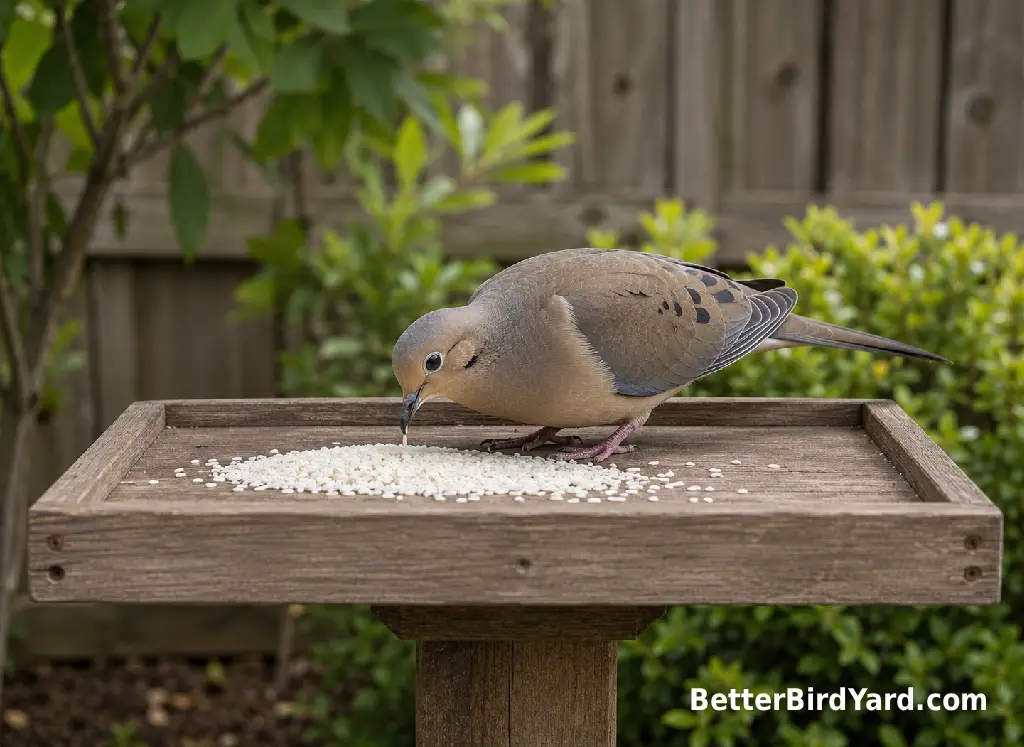
Some individual birds may find smaller grains easier to pick up than large or especially hard varieties, but that is a preference issue rather than evidence that dry rice is dangerous. Doves, sparrows, blackbirds, and other ground-feeding or grain-eating birds are more likely to investigate rice than birds adapted mainly for catching insects, drinking nectar, or clinging to trees for food. Results will vary according to the species already using your yard.
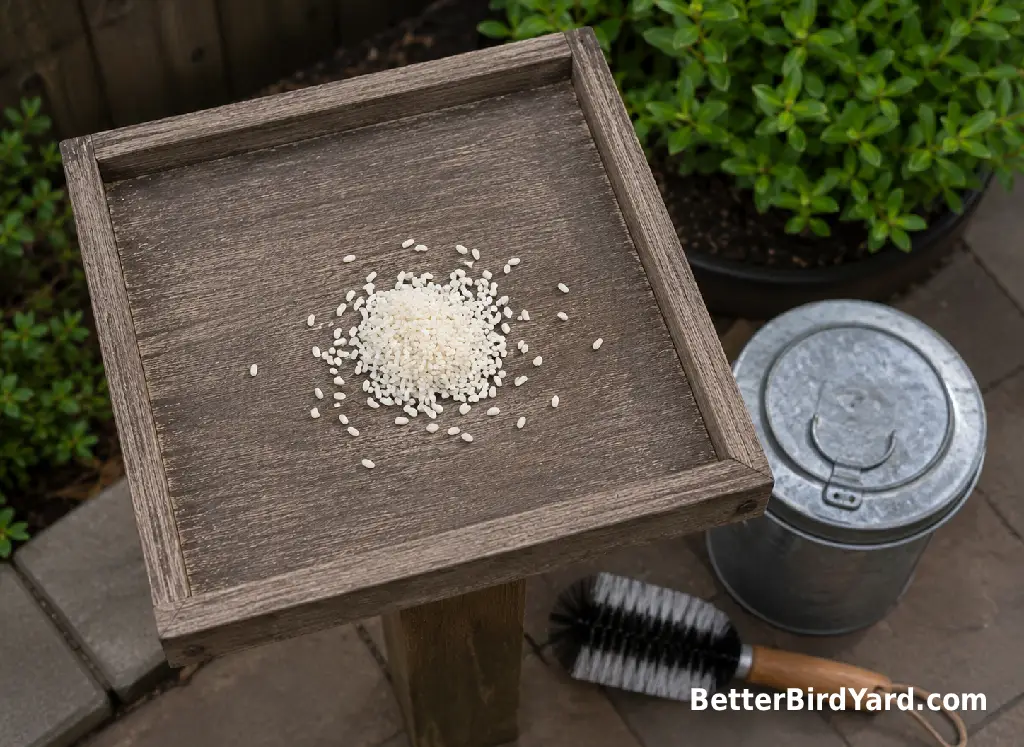
If you offer uncooked rice, use a raised platform with drainage rather than throwing a large quantity across the ground. Loose ground feeding can leave hidden food in grass, deck gaps, or mulch, where it may become wet or attract rodents and other wildlife. Virginia’s Department of Wildlife Resources advises against loose distribution of food on patios and similar surfaces because it can increase waste, disease concerns, and visits from non-target animals.
Why Rice Does Not Make Birds Explode
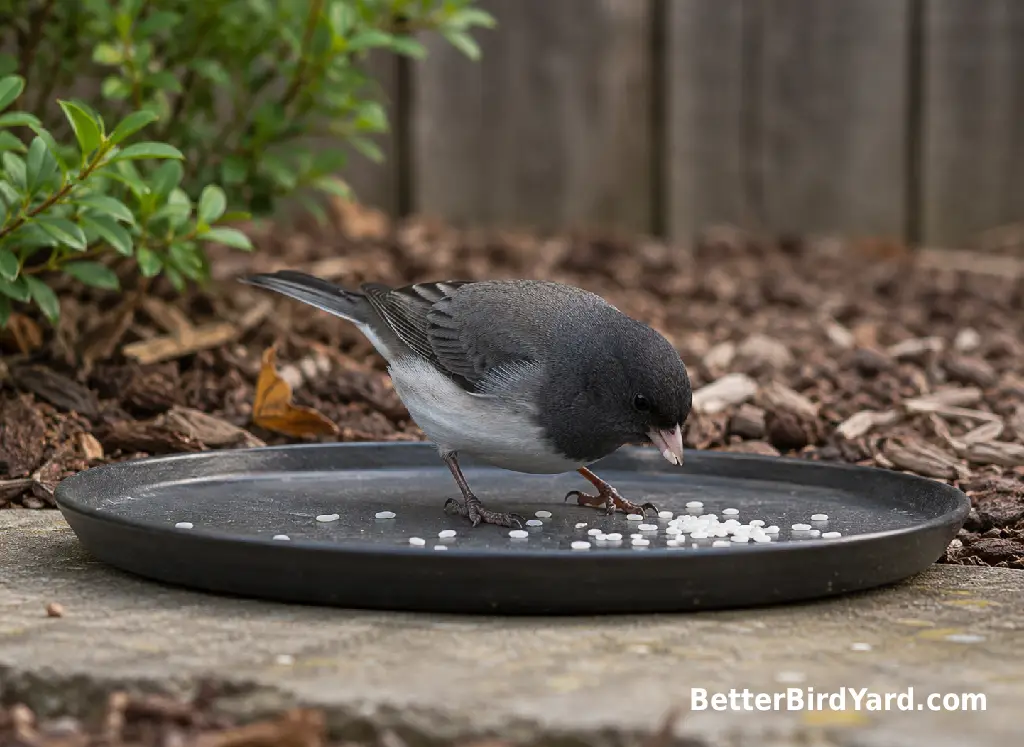
The idea that a bird will explode after eating uncooked rice is a long-running myth. The story claims that rice absorbs water, expands inside the bird, and ruptures its digestive system. That is not how normal rice consumption affects birds.
Cornell Lab of Ornithology states that rice does not harm birds and notes that birds ranging from waterfowl to Bobolinks eat it naturally. Audubon likewise says that tossing uncooked rice at a wedding will not hurt birds.
Birds already consume many dry foods, including seeds and grains, and their digestive systems are equipped to process them. Rice does not suddenly cook inside a bird or expand with enough force to cause an explosion.
How To Offer Rice Responsibly
Rice requires no special recipe. The safest setup is deliberately small, plain, and easy to clean.
- Use plain cooked or uncooked rice with no sauce, salt, oil, or seasoning.
- Place it on a clean platform, tray, or shallow washable dish.
- Offer only a thin portion that can be consumed quickly.
- Remove damp, dirty, sour-smelling, or uneaten rice.
- Sweep spilled grains from decks, balconies, and the ground below the feeder.
- Stop offering it if rats, raccoons, bears, or other unwanted wildlife begin visiting.
For a renter with a balcony or tiny patio, a shallow dish placed inside a catch tray is easier to manage than broadcasting rice across the floor. Check beneath railings and outdoor furniture afterward, since grains can roll into cracks where they are difficult to see.
Feeding stations bring birds into a concentrated space, so cleanliness matters regardless of which food you offer. Audubon and Virginia’s wildlife agency both emphasize regular cleaning and prompt action when sick birds or spoiled food appear. During a local wildlife disease advisory, follow your state wildlife agency’s instructions about reducing or pausing feeding.
A BetterBirdYard editorial note: if putting out rice adds another messy food to an already busy feeder station, skip it. Birds do not need you to use every safe food in your pantry. A clean feeder with one reliable seed is more helpful than a crowded tray of assorted leftovers.
What About Rice Krispies And Seasoned Rice?
Rice Krispies and similar breakfast cereals are not the same as plain rice. They are processed human foods and do not offer an advantage over purpose-selected birdseed. A bird picking up a stray cereal crumb is not a reason to panic, but intentionally filling a feeder with cereal is unnecessary.
The same applies to common leftovers such as fried rice, boxed rice mixes, restaurant rice, rice pudding, and rice covered with gravy or sauce. These dishes may contain salt, sugar, fats, dairy ingredients, or seasonings that are not appropriate choices for a wild bird feeding station. The U.S. Fish and Wildlife Service advises keeping human and packaged foods away from wildlife and recommends using properly managed bird-feeding practices instead.
Keep these foods indoors:
- Rice Krispies and sweetened cereal mixtures
- Fried rice
- Rice cooked in salty stock
- Rice with butter, cheese, gravy, or cream
- Rice mixed with meat scraps or heavily seasoned vegetables
- Any rice showing mold, slime, discoloration, or an unpleasant odor
There is no need to rinse sauce from leftover rice and repurpose it for birds. Compost or dispose of unsuitable leftovers according to your local waste practices, then offer a dependable bird food instead.
Is Rice A Good Everyday Bird Feeder Food?
Rice is safe, but it is not the most effective everyday choice for attracting a broad mix of backyard birds. Cornell recommends black-oil sunflower as a useful starting food because many common feeder species accept it, while Project FeederWatch also lists millet, nyjer, peanuts, safflower, suet, fruit, and mealworms for birds with different feeding preferences.
A simple feeding plan could include:
- Black-oil sunflower seed for a broad range of seed-eating birds
- White proso millet in a carefully managed tray for many ground-feeding species
- Nyjer in a suitable small-port feeder for finches
- Unsalted peanuts in an appropriate feeder for birds able to handle them
- Suet in a secure cage when weather and local conditions make it practical
Choose food according to the birds actually present rather than trying to create a large buffet. You can learn more in our guide to choosing backyard birdseed.
Whatever food you select, keep it dry and replace it when it becomes wet, moldy, or contaminated. Cornell warns that food waste and spoiled seed can contaminate fresh supplies, while Project FeederWatch recommends sweeping beneath feeders to prevent unhealthy buildup.
Common Problems When Feeding Rice Outdoors
The biggest rice-related problems in a backyard are usually caused by excess food and poor cleanup, not by the rice harming a bird.
Birds Ignore The Rice
Not every species is interested in grains. Remove uneaten rice rather than repeatedly adding more. Switching to an established feeder food may produce less waste and better match the birds using your space.
Rice Attracts Rodents
Loose grain can draw mice, rats, raccoons, and other wildlife. Cornell specifically notes that scattered rice may attract rodents, and the U.S. Fish and Wildlife Service recommends sweeping excess food from beneath feeders. Store unused rice or seed in a secure container and stop feeding if non-target wildlife becomes a persistent problem.
Cooked Rice Becomes Dirty Or Spoiled
Remove it as soon as it becomes wet, sour, slimy, soiled, or mixed with droppings. Do not place fresh food over old residue. Wash the tray before using it again.
Too Many Birds Crowd One Tray
Concentrating birds around one feeding point can increase competition and opportunities for disease to spread. Use manageable portions, keep the tray clean, and pause feeding if you observe birds with unusual lethargy, difficulty moving, crusted eyes, or other concerning signs. Do not attempt to diagnose or treat a wild bird; consult your state wildlife agency or a licensed wildlife rehabilitator for local guidance.
The Bottom Line On Feeding Rice To Birds
Birds can eat rice, whether it is plain cooked rice or dry uncooked rice. The claim that raw rice expands inside birds and causes them to explode is false. Both Cornell Lab of Ornithology and Audubon confirm that uncooked rice is harmless to birds and that many species naturally consume grains.
The better question is whether rice is the most useful food for your feeding station. In most yards, it is not. A small amount of plain rice can be an occasional extra, but sunflower seed and other recognized feeder foods generally provide a more practical everyday foundation.
Keep the setup simple: offer a modest portion on a washable tray, avoid seasoned leftovers and processed cereal, remove uneaten food, and clean spilled grains from the ground. Stop feeding when rice begins attracting rodents or other unwanted wildlife, and follow local wildlife agency guidance during disease advisories.
Safe bird feeding is less about finding a huge menu and more about maintaining a clean, dependable food source. Plain rice passes the safety test, but thoughtful portions, good sanitation, and suitable birdseed make the bigger difference in a responsible backyard.