What Do Blue Jays Eat? Wild Foods, Feeder Favorites, and Winter Picks
Blue Jays eat a surprisingly varied diet. They are omnivores that forage for acorns, other nuts, seeds, grains, fruits, insects, and other small animal foods. In a backyard, some of their most reliable feeder choices are peanuts, sunflower seeds, and suet. Cornell Lab also notes that Blue Jays tend to prefer roomy tray or hopper feeders rather than small hanging feeders.
If you want to feed Blue Jays responsibly, you do not need a special Blue Jay bird feed or an elaborate feeding station. A sturdy feeder, a small amount of fresh food, and a routine for keeping the feeding area clean will usually make more sense than buying a large mixed-seed bag.
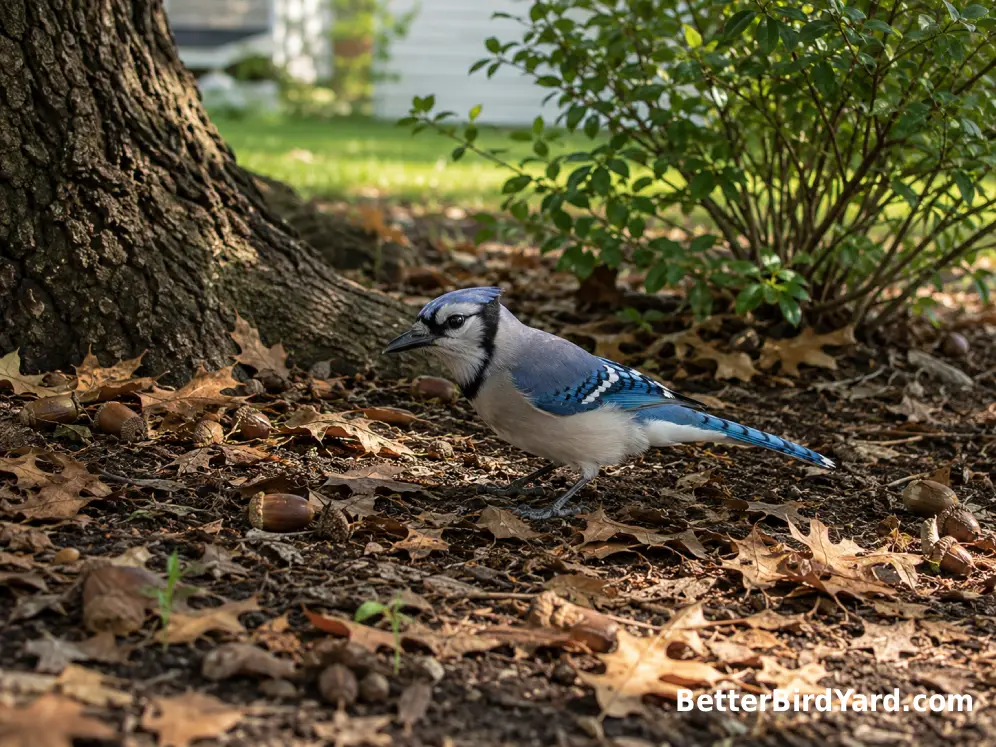
The other important point is that feeder food is only supplemental. Blue Jays still spend much of their time searching trees, shrubs, leaf litter, and the ground for natural foods. Oaks are especially valuable because acorns are a major part of their diet, particularly during the colder part of the year.
Quick Answer: Blue Jays Are Omnivores
Blue Jays are flexible eaters rather than strict seed eaters. Their natural menu can include:
- Acorns and other nuts
- Seeds and grains
- Berries and small fruits
- Caterpillars, beetles, grasshoppers, and other insects
- Spiders, snails, and occasional other animal foods
At feeders, peanuts, sunflower seeds, and suet are among the foods most likely to interest them. Cornell’s Blue Jay guidance specifically lists those three as feeder favorites.
That broad diet helps explain why Blue Jays can be equally comfortable hammering open a seed at a feeder, searching through leaves for food, or carrying an acorn away to store for later.
What Blue Jays Eat in the Wild
In the wild, Blue Jays forage in trees and shrubs as well as on the ground. Cornell Lab describes their diet as including insects, nuts, seeds, grains, fruits, and other foods, with acorns and other plant foods forming an important part of the overall diet. Audubon likewise notes their use of acorns, beechnuts, seeds, grains, berries, small fruits, and a range of insects.
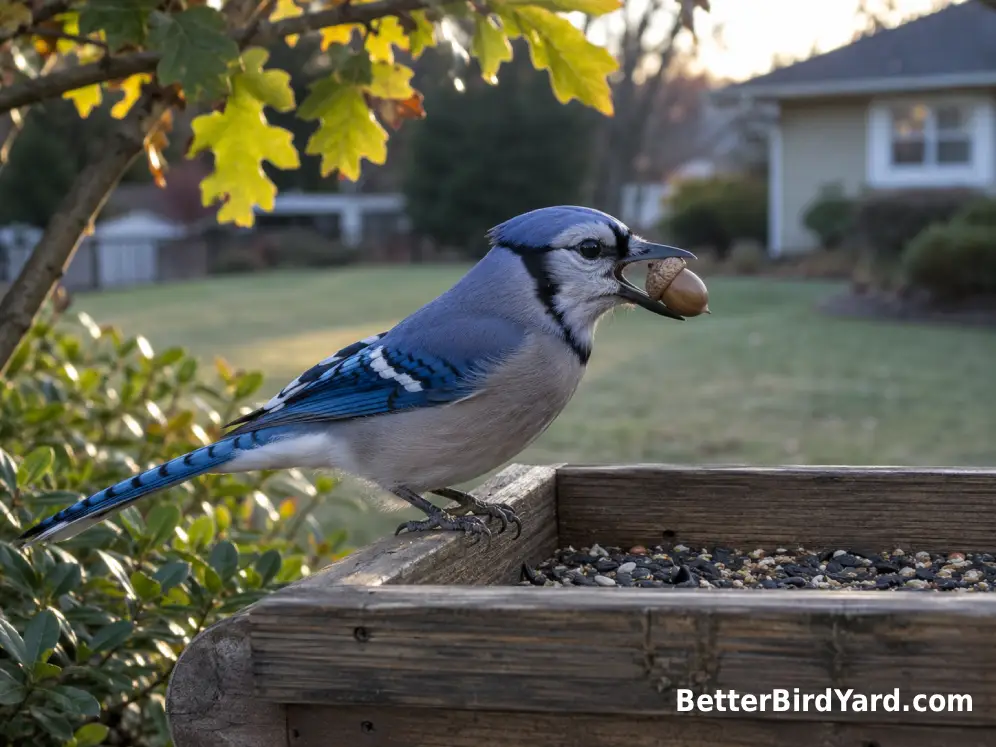
Acorns deserve special attention. Blue Jays do not always eat a nut where they find it. They may carry food away and cache it for later, which is why a jay can seem to make repeated trips from the same oak or feeder without stopping to eat each item immediately. Cornell describes Blue Jays stuffing food into the mouth or throat area, carrying it away, and storing food in caches.
Insects also matter, particularly during warmer months when they are abundant. Blue Jays take caterpillars, beetles, grasshoppers, and other invertebrates as they forage through foliage and around the ground.
Blue Jays sometimes eat bird eggs or nestlings, which has given them a harsher reputation than their everyday diet supports. Cornell notes that this behavior occurs, but an extensive stomach-content study found evidence of eggs or birds in only a small fraction of the birds examined. For most backyard observers, it is more accurate to think of the Blue Jay as an opportunistic omnivore than as a bird that mainly hunts other birds.
Best Foods to Offer at a Feeder
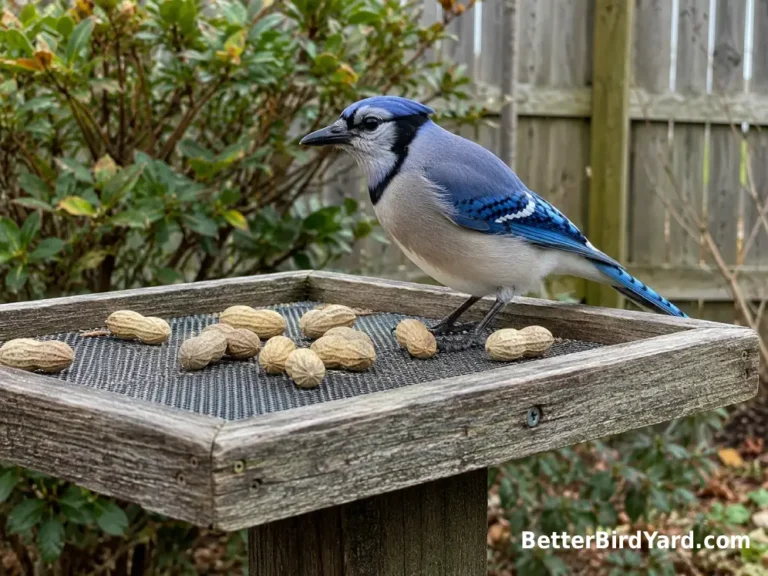
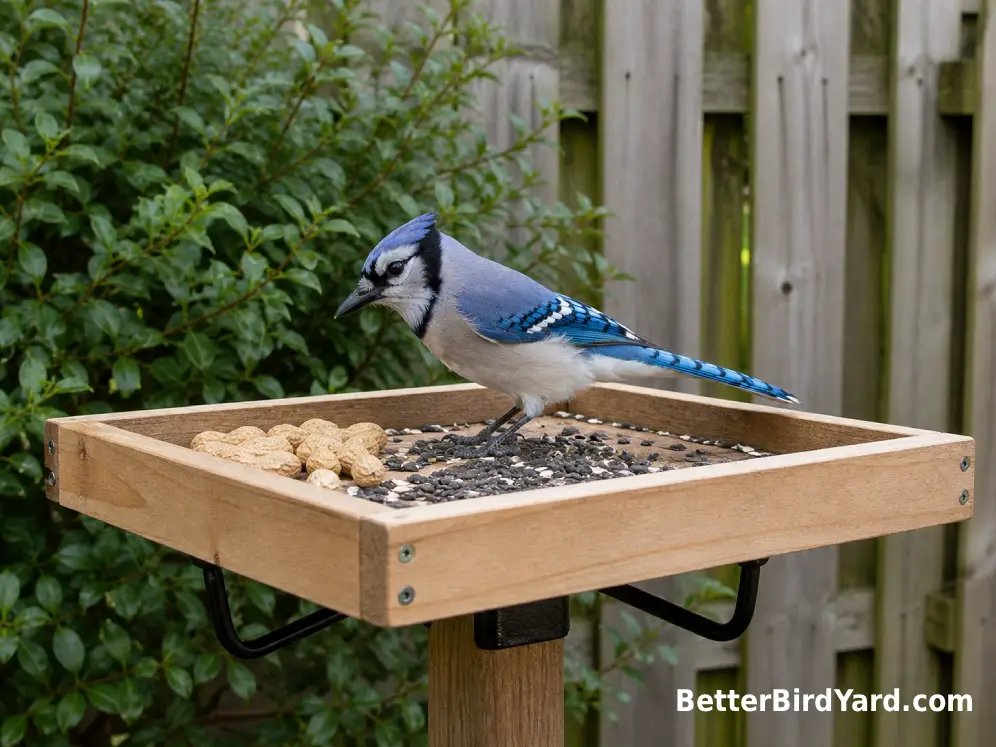
For most backyards, the simplest Blue Jay feeding setup is built around three foods: peanuts, sunflower seeds, and suet. Cornell lists all three among the species’ preferred feeder foods.
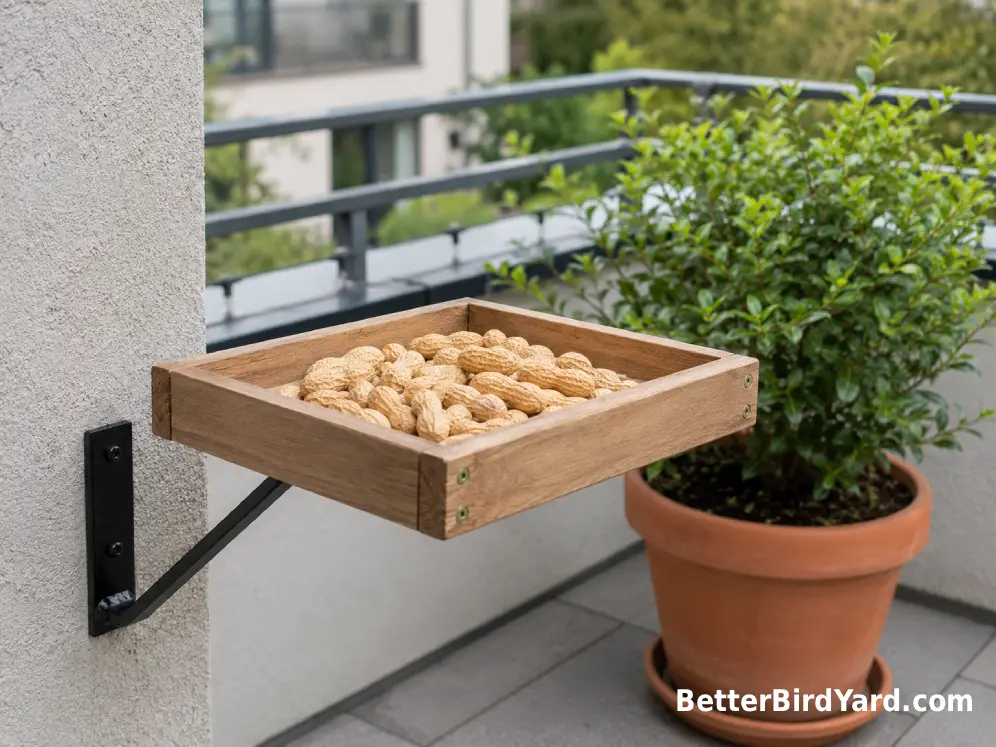
- Peanuts: Offer raw or roasted peanuts without salt, coatings, or flavorings. Shelled peanuts and peanuts in the shell can both be used. Project FeederWatch notes that jays often carry peanuts away to store for later.
- Sunflower seeds: These are an easy everyday option if you already feed a mixed group of backyard birds. Blue Jays readily eat sunflower seeds and can hold them with their feet while opening them.
- Suet: A useful additional option, particularly in cool weather. Check it regularly and discard it if it becomes spoiled or rancid.
A roomy tray or hopper feeder is usually easier for a Blue Jay to use than a feeder designed around tiny perches. Cornell specifically recommends tray feeders or hopper feeders on a post for Blue Jays.
Editorial note: If you only change one thing, start with the feeder size. A perfectly good food does little for a Blue Jay if the bird cannot comfortably land, balance, and reach it.
Choosing Seeds Without Wasting Money
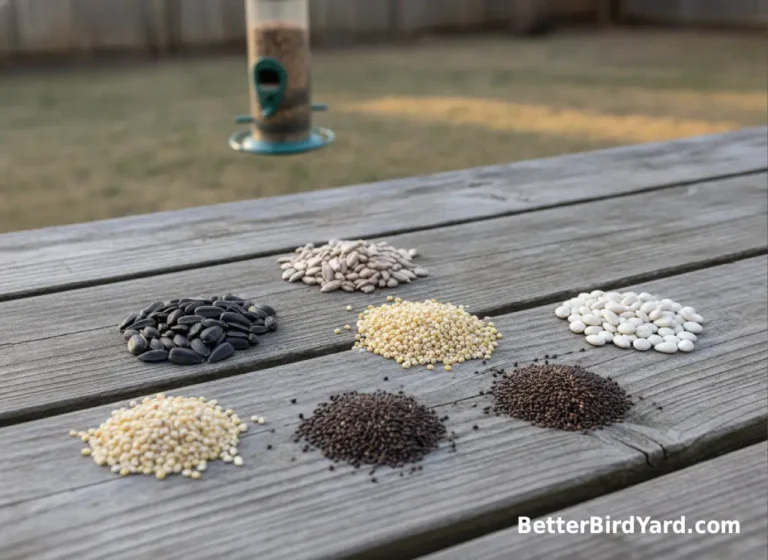
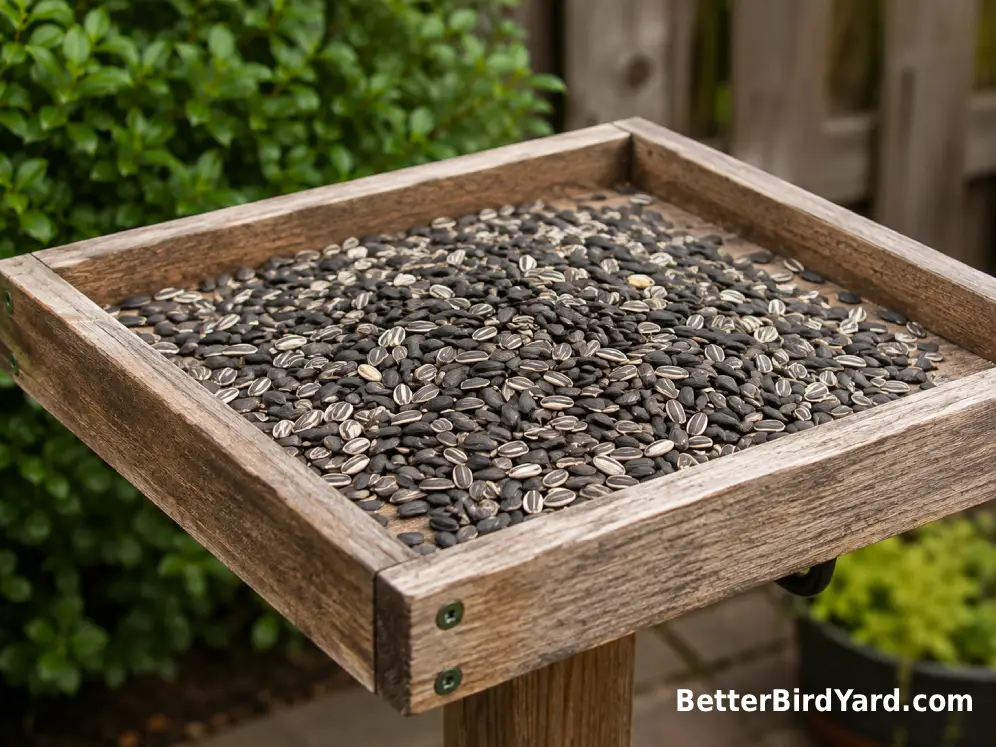
If you are wondering what seeds Blue Jays eat, sunflower is the easiest place to start. Cornell repeatedly identifies sunflower seed as a common Blue Jay feeder food, and black-oil sunflower is also one of the most useful general-purpose seeds for a mixed backyard feeding station.
That does not mean you need to buy a complicated Blue Jay seed mix. Inexpensive mixes can contain large amounts of smaller grains that other birds may eat but that are not necessarily the reason a jay visits your feeder. Cornell’s seed guidance also notes that some low-cost filler-heavy mixtures can lead to substantial waste as birds sort through them.
For a beginner setup, I would keep the choice simple: use fresh sunflower seed as the main seed, then add peanuts separately if Blue Jays are a priority. This makes it easier to see what the birds are actually taking and reduces the amount of unwanted seed accumulating underneath.
Shelled sunflower can be useful on patios because there are fewer hulls to sweep up, but it spoils more quickly once the protective shell is removed. Offer modest amounts, keep the feeder dry, and replace the food if it becomes damp or questionable.
Nyjer, by contrast, is mainly used in specialized feeders for small finches, so it would not be my first purchase if attracting Blue Jays is the main goal.
How Their Diet Changes in Winter
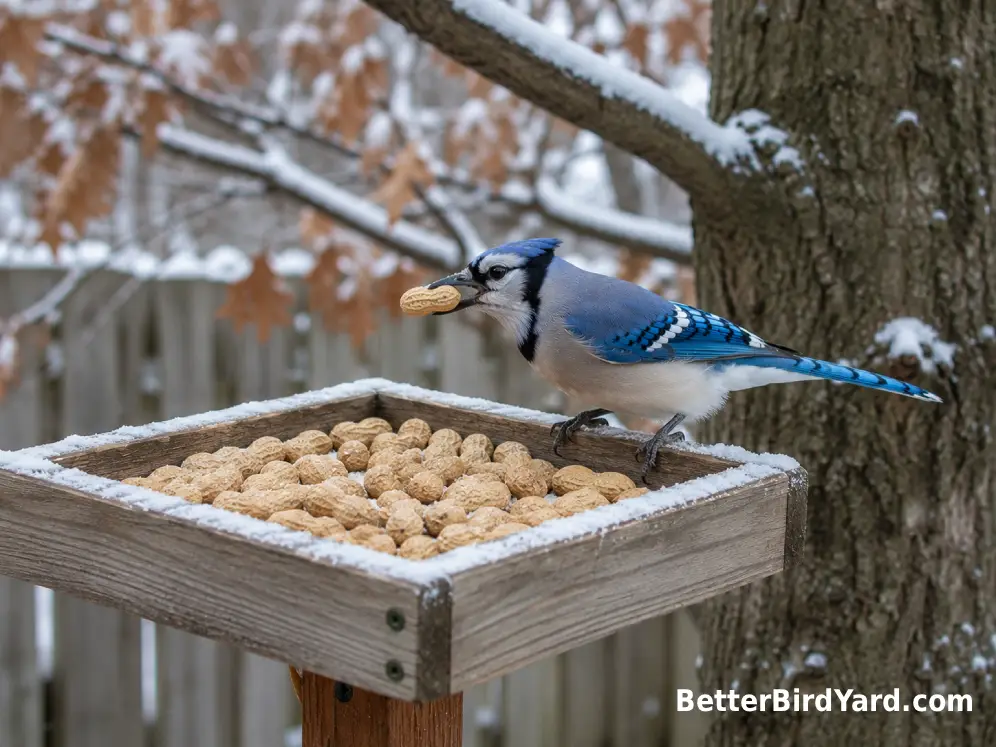
Blue Jays continue eating a mixed diet through the year, but nuts and other plant foods become especially important during the colder months. Audubon notes that vegetable foods make up a larger share of the Blue Jay’s diet in winter, with acorns, beechnuts, other nuts, seeds, grains, berries, and fruits among the foods they use.
Cached food can also become valuable. A Blue Jay that spent fall carrying acorns away may return to stored food later, rather than depending entirely on whatever is immediately visible.
At a winter feeder, practical choices include:
- Plain peanuts
- Sunflower seeds
- Fresh suet appropriate for bird feeding
Those foods complement rather than replace the bird’s natural foraging. If your yard has an established oak, leaving some natural leaf litter and acorns where appropriate can provide feeding opportunities without requiring another feeder.
Not every Blue Jay follows the same seasonal movement pattern. Cornell notes that some remain in their range through winter while others migrate, and even individual birds may behave differently from one year to the next. A quiet feeder one winter therefore does not necessarily mean you are offering the wrong food.
Feeding Blue Jays Responsibly in Small Spaces
A renter, patio gardener, or homeowner with a small yard can feed Blue Jays without turning the space into a seed-storage area. The trick is to put out only what birds are using and stay ahead of shells, spilled seed, and damp food.
A few habits make a noticeable difference:
- Start with small portions rather than filling a large tray to the top.
- Keep peanuts and seed dry.
- Discard anything moldy or spoiled rather than trying to salvage it.
- Sweep or rake up accumulated shells, old seed, and droppings beneath the feeder.
- Use a feeder that can be taken apart easily for cleaning.
Project FeederWatch recommends cleaning seed and suet feeders regularly, roughly every week or two, and more often during heavy use or wet weather. Cornell similarly advises regular cleaning and notes that wet, decomposing seed and accumulated debris can contribute to bird-health problems.
If you want a simple routine, empty the feeder before food has time to sit wet, wash it according to bird-feeding guidance and the feeder manufacturer’s instructions, rinse thoroughly, let it dry completely, and refill with fresh food. Our bird feeder cleaning guide covers the maintenance side in more detail.
A common mistake we see is treating a feeder like a storage container. More food is not automatically better. On a damp patio or during humid weather, a smaller amount that gets eaten promptly is easier to keep fresh.
For balconies, shared courtyards, and rental properties, also check your lease, building rules, or HOA requirements before adding a feeder. Even where feeding is permitted, controlling scattered food is worthwhile because spilled seed can attract rodents.
Common Blue Jay Feeding Mistakes to Avoid
Blue Jays are adaptable, but that does not mean every food from the kitchen is a good feeder choice. The safest routine is to use straightforward bird-feeding foods rather than seasoned human snacks.
- Do not offer salted, seasoned, or flavored peanuts. Project FeederWatch recommends raw or roasted peanuts without salt, coatings, or flavorings.
- Do not leave moldy peanuts, wet seed, or spoiled food in the feeder. Discard it and clean the feeder before refilling.
- Do not rely on bread or processed snack foods as useful bird food. Peanuts, sunflower seed, suet, and natural foods are better choices for this species.
- Do not assume that filling a feeder guarantees Blue Jays. Visits vary with local habitat, season, weather, natural food availability, and the birds present in your area.
- Do not ignore the ground below a feeder. Old food and hulls can accumulate there and may also attract rodents.
One other easy mistake is buying a feeder that is too awkward for a jay to use. Blue Jays are much larger than chickadees and finches. A roomy platform or hopper gives them a stable landing area and is closer to the feeder styles Cornell recommends for this species.
A Simple Blue Jay Feeding Plan
So, what do Blue Jays like to eat? In the wild, think acorns, other nuts, seeds, grains, fruits, insects, and whatever other suitable foods they encounter while foraging. At backyard feeders, plain peanuts, sunflower seeds, and suet are the most straightforward choices supported by Cornell’s Blue Jay guidance.
For a beginner, a sensible setup is uncomplicated: use a sturdy tray or hopper feeder, offer a modest amount of fresh sunflower seed or unsalted peanuts, watch what actually gets eaten, and keep the feeder and ground beneath it clean. In winter, those foods can supplement natural sources such as cached acorns and other nuts.
If you have room to think beyond the feeder, an oak can provide something a bag of bird seed cannot: a long-term source of acorns along with a more natural place for birds to forage. Audubon and Cornell both highlight the connection between Blue Jays and oak-rich habitat.
You do not need to feed heavily to enjoy Blue Jays. Fresh food, a feeder suited to their size, and a yard that still offers natural foraging opportunities are a better combination than simply putting out more seed.