What Do Goldfinches Eat? A Practical Guide to Seeds and Feeders
American Goldfinches are seed specialists. In the wild, they eat seeds from sunflowers, asters, thistles, grasses, and several kinds of trees. At backyard feeders, two of the most useful foods are nyjer and sunflower seed.
If you are deciding what to put out first, keep it simple: offer fresh nyjer in a feeder designed for tiny seeds, or offer black-oil or hulled sunflower seed in a feeder goldfinches can comfortably use. Cornell Lab lists sunflower and nyjer among the American Goldfinch’s preferred feeder foods.
Feeding goldfinches responsibly does not require a large yard or an elaborate feeding station. A single clean feeder on a small patio can work, and a few seed-producing plants can provide additional natural food. The bigger goal is to offer food that matches how these birds naturally eat while keeping the feeding area clean and manageable.
What Do American Goldfinches Eat?
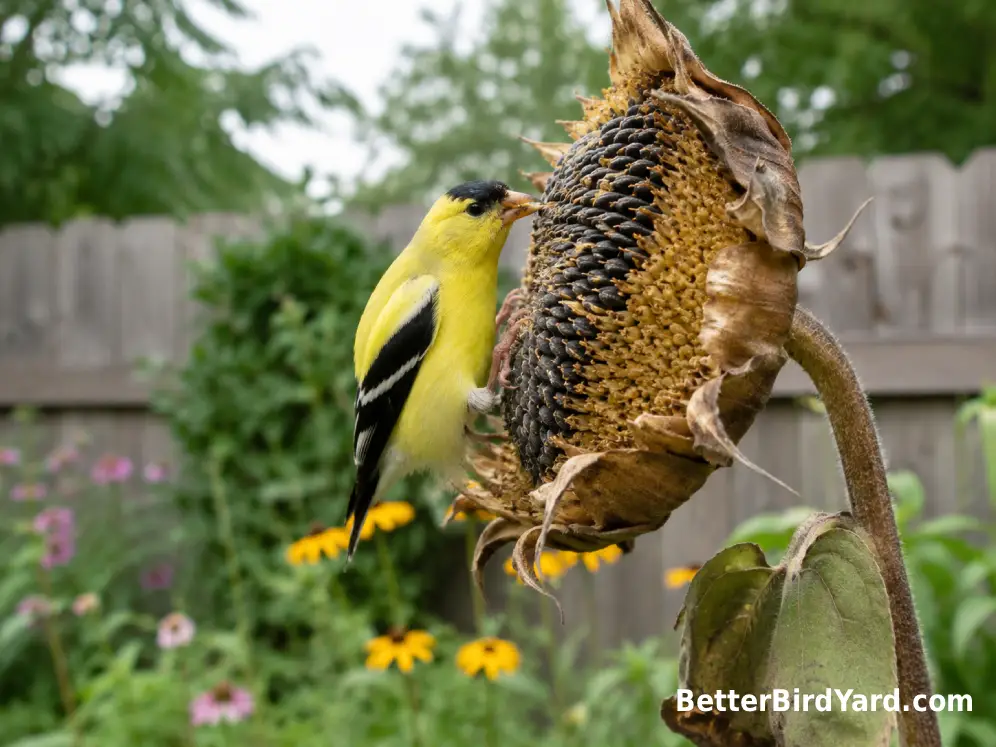
The American Goldfinch diet is overwhelmingly seed-based. Cornell Lab reports that these finches eat seeds from plants in the sunflower family, including sunflowers, asters, and thistles, along with grass seeds and seeds from trees such as alder, birch, and elm. Audubon similarly describes seeds as their primary food.
That seed-heavy diet sets goldfinches apart from many familiar backyard songbirds. They may consume small numbers of insects, particularly in warmer months, but insects are a minor part of the American Goldfinch diet rather than a main food source. Even their nestlings receive food that is mostly seed-based.
So if your goal is American goldfinch feeding, mealworms, fruit, suet, and other specialty bird foods are not where we would start. Appropriate seeds are a much better match.
Which Bird Seed Do Goldfinches Like Best?
For most backyard setups, three useful American goldfinch bird seed options stand out:
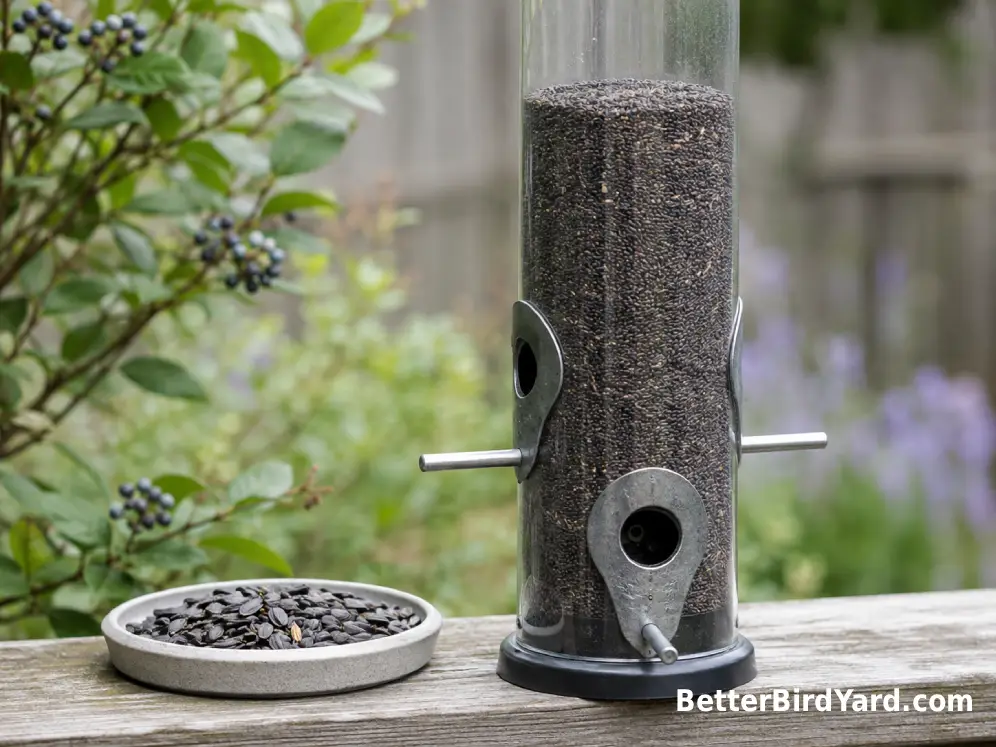
- Nyjer: A very small seed commonly offered specifically to finches. Project FeederWatch notes that American Goldfinches readily use nyjer feeders.
- Black-oil sunflower: A versatile feeder seed with a relatively thin shell that many finches can open. Cornell and Project FeederWatch both identify sunflower as a good finch food.
- Hulled sunflower: Sunflower kernels without the shells. They create less hull waste below the feeder, which can be especially useful on patios and small outdoor spaces. Because the protective shell has been removed, keep hulled seed dry and replace it if it spoils.
A useful detail for beginners: nyjer is sometimes sold as thistle seed, but it does not come from the wild North American thistles you may see goldfinches feeding on. Project FeederWatch identifies commercial nyjer as seed from Guizotia abyssinica, an African plant; imported seed is heat-treated to prevent sprouting.
You do not need to offer all three foods. If you want the most focused setup, start with nyjer. If you already maintain a general bird-feeding station, sunflower can serve goldfinches while also feeding several other seed-eating backyard species. Our bird seed guide can help if you are choosing food for a mixed group of backyard birds.
What Kind Of Feeder Works For Goldfinches?
For nyjer, choose a finch feeder with openings small enough to hold the tiny seed. Project FeederWatch specifically recommends a specialized feeder with very small ports because ordinary openings allow nyjer to spill easily.
Sunflower gives you more flexibility. Cornell notes that American Goldfinches use several feeder styles, including hanging, hopper, and platform feeders. They are agile birds and can handle feeders that move somewhat in the wind.
In a small yard or rental patio, we would favor the simplest feeder you can keep clean and refill without making a mess. A compact finch feeder with nyjer is particularly easy to dedicate to goldfinches. Hulled sunflower is another practical option when piles of shells beneath a feeder would be inconvenient.
There is no need to fill a large feeder completely if only a few birds are visiting. Smaller amounts that stay fresh are more useful than seed that sits outdoors through repeated damp weather.
Can You Feed Goldfinches Naturally Without A Feeder?
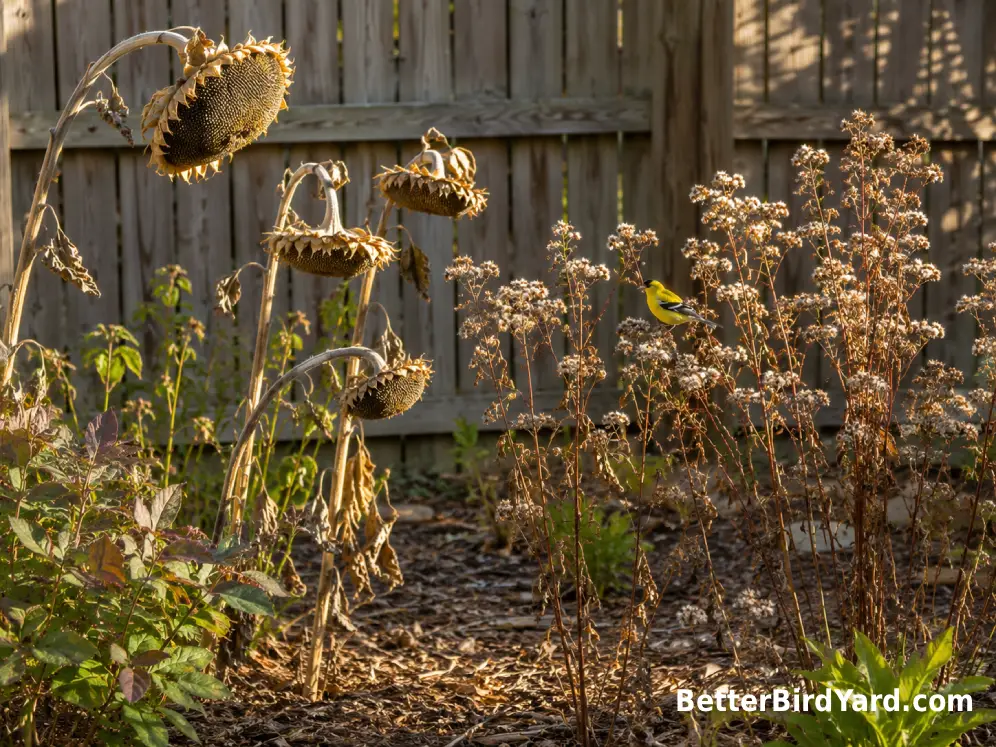
Feeders are optional. One of the most useful ways to support goldfinches is to let suitable plants produce mature seed heads instead of cutting everything back as soon as the flowers fade.
Depending on what grows naturally in your part of the United States, useful seed-producing plants may include:
- native sunflowers;
- native asters and other locally appropriate members of the sunflower family;
- native thistles;
- seed-producing grasses;
- other locally native plants that provide small seeds.
Cornell specifically recommends native thistles and other composite plants for yards where American Goldfinches occur. These birds often cling directly to plants while extracting the seeds.
Plant choices vary significantly across the country, so use a state extension service or a reputable regional native-plant resource rather than assuming one species is suitable everywhere.
For renters, this does not have to mean converting a yard. A few regionally appropriate plants in containers can add natural food and cover to a patio or balcony, provided your building or HOA rules allow them.
Do Goldfinches Eat Differently During The Breeding Season?
The basic answer remains seeds. Many songbirds switch heavily toward insects when they are raising young, but American Goldfinches remain unusually dependent on plant foods. Cornell describes them as among the most strongly seed-oriented North American songbirds, while Audubon reports that nestlings are fed regurgitated food made up mostly of seeds.
This helps explain why seed-producing habitat matters as much as a feeder. Natural stands of sunflowers, asters, thistles, grasses, and other suitable plants can provide food right where the birds forage.
Feeder traffic can still change through the year. Weather, local plant seed crops, migration movements, and the availability of food in surrounding habitat all affect how often birds visit a particular backyard. A quiet feeder for a few weeks does not necessarily mean anything is wrong with your seed or setup.
If the seed remains fresh and the feeder is clean, it is usually better to watch for changes over time than to keep switching foods every few days.
Why Aren’t Goldfinches Eating My Nyjer Seed?
A goldfinch feeder can be completely ignored even when you are offering the right food. Before buying a different feeder or another large bag of seed, check the simple things first.
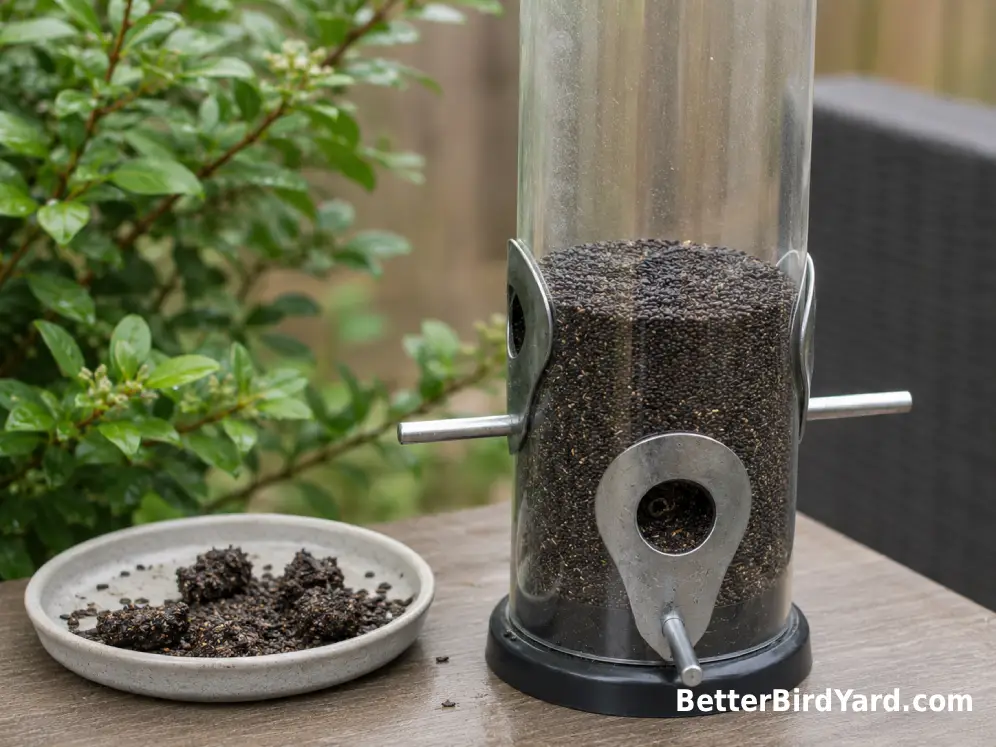
- Look at the seed. Discard it if it is wet, moldy, spoiled, or badly clumped.
- Check the feeding ports. Tiny nyjer openings can become obstructed by debris or damp seed.
- Offer a modest amount. Seed that turns over regularly is easier to keep fresh.
- Look around the yard. Goldfinches may simply be feeding on abundant natural seed elsewhere.
- Give the feeder time. Bird use varies with season, habitat, weather, and local food availability.
A common mistake is assuming that nyjer must outperform sunflower. Both are appropriate feeder foods for American Goldfinches, and individual flocks can make different choices when several foods are available. Cornell lists both sunflower and nyjer as preferred feeder foods.
Editorial note: If you only change one thing, start with seed condition. Fresh food in a simple, clean feeder is a better experiment than adding several new feeder types at once.
How Do You Feed Goldfinches Safely?
Good American goldfinch feeding is as much about maintenance as seed choice. Feeders bring birds together in a small space, so spoiled food, accumulated hulls, droppings, and dirty feeding surfaces should not be ignored.
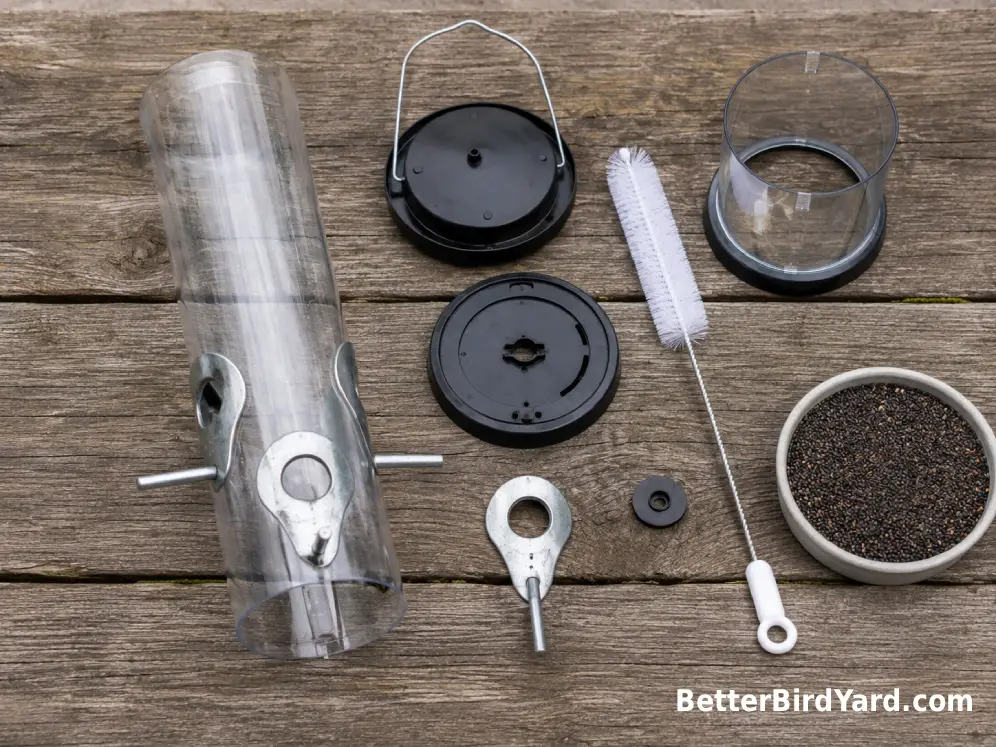
Project FeederWatch currently recommends cleaning seed and suet feeders regularly, such as every week or two, with more frequent cleaning during heavy use or wet weather. It also recommends removing old food and waste beneath feeding areas.
For an everyday goldfinch setup:
- keep the seed dry and discard moldy or spoiled food;
- clean the feeder regularly and whenever debris builds up;
- sweep or rake accumulated seed and droppings below the feeder;
- avoid putting out more food than you can reasonably keep fresh;
- wash your hands after handling feeders or cleaning feeding areas.
Hulled sunflower deserves a little extra attention because removing the shell also removes some protection from moisture; Project FeederWatch cautions that it can spoil more quickly than sunflower seed still in the hull.
If you notice a bird that appears unusually lethargic, has crusty or swollen eyes, abnormal growths, or otherwise seems unwell, do not try to diagnose or treat it yourself. Clean feeders and baths more frequently, consider temporarily reducing or removing the feeders involved, and check current guidance from Project FeederWatch or your state wildlife agency. If a wild bird appears to need direct intervention, contact a licensed wildlife rehabilitator or other qualified local wildlife professional.
For a more detailed routine, see our guide to cleaning bird feeders.
Common Goldfinch Feeding Mistakes To Avoid
The most common problems are usually simple ones rather than complicated feeder-placement mistakes.
- Buying a filler-heavy seed mix: Goldfinches are strongly seed-oriented, but that does not mean every inexpensive grain in a mix is equally attractive to them. Nyjer and sunflower are more dependable starting points.
- Leaving damp seed in the feeder: Replace seed that becomes wet, moldy, spoiled, or heavily compacted instead of topping it off with fresh seed.
- Ignoring the ground: Old seed and droppings can accumulate underneath a busy feeding station and may also encourage rodents. Project FeederWatch recommends keeping this area tidy.
- Expecting immediate results: Goldfinches move in response to natural food availability and local conditions. No seed or feeder can guarantee visits.
- Assuming more feeders are always better: In a small outdoor space, one feeder that is easy to maintain is often more practical than several feeders you struggle to keep clean.
We would also skip bread, salty human snacks, and other improvised foods. They are unnecessary when appropriate seed is readily available and do not match the natural seed-focused diet you are trying to support.
The Best Starting Point For Feeding Goldfinches
So, what do goldfinches eat? For American Goldfinches, the answer is mainly seeds: seeds from wild plants in the sunflower family, grasses, and certain trees, plus familiar feeder foods such as nyjer and sunflower. Their diet is much more seed-focused than that of many other backyard songbirds.
For a beginner, we would start with one of two setups: a small-port finch feeder filled with fresh nyjer, or a clean feeder offering black-oil or hulled sunflower seed. Then watch what the birds actually use before adding more equipment.
If you have room, let some appropriate native flowers and grasses mature and keep their seed heads standing. That gives goldfinches another food source while making your yard or patio less dependent on purchased seed.
Most importantly, keep the setup manageable. Fresh seed, a clean feeder, and realistic expectations will do more for responsible goldfinch feeding than a complicated collection of feeders and specialty foods.